



Derek D. Houston
@derekdhouston.bsky.social
Evolutionary Biology, Phylogeography, Ichthyology, Conservation Genetics, Community Ecology, Friend of Rough Fish
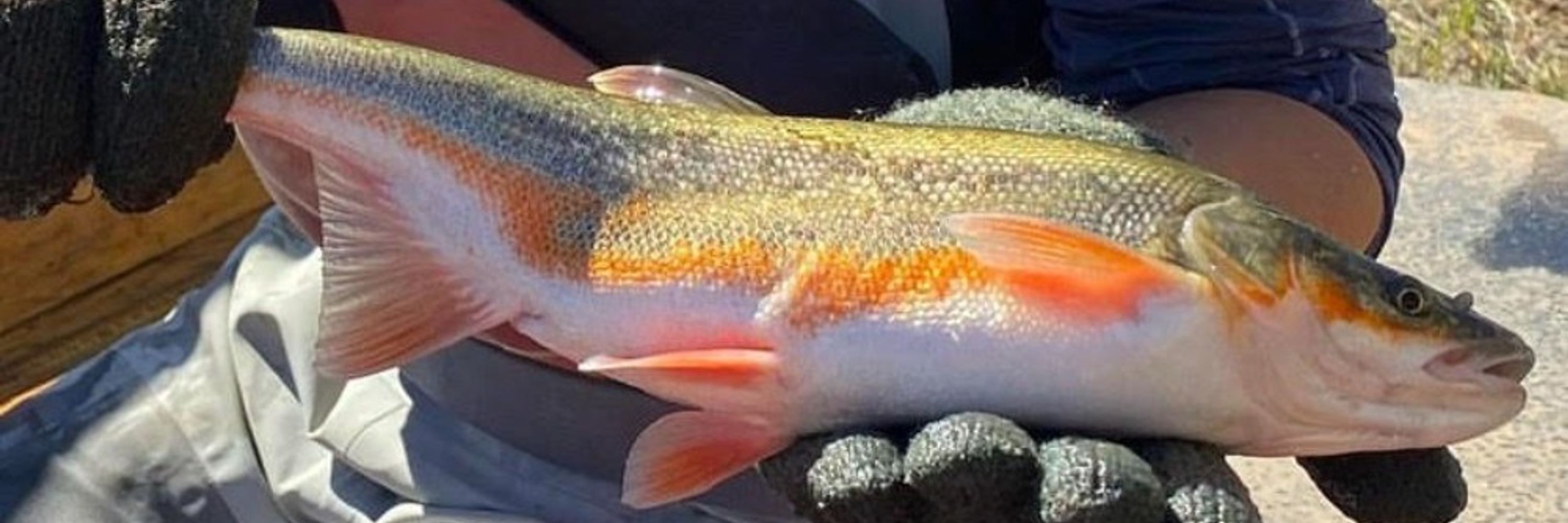
Some of my favorite things in this historical account of native Colorado River fishes is the guys that used to use rabbits, mice, and starlings for bait to catch Colorado pikeminnows.
coloradoriverrecovery.org/wp-content/u...
coloradoriverrecovery.org/wp-content/u...
coloradoriverrecovery.org
December 8, 2025 at 5:40 PM
Some of my favorite things in this historical account of native Colorado River fishes is the guys that used to use rabbits, mice, and starlings for bait to catch Colorado pikeminnows.
coloradoriverrecovery.org/wp-content/u...
coloradoriverrecovery.org/wp-content/u...
Reposted by Derek D. Houston
Despite lacking any teeth on their jaws, Colorado pikeminnows are the top native predators in the Colorado River basin. They do have long, curved teeth in their throat (pharyngeal teeth) that help them process prey (mostly fish, but whatever they can catch!) that they swallow whole #25DaysofFishmas

December 8, 2025 at 2:19 PM
Despite lacking any teeth on their jaws, Colorado pikeminnows are the top native predators in the Colorado River basin. They do have long, curved teeth in their throat (pharyngeal teeth) that help them process prey (mostly fish, but whatever they can catch!) that they swallow whole #25DaysofFishmas
Reposted by Derek D. Houston
Colorado pikeminnow is one of 4 species of pikeminnows (Ptychocheilus genus), all found in western North America + all large, predatory fish in the Leuciscidae (minnow) family. Though none grow as large - or as old (50+ years!) - as the Colorado pikeminnow! #25DaysofFishmas

December 8, 2025 at 2:07 PM
Colorado pikeminnow is one of 4 species of pikeminnows (Ptychocheilus genus), all found in western North America + all large, predatory fish in the Leuciscidae (minnow) family. Though none grow as large - or as old (50+ years!) - as the Colorado pikeminnow! #25DaysofFishmas
Reposted by Derek D. Houston
Suwannee bass is one of the smaller members of the black bass genus (Micropterus) typically growing only ~8 in/21 cm long - though females grow faster + reach larger sizes than males. Mature fish often have turquoise blue coloration on the cheeks/belly that's brighter when breeding #25DaysofFishmas

December 4, 2025 at 2:04 PM
Suwannee bass is one of the smaller members of the black bass genus (Micropterus) typically growing only ~8 in/21 cm long - though females grow faster + reach larger sizes than males. Mature fish often have turquoise blue coloration on the cheeks/belly that's brighter when breeding #25DaysofFishmas
Reposted by Derek D. Houston
The Christmas darter isn't the only darter in the holiday spirit! Other seasonally-appropriate darter species include the candy darter (Etheostoma osburni), lollipop darter (E. neopterum), Halloween darter (Percina crypta), and, of course, the holiday darter (E. brevirostrum) #25DaysofFishmas

December 1, 2025 at 2:20 PM
The Christmas darter isn't the only darter in the holiday spirit! Other seasonally-appropriate darter species include the candy darter (Etheostoma osburni), lollipop darter (E. neopterum), Halloween darter (Percina crypta), and, of course, the holiday darter (E. brevirostrum) #25DaysofFishmas
Reposted by Derek D. Houston
Don we now our gay apparel: The Christmas darter’s common name was suggested in 1963 “because of the gay decoration of the belly with symbolic red and green bands.” They're sexually dimorphic, with males being much more colorful than females - especially during the breeding season #25DaysofFishmas

December 1, 2025 at 2:08 PM
Don we now our gay apparel: The Christmas darter’s common name was suggested in 1963 “because of the gay decoration of the belly with symbolic red and green bands.” They're sexually dimorphic, with males being much more colorful than females - especially during the breeding season #25DaysofFishmas
I'm so sorry to hear this. I hope that this treatment works as intended. Sending you support and well wishes from CO.
November 6, 2025 at 5:30 PM
I'm so sorry to hear this. I hope that this treatment works as intended. Sending you support and well wishes from CO.