




Edgar Dubourg
@edgardubourg.bsky.social
PhD student in cognitive science (ENS, Paris) studying the evolutionary origin, psychological foundations and cultural evolution of fictions. www.edgardubourg.fr
Merci Le Monde des Livres pour cette lecture attentive et cette belle critique de mon livre…

September 12, 2025 at 9:08 AM
Merci Le Monde des Livres pour cette lecture attentive et cette belle critique de mon livre…
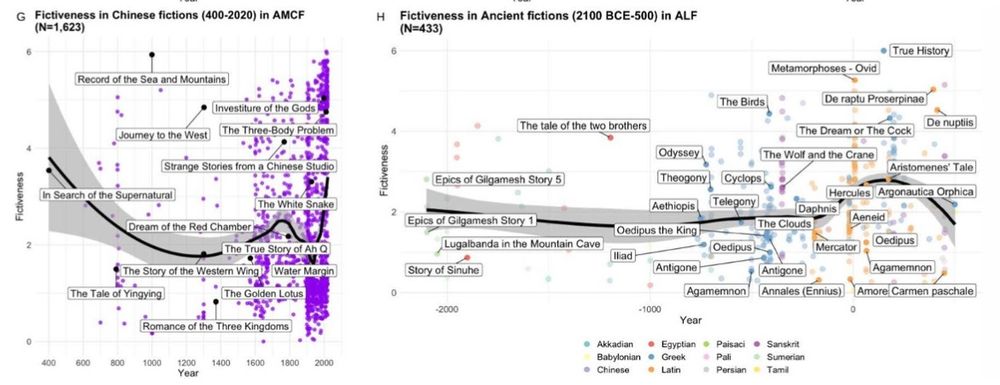
Over the long term, we also see gradual increases, with peaks in prosperous periods like the Roman Empire, Tang Dynasty, and Renaissance. Even in antiquity there were highly fictive works, but they were much less common than today.
August 12, 2025 at 10:26 AM
Over the long term, we also see gradual increases, with peaks in prosperous periods like the Roman Empire, Tang Dynasty, and Renaissance. Even in antiquity there were highly fictive works, but they were much less common than today.
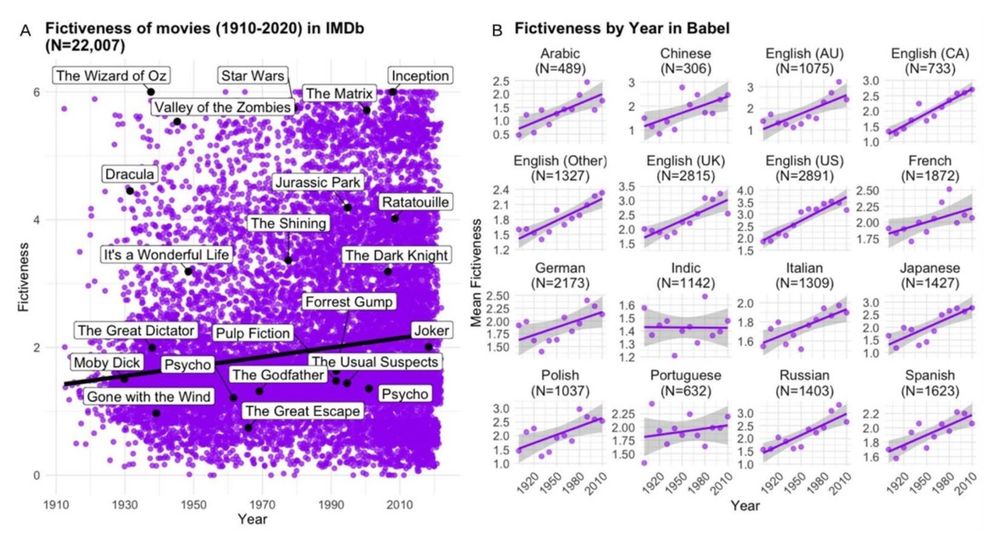
Across the 20th and 21st centuries, fictiveness rises steadily in novels, films, and Chinese fiction, regardless of genre or language. Box office data show that high-fictiveness films have become increasingly successful over time.
August 12, 2025 at 10:26 AM
Across the 20th and 21st centuries, fictiveness rises steadily in novels, films, and Chinese fiction, regardless of genre or language. Box office data show that high-fictiveness films have become increasingly successful over time.
The approach scales to all periods: The Imitation Game (real people and events) has low fictiveness; The Lord of the Rings (invented everything) has very high fictiveness; One Piece (manga) also scores high for fantastical settings, events and characters.

August 12, 2025 at 10:26 AM
The approach scales to all periods: The Imitation Game (real people and events) has low fictiveness; The Lord of the Rings (invented everything) has very high fictiveness; One Piece (manga) also scores high for fantastical settings, events and characters.
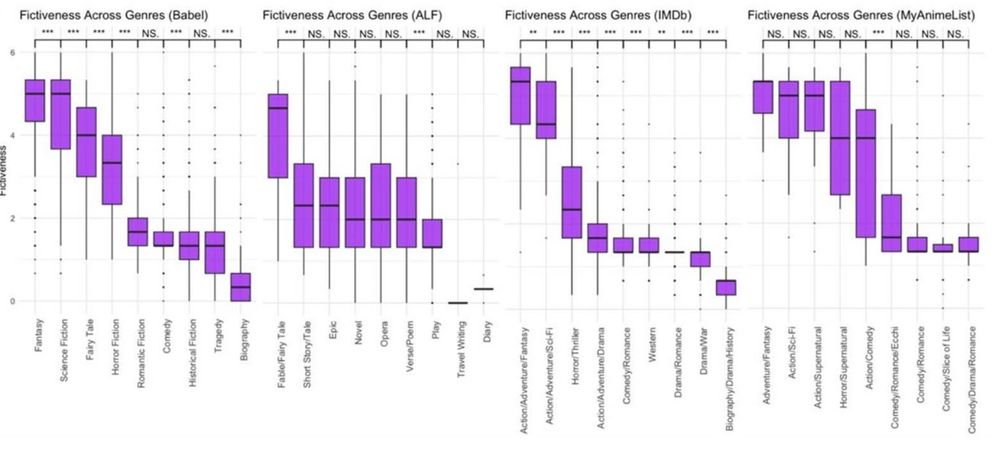
We checked validity by reviewing random samples and comparing to known genre patterns. As expected, fantasy and science fiction scored highest, biographies and historical dramas lowest. LLM annotations also converged with a second model and with manual checks.
August 12, 2025 at 10:26 AM
We checked validity by reviewing random samples and comparing to known genre patterns. As expected, fantasy and science fiction scored highest, biographies and historical dramas lowest. LLM annotations also converged with a second model and with manual checks.
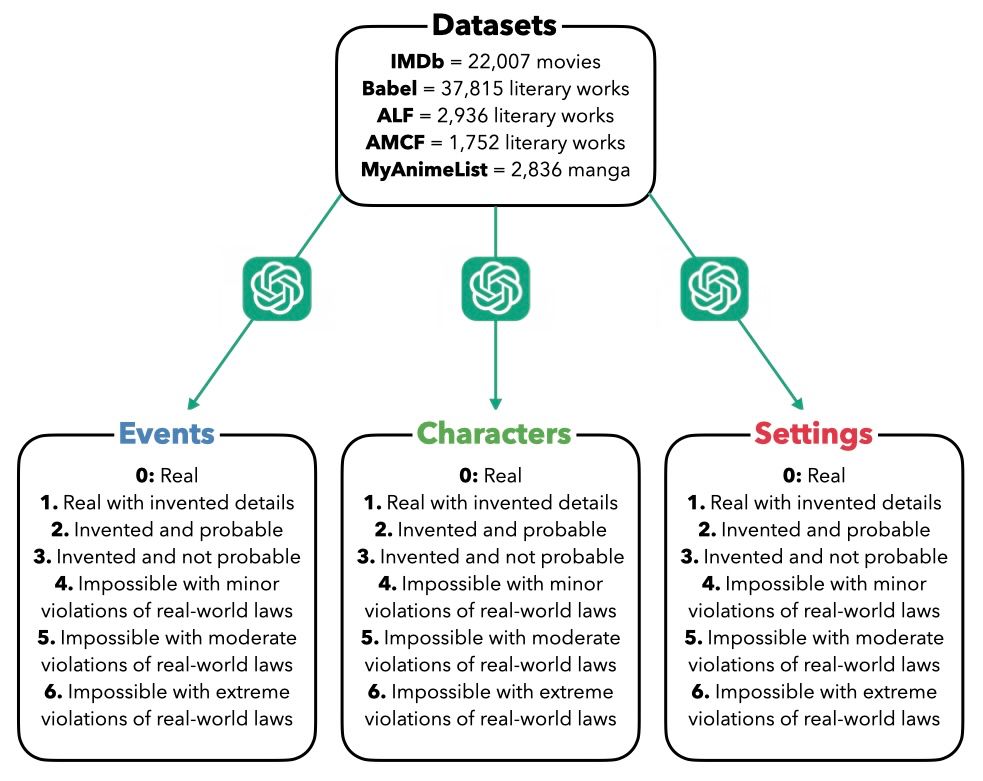
We then assembled more than 65,000 works from over 30 countries and 4,000 years – from The Epic of Gilgamesh and The Odyssey to modern cinema and video games – and scored them on a 0–6 scale for each narrative dimension.
August 12, 2025 at 10:26 AM
We then assembled more than 65,000 works from over 30 countries and 4,000 years – from The Epic of Gilgamesh and The Odyssey to modern cinema and video games – and scored them on a 0–6 scale for each narrative dimension.
Today’s popular fictions can be extremely far from reality: The Lord of the Rings, Avatar, The Legend of Zelda, Avengers: Endgame. But has this always been the case?

August 12, 2025 at 10:26 AM
Today’s popular fictions can be extremely far from reality: The Lord of the Rings, Avatar, The Legend of Zelda, Avengers: Endgame. But has this always been the case?
Even participants who knew very little themselves succeeded. We looked at the bottom 30% of scorers. They answered almost nothing correctly—yet they still made accurate inferences about others. They could tell which answers were rare, and who probably knew more.


June 2, 2025 at 11:43 AM
Even participants who knew very little themselves succeeded. We looked at the bottom 30% of scorers. They answered almost nothing correctly—yet they still made accurate inferences about others. They could tell which answers were rare, and who probably knew more.
Third: From a single correct answer, participants could infer broader knowledge. Their judgments matched actual scores. The more they expected someone to know, the more that person really knew. This was true in aggregate and at the individual level.


June 2, 2025 at 11:43 AM
Third: From a single correct answer, participants could infer broader knowledge. Their judgments matched actual scores. The more they expected someone to know, the more that person really knew. This was true in aggregate and at the individual level.
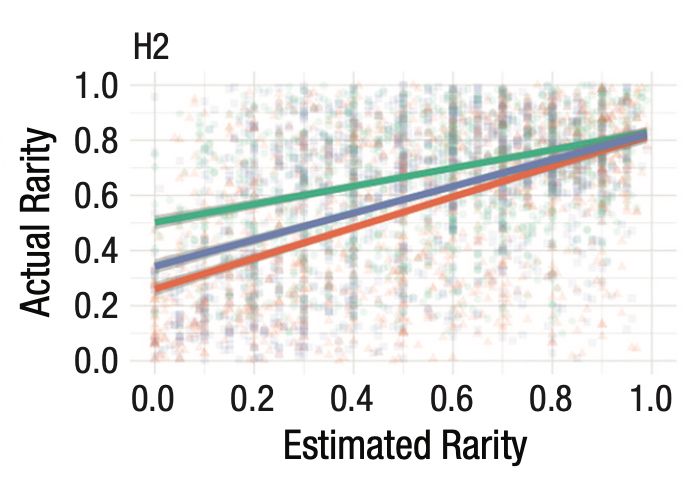
Second: Participants could accurately judge the rarity of each fact. Even when they didn’t know the answers themselves, their rarity estimates were consistently correlated with actual difficulty.
June 2, 2025 at 11:43 AM
Second: Participants could accurately judge the rarity of each fact. Even when they didn’t know the answers themselves, their rarity estimates were consistently correlated with actual difficulty.
First: Knowledge was indeed nested. We applied standard metrics from ecology, like NODF and matrix temperature. All three domains—astronomy, history, superheroes—showed strong nestedness compared to shuffled matrices.

June 2, 2025 at 11:43 AM
First: Knowledge was indeed nested. We applied standard metrics from ecology, like NODF and matrix temperature. All three domains—astronomy, history, superheroes—showed strong nestedness compared to shuffled matrices.
Nestedness means that people who know rare facts tend to also know the common ones. But not vice versa. It’s a pattern well known in ecology. Rare species only appear in rich ecosystems, while poor ones only have common species.

June 2, 2025 at 11:43 AM
Nestedness means that people who know rare facts tend to also know the common ones. But not vice versa. It’s a pattern well known in ecology. Rare species only appear in rich ecosystems, while poor ones only have common species.
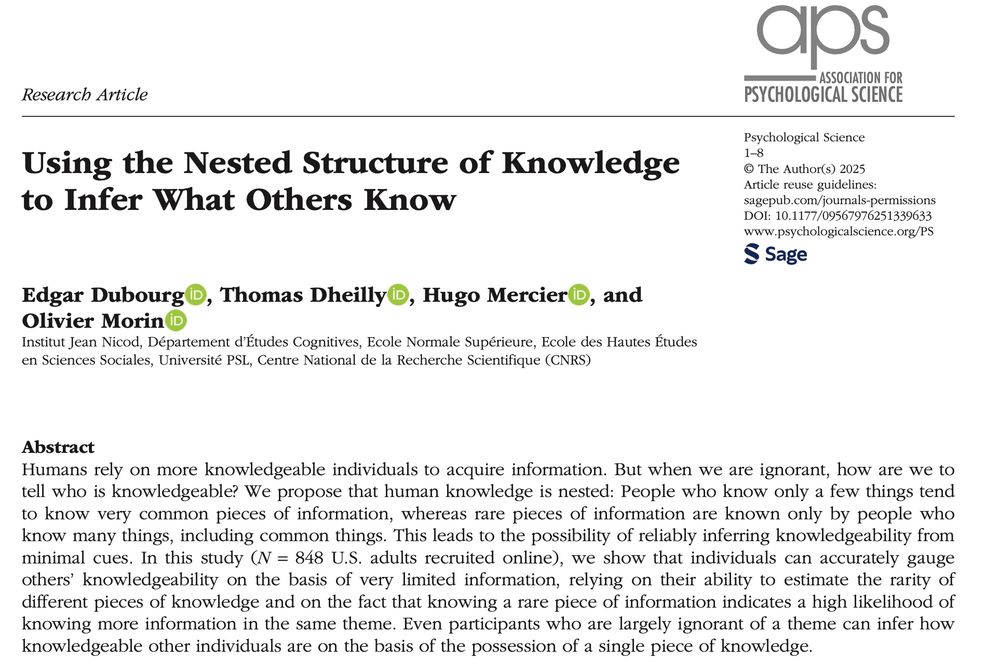
We often have to judge who is knowledgeable—precisely when we are not. Can humans really do that? Our new paper in Psychological Science shows that, surprisingly, we can. drive.google.com/file/d/1b15E...
June 2, 2025 at 11:43 AM
We often have to judge who is knowledgeable—precisely when we are not. Can humans really do that? Our new paper in Psychological Science shows that, surprisingly, we can. drive.google.com/file/d/1b15E...

A great opportunity for a PhD Scolarship at the new CultureLab (Paris), at the intersection of the humanities, the computational sciences, and cultural evolution!


May 3, 2025 at 8:42 AM
A great opportunity for a PhD Scolarship at the new CultureLab (Paris), at the intersection of the humanities, the computational sciences, and cultural evolution!
To summarize: we showed that imaginary worlds have risen both in prevalence and in complexity, that their structure has become tighter over time, and that these trends correlate better with societal affluence than with the mere passage of time.

April 29, 2025 at 12:42 PM
To summarize: we showed that imaginary worlds have risen both in prevalence and in complexity, that their structure has become tighter over time, and that these trends correlate better with societal affluence than with the mere passage of time.
We tested this by comparing two models. One where time predicts the rise of imaginary worlds. Another where GDP, as a proxy for material affluence, predicts it. GDP systematically outperformed time. Material affluence better explains the trend.


April 29, 2025 at 12:42 PM
We tested this by comparing two models. One where time predicts the rise of imaginary worlds. Another where GDP, as a proxy for material affluence, predicts it. GDP systematically outperformed time. Material affluence better explains the trend.
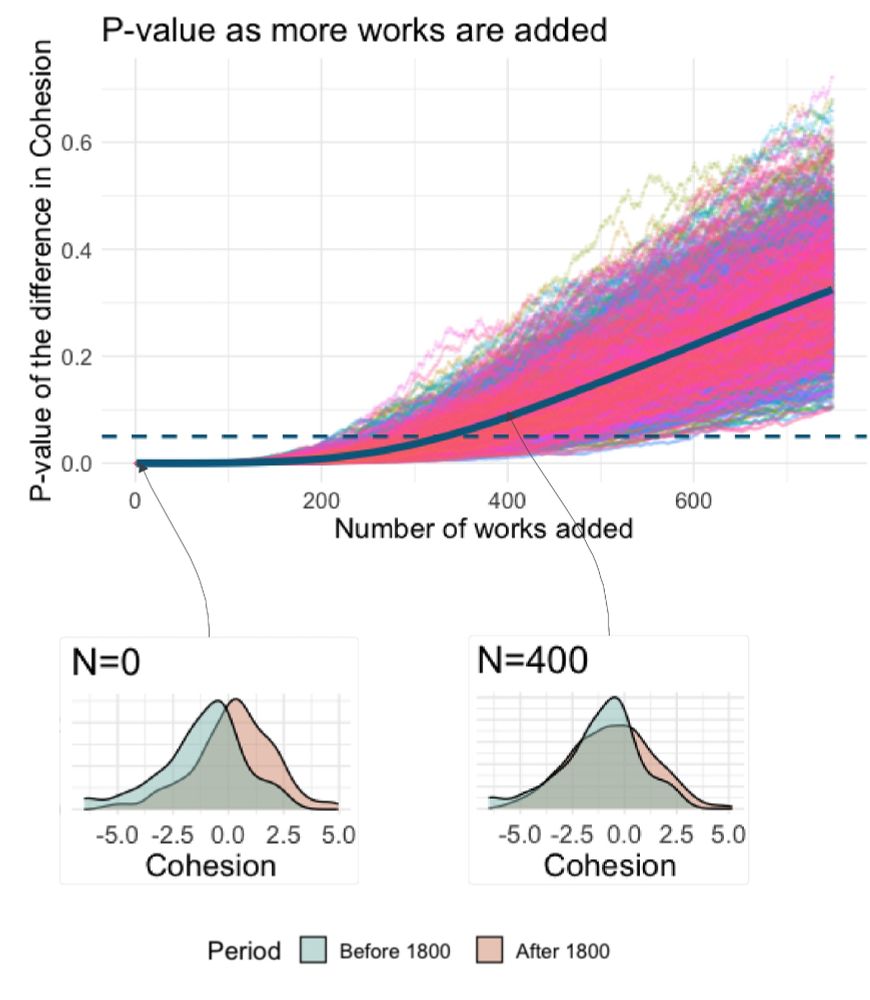
To make sure this was not a sampling artifact, we applied two robustness checks. Weighted regression confirmed the result. Counterfactual simulations showed that the observed trend would require implausible biases in the data to disappear.
April 29, 2025 at 12:42 PM
To make sure this was not a sampling artifact, we applied two robustness checks. Weighted regression confirmed the result. Counterfactual simulations showed that the observed trend would require implausible biases in the data to disappear.
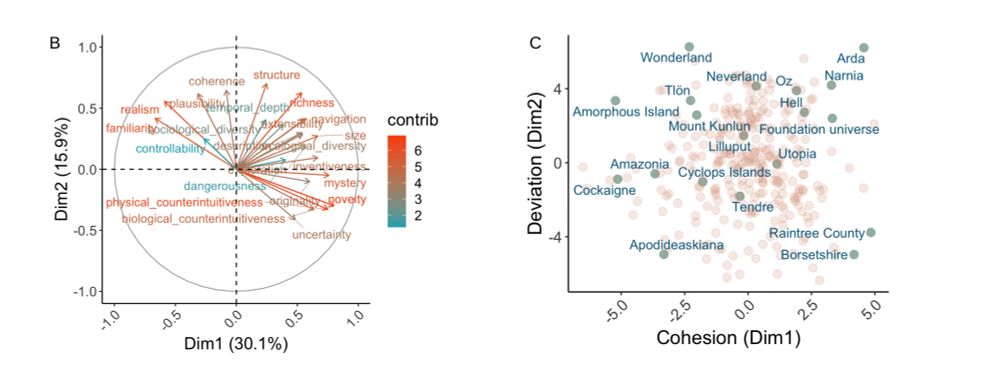
Deviation stayed stable across history. Imaginary worlds have always been different from the real world. But Cohesion increased . Imaginary worlds have become more structured, plausible, systematically organized over time.

April 29, 2025 at 12:42 PM
Deviation stayed stable across history. Imaginary worlds have always been different from the real world. But Cohesion increased . Imaginary worlds have become more structured, plausible, systematically organized over time.
Using principal component analysis, we extracted two major dimensions. One captured how much the world deviates from the real world (Deviation). The other captured how internally structured and cohesive the world is (Cohesion).
April 29, 2025 at 12:42 PM
Using principal component analysis, we extracted two major dimensions. One captured how much the world deviates from the real world (Deviation). The other captured how internally structured and cohesive the world is (Cohesion).
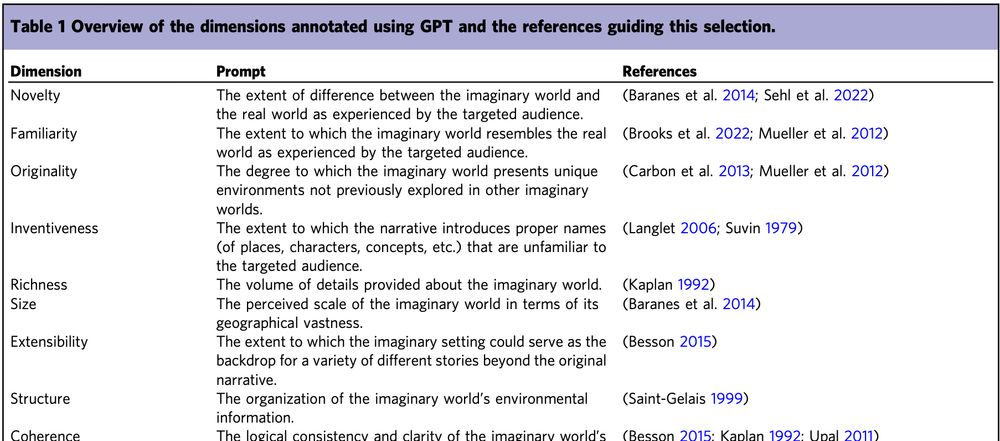
Then we turned to Study 2. Here, we analyzed 371 famous imaginary worlds annotated by Wolf, from Homer’s Odyssey to early 20th-century science fiction. We annotated each world along 21 dimensions, like novelty, internal coherence, sociological diversity, and exploration opportunities.
April 29, 2025 at 12:42 PM
Then we turned to Study 2. Here, we analyzed 371 famous imaginary worlds annotated by Wolf, from Homer’s Odyssey to early 20th-century science fiction. We annotated each world along 21 dimensions, like novelty, internal coherence, sociological diversity, and exploration opportunities.
We found that the richness of imaginary worlds increased significantly over time. Worlds not only became more frequent; they also became more central and more detailed within stories. This trend was statistically robust despite conservative biases.

April 29, 2025 at 12:42 PM
We found that the richness of imaginary worlds increased significantly over time. Worlds not only became more frequent; they also became more central and more detailed within stories. This trend was statistically robust despite conservative biases.
We applied this method to over 7000 novels across 4000 years. Each work received an "Imaginary World Score" between 0 and 10. As expected, many works scored low, since most stories happen in the real world. But the key was to track the historical trend.

April 29, 2025 at 12:42 PM
We applied this method to over 7000 novels across 4000 years. Each work received an "Imaginary World Score" between 0 and 10. As expected, many works scored low, since most stories happen in the real world. But the key was to track the historical trend.
The results were striking. The proportion of novels set in imaginary worlds rose from under 10% before the Industrial Revolution to over 30% today. In movies, the proportion doubled during the 20th century. The rise is real and robust across methods.

April 29, 2025 at 12:42 PM
The results were striking. The proportion of novels set in imaginary worlds rose from under 10% before the Industrial Revolution to over 30% today. In movies, the proportion doubled during the 20th century. The rise is real and robust across methods.
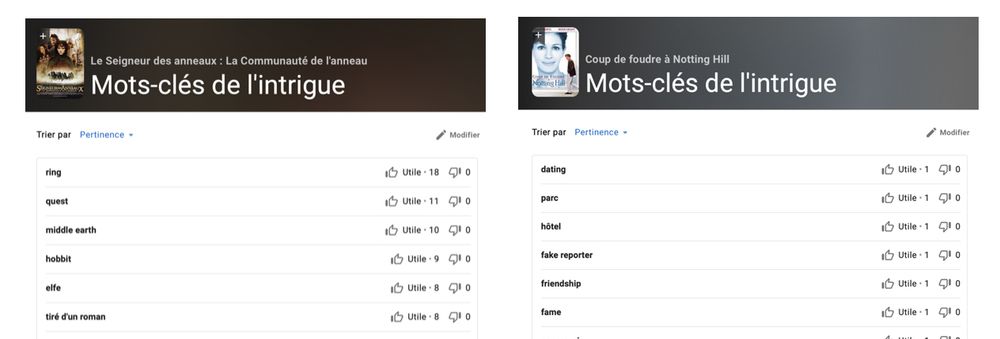
For classification, we used speculative genres like fantasy and science fiction as proxies. For movies, we added a machine learning model based on plot keywords to better capture cases where genre labels were missing or imprecise.
April 29, 2025 at 12:42 PM
For classification, we used speculative genres like fantasy and science fiction as proxies. For movies, we added a machine learning model based on plot keywords to better capture cases where genre labels were missing or imprecise.