




Physics Today
@physicstoday.bsky.social
The world's most popular physics magazine.
physicstoday.org
physicstoday.org
For more Ig Nobel Prize–winning work, see Andrey Geim’s 1998 Physics Today article on levitating a live frog using a 20-tesla magnet.
doi.org/10.1063/1.88...
doi.org/10.1063/1.88...

September 23, 2025 at 8:42 PM
For more Ig Nobel Prize–winning work, see Andrey Geim’s 1998 Physics Today article on levitating a live frog using a 20-tesla magnet.
doi.org/10.1063/1.88...
doi.org/10.1063/1.88...
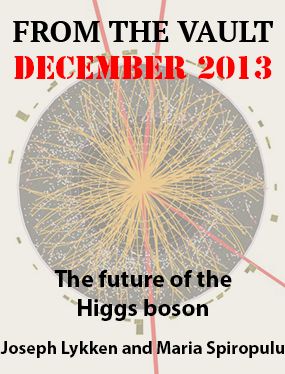
From our archives: “The future of the #Higgs boson” by Joseph Lykken and Maria Spiropulu from December 2013
doi.org/10.1063/PT.3...
#FromTheVault #PTarchive
doi.org/10.1063/PT.3...
#FromTheVault #PTarchive
August 25, 2025 at 8:19 PM
From our archives: “The future of the #Higgs boson” by Joseph Lykken and Maria Spiropulu from December 2013
doi.org/10.1063/PT.3...
#FromTheVault #PTarchive
doi.org/10.1063/PT.3...
#FromTheVault #PTarchive
From our archives: “Analysis of musical‐instrument tones” by Jean‐Claude Risset and Max V. Mathews from February 1969
"With computers we can not only analyse the sound of a musical instrument but also build up a synthesized copy of the sound."
doi.org/10.1063/1.30...
#FromTheVault #PTarchive
"With computers we can not only analyse the sound of a musical instrument but also build up a synthesized copy of the sound."
doi.org/10.1063/1.30...
#FromTheVault #PTarchive

August 18, 2025 at 2:02 PM
From our archives: “Analysis of musical‐instrument tones” by Jean‐Claude Risset and Max V. Mathews from February 1969
"With computers we can not only analyse the sound of a musical instrument but also build up a synthesized copy of the sound."
doi.org/10.1063/1.30...
#FromTheVault #PTarchive
"With computers we can not only analyse the sound of a musical instrument but also build up a synthesized copy of the sound."
doi.org/10.1063/1.30...
#FromTheVault #PTarchive
From the archive: “Mass extinctions caused by large bolide impacts,” Luis Alvarez, July 1987
"Evidence indicates that the collision of Earth and a large piece of Solar System debris such as a meteoroid, asteroid or comet caused the great extinctions of 65 million years ago"
doi.org/10.1063/1.88...
"Evidence indicates that the collision of Earth and a large piece of Solar System debris such as a meteoroid, asteroid or comet caused the great extinctions of 65 million years ago"
doi.org/10.1063/1.88...

August 11, 2025 at 1:49 PM
From the archive: “Mass extinctions caused by large bolide impacts,” Luis Alvarez, July 1987
"Evidence indicates that the collision of Earth and a large piece of Solar System debris such as a meteoroid, asteroid or comet caused the great extinctions of 65 million years ago"
doi.org/10.1063/1.88...
"Evidence indicates that the collision of Earth and a large piece of Solar System debris such as a meteoroid, asteroid or comet caused the great extinctions of 65 million years ago"
doi.org/10.1063/1.88...
From our archives: “Flavor SU(3) Symmetries in Particle Physics” by Howard Georgi in April 1988
"Anyone who understands quantum mechanical harmonic oscillators can understand the role and significance of the flavor symmetries of the standard model."
doi.org/10.1063/1.88...
#FromTheVault
"Anyone who understands quantum mechanical harmonic oscillators can understand the role and significance of the flavor symmetries of the standard model."
doi.org/10.1063/1.88...
#FromTheVault

August 4, 2025 at 2:31 PM
From our archives: “Flavor SU(3) Symmetries in Particle Physics” by Howard Georgi in April 1988
"Anyone who understands quantum mechanical harmonic oscillators can understand the role and significance of the flavor symmetries of the standard model."
doi.org/10.1063/1.88...
#FromTheVault
"Anyone who understands quantum mechanical harmonic oscillators can understand the role and significance of the flavor symmetries of the standard model."
doi.org/10.1063/1.88...
#FromTheVault
From our archives: “The future of physics” by Freeman Dyson from September 1970
"Many physicists may turn to molecular biophysics, pulsar astronomy and the problems of environmental pollution, just as some turned to radioastronomy and computer technology 25 years ago."
doi.org/10.1063/1.30...
"Many physicists may turn to molecular biophysics, pulsar astronomy and the problems of environmental pollution, just as some turned to radioastronomy and computer technology 25 years ago."
doi.org/10.1063/1.30...

July 28, 2025 at 1:26 PM
From our archives: “The future of physics” by Freeman Dyson from September 1970
"Many physicists may turn to molecular biophysics, pulsar astronomy and the problems of environmental pollution, just as some turned to radioastronomy and computer technology 25 years ago."
doi.org/10.1063/1.30...
"Many physicists may turn to molecular biophysics, pulsar astronomy and the problems of environmental pollution, just as some turned to radioastronomy and computer technology 25 years ago."
doi.org/10.1063/1.30...
From our archives: “Color Perception” by Alan R. Robertson from December 1992
The physical stimulus that causes a color perception can be measured by straightforward physical methods, but predicting the perceived color is much more complex.
doi.org/10.1063/1.88...
#FromTheVault #ptarchive
The physical stimulus that causes a color perception can be measured by straightforward physical methods, but predicting the perceived color is much more complex.
doi.org/10.1063/1.88...
#FromTheVault #ptarchive

July 21, 2025 at 1:23 PM
From our archives: “Color Perception” by Alan R. Robertson from December 1992
The physical stimulus that causes a color perception can be measured by straightforward physical methods, but predicting the perceived color is much more complex.
doi.org/10.1063/1.88...
#FromTheVault #ptarchive
The physical stimulus that causes a color perception can be measured by straightforward physical methods, but predicting the perceived color is much more complex.
doi.org/10.1063/1.88...
#FromTheVault #ptarchive
From 1939 to 1948, Dorothy Weeks—the first woman to receive a PhD in mathematics from MIT—led a physics summer internship program that was specifically targeted for women.
doi.org/10.1063/pt.v...
doi.org/10.1063/pt.v...

July 9, 2025 at 2:12 PM
From 1939 to 1948, Dorothy Weeks—the first woman to receive a PhD in mathematics from MIT—led a physics summer internship program that was specifically targeted for women.
doi.org/10.1063/pt.v...
doi.org/10.1063/pt.v...
From our archives: “Chandrasekhar’s role in 20th-century science” by Freeman Dyson
Once the astrophysics community had come to grips with a calculation performed by a 19-year-old student, the heavens could never again be seen as a perfect and tranquil dominion.
doi.org/10.1063/1.35...
Once the astrophysics community had come to grips with a calculation performed by a 19-year-old student, the heavens could never again be seen as a perfect and tranquil dominion.
doi.org/10.1063/1.35...

July 7, 2025 at 1:09 PM
From our archives: “Chandrasekhar’s role in 20th-century science” by Freeman Dyson
Once the astrophysics community had come to grips with a calculation performed by a 19-year-old student, the heavens could never again be seen as a perfect and tranquil dominion.
doi.org/10.1063/1.35...
Once the astrophysics community had come to grips with a calculation performed by a 19-year-old student, the heavens could never again be seen as a perfect and tranquil dominion.
doi.org/10.1063/1.35...
From our archives: “History of the cyclotron” by M. Stanley Livingston, October 1959
In memory of E. O. Lawrence, two lectures on the history of the cyclotron were presented at the @apsphysics.bsky.social 1959 spring meeting. This article is based on Dr Livingston's talk.
doi.org/10.1063/1.30...
In memory of E. O. Lawrence, two lectures on the history of the cyclotron were presented at the @apsphysics.bsky.social 1959 spring meeting. This article is based on Dr Livingston's talk.
doi.org/10.1063/1.30...

June 30, 2025 at 1:56 PM
From our archives: “History of the cyclotron” by M. Stanley Livingston, October 1959
In memory of E. O. Lawrence, two lectures on the history of the cyclotron were presented at the @apsphysics.bsky.social 1959 spring meeting. This article is based on Dr Livingston's talk.
doi.org/10.1063/1.30...
In memory of E. O. Lawrence, two lectures on the history of the cyclotron were presented at the @apsphysics.bsky.social 1959 spring meeting. This article is based on Dr Livingston's talk.
doi.org/10.1063/1.30...
“Physics looks at waste management” by David Rose, John Gibbons, & William Fulkerson. Feb 1972
What are the best ways to find out what's in our waste, sort & separate it, return to service anything that can be used again & properly dispose of the remainder?
doi.org/10.1063/1.30...
#FromTheVault
What are the best ways to find out what's in our waste, sort & separate it, return to service anything that can be used again & properly dispose of the remainder?
doi.org/10.1063/1.30...
#FromTheVault

June 16, 2025 at 5:17 PM
“Physics looks at waste management” by David Rose, John Gibbons, & William Fulkerson. Feb 1972
What are the best ways to find out what's in our waste, sort & separate it, return to service anything that can be used again & properly dispose of the remainder?
doi.org/10.1063/1.30...
#FromTheVault
What are the best ways to find out what's in our waste, sort & separate it, return to service anything that can be used again & properly dispose of the remainder?
doi.org/10.1063/1.30...
#FromTheVault
The success of the D-Day invasion #OTD in 1944 hinged on the Allies’ ability to predict the tides. To perform tidal calculations, the Allies used large mechanical computers that were originally designed by Lord Kelvin. doi.org/10.1063/PT.3...
Photo credit: H. R. Seiwell, Mil. Eng. 39, 202 (1947)
Photo credit: H. R. Seiwell, Mil. Eng. 39, 202 (1947)

June 6, 2025 at 3:30 PM
The success of the D-Day invasion #OTD in 1944 hinged on the Allies’ ability to predict the tides. To perform tidal calculations, the Allies used large mechanical computers that were originally designed by Lord Kelvin. doi.org/10.1063/PT.3...
Photo credit: H. R. Seiwell, Mil. Eng. 39, 202 (1947)
Photo credit: H. R. Seiwell, Mil. Eng. 39, 202 (1947)
From our archives: “The tide predictions for D-Day” by Bruce Parker from September 2011
Based on the physics of Newton and Laplace, the big brass tide-predicting machine designed by Lord Kelvin was crucial for the success of the Normandy invasion in World War II.
doi.org/10.1063/PT.3...
Based on the physics of Newton and Laplace, the big brass tide-predicting machine designed by Lord Kelvin was crucial for the success of the Normandy invasion in World War II.
doi.org/10.1063/PT.3...

June 2, 2025 at 1:43 PM
From our archives: “The tide predictions for D-Day” by Bruce Parker from September 2011
Based on the physics of Newton and Laplace, the big brass tide-predicting machine designed by Lord Kelvin was crucial for the success of the Normandy invasion in World War II.
doi.org/10.1063/PT.3...
Based on the physics of Newton and Laplace, the big brass tide-predicting machine designed by Lord Kelvin was crucial for the success of the Normandy invasion in World War II.
doi.org/10.1063/PT.3...
Hidden behind a fog of galactic gas, Sagittarius A* proved a tricky imaging target for the @ehtelescope.bsky.social team.
doi.org/10.1063/PT.6...
#BlackHoleWeek #Astronomy
doi.org/10.1063/PT.6...
#BlackHoleWeek #Astronomy

May 7, 2025 at 2:22 PM
Hidden behind a fog of galactic gas, Sagittarius A* proved a tricky imaging target for the @ehtelescope.bsky.social team.
doi.org/10.1063/PT.6...
#BlackHoleWeek #Astronomy
doi.org/10.1063/PT.6...
#BlackHoleWeek #Astronomy
Roger Penrose proved that black holes could and should form in the universe. The topological picture he used in that proof has become foundational to general relativity.
doi.org/10.1063/PT.3...
#BlackHoleWeek #Astronomy #Physics #NobelPrize
doi.org/10.1063/PT.3...
#BlackHoleWeek #Astronomy #Physics #NobelPrize

May 6, 2025 at 3:26 PM
Roger Penrose proved that black holes could and should form in the universe. The topological picture he used in that proof has become foundational to general relativity.
doi.org/10.1063/PT.3...
#BlackHoleWeek #Astronomy #Physics #NobelPrize
doi.org/10.1063/PT.3...
#BlackHoleWeek #Astronomy #Physics #NobelPrize
@drbecky.bsky.social aims to shrink the gender imbalance in the viewership of her astronomy videos.
doi.org/10.1063/pt.w...
#BlackHoleWeek ⚛️🔭
doi.org/10.1063/pt.w...
#BlackHoleWeek ⚛️🔭

May 5, 2025 at 6:00 PM
@drbecky.bsky.social aims to shrink the gender imbalance in the viewership of her astronomy videos.
doi.org/10.1063/pt.w...
#BlackHoleWeek ⚛️🔭
doi.org/10.1063/pt.w...
#BlackHoleWeek ⚛️🔭
From our archives: “Introducing the black hole” by Remo Ruffini and John A. Wheeler
According to present cosmology, certain stars end their careers in a total gravitational collapse that transcends the ordinary laws of physics.
doi.org/10.1063/1.30...
#FromTheVault #PTarchive #BlackHoleWeek 🔭⚛️
According to present cosmology, certain stars end their careers in a total gravitational collapse that transcends the ordinary laws of physics.
doi.org/10.1063/1.30...
#FromTheVault #PTarchive #BlackHoleWeek 🔭⚛️

May 5, 2025 at 1:17 PM
From our archives: “Introducing the black hole” by Remo Ruffini and John A. Wheeler
According to present cosmology, certain stars end their careers in a total gravitational collapse that transcends the ordinary laws of physics.
doi.org/10.1063/1.30...
#FromTheVault #PTarchive #BlackHoleWeek 🔭⚛️
According to present cosmology, certain stars end their careers in a total gravitational collapse that transcends the ordinary laws of physics.
doi.org/10.1063/1.30...
#FromTheVault #PTarchive #BlackHoleWeek 🔭⚛️
Our May issue is here! Learn about threats to the dark and quiet sky, seismic data that reveal groundwater health, and the future of ocean sciences in the US. Plus, enjoy a poem about physics!
pubs.aip.org/physicstoday...
📸: Pexels/Pixabay
⚛️🔭 #PhysicsToday #oceanography #seismology #poetry
pubs.aip.org/physicstoday...
📸: Pexels/Pixabay
⚛️🔭 #PhysicsToday #oceanography #seismology #poetry

May 1, 2025 at 1:28 PM
Our May issue is here! Learn about threats to the dark and quiet sky, seismic data that reveal groundwater health, and the future of ocean sciences in the US. Plus, enjoy a poem about physics!
pubs.aip.org/physicstoday...
📸: Pexels/Pixabay
⚛️🔭 #PhysicsToday #oceanography #seismology #poetry
pubs.aip.org/physicstoday...
📸: Pexels/Pixabay
⚛️🔭 #PhysicsToday #oceanography #seismology #poetry
From our archives: “What is the Lithosphere?” by John C. Maxwell from September, 1985
doi.org/10.1063/1.88...
#FromTheVault #PTarchive #EarthScience
doi.org/10.1063/1.88...
#FromTheVault #PTarchive #EarthScience

April 28, 2025 at 1:45 PM
From our archives: “What is the Lithosphere?” by John C. Maxwell from September, 1985
doi.org/10.1063/1.88...
#FromTheVault #PTarchive #EarthScience
doi.org/10.1063/1.88...
#FromTheVault #PTarchive #EarthScience
Celebrate the 35th anniversary of Hubble's launch with a data visualization that charts the positions in the sky of the Hubble Space Telescope’s plethora of cosmic targets. 🔭⚛️
#Hubble35
#Hubble35

April 24, 2025 at 2:42 PM
Celebrate the 35th anniversary of Hubble's launch with a data visualization that charts the positions in the sky of the Hubble Space Telescope’s plethora of cosmic targets. 🔭⚛️
#Hubble35
#Hubble35
From our archives: Hubble’s 30-year legacy by Nadieh Bremer and Andrew Grant from April 2020
doi.org/10.1063/PT.6...
#Hubble35 #FromTheVault #PTarchives #astronomy #HST
doi.org/10.1063/PT.6...
#Hubble35 #FromTheVault #PTarchives #astronomy #HST

April 21, 2025 at 1:07 PM
From our archives: Hubble’s 30-year legacy by Nadieh Bremer and Andrew Grant from April 2020
doi.org/10.1063/PT.6...
#Hubble35 #FromTheVault #PTarchives #astronomy #HST
doi.org/10.1063/PT.6...
#Hubble35 #FromTheVault #PTarchives #astronomy #HST
Fom our archives: “The nuclear‐powered rocket feasible?” by H. S. Seifert from May, 1949.
doi.org/10.1063/1.30...
#FromTheVault #PTarchive
doi.org/10.1063/1.30...
#FromTheVault #PTarchive

April 14, 2025 at 1:29 PM
Fom our archives: “The nuclear‐powered rocket feasible?” by H. S. Seifert from May, 1949.
doi.org/10.1063/1.30...
#FromTheVault #PTarchive
doi.org/10.1063/1.30...
#FromTheVault #PTarchive
Window shades made of renewable cellulose bend in response to changing humidity levels.
doi.org/10.1063/pt.cukf.hdrh
#PhysicsToday ⚛️🧪
doi.org/10.1063/pt.cukf.hdrh
#PhysicsToday ⚛️🧪

April 11, 2025 at 1:16 PM
Window shades made of renewable cellulose bend in response to changing humidity levels.
doi.org/10.1063/pt.cukf.hdrh
#PhysicsToday ⚛️🧪
doi.org/10.1063/pt.cukf.hdrh
#PhysicsToday ⚛️🧪
From our archives:
Given that microscopic physical lows are reversible, why do all macroscopic events have a preferred time direction? Boltzmann's thoughts on this question have withstood the test of time.
doi.org/10.1063/1.88...
#FromTheVault #PTarchive ⚛️🧪
Given that microscopic physical lows are reversible, why do all macroscopic events have a preferred time direction? Boltzmann's thoughts on this question have withstood the test of time.
doi.org/10.1063/1.88...
#FromTheVault #PTarchive ⚛️🧪

April 7, 2025 at 1:26 PM
From our archives:
Given that microscopic physical lows are reversible, why do all macroscopic events have a preferred time direction? Boltzmann's thoughts on this question have withstood the test of time.
doi.org/10.1063/1.88...
#FromTheVault #PTarchive ⚛️🧪
Given that microscopic physical lows are reversible, why do all macroscopic events have a preferred time direction? Boltzmann's thoughts on this question have withstood the test of time.
doi.org/10.1063/1.88...
#FromTheVault #PTarchive ⚛️🧪
Learn about the highest-energy neutrino ever detected, collective behaviors in dense crowds of people, and myths that have distorted the history of modern quantum mechanics. Plus, read about jobs in quantum industries that don’t require quantum skills.
#PhysicsToday ⚛️🧪🔭
pubs.aip.org/physicstoday...
#PhysicsToday ⚛️🧪🔭
pubs.aip.org/physicstoday...

April 1, 2025 at 1:28 PM
Learn about the highest-energy neutrino ever detected, collective behaviors in dense crowds of people, and myths that have distorted the history of modern quantum mechanics. Plus, read about jobs in quantum industries that don’t require quantum skills.
#PhysicsToday ⚛️🧪🔭
pubs.aip.org/physicstoday...
#PhysicsToday ⚛️🧪🔭
pubs.aip.org/physicstoday...