




TheSleepyBear
@rolandsleepybear.bsky.social
Self-tought artist
Archaeologist & Fantasy enjoyer
My private blog 🐻
archaeologyart🏺/gaybearart🐻
/fantasy🪶/books📚/videogames 🎮
Archaeologist & Fantasy enjoyer
My private blog 🐻
archaeologyart🏺/gaybearart🐻
/fantasy🪶/books📚/videogames 🎮
Reposted by TheSleepyBear

A more than 3000-year-old Egyptian basket of coiled palm fibre with a lid. Baskets served as household containers and were frequently placed in tombs, containing grave goods such as jewelry or food offerings. The basket has been remarkably preserved because of Egypt's arid desert climate.🧵1/2
📷 me
📷 me

December 6, 2025 at 11:02 AM
A more than 3000-year-old Egyptian basket of coiled palm fibre with a lid. Baskets served as household containers and were frequently placed in tombs, containing grave goods such as jewelry or food offerings. The basket has been remarkably preserved because of Egypt's arid desert climate.🧵1/2
📷 me
📷 me
Reposted by TheSleepyBear
Some 1,900 years ago a child was buried with an array of terracotta figurines in the #Roman town of Arae Flaviae, #Rottweil: 2 pigeons, 2 dogs, 2 roosters, a chicken, a duck, and a female figure, commonly identified as Iuventas, the personification of youth. Rather than....🧵1/2
🏺
📷 me
🏺
📷 me

December 4, 2025 at 9:45 AM
Reposted by TheSleepyBear
A helmet of a Thraex (Thracian) #gladiator found in the gladiatorial barracks in #Pompeii.
The different classes of gladiators can be distinguished by their armor and weapons. A Thraex was equipped with a small shield and a short, curved blade. The helmet, with...🧵1/3
📷 me
🏺 #archaeology
The different classes of gladiators can be distinguished by their armor and weapons. A Thraex was equipped with a small shield and a short, curved blade. The helmet, with...🧵1/3
📷 me
🏺 #archaeology

November 23, 2025 at 7:44 AM
A helmet of a Thraex (Thracian) #gladiator found in the gladiatorial barracks in #Pompeii.
The different classes of gladiators can be distinguished by their armor and weapons. A Thraex was equipped with a small shield and a short, curved blade. The helmet, with...🧵1/3
📷 me
🏺 #archaeology
The different classes of gladiators can be distinguished by their armor and weapons. A Thraex was equipped with a small shield and a short, curved blade. The helmet, with...🧵1/3
📷 me
🏺 #archaeology
Reposted by TheSleepyBear

The Roman military ‘draco’ standard was carried by a ‘draconarius’. The Draconarius Tombstone from Chester (Roman Deva) shows a Sarmatian standard bearer, fighting far from home with the Roman legions.
Grosvenor Museum, Chester. 📷 by me
grosvenormuseum.westcheshiremuseums.co.uk/collections/...
Grosvenor Museum, Chester. 📷 by me
grosvenormuseum.westcheshiremuseums.co.uk/collections/...

November 20, 2025 at 9:05 PM
The Roman military ‘draco’ standard was carried by a ‘draconarius’. The Draconarius Tombstone from Chester (Roman Deva) shows a Sarmatian standard bearer, fighting far from home with the Roman legions.
Grosvenor Museum, Chester. 📷 by me
grosvenormuseum.westcheshiremuseums.co.uk/collections/...
Grosvenor Museum, Chester. 📷 by me
grosvenormuseum.westcheshiremuseums.co.uk/collections/...
Reposted by TheSleepyBear
Roman bronze dragon’s head standard, AD 190-260.
Originally mounted on a pole, with a long fabric tube attached to the back of the head. When charging on horseback, the wind inflated the tube and the dragon shrieked!
Niederbieber fort. Landesmuseum Koblenz. 📷 me
#RomanFortThursday
#Archaeology
Originally mounted on a pole, with a long fabric tube attached to the back of the head. When charging on horseback, the wind inflated the tube and the dragon shrieked!
Niederbieber fort. Landesmuseum Koblenz. 📷 me
#RomanFortThursday
#Archaeology

November 20, 2025 at 4:39 PM
Roman bronze dragon’s head standard, AD 190-260.
Originally mounted on a pole, with a long fabric tube attached to the back of the head. When charging on horseback, the wind inflated the tube and the dragon shrieked!
Niederbieber fort. Landesmuseum Koblenz. 📷 me
#RomanFortThursday
#Archaeology
Originally mounted on a pole, with a long fabric tube attached to the back of the head. When charging on horseback, the wind inflated the tube and the dragon shrieked!
Niederbieber fort. Landesmuseum Koblenz. 📷 me
#RomanFortThursday
#Archaeology
Reposted by TheSleepyBear
For #Caturday
Behold the mouse! 🐭🐈
So says the inscription on this #medieval badge of a cat with mouse in mouth!
Lead alloy, circa 1300-1500.
📷 British Museum www.britishmuseum.org/collection/o...
#Archaeology
Behold the mouse! 🐭🐈
So says the inscription on this #medieval badge of a cat with mouse in mouth!
Lead alloy, circa 1300-1500.
📷 British Museum www.britishmuseum.org/collection/o...
#Archaeology

November 15, 2025 at 11:12 AM
For #Caturday
Behold the mouse! 🐭🐈
So says the inscription on this #medieval badge of a cat with mouse in mouth!
Lead alloy, circa 1300-1500.
📷 British Museum www.britishmuseum.org/collection/o...
#Archaeology
Behold the mouse! 🐭🐈
So says the inscription on this #medieval badge of a cat with mouse in mouth!
Lead alloy, circa 1300-1500.
📷 British Museum www.britishmuseum.org/collection/o...
#Archaeology
Reposted by TheSleepyBear

Saint Barbara
#TilmanRiemenschneider - c. 1510
Linden wood, originally painted.
“The high quality of the sculpture suggests it was done by the master himself” - museum caption
Mainfränkisches Museum, #Würzburg
#Woodensday
#WoodcarvingWednesday
#TilmanRiemenschneider - c. 1510
Linden wood, originally painted.
“The high quality of the sculpture suggests it was done by the master himself” - museum caption
Mainfränkisches Museum, #Würzburg
#Woodensday
#WoodcarvingWednesday

November 5, 2025 at 8:22 AM
Saint Barbara
#TilmanRiemenschneider - c. 1510
Linden wood, originally painted.
“The high quality of the sculpture suggests it was done by the master himself” - museum caption
Mainfränkisches Museum, #Würzburg
#Woodensday
#WoodcarvingWednesday
#TilmanRiemenschneider - c. 1510
Linden wood, originally painted.
“The high quality of the sculpture suggests it was done by the master himself” - museum caption
Mainfränkisches Museum, #Würzburg
#Woodensday
#WoodcarvingWednesday
Reposted by TheSleepyBear
A terracotta bust of a girl wearing a crescent-shaped pendant, known as a lunula, which was typically worn by females.
Lunula pendants were believed to possess apotropaic qualities, meaning they were intended to ward off evil. The moon was a symbol associated. ..🧵1/2
📷 me
🏺 #archaeology
Lunula pendants were believed to possess apotropaic qualities, meaning they were intended to ward off evil. The moon was a symbol associated. ..🧵1/2
📷 me
🏺 #archaeology

November 1, 2025 at 8:43 AM
A terracotta bust of a girl wearing a crescent-shaped pendant, known as a lunula, which was typically worn by females.
Lunula pendants were believed to possess apotropaic qualities, meaning they were intended to ward off evil. The moon was a symbol associated. ..🧵1/2
📷 me
🏺 #archaeology
Lunula pendants were believed to possess apotropaic qualities, meaning they were intended to ward off evil. The moon was a symbol associated. ..🧵1/2
📷 me
🏺 #archaeology
Reposted by TheSleepyBear

Two examples of a distinctively Romano-British artefact: the sinuously gorgeous dragonesque brooch for #FindsFriday 😍
These particular copper alloy beauties, inlaid with red and blue enamel, were found in Faversham #Kent c 1895
© Trustees of the British Museum
#Roman #Archaeology
These particular copper alloy beauties, inlaid with red and blue enamel, were found in Faversham #Kent c 1895
© Trustees of the British Museum
#Roman #Archaeology

October 31, 2025 at 6:25 AM
Two examples of a distinctively Romano-British artefact: the sinuously gorgeous dragonesque brooch for #FindsFriday 😍
These particular copper alloy beauties, inlaid with red and blue enamel, were found in Faversham #Kent c 1895
© Trustees of the British Museum
#Roman #Archaeology
These particular copper alloy beauties, inlaid with red and blue enamel, were found in Faversham #Kent c 1895
© Trustees of the British Museum
#Roman #Archaeology
Reposted by TheSleepyBear
#ReliefWednesday!
A Roman marble relief of a warship. Found in the necropolis of Praeneste (Latium), late 1st century BC.
The relief presumably belonged to the tomb of a Roman veteran who had served on Octavian’s side at the Battle of Actium in 31 BC.
📷 me
🏺 #archaeology
A Roman marble relief of a warship. Found in the necropolis of Praeneste (Latium), late 1st century BC.
The relief presumably belonged to the tomb of a Roman veteran who had served on Octavian’s side at the Battle of Actium in 31 BC.
📷 me
🏺 #archaeology

October 29, 2025 at 6:39 AM
#ReliefWednesday!
A Roman marble relief of a warship. Found in the necropolis of Praeneste (Latium), late 1st century BC.
The relief presumably belonged to the tomb of a Roman veteran who had served on Octavian’s side at the Battle of Actium in 31 BC.
📷 me
🏺 #archaeology
A Roman marble relief of a warship. Found in the necropolis of Praeneste (Latium), late 1st century BC.
The relief presumably belonged to the tomb of a Roman veteran who had served on Octavian’s side at the Battle of Actium in 31 BC.
📷 me
🏺 #archaeology
Reposted by TheSleepyBear

@classicstober.bsky.social Day 22 of #ClassicsTober25: Judge. The Judgement of Paris Amphora is an Attic black-figure amphora. It is held by the Musée des beaux-arts de Lyon and is attributed to the London B76 Painter, active at Athens in the second quarter of the sixth century BC. #ClassicsTober

October 22, 2025 at 3:50 AM
@classicstober.bsky.social Day 22 of #ClassicsTober25: Judge. The Judgement of Paris Amphora is an Attic black-figure amphora. It is held by the Musée des beaux-arts de Lyon and is attributed to the London B76 Painter, active at Athens in the second quarter of the sixth century BC. #ClassicsTober
Reposted by TheSleepyBear
A grave of a Roman physician in Bingen dating to the 2nd c. AD contained a remarkable set of medical instruments, including cupping cups with a stand in the shape of a grapevine.
These cups were used for therapeutic suction or bloodletting, a practice with deep roots in Greco-Roman . 🧵1/ 2
📷 me
🏺
These cups were used for therapeutic suction or bloodletting, a practice with deep roots in Greco-Roman . 🧵1/ 2
📷 me
🏺

October 22, 2025 at 7:06 AM
A grave of a Roman physician in Bingen dating to the 2nd c. AD contained a remarkable set of medical instruments, including cupping cups with a stand in the shape of a grapevine.
These cups were used for therapeutic suction or bloodletting, a practice with deep roots in Greco-Roman . 🧵1/ 2
📷 me
🏺
These cups were used for therapeutic suction or bloodletting, a practice with deep roots in Greco-Roman . 🧵1/ 2
📷 me
🏺
Reposted by TheSleepyBear
The Royal Game of Ur is the world’s oldest playable boardgame!
Played by Sumerians in ancient Mesopotamia about 4,500 years ago!
It is a two-player race game, the rules of which have been deciphered from a cuneiform tablet.
Game from the Royal Cemetery of Ur. 📷 British Museum
#Archaeology
Played by Sumerians in ancient Mesopotamia about 4,500 years ago!
It is a two-player race game, the rules of which have been deciphered from a cuneiform tablet.
Game from the Royal Cemetery of Ur. 📷 British Museum
#Archaeology

October 9, 2025 at 11:00 AM
The Royal Game of Ur is the world’s oldest playable boardgame!
Played by Sumerians in ancient Mesopotamia about 4,500 years ago!
It is a two-player race game, the rules of which have been deciphered from a cuneiform tablet.
Game from the Royal Cemetery of Ur. 📷 British Museum
#Archaeology
Played by Sumerians in ancient Mesopotamia about 4,500 years ago!
It is a two-player race game, the rules of which have been deciphered from a cuneiform tablet.
Game from the Royal Cemetery of Ur. 📷 British Museum
#Archaeology
Reposted by TheSleepyBear
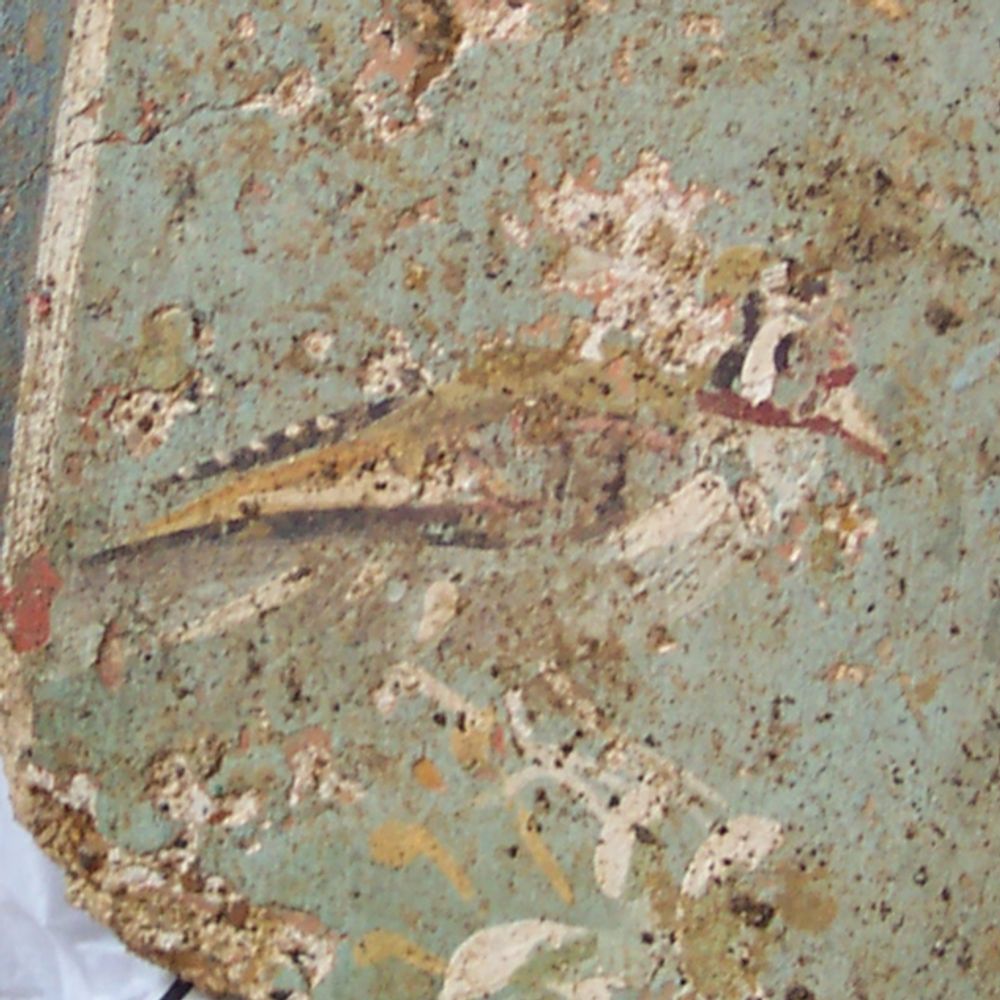
#TerracottaTuesday 🏺
Brilliant trozzella with roosters from Egnazia necropolis, mid C5 BC, a classic Messapian form.
Trozzella - 'little wheels' in local dialect - refers to sculpted circles on handles.
Messapian people inhabited Egnazia in Puglian 'heel' of Italy from C8 BC until Roman conquest.
Brilliant trozzella with roosters from Egnazia necropolis, mid C5 BC, a classic Messapian form.
Trozzella - 'little wheels' in local dialect - refers to sculpted circles on handles.
Messapian people inhabited Egnazia in Puglian 'heel' of Italy from C8 BC until Roman conquest.

September 30, 2025 at 3:05 PM
#TerracottaTuesday 🏺
Brilliant trozzella with roosters from Egnazia necropolis, mid C5 BC, a classic Messapian form.
Trozzella - 'little wheels' in local dialect - refers to sculpted circles on handles.
Messapian people inhabited Egnazia in Puglian 'heel' of Italy from C8 BC until Roman conquest.
Brilliant trozzella with roosters from Egnazia necropolis, mid C5 BC, a classic Messapian form.
Trozzella - 'little wheels' in local dialect - refers to sculpted circles on handles.
Messapian people inhabited Egnazia in Puglian 'heel' of Italy from C8 BC until Roman conquest.
Reposted by TheSleepyBear
Children loved to play with toys in #Roman times too: some 1,800 years ago, a child in Cologne was buried with a terracotta horse with a rider on wheels. It was certainly a much-loved which the child was also supposed to play with in the afterlife.
📷 Römisch-Germanisches Museum Köln
🏺 #archaeology
📷 Römisch-Germanisches Museum Köln
🏺 #archaeology

September 29, 2025 at 6:49 AM
Children loved to play with toys in #Roman times too: some 1,800 years ago, a child in Cologne was buried with a terracotta horse with a rider on wheels. It was certainly a much-loved which the child was also supposed to play with in the afterlife.
📷 Römisch-Germanisches Museum Köln
🏺 #archaeology
📷 Römisch-Germanisches Museum Köln
🏺 #archaeology
Reposted by TheSleepyBear
Roman horse terracotta figurine found in Rottweil, dating 2nd or 3rd century AD.
Horse figurines served as offerings in sanctuaries or domestic shrines and occasionally as grave goods. Their use and meaning shift depending on context but reflect associations ... 🧵1/2
📷 me
🏺 #archaeology
Horse figurines served as offerings in sanctuaries or domestic shrines and occasionally as grave goods. Their use and meaning shift depending on context but reflect associations ... 🧵1/2
📷 me
🏺 #archaeology

September 25, 2025 at 6:27 AM
Roman horse terracotta figurine found in Rottweil, dating 2nd or 3rd century AD.
Horse figurines served as offerings in sanctuaries or domestic shrines and occasionally as grave goods. Their use and meaning shift depending on context but reflect associations ... 🧵1/2
📷 me
🏺 #archaeology
Horse figurines served as offerings in sanctuaries or domestic shrines and occasionally as grave goods. Their use and meaning shift depending on context but reflect associations ... 🧵1/2
📷 me
🏺 #archaeology
Reposted by TheSleepyBear
Roman hair pins made of bone were widely used by women to secure and decorate their hair. These pins typically featured a tapered shaft and could be plain or ornately decorated with heads shaped like busts, animals, plants, or geometric forms. Hair pins are ... 🧵1/2
🏺 #archaeology
📷 me
🏺 #archaeology
📷 me

September 24, 2025 at 7:10 AM
Roman hair pins made of bone were widely used by women to secure and decorate their hair. These pins typically featured a tapered shaft and could be plain or ornately decorated with heads shaped like busts, animals, plants, or geometric forms. Hair pins are ... 🧵1/2
🏺 #archaeology
📷 me
🏺 #archaeology
📷 me
Reposted by TheSleepyBear
Two Roman finds from Rottweil (my beautiful hometown 😊): vessels in the shape of boars, dating 2nd century AD. They were used to hold oil.
📷 me
🏺 #archaeology
📷 me
🏺 #archaeology

September 23, 2025 at 5:13 PM
Two Roman finds from Rottweil (my beautiful hometown 😊): vessels in the shape of boars, dating 2nd century AD. They were used to hold oil.
📷 me
🏺 #archaeology
📷 me
🏺 #archaeology
Reposted by TheSleepyBear
The Roos Carr figures are dating to the Late Bronze Age or Early Iron Age. They were inadvertently unearthed by laborers during ditch maintenance at Roos Carr in 1836.
Approximately two meters beneath the surface, the workers discovered a collection of well-preserved...🧵1/3
📷 me
#archaeology 🏺
Approximately two meters beneath the surface, the workers discovered a collection of well-preserved...🧵1/3
📷 me
#archaeology 🏺

September 20, 2025 at 11:40 AM
The Roos Carr figures are dating to the Late Bronze Age or Early Iron Age. They were inadvertently unearthed by laborers during ditch maintenance at Roos Carr in 1836.
Approximately two meters beneath the surface, the workers discovered a collection of well-preserved...🧵1/3
📷 me
#archaeology 🏺
Approximately two meters beneath the surface, the workers discovered a collection of well-preserved...🧵1/3
📷 me
#archaeology 🏺
Reposted by TheSleepyBear

This cute (and anatomically correct) little pipe clay Roman dog was discovered in Bath close to the temple of Sulis Minerva. In Roman religion, dogs were associated with the deities Diana and Aesculapius. #FindsFriday

September 12, 2025 at 7:56 AM
This cute (and anatomically correct) little pipe clay Roman dog was discovered in Bath close to the temple of Sulis Minerva. In Roman religion, dogs were associated with the deities Diana and Aesculapius. #FindsFriday
Reposted by TheSleepyBear
Below the red-figure decoration on the neck of the drinking cup, the main body of the vessel is in the shape of an owl! 🦉
Museum record: collections.louvre.fr/en/ark:/5335...
Museum record: collections.louvre.fr/en/ark:/5335...

September 8, 2025 at 3:31 PM
Below the red-figure decoration on the neck of the drinking cup, the main body of the vessel is in the shape of an owl! 🦉
Museum record: collections.louvre.fr/en/ark:/5335...
Museum record: collections.louvre.fr/en/ark:/5335...
Reposted by TheSleepyBear
#FrescoFriday
Chariot races featured often in both funerals and tombs for senior Lucanian figures: here tomb 48 from Andriulo necropolis north of Paestum in Campania.
Pre-Roman Lucanian culture of C4 BC Magna Graecia with a distinctive style/customs used 5-sided tombs painted in situ below ground.
Chariot races featured often in both funerals and tombs for senior Lucanian figures: here tomb 48 from Andriulo necropolis north of Paestum in Campania.
Pre-Roman Lucanian culture of C4 BC Magna Graecia with a distinctive style/customs used 5-sided tombs painted in situ below ground.

September 5, 2025 at 8:07 AM
#FrescoFriday
Chariot races featured often in both funerals and tombs for senior Lucanian figures: here tomb 48 from Andriulo necropolis north of Paestum in Campania.
Pre-Roman Lucanian culture of C4 BC Magna Graecia with a distinctive style/customs used 5-sided tombs painted in situ below ground.
Chariot races featured often in both funerals and tombs for senior Lucanian figures: here tomb 48 from Andriulo necropolis north of Paestum in Campania.
Pre-Roman Lucanian culture of C4 BC Magna Graecia with a distinctive style/customs used 5-sided tombs painted in situ below ground.
Reposted by TheSleepyBear
In the basket on the right already cut tesserae can be seen. Tesserae were not only made of stone, but also of other materials such as glass or pottery.
📷relief: Dan Diffendale via Flickr flickr.com/photos/dandi...
📷relief: Dan Diffendale via Flickr flickr.com/photos/dandi...


August 27, 2025 at 7:18 AM
In the basket on the right already cut tesserae can be seen. Tesserae were not only made of stone, but also of other materials such as glass or pottery.
📷relief: Dan Diffendale via Flickr flickr.com/photos/dandi...
📷relief: Dan Diffendale via Flickr flickr.com/photos/dandi...
Reposted by TheSleepyBear
Wonderful! I love these Egyptian nature scenes. Last month in Vatican I came across this😍
bsky.app/profile/sapi...
bsky.app/profile/sapi...
Hehe am I sharing too many photos🤣🤣🤣
Anyway. "Fragment of tomb relief, limestone, Thebes, 26th dynasty (664-525 BC)"
Anyway. "Fragment of tomb relief, limestone, Thebes, 26th dynasty (664-525 BC)"

August 13, 2025 at 8:24 AM
Wonderful! I love these Egyptian nature scenes. Last month in Vatican I came across this😍
bsky.app/profile/sapi...
bsky.app/profile/sapi...
Reposted by TheSleepyBear

Happy #FindsFriday Bluesky! 🏺
We couldn't decide if we wanted a cute animal or a cool lamp so here's both!
This Late Roman terracotta statuette depicts a bear holding an oil lamp (or so we're told).
We couldn't decide if we wanted a cute animal or a cool lamp so here's both!
This Late Roman terracotta statuette depicts a bear holding an oil lamp (or so we're told).

July 18, 2025 at 2:44 PM
Happy #FindsFriday Bluesky! 🏺
We couldn't decide if we wanted a cute animal or a cool lamp so here's both!
This Late Roman terracotta statuette depicts a bear holding an oil lamp (or so we're told).
We couldn't decide if we wanted a cute animal or a cool lamp so here's both!
This Late Roman terracotta statuette depicts a bear holding an oil lamp (or so we're told).