



Composition Studies
@compstudiesjrnl.bsky.social
An academic journal dedicated to the range of professional practices associated with rhetoric and composition.
Pinned
compstudiesjournal.com
Turns out, a lot of PhDs—and a lot of care.
Composition Studies 53.1 is now live.
Featuring essays on grading contracts, conference futures, sustainable teaching, and editorial care.
Read it here: compstudiesjournal.com/current-issu...
#cs531 #compositionstudies #rhetcomp #writingstudies
Composition Studies 53.1 is now live.
Featuring essays on grading contracts, conference futures, sustainable teaching, and editorial care.
Read it here: compstudiesjournal.com/current-issu...
#cs531 #compositionstudies #rhetcomp #writingstudies
Most outcomes statements just sit in a PDF. This one didn’t.
In their article, Aligning with and through Difference, Jessica Ouellette and Ryan Dippre trace how a shared outcomes statement reshaped two campuses in the University of Maine System.
🔗 bit.ly/CS53-1
In their article, Aligning with and through Difference, Jessica Ouellette and Ryan Dippre trace how a shared outcomes statement reshaped two campuses in the University of Maine System.
🔗 bit.ly/CS53-1

December 10, 2025 at 8:07 PM
Most outcomes statements just sit in a PDF. This one didn’t.
In their article, Aligning with and through Difference, Jessica Ouellette and Ryan Dippre trace how a shared outcomes statement reshaped two campuses in the University of Maine System.
🔗 bit.ly/CS53-1
In their article, Aligning with and through Difference, Jessica Ouellette and Ryan Dippre trace how a shared outcomes statement reshaped two campuses in the University of Maine System.
🔗 bit.ly/CS53-1
Are “real” conferences excluding people?
For years, conferences have meant flights, hotels, and steep fees. What if our most inclusive, connected professional spaces are intentionally online?
🔗 bit.ly/wwa-living
For years, conferences have meant flights, hotels, and steep fees. What if our most inclusive, connected professional spaces are intentionally online?
🔗 bit.ly/wwa-living

November 19, 2025 at 3:30 PM
Are “real” conferences excluding people?
For years, conferences have meant flights, hotels, and steep fees. What if our most inclusive, connected professional spaces are intentionally online?
🔗 bit.ly/wwa-living
For years, conferences have meant flights, hotels, and steep fees. What if our most inclusive, connected professional spaces are intentionally online?
🔗 bit.ly/wwa-living
Working at the intersection of rhetoric, migration, and teaching? Katie Silvester reviews Cruz Medina’s Sanctuary, tracing how geopolitical forces shape literacies, citizenship, and belonging—vital for scholars and instructors alike.
Read the full review: bit.ly/review-sanct...
Read the full review: bit.ly/review-sanct...

November 14, 2025 at 10:00 PM
Working at the intersection of rhetoric, migration, and teaching? Katie Silvester reviews Cruz Medina’s Sanctuary, tracing how geopolitical forces shape literacies, citizenship, and belonging—vital for scholars and instructors alike.
Read the full review: bit.ly/review-sanct...
Read the full review: bit.ly/review-sanct...
What if professional conferences built belonging—not barriers?
Joanne Baird Giordano & Charissa Che trace how TYCA National became an open-access advocacy space for two-year college educators.
🔗 bit.ly/WWA_TYCA
Joanne Baird Giordano & Charissa Che trace how TYCA National became an open-access advocacy space for two-year college educators.
🔗 bit.ly/WWA_TYCA

November 14, 2025 at 12:06 AM
What if professional conferences built belonging—not barriers?
Joanne Baird Giordano & Charissa Che trace how TYCA National became an open-access advocacy space for two-year college educators.
🔗 bit.ly/WWA_TYCA
Joanne Baird Giordano & Charissa Che trace how TYCA National became an open-access advocacy space for two-year college educators.
🔗 bit.ly/WWA_TYCA
What does it mean to “write the race” in America? Kimberly A. Bain reviews Henry Louis Gates Jr.’s The Black Box, tracing how language shapes—and constrains—Black identity. A sharp read with big stakes for our classrooms.
Full review: bit.ly/review-black...
Full review: bit.ly/review-black...

October 31, 2025 at 3:50 PM
What does it mean to “write the race” in America? Kimberly A. Bain reviews Henry Louis Gates Jr.’s The Black Box, tracing how language shapes—and constrains—Black identity. A sharp read with big stakes for our classrooms.
Full review: bit.ly/review-black...
Full review: bit.ly/review-black...
What if our conferences actually matched our values?
In their new Composition Studies article, Kofi J. Adisa and Frankie Condon imagine a future for academic gatherings that’s more accessible, inclusive, and human. 🧵
🔗 Read here: bit.ly/www-future
In their new Composition Studies article, Kofi J. Adisa and Frankie Condon imagine a future for academic gatherings that’s more accessible, inclusive, and human. 🧵
🔗 Read here: bit.ly/www-future

October 29, 2025 at 2:02 PM
What if our conferences actually matched our values?
In their new Composition Studies article, Kofi J. Adisa and Frankie Condon imagine a future for academic gatherings that’s more accessible, inclusive, and human. 🧵
🔗 Read here: bit.ly/www-future
In their new Composition Studies article, Kofi J. Adisa and Frankie Condon imagine a future for academic gatherings that’s more accessible, inclusive, and human. 🧵
🔗 Read here: bit.ly/www-future
What are we really grading — writing or behavior?
In Composition Studies 53.1, @mattgomes.bsky.social explores how grading contracts don’t just assess writing, but regulate how students act, participate, and even think about writing.
🔗 Read here: bit.ly/CS53-1
In Composition Studies 53.1, @mattgomes.bsky.social explores how grading contracts don’t just assess writing, but regulate how students act, participate, and even think about writing.
🔗 Read here: bit.ly/CS53-1

October 8, 2025 at 7:11 PM
What are we really grading — writing or behavior?
In Composition Studies 53.1, @mattgomes.bsky.social explores how grading contracts don’t just assess writing, but regulate how students act, participate, and even think about writing.
🔗 Read here: bit.ly/CS53-1
In Composition Studies 53.1, @mattgomes.bsky.social explores how grading contracts don’t just assess writing, but regulate how students act, participate, and even think about writing.
🔗 Read here: bit.ly/CS53-1
New on the FEN blog: Joyce Kinkead’s collaboration with student researchers explores pens, pencils, and even quills in the classroom.
🔗 bit.ly/Zen-Pen-Blog
🔗 bit.ly/Zen-Pen-Blog

October 2, 2025 at 4:16 PM
New on the FEN blog: Joyce Kinkead’s collaboration with student researchers explores pens, pencils, and even quills in the classroom.
🔗 bit.ly/Zen-Pen-Blog
🔗 bit.ly/Zen-Pen-Blog
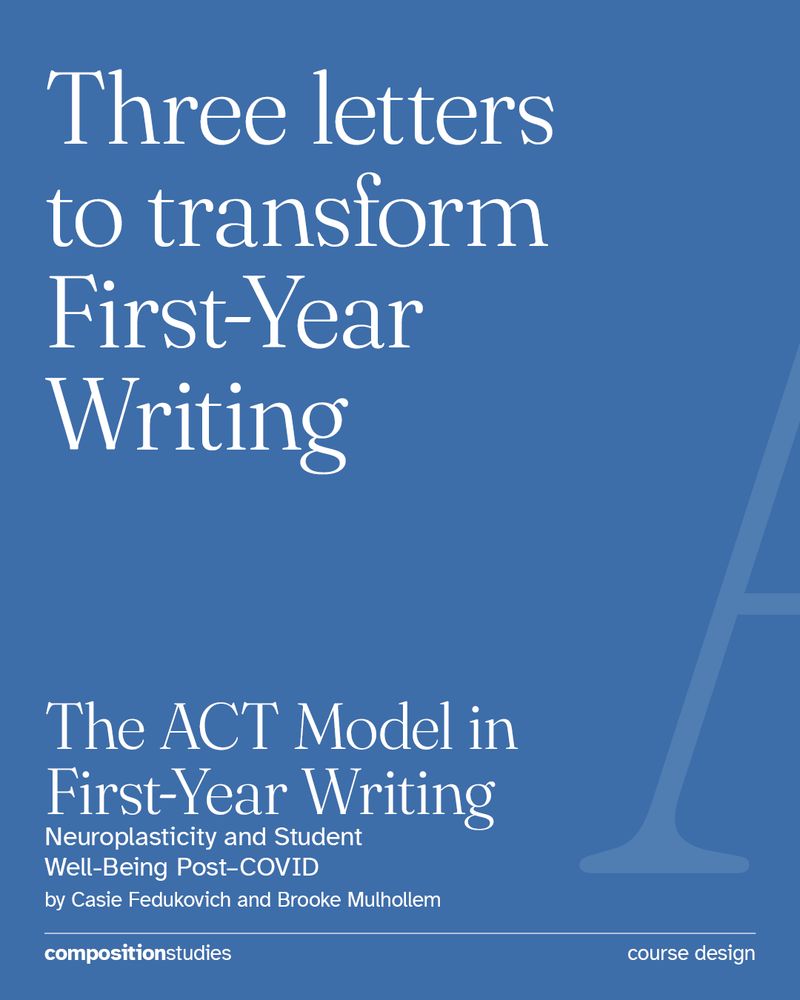
Teaching first-year writing in 2025 means juggling more than thesis statements. Students are navigating stress spirals, fragmented reading habits, and pandemic aftershocks.
Casie Fedukovich & Brooke Mulhollem offer a reset: the ACT model.
🔗 Read more: bit.ly/ACT-FYW
Casie Fedukovich & Brooke Mulhollem offer a reset: the ACT model.
🔗 Read more: bit.ly/ACT-FYW
September 24, 2025 at 2:02 PM
Teaching first-year writing in 2025 means juggling more than thesis statements. Students are navigating stress spirals, fragmented reading habits, and pandemic aftershocks.
Casie Fedukovich & Brooke Mulhollem offer a reset: the ACT model.
🔗 Read more: bit.ly/ACT-FYW
Casie Fedukovich & Brooke Mulhollem offer a reset: the ACT model.
🔗 Read more: bit.ly/ACT-FYW
How can we rethink academic conferences in a world of growing precarity?
In Composition Studies 53.1, Genie Nicole Giaimo reflects on the inequities of academic labor—and the possibilities for reimagining how we gather.
In Composition Studies 53.1, Genie Nicole Giaimo reflects on the inequities of academic labor—and the possibilities for reimagining how we gather.

September 17, 2025 at 2:31 PM
How can we rethink academic conferences in a world of growing precarity?
In Composition Studies 53.1, Genie Nicole Giaimo reflects on the inequities of academic labor—and the possibilities for reimagining how we gather.
In Composition Studies 53.1, Genie Nicole Giaimo reflects on the inequities of academic labor—and the possibilities for reimagining how we gather.
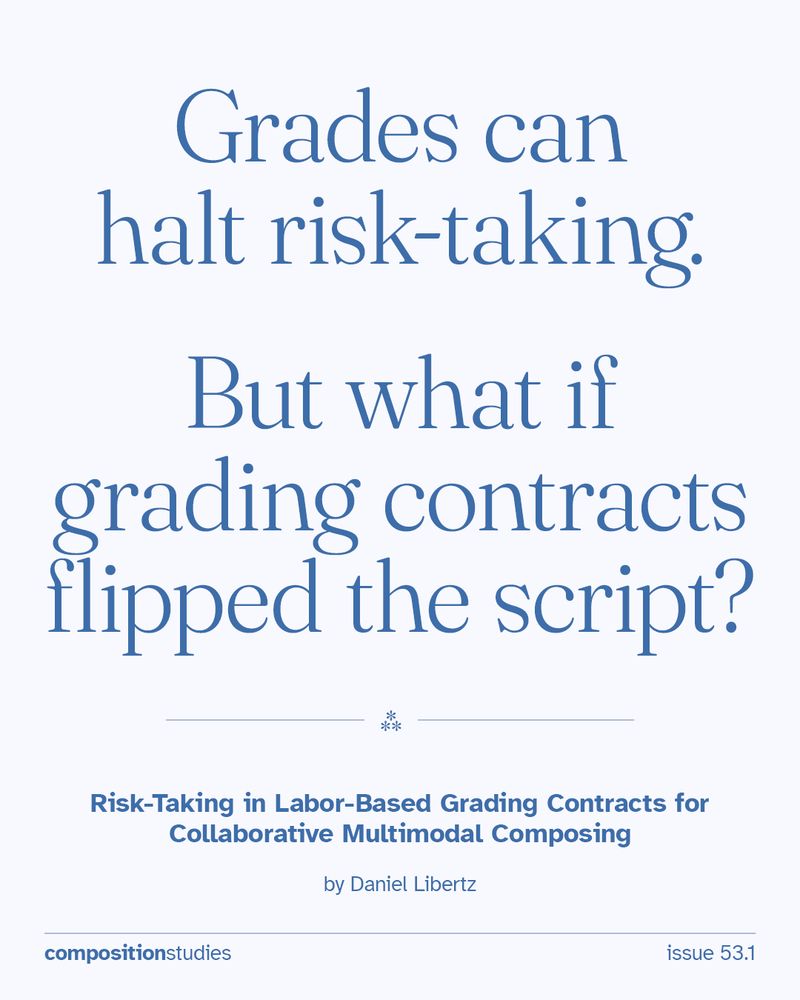
Grades often stifle students’ willingness to take risks. But what if grading itself could invite risk?
In Composition Studies 53.1, @dlib24.bsky.social explores how labor-based grading contracts (LBGCs) reshape what risk means in the classroom. 🧵
In Composition Studies 53.1, @dlib24.bsky.social explores how labor-based grading contracts (LBGCs) reshape what risk means in the classroom. 🧵
September 15, 2025 at 7:50 PM
Grades often stifle students’ willingness to take risks. But what if grading itself could invite risk?
In Composition Studies 53.1, @dlib24.bsky.social explores how labor-based grading contracts (LBGCs) reshape what risk means in the classroom. 🧵
In Composition Studies 53.1, @dlib24.bsky.social explores how labor-based grading contracts (LBGCs) reshape what risk means in the classroom. 🧵
What if the future of conferences looked nothing like the past?
Our first highlight from 53.1’s “Where We Are” is Cristy Beemer & Rebecca S. Richards’ “Nimble and Sustainable.” 🧵
Our first highlight from 53.1’s “Where We Are” is Cristy Beemer & Rebecca S. Richards’ “Nimble and Sustainable.” 🧵

September 10, 2025 at 7:31 PM
What if the future of conferences looked nothing like the past?
Our first highlight from 53.1’s “Where We Are” is Cristy Beemer & Rebecca S. Richards’ “Nimble and Sustainable.” 🧵
Our first highlight from 53.1’s “Where We Are” is Cristy Beemer & Rebecca S. Richards’ “Nimble and Sustainable.” 🧵
Want to shape the next Composition Studies special issue?
We’re looking for guest editors for Summer 2026.
(Open-access + digital → wide circulation + real impact)
We’re looking for guest editors for Summer 2026.
(Open-access + digital → wide circulation + real impact)

August 29, 2025 at 2:30 PM
Want to shape the next Composition Studies special issue?
We’re looking for guest editors for Summer 2026.
(Open-access + digital → wide circulation + real impact)
We’re looking for guest editors for Summer 2026.
(Open-access + digital → wide circulation + real impact)
Reflection isn’t just a tidy essay at the end of class. ✨
In the newest issue of Composition Studies, Jaclyn Fiscus-Cannaday shows how reflection is alive, happening in motion through everyday classroom moments.
👇 3 reasons her new book is worth your time:
In the newest issue of Composition Studies, Jaclyn Fiscus-Cannaday shows how reflection is alive, happening in motion through everyday classroom moments.
👇 3 reasons her new book is worth your time:

August 26, 2025 at 8:05 PM
Reflection isn’t just a tidy essay at the end of class. ✨
In the newest issue of Composition Studies, Jaclyn Fiscus-Cannaday shows how reflection is alive, happening in motion through everyday classroom moments.
👇 3 reasons her new book is worth your time:
In the newest issue of Composition Studies, Jaclyn Fiscus-Cannaday shows how reflection is alive, happening in motion through everyday classroom moments.
👇 3 reasons her new book is worth your time:
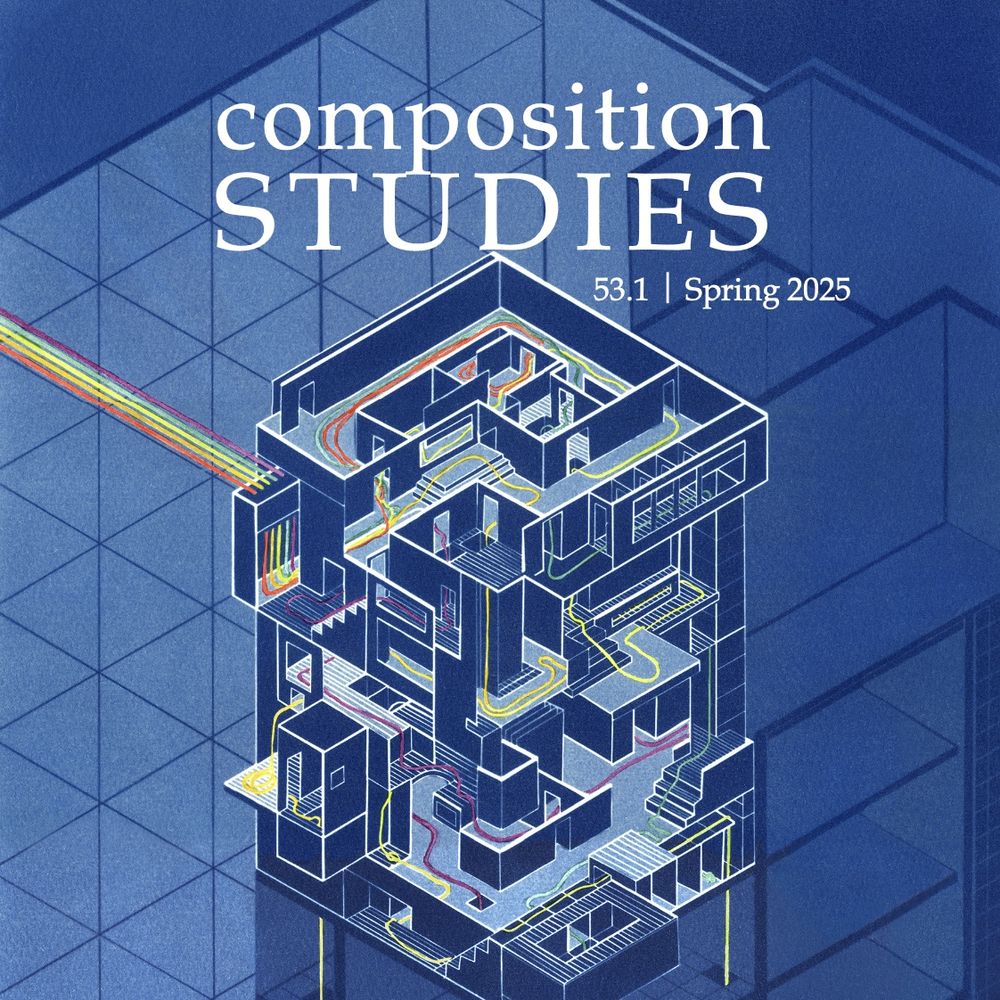
The cover of our new issue features Attention by Susanna Crum—a cyanotype that reimagines the “blueprint” as the architecture of thought.
#cs531 #chartingourcourse #compositionstudies #writingstudies #rhetcomp #coverart #cyanotype
#cs531 #chartingourcourse #compositionstudies #writingstudies #rhetcomp #coverart #cyanotype

August 11, 2025 at 5:10 PM
The cover of our new issue features Attention by Susanna Crum—a cyanotype that reimagines the “blueprint” as the architecture of thought.
#cs531 #chartingourcourse #compositionstudies #writingstudies #rhetcomp #coverart #cyanotype
#cs531 #chartingourcourse #compositionstudies #writingstudies #rhetcomp #coverart #cyanotype
Turns out, a lot of PhDs—and a lot of care.
Composition Studies 53.1 is now live.
Featuring essays on grading contracts, conference futures, sustainable teaching, and editorial care.
Read it here: compstudiesjournal.com/current-issu...
#cs531 #compositionstudies #rhetcomp #writingstudies
Composition Studies 53.1 is now live.
Featuring essays on grading contracts, conference futures, sustainable teaching, and editorial care.
Read it here: compstudiesjournal.com/current-issu...
#cs531 #compositionstudies #rhetcomp #writingstudies
compstudiesjournal.com
July 31, 2025 at 5:30 PM
Turns out, a lot of PhDs—and a lot of care.
Composition Studies 53.1 is now live.
Featuring essays on grading contracts, conference futures, sustainable teaching, and editorial care.
Read it here: compstudiesjournal.com/current-issu...
#cs531 #compositionstudies #rhetcomp #writingstudies
Composition Studies 53.1 is now live.
Featuring essays on grading contracts, conference futures, sustainable teaching, and editorial care.
Read it here: compstudiesjournal.com/current-issu...
#cs531 #compositionstudies #rhetcomp #writingstudies
“How many PhDs does it take to write an editorial introduction?”
Our Spring 2025 issue isn’t about returning—it’s about reimagining.
Coming soon from Composition Studies.
#cs531 #chartingourcourse #compositionstudies #writingstudies #rhetcomp #academicpublishing #editorsatwork
Our Spring 2025 issue isn’t about returning—it’s about reimagining.
Coming soon from Composition Studies.
#cs531 #chartingourcourse #compositionstudies #writingstudies #rhetcomp #academicpublishing #editorsatwork
July 28, 2025 at 8:48 PM
“How many PhDs does it take to write an editorial introduction?”
Our Spring 2025 issue isn’t about returning—it’s about reimagining.
Coming soon from Composition Studies.
#cs531 #chartingourcourse #compositionstudies #writingstudies #rhetcomp #academicpublishing #editorsatwork
Our Spring 2025 issue isn’t about returning—it’s about reimagining.
Coming soon from Composition Studies.
#cs531 #chartingourcourse #compositionstudies #writingstudies #rhetcomp #academicpublishing #editorsatwork
Read about Amanda Smith, Jill Logan, Bryan Hoffer, Alesya Petty, Chelsea Criez, and Anne F. Walker's work on the FEN Blog: bit.ly/43DELtK 👈

“Stretching” Faculty Development at San José State University
Amanda Smith, Jill Logan, Bryan Hoffer, Alesya Petty, Chelsea Criez, and Anne F. Walker | San José State University Image Credit: “Teamwork 2” by Victuallers under Creative Commons …
bit.ly
June 3, 2025 at 4:26 PM
Read about Amanda Smith, Jill Logan, Bryan Hoffer, Alesya Petty, Chelsea Criez, and Anne F. Walker's work on the FEN Blog: bit.ly/43DELtK 👈
Are you interested in #studentcentered #assessment projects?
Check out Nicole Guinot Varty & @adriennejankens 52.2 #article about Wayne State University’s CLC #writing showcase: bit.ly/3DOvnu2 ✨
#multimodal #studentvoice #TeamRhetoric #highered #composition #rhetcomp
Check out Nicole Guinot Varty & @adriennejankens 52.2 #article about Wayne State University’s CLC #writing showcase: bit.ly/3DOvnu2 ✨
#multimodal #studentvoice #TeamRhetoric #highered #composition #rhetcomp
bit.ly
April 19, 2025 at 3:32 PM
Are you interested in #studentcentered #assessment projects?
Check out Nicole Guinot Varty & @adriennejankens 52.2 #article about Wayne State University’s CLC #writing showcase: bit.ly/3DOvnu2 ✨
#multimodal #studentvoice #TeamRhetoric #highered #composition #rhetcomp
Check out Nicole Guinot Varty & @adriennejankens 52.2 #article about Wayne State University’s CLC #writing showcase: bit.ly/3DOvnu2 ✨
#multimodal #studentvoice #TeamRhetoric #highered #composition #rhetcomp
Composition Studies readers and #4C25 goers, it's time for a subscription discount. Use the QR code below to take $10 off any one-year subscription to our journal. And, if you find Jacob or Zach at 4Cs, show them your confirmation for a free sticker!


April 9, 2025 at 2:47 PM
Composition Studies readers and #4C25 goers, it's time for a subscription discount. Use the QR code below to take $10 off any one-year subscription to our journal. And, if you find Jacob or Zach at 4Cs, show them your confirmation for a free sticker!
“But most of all, every student leaves the course knowing that editing and publishing is not just ‘correcting’ or ‘copy editing’ other people’s words” (Richards 142).
Read more from @RhetorRichards: bit.ly/4a9Ay3P. 🎉
#editing #publishing #antiracism #feminism #rhetcomp #contractgrading #umass #engl
Read more from @RhetorRichards: bit.ly/4a9Ay3P. 🎉
#editing #publishing #antiracism #feminism #rhetcomp #contractgrading #umass #engl

April 1, 2025 at 8:10 PM
“But most of all, every student leaves the course knowing that editing and publishing is not just ‘correcting’ or ‘copy editing’ other people’s words” (Richards 142).
Read more from @RhetorRichards: bit.ly/4a9Ay3P. 🎉
#editing #publishing #antiracism #feminism #rhetcomp #contractgrading #umass #engl
Read more from @RhetorRichards: bit.ly/4a9Ay3P. 🎉
#editing #publishing #antiracism #feminism #rhetcomp #contractgrading #umass #engl
Check out Nasih Alam’s #bookreview for a collection that highlights linguistic and cultural diversities by amplifying twenty-two voices whose primary language is not English: bit.ly/3C1GRda. 🎉🎉
#identity #diversity #inclusion #marginalization #pedagogy #composition
#identity #diversity #inclusion #marginalization #pedagogy #composition
bit.ly
March 31, 2025 at 11:29 PM
Check out Nasih Alam’s #bookreview for a collection that highlights linguistic and cultural diversities by amplifying twenty-two voices whose primary language is not English: bit.ly/3C1GRda. 🎉🎉
#identity #diversity #inclusion #marginalization #pedagogy #composition
#identity #diversity #inclusion #marginalization #pedagogy #composition
Monica Reyes’ “Transformative Counterstorying in a Rhetorics of Displacement Seminar” is a course design that you would want to read to help your students use stories as a geopolitical tool for accessing safety, power, and dignity: bit.ly/4h6H4ur
bit.ly
March 31, 2025 at 11:28 PM
Monica Reyes’ “Transformative Counterstorying in a Rhetorics of Displacement Seminar” is a course design that you would want to read to help your students use stories as a geopolitical tool for accessing safety, power, and dignity: bit.ly/4h6H4ur
Check out Omar Yacoub's review of Writing STEAM: Composition, STEM, and a New Humanities. This collection explores the intersection of writing, STEM, & the arts, highlighting the need for better communication in these fields. Read more: bit.ly/40pgJlL.
#STEAM #HigherEd
#STEAM #HigherEd
bit.ly
March 31, 2025 at 11:28 PM
Check out Omar Yacoub's review of Writing STEAM: Composition, STEM, and a New Humanities. This collection explores the intersection of writing, STEM, & the arts, highlighting the need for better communication in these fields. Read more: bit.ly/40pgJlL.
#STEAM #HigherEd
#STEAM #HigherEd
In "Liberalism in Rhetoric and Composition: An Ideological History and (Re)Definition," Overstreet challenges critiques of liberalism, arguing that it is "a political reform project that seeks to structure social systems to maximize human potential” (103). Subscribe for access: bit.ly/3SL3ANl

Subscriptions + Advertising
Composition Studies is published biannually in April and October. Subscription rates are as follows: Subscription LengthIndividual RatesInstitutional Rates1 year► Domestic (USA) $50► Internati…
bit.ly
March 31, 2025 at 11:27 PM
In "Liberalism in Rhetoric and Composition: An Ideological History and (Re)Definition," Overstreet challenges critiques of liberalism, arguing that it is "a political reform project that seeks to structure social systems to maximize human potential” (103). Subscribe for access: bit.ly/3SL3ANl