




Economics of Genomics and Precision Medicine Unit
@eigen-uom.bsky.social
Generating health economics evidence to support cost-effective and value-based implementation of genomics and precision medicine.
Melbourne Health Economics, The University of Melbourne
Melbourne Health Economics, The University of Melbourne
New publication 🎉
A systematic review of preferences for additional findings from genomic testing, led by Daniel Sheen with A/Prof Ilias Goranitis, is now published in the European Journal of Human Genetics.
Read more: www.nature.com/articles/s41...
A systematic review of preferences for additional findings from genomic testing, led by Daniel Sheen with A/Prof Ilias Goranitis, is now published in the European Journal of Human Genetics.
Read more: www.nature.com/articles/s41...

Systematic review of preferences for additional findings from genomic testing - European Journal of Human Genetics
European Journal of Human Genetics - Systematic review of preferences for additional findings from genomic testing
www.nature.com
December 22, 2025 at 5:10 AM
New publication 🎉
A systematic review of preferences for additional findings from genomic testing, led by Daniel Sheen with A/Prof Ilias Goranitis, is now published in the European Journal of Human Genetics.
Read more: www.nature.com/articles/s41...
A systematic review of preferences for additional findings from genomic testing, led by Daniel Sheen with A/Prof Ilias Goranitis, is now published in the European Journal of Human Genetics.
Read more: www.nature.com/articles/s41...
PhD opportunity in Health Economics: Quantifying the Value of Advanced Cell Therapy for Long-term Autoimmune Conditions: CAR-T Cell Therapy for Systemic Lupus Erythematosus. Led by the Uni of Manchester with a 12-month placement at UniMelb. More here: findanexpert.unimelb.edu.au/opportunity/...

Quantifying the Value of Advanced Cell Therapy for Long-term Autoimmune Conditions: CAR-T Cell Therapy for Systemic Lupus Erythematosus : Find an Expert : The University of Melbourne
<p> Systemic lupus erythematosus is a lifelong health condition where a person’s immune system starts to attack their own body. As a result, many organs in the body become permanently damaged (including the skin, heart, kidneys and brain). This damage leads to a substantial quality of life burden, a lower ability to perform usual daily activities, and lower life expectancy compared with the general population. This burden is also very unequal across diverse groups of individuals. Most people affected are younger women, and more likely to be Aboriginal and Torres Strait Islander peoples (in Australia) and of Black African/Caribbean and South Asian descent (in the UK). </p> <p> There are only a couple of treatments available for people with lupus. When these treatments don’t work, the condition continues to cause damage and harm to patients. However, a new promising type of treatment (called CAR-T cell therapy) is starting to emerge. CAR-T cell therapy is a type of precision medicine that works by infusing modified immune cells to fight against a patient’s lupus. Healthcare systems in the UK and Australia have excellent experience of using CAR-T cell therapies for other health conditions. There is now a growing need to understand the value of CAR-T cell therapy for severe lifelong health conditions such as systemic lupus erythematosus. </p> <p> In this PhD, you will address this need with health economics methods. These methods are essential to guide health policy decisions globally, and the findings will have a positive impact to move these new treatments closer to benefiting people with lupus. You will be based at the Manchester Centre for Health Economics (The University of Manchester), and will have a 12-month research visit to the Economics of Genomics and Precision Medicine Unit (The University of Melbourne). You will be supervised by a world leading multi-disciplinary team of experts in the health economics of advanced cell therapies and lupus (Gavan), precision medicine (Payne, Goranitis) and doctors who test CAR-T cell therapies for cancer and lupus (Thistlethwaite, Parker). </p> <p> The PhD will be split into three projects. First, you will use data from an important national register of patients with lupus (called the BILAG-BR) to understand health outcomes (life expectancy and quality of life) for people who don’t respond well to treatments in current practice. Second, you will perform a discrete choice experiment to quantify people’s preferences for receiving a CAR-T cell therapy, and its likely uptake in routine care. Third, you will run an early model-based cost-effectiveness analysis of CAR-T cell therapy compared with standard of care to simulate the lifetime costs, health outcomes, and value for people with lupus. </p> <p> You will develop skills in research collaborations with patients and the public, health economic evaluation, statistical analysis of real-world patient data, quantitative preference elicitation, project management, and communicating with policymakers and clinical leaders. The findings will have a direct impact on improving the lives of people with lupus, by stimulating future treatments, informing service delivery, and guiding research and development strategies within the UK and Australia. </p> <p> <strong>Applications should include a cover letter outlining the applicant’s interest in the project and explaining how their skills, background, and experience make them a strong fit for this PhD.</strong> </p>
findanexpert.unimelb.edu.au
December 17, 2025 at 11:22 PM
PhD opportunity in Health Economics: Quantifying the Value of Advanced Cell Therapy for Long-term Autoimmune Conditions: CAR-T Cell Therapy for Systemic Lupus Erythematosus. Led by the Uni of Manchester with a 12-month placement at UniMelb. More here: findanexpert.unimelb.edu.au/opportunity/...
PhD opportunity in Health Economics: Real world evaluation methods for health technology assessment of genomic technologies. Joint PhD based at the University of Melbourne with a minimum 12-month stay at the University of Manchester.
More info here: findanexpert.unimelb.edu.au/opportunity/...
More info here: findanexpert.unimelb.edu.au/opportunity/...
Real world evaluation methods for health technology assessment of genomic technologies : Find an Expert : The University of Melbourne
<p> The Economics of Genomics and Precision Medicine Unit and the Melbourne Health Economics at the University of Melbourne invites applications for a PhD scholar to contribute to a research project funded by the University of Melbourne and the University of Manchester Dr Isabel Clifton Cookson Scholars scheme. This PhD provides a unique opportunity to undertake impactful research in the economics of genomic medicine, and generate results that can influence genomic policy in Australia and internationally. </p> <p> Rare genetic conditions impose a significant health and economic burden on patients, their families, and healthcare systems. Although individually rare, over 10,000 such conditions have been identified to date, affecting more than 350 million people globally. Genomic medicine has a transformative potential for the diagnosis and clinical care of these rare and other more common conditions, such as breast cancer, where there is an established genetic basis. However, small patient populations, heterogeneity in how the conditions may present and develop and lack of long-term cost and outcome data are barriers to the sustainable and equitable translation of genomics. </p> <p> This PhD will explore how patient data collected routinely within clinical care can best be used to advance the way we assess value and value for money, and support policy makers to make evidence-informed decisions that help health systems, patients and families realise the value of genomic medicine. Through the application of different health economics methods, the PhD candidate will have a unique opportunity to work with real-world data of patients experiencing rare and more common conditions and generate evidence that can shape national genomic policy. </p> <p> The project is led by A/Prof Ilias Goranitis (Head of Economics of Genomics and Precision Medicine Unit, University of Melbourne) and Prof Zornitza Stark (Department of Paediatrics, University of Melbourne), and the project team is further comprised of leading experts in health economics of genomics from the University of Manchester (Dr Sean Gavan and Prof Katherine Payne). </p> <p> <strong>Applications should include a cover letter outlining the applicant’s interest in the project and explaining how their skills, background, and experience make them a strong fit for this PhD.</strong> </p>
findanexpert.unimelb.edu.au
December 17, 2025 at 11:04 PM
PhD opportunity in Health Economics: Real world evaluation methods for health technology assessment of genomic technologies. Joint PhD based at the University of Melbourne with a minimum 12-month stay at the University of Manchester.
More info here: findanexpert.unimelb.edu.au/opportunity/...
More info here: findanexpert.unimelb.edu.au/opportunity/...
PhD opportunity in Health Economics: Evaluate the value, feasibility and sustainability of PERSONA, a precision prevention program for breast and ovarian cancer. Methods include early HTA, micro-costing and DCEs. More info here:
findanexpert.unimelb.edu.au/opportunity/...
findanexpert.unimelb.edu.au/opportunity/...
Economic evaluation of a breast and ovarian cancer precision prevention program (PERSONA) for unselected young women from the general population. : Find an Expert : The University of Melbourne
<p> Personalising the early detection and prevention of cancer aims to reduce the significant cancer burden experienced by individuals and their families and reduce cancer-associated costs on the Australian healthcare system. The feasibility of a complex intervention called PERSONA (Precision prEvention of bReaSt and OvariaN cAncer) that delivers a multifactorial cancer risk assessment to the general population is being tested. Through this feasibility trial, young women from the general population will receive personalised breast and ovarian cancer risk information and tailored cancer prevention and early detection recommendations. The risk assessment and risk management recommendations will be delivered by their general practitioner with support from a genetic counsellor. The PhD will involve undertaking a health economic assessment of PERSONA to determine the value to the Australian health care system. </p> <p> <strong>Aims</strong> </p> <ol> <li>Assess the potential value of PERSONA using early economic and clinical evaluation methods to identify areas of high clinical impact and cost-effectiveness. </li> <li>Quantify resource needs and delivery costs at the health system level to inform scale-up planning and sustainability. </li> <li>Model cost-effectiveness and value thresholds for PERSONA across different population subgroups and implementation scenarios. </li> </ol> <p> <strong>Methods:</strong> </p> <p> 1.Early Health Technology Assessment </p> <ul> <li>Conduct a clinical gap analysis to identify where PERSONA offers the greatest incremental benefit relative to existing prevention programs. </li> <li>Develop a conceptual economic evaluation model integrating clinical effectiveness pathways, cost drivers, and potential population health gains. </li> <li>Apply economic model to explore cost-effectiveness and identify thresholds for uptake and effectiveness required for PERSONA to be a cost-effective and equitable prevention strategy. </li> <li>Provide early estimates of value for money and identify key data gaps to inform future trials and full economic evaluation. </li> </ul> <p> 2. Micro-Costing of Implementation Resources </p> <ul> <li>Perform a micro-costing analysis to capture real-world resource use at the service delivery level. </li> <li>Quantify personnel time, training needs, infrastructure, and workflow adjustments required to embed PERSONA within health service operations. </li> <li>Develop an implementation cost framework to support financial planning, sustainability, and scaling strategies. </li> </ul> <p> 3. Discrete Choice Experiments (DCEs) </p> <ul> <li>Design and administer DCEs to understand public and clinician preferences for program attributes (e.g., age targeting, delivery mode, risk thresholds). </li> <li>Combine DCE findings with feasibility study data and published evidence into cost-effectiveness models. </li> </ul>
findanexpert.unimelb.edu.au
December 16, 2025 at 12:33 AM
PhD opportunity in Health Economics: Evaluate the value, feasibility and sustainability of PERSONA, a precision prevention program for breast and ovarian cancer. Methods include early HTA, micro-costing and DCEs. More info here:
findanexpert.unimelb.edu.au/opportunity/...
findanexpert.unimelb.edu.au/opportunity/...
We’re excited to welcome A/Prof Dean Regier as an Honorary within the EiGEN team. Dean is a leading international health economist at UBC and BC Cancer, with work spanning translational medicine, regulatory science, learning health systems and AI-supported real-world evidence in genomics.

December 9, 2025 at 3:41 AM
We’re excited to welcome A/Prof Dean Regier as an Honorary within the EiGEN team. Dean is a leading international health economist at UBC and BC Cancer, with work spanning translational medicine, regulatory science, learning health systems and AI-supported real-world evidence in genomics.
Determining the value of genomics in healthcare” is now published in Nature Medicine. Led by A/Prof Ilias Goranitis, the paper brings together international co-authors to examine how the value of genomics can be assessed.
Read the full article: www.nature.com/articles/s41...
Read the full article: www.nature.com/articles/s41...

November 27, 2025 at 10:16 PM
Determining the value of genomics in healthcare” is now published in Nature Medicine. Led by A/Prof Ilias Goranitis, the paper brings together international co-authors to examine how the value of genomics can be assessed.
Read the full article: www.nature.com/articles/s41...
Read the full article: www.nature.com/articles/s41...
What a fantastic achievement! Congratulations to @zornitza.bsky.social, @iliasgoranitis.bsky.social and team on the publication of the BabyScreen+ genomic newborn screening study, out today in Nature Medicine.

🤗 Out now @naturemedicine.bsky.social results of our genomic NBS study BabyScreen+ 👶🧬
👉 www.nature.com/articles/s41...
1,000 babies
WGS using existing cards
600+ conditions
13 day TAT
16 diagnoses (vs 1 in std NBS)
High clinical impact
High parental acceptability
👉 www.nature.com/articles/s41...
1,000 babies
WGS using existing cards
600+ conditions
13 day TAT
16 diagnoses (vs 1 in std NBS)
High clinical impact
High parental acceptability

October 10, 2025 at 4:34 AM
What a fantastic achievement! Congratulations to @zornitza.bsky.social, @iliasgoranitis.bsky.social and team on the publication of the BabyScreen+ genomic newborn screening study, out today in Nature Medicine.

September 15, 2025 at 2:54 AM
Mackenzie Bourke presented “Incorporating individual-level preferences into cost-effectiveness analysis of population genomic risk screening: a discrete event simulation.”
September 15, 2025 at 2:54 AM
Mackenzie Bourke presented “Incorporating individual-level preferences into cost-effectiveness analysis of population genomic risk screening: a discrete event simulation.”
Lizzy Liu presented “Risk in preferences for breast cancer genomic risk screening and subsequent prevention protocols.”

September 15, 2025 at 2:54 AM
Lizzy Liu presented “Risk in preferences for breast cancer genomic risk screening and subsequent prevention protocols.”
Julia Steinberg presented “Community preferences for population-wide genomic risk stratification (using polygenic risk scores) and risk-tailored cancer screening.”
September 15, 2025 at 2:54 AM
Julia Steinberg presented “Community preferences for population-wide genomic risk stratification (using polygenic risk scores) and risk-tailored cancer screening.”
Last week, Lizzy Liu and Mackenzie Bourke presented in an organised session at the AHES Conference in Canberra on the value of population-wide genomic risk assessment for cancer screening, alongside A/Prof Julia Steinberg from the Daffodil Centre.

September 15, 2025 at 2:54 AM
Last week, Lizzy Liu and Mackenzie Bourke presented in an organised session at the AHES Conference in Canberra on the value of population-wide genomic risk assessment for cancer screening, alongside A/Prof Julia Steinberg from the Daffodil Centre.
Reposted by Economics of Genomics and Precision Medicine Unit

(1/4) INVITATION: Applying #MendelianRandomization in #HealthEconomics - Bridging #Genomics & #CostEffectiveness
🗓️ Tues 16 Sept
⏰8-9 AM UTC / 9-10 AM BST / 6-7 PM AEST
📍Online, download the calendar invite here: healtheconomics.org/event/applyi...
🗓️ Tues 16 Sept
⏰8-9 AM UTC / 9-10 AM BST / 6-7 PM AEST
📍Online, download the calendar invite here: healtheconomics.org/event/applyi...
Applying Mendelian Randomization in Health Economics – Bridging Genomics and Cost-Effectiveness – International Health Economics Association
healtheconomics.org
August 14, 2025 at 8:26 AM
(1/4) INVITATION: Applying #MendelianRandomization in #HealthEconomics - Bridging #Genomics & #CostEffectiveness
🗓️ Tues 16 Sept
⏰8-9 AM UTC / 9-10 AM BST / 6-7 PM AEST
📍Online, download the calendar invite here: healtheconomics.org/event/applyi...
🗓️ Tues 16 Sept
⏰8-9 AM UTC / 9-10 AM BST / 6-7 PM AEST
📍Online, download the calendar invite here: healtheconomics.org/event/applyi...
Reposted by Economics of Genomics and Precision Medicine Unit
(1/4) INVITATION: Webinar exploring distributional cost-effectiveness analysis (#DCEA) for advancing #healthequity
🗓️ Date & time: 6-7pm Wed 8 Oct EDT / 10-11pm Wed 8 Oct UTC / 9-10am Thurs 9 Oct AEDT
📍 Online, download the calendar invitation here: healtheconomics.org/event/advanc...
🗓️ Date & time: 6-7pm Wed 8 Oct EDT / 10-11pm Wed 8 Oct UTC / 9-10am Thurs 9 Oct AEDT
📍 Online, download the calendar invitation here: healtheconomics.org/event/advanc...
Advancing Health Equity through Distributional Cost-Effectiveness Analysis (DCEA) – International Health Economics Association
healtheconomics.org
August 19, 2025 at 1:03 PM
(1/4) INVITATION: Webinar exploring distributional cost-effectiveness analysis (#DCEA) for advancing #healthequity
🗓️ Date & time: 6-7pm Wed 8 Oct EDT / 10-11pm Wed 8 Oct UTC / 9-10am Thurs 9 Oct AEDT
📍 Online, download the calendar invitation here: healtheconomics.org/event/advanc...
🗓️ Date & time: 6-7pm Wed 8 Oct EDT / 10-11pm Wed 8 Oct UTC / 9-10am Thurs 9 Oct AEDT
📍 Online, download the calendar invitation here: healtheconomics.org/event/advanc...
📢 New publication in The European Journal of Health Economics!
The paper assesses the psychometric performance CHU9D proxy version compared with the PedsQL in Australian children aged 0–7 years with congenital colorectal conditions.
Read our findings: link.springer.com/article/10.1...
The paper assesses the psychometric performance CHU9D proxy version compared with the PedsQL in Australian children aged 0–7 years with congenital colorectal conditions.
Read our findings: link.springer.com/article/10.1...

Psychometric comparison of CHU9D and PedsQL 4.0 proxy version administered to parents of children with congenital colorectal conditions in Australia - The European Journal of Health Economics
Objective To assess the psychometric performance of the Child Health Utility (CHU9D) proxy version compared with the Pediatric Quality of Life Inventory (PedsQL) in Australian children aged 0–7 years ...
link.springer.com
June 10, 2025 at 5:44 AM
📢 New publication in The European Journal of Health Economics!
The paper assesses the psychometric performance CHU9D proxy version compared with the PedsQL in Australian children aged 0–7 years with congenital colorectal conditions.
Read our findings: link.springer.com/article/10.1...
The paper assesses the psychometric performance CHU9D proxy version compared with the PedsQL in Australian children aged 0–7 years with congenital colorectal conditions.
Read our findings: link.springer.com/article/10.1...
Recently our team conducted two #DCEs as part of the BabyScreen+ program to elicit the Australian public’s preferences, values, and priorities for genomic newborn screening (gNBS) and its implementation.
Read more here: sciencedirect.com/science/arti...
Read more here: sciencedirect.com/science/arti...
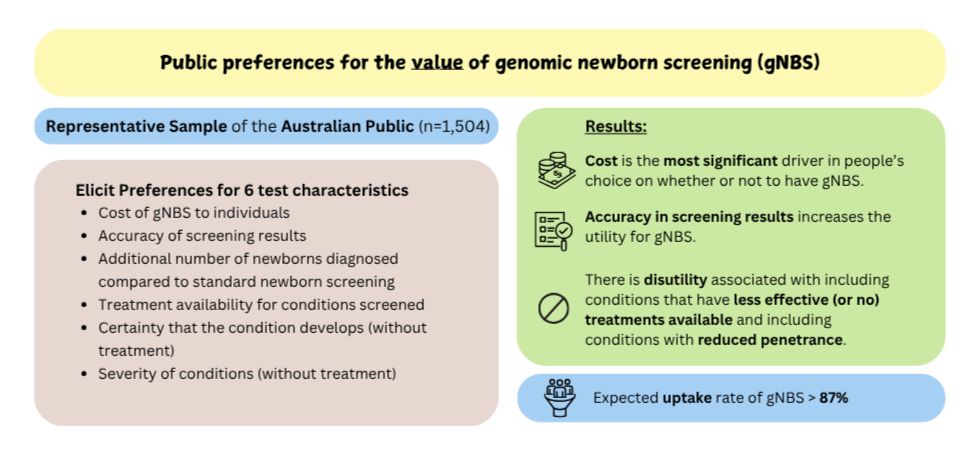

June 1, 2025 at 10:51 PM
Recently our team conducted two #DCEs as part of the BabyScreen+ program to elicit the Australian public’s preferences, values, and priorities for genomic newborn screening (gNBS) and its implementation.
Read more here: sciencedirect.com/science/arti...
Read more here: sciencedirect.com/science/arti...
Excited to welcome Thuy Dung (“Dzung”) Nguyen as our new Research Assistant in the Economics of Genomics and Precision Medicine Unit! Dzung will be contributing to a project evaluating the cost-effectiveness of genomic testing for children/adults with suspected kidney disease.

May 9, 2025 at 12:12 AM
Excited to welcome Thuy Dung (“Dzung”) Nguyen as our new Research Assistant in the Economics of Genomics and Precision Medicine Unit! Dzung will be contributing to a project evaluating the cost-effectiveness of genomic testing for children/adults with suspected kidney disease.
📄 pubmed.ncbi.nlm.nih.gov/38459833/
📄 pubmed.ncbi.nlm.nih.gov/39725011/
humgenomics.biomedcentral.com/articles/10....
📄 pubmed.ncbi.nlm.nih.gov/39725011/
humgenomics.biomedcentral.com/articles/10....
April 10, 2025 at 5:21 AM
Links to the papers referenced in the presentation are included below.
📄 pubmed.ncbi.nlm.nih.gov/32266555/
📄 pubmed.ncbi.nlm.nih.gov/39522058/
📄 pubmed.ncbi.nlm.nih.gov/32024983/
📄 pubmed.ncbi.nlm.nih.gov/32371919/
📄 nature.com/articles/s41...
📄 pubmed.ncbi.nlm.nih.gov/32839572/
📄 pubmed.ncbi.nlm.nih.gov/32266555/
📄 pubmed.ncbi.nlm.nih.gov/39522058/
📄 pubmed.ncbi.nlm.nih.gov/32024983/
📄 pubmed.ncbi.nlm.nih.gov/32371919/
📄 nature.com/articles/s41...
📄 pubmed.ncbi.nlm.nih.gov/32839572/
April 10, 2025 at 5:21 AM
Links to the papers referenced in the presentation are included below.
📄 pubmed.ncbi.nlm.nih.gov/32266555/
📄 pubmed.ncbi.nlm.nih.gov/39522058/
📄 pubmed.ncbi.nlm.nih.gov/32024983/
📄 pubmed.ncbi.nlm.nih.gov/32371919/
📄 nature.com/articles/s41...
📄 pubmed.ncbi.nlm.nih.gov/32839572/
📄 pubmed.ncbi.nlm.nih.gov/32266555/
📄 pubmed.ncbi.nlm.nih.gov/39522058/
📄 pubmed.ncbi.nlm.nih.gov/32024983/
📄 pubmed.ncbi.nlm.nih.gov/32371919/
📄 nature.com/articles/s41...
📄 pubmed.ncbi.nlm.nih.gov/32839572/
A few weeks ago, @iliasgoranitis.bsky.social
presented at the Pan American Health Organisation webinar series. The webinar explored the challenges and opportunities of incorporating genomic innovations into health systems. youtube.com/watch?v=cPQr...
presented at the Pan American Health Organisation webinar series. The webinar explored the challenges and opportunities of incorporating genomic innovations into health systems. youtube.com/watch?v=cPQr...
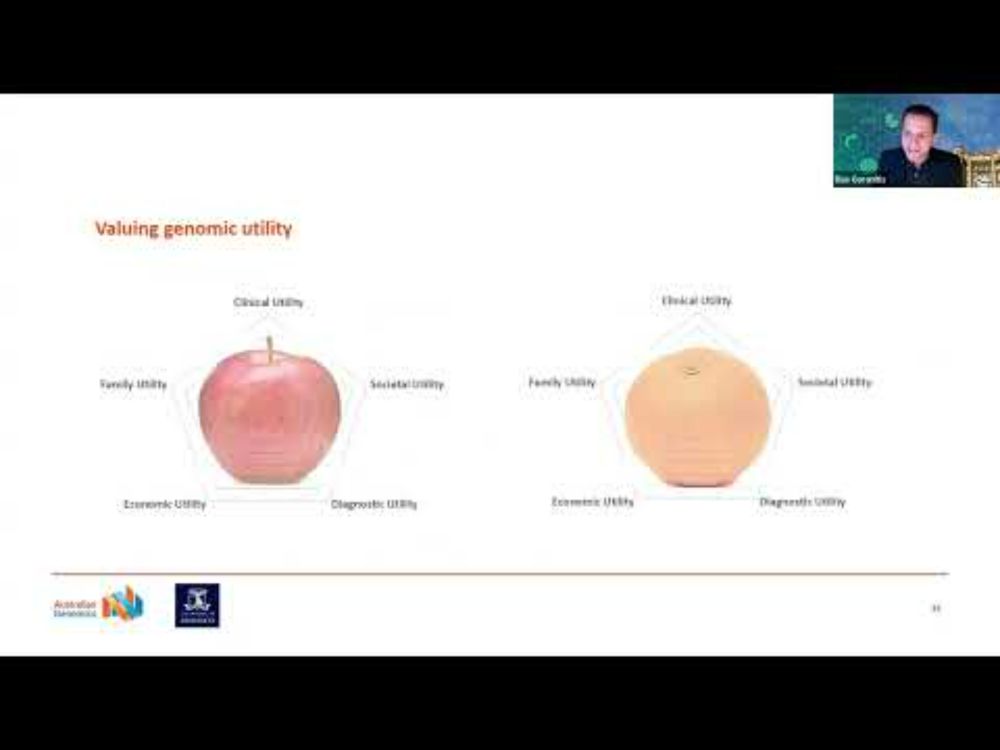
Genomics in public health: Technology assessment
YouTube video by PAHO TV
youtube.com
April 10, 2025 at 5:21 AM
A few weeks ago, @iliasgoranitis.bsky.social
presented at the Pan American Health Organisation webinar series. The webinar explored the challenges and opportunities of incorporating genomic innovations into health systems. youtube.com/watch?v=cPQr...
presented at the Pan American Health Organisation webinar series. The webinar explored the challenges and opportunities of incorporating genomic innovations into health systems. youtube.com/watch?v=cPQr...
Read more here: link.springer.com/article/10.1...
April 3, 2025 at 2:49 AM
Read more here: link.springer.com/article/10.1...
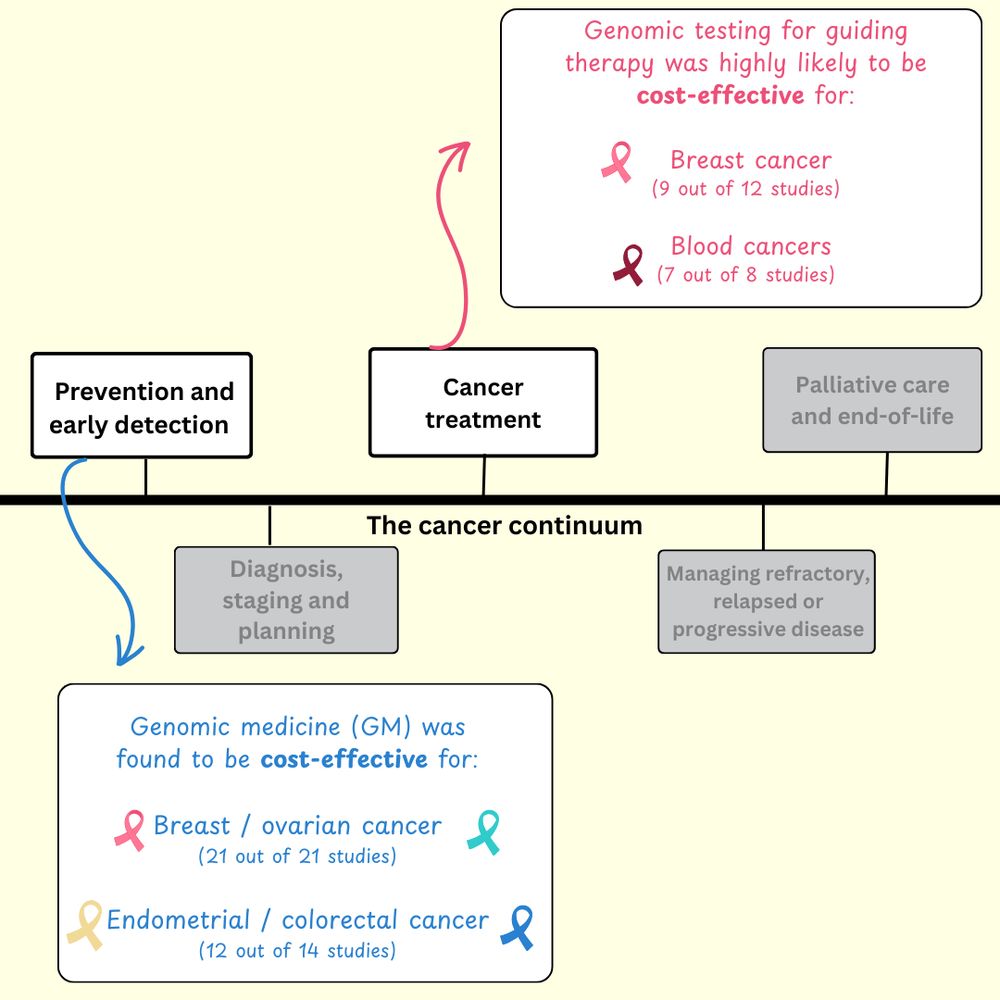
This systematic review highlights where genomic medicine is likely cost-effective across the cancer care continuum, from:
🔹 Prevention & early detection
🔹 Diagnosis, staging & planning
🔹 Treatment
🔹 Managing refractory/relapsed disease
🔹 Palliative & end-of-life care
🔹 Prevention & early detection
🔹 Diagnosis, staging & planning
🔹 Treatment
🔹 Managing refractory/relapsed disease
🔹 Palliative & end-of-life care
April 3, 2025 at 2:49 AM
This systematic review highlights where genomic medicine is likely cost-effective across the cancer care continuum, from:
🔹 Prevention & early detection
🔹 Diagnosis, staging & planning
🔹 Treatment
🔹 Managing refractory/relapsed disease
🔹 Palliative & end-of-life care
🔹 Prevention & early detection
🔹 Diagnosis, staging & planning
🔹 Treatment
🔹 Managing refractory/relapsed disease
🔹 Palliative & end-of-life care
🔬 Excited to share our latest work: "The Cost Effectiveness of Genomic Medicine in Cancer Control", in collaboration with Cancer Australia and @who.int.
April 3, 2025 at 2:49 AM
🔬 Excited to share our latest work: "The Cost Effectiveness of Genomic Medicine in Cancer Control", in collaboration with Cancer Australia and @who.int.
Preferences like testing uptake, treatment adherence, and trust in the healthcare system are key to evaluating genomic medicine. Ignoring them can bias cost-effectiveness and policy relevance.
🔎 Read the paper our team supported: rdcu.be/eaJBy
🔎 Read the paper our team supported: rdcu.be/eaJBy

March 31, 2025 at 3:03 AM
Preferences like testing uptake, treatment adherence, and trust in the healthcare system are key to evaluating genomic medicine. Ignoring them can bias cost-effectiveness and policy relevance.
🔎 Read the paper our team supported: rdcu.be/eaJBy
🔎 Read the paper our team supported: rdcu.be/eaJBy