



FEMS Journals
@femsjournals.bsky.social
Not-for-profit journals from @femsmicro.org | Publish with purpose | https://academic.oup.com/fems-journals | #FEMSJournals | #OpenAccess | #PeerReview | #Microbiology
Pinned

🎙️ New Microbes and Us Podcast🔬
In our latest episode, we hear from the insightful Prof. Max Häggblom, as he shares his personal, inspiring journey—from his first student publication in a FEMS Journal in 1987 to becoming Editor-in-Chief of FEMS Microbiology Ecology.
buff.ly/MkOmbBq
In our latest episode, we hear from the insightful Prof. Max Häggblom, as he shares his personal, inspiring journey—from his first student publication in a FEMS Journal in 1987 to becoming Editor-in-Chief of FEMS Microbiology Ecology.
buff.ly/MkOmbBq
Reposted by FEMS Journals

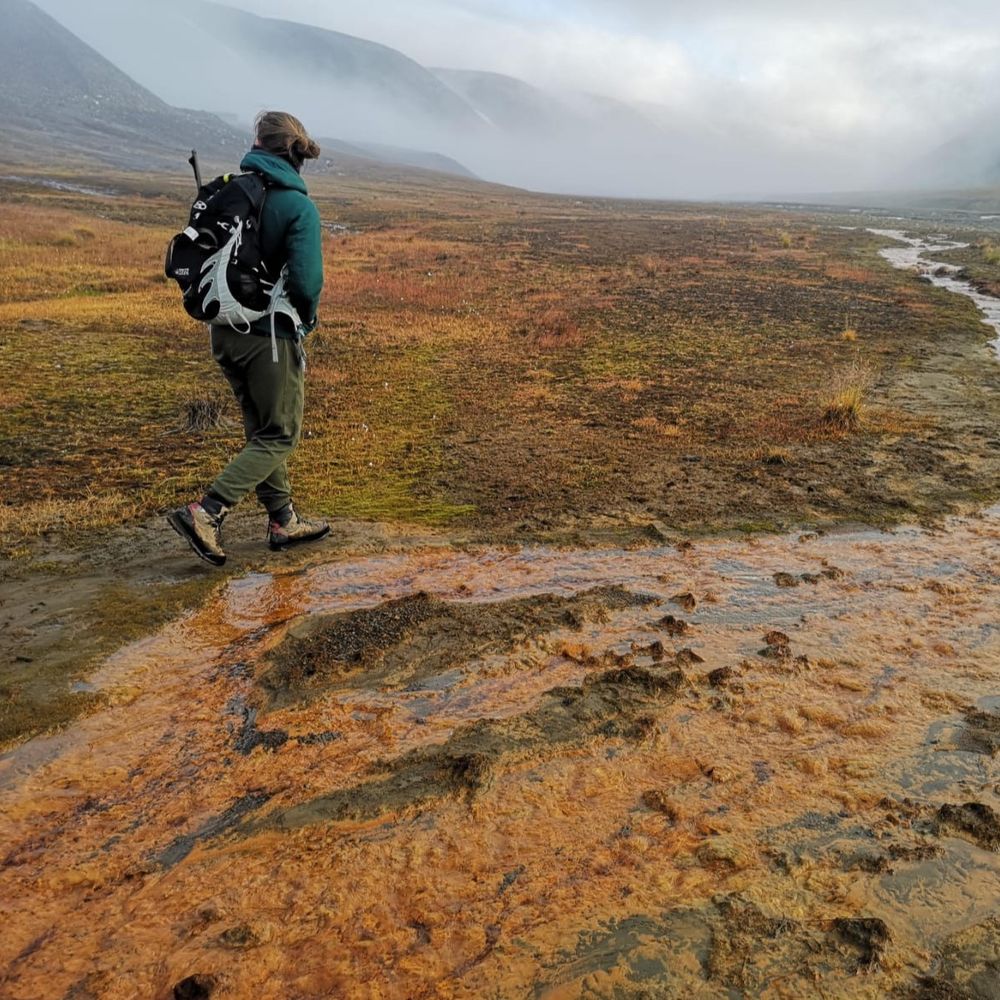
🎄Early Christmas news! Chapter IV of my PhD thesis has been accepted for publication in @femsmicro.org Microbiology Ecology 🤘
We show how three Greenlandic bacteria shift their VOC profiles along a salt gradient.
Read it here👉 doi.org/10.1093/fems...
Stay tuned for another paper coming out soon! 🤞
We show how three Greenlandic bacteria shift their VOC profiles along a salt gradient.
Read it here👉 doi.org/10.1093/fems...
Stay tuned for another paper coming out soon! 🤞

Volatilomic complexity of three Northern Greenland bacterial isolates across a salt gradient
Abstract. The High Arctic deserts of remote northern Greenland are expected to become warmer and wetter due to climate change. Precipitation changes will i
doi.org
December 15, 2025 at 12:09 PM
🎄Early Christmas news! Chapter IV of my PhD thesis has been accepted for publication in @femsmicro.org Microbiology Ecology 🤘
We show how three Greenlandic bacteria shift their VOC profiles along a salt gradient.
Read it here👉 doi.org/10.1093/fems...
Stay tuned for another paper coming out soon! 🤞
We show how three Greenlandic bacteria shift their VOC profiles along a salt gradient.
Read it here👉 doi.org/10.1093/fems...
Stay tuned for another paper coming out soon! 🤞
How can amino acid–rich brewing yeasts boost flavour in alcoholic beverages? 🍶🍺
Learn how S. Isogai et al. breed strains with amino acid accumulation for tailored aromas:
🔗 buff.ly/n4ix58J
#FEMSYeastRes
Learn how S. Isogai et al. breed strains with amino acid accumulation for tailored aromas:
🔗 buff.ly/n4ix58J
#FEMSYeastRes

December 12, 2025 at 1:01 PM
How can amino acid–rich brewing yeasts boost flavour in alcoholic beverages? 🍶🍺
Learn how S. Isogai et al. breed strains with amino acid accumulation for tailored aromas:
🔗 buff.ly/n4ix58J
#FEMSYeastRes
Learn how S. Isogai et al. breed strains with amino acid accumulation for tailored aromas:
🔗 buff.ly/n4ix58J
#FEMSYeastRes
Bick et al. underline how nutrient availability and community size jointly influence stochastic assembly processes, with important consequences for bacterial diversity and ecosystem functioning under environmental change.
buff.ly/HeF9VUl
#FEMSMicrobiolEcol #ecology
buff.ly/HeF9VUl
#FEMSMicrobiolEcol #ecology

December 12, 2025 at 9:01 AM
Bick et al. underline how nutrient availability and community size jointly influence stochastic assembly processes, with important consequences for bacterial diversity and ecosystem functioning under environmental change.
buff.ly/HeF9VUl
#FEMSMicrobiolEcol #ecology
buff.ly/HeF9VUl
#FEMSMicrobiolEcol #ecology
Reposted by FEMS Journals

Reposted by FEMS Journals

As 2025 wraps up, we’re looking back at some of the most intriguing microbes that made their scientific debut this year. This blog highlights standout bacterial species that caught our eye. Read the full #FEMSmicroBlog: buff.ly/2wz7k16
#NewMicrobes
#NewMicrobes

December 10, 2025 at 11:01 AM
As 2025 wraps up, we’re looking back at some of the most intriguing microbes that made their scientific debut this year. This blog highlights standout bacterial species that caught our eye. Read the full #FEMSmicroBlog: buff.ly/2wz7k16
#NewMicrobes
#NewMicrobes
Kantnerová, V. and Škaloud, P. determined that the diversity of the photobionts within a lichen thallus can vary significantly, even within a single lichen species. Check-out their results!
buff.ly/1CSDVDj
#FEMSMicrobiolEcol #ecology
buff.ly/1CSDVDj
#FEMSMicrobiolEcol #ecology

December 8, 2025 at 4:30 PM
Kantnerová, V. and Škaloud, P. determined that the diversity of the photobionts within a lichen thallus can vary significantly, even within a single lichen species. Check-out their results!
buff.ly/1CSDVDj
#FEMSMicrobiolEcol #ecology
buff.ly/1CSDVDj
#FEMSMicrobiolEcol #ecology
Reposted by FEMS Journals
on the importance of learned societies, here FEMS in particular 🦠🧫. Join a(ny) society or two, publish in society journals, and let the APC $$$ circulate back to the scientific community ♻️
🎙️ New Microbes and Us Podcast🔬
In our latest episode, we hear from the insightful Prof. Max Häggblom, as he shares his personal, inspiring journey—from his first student publication in a FEMS Journal in 1987 to becoming Editor-in-Chief of FEMS Microbiology Ecology.
buff.ly/MkOmbBq
In our latest episode, we hear from the insightful Prof. Max Häggblom, as he shares his personal, inspiring journey—from his first student publication in a FEMS Journal in 1987 to becoming Editor-in-Chief of FEMS Microbiology Ecology.
buff.ly/MkOmbBq
December 2, 2025 at 4:34 PM
on the importance of learned societies, here FEMS in particular 🦠🧫. Join a(ny) society or two, publish in society journals, and let the APC $$$ circulate back to the scientific community ♻️
What can 53 #Monosporozyma_unispora strains reveal about yeast evolution in food ecosystems? 🍞🧀
Read how F. Bigey et al. map genome structure, stress-tolerance traits & clonal reproduction:
🔗 buff.ly/Q444xkI
##FEMSYeastRes
Read how F. Bigey et al. map genome structure, stress-tolerance traits & clonal reproduction:
🔗 buff.ly/Q444xkI
##FEMSYeastRes

December 4, 2025 at 11:01 AM
What can 53 #Monosporozyma_unispora strains reveal about yeast evolution in food ecosystems? 🍞🧀
Read how F. Bigey et al. map genome structure, stress-tolerance traits & clonal reproduction:
🔗 buff.ly/Q444xkI
##FEMSYeastRes
Read how F. Bigey et al. map genome structure, stress-tolerance traits & clonal reproduction:
🔗 buff.ly/Q444xkI
##FEMSYeastRes
How does intracellular Chlamydia psittaci hijack mammalian cells? 🦠🔬
Gensch et al. use computational and experimental tools to map host interaction partners and investigate a new Inclusion membrane protein.
#PathogDis
Read the full article here 👇
academic.oup.com/femspd/artic...
Gensch et al. use computational and experimental tools to map host interaction partners and investigate a new Inclusion membrane protein.
#PathogDis
Read the full article here 👇
academic.oup.com/femspd/artic...

December 1, 2025 at 9:30 AM
How does intracellular Chlamydia psittaci hijack mammalian cells? 🦠🔬
Gensch et al. use computational and experimental tools to map host interaction partners and investigate a new Inclusion membrane protein.
#PathogDis
Read the full article here 👇
academic.oup.com/femspd/artic...
Gensch et al. use computational and experimental tools to map host interaction partners and investigate a new Inclusion membrane protein.
#PathogDis
Read the full article here 👇
academic.oup.com/femspd/artic...
🦠Insight into the resilient world of prokaryotes! Koch lab – @sfb1381.bsky.social – reveals that E.coli use small membrane proteins (YohP & YncL) to condense their DNA & slow down metabolism, helping them survive to stresses. 🧬
buff.ly/dMzcQsP
buff.ly/dMzcQsP

November 30, 2025 at 7:00 AM
🦠Insight into the resilient world of prokaryotes! Koch lab – @sfb1381.bsky.social – reveals that E.coli use small membrane proteins (YohP & YncL) to condense their DNA & slow down metabolism, helping them survive to stresses. 🧬
buff.ly/dMzcQsP
buff.ly/dMzcQsP
Reposted by FEMS Journals

Transforming science into engaging stories
Commentary in @femsjournals.bsky.social Microbiology Letters by @drsarahwettstadt.bsky.social
academic.oup.com/femsle/advan...
Commentary in @femsjournals.bsky.social Microbiology Letters by @drsarahwettstadt.bsky.social
academic.oup.com/femsle/advan...

Transforming science into engaging stories
Sarah Wettstadt; Transforming science into engaging stories, FEMS Microbiology Letters, , fnaf129, https://doi.org/10.1093/femsle/fnaf129
academic.oup.com
November 22, 2025 at 6:22 PM
Transforming science into engaging stories
Commentary in @femsjournals.bsky.social Microbiology Letters by @drsarahwettstadt.bsky.social
academic.oup.com/femsle/advan...
Commentary in @femsjournals.bsky.social Microbiology Letters by @drsarahwettstadt.bsky.social
academic.oup.com/femsle/advan...
Why do methods for estimating microbial lag phase vary so much? 📈🧪
Read more on how Opalek M. et al. unravel the impact of noise, sampling, and growth rate on lag phase predictions in #Saccharomyces_cerevisiae:
🔗 buff.ly/IuOFcE7
#FEMSYeastRes
Read more on how Opalek M. et al. unravel the impact of noise, sampling, and growth rate on lag phase predictions in #Saccharomyces_cerevisiae:
🔗 buff.ly/IuOFcE7
#FEMSYeastRes

November 29, 2025 at 4:01 PM
Why do methods for estimating microbial lag phase vary so much? 📈🧪
Read more on how Opalek M. et al. unravel the impact of noise, sampling, and growth rate on lag phase predictions in #Saccharomyces_cerevisiae:
🔗 buff.ly/IuOFcE7
#FEMSYeastRes
Read more on how Opalek M. et al. unravel the impact of noise, sampling, and growth rate on lag phase predictions in #Saccharomyces_cerevisiae:
🔗 buff.ly/IuOFcE7
#FEMSYeastRes
Reposted by FEMS Journals

Better late than never... I only now re-post this paper by Daniela Guasconi @stockholm-uni.bsky.social @bolincentre.bsky.social on microbial communities in a Swedish grassland: summer drought has mild effects, one compost addition can have long-lasting (but small) consequences
Latest at #FEMSMicrobiolLett: 🌱 Compost boosts fungal abundance in grassland soils, even under drought.💧 Microbial communities show resilience to reduced precipitation.📍 Site variation matters more than treatment! 🔗 buff.ly/lG7AK0y #SoilMicrobiology #ClimateResilience #MicrobialEcology

November 22, 2025 at 1:27 PM
Better late than never... I only now re-post this paper by Daniela Guasconi @stockholm-uni.bsky.social @bolincentre.bsky.social on microbial communities in a Swedish grassland: summer drought has mild effects, one compost addition can have long-lasting (but small) consequences
Reposted by FEMS Journals
The mhqPOD gene cluster in lignin-degrading Paenibacillus sp. B2 encodes a pathway for degradation of lignin-derived 5,5’-di(dehydrovanillic acid) (DDVA)
-in @femsjournals.bsky.social Microbiology Letters from Timothy D H Bugg
academic.oup.com/femsle/advan...
-in @femsjournals.bsky.social Microbiology Letters from Timothy D H Bugg
academic.oup.com/femsle/advan...
The mhqPOD gene cluster in lignin-degrading Paenibacillus sp. B2 encodes a pathway for degradation of lignin-derived 5,5’-di(dehydrovanillic acid) (DDVA)
Abstract. Lignin-degrading bacteria Paenibacillus sp. B2, Agrobacterium sp. B1 and Ochrobactrum sp. each contain mhqO genes encoding ring cleavage dioxygen
academic.oup.com
November 22, 2025 at 6:29 PM
The mhqPOD gene cluster in lignin-degrading Paenibacillus sp. B2 encodes a pathway for degradation of lignin-derived 5,5’-di(dehydrovanillic acid) (DDVA)
-in @femsjournals.bsky.social Microbiology Letters from Timothy D H Bugg
academic.oup.com/femsle/advan...
-in @femsjournals.bsky.social Microbiology Letters from Timothy D H Bugg
academic.oup.com/femsle/advan...
Check-out FEMS Microbiology Ecology Latest Editor's Choice: Mittmann-Goetsch et al. suggest that while the active microbial community is broadly resistant to warming, subtle compositional shifts may enhance decomposition of recalcitrant soil carbon.
buff.ly/nwQknd5
#FEMSMicrobiolEcol #ecology
buff.ly/nwQknd5
#FEMSMicrobiolEcol #ecology

November 28, 2025 at 9:01 AM
Check-out FEMS Microbiology Ecology Latest Editor's Choice: Mittmann-Goetsch et al. suggest that while the active microbial community is broadly resistant to warming, subtle compositional shifts may enhance decomposition of recalcitrant soil carbon.
buff.ly/nwQknd5
#FEMSMicrobiolEcol #ecology
buff.ly/nwQknd5
#FEMSMicrobiolEcol #ecology
tRNA-derived fragments don’t just mark stress, they reshape translation. ⚡🧫
Read more on how Bąkowska-Żywicka K. & Tyczewska A. introduce tDR-quant, a powerful in vivo method revealing how tDRs selectively bind ribosomes under stress:
🔗https://buff.ly/9GTtT5i
#FEMSYeastRes
Read more on how Bąkowska-Żywicka K. & Tyczewska A. introduce tDR-quant, a powerful in vivo method revealing how tDRs selectively bind ribosomes under stress:
🔗https://buff.ly/9GTtT5i
#FEMSYeastRes

November 27, 2025 at 11:01 AM
tRNA-derived fragments don’t just mark stress, they reshape translation. ⚡🧫
Read more on how Bąkowska-Żywicka K. & Tyczewska A. introduce tDR-quant, a powerful in vivo method revealing how tDRs selectively bind ribosomes under stress:
🔗https://buff.ly/9GTtT5i
#FEMSYeastRes
Read more on how Bąkowska-Żywicka K. & Tyczewska A. introduce tDR-quant, a powerful in vivo method revealing how tDRs selectively bind ribosomes under stress:
🔗https://buff.ly/9GTtT5i
#FEMSYeastRes
🎙️ New Microbes and Us Podcast🔬
In our latest episode, we hear from the insightful Prof. Max Häggblom, as he shares his personal, inspiring journey—from his first student publication in a FEMS Journal in 1987 to becoming Editor-in-Chief of FEMS Microbiology Ecology.
buff.ly/MkOmbBq
In our latest episode, we hear from the insightful Prof. Max Häggblom, as he shares his personal, inspiring journey—from his first student publication in a FEMS Journal in 1987 to becoming Editor-in-Chief of FEMS Microbiology Ecology.
buff.ly/MkOmbBq
November 24, 2025 at 2:45 PM
🎙️ New Microbes and Us Podcast🔬
In our latest episode, we hear from the insightful Prof. Max Häggblom, as he shares his personal, inspiring journey—from his first student publication in a FEMS Journal in 1987 to becoming Editor-in-Chief of FEMS Microbiology Ecology.
buff.ly/MkOmbBq
In our latest episode, we hear from the insightful Prof. Max Häggblom, as he shares his personal, inspiring journey—from his first student publication in a FEMS Journal in 1987 to becoming Editor-in-Chief of FEMS Microbiology Ecology.
buff.ly/MkOmbBq
Lewis et al. deploy micro-sampling techniques to characterize the thin melt water film inhabited by glacier algae across three high-Arctic glaciers in Svalbard and compare them to classic bulk-sampling techniques. Check-out their results!
buff.ly/6EWo3N4
#FEMSMicrobiolEcol #ecology
buff.ly/6EWo3N4
#FEMSMicrobiolEcol #ecology

November 24, 2025 at 9:01 AM
Lewis et al. deploy micro-sampling techniques to characterize the thin melt water film inhabited by glacier algae across three high-Arctic glaciers in Svalbard and compare them to classic bulk-sampling techniques. Check-out their results!
buff.ly/6EWo3N4
#FEMSMicrobiolEcol #ecology
buff.ly/6EWo3N4
#FEMSMicrobiolEcol #ecology
Reposted by FEMS Journals
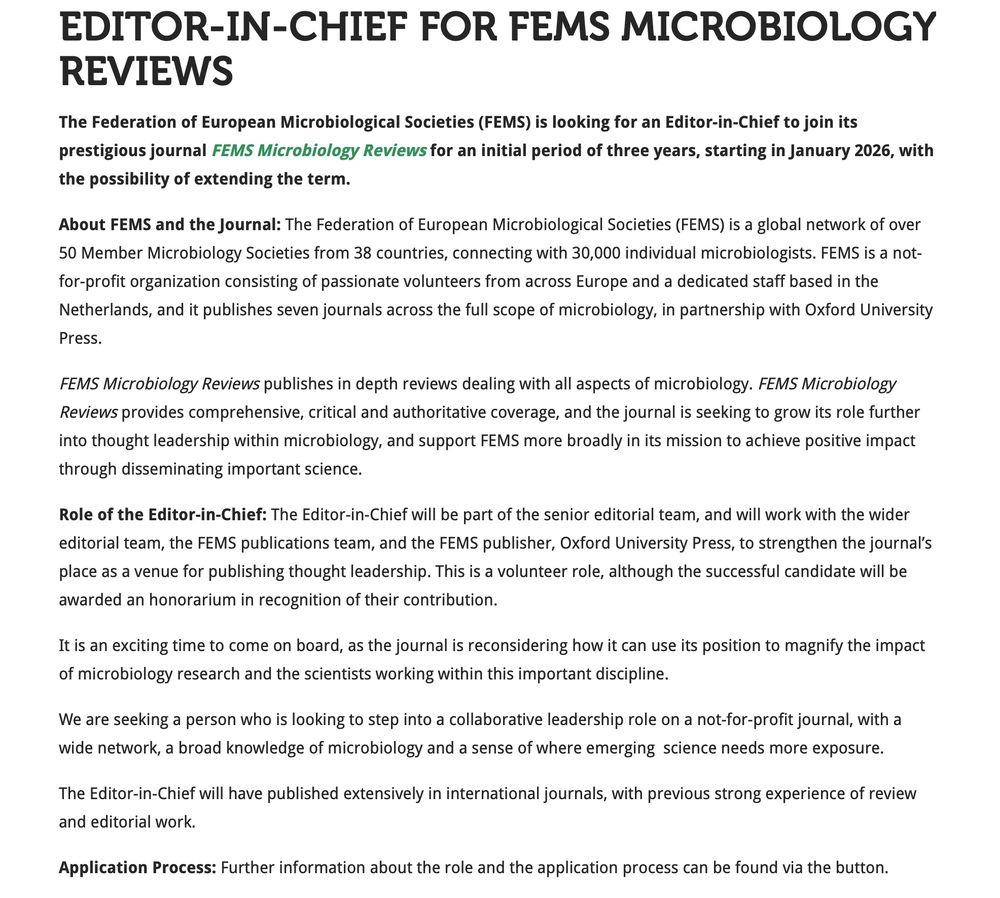
Editor-In-Chief for FEMS Microbiology Reviews of @femsjournals.bsky.social @femsmicro.org
#SocietyJournal #Microbiology #EditorInChief
fems-microbiology.org/opportunitie...
#SocietyJournal #Microbiology #EditorInChief
fems-microbiology.org/opportunitie...
November 24, 2025 at 7:51 AM
Editor-In-Chief for FEMS Microbiology Reviews of @femsjournals.bsky.social @femsmicro.org
#SocietyJournal #Microbiology #EditorInChief
fems-microbiology.org/opportunitie...
#SocietyJournal #Microbiology #EditorInChief
fems-microbiology.org/opportunitie...
Reposted by FEMS Journals
Editorial: Society journals matter—supporting science through renewed commitment
Editorial in @femsjournals.bsky.social microLife by @paulbrainey.bsky.social and colleagues
academic.oup.com/microlife/ad...
Editorial in @femsjournals.bsky.social microLife by @paulbrainey.bsky.social and colleagues
academic.oup.com/microlife/ad...

Editorial: Society journals matter—supporting science through renewed commitment
Paul B Rainey, Puri López-García, Zeynep Ceren Karahan, Paul Williams, Stipan Jonjić, Kenneth N Timmis; Editorial: Society journals matter—supporting scien
academic.oup.com
November 22, 2025 at 6:35 PM
Editorial: Society journals matter—supporting science through renewed commitment
Editorial in @femsjournals.bsky.social microLife by @paulbrainey.bsky.social and colleagues
academic.oup.com/microlife/ad...
Editorial in @femsjournals.bsky.social microLife by @paulbrainey.bsky.social and colleagues
academic.oup.com/microlife/ad...
AMR is moving through every ecological niche, including wildlife.
This #FEMSMicrobiolEcol review uncovers how animals act as reservoirs, pathways, and receivers of resistant bacteria and genes, reshaping the AMR landscape.
🔗 Learn more: buff.ly/86PDZNf
#AMRAwarenessWeek
This #FEMSMicrobiolEcol review uncovers how animals act as reservoirs, pathways, and receivers of resistant bacteria and genes, reshaping the AMR landscape.
🔗 Learn more: buff.ly/86PDZNf
#AMRAwarenessWeek

November 23, 2025 at 3:30 PM
AMR is moving through every ecological niche, including wildlife.
This #FEMSMicrobiolEcol review uncovers how animals act as reservoirs, pathways, and receivers of resistant bacteria and genes, reshaping the AMR landscape.
🔗 Learn more: buff.ly/86PDZNf
#AMRAwarenessWeek
This #FEMSMicrobiolEcol review uncovers how animals act as reservoirs, pathways, and receivers of resistant bacteria and genes, reshaping the AMR landscape.
🔗 Learn more: buff.ly/86PDZNf
#AMRAwarenessWeek
A small-scale surveillance study in Kolkata reveals that the healthy gut microbiome is a reservoir of diverse antimicrobial-resistance genes. It's a community level warning that AMR is spreading beyond clinical settings.
🔗 Read the study for #AMRAwarenessWeek: buff.ly/HaDBEwV
#FEMSMicrobiolLett
🔗 Read the study for #AMRAwarenessWeek: buff.ly/HaDBEwV
#FEMSMicrobiolLett

November 23, 2025 at 11:00 AM
A small-scale surveillance study in Kolkata reveals that the healthy gut microbiome is a reservoir of diverse antimicrobial-resistance genes. It's a community level warning that AMR is spreading beyond clinical settings.
🔗 Read the study for #AMRAwarenessWeek: buff.ly/HaDBEwV
#FEMSMicrobiolLett
🔗 Read the study for #AMRAwarenessWeek: buff.ly/HaDBEwV
#FEMSMicrobiolLett
Sewage sludge isn’t just waste, it can be a hotspot for antimicrobial resistance.
This study on @FEMSmicrobes uncovers multidrug-resistant bacteria, high AMR-gene abundance, and metal-tolerant strains in STP sludge. An interesting read for #AMRAwarenessWeek: buff.ly/1nTb9Ji
This study on @FEMSmicrobes uncovers multidrug-resistant bacteria, high AMR-gene abundance, and metal-tolerant strains in STP sludge. An interesting read for #AMRAwarenessWeek: buff.ly/1nTb9Ji

November 22, 2025 at 6:01 PM
Sewage sludge isn’t just waste, it can be a hotspot for antimicrobial resistance.
This study on @FEMSmicrobes uncovers multidrug-resistant bacteria, high AMR-gene abundance, and metal-tolerant strains in STP sludge. An interesting read for #AMRAwarenessWeek: buff.ly/1nTb9Ji
This study on @FEMSmicrobes uncovers multidrug-resistant bacteria, high AMR-gene abundance, and metal-tolerant strains in STP sludge. An interesting read for #AMRAwarenessWeek: buff.ly/1nTb9Ji
Antibiotic resistance is rising in our rivers and lakes.
This #FEMSMicrobiolEcol review shows how antibiotics, heavy metals, & microplastics fuel the spread of AMR, & why current safety guidelines aren’t enough.
🔗Read for #AMRAwarenessWeek: buff.ly/amzPUsW
This #FEMSMicrobiolEcol review shows how antibiotics, heavy metals, & microplastics fuel the spread of AMR, & why current safety guidelines aren’t enough.
🔗Read for #AMRAwarenessWeek: buff.ly/amzPUsW

November 21, 2025 at 11:00 AM
Antibiotic resistance is rising in our rivers and lakes.
This #FEMSMicrobiolEcol review shows how antibiotics, heavy metals, & microplastics fuel the spread of AMR, & why current safety guidelines aren’t enough.
🔗Read for #AMRAwarenessWeek: buff.ly/amzPUsW
This #FEMSMicrobiolEcol review shows how antibiotics, heavy metals, & microplastics fuel the spread of AMR, & why current safety guidelines aren’t enough.
🔗Read for #AMRAwarenessWeek: buff.ly/amzPUsW
Microbial conservation is vital for planetary health, yet its largely overlooked. To change this, The IUCN has established the first global group dedicated to protecting microbial biodiversity, the Microbial Conservation Specialist Group (MCSG) .
Learn more: buff.ly/gngCpMh
Learn more: buff.ly/gngCpMh

November 20, 2025 at 4:30 PM
Microbial conservation is vital for planetary health, yet its largely overlooked. To change this, The IUCN has established the first global group dedicated to protecting microbial biodiversity, the Microbial Conservation Specialist Group (MCSG) .
Learn more: buff.ly/gngCpMh
Learn more: buff.ly/gngCpMh