



Ian Dworkin
@idworkin.bsky.social
Evolutionary biologist in love with morphology, especially size and shape. Drosophila Quantitative/Statistical geneticist. Dabbler in Development. Occasional genomicist.
Thinking about cell size a lot lately.
Lab website: https://dworkinlab.github.io
Thinking about cell size a lot lately.
Lab website: https://dworkinlab.github.io
Reposted by Ian Dworkin

New research in #G3journal highlights the distinct roles of individual #insulin-like peptides in regulating growth and development time in response to changes in dietary macronutrients in #Drosophila. buff.ly/J6SO9BQ

January 17, 2026 at 5:02 PM
New research in #G3journal highlights the distinct roles of individual #insulin-like peptides in regulating growth and development time in response to changes in dietary macronutrients in #Drosophila. buff.ly/J6SO9BQ
Reposted by Ian Dworkin

Congratulations to UMMP Associate Research Scientist Miriam Zelditch on the release of the third edition of the indispensable "Geometric Morphometrics for Biologists" (a.k.a. the green book)! #FossilFriday

December 6, 2025 at 1:12 AM
Congratulations to UMMP Associate Research Scientist Miriam Zelditch on the release of the third edition of the indispensable "Geometric Morphometrics for Biologists" (a.k.a. the green book)! #FossilFriday
Reposted by Ian Dworkin

Evolutionary Divergence of mTOR-mediated Transcriptional Regulation Between Drosophila melanogaster and Drosophila simulans is Modulated by Sex and Tissue https://www.biorxiv.org/content/10.64898/2026.01.12.699128v1
January 13, 2026 at 11:31 AM
Evolutionary Divergence of mTOR-mediated Transcriptional Regulation Between Drosophila melanogaster and Drosophila simulans is Modulated by Sex and Tissue https://www.biorxiv.org/content/10.64898/2026.01.12.699128v1
Reposted by Ian Dworkin

OTD 1908 Willhelm Weinberg gave a talk to the Society for the Natural History of the Fatherland in Württemberg giving the population genetics equations GH Hardy would independently publish 5 months later. It was 35 years before his work was recognized in the Anglophone world.
🐋🌱🥢🧪 #EvoBio #HistSTM
🐋🌱🥢🧪 #EvoBio #HistSTM

January 13, 2026 at 5:27 PM
Reposted by Ian Dworkin
Behavior evolves as a correlated response to selection on cuticle color in Drosophila melanogaster and D. simulans https://www.biorxiv.org/content/10.64898/2026.01.13.699118v1
January 14, 2026 at 10:33 PM
Behavior evolves as a correlated response to selection on cuticle color in Drosophila melanogaster and D. simulans https://www.biorxiv.org/content/10.64898/2026.01.13.699118v1
Reposted by Ian Dworkin
Nucleotide diversity is a poor predictor of short-term adaptive potential https://www.biorxiv.org/content/10.64898/2026.01.05.697705v1
January 5, 2026 at 9:32 PM
Nucleotide diversity is a poor predictor of short-term adaptive potential https://www.biorxiv.org/content/10.64898/2026.01.05.697705v1
Reposted by Ian Dworkin
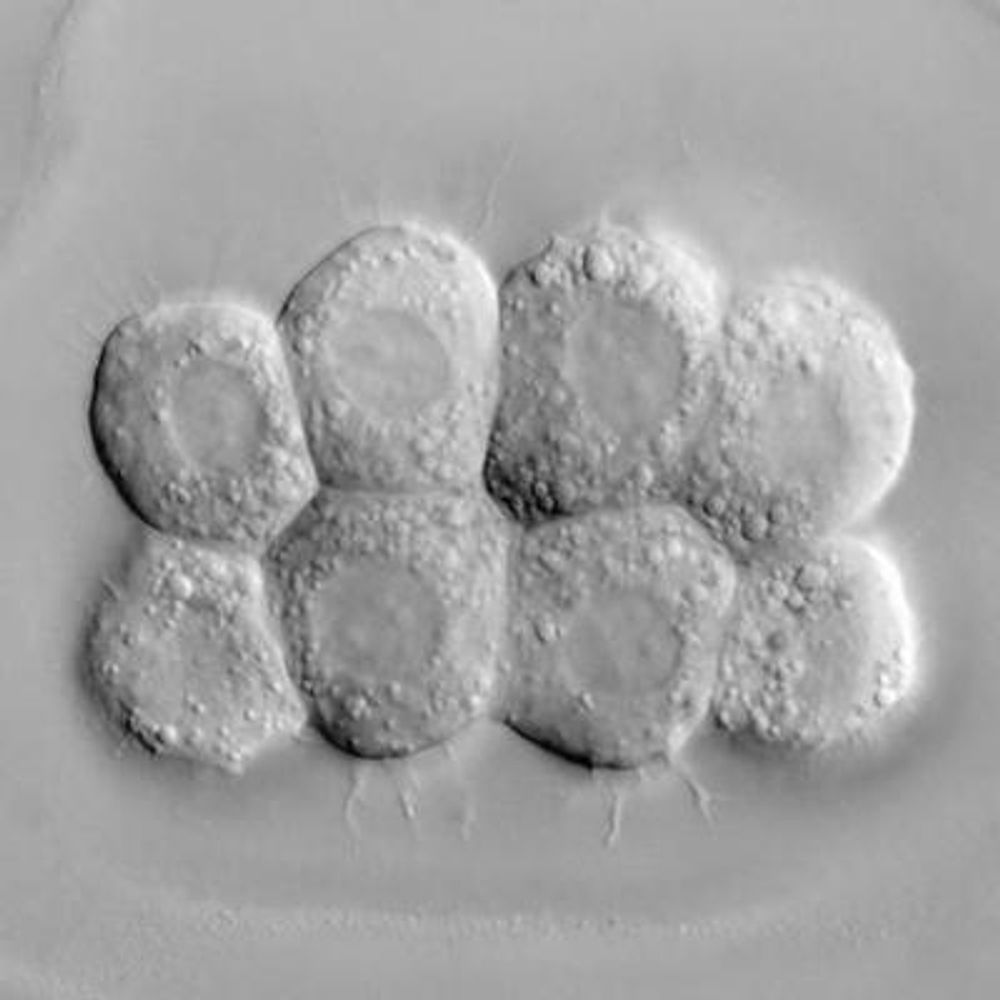
Morphomechanics and Developmental Constraints in the Evolution of Ammonites Shell Form https://pubmed.ncbi.nlm.nih.gov/27921363/ #EvoDevo
January 2, 2026 at 1:00 PM
Morphomechanics and Developmental Constraints in the Evolution of Ammonites Shell Form https://pubmed.ncbi.nlm.nih.gov/27921363/ #EvoDevo
Reposted by Ian Dworkin

Here is our introductory paper to the Paleobiology special volume @paleosoc.bsky.social celebrating the 50th anniversary of #punctuatedequilibria #macroevolution #paleobiology #palaeontology #paleontology @nilese.bsky.social www.cambridge.org/core/journal...
Punctuated equilibria at 50: half a century of stasis, cladogenesis, and macroevolutionary insights | Paleobiology | Cambridge Core
Punctuated equilibria at 50: half a century of stasis, cladogenesis, and macroevolutionary insights - Volume 51 Issue 4
www.cambridge.org
January 2, 2026 at 6:33 PM
Here is our introductory paper to the Paleobiology special volume @paleosoc.bsky.social celebrating the 50th anniversary of #punctuatedequilibria #macroevolution #paleobiology #palaeontology #paleontology @nilese.bsky.social www.cambridge.org/core/journal...
Reposted by Ian Dworkin
Fast phylogenetic generalised linear mixed-effects modelling using the glmmTMB R package https://www.biorxiv.org/content/10.64898/2025.12.20.695312v1
December 23, 2025 at 8:31 PM
Fast phylogenetic generalised linear mixed-effects modelling using the glmmTMB R package https://www.biorxiv.org/content/10.64898/2025.12.20.695312v1
Reposted by Ian Dworkin

We are thrilled to announce the first official release (v0.1.8) of #𝗯𝗲𝗱𝗱𝗲𝗿, the successor to one of our flagship tool, #𝗯𝗲𝗱𝘁𝗼𝗼𝗹𝘀! Based on ideas we conceived of long ago (!), this was achieved thanks to the dedication of Brent Pedersen.
1/n
1/n
Intro to Bedder – The Quinlan Lab
quinlanlab.org
December 2, 2025 at 2:28 AM
Reposted by Ian Dworkin

The Undergraduate Community at Evolution program provides travel funding, mentoring, and a presentation opportunity at #Evol2026. Please share with undergrads in your lab! www.evolutionsociety.org/content/educ...
@asn-amnat.bsky.social @systbiol.bsky.social @evolmtg.bsky.social
@asn-amnat.bsky.social @systbiol.bsky.social @evolmtg.bsky.social

November 10, 2025 at 2:29 AM
The Undergraduate Community at Evolution program provides travel funding, mentoring, and a presentation opportunity at #Evol2026. Please share with undergrads in your lab! www.evolutionsociety.org/content/educ...
@asn-amnat.bsky.social @systbiol.bsky.social @evolmtg.bsky.social
@asn-amnat.bsky.social @systbiol.bsky.social @evolmtg.bsky.social
Reposted by Ian Dworkin

Why did I only just find out that that there are water striders that live IN (ON!!) THE OPEN OCEAN? 🧪
OCEAN STRIDERS!!
OCEAN STRIDERS!!

Why did only one genus of insects, Halobates, take to the high seas?
Oceans cover over 70% of the earth’s surface and house a dizzying array of organisms, including five species of the peppercorn-sized ocean-skater Halobates, which live exclusively at the ocean surface...
journals.plos.org
November 19, 2025 at 12:24 PM
Why did I only just find out that that there are water striders that live IN (ON!!) THE OPEN OCEAN? 🧪
OCEAN STRIDERS!!
OCEAN STRIDERS!!
Reposted by Ian Dworkin


I recently moved my lab to Purdue University and am looking for graduate students. We are working at the interface of population genomics, quantitative genetics and functional genomics to understand how plants adapt to extreme environments. Reach out if you would like to discuss potential projects.

November 8, 2025 at 9:48 PM
Reposted by Ian Dworkin

these are really sad news. Antonio Garcia Bellido was a scientific giant, he paved the way to world class science in Spain. His pioneering work in Developmental Biology was truly revolutionary

Ha muerto Antonio García-Bellido, uno de los mejores científicos de la historia de España tras descubrir las fronteras invisibles dentro de los seres vivos: elpais.com/ciencia/2025...

Muere Antonio García-Bellido, descubridor de las fronteras invisibles dentro de los seres vivos
El biólogo, fallecido a los 89 años, deja un legado científico que roza las alturas de los nobeles Santiago Ramón y Cajal y Severo Ochoa
elpais.com
November 11, 2025 at 2:00 PM
these are really sad news. Antonio Garcia Bellido was a scientific giant, he paved the way to world class science in Spain. His pioneering work in Developmental Biology was truly revolutionary
Reposted by Ian Dworkin

The European Drosophila Society #flyEDS extends the condolences on the passing of Antonio García-Bellido, considered the founder of the Spanish school of #Drosophila genetics and an influential figure in developmental biology research worldwide. May he rest in peace.

November 11, 2025 at 2:15 PM
The European Drosophila Society #flyEDS extends the condolences on the passing of Antonio García-Bellido, considered the founder of the Spanish school of #Drosophila genetics and an influential figure in developmental biology research worldwide. May he rest in peace.
Reposted by Ian Dworkin

Part of the undergrad Cell/Developmental Biology lab, waiting for the first group of students to arrive and generate their own GAL4 enhancer traps yesterday.... the results of their labours at the end of the day... and a whale keeping its beady eye on me during a short lunch break at the Whale Cafe.


November 8, 2025 at 11:38 AM
Part of the undergrad Cell/Developmental Biology lab, waiting for the first group of students to arrive and generate their own GAL4 enhancer traps yesterday.... the results of their labours at the end of the day... and a whale keeping its beady eye on me during a short lunch break at the Whale Cafe.
Reposted by Ian Dworkin

Editor's Choice article in our latest issue:
"The genetic basis of natural variation in sociability " by Arteen Torabi-Marashi, Dania Daanish, Andrew M Scott, Reuven Dukas, & Ian Dworkin.
academic.oup.com/evolut/artic...
@idworkin.bsky.social
"The genetic basis of natural variation in sociability " by Arteen Torabi-Marashi, Dania Daanish, Andrew M Scott, Reuven Dukas, & Ian Dworkin.
academic.oup.com/evolut/artic...
@idworkin.bsky.social

The genetic basis of natural variation in sociability
Abstract. Sociability, defined as individuals’ tendencies to affiliate with conspecifics, is widespread among animals, including species not traditionally
academic.oup.com
October 20, 2025 at 10:36 AM
Editor's Choice article in our latest issue:
"The genetic basis of natural variation in sociability " by Arteen Torabi-Marashi, Dania Daanish, Andrew M Scott, Reuven Dukas, & Ian Dworkin.
academic.oup.com/evolut/artic...
@idworkin.bsky.social
"The genetic basis of natural variation in sociability " by Arteen Torabi-Marashi, Dania Daanish, Andrew M Scott, Reuven Dukas, & Ian Dworkin.
academic.oup.com/evolut/artic...
@idworkin.bsky.social
Reposted by Ian Dworkin
Distinct genomic architectures but the same gene underlie the convergent evolution of a plant supergene https://www.biorxiv.org/content/10.1101/2025.10.01.679701v1
October 1, 2025 at 11:32 PM
Distinct genomic architectures but the same gene underlie the convergent evolution of a plant supergene https://www.biorxiv.org/content/10.1101/2025.10.01.679701v1
Reposted by Ian Dworkin

Fischer et al. characterize differences in gene network connectivity and density, suggesting that flexibility in gene coexpression relationships could promote evolvability.
🔗 doi.org/10.1093/molbev/msaf194
#evobio #molbio
🔗 doi.org/10.1093/molbev/msaf194
#evobio #molbio

Flexibility in Gene Coexpression at Developmental and Evolutionary Timescales
Abstract. The explosion of next-generation sequencing technologies has allowed researchers to move from studying single genes to studying thousands of gene
doi.org
October 2, 2025 at 8:51 AM
Fischer et al. characterize differences in gene network connectivity and density, suggesting that flexibility in gene coexpression relationships could promote evolvability.
🔗 doi.org/10.1093/molbev/msaf194
#evobio #molbio
🔗 doi.org/10.1093/molbev/msaf194
#evobio #molbio
Reposted by Ian Dworkin

Continent-wide differentiation of fitness traits and patterns of climate adaptation among European populations of Drosophila melanogaster
#Drosophila
#Drosophila
Continent-wide differentiation of fitness traits and patterns of climate adaptation among European populations of Drosophila melanogaster
#Drosophila
PubMed link
pubmed.ncbi.nlm.nih.gov
September 22, 2025 at 5:24 PM
Continent-wide differentiation of fitness traits and patterns of climate adaptation among European populations of Drosophila melanogaster
#Drosophila
#Drosophila
Reposted by Ian Dworkin
Brubaker et al. investigated the role of redundancy in cis-regulatory evolution in sexually dimorphic abdomen pigmentation of Drosophila melanogaster.
🔗 doi.org/10.1093/molb...
#evobio #molbio #drosophila
🔗 doi.org/10.1093/molb...
#evobio #molbio #drosophila

Redundant and Singular Regulatory Elements Underlie the Rapidly Evolving Pigmentation of Drosophila
Abstract. A major hurdle in understanding the molecular changes responsible for metazoan diversity is the characterization of cis-regulatory elements (CREs
doi.org
September 22, 2025 at 8:53 AM
Brubaker et al. investigated the role of redundancy in cis-regulatory evolution in sexually dimorphic abdomen pigmentation of Drosophila melanogaster.
🔗 doi.org/10.1093/molb...
#evobio #molbio #drosophila
🔗 doi.org/10.1093/molb...
#evobio #molbio #drosophila
Reposted by Ian Dworkin
Heitzmann et al. compared brain transcriptomes of four sexual genotypes of the African pygmy mouse, showing how sex and neo-sex chromosomes impacted transcriptomes to reflect their transmission mode, evolutionary trajectories, and genomic conflicts.
🔗 doi.org/10.1093/molbev/msaf208
#evobio #molbio
🔗 doi.org/10.1093/molbev/msaf208
#evobio #molbio

September 23, 2025 at 9:15 AM
Heitzmann et al. compared brain transcriptomes of four sexual genotypes of the African pygmy mouse, showing how sex and neo-sex chromosomes impacted transcriptomes to reflect their transmission mode, evolutionary trajectories, and genomic conflicts.
🔗 doi.org/10.1093/molbev/msaf208
#evobio #molbio
🔗 doi.org/10.1093/molbev/msaf208
#evobio #molbio
Reposted by Ian Dworkin

![Comic. [block quote] “Far better an approximate answer to the *right* question, which is often vague, than an *exact* answer to the wrong question, which can always be made precise.” -John W. Tukey, The Future of Data Analysis (1962) [caption] Happy Approximate Birthday to John Tukey, author of my favorite statistics quote, who was born 110.000 years ago sometime this week.](https://cdn.bsky.app/img/feed_thumbnail/plain/did:plc:cz73r7iyiqn26upot4jtjdhk/bafkreid4vie3df7ltmh7capumhhqcpbejyr7ya7y762fasdeq46ud3gyva@jpeg)
Reposted by Ian Dworkin
@jcbnunez.bsky.social et al. present an expanded release of the community-generated resource Drosophila Evolution over Space and Time (DEST 2.0), and showcase it by studying the species' demographic history and signatures of adaptation.
🔗 doi.org/10.1093/molbev/msaf132
#evobio #molbio #drosophila
🔗 doi.org/10.1093/molbev/msaf132
#evobio #molbio #drosophila

August 20, 2025 at 5:52 PM
@jcbnunez.bsky.social et al. present an expanded release of the community-generated resource Drosophila Evolution over Space and Time (DEST 2.0), and showcase it by studying the species' demographic history and signatures of adaptation.
🔗 doi.org/10.1093/molbev/msaf132
#evobio #molbio #drosophila
🔗 doi.org/10.1093/molbev/msaf132
#evobio #molbio #drosophila
Reposted by Ian Dworkin

doi.org/10.1093/molb...
Thrilled to share our new paper in MBE! 🎉 Presenting DEST 2.0: 530 pooled Drosophila populations spanning 12 years across 6 continents. We map genomic footprints of adaptation, from pesticide resistance to seasonal changes. #PopulationGenetics #Drosophila #Genomics #Evolution
Thrilled to share our new paper in MBE! 🎉 Presenting DEST 2.0: 530 pooled Drosophila populations spanning 12 years across 6 continents. We map genomic footprints of adaptation, from pesticide resistance to seasonal changes. #PopulationGenetics #Drosophila #Genomics #Evolution
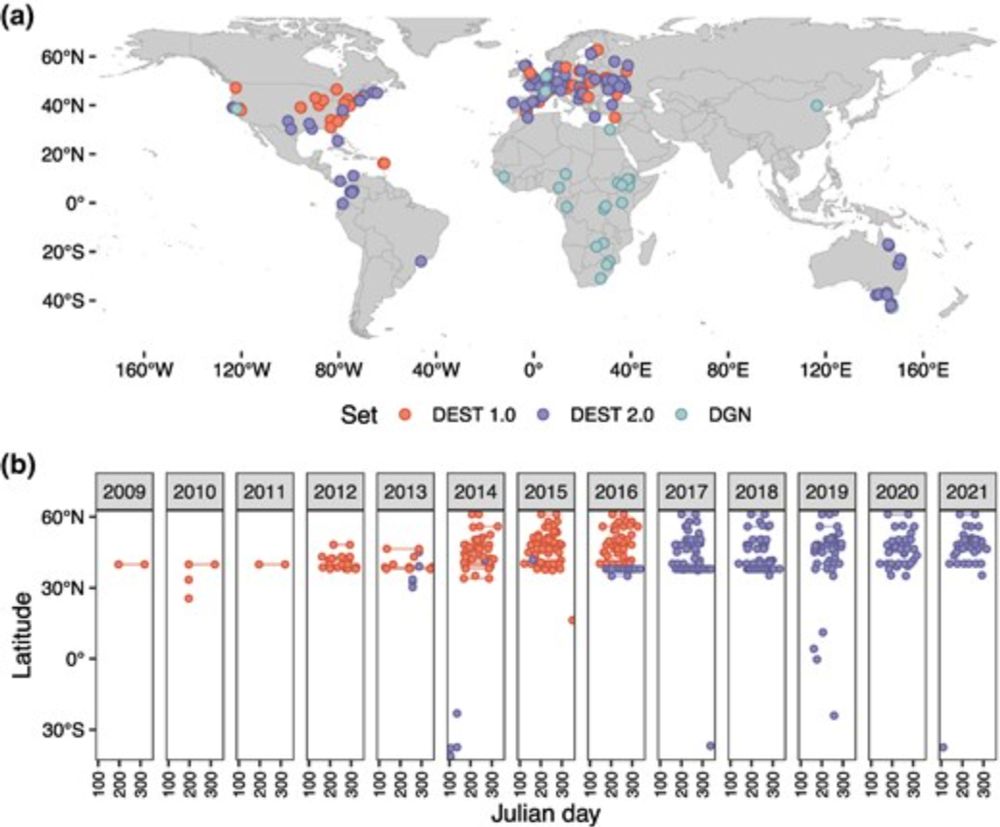
Footprints of Worldwide Adaptation in Structured Populations of Drosophila melanogaster Through the Expanded DEST 2.0 Genomic Resource
Abstract. Large-scale genomic resources can place genetic variation into an ecologically informed context. To advance our understanding of the population g
doi.org
August 19, 2025 at 1:34 AM
doi.org/10.1093/molb...
Thrilled to share our new paper in MBE! 🎉 Presenting DEST 2.0: 530 pooled Drosophila populations spanning 12 years across 6 continents. We map genomic footprints of adaptation, from pesticide resistance to seasonal changes. #PopulationGenetics #Drosophila #Genomics #Evolution
Thrilled to share our new paper in MBE! 🎉 Presenting DEST 2.0: 530 pooled Drosophila populations spanning 12 years across 6 continents. We map genomic footprints of adaptation, from pesticide resistance to seasonal changes. #PopulationGenetics #Drosophila #Genomics #Evolution