



Bob Danley
@imagewildlife.bsky.social
Photographer, naturalist - advocate for wildlife
Powdered Funnel Lichen (Cladonia cenotea) is a pixie cup #lichen commonly found on rotting logs in the Pacific Northwest (McCune and Geiser 2009). McCune et al (2014) hints, find a rotting log here and it is likely this pixie cup species is there. Distribution: www.inaturalist.org/observations...


December 17, 2025 at 12:45 AM
Powdered Funnel Lichen (Cladonia cenotea) is a pixie cup #lichen commonly found on rotting logs in the Pacific Northwest (McCune and Geiser 2009). McCune et al (2014) hints, find a rotting log here and it is likely this pixie cup species is there. Distribution: www.inaturalist.org/observations...
Lighting makes such a difference when photographing wildlife for ID purposes. Fritillary #butterfy species hard to separate without good looks at upper/lower wings. Both left side images are fully illuminated by sunshine; note the right side shaded look. Without bottom left, specific ID can't be had

December 16, 2025 at 9:09 PM
Lighting makes such a difference when photographing wildlife for ID purposes. Fritillary #butterfy species hard to separate without good looks at upper/lower wings. Both left side images are fully illuminated by sunshine; note the right side shaded look. Without bottom left, specific ID can't be had
Meadowhawk #dragonflies change color with age. Female Saffron-winged Meadowhawk featured. Top image is a yellowish immature; bottom image is a red adult female. Average lifespan of flying immature to adult is only one to two months ergo, color change is pretty rapid.

December 16, 2025 at 6:07 AM
Meadowhawk #dragonflies change color with age. Female Saffron-winged Meadowhawk featured. Top image is a yellowish immature; bottom image is a red adult female. Average lifespan of flying immature to adult is only one to two months ergo, color change is pretty rapid.
Common Powderhorn #lichen is very similar to Smooth-footed Powderhorn. Compare the images below with Smooth-footed post from the other day. Similar form podetia, maybe more pointed. Concentrate instead on the primary squamules. Common has smaller, more dissected edge compared to Smooth-footed🫣

December 15, 2025 at 10:39 PM
Common Powderhorn #lichen is very similar to Smooth-footed Powderhorn. Compare the images below with Smooth-footed post from the other day. Similar form podetia, maybe more pointed. Concentrate instead on the primary squamules. Common has smaller, more dissected edge compared to Smooth-footed🫣
Below is an image of Smooth-footed Powderhorn on moss over decaying wood. This is a preferred substrate for this pixie cup #lichen. Now you have a search image for your wildlife walks. Take along a magnifying lens or smartphone to capture your discovery. About 120 species of pixie cup in N.A.

December 15, 2025 at 2:29 AM
Below is an image of Smooth-footed Powderhorn on moss over decaying wood. This is a preferred substrate for this pixie cup #lichen. Now you have a search image for your wildlife walks. Take along a magnifying lens or smartphone to capture your discovery. About 120 species of pixie cup in N.A.
Bold color from Northern Checkerspot, a #butterfly flying during June/July here in western MT (Montana Field Guide). Commonly encountered using moist soil. Though variable, I recognize this checkerspot by the dominant orange cells on the upperwing that "don't appear as two-toned" (Glassberg 2017).

December 14, 2025 at 2:56 AM
Bold color from Northern Checkerspot, a #butterfly flying during June/July here in western MT (Montana Field Guide). Commonly encountered using moist soil. Though variable, I recognize this checkerspot by the dominant orange cells on the upperwing that "don't appear as two-toned" (Glassberg 2017).
Northern Shoveler wearing alternate plumage of spring. As we approach, surpass the shortest day of the year...well it won't be long before the bold colors of this bird will be on your favorite wetland for your #birding pleasure.

December 13, 2025 at 6:49 PM
Northern Shoveler wearing alternate plumage of spring. As we approach, surpass the shortest day of the year...well it won't be long before the bold colors of this bird will be on your favorite wetland for your #birding pleasure.
A key structural feature for identifying pixie cup #lichen to species is the color of apothecia. Apothecia are colored (brown, tan or red vary by species) cup or disk shaped structures that produce spores. In this case, there are red apothecia (right ph.) which makes identification a little easier😊
![Greater Sulphur-cup Lichen is a lichen inhabitant of coniferous forest and rocky outcroppings of the northern Rocky Mountains. The favored substrate in particular are "rotten wood [on lower left of stump above], bark or humus-rich soil" (McCune and Geiser 2009). The podetia are one to three inches tall with splits down the sides. Coloration is grayish-green with yellow tinge. Cups at the apex are irregular and narrow. Red apothecia are fairly common on the cup edges.](https://cdn.bsky.app/img/feed_thumbnail/plain/did:plc:yho6jlgthca2ejc5cjtihrbh/bafkreidcfjxd54jbyfstlpsemzacb42dwex4phlg6udp66vncpfd2vydha@jpeg)
December 12, 2025 at 1:32 AM
A key structural feature for identifying pixie cup #lichen to species is the color of apothecia. Apothecia are colored (brown, tan or red vary by species) cup or disk shaped structures that produce spores. In this case, there are red apothecia (right ph.) which makes identification a little easier😊
Many #lichen species are specific to growing on a certain substrate, i.e. soil, rock, bark or wood. Additionally moss may be a layer between a lichen, base substrate. Example pictured is Mealy Pixie Cup growing on moss over Douglas Fir bark. Fun finding 'islands' of lichen tucked in bark crevices.

December 10, 2025 at 11:59 PM
Many #lichen species are specific to growing on a certain substrate, i.e. soil, rock, bark or wood. Additionally moss may be a layer between a lichen, base substrate. Example pictured is Mealy Pixie Cup growing on moss over Douglas Fir bark. Fun finding 'islands' of lichen tucked in bark crevices.
Early winter snow melted off enough for the ground to be exposed. So off I went to visit one of my favorite spots for #lichen. A roadcut turned out to be a real hotspot. Took about 130 photos; most were of a pixie cup named Western Wand Lichen. Below are two images of this species.

December 10, 2025 at 4:08 AM
Early winter snow melted off enough for the ground to be exposed. So off I went to visit one of my favorite spots for #lichen. A roadcut turned out to be a real hotspot. Took about 130 photos; most were of a pixie cup named Western Wand Lichen. Below are two images of this species.
Photographed a purplish Russula #mushroom back in Sept. 2022. It could be one of a handful species. I didn't take enough photos or note smell, change of color with bruising. These variables could have led to a specific ID. No worries, still neat to look at 👍😊

December 9, 2025 at 9:46 PM
Photographed a purplish Russula #mushroom back in Sept. 2022. It could be one of a handful species. I didn't take enough photos or note smell, change of color with bruising. These variables could have led to a specific ID. No worries, still neat to look at 👍😊
Found Yellow Swamp Brittlegill under birch immediate an irrigation ditch during late September. Not a large grouping. Love the deep yellow color of this #mushroom. Maps from INaturalist indicate a dense distribution in eastern U.S., scattered in Pacific NW and Midwest.

December 9, 2025 at 5:33 AM
Found Yellow Swamp Brittlegill under birch immediate an irrigation ditch during late September. Not a large grouping. Love the deep yellow color of this #mushroom. Maps from INaturalist indicate a dense distribution in eastern U.S., scattered in Pacific NW and Midwest.
Cute little light green pixie cup #lichen: Crowned Pixie-Cup. Appropriately named, note the obvious dentate (toothed cup edges) that resemble a crown. Usually < 1 inch tall. Habitat: duff, rotten wood. Fairly common in western Montana (McCune et al 2014).

December 8, 2025 at 5:53 AM
Cute little light green pixie cup #lichen: Crowned Pixie-Cup. Appropriately named, note the obvious dentate (toothed cup edges) that resemble a crown. Usually < 1 inch tall. Habitat: duff, rotten wood. Fairly common in western Montana (McCune et al 2014).
There are conflicting names and identity for this #mushroom. Traditionally named Bicolored Russula, now assigned to the Emetic Brittlegill (Russula emetica) group due to recent research (Siegel and Schwarz 2024). Recognized by yellow center to pinkish-red cap.

December 8, 2025 at 5:07 AM
There are conflicting names and identity for this #mushroom. Traditionally named Bicolored Russula, now assigned to the Emetic Brittlegill (Russula emetica) group due to recent research (Siegel and Schwarz 2024). Recognized by yellow center to pinkish-red cap.
Giant Pinedrops is a different kind of #wildflower. Has holiday coloration, not unusual, but this perennial has zero chlorophyll! That's right it does not convert sunlight to biological building blocks. Instead has symbiotic relationship with soil fungi from which it receives nutrients. See alt text

December 7, 2025 at 5:30 AM
Giant Pinedrops is a different kind of #wildflower. Has holiday coloration, not unusual, but this perennial has zero chlorophyll! That's right it does not convert sunlight to biological building blocks. Instead has symbiotic relationship with soil fungi from which it receives nutrients. See alt text
Second in a series featuring the colorful caps of Russula #mushrooms. I took this photo several years ago and didn't pay attention to the finer details necessary for ID. Guessing this could be Charcoal Burner (Russula cyanoxantha). Even without a specific ID it is still a cool looking mushroom.

December 6, 2025 at 8:31 PM
Second in a series featuring the colorful caps of Russula #mushrooms. I took this photo several years ago and didn't pay attention to the finer details necessary for ID. Guessing this could be Charcoal Burner (Russula cyanoxantha). Even without a specific ID it is still a cool looking mushroom.
Green colored #mushrooms are not very common on the landscape. If found and large, likely they're of the Russula genus which can appear in a rainbow of colors. Pictured below is one example, likely Green Brittlegill. Appropriately named; chalk-like when breaking apart. Species ID very difficult.

December 6, 2025 at 5:08 AM
Green colored #mushrooms are not very common on the landscape. If found and large, likely they're of the Russula genus which can appear in a rainbow of colors. Pictured below is one example, likely Green Brittlegill. Appropriately named; chalk-like when breaking apart. Species ID very difficult.
AI is already assisting in wildlife conservation (illuminate.google.com/library?play...). Listen to a Google Illuminate generated audio summary of two technical papers outlining efforts in this regard. Illuminate is a digital tool that distills complex issues for customized learning.
Illuminate | Learn Your Way
Transform research papers into AI-generated audio summaries with Illuminate, your Gen AI tool for understanding complex content faster.
illuminate.google.com
December 5, 2025 at 10:14 PM
AI is already assisting in wildlife conservation (illuminate.google.com/library?play...). Listen to a Google Illuminate generated audio summary of two technical papers outlining efforts in this regard. Illuminate is a digital tool that distills complex issues for customized learning.
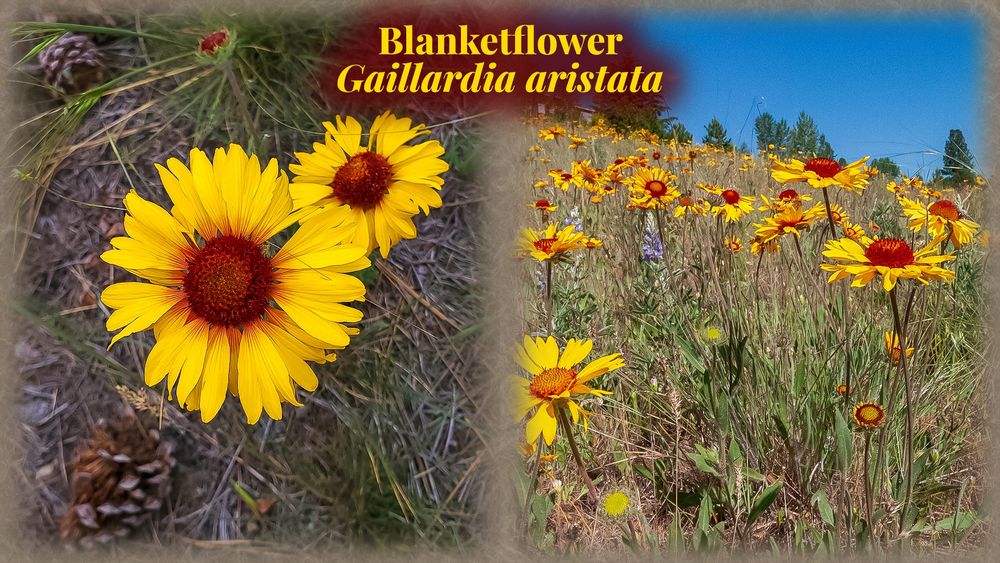
Winter has arrived. Cloud deck and fog to the ground. Snow covering the ground. White and gray landscape. Posted below is beaming color from June. Blanketflower, a favorite, is a very common #wildflower of the Pacific Northwest. Scattered across e. U.S. and Europe. Habitat: open meadows, prairies.
December 5, 2025 at 7:57 PM
Winter has arrived. Cloud deck and fog to the ground. Snow covering the ground. White and gray landscape. Posted below is beaming color from June. Blanketflower, a favorite, is a very common #wildflower of the Pacific Northwest. Scattered across e. U.S. and Europe. Habitat: open meadows, prairies.
What was your favorite #wildflower of 2025? Linnaeus published 'Species Plantarum' in 1753. Now considered the starting point of modern botanical nomenclature. It described 7,300 species. Twinflower was his personal wildflower favorite. What's yours?

December 5, 2025 at 4:10 AM
What was your favorite #wildflower of 2025? Linnaeus published 'Species Plantarum' in 1753. Now considered the starting point of modern botanical nomenclature. It described 7,300 species. Twinflower was his personal wildflower favorite. What's yours?

You can smile, maybe laugh out loud...you made it through Hump-Day. Alternatively, you're taking time out from early winter visiting the Lower Rio Grande Valley (Mission TX et al). You will get reminded to smile any day of the week by the upperwing pattern on this #butterfly. Life is good :-)

December 4, 2025 at 1:11 AM
You can smile, maybe laugh out loud...you made it through Hump-Day. Alternatively, you're taking time out from early winter visiting the Lower Rio Grande Valley (Mission TX et al). You will get reminded to smile any day of the week by the upperwing pattern on this #butterfly. Life is good :-)
Get out seed catalogs or yard photos; start determining what/where you'll plant flowers 2026. #Butterflies, like pictured Red Admiral, will use your plantings. Or don't weed. Stinging nettle is a larval host; yup, a native considered a weed. Allow a patch in moist spot, it might raise a family.

December 2, 2025 at 11:39 PM
Get out seed catalogs or yard photos; start determining what/where you'll plant flowers 2026. #Butterflies, like pictured Red Admiral, will use your plantings. Or don't weed. Stinging nettle is a larval host; yup, a native considered a weed. Allow a patch in moist spot, it might raise a family.
This organic brilliance is seen primarily during June. Coville's Paintbrush is an endemic of c/s Idaho and w-c Montana. The glowing red parts of this plant aren't flowers! Instead they're bracts surrounding tiny flowers. Habitat: Stony, granitic soil of slopes and summits (Montana Field Guide).

December 2, 2025 at 8:35 PM
This organic brilliance is seen primarily during June. Coville's Paintbrush is an endemic of c/s Idaho and w-c Montana. The glowing red parts of this plant aren't flowers! Instead they're bracts surrounding tiny flowers. Habitat: Stony, granitic soil of slopes and summits (Montana Field Guide).
Posting of Saffron-winged Meadowhawk is a reminder there is no time like the present to fly, for us metaphorically. And okay, all #dragonfly activity in the temperate parts of the country is not happening (winter). Still the message remains, think then take action. Build good habits towards 2026 :-)

December 2, 2025 at 12:19 AM
Posting of Saffron-winged Meadowhawk is a reminder there is no time like the present to fly, for us metaphorically. And okay, all #dragonfly activity in the temperate parts of the country is not happening (winter). Still the message remains, think then take action. Build good habits towards 2026 :-)