


Jack Rayner
@jackrayner.bsky.social
Reposted by Jack Rayner

New paper out: “allopatric” Drosophila species aren’t so allopatric after all. We show that most currently allopatric species pairs probably overlapped in the past and exchanged genes at levels similar to sympatric pairs. @evolletters.bsky.social
doi.org/10.1093/evle... [1/6]
doi.org/10.1093/evle... [1/6]

Genomic analyses in Drosophila do not support the classic allopatric model of speciation
Abstract. The allopatric model of speciation has dominated our understanding of speciation biology and biogeography since the Modern Synthesis. It is uncon
doi.org
January 15, 2026 at 11:58 AM
New paper out: “allopatric” Drosophila species aren’t so allopatric after all. We show that most currently allopatric species pairs probably overlapped in the past and exchanged genes at levels similar to sympatric pairs. @evolletters.bsky.social
doi.org/10.1093/evle... [1/6]
doi.org/10.1093/evle... [1/6]
Reposted by Jack Rayner

Different transcriptional responses to developmental versus short-term acclimation temperatures in Pieris rapae https://www.biorxiv.org/content/10.1101/2025.11.11.686846v1
November 13, 2025 at 12:31 AM
Different transcriptional responses to developmental versus short-term acclimation temperatures in Pieris rapae https://www.biorxiv.org/content/10.1101/2025.11.11.686846v1
These crickets are targeted by a parasitoid fly that is attracted to their song. We found fly attack rates vary across populations which influences allelic variation in the region underlying a protective male-silencing 'curly-wing' phenotype. Also, these crickets give birth to a new type of ant


September 4, 2025 at 1:47 PM
These crickets are targeted by a parasitoid fly that is attracted to their song. We found fly attack rates vary across populations which influences allelic variation in the region underlying a protective male-silencing 'curly-wing' phenotype. Also, these crickets give birth to a new type of ant
A finding we didn't anticipate is that these small, fragmented populations share many large/very large structural variants - presumably inversions, presumably influenced by balancing selection. We don't know what their phenotypic consequences are, but they have substantial effects on gene expression

September 4, 2025 at 1:28 PM
A finding we didn't anticipate is that these small, fragmented populations share many large/very large structural variants - presumably inversions, presumably influenced by balancing selection. We don't know what their phenotypic consequences are, but they have substantial effects on gene expression
We have a preprint out for our study testing conditions/signatures of repeated adaptation in multiple wild cricket populations. Feedback welcome!
www.biorxiv.org/content/10.1...
www.biorxiv.org/content/10.1...

Genomic signatures of local adaptation across parasitised cricket populations
Host-parasite interactions are predicted to exhibit geographic heterogeneity, creating the opportunity for local adaptation. This is difficult to detect because it requires knowledge of selection pres...
www.biorxiv.org
September 4, 2025 at 1:05 PM
We have a preprint out for our study testing conditions/signatures of repeated adaptation in multiple wild cricket populations. Feedback welcome!
www.biorxiv.org/content/10.1...
www.biorxiv.org/content/10.1...
Don't have anything like that, sorry.
April 17, 2025 at 6:13 PM
Don't have anything like that, sorry.
Reposted by Jack Rayner

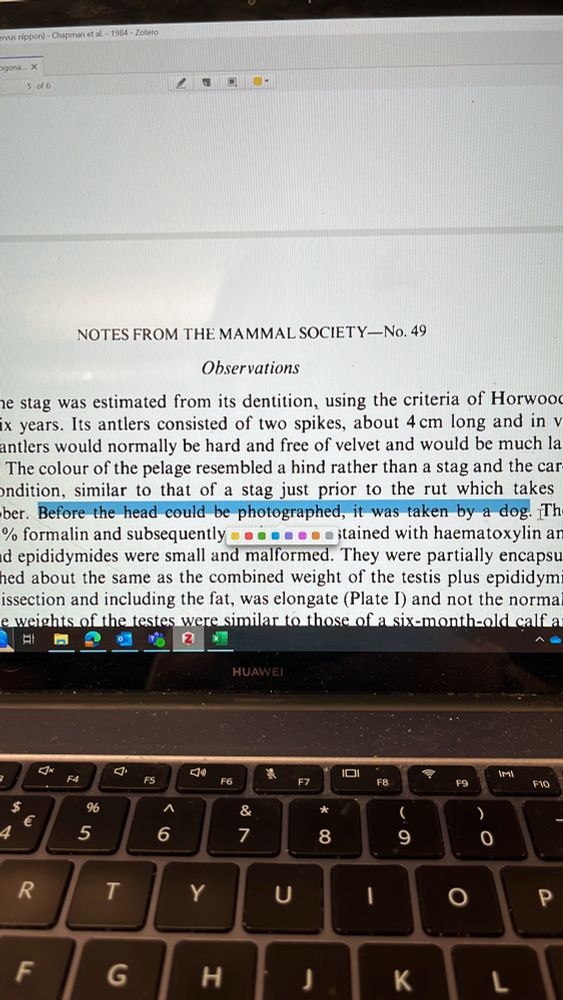
Today in: sentences that make me love reading old scientific papers
March 7, 2025 at 12:41 PM
Today in: sentences that make me love reading old scientific papers
Reposted by Jack Rayner

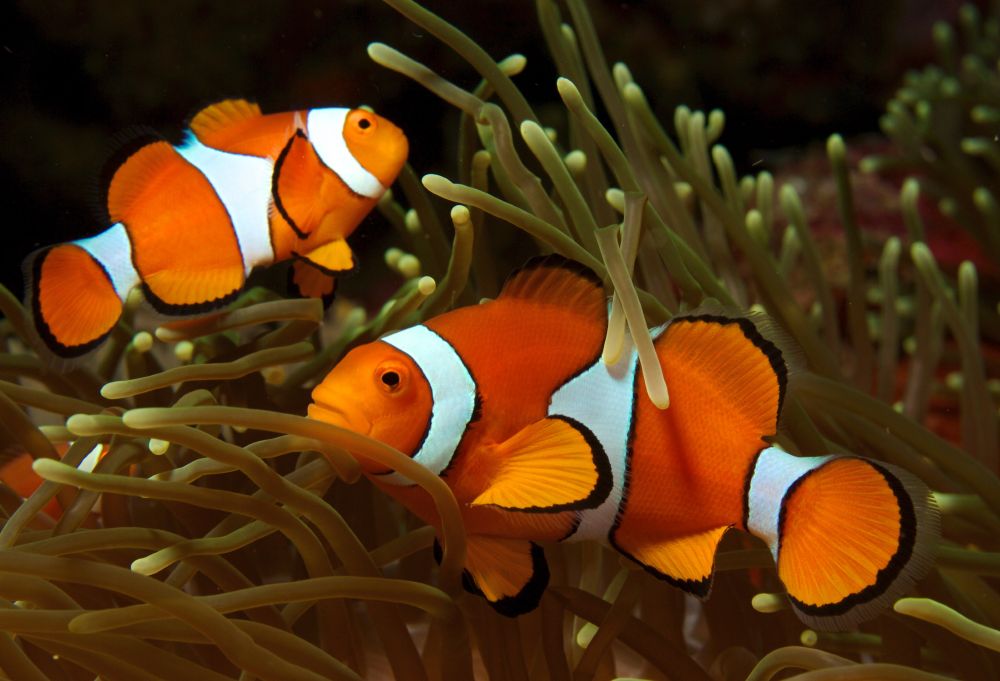
Our new paper on sexual antagonism in sequential hermaphrodites has now been published! royalsocietypublishing.org/doi/full/10....
November 22, 2023 at 6:31 AM
Our new paper on sexual antagonism in sequential hermaphrodites has now been published! royalsocietypublishing.org/doi/full/10....
Reposted by Jack Rayner

Competing adaptations maintain non-adaptive variation in a wild cricket population https://www.biorxiv.org/content/10.1101/2023.10.14.562337v1

Competing adaptations maintain non-adaptive variation in a wild cricket population https://www.biorxiv.org/content/10.1101/2023.10.14.562337v1
How emerging adaptive variants interact is an important factor in the evolution of wild populations.
www.biorxiv.org
October 18, 2023 at 5:32 PM
Competing adaptations maintain non-adaptive variation in a wild cricket population https://www.biorxiv.org/content/10.1101/2023.10.14.562337v1