




M. Saïd H. Unger
@mshu.bsky.social
Research Assistant at the University of Münster
Reposted by M. Saïd H. Unger

4 𝐎𝐩𝐞𝐧 𝐏𝐨𝐬𝐢𝐭𝐢𝐨𝐧𝐬 (𝐏𝐡𝐝, 𝐏𝐨𝐬𝐭𝐝𝐨𝐜, 𝐅𝐮𝐥𝐥 𝐏𝐫𝐨𝐟𝐞𝐬𝐬𝐨𝐫) 𝐚𝐭 𝐭𝐡𝐞 𝐃𝐃𝐂!!! 😯🤩
The DDC is expanding its team with *4* new opportunities for researchers passionate about the intersection of AI, media, democracy, & society.
Deadline: 📅 Feb 15 for 3 of these roles!
The Professorship deadline follows in March.🧵👇
The DDC is expanding its team with *4* new opportunities for researchers passionate about the intersection of AI, media, democracy, & society.
Deadline: 📅 Feb 15 for 3 of these roles!
The Professorship deadline follows in March.🧵👇

Postdoc position(s) at The Digital Democracy Centre
Application deadline: February 15th, 2026, 23:59 CET/CEST.
fa-eosd-saasfaprod1.fa.ocs.oraclecloud.com
January 21, 2026 at 12:12 PM
4 𝐎𝐩𝐞𝐧 𝐏𝐨𝐬𝐢𝐭𝐢𝐨𝐧𝐬 (𝐏𝐡𝐝, 𝐏𝐨𝐬𝐭𝐝𝐨𝐜, 𝐅𝐮𝐥𝐥 𝐏𝐫𝐨𝐟𝐞𝐬𝐬𝐨𝐫) 𝐚𝐭 𝐭𝐡𝐞 𝐃𝐃𝐂!!! 😯🤩
The DDC is expanding its team with *4* new opportunities for researchers passionate about the intersection of AI, media, democracy, & society.
Deadline: 📅 Feb 15 for 3 of these roles!
The Professorship deadline follows in March.🧵👇
The DDC is expanding its team with *4* new opportunities for researchers passionate about the intersection of AI, media, democracy, & society.
Deadline: 📅 Feb 15 for 3 of these roles!
The Professorship deadline follows in March.🧵👇
Reposted by M. Saïd H. Unger

New @gesis.org data set publication: "Social Media Accounts of German Candidates from the German Federal Election 2025"
doi.org/10.4232/1.14...
doi.org/10.4232/1.14...
GESIS-Suche
doi.org
January 15, 2026 at 9:26 AM
New @gesis.org data set publication: "Social Media Accounts of German Candidates from the German Federal Election 2025"
doi.org/10.4232/1.14...
doi.org/10.4232/1.14...
Reposted by M. Saïd H. Unger

Identifying #SyntheticDisinformation: @nilsvief.bsky.social, @boesch.bsky.social, @mshu.bsky.social, Johanna Klapproth, @zwizwasvens.bsky.social, @thorstenquandt.bsky.social, & @christianstoecker.de investigated detection strategies of German elite actors. doi.org/10.5771/2192...

January 14, 2026 at 4:15 PM
Identifying #SyntheticDisinformation: @nilsvief.bsky.social, @boesch.bsky.social, @mshu.bsky.social, Johanna Klapproth, @zwizwasvens.bsky.social, @thorstenquandt.bsky.social, & @christianstoecker.de investigated detection strategies of German elite actors. doi.org/10.5771/2192...
Reposted by M. Saïd H. Unger
We’re kicking off the year with the announcement of our 2025 special issue on how #SyntheticMedia challenge epistemic institutions. Many thanks to Alexander Godulla and @cphoffmann.bsky.social for their excellent work as guest editors. doi.org/10.5771/2192...

January 8, 2026 at 11:45 AM
We’re kicking off the year with the announcement of our 2025 special issue on how #SyntheticMedia challenge epistemic institutions. Many thanks to Alexander Godulla and @cphoffmann.bsky.social for their excellent work as guest editors. doi.org/10.5771/2192...
Reposted by M. Saïd H. Unger
Such important work! Men across the globe publish around 40% of articles in communication and get almost 60% of the citations. Women publish almost 60% but get only a little over 40% of the citations. This gap has remained almost constant since 2000. #frozen #comsky academic.oup.com/anncom/advan...

Authors’ gender and productivity as predictors of reciprocal dynamics in publications and citations in communication
Abstract. Gender bias in academic publishing and citation practices in communication has been discussed extensively, yet the link between the two remains p
academic.oup.com
January 5, 2026 at 4:02 PM
Such important work! Men across the globe publish around 40% of articles in communication and get almost 60% of the citations. Women publish almost 60% but get only a little over 40% of the citations. This gap has remained almost constant since 2000. #frozen #comsky academic.oup.com/anncom/advan...
Reposted by M. Saïd H. Unger
📢 New #OpenAccess!
Why do some professors appear in the media far more than others?
#RH_Heiberger @BasHofstra #S_Unger find both patterns of cumulative advantage & gender inequality, with men more likely to become “short-listed”!
➡️ Read it ungated at: doi.org/10.1093/esr/jcaf037
image.png
Why do some professors appear in the media far more than others?
#RH_Heiberger @BasHofstra #S_Unger find both patterns of cumulative advantage & gender inequality, with men more likely to become “short-listed”!
➡️ Read it ungated at: doi.org/10.1093/esr/jcaf037
image.png

Professors in the media: dynamics of cumulative advantage, reputation, and gender
Abstract. Translation of science to a general public is increasingly important in modern academia. Yet, there is little knowledge on whether and why scient
doi.org
December 3, 2025 at 8:17 AM
📢 New #OpenAccess!
Why do some professors appear in the media far more than others?
#RH_Heiberger @BasHofstra #S_Unger find both patterns of cumulative advantage & gender inequality, with men more likely to become “short-listed”!
➡️ Read it ungated at: doi.org/10.1093/esr/jcaf037
image.png
Why do some professors appear in the media far more than others?
#RH_Heiberger @BasHofstra #S_Unger find both patterns of cumulative advantage & gender inequality, with men more likely to become “short-listed”!
➡️ Read it ungated at: doi.org/10.1093/esr/jcaf037
image.png
Reposted by M. Saïd H. Unger
After a long time in development, {traktok} #rstats is now finally on CRAN!
Whether you have access to the Research API or just want to scrape some pages, traktok has you covered
jbgruber.github.io/traktok/
Whether you have access to the Research API or just want to scrape some pages, traktok has you covered
jbgruber.github.io/traktok/
November 24, 2025 at 8:50 PM
After a long time in development, {traktok} #rstats is now finally on CRAN!
Whether you have access to the Research API or just want to scrape some pages, traktok has you covered
jbgruber.github.io/traktok/
Whether you have access to the Research API or just want to scrape some pages, traktok has you covered
jbgruber.github.io/traktok/
What gets professors into the media?
📢 New open access publication in @europeansocreview.bsky.social together with Raphael Heiberger from @s7css.bsky.social and @bashofstra.bsky.social!
👉 doi.org/10.1093/esr/...
📢 New open access publication in @europeansocreview.bsky.social together with Raphael Heiberger from @s7css.bsky.social and @bashofstra.bsky.social!
👉 doi.org/10.1093/esr/...

Professors in the media: dynamics of cumulative advantage, reputation, and gender
Abstract. Translation of science to a general public is increasingly important in modern academia. Yet, there is little knowledge on whether and why scient
doi.org
November 21, 2025 at 8:44 AM
What gets professors into the media?
📢 New open access publication in @europeansocreview.bsky.social together with Raphael Heiberger from @s7css.bsky.social and @bashofstra.bsky.social!
👉 doi.org/10.1093/esr/...
📢 New open access publication in @europeansocreview.bsky.social together with Raphael Heiberger from @s7css.bsky.social and @bashofstra.bsky.social!
👉 doi.org/10.1093/esr/...
📣 Come work with us!
🎓 We’re hiring!
Two researcher / PhD positions in the ERC project DANCE – Dark Nerd Communities at the University of Münster 🇪🇺
🧮 Quantitative: survey, lab + field experiments
🎙️ Qualitative: ethnography, focus groups, interviews
Apply by 28 Nov 2025 👇
#AcademicJobs #ERC #PhD #CommunicationResearch
Two researcher / PhD positions in the ERC project DANCE – Dark Nerd Communities at the University of Münster 🇪🇺
🧮 Quantitative: survey, lab + field experiments
🎙️ Qualitative: ethnography, focus groups, interviews
Apply by 28 Nov 2025 👇
#AcademicJobs #ERC #PhD #CommunicationResearch


November 2, 2025 at 12:17 PM
📣 Come work with us!
Reposted by M. Saïd H. Unger

✨ New open-access paper ✨
We explored language similarity between Querdenken (Telegram) and German politicians (Twitter). In short: AfD’s communication most similar, but parts of FDP and CDU/CSU also find common ground through discrediting left-wing politics.
Full paper:
🔗 doi.org/10.1080/1369...
We explored language similarity between Querdenken (Telegram) and German politicians (Twitter). In short: AfD’s communication most similar, but parts of FDP and CDU/CSU also find common ground through discrediting left-wing politics.
Full paper:
🔗 doi.org/10.1080/1369...

The language similarity between corona protest mobilizers on Telegram and German politicians on Twitter
Protest movements against COVID-19 containment measures, like Germany’s Querdenken, aim to put their position on the political agenda. The German far-right party Alternative for Germany (AfD) acted...
doi.org
August 15, 2025 at 9:15 AM
✨ New open-access paper ✨
We explored language similarity between Querdenken (Telegram) and German politicians (Twitter). In short: AfD’s communication most similar, but parts of FDP and CDU/CSU also find common ground through discrediting left-wing politics.
Full paper:
🔗 doi.org/10.1080/1369...
We explored language similarity between Querdenken (Telegram) and German politicians (Twitter). In short: AfD’s communication most similar, but parts of FDP and CDU/CSU also find common ground through discrediting left-wing politics.
Full paper:
🔗 doi.org/10.1080/1369...
Reposted by M. Saïd H. Unger

New publication, out in Political Analysis:
There is an increasing array of tools to measure facets of morality in political language. But while they ostensibly measure the same concept, do they actually?
I and @fhopp.bsky.social set out to see what happens.
There is an increasing array of tools to measure facets of morality in political language. But while they ostensibly measure the same concept, do they actually?
I and @fhopp.bsky.social set out to see what happens.
Moral Foundation Measurements Fail to Converge on Multilingual Party Manifestos | Political Analysis | Cambridge Core
Moral Foundation Measurements Fail to Converge on Multilingual Party Manifestos
www.cambridge.org
August 19, 2025 at 7:52 AM
New publication, out in Political Analysis:
There is an increasing array of tools to measure facets of morality in political language. But while they ostensibly measure the same concept, do they actually?
I and @fhopp.bsky.social set out to see what happens.
There is an increasing array of tools to measure facets of morality in political language. But while they ostensibly measure the same concept, do they actually?
I and @fhopp.bsky.social set out to see what happens.
Reposted by M. Saïd H. Unger

😅 Late to share this one (summer + other projects got in the way), but this #aBitOfCCS episode with @ellamcloughlin.bsky.social is too good to skip.
How do you measure something as complex as uncertainty in political speech? 🎙️
🎧 Listen here: aboutccs.net/abitofccs/
#PoliticalSpeech #CSS
How do you measure something as complex as uncertainty in political speech? 🎙️
🎧 Listen here: aboutccs.net/abitofccs/
#PoliticalSpeech #CSS
#aBitOfCCS – What is it about CCS
aboutccs.net
August 12, 2025 at 7:35 AM
😅 Late to share this one (summer + other projects got in the way), but this #aBitOfCCS episode with @ellamcloughlin.bsky.social is too good to skip.
How do you measure something as complex as uncertainty in political speech? 🎙️
🎧 Listen here: aboutccs.net/abitofccs/
#PoliticalSpeech #CSS
How do you measure something as complex as uncertainty in political speech? 🎙️
🎧 Listen here: aboutccs.net/abitofccs/
#PoliticalSpeech #CSS
Reposted by M. Saïd H. Unger
My first academic paper is out (open access). It's a study of the organisation of Prigozhin's Patriot Media Group, based on a dataset of 818 CVs of its employees downloaded shortly after the full-scale invasion of Ukraine in 2022. doi.org/10.1080/1075... The main findings are in the thread below.
Trolls Behind the Mask of Journalists: How Yevgeny Prigozhin’s Patriot Media Group Was Organized
The Patriot Media Group, sponsored by Yevgeny Prigozhin, the founder of the Kremlin’s “troll farm,” represents a distinct type of media organization that does not fit any of the contemporary Russia...
doi.org
January 8, 2025 at 7:39 PM
My first academic paper is out (open access). It's a study of the organisation of Prigozhin's Patriot Media Group, based on a dataset of 818 CVs of its employees downloaded shortly after the full-scale invasion of Ukraine in 2022. doi.org/10.1080/1075... The main findings are in the thread below.
Reposted by M. Saïd H. Unger

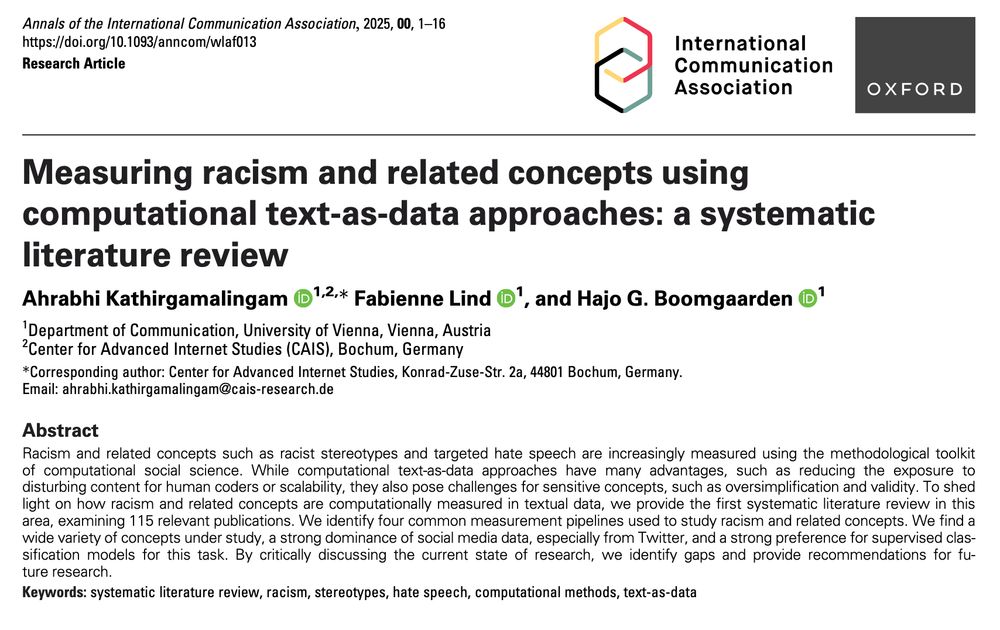
Thinking about using #CSS methods to study #racism, #stereotypes or #hate speech in text? 📐
👉 Check out my first dissertation paper co-authored by @fabiennelind.bsky.social and @hajoboo.bsky.social just published in Annals of the ICA! @icahdq.bsky.social 🥳
🔗 doi.org/10.1093/annc...
👉 Check out my first dissertation paper co-authored by @fabiennelind.bsky.social and @hajoboo.bsky.social just published in Annals of the ICA! @icahdq.bsky.social 🥳
🔗 doi.org/10.1093/annc...
July 21, 2025 at 6:43 AM
Thinking about using #CSS methods to study #racism, #stereotypes or #hate speech in text? 📐
👉 Check out my first dissertation paper co-authored by @fabiennelind.bsky.social and @hajoboo.bsky.social just published in Annals of the ICA! @icahdq.bsky.social 🥳
🔗 doi.org/10.1093/annc...
👉 Check out my first dissertation paper co-authored by @fabiennelind.bsky.social and @hajoboo.bsky.social just published in Annals of the ICA! @icahdq.bsky.social 🥳
🔗 doi.org/10.1093/annc...
✨New Publication in JEPOP✨
How do societal stakeholders understand and detect disinformation?
www.tandfonline.com/doi/full/10....
How do societal stakeholders understand and detect disinformation?
www.tandfonline.com/doi/full/10....
Features of disinformation: an expert interview study on the perception of disinformation among political, governmental, media and business elites in Germany
To curb the spread of disinformation, societal decision-makers are working intensively on the design of effective intervention strategies. Primarily elites from the sectors of politics, administrat...
www.tandfonline.com
July 14, 2025 at 3:49 PM
✨New Publication in JEPOP✨
How do societal stakeholders understand and detect disinformation?
www.tandfonline.com/doi/full/10....
How do societal stakeholders understand and detect disinformation?
www.tandfonline.com/doi/full/10....
Reposted by M. Saïd H. Unger

Still confused, but uber-happy. The news came out right after #ICA25 has ended:
The European Research Council #ERC has awarded me an ERC Advanced Grant!
Project DANCE on "Dark Nerd Communities" runs for 5 years with 2.5 million Euros funding. Immensely grateful!
erc.europa.eu/.../erc-2024...
The European Research Council #ERC has awarded me an ERC Advanced Grant!
Project DANCE on "Dark Nerd Communities" runs for 5 years with 2.5 million Euros funding. Immensely grateful!
erc.europa.eu/.../erc-2024...
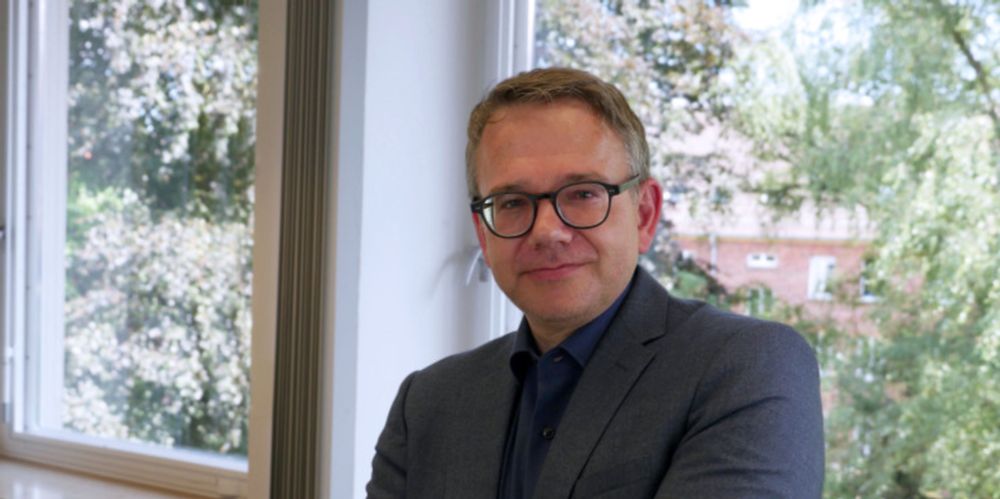
EU-Forschungsrat zeichnet Thorsten Quandt mit Advanced Grant aus
Der Kommunikationswissenschaftler Prof. Dr. Thorsten Quandt von der Universität Münster erhält einen mit 2,5 Millionen Euro dotierten „ERC Advanced Grant“ des Europäischen Forschungsrats. Mit dieser F...
www.uni-muenster.de
June 17, 2025 at 4:29 PM
Still confused, but uber-happy. The news came out right after #ICA25 has ended:
The European Research Council #ERC has awarded me an ERC Advanced Grant!
Project DANCE on "Dark Nerd Communities" runs for 5 years with 2.5 million Euros funding. Immensely grateful!
erc.europa.eu/.../erc-2024...
The European Research Council #ERC has awarded me an ERC Advanced Grant!
Project DANCE on "Dark Nerd Communities" runs for 5 years with 2.5 million Euros funding. Immensely grateful!
erc.europa.eu/.../erc-2024...
Reposted by M. Saïd H. Unger

Der Kommunikationswissenschaftler Prof. Thorsten Quandt erhält einen mit 2,5 Mio. € dotierten „ERC Advanced Grant“ des Europäischen Forschungsrats. Damit wird er in den kommenden 5 Jahren erforschen, wie bestimmte Online-Gruppen, die vorw. aus jungen Männern bestehen, zu gefährlichen Milieus werden.

EU-Forschungsrat zeichnet Thorsten Quandt mit Advanced Grant aus
Der Kommunikationswissenschaftler Prof. Dr. Thorsten Quandt von der Universität Münster erhält einen mit 2,5 Millionen Euro dotierten „ERC Advanced Grant“ des Europäischen Forschungsrats. Mit dieser F...
www.uni-muenster.de
June 17, 2025 at 3:26 PM
Der Kommunikationswissenschaftler Prof. Thorsten Quandt erhält einen mit 2,5 Mio. € dotierten „ERC Advanced Grant“ des Europäischen Forschungsrats. Damit wird er in den kommenden 5 Jahren erforschen, wie bestimmte Online-Gruppen, die vorw. aus jungen Männern bestehen, zu gefährlichen Milieus werden.
Reposted by M. Saïd H. Unger
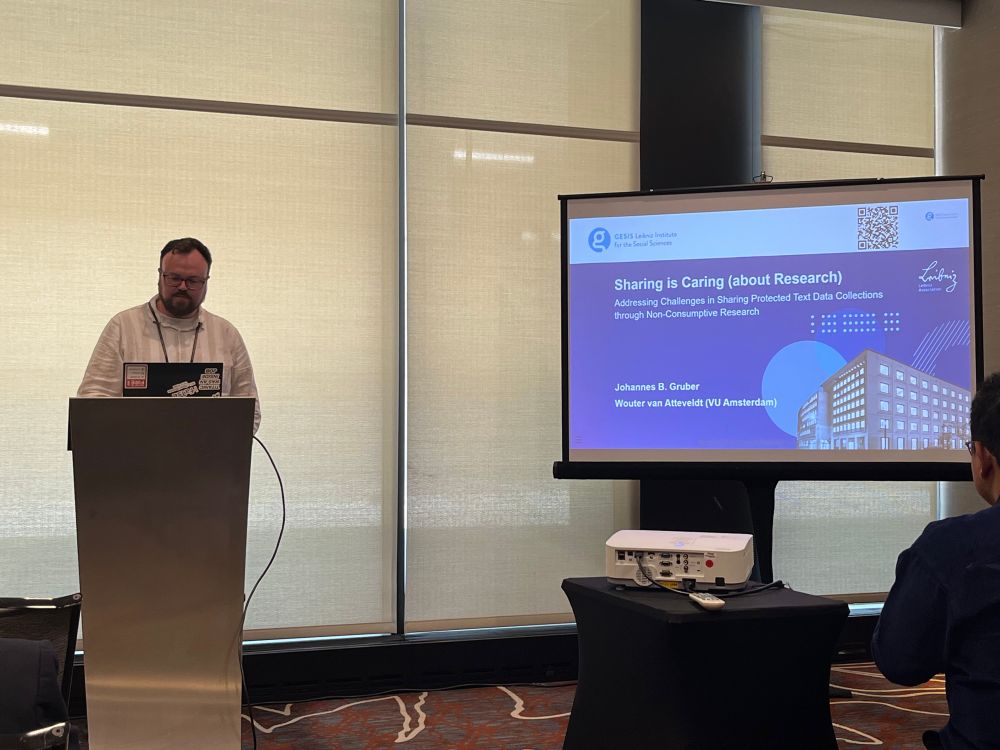
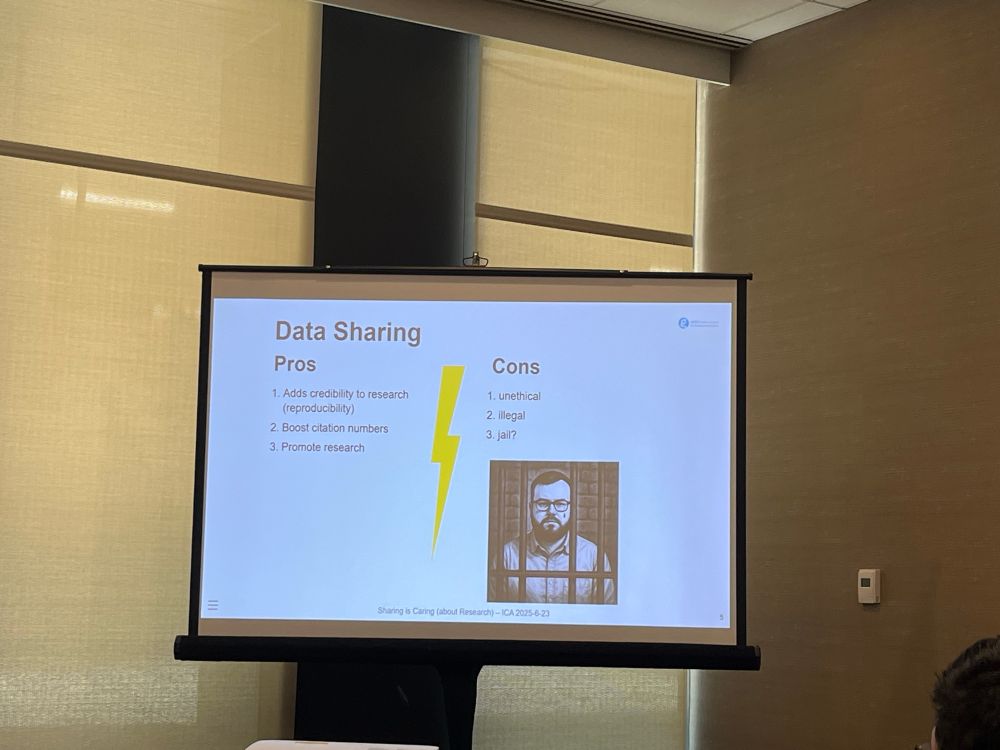
@jbgruber.bsky.social & @vanatteveldt.com argue that as data become more difficult to collect (no APIs, scraping more difficult) we need to share existing data more. And how non-consumptive research is a way to do that without goi g to jail! #ica25
June 16, 2025 at 5:07 PM
@jbgruber.bsky.social & @vanatteveldt.com argue that as data become more difficult to collect (no APIs, scraping more difficult) we need to share existing data more. And how non-consumptive research is a way to do that without goi g to jail! #ica25
Reposted by M. Saïd H. Unger
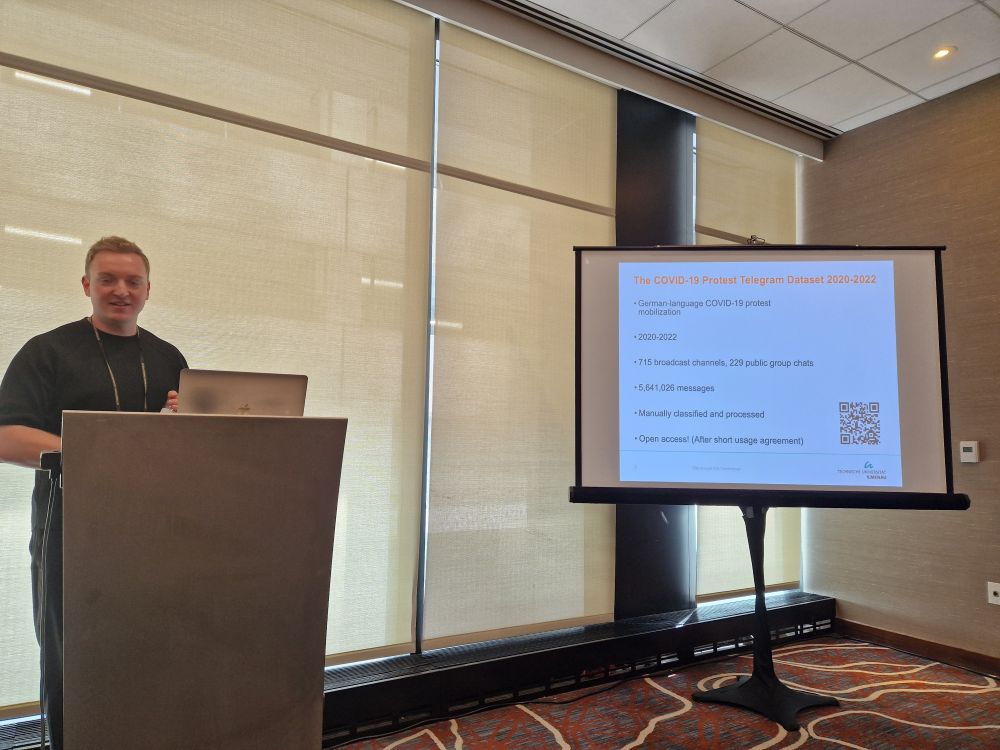
You want to study German covid-19 protests? @maxzehring.bsky.social, @hdschulze.bsky.social and @buehling.bsky.social got you covered with their dataset! #ica25
June 16, 2025 at 4:34 PM
You want to study German covid-19 protests? @maxzehring.bsky.social, @hdschulze.bsky.social and @buehling.bsky.social got you covered with their dataset! #ica25
Reposted by M. Saïd H. Unger

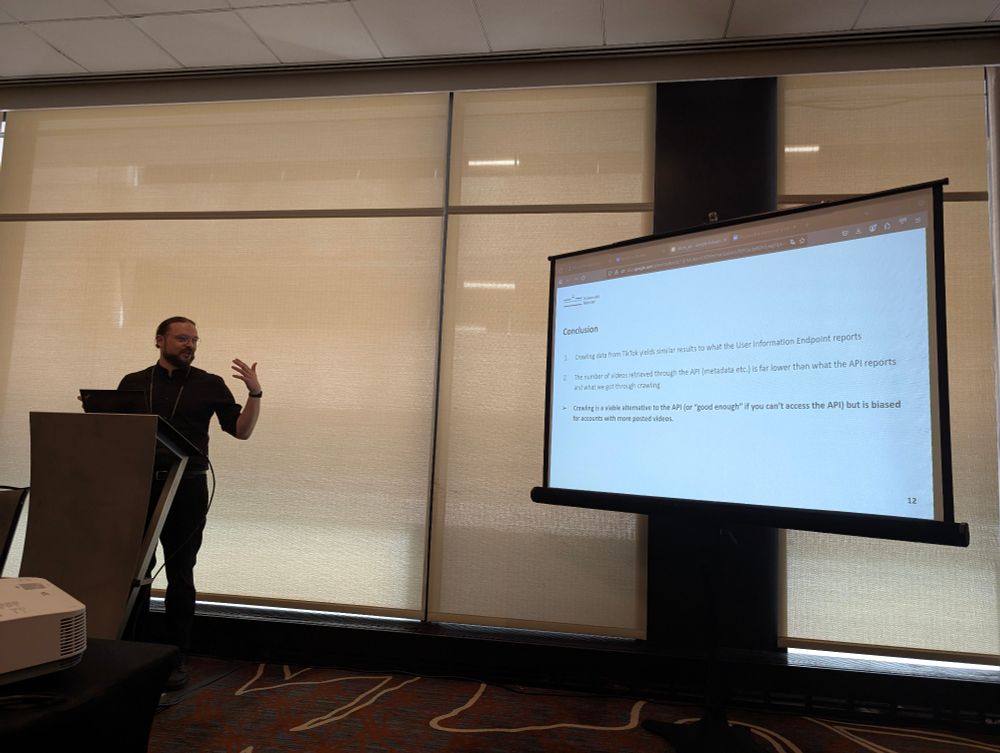
@mshu.bsky.social & @jbgruber.bsky.social presenting great work showing that scraping TikTok yields similar results to using the API (although it is a lot slower and doesn't work as well with larger accounts).
June 16, 2025 at 4:54 PM
@mshu.bsky.social & @jbgruber.bsky.social presenting great work showing that scraping TikTok yields similar results to using the API (although it is a lot slower and doesn't work as well with larger accounts).
Reposted by M. Saïd H. Unger
Happening now #ica25: how high is the quality of the data you get from the TikTok research API? @mshu.bsky.social , me, @zwizwasvens.bsky.social, Johanna Klapproth, and @thorstenquandt.bsky.social have an answer: it's bad!

June 16, 2025 at 4:48 PM
Happening now #ica25: how high is the quality of the data you get from the TikTok research API? @mshu.bsky.social , me, @zwizwasvens.bsky.social, Johanna Klapproth, and @thorstenquandt.bsky.social have an answer: it's bad!
Reposted by M. Saïd H. Unger
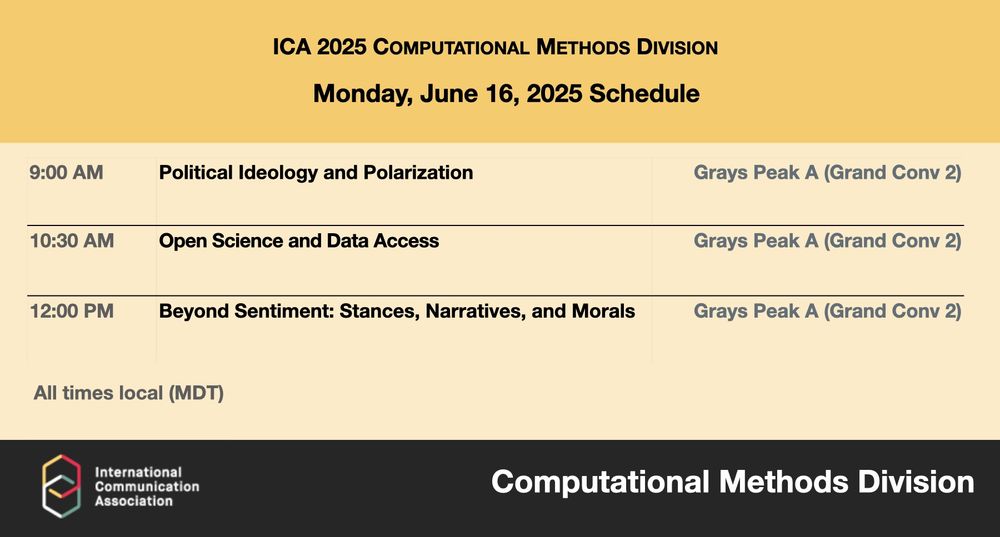
It's the last day of #ICA25! We hope you'll join us at today's Computational Methods panels.
We're looking forward to sessions on polarization, data access, and sentiment
We're looking forward to sessions on polarization, data access, and sentiment
June 16, 2025 at 12:09 PM
It's the last day of #ICA25! We hope you'll join us at today's Computational Methods panels.
We're looking forward to sessions on polarization, data access, and sentiment
We're looking forward to sessions on polarization, data access, and sentiment
Reposted by M. Saïd H. Unger
For example, for this panel at 10:30 where @mshu.bsky.social will present our audit of the TikTok Research API and I will talk about non-consumptive research in #commsky (#ica25)

June 16, 2025 at 2:59 PM
For example, for this panel at 10:30 where @mshu.bsky.social will present our audit of the TikTok Research API and I will talk about non-consumptive research in #commsky (#ica25)
Reposted by M. Saïd H. Unger
Today at #ica25 - panel "Retrospectives on 30 years of digital transformation in the journalism industry and media policy". Interview study with retired top managers and editors. With @hermida.bsky.social, Helle Sjovaag, Raul Ferrer, Mary Lynn Young. CU at Centennial B Regency 3 at 1.30 p.m.

June 15, 2025 at 5:01 PM
Today at #ica25 - panel "Retrospectives on 30 years of digital transformation in the journalism industry and media policy". Interview study with retired top managers and editors. With @hermida.bsky.social, Helle Sjovaag, Raul Ferrer, Mary Lynn Young. CU at Centennial B Regency 3 at 1.30 p.m.
Reposted by M. Saïd H. Unger
How can you test effects of platform mechanics? One option is to build your own social network 😎. @damiantrilling.net and colleagues did just that and populated the platform with LLMs and real people! #ica25

June 13, 2025 at 10:02 PM
How can you test effects of platform mechanics? One option is to build your own social network 😎. @damiantrilling.net and colleagues did just that and populated the platform with LLMs and real people! #ica25