



Mykhaylo M. Malakhov
@mykmal.xyz
Genetic epidemiology postdoc at @stanford.edu
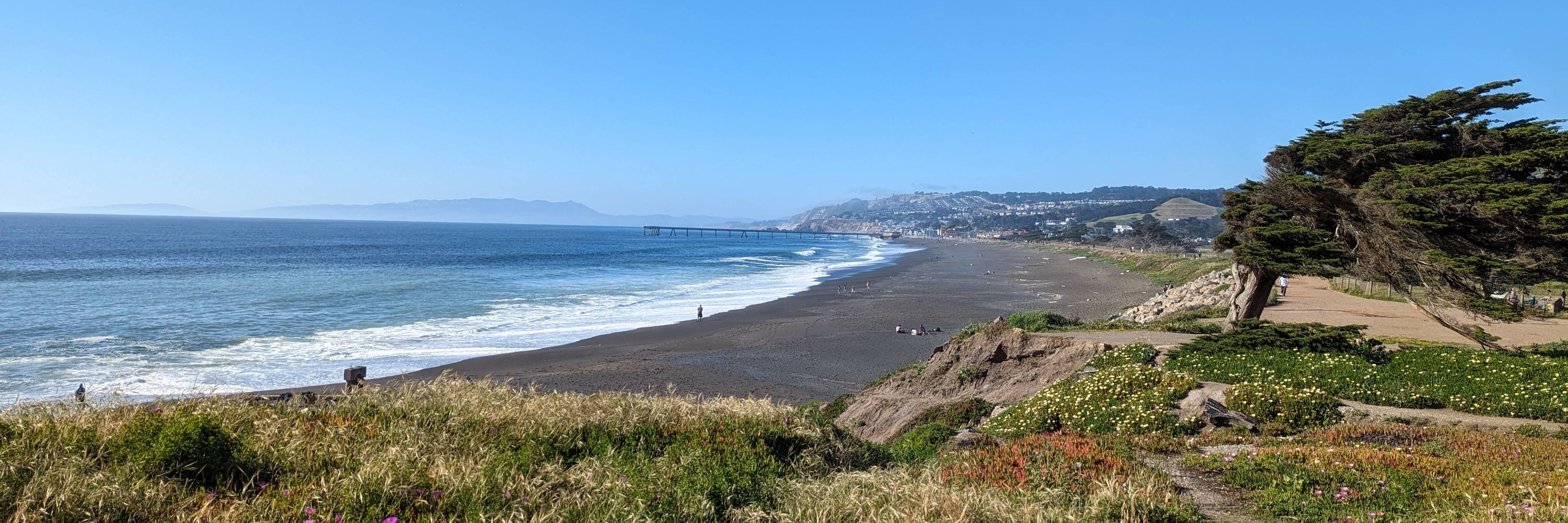
Stanford's campus is so beautiful. After spending five years in a windowless office building in snowy Minnesota, it feels incredibly motivating to now walk to work through Romanesque archways and neatly trimmed gardens on a 70-degree day in early February.
February 5, 2026 at 11:38 PM
Stanford's campus is so beautiful. After spending five years in a windowless office building in snowy Minnesota, it feels incredibly motivating to now walk to work through Romanesque archways and neatly trimmed gardens on a 70-degree day in early February.
I wanted to keep this account focused on science, but it is hard to stay silent on political issues right now. My home country is still being bombed by Russia, the city I lived in for the past several years is under occupation by ICE, and the funding that supports my work is constantly threatened.
January 23, 2026 at 3:16 AM
I wanted to keep this account focused on science, but it is hard to stay silent on political issues right now. My home country is still being bombed by Russia, the city I lived in for the past several years is under occupation by ICE, and the funding that supports my work is constantly threatened.
My second dissertation paper is now out in @natcomms.nature.com! Here we introduce the co-expression-wide association study (COWAS) method for identifying pairs of genes or proteins whose genetically regulated co-expression is associated with complex traits. 🧵⬇️
www.nature.com/articles/s41...
www.nature.com/articles/s41...

Co-expression-wide association studies link genetically regulated interactions with complex traits - Nature Communications
Proteins can affect traits through their interactions with one another. Here, the authors propose the COWAS method to identify pairs of interacting genes or proteins whose genetically regulated co-exp...
www.nature.com
December 20, 2025 at 1:52 AM
My second dissertation paper is now out in @natcomms.nature.com! Here we introduce the co-expression-wide association study (COWAS) method for identifying pairs of genes or proteins whose genetically regulated co-expression is associated with complex traits. 🧵⬇️
www.nature.com/articles/s41...
www.nature.com/articles/s41...
Reposted by Mykhaylo M. Malakhov

GWAS has been an incredible discovery tool for human genetics: it regularly identifies *causal* links from 1000s of SNPs to any given trait. But mechanistic interpretation is usually difficult.
Our latest work on causal models for this is out yesterday:
www.nature.com/articles/s41...
A short🧵:
Our latest work on causal models for this is out yesterday:
www.nature.com/articles/s41...
A short🧵:

Causal modelling of gene effects from regulators to programs to traits - Nature
Approaches combining genetic association and Perturb-seq data that link genetic variants to functional programs to traits are described.
www.nature.com
December 11, 2025 at 5:54 PM
GWAS has been an incredible discovery tool for human genetics: it regularly identifies *causal* links from 1000s of SNPs to any given trait. But mechanistic interpretation is usually difficult.
Our latest work on causal models for this is out yesterday:
www.nature.com/articles/s41...
A short🧵:
Our latest work on causal models for this is out yesterday:
www.nature.com/articles/s41...
A short🧵:
"The aim of equity is not to brag about how many students of a target background you awarded an A in calculus, it’s to ensure that every student actually learns."
This is such an important and timely article. I have noticed a lot of the same issues myself.
www.theargumentmag.com/p/when-grade...
This is such an important and timely article. I have noticed a lot of the same issues myself.
www.theargumentmag.com/p/when-grade...

When grades stop meaning anything
The UC San Diego math scandal is a warning
www.theargumentmag.com
November 23, 2025 at 4:51 PM
"The aim of equity is not to brag about how many students of a target background you awarded an A in calculus, it’s to ensure that every student actually learns."
This is such an important and timely article. I have noticed a lot of the same issues myself.
www.theargumentmag.com/p/when-grade...
This is such an important and timely article. I have noticed a lot of the same issues myself.
www.theargumentmag.com/p/when-grade...
This is an exceedingly late post, but I wanted to share a few pictures from #IGES2025 earlier this fall. I had the honor of giving a platform talk on age-related genetic dysregulation, and I really enjoyed connecting with other researchers and exploring the beautiful city of Cologne!


November 7, 2025 at 11:09 PM
This is an exceedingly late post, but I wanted to share a few pictures from #IGES2025 earlier this fall. I had the honor of giving a platform talk on age-related genetic dysregulation, and I really enjoyed connecting with other researchers and exploring the beautiful city of Cologne!

The use of dichotomized labels for traits that are actually continuous has bothered me ever since I started working on complex trait genetics. Sasha's blog post provides an excellent explanation of why this matters in the context of polygenic risk and embryo selection.

I wrote about how genetic risk works in the context of embryo selection and how people often think about it all wrong. A short 🧵:

What we talk about when we talk about risk
How embryo selection exploits our flawed intuitions about risk
open.substack.com
August 10, 2025 at 7:33 PM
The use of dichotomized labels for traits that are actually continuous has bothered me ever since I started working on complex trait genetics. Sasha's blog post provides an excellent explanation of why this matters in the context of polygenic risk and embryo selection.
Yesterday I successfully defended my dissertation! It feels surreal to finally reach the end of my PhD journey at @umnsph.bsky.social. Thank you to my adviser Wei Pan and to my committee members @elock.bsky.social, @aazaidi.bsky.social, and Thierry Chekouo for your invaluable mentorship and support!

July 24, 2025 at 9:24 PM
Yesterday I successfully defended my dissertation! It feels surreal to finally reach the end of my PhD journey at @umnsph.bsky.social. Thank you to my adviser Wei Pan and to my committee members @elock.bsky.social, @aazaidi.bsky.social, and Thierry Chekouo for your invaluable mentorship and support!
Reposted by Mykhaylo M. Malakhov
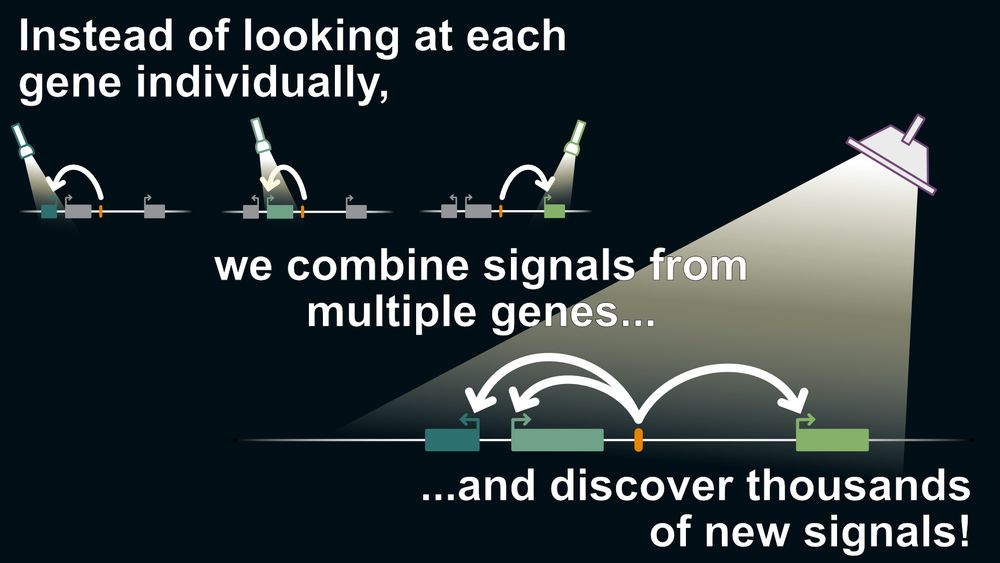
Excited to share my first PhD paper in the @sbmontgom.bsky.social lab with @tamigj.bsky.social (www.biorxiv.org/content/10.1...)! Standard QTL methods treat each gene independently. But what if a single variant regulates multiple nearby genes at once - what we call “allelic proxitropy”? 🧵 ⬇️
June 8, 2025 at 5:39 PM
Excited to share my first PhD paper in the @sbmontgom.bsky.social lab with @tamigj.bsky.social (www.biorxiv.org/content/10.1...)! Standard QTL methods treat each gene independently. But what if a single variant regulates multiple nearby genes at once - what we call “allelic proxitropy”? 🧵 ⬇️
Reposted by Mykhaylo M. Malakhov

Join us for our next virtual journal club! Jasper Hof will present on his paper "Fast and accurate recurrent event analysis for genome-wide association studies".
📅 June 16, 2025
⏰ 11 am (EDT), 8 am (PDT), 5 pm (CET)
📍 Online
Learn more and register: www.geneticepi.org/index.php?op...
📅 June 16, 2025
⏰ 11 am (EDT), 8 am (PDT), 5 pm (CET)
📍 Online
Learn more and register: www.geneticepi.org/index.php?op...
Save the Date: Monday June 16, 2025 Journal Club
www.geneticepi.org
May 30, 2025 at 5:20 PM
Join us for our next virtual journal club! Jasper Hof will present on his paper "Fast and accurate recurrent event analysis for genome-wide association studies".
📅 June 16, 2025
⏰ 11 am (EDT), 8 am (PDT), 5 pm (CET)
📍 Online
Learn more and register: www.geneticepi.org/index.php?op...
📅 June 16, 2025
⏰ 11 am (EDT), 8 am (PDT), 5 pm (CET)
📍 Online
Learn more and register: www.geneticepi.org/index.php?op...
I had a great time at STATGEN 2025 last week! Thank you to everyone who came to my talk and to the organizers for putting on this conference.

May 28, 2025 at 7:53 PM
I had a great time at STATGEN 2025 last week! Thank you to everyone who came to my talk and to the organizers for putting on this conference.
Reposted by Mykhaylo M. Malakhov
This year's IGES Annual Meeting and Education Workshop will be held Aug. 31 - Sept. 2 in the beautiful city of Cologne, Germany. Join us for an exciting lineup of keynote presentations, platform talks, posters, and hands-on tutorials at #IGES2025!
Learn more: www.geneticepi.org/2025-annual-...
Learn more: www.geneticepi.org/2025-annual-...

May 19, 2025 at 2:28 PM
This year's IGES Annual Meeting and Education Workshop will be held Aug. 31 - Sept. 2 in the beautiful city of Cologne, Germany. Join us for an exciting lineup of keynote presentations, platform talks, posters, and hands-on tutorials at #IGES2025!
Learn more: www.geneticepi.org/2025-annual-...
Learn more: www.geneticepi.org/2025-annual-...
Follow @geneticepi.bsky.social to stay up to date on news and events from IGES! This will be the society's primary social media presence going forward, and we will be sharing a lot of cool and useful content. Full disclosure: I manage the IGES account.
The International Genetic Epidemiology Society (IGES) is now on Bluesky! 👋🧬
We are the only international scientific society devoted to promoting the study of genetic epidemiology and statistical genetics. Follow along for the latest from IGES! #genetics #epidemiology #statistics #science #IGES
We are the only international scientific society devoted to promoting the study of genetic epidemiology and statistical genetics. Follow along for the latest from IGES! #genetics #epidemiology #statistics #science #IGES
May 16, 2025 at 8:45 PM
Follow @geneticepi.bsky.social to stay up to date on news and events from IGES! This will be the society's primary social media presence going forward, and we will be sharing a lot of cool and useful content. Full disclosure: I manage the IGES account.
A reviewer described my COWAS method as "a significant breakthrough in the study of gene-gene (protein-protein) interaction." Before that, the very same paper was desk rejected by four other journals. The moral of this story is obvious and left as an exercise to the reader.
May 13, 2025 at 8:23 PM
A reviewer described my COWAS method as "a significant breakthrough in the study of gene-gene (protein-protein) interaction." Before that, the very same paper was desk rejected by four other journals. The moral of this story is obvious and left as an exercise to the reader.
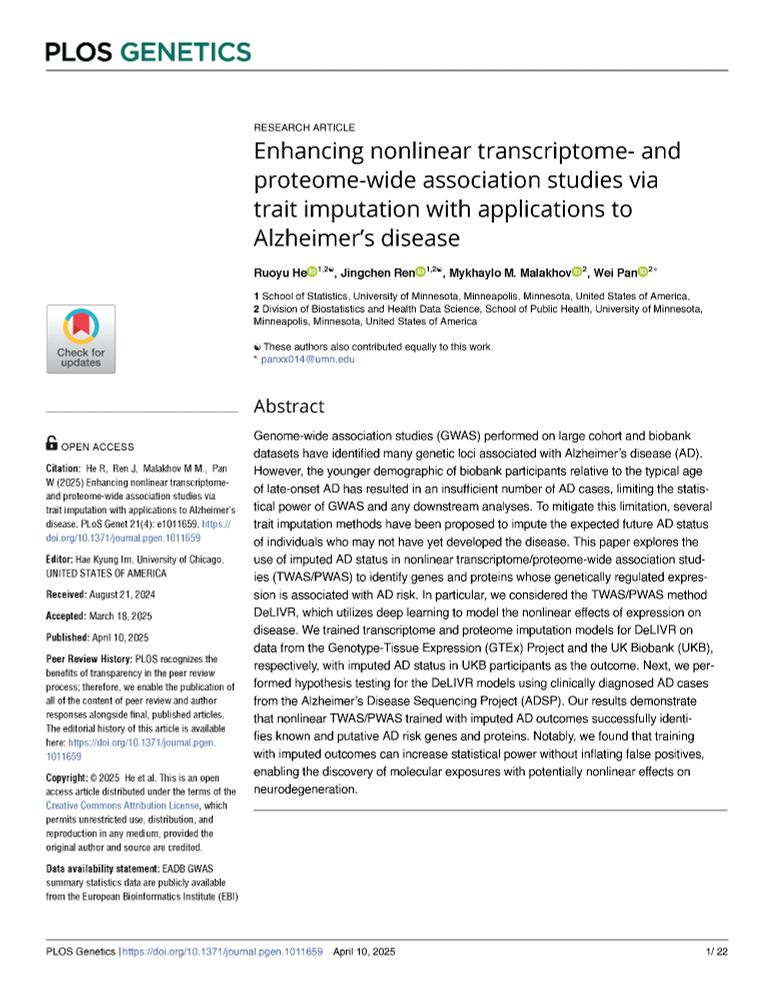
I'm excited to share our latest work, now out in #PLOSGenetics! If you feel limited by linear models in TWAS or PWAS but don't think you can switch to nonlinear methods due to a lack of individual-level phenotype data, this paper is for you.
🔗 journals.plos.org/plosgenetics...
Thread below 👇 (1/6)
🔗 journals.plos.org/plosgenetics...
Thread below 👇 (1/6)
May 7, 2025 at 6:12 PM
I'm excited to share our latest work, now out in #PLOSGenetics! If you feel limited by linear models in TWAS or PWAS but don't think you can switch to nonlinear methods due to a lack of individual-level phenotype data, this paper is for you.
🔗 journals.plos.org/plosgenetics...
Thread below 👇 (1/6)
🔗 journals.plos.org/plosgenetics...
Thread below 👇 (1/6)