



National Trust Archaeology
@nattrustarch.bsky.social
Sharing information about archaeology at National Trust places across England, Wales and Northern Ireland
Last July provided us with a wealth of opportunities to learn more about the places in the care of the National Trust as part of the Festival of Archaeology including:
🔍 Ground penetrating radar surveys at Dunster Castle in Somerset, in search of remains of the Norman motte and bailey castle
🔍 Ground penetrating radar surveys at Dunster Castle in Somerset, in search of remains of the Norman motte and bailey castle

January 19, 2026 at 10:01 AM
Last July provided us with a wealth of opportunities to learn more about the places in the care of the National Trust as part of the Festival of Archaeology including:
🔍 Ground penetrating radar surveys at Dunster Castle in Somerset, in search of remains of the Norman motte and bailey castle
🔍 Ground penetrating radar surveys at Dunster Castle in Somerset, in search of remains of the Norman motte and bailey castle
Last June, @timeteam.bsky.social returned to Garden Field at Sutton Hoo to continue Phase 2 of their research project to find out more about the archaeology of the Suffolk site, which is famous for the ship burial discovered there in 1939. 🧵

January 16, 2026 at 2:39 PM
Last June, @timeteam.bsky.social returned to Garden Field at Sutton Hoo to continue Phase 2 of their research project to find out more about the archaeology of the Suffolk site, which is famous for the ship burial discovered there in 1939. 🧵
Last May saw the University of Exeter’s Archaeology Field School return to the Killerton Estate in Devon to continue investigations into the search for the lost Elizabethan manor at Columbjohn, with support from Killerton’s HART team and NT Archaeologist, Cat Lodge. 🧵


January 14, 2026 at 12:22 PM
Last May saw the University of Exeter’s Archaeology Field School return to the Killerton Estate in Devon to continue investigations into the search for the lost Elizabethan manor at Columbjohn, with support from Killerton’s HART team and NT Archaeologist, Cat Lodge. 🧵
Reposted by National Trust Archaeology

Happy birthday to us!
Our founders – Octavia Hill, Robert Hunter and Hardwicke Rawnsley – believed that nature, beauty and history were for everyone. On this day in 1895, they set up the National Trust and we're proud to continue their work today.
Thank you to all those who support what we do.
Our founders – Octavia Hill, Robert Hunter and Hardwicke Rawnsley – believed that nature, beauty and history were for everyone. On this day in 1895, they set up the National Trust and we're proud to continue their work today.
Thank you to all those who support what we do.

January 12, 2026 at 8:21 AM
Happy birthday to us!
Our founders – Octavia Hill, Robert Hunter and Hardwicke Rawnsley – believed that nature, beauty and history were for everyone. On this day in 1895, they set up the National Trust and we're proud to continue their work today.
Thank you to all those who support what we do.
Our founders – Octavia Hill, Robert Hunter and Hardwicke Rawnsley – believed that nature, beauty and history were for everyone. On this day in 1895, they set up the National Trust and we're proud to continue their work today.
Thank you to all those who support what we do.
Last April, we were flying the flag for the National Trust as we shared some of the exciting collaborations we're engaged with at the Chartered Institute for Archaeologists Conference.

January 12, 2026 at 10:00 AM
Last April, we were flying the flag for the National Trust as we shared some of the exciting collaborations we're engaged with at the Chartered Institute for Archaeologists Conference.
Reposted by National Trust Archaeology

✨ An Evening with National Trust Archaeologists
Ever wondered what archaeology looks like behind the scenes at National Trust places? Join us and @nattrustarch.bsky.social for a free online evening exploring community digs and hilltop enclosures to Roman gold mining.
Book here 👉 shorturl.at/85Avq
Ever wondered what archaeology looks like behind the scenes at National Trust places? Join us and @nattrustarch.bsky.social for a free online evening exploring community digs and hilltop enclosures to Roman gold mining.
Book here 👉 shorturl.at/85Avq

January 11, 2026 at 11:01 AM
✨ An Evening with National Trust Archaeologists
Ever wondered what archaeology looks like behind the scenes at National Trust places? Join us and @nattrustarch.bsky.social for a free online evening exploring community digs and hilltop enclosures to Roman gold mining.
Book here 👉 shorturl.at/85Avq
Ever wondered what archaeology looks like behind the scenes at National Trust places? Join us and @nattrustarch.bsky.social for a free online evening exploring community digs and hilltop enclosures to Roman gold mining.
Book here 👉 shorturl.at/85Avq
Continuing with our round up of discoveries and projects in 2025, we're heading back to March, and the announcement that Flagstones in Dorset was found to be older than Stonehenge. 🧵

January 9, 2026 at 10:43 AM
Continuing with our round up of discoveries and projects in 2025, we're heading back to March, and the announcement that Flagstones in Dorset was found to be older than Stonehenge. 🧵
In early 2025 Malachy Conway, our Northern Ireland archaeologist, was overseeing a programme of archaeological monitoring and recording by Northern Archaeological Consultancy at the Castle Ward Estate in County Down. 🧵

January 8, 2026 at 10:01 AM
In early 2025 Malachy Conway, our Northern Ireland archaeologist, was overseeing a programme of archaeological monitoring and recording by Northern Archaeological Consultancy at the Castle Ward Estate in County Down. 🧵
Reposted by National Trust Archaeology

Now, @hannahfluck.bsky.social Senior Archaeologist at @nattrustarch.bsky.social on the Past as an Opportunity in Landscape and Nature Recovery .
#QRA2026ADM
#QRA2026ADM

January 7, 2026 at 3:06 PM
Now, @hannahfluck.bsky.social Senior Archaeologist at @nattrustarch.bsky.social on the Past as an Opportunity in Landscape and Nature Recovery .
#QRA2026ADM
#QRA2026ADM
Digging for Britain is back on our screens on BBC Two at 9pm tonight!
Two @Nationaltrust.org.uk properties feature in this series - Woolsthorpe Manor, Lincolnshire (Ep. 5, 4th February) and St Michael's Mount, Cornwall (Ep. 6, 5th February).
All episodes are also on BBC iPlayer: bit.ly/4qv9H9o
Two @Nationaltrust.org.uk properties feature in this series - Woolsthorpe Manor, Lincolnshire (Ep. 5, 4th February) and St Michael's Mount, Cornwall (Ep. 6, 5th February).
All episodes are also on BBC iPlayer: bit.ly/4qv9H9o

January 7, 2026 at 10:00 AM
Digging for Britain is back on our screens on BBC Two at 9pm tonight!
Two @Nationaltrust.org.uk properties feature in this series - Woolsthorpe Manor, Lincolnshire (Ep. 5, 4th February) and St Michael's Mount, Cornwall (Ep. 6, 5th February).
All episodes are also on BBC iPlayer: bit.ly/4qv9H9o
Two @Nationaltrust.org.uk properties feature in this series - Woolsthorpe Manor, Lincolnshire (Ep. 5, 4th February) and St Michael's Mount, Cornwall (Ep. 6, 5th February).
All episodes are also on BBC iPlayer: bit.ly/4qv9H9o
Throughout January we'll be reflecting on discoveries made and projects led by National Trust archaeologists and volunteers in 2025.
We're starting with a visit to Sheffield Park, where in January 2025, we shared a 3D model of a Type 24 Pillbox that David Fletcher had created through photogrammetry
We're starting with a visit to Sheffield Park, where in January 2025, we shared a 3D model of a Type 24 Pillbox that David Fletcher had created through photogrammetry

January 5, 2026 at 10:00 AM
Throughout January we'll be reflecting on discoveries made and projects led by National Trust archaeologists and volunteers in 2025.
We're starting with a visit to Sheffield Park, where in January 2025, we shared a 3D model of a Type 24 Pillbox that David Fletcher had created through photogrammetry
We're starting with a visit to Sheffield Park, where in January 2025, we shared a 3D model of a Type 24 Pillbox that David Fletcher had created through photogrammetry
Wishing everyone a very Happy New Year and all the very best for 2026!
Image: Fireworks over the lake at Stourhead ©National Trust Images/David Levenson
Image: Fireworks over the lake at Stourhead ©National Trust Images/David Levenson

December 31, 2025 at 6:03 PM
Wishing everyone a very Happy New Year and all the very best for 2026!
Image: Fireworks over the lake at Stourhead ©National Trust Images/David Levenson
Image: Fireworks over the lake at Stourhead ©National Trust Images/David Levenson
Our very own Jim Parry (archaeologist covering South Devon and Cornwall) has appeared in a national roundup of archaeological discoveries!

Old loo and evidence of murder among archaeological finds of 2025
Other finds include a Bronze Age coffin and human remains thought to belong to shipwreck victims.
www.bbc.co.uk
December 30, 2025 at 10:01 AM
Our very own Jim Parry (archaeologist covering South Devon and Cornwall) has appeared in a national roundup of archaeological discoveries!
#DiggingforBritain returns on 7th January with a new 6-part series on BBC Two with @profaliceroberts.bsky.social, and includes two @nationaltrust.org.uk properties:
4th February - Woolsthorpe Manor, Lincolnshire
5th February - St Michael's Mount, Cornwall.
Tune in to find out more!
4th February - Woolsthorpe Manor, Lincolnshire
5th February - St Michael's Mount, Cornwall.
Tune in to find out more!

December 29, 2025 at 10:01 AM
#DiggingforBritain returns on 7th January with a new 6-part series on BBC Two with @profaliceroberts.bsky.social, and includes two @nationaltrust.org.uk properties:
4th February - Woolsthorpe Manor, Lincolnshire
5th February - St Michael's Mount, Cornwall.
Tune in to find out more!
4th February - Woolsthorpe Manor, Lincolnshire
5th February - St Michael's Mount, Cornwall.
Tune in to find out more!
As a special treat for #HillfortsWednesday landing on Christmas Eve, we’re sharing some wintery images of hillforts in the care of the National Trust!
The photos are of Figsbury Ring (Wiltshire), Hod Hill (Dorset), Mam Tor (Derbyshire) and Cissbury Ring (West Sussex).
The photos are of Figsbury Ring (Wiltshire), Hod Hill (Dorset), Mam Tor (Derbyshire) and Cissbury Ring (West Sussex).


December 24, 2025 at 10:01 AM
As a special treat for #HillfortsWednesday landing on Christmas Eve, we’re sharing some wintery images of hillforts in the care of the National Trust!
The photos are of Figsbury Ring (Wiltshire), Hod Hill (Dorset), Mam Tor (Derbyshire) and Cissbury Ring (West Sussex).
The photos are of Figsbury Ring (Wiltshire), Hod Hill (Dorset), Mam Tor (Derbyshire) and Cissbury Ring (West Sussex).
❄❄ Hope everyone is feeling suitably festive! ❄❄
Here are a few suggestions of places to visit: www.nationaltrust.org.uk/visit/christ...
Here are a few suggestions of places to visit: www.nationaltrust.org.uk/visit/christ...

December 22, 2025 at 10:00 AM
❄❄ Hope everyone is feeling suitably festive! ❄❄
Here are a few suggestions of places to visit: www.nationaltrust.org.uk/visit/christ...
Here are a few suggestions of places to visit: www.nationaltrust.org.uk/visit/christ...
Another #FestiveFriday offering, and this time we’re heading to Cornwall, to the St Just area to find some ‘merriment holes’!
These were drilled into stones by miners and quarrymen in the 19th century.
These were drilled into stones by miners and quarrymen in the 19th century.

December 19, 2025 at 10:49 AM
Another #FestiveFriday offering, and this time we’re heading to Cornwall, to the St Just area to find some ‘merriment holes’!
These were drilled into stones by miners and quarrymen in the 19th century.
These were drilled into stones by miners and quarrymen in the 19th century.
Cover to Cover: Christmas at Scotney in Kent
Each room of the Victorian Mansion has been transformed with decorations inspired by books from Scotney's collection. From Alice in Wonderland to A Christmas Carol there's enchantment around every corner 🎄
www.nationaltrust.org.uk/visit/kent/s...
Each room of the Victorian Mansion has been transformed with decorations inspired by books from Scotney's collection. From Alice in Wonderland to A Christmas Carol there's enchantment around every corner 🎄
www.nationaltrust.org.uk/visit/kent/s...

December 17, 2025 at 11:08 AM
Cover to Cover: Christmas at Scotney in Kent
Each room of the Victorian Mansion has been transformed with decorations inspired by books from Scotney's collection. From Alice in Wonderland to A Christmas Carol there's enchantment around every corner 🎄
www.nationaltrust.org.uk/visit/kent/s...
Each room of the Victorian Mansion has been transformed with decorations inspired by books from Scotney's collection. From Alice in Wonderland to A Christmas Carol there's enchantment around every corner 🎄
www.nationaltrust.org.uk/visit/kent/s...
Reposted by National Trust Archaeology
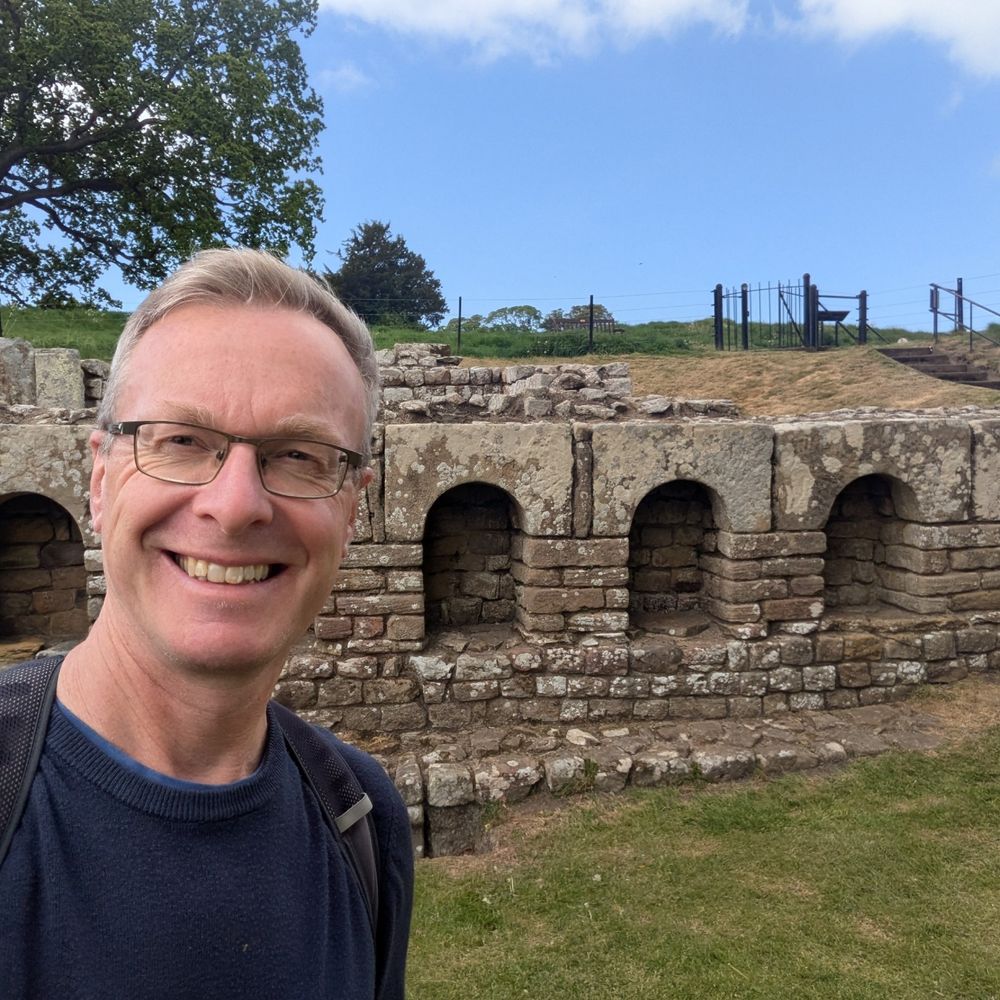
Not a bad office for the last drone survey of 2025 🌞🎄 - back at Penmaen Dewi/St David's Head in Pembrokeshire with the Matrice 4E for @rcahmwales.bsky.social

December 16, 2025 at 11:44 AM
Not a bad office for the last drone survey of 2025 🌞🎄 - back at Penmaen Dewi/St David's Head in Pembrokeshire with the Matrice 4E for @rcahmwales.bsky.social
"Hidden Treasures of the National Trust" returns with a Christmas special this Friday (19th December) on BBC Two at 9pm.
Viewers will have privileged access to three unique properties as they prepare for three very different Christmas celebrations: Cragside, Cotehele and Coleton Fishacre.
Viewers will have privileged access to three unique properties as they prepare for three very different Christmas celebrations: Cragside, Cotehele and Coleton Fishacre.

December 15, 2025 at 10:01 AM
"Hidden Treasures of the National Trust" returns with a Christmas special this Friday (19th December) on BBC Two at 9pm.
Viewers will have privileged access to three unique properties as they prepare for three very different Christmas celebrations: Cragside, Cotehele and Coleton Fishacre.
Viewers will have privileged access to three unique properties as they prepare for three very different Christmas celebrations: Cragside, Cotehele and Coleton Fishacre.
For #Hanukkah, we're visiting 1 Home Farm Drive, part of the Upton House estate. A former farm outbuilding, it was converted in the 1930s by the owners of the estate, the Bearsteds, for their family Rabbi to live in.
www.nationaltrust.org.uk/holidays/oxf...
Chag Sameach 🕎
#JewishCountryHouses
www.nationaltrust.org.uk/holidays/oxf...
Chag Sameach 🕎
#JewishCountryHouses

December 14, 2025 at 4:05 PM
For #Hanukkah, we're visiting 1 Home Farm Drive, part of the Upton House estate. A former farm outbuilding, it was converted in the 1930s by the owners of the estate, the Bearsteds, for their family Rabbi to live in.
www.nationaltrust.org.uk/holidays/oxf...
Chag Sameach 🕎
#JewishCountryHouses
www.nationaltrust.org.uk/holidays/oxf...
Chag Sameach 🕎
#JewishCountryHouses
Throughout December we’ll be celebrating ‘Festive Fridays’, sharing the most tenuous links to festive-themed archaeological sites in the care of the National Trust!
We’re starting with ‘Christmas Shaft’, an air shaft marked on the 1882 Ordnance Survey at Alderley Edge. bit.ly/3MbSqTI
We’re starting with ‘Christmas Shaft’, an air shaft marked on the 1882 Ordnance Survey at Alderley Edge. bit.ly/3MbSqTI

December 12, 2025 at 10:02 AM
Throughout December we’ll be celebrating ‘Festive Fridays’, sharing the most tenuous links to festive-themed archaeological sites in the care of the National Trust!
We’re starting with ‘Christmas Shaft’, an air shaft marked on the 1882 Ordnance Survey at Alderley Edge. bit.ly/3MbSqTI
We’re starting with ‘Christmas Shaft’, an air shaft marked on the 1882 Ordnance Survey at Alderley Edge. bit.ly/3MbSqTI
Congratulations to all of the #CurrentArchaeologyAwards nominees!
Cast your vote here: bit.ly/48zAZp3
We're also excited for the Current Archaeology Live conference next year which includes our @nts-archaeology.bsky.social colleagues on their their award winning #PioneeringSpirit whisky project!
Cast your vote here: bit.ly/48zAZp3
We're also excited for the Current Archaeology Live conference next year which includes our @nts-archaeology.bsky.social colleagues on their their award winning #PioneeringSpirit whisky project!

Archaeology Awards Voting - Current Archaeology
Voting has now opened for the Current Archaeology Awards! Which people, projects and publications deserve recognition?
archaeology.co.uk
December 11, 2025 at 2:38 PM
Congratulations to all of the #CurrentArchaeologyAwards nominees!
Cast your vote here: bit.ly/48zAZp3
We're also excited for the Current Archaeology Live conference next year which includes our @nts-archaeology.bsky.social colleagues on their their award winning #PioneeringSpirit whisky project!
Cast your vote here: bit.ly/48zAZp3
We're also excited for the Current Archaeology Live conference next year which includes our @nts-archaeology.bsky.social colleagues on their their award winning #PioneeringSpirit whisky project!
Explore 700 years of festive cheer at Ightham Mote in #Kent: from yuletide folklore to Tudor festivities, a Victorian Christmas & the traditions of Charles Henry Robinson to the the nostalgia of 1985, the year Ightham Mote entered National Trust care 🎄❄️
www.nationaltrust.org.uk/visit/kent/i...
www.nationaltrust.org.uk/visit/kent/i...

December 10, 2025 at 10:16 AM
Explore 700 years of festive cheer at Ightham Mote in #Kent: from yuletide folklore to Tudor festivities, a Victorian Christmas & the traditions of Charles Henry Robinson to the the nostalgia of 1985, the year Ightham Mote entered National Trust care 🎄❄️
www.nationaltrust.org.uk/visit/kent/i...
www.nationaltrust.org.uk/visit/kent/i...
*NEWS* Fundraiser launched to help buy land around Cerne Giant.
NT Archaeologist, Steve Timms, said: “The acquisition will provide an opportunity for landscape scale research & investigation & help us manage the land in the most appropriate way.”
www.nationaltrust.org.uk/services/med...
NT Archaeologist, Steve Timms, said: “The acquisition will provide an opportunity for landscape scale research & investigation & help us manage the land in the most appropriate way.”
www.nationaltrust.org.uk/services/med...

December 9, 2025 at 1:04 PM
*NEWS* Fundraiser launched to help buy land around Cerne Giant.
NT Archaeologist, Steve Timms, said: “The acquisition will provide an opportunity for landscape scale research & investigation & help us manage the land in the most appropriate way.”
www.nationaltrust.org.uk/services/med...
NT Archaeologist, Steve Timms, said: “The acquisition will provide an opportunity for landscape scale research & investigation & help us manage the land in the most appropriate way.”
www.nationaltrust.org.uk/services/med...