



@parapraxismag.bsky.social
Starting this Sunday: Our sliding-scale 10 week long seminar with The Psychosocial Foundation on GROUPS:
www.thepsychosocialfoundation.org/store/p/the-...
www.thepsychosocialfoundation.org/store/p/the-...

January 19, 2026 at 2:47 PM
Starting this Sunday: Our sliding-scale 10 week long seminar with The Psychosocial Foundation on GROUPS:
www.thepsychosocialfoundation.org/store/p/the-...
www.thepsychosocialfoundation.org/store/p/the-...
“The colonized have another take on helplessness, an obstinate strength in living in it, in knowing that no one will come for them, no one will save them.”
-Nadia Bou Ali on Helplessness, out from the paywall in Issue 07
www.parapraxismagazine.com/articles/on-...
-Nadia Bou Ali on Helplessness, out from the paywall in Issue 07
www.parapraxismagazine.com/articles/on-...

On Helplessness — Parapraxis
When All That’s Left Is to Refuse to Be Saved nadia bou ali
www.parapraxismagazine.com
January 19, 2026 at 2:45 PM
“The colonized have another take on helplessness, an obstinate strength in living in it, in knowing that no one will come for them, no one will save them.”
-Nadia Bou Ali on Helplessness, out from the paywall in Issue 07
www.parapraxismagazine.com/articles/on-...
-Nadia Bou Ali on Helplessness, out from the paywall in Issue 07
www.parapraxismagazine.com/articles/on-...
“The Oedipal subject smites lest they remain smitten.”
-Cassandra Seltman, from Issue 07: parapraxismagazine.com/articles/det...
-Cassandra Seltman, from Issue 07: parapraxismagazine.com/articles/det...

Detachment Styles — Parapraxis
On Coming to Nothing Cassandra Seltman
parapraxismagazine.com
January 19, 2026 at 2:45 PM
“The Oedipal subject smites lest they remain smitten.”
-Cassandra Seltman, from Issue 07: parapraxismagazine.com/articles/det...
-Cassandra Seltman, from Issue 07: parapraxismagazine.com/articles/det...
Reposted

@parapraxismag.bsky.social is not fucking around 😍😍😍

January 17, 2026 at 12:53 AM
@parapraxismag.bsky.social is not fucking around 😍😍😍
Reposted
fantastic article by federico perelmuter (not here yet!) in @parapraxismag.bsky.social on the depoliticization of psychoanalysis in argentina
New online: Federico Perelmuter on the birth and death of community psychoanalysis in Argentina: www.parapraxismagazine.com/articles/bir...

Atomizing Analysis — Parapraxis
The Birth and Death of Community Psychoanalysis in Argentina Federico Perelmuter
www.parapraxismagazine.com
January 16, 2026 at 2:51 PM
fantastic article by federico perelmuter (not here yet!) in @parapraxismag.bsky.social on the depoliticization of psychoanalysis in argentina
Reposted
New Parapraxis arrived….terrific essays including my most recent musings on incest

January 15, 2026 at 8:25 PM
New Parapraxis arrived….terrific essays including my most recent musings on incest
Reposted
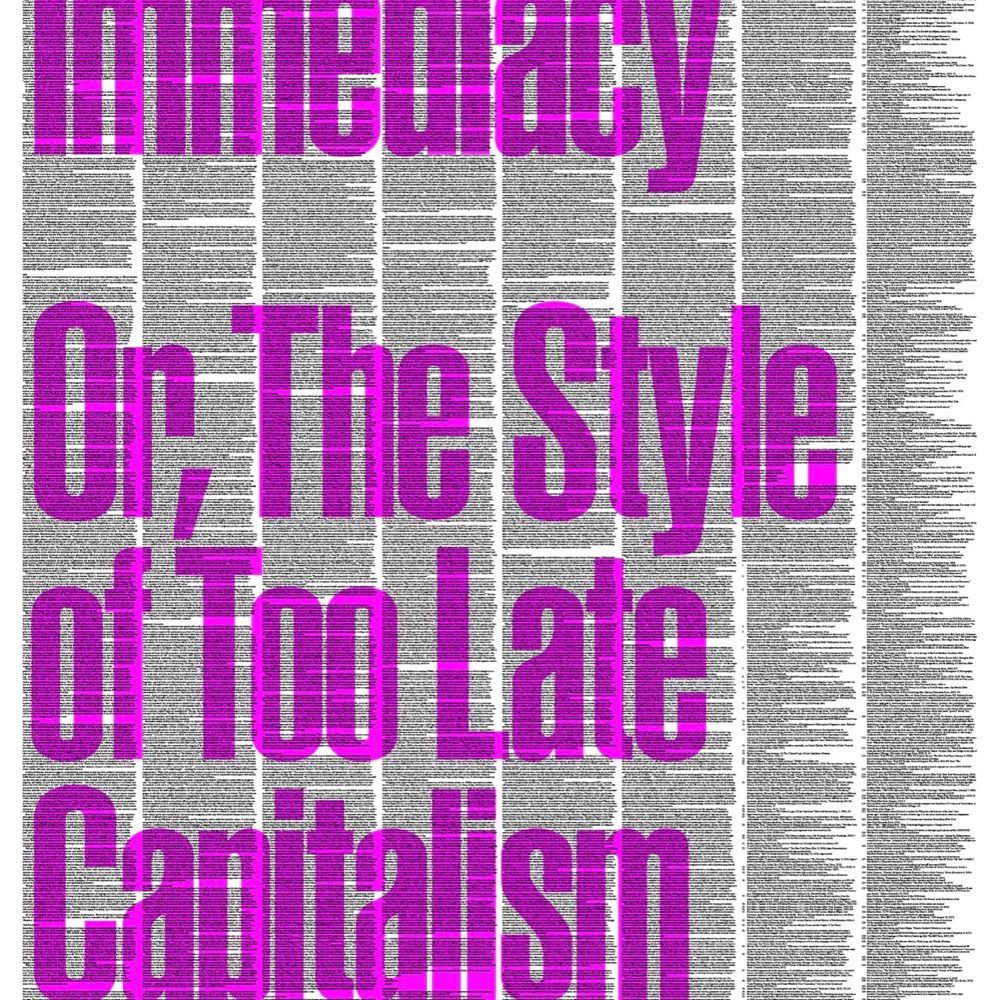
Parapraxis issue 7: ROMANCE
beautiful hard copy just arrived!
(thoughts about genre and emily henry therein!)
beautiful hard copy just arrived!
(thoughts about genre and emily henry therein!)

January 14, 2026 at 5:27 PM
Parapraxis issue 7: ROMANCE
beautiful hard copy just arrived!
(thoughts about genre and emily henry therein!)
beautiful hard copy just arrived!
(thoughts about genre and emily henry therein!)
New web-only: poupeh missaghi on Iran and Palestine, meditating on grief and the affirmation of life in the face of annihilatory violence: www.parapraxismagazine.com/articles/whe...

When Bombs Fall — Parapraxis
Saying Yes to Life poupeh Missaghi
www.parapraxismagazine.com
January 12, 2026 at 2:31 PM
New web-only: poupeh missaghi on Iran and Palestine, meditating on grief and the affirmation of life in the face of annihilatory violence: www.parapraxismagazine.com/articles/whe...
New online: Federico Perelmuter on the birth and death of community psychoanalysis in Argentina: www.parapraxismagazine.com/articles/bir...
Atomizing Analysis — Parapraxis
The Birth and Death of Community Psychoanalysis in Argentina Federico Perelmuter
www.parapraxismagazine.com
January 12, 2026 at 2:25 PM
New online: Federico Perelmuter on the birth and death of community psychoanalysis in Argentina: www.parapraxismagazine.com/articles/bir...
New and exclusively on web: an Auto-analysis by Marci Kwon on being written about and racialized by her analyst:
www.parapraxismagazine.com/articles/on-...
www.parapraxismagazine.com/articles/on-...

On Being an Object of Analysis — Parapraxis
My life as an academic article Marci Kwon
www.parapraxismagazine.com
January 12, 2026 at 2:16 PM
New and exclusively on web: an Auto-analysis by Marci Kwon on being written about and racialized by her analyst:
www.parapraxismagazine.com/articles/on-...
www.parapraxismagazine.com/articles/on-...
Reposted
for the ROMANCE issue of @parapraxismag.bsky.social,
"Love's Work"
some thoughts on psychoanalysis, genre, and the romance boom, featuring, among others, Emily Henry and Sally Rooney www.parapraxismagazine.com/magazine
"Love's Work"
some thoughts on psychoanalysis, genre, and the romance boom, featuring, among others, Emily Henry and Sally Rooney www.parapraxismagazine.com/magazine

Current Issue — Parapraxis
www.parapraxismagazine.com
December 31, 2025 at 1:14 PM
for the ROMANCE issue of @parapraxismag.bsky.social,
"Love's Work"
some thoughts on psychoanalysis, genre, and the romance boom, featuring, among others, Emily Henry and Sally Rooney www.parapraxismagazine.com/magazine
"Love's Work"
some thoughts on psychoanalysis, genre, and the romance boom, featuring, among others, Emily Henry and Sally Rooney www.parapraxismagazine.com/magazine
Reposted

On Being an Object of Analysis — Parapraxis
https://www.parapraxismagazine.com/articles/on-being-an-object-of-analysis
https://www.parapraxismagazine.com/articles/on-being-an-object-of-analysis

On Being an Object of Analysis
## _My life as an academic article_
Marci Kwon
The email from my therapist, whom I will call B, arrived under the subject line “Knowing me, knowing you.” An ominous message, until I realized it was the title of an ABBA song.
B was writing to ask my permission to publish an academic article about our sessions. He explained that he had anonymized me by changing my ethnicity and field, and assured me I had a say in whether he would publish it. He hoped I would grant him permission. The article was attached for review. This email was the first I heard of his writing about me. Apparently, he had been doing so for months. In shock, I responded the way I did to all the credentialed men in my life: as a good girl. I gave him everything he wanted and more. “It will take me a while to read it, but of course you have my permission to publish it!” He replied immediately to ask if he could send it out. I asked him to wait until I had read it.
When I didn’t reply for two weeks, he followed up; I ignored his email. Two weeks after that he sent a terse message asking if I could find a few minutes to skim his paper, because he wanted to send it out.
Later that day I replied:
It’s just a very strange and overwhelming experience seeing the past few years of your life narrated in a single document. When you first emailed me, I opened it and skimmed it for two minutes, and was so overwhelmed I had to put it away. I think the strangest thing was skipping ahead to the end and feeling like there was some kind of conclusion or summation to an overwhelming swirl of emotions and events, which I am still sifting through. To be honest, I'm not sure I'm ready to take in everything that's been narrativized so neatly in your paper (this is not a critique of your writing or our sessions, but of the paper format itself). I was hoping that taking more time would make me feel differently, but to be honest I'm not sure when I'll be able to read it. As I wrote you previously, there is no way I would ever object to your publishing it, but I'm not sure when I'm going to be able to read it.
He replied that he understood and felt bad for pressuring me. He had experienced the difficulty of trying to capture emotions in language while drafting the article, but was buoyed by his “pride in” and “fascination” with our relationship, and his “desire” to share it with other therapists. He did not apologize. Instead, he told me he would send the article out.
I never spoke to him again.
Our last email exchange took place in October 2016, a week after the start of my first academic job. In the preceding two months, I had defended my dissertation, gotten married, and moved from New York City, where I had lived for thirteen years, to the Bay Area. I worked with B from 2012-2016, four out of the six years I was in graduate school for art history. I had planned to find a new therapist in California, but was too overwhelmed by these changes to tell B before I moved. In one of our last sessions, we agreed to continue working together over the phone after the move, although we never did so. Because we never had a proper termination process, I considered B my therapist during the period he was writing his article.
B’s article did not appear in the edited volume mentioned in his email, and for which I gave my consent. Instead, in 2018 he published a substantially revised version in a psychoanalytic journal. This new article, which I was never offered a chance to review, contained additional details about my life and offered a revised interpretation of our sessions. I had become “Mexican-American” and our sessions had gained a new theoretical frame: intersectionality, or as he later put it, “the exchanges between a white gay male analyst and his straight female patient of color.” This description comes from a volume that B co-edited in 2020. The volume was followed by a special section in the same academic journal that published his article about me, which also featured a new article by B about a queer man of color.
*
I tried for five years to forget the existence of B’s article. I was finally forced to acknowledge its presence in my psyche when I found myself asking about publication plans while interviewing potential therapists. I ended up choosing a 78-year-old white Jungian analyst who assured me her publishing days were over.
It took me another three years to write about being written about. To do so is, despite the light anonymization, to tether my name to B’s article. (I hope what follows will at least prompt the curious to examine their desire to read it). I didn’t document our sessions, never imagining that what I thought were private conversations would end up in print. Our only substantial email exchange is summarized above; all our other written correspondence concerns my co-pay. Trying to remember our work together is like trying to recall a lightning strike: rather than the precise contours of individual sessions, I remember the bright flash of certain moments and the intense emotions they engendered. Writing about B’s article is my way of trying to accept that these oft-indistinct recollections and feelings are just as valid—just as real—as B’s surfeit of documented details. There is something true in my memories and how I feel about them today. This, of course, is a core lesson of psychoanalysis.
For a long a time, I was ashamed of the version of myself I saw in B’s article and our email exchange. Anxious and eager to please, she mistakes the values of others for her own desires. She tries so hard to manage B’s feelings that even when she asserts herself, as she did in the last email, she includes a parenthetical aside to assuage his anticipated hurt. But I did assert myself. I was honest about how strange and painful it was to read the article. I was so much braver than I had remembered.
*
B was my first therapist. I chose him from a list of providers offered by the university. He was the third person I contacted; the first said I needed a higher level of care and referred me to a psychoanalytic trainee who wanted to see me four days a week; the second had a full practice. When we began working together, I was in crisis. Months earlier, my father threatened suicide while I was at an academic conference, and for several hours I did not know if he was alive or dead. After the police wellness check revealed that he was safe, I returned to the conference and participated as if nothing had happened. Now I was supposed to be working on my dissertation, but I could not be alone without bursting into tears.
At this point in my life, all my closest friendships were with cis gay men. I deliberately sought a queer therapist hoping to find the humor, intimacy, and acceptance I cherished in these relationships. But my sessions with B did not feel the way I had expected. I found him condescending and withholding rather than warm or funny. He did not align with my idealized and admittedly essentializing image of queer men. Ever the good student, I read psychoanalytic theory trying to understand our dynamic, and learned that resistance and transference were integral to the process. I ignored my gut feelings about B because working through our friction was supposed to fix what was wrong with me.
I continued to feel uncomfortable with him and, as I later learned from his article, he felt similarly about me. B’s article reads my transference and his countertransference as a mutual misunderstanding of the other’s subject. He was offended when I told him that his personality and cultural references were different from what I had expected of a queer therapist and was taken aback that I described him as “straight acting” when I told him he reminded me of a famously closeted actor. I was imposing my stereotypical American idea of queerness onto him. In the foreign country where he grew up, homosexuality was criminalized and barely even acknowledged as a possibility. It was only when he realized that I, a straight woman of color, was experiencing him as a white man that he was able to trace this friction to our rigid conceptions of each other’s identity. Working with these perceptions and staying curious about the other’s experience ultimately allowed each of our fixed definitions of ourselves to soften.
* * *
### “I fantasize that this would not have happened to me were I not, in his eyes, a woman of color. After all, that was his entire point.”
This account fits perfectly with the article’s many theoretical paradigms. B cites canonical queer theory by Foucault, Butler, and Sedgwick to discuss the formation of identity categories through discourse. He then turns to the work of Kimberlé Crenshaw and Patricia Hill Collins to discuss the fluid entanglements of gender, sexuality, and race as markers of difference. Relational psychoanalysis, which B subscribes to, rejects the idea that psychoanalysis occurs between an all-knowing doctor and his ill patient, and instead acknowledges that people are constantly changing in relation to one another. He presents our sessions as an example of the good that can come when the analyst examines their own biases and imagined identities in relation to those of the patient. For B, this meant investigating what he terms the “unfinished business” of his homosexuality; I became more able to tolerate complexity in myself and my parents.
If this were not a story about me, I would agree with much of what B has to say. I agree with his general sense of race, gender, and sexuality as fluid, culturally contingent categories through which power is enacted and exercised, although B’s discussion of intersectionality often slides into the liberal misuse of the term as overlapping identity categories. I agree that positionality shapes relationships among people. I even admire his point that “transference” and “metaphor” stem from the same Greek root, and, like him, I am interested in how metaphor’s contingent equivalences—its “as if”—suggest alternatives to the certainty of definitions. Above all, I agree that psychoanalysis teaches us of the impossibility of perfect knowledge—of self, of other—and asks us to acknowledge the relationality and codependence of these supposedly coherent, immutable categories. This deep wisdom of psychoanalytic theory has been vital to my scholarship, and to my life.
The theoretical claims of B’s article do not capture what I feel were the deeper emotional registers of our relationship. Because he remained fixed on identity categories, B did not hear the wish beneath my disappointment that he was not like my queer friends. I see now that I was trying to tell him that I wished I could bring my full self into our sessions, rather than feeling like I was in another intellectual sparring match. I had enough of that in my academic program.
As I explained in my email, the first time I tried to read his article I skipped ahead to the ending, eager to spoil the story of my life. Its conclusion is neat, presenting my plum academic job as proof of my improved emotional health, conflating conventional success with evidence of a cure. But why then did even the briefest thought of my father lead me to dissociate into my academic work, just as I fled from the scene of his suicide threat into the lecture hall? Had I really learned better work-life balance, as B claimed, or was I simply better at masking my feelings and myself for the benefit of others? Was my winning the lottery of the academic job market really evidence of my healing, or the spoils of a milieu that rewards dissociation as much as it magpies to prestige? Broadly speaking, academic writing likes steady argumentation and neat conclusions. The genre is ill-suited to describing failure, incompletion, confusion. It lauds knowing and abhors not knowing. B prioritized the genre requirements of closure and takeaways over the messiness of our relationship.
When I told B of my discomfort at seeing my life turned into a story, I was trying to explain that the story he was telling was his, not mine. Reading his article, I realized that I had become a character to him. Perhaps I always was.
*
My graduate program was housed in a stately mansion on the Upper East Side, and its curriculum matched the architecture. During coursework for my Ph.D., I had a total of two non-white professors, both of whom taught Chinese art. I learned next to nothing about race and artists of color. I loved art history, but was frustrated by its unwillingness to examine critically the stories it told about itself—stories about what constitutes knowledge, what counts as art, and who counts as an artist. On my own, I undertook a shadow curriculum of critical race theory outside of class as I tried to give words to the lump in my throat. Without telling me, B read the books I mentioned during our sessions and later cited them in his article.
I remember our few discussions about race feeling clumsy and forced. I rolled my eyes when he brought up Confucian filial piety and _The Joy Luck Club_(although to be fair, every therapist I’ve worked with since, including the Asian American one, has also mentioned filial piety and _The Joy Luck Club_). Another time, after hearing me describe yet another awkward interaction with the graduate students in my program, he asked whether my discomfort was because they were white while I was a woman of color. I was shocked by the question, which seemed to have little to do with the situation I described. B’s question drew my attention to something that had remained on the edges of my conscious awareness—my alienation from the polished white women who filled my classes. But I also experienced it as a moment of interpellation, in which I realized that B registered my racial difference as something to be discussed. I wonder now whether he asked because he was planning to write about me or was already in the process of doing so.
If his article’s manifest content is intersectional theory’s lesson for psychoanalysis, the essay is latent with the unacknowledged desires that led B to write about me in the first place, and his ethnically questionable decision to publish without my explicit permission a substantially revised article in a different venue, despite knowing of my initial discomfort and people-pleasing defenses. A truly relational and intersectional approach to our relationship would have enacted the ethical commitment to shared agency and the acknowledgment of our different positions of power rather than just theorizing it.
His latent desires, of course, remain unknown to me. But I do know what it felt like to be subject to them. I know what it feels like to be described as “ _his_ straight female patient of color,” and to be anonymized as “Mexican American,” as if my ethnicity were interchangeable with that of another. I know what it feels like to have a self-identifying white cis man use my words and the irreducible facts of my life to build a career as an expert on race. I know the violation of being extracted from.
* * *
### “Ironically, being written about made my own scholarship more relational.”
I have found this obvious point excruciatingly difficult to write about. My academic superego, which is perhaps, but not only, a well-honed defense against reactionary projection, immediately compels me to list all of the things I am _not_ saying, as if I could prevent being misunderstood: I’m not saying that people’s identities need to match the subjects of their research; I’m not saying that white scholars are automatically suspect or that they should not write about race, for of course, such a claim subscribes to the pernicious logic of racial classification; I’m not saying that people of color are more authentic or necessarily have better politics; I’m not saying that scholars of color should only write about race. I’m not saying that representation is the answer. I use the term “white” to describe an understanding of the self and a relation to the world defined by mastery, possession, objectification, rapacious hunger, and, more often than not a willful innocence about all of these things. People of color can also be white.
The extractionist mentality of white scholars writing about race is a frequent topic of conversation when I am with other scholars of color. Often, we are the ones being mined. I have had countless conversations with other racialized scholars who have had their research, which so often grows from a place deeper than mere intellect, casually lifted by opportunistic white scholars, who then affix these borrowed insights to their own work like charms of academic currency or racial sensitivity. I have also seen scholars drop into communities like salvage anthropologists, gathering pictures and stories and documents as if it were their due, all while acting as if they were doing their subjects a favor by packaging their work and lives for consumption. Even as they write about colonialism and racism, these researchers seem not to give a second thought to the power relations between them and “their” subjects, or the damage they cause the artists, families, and communities they mine. And I have seen these people rewarded with the riches of academia.
After he published about me in 2018, B became an associate editor of the journal where the article first appeared. He also edited a volume on the intersectional clinic, further conferring expertise onto himself.
What is the line between the acknowledgment of racialization and its imposition? I’m not sure it is so easy to tell. B’s article interpellates me as a woman of color, and extracts from me as a woman of color even as it draws upon critical race and queer theory to deconstruct the fictions of identity. He espouses belief in relational psychoanalysis even as his decision to publish enacts a willful ignorance of the power he held over me as my therapist. I fantasize that this would not have happened to me were I not, in his eyes, a woman of color. After all, that was his entire point.
*
Ironically, being written about made my own scholarship more relational. Before B, I thought little about the inevitable power dynamics of my encounter with works of art and artists. I did not acknowledge my own desires in relation to “my” subjects of study—desires for worthiness and acceptance by an academic milieu that I both loved and hated, and which was, of course, a substitute for my family—and the way that these desires scripted what I tried to find in art. And I did not acknowledge my own power as an agent of legitimation, and the complex ways that much scholarship renders its subject knowable, and thus consumable, within the marketplace of academia and the art world.
I now understand writing as a relationship with that which I write about. As in any relationship, the pasts of the participants, and the times and places from which we come, shape the way scholar and subject project upon, desire, and imagine the other. And as in any relationship, the dynamic is co-created and also creates, or recreates, its participants as they refigure themselves in relation to each other. I am changed by what I write about, and it in turn is changed by me.
* * *
### “The violation I experienced inheres not in the content of his fantasy, but in his choice to bring it into the room, write about it, and publish it.”
The parallel—between B writing about me and my writing about art—is imperfect. There are vast differences in the relationship between analyst and analysand, and art historian and art. My colleague jokes that there are at least three unconsciouses at play in any encounter with a work of art: that of the artist, that of the viewer, and that of the work itself. The joke critiques the common conflation of artist and work of art on one hand, and the modernist fantasy of artistic autonomy on the other. It also speaks to the rich vein of relational questions that remain largely unexplored within art history. How does the work of art—a third—transform the scholarly dyad? What does it mean to encounter something that is not another person (to project the Human onto the work of art is to domesticate its otherness) but is _of_ another person and _of_ a particular moment or episteme? What are the contours of these _ofs_?__ Where does the scholar choose to circumscribe their subject of study, and how does this circumscription involve an inevitable imposition of power? How does a work and its material presence exceed the discursive frames that are imposed upon it, and what is the nature of this excess? How do the specific histories and contexts which shaped the artist and scholar, and from which the work of art emerged and in which it continues to exist, inflect these encounters? How can a scholar stay open enough to be changed by their subject of study and grounded enough to remain true to themselves?
I don’t know.
But I do know this: I would not have thought to ask such questions had I not been written about. I was changed by B’s article.
*
Rather than acknowledging my obvious discomfort, B gleaned my email for what he desired: permission to publish his article. It was this decision, along with neglecting to send me the revised version, that is the core of his violation. Although some of our work together was undoubtedly positive, this decision cast a shadow over our relationship. How long had he been planning to write about me? Did this plan inform how he conducted our sessions, and what he chose to bring into the room? What was for me, and what was for the article? Could he even tell the difference?
I wonder especially about a moment near the conclusion of our work together, when B told me about his reoccurring fantasy of impersonating Josephine Baker. The disclosure functions as the climax of his article, a moment that exemplifies our improved dynamic. “[She] found my self-disclosure amusing and promised to take pictures of my drag debut,” he writes of my reaction. I don’t remember saying this; I remember only my shock. I likely did laugh it off, but this was my reaction to being subjected to his fantasies about gender and Blackness, rather than what he describes as “a way of suspending and subverting (however temporarily) the familiar boundaries around our gendered and racialized sexual identities.”
To theorize this moment, B cites Anne Anlin Cheng, and credits me for introducing him to her work. Cheng’s investigation of aesthetics and its entanglements with race and gender are foundational to my own academic work, due to her willingness to linger with the ambivalent meaning of such fantasies for those who have been subjected to them. She speaks frankly of their pleasures, as well as their violence. I am fortunate that Cheng has become an interlocutor. When I told her about B’s article, she offered the characteristically insightful interpretation that in telling me about Baker, B was confessing his fantasies about me. B himself admitted as much, and disclosed in one of our sessions that he felt envious after I received a tenure-track job offer. His article describes this moment as modelling an embrace of one’s bad, shameful parts.
To be clear, I do not take issue with the fact that B had such a fantasy. The violation I experienced inheres not in the content of his fantasy, but in his choice to bring it into the room, write about it, and publish it. In his last email to me, he used the words “desire,” “pride,” and “fascination” to describe our relationship. In retrospect, these words seem to register the pleasure B received from knowing about me—figuring me out, understanding me, curing me. But rather than being known about, I wanted to be a person. I am more than an object of knowledge, more than proof of B’s cleverness and theoretical acumen.
B describes his Baker disclosure as us “play[ing] together in the metaphorical space between fantasy and reality,” citing Winnicott’s famous description of transitional spaces. Relational psychoanalysis’ ideal of the co-creation of analysis licensed B to bring his own underexplored fantasies about sexuality and racialization into the room, displacing me. What he described as playing together, I experienced as being played with. B turned our sessions into a transitional space for himself: I was the doll with which B enacted his fantasies, and I played my role well, as I had done my entire life. Perhaps anticipating this possibility, Winnicott observed in 1960: “Interpretation outside the ripeness of the material is indoctrination and produces compliance.”
Winnicott’s transitional space remains precious to me. It is a space of omnipotence and dependency; a space that is apart from the world as much as it is a part of it; at once place and no-place. In its ability to hold these ostensible contradictions, I have come to believe that this is where much of the art I love is made. At some point while writing this essay, I realized that here, I created a transitional space where I could play with B much as he played with me. I did not ask his consent to write or publish about our sessions. To tell the truth, I had to be selfish. I could not worry about hurting him, and I had to accept that my words would never capture the whole truth of him, of our relationship. I had to acknowledge the inevitable objectification that occurs when one sets something from the world into language, into aesthetic form. In short, I had to acknowledge my power over him. And so, despite everything, I have gained a degree of empathy for B. To write requires the ruthlessness to believe in your own view of the world but, to see clearly, one needs first to try to see themselves clearly. B, I believe, failed in this. And in this he is a flawed person, like any other.
* * *
www.parapraxismagazine.com
December 21, 2025 at 1:08 PM
On Being an Object of Analysis — Parapraxis
https://www.parapraxismagazine.com/articles/on-being-an-object-of-analysis
https://www.parapraxismagazine.com/articles/on-being-an-object-of-analysis
Reposted
A piece for @parapraxismag.bsky.social on Holocaust trauma and its relation to Zionist exterminationism
parapraxismagazine.com/articles/ide...
parapraxismagazine.com/articles/ide...

December 27, 2025 at 4:59 PM
A piece for @parapraxismag.bsky.social on Holocaust trauma and its relation to Zionist exterminationism
parapraxismagazine.com/articles/ide...
parapraxismagazine.com/articles/ide...
Reposted
www.parapraxismagazine.com/articles/end... on Gillian Rose's death in @parapraxismag.bsky.social

Ending in the Middle — Parapraxis
On Gillian Rose’s Death Robert Lucas Scott
www.parapraxismagazine.com
December 15, 2025 at 2:19 PM
www.parapraxismagazine.com/articles/end... on Gillian Rose's death in @parapraxismag.bsky.social
Reposted
ROMANCE ships this week!
everything you ever wanted to know about love, sex, and genre but were born too late to ask freud
if you don't already subscribe to Parapraxis, you can still order our new issue! and sign up to be 1st in line for #8, GROUPS!
www.parapraxismagazine.com/store/p/para...
everything you ever wanted to know about love, sex, and genre but were born too late to ask freud
if you don't already subscribe to Parapraxis, you can still order our new issue! and sign up to be 1st in line for #8, GROUPS!
www.parapraxismagazine.com/store/p/para...
December 8, 2025 at 2:54 PM
ROMANCE ships this week!
everything you ever wanted to know about love, sex, and genre but were born too late to ask freud
if you don't already subscribe to Parapraxis, you can still order our new issue! and sign up to be 1st in line for #8, GROUPS!
www.parapraxismagazine.com/store/p/para...
everything you ever wanted to know about love, sex, and genre but were born too late to ask freud
if you don't already subscribe to Parapraxis, you can still order our new issue! and sign up to be 1st in line for #8, GROUPS!
www.parapraxismagazine.com/store/p/para...
Shipping this week! Issue 07: Romance. Dependent. Detached. Trauma Bonded. The Incest Lobby. Revolution Against Romance. Reading for Love and Labor. Surrealist Bedfellows. Mad Love. Essays by Nadia Bou Ali, hannah baer, Moon Charania, Davey Davis, Kaleem Hawa, Anna Kornbluh, Thomas Ogden, & more.

December 8, 2025 at 2:51 PM
Shipping this week! Issue 07: Romance. Dependent. Detached. Trauma Bonded. The Incest Lobby. Revolution Against Romance. Reading for Love and Labor. Surrealist Bedfellows. Mad Love. Essays by Nadia Bou Ali, hannah baer, Moon Charania, Davey Davis, Kaleem Hawa, Anna Kornbluh, Thomas Ogden, & more.
“I do not invoke love as a universal unit of analysis or a private, hyper-commodified emotion emptied of history, but a revolutionary commitment to the land and its liberation.”
-Laura al-Tibi, on Martyrdom and the Palestinian Wedding-Funeral
www.parapraxismagazine.com/articles/bri...
-Laura al-Tibi, on Martyrdom and the Palestinian Wedding-Funeral
www.parapraxismagazine.com/articles/bri...

December 8, 2025 at 2:46 PM
“I do not invoke love as a universal unit of analysis or a private, hyper-commodified emotion emptied of history, but a revolutionary commitment to the land and its liberation.”
-Laura al-Tibi, on Martyrdom and the Palestinian Wedding-Funeral
www.parapraxismagazine.com/articles/bri...
-Laura al-Tibi, on Martyrdom and the Palestinian Wedding-Funeral
www.parapraxismagazine.com/articles/bri...
Reposted
Last month, we celebrated the magazine’s third birthday. Today, we write to you with an appeal: help us keep going. Next year will see the publication of Issues 08: Groups and 09: The End.
As we make these new projects, we need your help:
www.thepsychosocialfoundation.org/donate
As we make these new projects, we need your help:
www.thepsychosocialfoundation.org/donate

December 2, 2025 at 4:45 PM
Last month, we celebrated the magazine’s third birthday. Today, we write to you with an appeal: help us keep going. Next year will see the publication of Issues 08: Groups and 09: The End.
As we make these new projects, we need your help:
www.thepsychosocialfoundation.org/donate
As we make these new projects, we need your help:
www.thepsychosocialfoundation.org/donate
Last month, we celebrated the magazine’s third birthday. Today, we write to you with an appeal: help us keep going. Next year will see the publication of Issues 08: Groups and 09: The End.
As we make these new projects, we need your help:
www.thepsychosocialfoundation.org/donate
As we make these new projects, we need your help:
www.thepsychosocialfoundation.org/donate
December 2, 2025 at 4:45 PM
Last month, we celebrated the magazine’s third birthday. Today, we write to you with an appeal: help us keep going. Next year will see the publication of Issues 08: Groups and 09: The End.
As we make these new projects, we need your help:
www.thepsychosocialfoundation.org/donate
As we make these new projects, we need your help:
www.thepsychosocialfoundation.org/donate
Reposted

“I read Fornari’s book against the backdrop of Israel’s ongoing genocidal war in Gaza”
This by Ramsey McGlazer is very much worth reading in @parapraxismag.bsky.social www.parapraxismagazine.com/articles/the...
This by Ramsey McGlazer is very much worth reading in @parapraxismag.bsky.social www.parapraxismagazine.com/articles/the...
The State Terrifier — Parapraxis
Franco Fornari, Melanie Klein, and The Psychoanalysis of War Ramsey McGlazer
www.parapraxismagazine.com
December 2, 2025 at 12:03 PM
“I read Fornari’s book against the backdrop of Israel’s ongoing genocidal war in Gaza”
This by Ramsey McGlazer is very much worth reading in @parapraxismag.bsky.social www.parapraxismagazine.com/articles/the...
This by Ramsey McGlazer is very much worth reading in @parapraxismag.bsky.social www.parapraxismagazine.com/articles/the...
Announcing Seminar 08: Groups
For more information & registration: www.thepsychosocialfoundation.org/seminars
For more information & registration: www.thepsychosocialfoundation.org/seminars
November 17, 2025 at 2:07 PM
Announcing Seminar 08: Groups
For more information & registration: www.thepsychosocialfoundation.org/seminars
For more information & registration: www.thepsychosocialfoundation.org/seminars
Reposted
wrote about edgeplay & exigent sadism 💋
Dependent. Detached. Trauma Bonded. The Incest Lobby. Revolution Against Romance. Reading for Love and Labor. Surrealist Bedfellows. Mad Love. Essays by Nadia Bou Ali, hannah baer, Moon Charania, Davey Davis, Kaleem Hawa, Anna Kornbluh, Thomas Ogden, and more.
Issue 07: Romance
Issue 07: Romance

November 6, 2025 at 9:20 PM
wrote about edgeplay & exigent sadism 💋
Reposted

Was reading this as I was commuting today and man, @parapraxismag.bsky.social got some hitters.

Breakthroughs and Breakdowns — Parapraxis
Mohammed El-Kurd and Peter Beinart on Resisting Zionist Supremacy Ussama Makdisi
www.parapraxismagazine.com
November 4, 2025 at 4:32 AM
Was reading this as I was commuting today and man, @parapraxismag.bsky.social got some hitters.
Reposted
now available for preorder!
PARAPRAXIS issue 7: ROMANCE
The heart can be fickle, indulgent. But in the heavy boots of our undesirable present, seized by colliding catastrophes, we ask: how do we get out of here? Can the math of desire break us free?
www.parapraxismagazine.com/store/p/para...
PARAPRAXIS issue 7: ROMANCE
The heart can be fickle, indulgent. But in the heavy boots of our undesirable present, seized by colliding catastrophes, we ask: how do we get out of here? Can the math of desire break us free?
www.parapraxismagazine.com/store/p/para...
Parapraxis Issue 07: Romance — Parapraxis
Now available for pre-order. Copies will ship in December It is a particularly unlovely time to be thinking about romance. The heart can be fickle, indulgent, its matters distracting, impractical. ...
www.parapraxismagazine.com
November 3, 2025 at 2:30 PM
now available for preorder!
PARAPRAXIS issue 7: ROMANCE
The heart can be fickle, indulgent. But in the heavy boots of our undesirable present, seized by colliding catastrophes, we ask: how do we get out of here? Can the math of desire break us free?
www.parapraxismagazine.com/store/p/para...
PARAPRAXIS issue 7: ROMANCE
The heart can be fickle, indulgent. But in the heavy boots of our undesirable present, seized by colliding catastrophes, we ask: how do we get out of here? Can the math of desire break us free?
www.parapraxismagazine.com/store/p/para...