



Marlo Paßler
@passler.bsky.social
Hey there👋 I am a philosopher working on neuroscience of consciousness, cognition, representations, AI, and related stuff!
Pinned
Marlo Paßler
@passler.bsky.social
· Jan 15

Neurophenomenal Structuralism and the Role of Computational Context
Neurophenomenal structuralism posits that conscious experiences are defined relationally and that their phenomenal structures are mirrored by neural structures. While this approach offers a promising ...
arxiv.org
Thrilled to share a new preprint on Neurophenomenal Structuralism (NPS) by @adriendoerig.bsky.social & myself! We show why neural structures alone aren’t enough to capture conscious contents. We must consider computational context! (arxiv.org/abs/2412.20873). A Thread (1/15):
Reposted by Marlo Paßler

Excited to share our latest story! We found disentangled memory representations in the hippocampus that generalized across time and environments, despite the seemingly random drift and remapping of single cells. This code enabled the transfer of prior knowledge to solve new tasks
March 17, 2025 at 1:35 AM
Excited to share our latest story! We found disentangled memory representations in the hippocampus that generalized across time and environments, despite the seemingly random drift and remapping of single cells. This code enabled the transfer of prior knowledge to solve new tasks
Reposted by Marlo Paßler

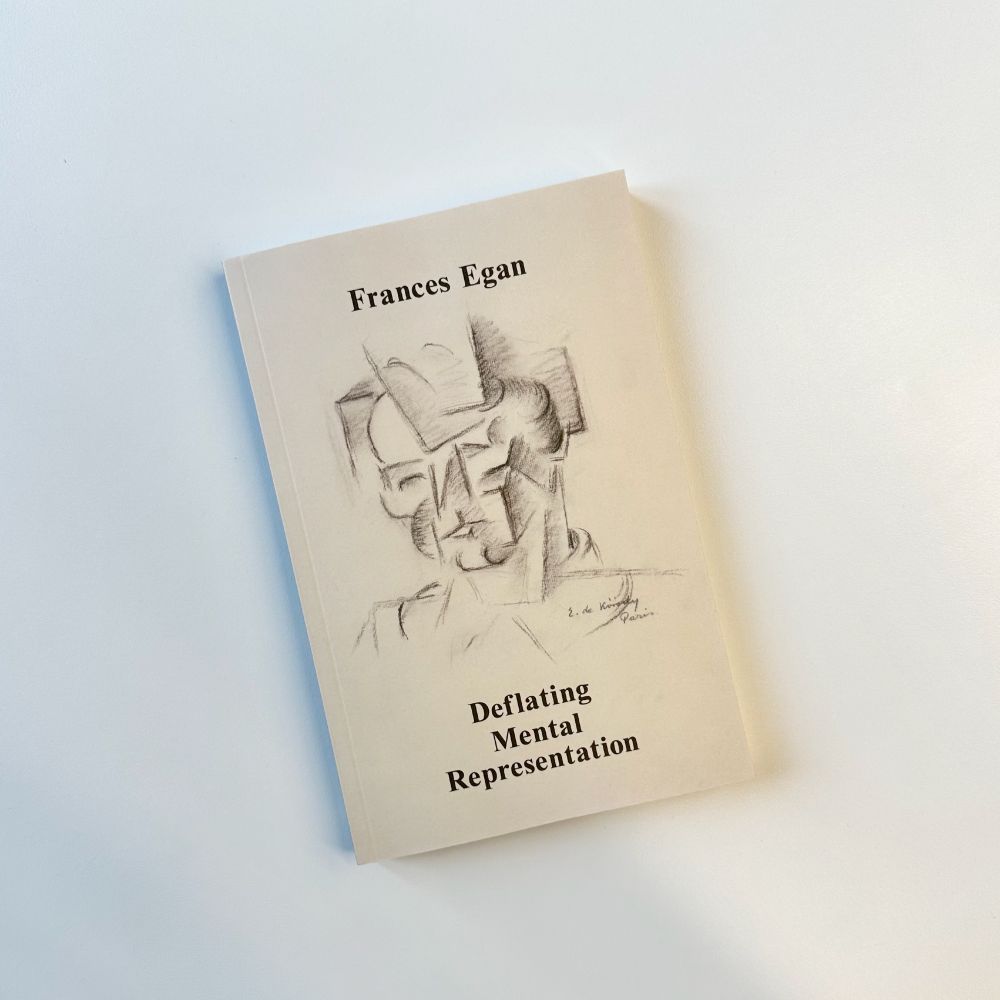
Just published! Free download at mitpress.mit.edu/978026255160... Discounts available for anyone with a US mailing address at www.penguinrandomhouse.com/books/777572... (use code MITP30 for 30% discount today only and READMIT20 for 20% discount anytime)
March 11, 2025 at 6:14 PM
Just published! Free download at mitpress.mit.edu/978026255160... Discounts available for anyone with a US mailing address at www.penguinrandomhouse.com/books/777572... (use code MITP30 for 30% discount today only and READMIT20 for 20% discount anytime)
Reposted by Marlo Paßler

New version of "the letter" in Nature Neuroscience. Like many others in the field, I signed because I believe that IIT threatens to deligitimize the scientific study of consciousness: www.nature.com/articles/s41....
What makes a theory of consciousness unscientific? - Nature Neuroscience
Theories of consciousness have a long and controversial history. One well-known proposal — integrated information theory — has recently been labeled as ‘pseudoscience’, which has caused a heated open ...
www.nature.com
March 10, 2025 at 12:15 PM
New version of "the letter" in Nature Neuroscience. Like many others in the field, I signed because I believe that IIT threatens to deligitimize the scientific study of consciousness: www.nature.com/articles/s41....
Reposted by Marlo Paßler

[what it's like to be Qstr-summer school?] 24 June 20 Qstr Summer School 4-2 Giulio Tononi & Matteo Grasso : IIT Wiki, Quality of space & time youtu.be/4OFbRkic9n8

24 June 20 Qstr Summer School 4-2 Giulio Tononi & Matteo Grasso : IIT Wiki, Quality of space & time
YouTube video by Neural basis of Consciousness & Qualia Structure
youtu.be
March 10, 2025 at 2:51 AM
[what it's like to be Qstr-summer school?] 24 June 20 Qstr Summer School 4-2 Giulio Tononi & Matteo Grasso : IIT Wiki, Quality of space & time youtu.be/4OFbRkic9n8
Reposted by Marlo Paßler
Hier noch ein paar Alternativen:

Schluss mit Google, Apple und Meta
Kartenapps, Clouddienste oder Webbrowser: Viele unserer Daten liegt in den Händen
von US-Unternehmen. Doch es gibt europäische Alternativen
www.fr.de
March 1, 2025 at 8:02 AM
Hier noch ein paar Alternativen:
Ok. I re-read and here it basically means that some voxel constantly maps onto experiences rather than just physical properties… so retinal color sensitive cells do not constantly map onto color experience because sometimes they signal grey but we perceive yellow… hope that helps 😊
February 7, 2025 at 11:38 AM
Ok. I re-read and here it basically means that some voxel constantly maps onto experiences rather than just physical properties… so retinal color sensitive cells do not constantly map onto color experience because sometimes they signal grey but we perceive yellow… hope that helps 😊
From the top of my head it should mean: same cells or voxels encode the same information across different contexts… unlike voxels in PFC for example which have been shown to encode different information in different tasks. But I would have to re-read the paper or ask John to be sure 😅
February 7, 2025 at 7:22 AM
From the top of my head it should mean: same cells or voxels encode the same information across different contexts… unlike voxels in PFC for example which have been shown to encode different information in different tasks. But I would have to re-read the paper or ask John to be sure 😅
Reposted by Marlo Paßler

New preprint! Structuralist approaches are becoming popular in consciousness science. @passler.bsky.social and I propose criteria for which kinds of neural structures can be reliably linked to quality spaces derived from reports.
Thrilled to share a new preprint on Neurophenomenal Structuralism (NPS) by @adriendoerig.bsky.social & myself! We show why neural structures alone aren’t enough to capture conscious contents. We must consider computational context! (arxiv.org/abs/2412.20873). A Thread (1/15):
Neurophenomenal Structuralism and the Role of Computational Context
Neurophenomenal structuralism posits that conscious experiences are defined relationally and that their phenomenal structures are mirrored by neural structures. While this approach offers a promising ...
arxiv.org
January 15, 2025 at 3:34 PM
New preprint! Structuralist approaches are becoming popular in consciousness science. @passler.bsky.social and I propose criteria for which kinds of neural structures can be reliably linked to quality spaces derived from reports.
Reposted by Marlo Paßler
Thrilled to share a new preprint on Neurophenomenal Structuralism (NPS) by @adriendoerig.bsky.social & myself! We show why neural structures alone aren’t enough to capture conscious contents. We must consider computational context! (arxiv.org/abs/2412.20873). A Thread (1/15):
Neurophenomenal Structuralism and the Role of Computational Context
Neurophenomenal structuralism posits that conscious experiences are defined relationally and that their phenomenal structures are mirrored by neural structures. While this approach offers a promising ...
arxiv.org
January 15, 2025 at 1:28 PM
Thrilled to share a new preprint on Neurophenomenal Structuralism (NPS) by @adriendoerig.bsky.social & myself! We show why neural structures alone aren’t enough to capture conscious contents. We must consider computational context! (arxiv.org/abs/2412.20873). A Thread (1/15):
Thanks for the (m)nice study! And we referred to the consumer- vs. producer-based discussion in an earlier version but decided to concentrate only on the structural representation literature which is definitely inspired a lot by these ideas of Millikan and co!
January 15, 2025 at 7:44 PM
Thanks for the (m)nice study! And we referred to the consumer- vs. producer-based discussion in an earlier version but decided to concentrate only on the structural representation literature which is definitely inspired a lot by these ideas of Millikan and co!
Thanks! Looking forward to the discussion 😊
January 15, 2025 at 7:36 PM
Thanks! Looking forward to the discussion 😊
15/
Check out our preprint for all the details, examples, & philosophical grounding! We’d love your feedback, questions, and thoughts on how we can sharpen Neurophenomenal Structuralism further.
Thanks for reading & sharing!
Check out our preprint for all the details, examples, & philosophical grounding! We’d love your feedback, questions, and thoughts on how we can sharpen Neurophenomenal Structuralism further.
Thanks for reading & sharing!
January 15, 2025 at 1:28 PM
15/
Check out our preprint for all the details, examples, & philosophical grounding! We’d love your feedback, questions, and thoughts on how we can sharpen Neurophenomenal Structuralism further.
Thanks for reading & sharing!
Check out our preprint for all the details, examples, & philosophical grounding! We’d love your feedback, questions, and thoughts on how we can sharpen Neurophenomenal Structuralism further.
Thanks for reading & sharing!
14/
Thus, we can’t find NCCCs by only checking local neural patterns. We must trace how neural similarities feed into subjective reports—our best empirical window into the structure of subjective experience–functionally.
Thus, we can’t find NCCCs by only checking local neural patterns. We must trace how neural similarities feed into subjective reports—our best empirical window into the structure of subjective experience–functionally.
January 15, 2025 at 1:28 PM
14/
Thus, we can’t find NCCCs by only checking local neural patterns. We must trace how neural similarities feed into subjective reports—our best empirical window into the structure of subjective experience–functionally.
Thus, we can’t find NCCCs by only checking local neural patterns. We must trace how neural similarities feed into subjective reports—our best empirical window into the structure of subjective experience–functionally.
13/
It also critiques "rich global" structural theories (Fleming & Shea, 2024), which assume conscious content arises by "copying" local structures into a global workspace (GWS). But without any context, how do GWS consumer systems know if it’s a color space or an affect space?
It also critiques "rich global" structural theories (Fleming & Shea, 2024), which assume conscious content arises by "copying" local structures into a global workspace (GWS). But without any context, how do GWS consumer systems know if it’s a color space or an affect space?
January 15, 2025 at 1:28 PM
13/
It also critiques "rich global" structural theories (Fleming & Shea, 2024), which assume conscious content arises by "copying" local structures into a global workspace (GWS). But without any context, how do GWS consumer systems know if it’s a color space or an affect space?
It also critiques "rich global" structural theories (Fleming & Shea, 2024), which assume conscious content arises by "copying" local structures into a global workspace (GWS). But without any context, how do GWS consumer systems know if it’s a color space or an affect space?
12/
Our framework challenges "local" structural theories, which claim that sensory areas encode quality spaces. These theories overlook how downstream processes and computational context are essential for determining what the neural structure represents.
Our framework challenges "local" structural theories, which claim that sensory areas encode quality spaces. These theories overlook how downstream processes and computational context are essential for determining what the neural structure represents.
January 15, 2025 at 1:28 PM
12/
Our framework challenges "local" structural theories, which claim that sensory areas encode quality spaces. These theories overlook how downstream processes and computational context are essential for determining what the neural structure represents.
Our framework challenges "local" structural theories, which claim that sensory areas encode quality spaces. These theories overlook how downstream processes and computational context are essential for determining what the neural structure represents.
11/
In short, we argue NPS must be more than a “find-the-best-match” approach. We need neural structures with genuine causal impact on similarity ratings. Otherwise, structural matches are trivial or ambiguous. Our criteria help determine promising candidate structures for NPS.
In short, we argue NPS must be more than a “find-the-best-match” approach. We need neural structures with genuine causal impact on similarity ratings. Otherwise, structural matches are trivial or ambiguous. Our criteria help determine promising candidate structures for NPS.
January 15, 2025 at 1:28 PM
11/
In short, we argue NPS must be more than a “find-the-best-match” approach. We need neural structures with genuine causal impact on similarity ratings. Otherwise, structural matches are trivial or ambiguous. Our criteria help determine promising candidate structures for NPS.
In short, we argue NPS must be more than a “find-the-best-match” approach. We need neural structures with genuine causal impact on similarity ratings. Otherwise, structural matches are trivial or ambiguous. Our criteria help determine promising candidate structures for NPS.
10/
More precisely, the cell groups for R-G/B-Y could, in principle, be implanted into a new context to encode Arousal and Valence instead, by only altering up- and downstream systems. Content doesn’t arise from structure itself but from structure + computational context.
More precisely, the cell groups for R-G/B-Y could, in principle, be implanted into a new context to encode Arousal and Valence instead, by only altering up- and downstream systems. Content doesn’t arise from structure itself but from structure + computational context.
January 15, 2025 at 1:28 PM
10/
More precisely, the cell groups for R-G/B-Y could, in principle, be implanted into a new context to encode Arousal and Valence instead, by only altering up- and downstream systems. Content doesn’t arise from structure itself but from structure + computational context.
More precisely, the cell groups for R-G/B-Y could, in principle, be implanted into a new context to encode Arousal and Valence instead, by only altering up- and downstream systems. Content doesn’t arise from structure itself but from structure + computational context.
9/
Criterion 4: Contextualization
The content of a candidate neural structure cannot be determined in isolation. The same 2D activation space could encode color (red-green/blue-yellow) or affect (valence/arousal). The difference lies in how broader networks exploit it.
Criterion 4: Contextualization
The content of a candidate neural structure cannot be determined in isolation. The same 2D activation space could encode color (red-green/blue-yellow) or affect (valence/arousal). The difference lies in how broader networks exploit it.

January 15, 2025 at 1:28 PM
9/
Criterion 4: Contextualization
The content of a candidate neural structure cannot be determined in isolation. The same 2D activation space could encode color (red-green/blue-yellow) or affect (valence/arousal). The difference lies in how broader networks exploit it.
Criterion 4: Contextualization
The content of a candidate neural structure cannot be determined in isolation. The same 2D activation space could encode color (red-green/blue-yellow) or affect (valence/arousal). The difference lies in how broader networks exploit it.
8/
Criterion 3: Exploitation
Downstream circuits must exploit the corresponding relational information of candidate neural structure. E.g., if the neural structure is only read out by winner-take-all mechanisms (which does not exploit relational information), then it fails the test.
Criterion 3: Exploitation
Downstream circuits must exploit the corresponding relational information of candidate neural structure. E.g., if the neural structure is only read out by winner-take-all mechanisms (which does not exploit relational information), then it fails the test.

January 15, 2025 at 1:28 PM
8/
Criterion 3: Exploitation
Downstream circuits must exploit the corresponding relational information of candidate neural structure. E.g., if the neural structure is only read out by winner-take-all mechanisms (which does not exploit relational information), then it fails the test.
Criterion 3: Exploitation
Downstream circuits must exploit the corresponding relational information of candidate neural structure. E.g., if the neural structure is only read out by winner-take-all mechanisms (which does not exploit relational information), then it fails the test.
7/
Criterion 2: Organization
The way a candidate neural structure impacts behavior must be systematic. Neural changes ⇒ similar changes in reported experiences. Structures that don’t systematically shift reported similarities (e.g., cause-effect structure of IIT) miss the mark.
Criterion 2: Organization
The way a candidate neural structure impacts behavior must be systematic. Neural changes ⇒ similar changes in reported experiences. Structures that don’t systematically shift reported similarities (e.g., cause-effect structure of IIT) miss the mark.
January 15, 2025 at 1:28 PM
7/
Criterion 2: Organization
The way a candidate neural structure impacts behavior must be systematic. Neural changes ⇒ similar changes in reported experiences. Structures that don’t systematically shift reported similarities (e.g., cause-effect structure of IIT) miss the mark.
Criterion 2: Organization
The way a candidate neural structure impacts behavior must be systematic. Neural changes ⇒ similar changes in reported experiences. Structures that don’t systematically shift reported similarities (e.g., cause-effect structure of IIT) miss the mark.
6/
Criterion 1: Sensitivity
Downstream processes must be sensitive to the candidate neural structure. E.g., rearranging neurons in space without altering connectivity won’t affect downstream processing—so spatial structures (like retinotopic maps) fail this test.
Criterion 1: Sensitivity
Downstream processes must be sensitive to the candidate neural structure. E.g., rearranging neurons in space without altering connectivity won’t affect downstream processing—so spatial structures (like retinotopic maps) fail this test.
January 15, 2025 at 1:28 PM
6/
Criterion 1: Sensitivity
Downstream processes must be sensitive to the candidate neural structure. E.g., rearranging neurons in space without altering connectivity won’t affect downstream processing—so spatial structures (like retinotopic maps) fail this test.
Criterion 1: Sensitivity
Downstream processes must be sensitive to the candidate neural structure. E.g., rearranging neurons in space without altering connectivity won’t affect downstream processing—so spatial structures (like retinotopic maps) fail this test.
5/
For that we propose 4 Criteria for structural candidate NCCCs:
- Sensitivity
- Organization
- Exploitation
- Contextualization
Together they ensure neural structures are genuine content drivers, instead of merely contingently corresponding with phenomenal structure.
For that we propose 4 Criteria for structural candidate NCCCs:
- Sensitivity
- Organization
- Exploitation
- Contextualization
Together they ensure neural structures are genuine content drivers, instead of merely contingently corresponding with phenomenal structure.
January 15, 2025 at 1:28 PM
5/
For that we propose 4 Criteria for structural candidate NCCCs:
- Sensitivity
- Organization
- Exploitation
- Contextualization
Together they ensure neural structures are genuine content drivers, instead of merely contingently corresponding with phenomenal structure.
For that we propose 4 Criteria for structural candidate NCCCs:
- Sensitivity
- Organization
- Exploitation
- Contextualization
Together they ensure neural structures are genuine content drivers, instead of merely contingently corresponding with phenomenal structure.
4/
Why care? Because if a candidate neural structure mirrors phenomenal structure but doesn't shape the similarity reports used to scientifically approximate phenomenal structure, we get an “ant’s trail vs stock chart” situation: structural correspondence without explanatory power.
Why care? Because if a candidate neural structure mirrors phenomenal structure but doesn't shape the similarity reports used to scientifically approximate phenomenal structure, we get an “ant’s trail vs stock chart” situation: structural correspondence without explanatory power.

January 15, 2025 at 1:28 PM
4/
Why care? Because if a candidate neural structure mirrors phenomenal structure but doesn't shape the similarity reports used to scientifically approximate phenomenal structure, we get an “ant’s trail vs stock chart” situation: structural correspondence without explanatory power.
Why care? Because if a candidate neural structure mirrors phenomenal structure but doesn't shape the similarity reports used to scientifically approximate phenomenal structure, we get an “ant’s trail vs stock chart” situation: structural correspondence without explanatory power.
3/
Key question: How do we scientifically test the link between phenomenal and neural structures proposed by NPS? Our answer: mere neuro-phenomenal structural correspondence is insufficient—we must check if the candidate neural structures causally shape our similarity reports.
Key question: How do we scientifically test the link between phenomenal and neural structures proposed by NPS? Our answer: mere neuro-phenomenal structural correspondence is insufficient—we must check if the candidate neural structures causally shape our similarity reports.
January 15, 2025 at 1:28 PM
3/
Key question: How do we scientifically test the link between phenomenal and neural structures proposed by NPS? Our answer: mere neuro-phenomenal structural correspondence is insufficient—we must check if the candidate neural structures causally shape our similarity reports.
Key question: How do we scientifically test the link between phenomenal and neural structures proposed by NPS? Our answer: mere neuro-phenomenal structural correspondence is insufficient—we must check if the candidate neural structures causally shape our similarity reports.
2/
Core idea of NPS: Phenomenal conscious experiences are relational. We capture their phenomenal structure in “quality spaces” (built from similarity reports) and can find the neural correlates of conscious contents (NCCCs) by finding neural populations with the same structure.
Core idea of NPS: Phenomenal conscious experiences are relational. We capture their phenomenal structure in “quality spaces” (built from similarity reports) and can find the neural correlates of conscious contents (NCCCs) by finding neural populations with the same structure.

January 15, 2025 at 1:28 PM
2/
Core idea of NPS: Phenomenal conscious experiences are relational. We capture their phenomenal structure in “quality spaces” (built from similarity reports) and can find the neural correlates of conscious contents (NCCCs) by finding neural populations with the same structure.
Core idea of NPS: Phenomenal conscious experiences are relational. We capture their phenomenal structure in “quality spaces” (built from similarity reports) and can find the neural correlates of conscious contents (NCCCs) by finding neural populations with the same structure.