



@pollinationut.bsky.social
Pollination Ecology Workgroup at the University of Tartu is interested in the relationships between plants and the insects that pollinate them, studying their interactions from gene flow of plants to plant-pollinator interaction networks.
pollination.ut.ee
pollination.ut.ee
🧬🌱 New collab paper reviews advances and challenges in applying landscape genetics to plant conservation. It highlights key gaps, especially for non-vascular plants and calls for stronger interdisciplinary collaboration and more accessible tools to bring genetic insights into practice
👉 doi.org/qkct
👉 doi.org/qkct

Landscape genetics in plants: challenges and insights from the XX International Botanical Congress - Landscape Ecology
Context Plant landscape genetics is a rapidly developing discipline that examines how habitat loss and fragmentation due to anthropogenic pressures shape plant genetic diversity, gene flow, and potential adaptation. Despite its potential, many aspects remain underexplored, limiting its effective incorporation into conservation planning. Objectives This study aims to identify current trends, challenges, and practical opportunities for applying landscape genetics in plant conservation, framed within the Madrid Declaration (XX International Botanical Congress, IBC, in Madrid, July 2024). Methods Insights were gathered from presentations and discussions held during the symposium “Across Land and Water: Understanding Plant Gene Flow at a Landscape Scale” (XX IBC), targeted literature review, and interviews with conservation practitioners. Results Findings highlight major gaps in bryophyte genetics and vector ecology. Methodological challenges include accounting for life history traits and time-lags. Landscape genetics and genomics have rarely been applied in conservation planning. Effective communication between scientists and stakeholders, increased public awareness, and user-friendly tools are crucial for translating genetic research into conservation action. Conclusions Addressing methodological challenges and fostering interdisciplinary collaboration will increase the field’s impact. Improved knowledge exchange can strengthen conservation planning, promote genetic diversity, and ecosystem resilience in human-modified landscapes.
doi.org
December 22, 2025 at 12:30 PM
🧬🌱 New collab paper reviews advances and challenges in applying landscape genetics to plant conservation. It highlights key gaps, especially for non-vascular plants and calls for stronger interdisciplinary collaboration and more accessible tools to bring genetic insights into practice
👉 doi.org/qkct
👉 doi.org/qkct
Really a great opportunity to introduce our research and plan collaboration.🏵️

We were very happy to welcome Tsipe Aavik for a #WilhelminenbergSeminarTalk last week. She introduced us to the world of landscape genetics🧬and spoke about a succesful Citizen Science Project concerning the counting of cowslips🌼
@klivvvienna.bsky.social @pollinationut.bsky.social
@klivvvienna.bsky.social @pollinationut.bsky.social


October 29, 2025 at 12:57 PM
Really a great opportunity to introduce our research and plan collaboration.🏵️
📢 Tune in next Wednesday at 2:00 PM CET (3:00 PM EET) to hear our group leader Tsipe Aavik talk about landscape genetics of plants.🌼
Next #WilhelminenbergSeminarTalk: 22.10. | 2:00 PM with Tsipe Aavik / University of Tartu, Estonia @pollinationut.bsky.social
📍FIWI, 1160 Wien or online 👩💻
→ vetmeduni.ac.at/fiwi/seminar...
📢 Tip for students: The participation is recognised as an elective! (KV 128 804) @klivvvienna.bsky.social
📍FIWI, 1160 Wien or online 👩💻
→ vetmeduni.ac.at/fiwi/seminar...
📢 Tip for students: The participation is recognised as an elective! (KV 128 804) @klivvvienna.bsky.social

October 16, 2025 at 1:43 PM
📢 Tune in next Wednesday at 2:00 PM CET (3:00 PM EET) to hear our group leader Tsipe Aavik talk about landscape genetics of plants.🌼
‼️New article in @oikosjournal.bsky.social led by our post-doc Arne Devriese used metabarcoding to identify🌼🦋 plant pollinator interactions in fragmented dune slacks along the Belgian coast, and uncovered that pollinators commonly interact with resources in the surrounding landscape.
👉 doi.org/p89v
👉 doi.org/p89v

October 14, 2025 at 1:52 PM
‼️New article in @oikosjournal.bsky.social led by our post-doc Arne Devriese used metabarcoding to identify🌼🦋 plant pollinator interactions in fragmented dune slacks along the Belgian coast, and uncovered that pollinators commonly interact with resources in the surrounding landscape.
👉 doi.org/p89v
👉 doi.org/p89v
‼️New article published in AoBP revealing how habitat loss and fragmentation affect heterostylous plants!
The study was led by Dr Marianne Kivastik from our workgroup and was part of her PhD thesis that she successfuly defended in spring.
Article 👉 doi.org/p63x
Thesis 👉 dspace.ut.ee/items/a8dd02...
The study was led by Dr Marianne Kivastik from our workgroup and was part of her PhD thesis that she successfuly defended in spring.
Article 👉 doi.org/p63x
Thesis 👉 dspace.ut.ee/items/a8dd02...

🌿 New article in @aobp.bsky.social addressing how habitat loss and fragmentation affect heterostylous plants, revealing consequences such as reduced population size, biased morph ratios, disrupted pollination, and shifts toward selfing.
👉 doi.org/p63x
@pollinationut.bsky.social
#PlantScience
👉 doi.org/p63x
@pollinationut.bsky.social
#PlantScience

October 1, 2025 at 8:48 AM
‼️New article published in AoBP revealing how habitat loss and fragmentation affect heterostylous plants!
The study was led by Dr Marianne Kivastik from our workgroup and was part of her PhD thesis that she successfuly defended in spring.
Article 👉 doi.org/p63x
Thesis 👉 dspace.ut.ee/items/a8dd02...
The study was led by Dr Marianne Kivastik from our workgroup and was part of her PhD thesis that she successfuly defended in spring.
Article 👉 doi.org/p63x
Thesis 👉 dspace.ut.ee/items/a8dd02...
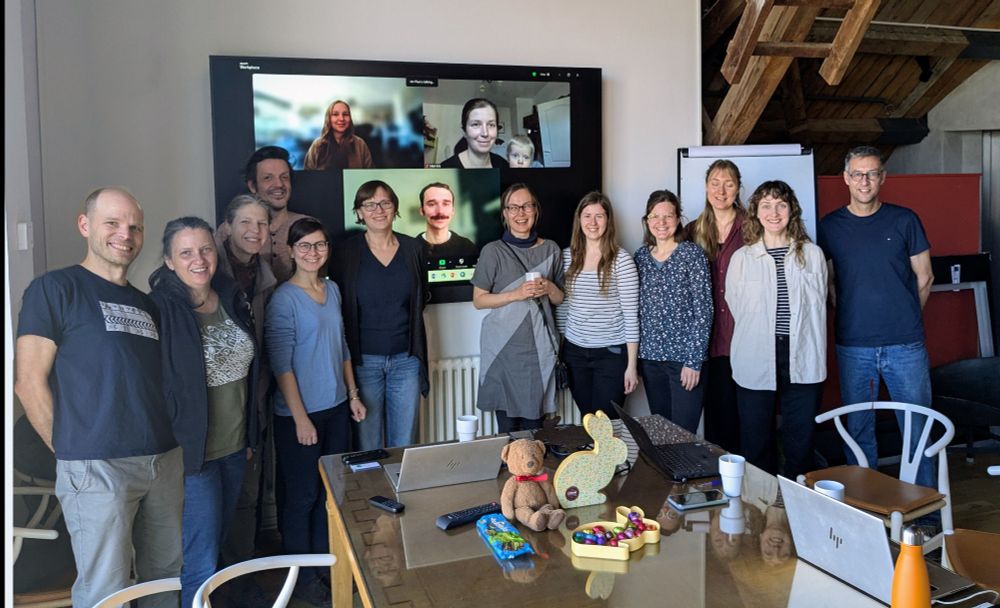
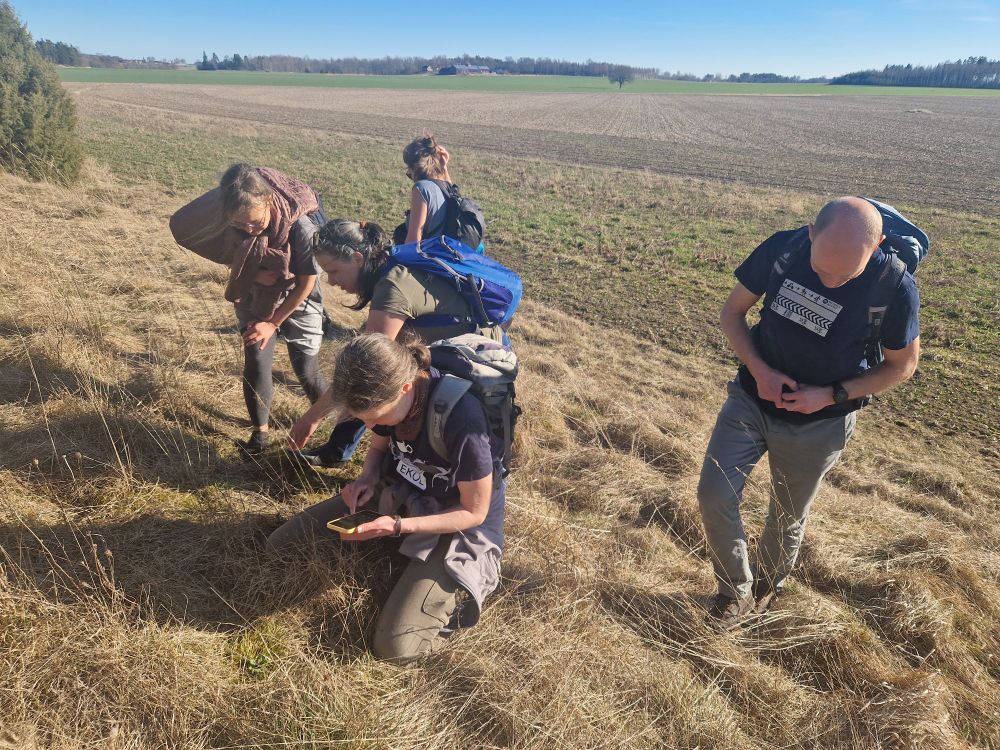
Last week, we met in sunny☀️ Uppsala with our @biodiversaplus.bsky.social FuncNet project partners to discuss the work done and manuscript ideas and plan our coming fieldwork.
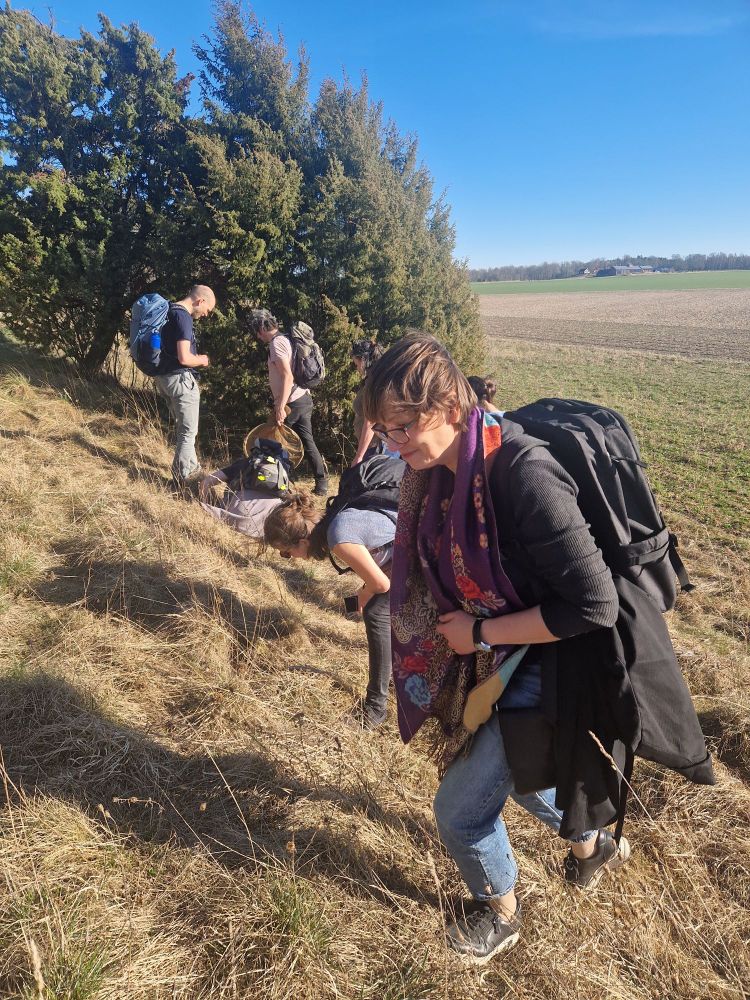
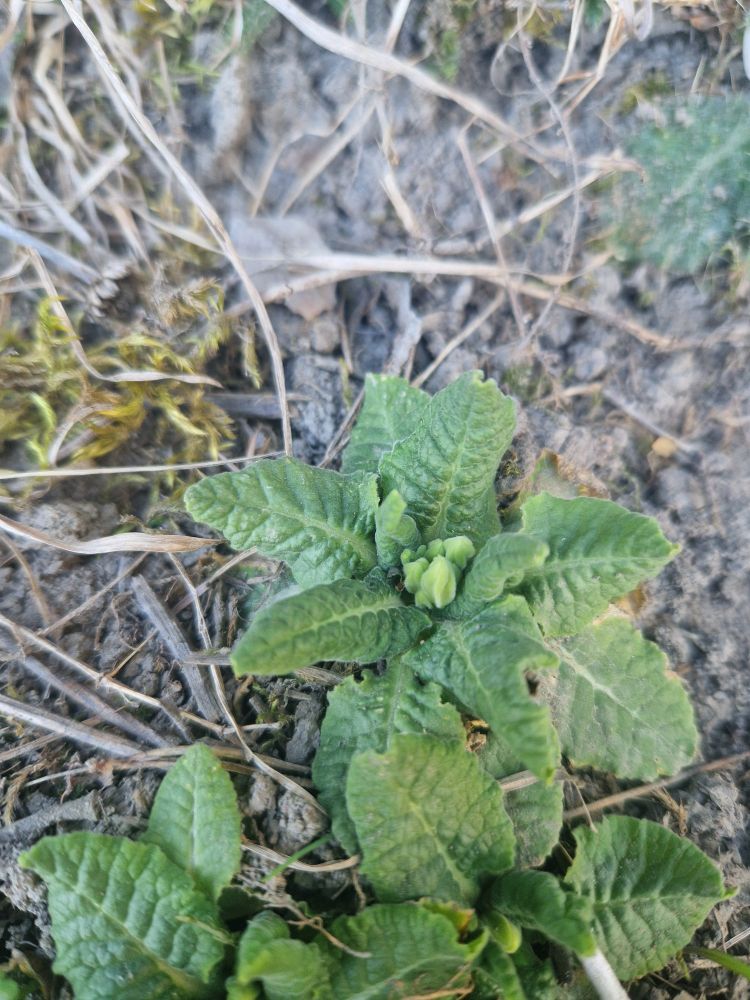
We also had a short trip to one of the Swedish project sites, where we found already first cowslip leaves and pollinators 🌻🐝
We also had a short trip to one of the Swedish project sites, where we found already first cowslip leaves and pollinators 🌻🐝
April 7, 2025 at 8:23 AM
Last week, we met in sunny☀️ Uppsala with our @biodiversaplus.bsky.social FuncNet project partners to discuss the work done and manuscript ideas and plan our coming fieldwork.
We also had a short trip to one of the Swedish project sites, where we found already first cowslip leaves and pollinators 🌻🐝
We also had a short trip to one of the Swedish project sites, where we found already first cowslip leaves and pollinators 🌻🐝
🌻The surprising results from the citizen science campaign led by our workgroup are now published!
Data from 5,200+ locations revealed 9% more short-styled flowers (S-morph), linked to climate change & land use. 🌍
Read more👉 ut.ee/en/news/thou...
Data from 5,200+ locations revealed 9% more short-styled flowers (S-morph), linked to climate change & land use. 🌍
Read more👉 ut.ee/en/news/thou...

In the news!🗞️
Thousands of European citizen scientists helped identify shifts in the #floral traits of #insect-#pollinated #plants: besjournals.onlinelibrary.wiley.com/doi/10.1111/...
Thousands of European citizen scientists helped identify shifts in the #floral traits of #insect-#pollinated #plants: besjournals.onlinelibrary.wiley.com/doi/10.1111/...

A pan‐European citizen science study shows population size, climate and land use are related to biased morph ratios in the heterostylous plant Primula veris
A large-scale citizen science study involving thousands of cowslip (Primula veris) observations from all over Europe revealed an unexpected prevalence of S-morphs over L-morphs, which was influenced ....
besjournals.onlinelibrary.wiley.com
February 14, 2025 at 2:28 PM
🌻The surprising results from the citizen science campaign led by our workgroup are now published!
Data from 5,200+ locations revealed 9% more short-styled flowers (S-morph), linked to climate change & land use. 🌍
Read more👉 ut.ee/en/news/thou...
Data from 5,200+ locations revealed 9% more short-styled flowers (S-morph), linked to climate change & land use. 🌍
Read more👉 ut.ee/en/news/thou...