




Sam J Wilson
@samjwilsonphd.bsky.social
Virologist. Professor. Cambridge, UK
https://www.immunology.cam.ac.uk/staff/professor-sam-wilson
https://tinyurl.com/samjwilsonscholar
https://www.immunology.cam.ac.uk/staff/professor-sam-wilson
https://tinyurl.com/samjwilsonscholar
Pinned
Sam J Wilson
@samjwilsonphd.bsky.social
· Nov 27

Avian-origin influenza A viruses tolerate elevated pyrexic temperatures in mammals
Host body temperature can define a virus’s replicative profile—influenza A viruses (IAVs) adapted to 40° to 42°C in birds are less temperature sensitive in vitro compared with human isolates adapted t...
www.science.org
How does fever work?
Our new Science paper shows how elevated body temperature can protect against severe influenza and that avian-origin viruses escape this defence.
This is likely one reason why bird flus and some pandemic influenzas can be so severe.🧵
www.science.org/doi/10.1126/...
Our new Science paper shows how elevated body temperature can protect against severe influenza and that avian-origin viruses escape this defence.
This is likely one reason why bird flus and some pandemic influenzas can be so severe.🧵
www.science.org/doi/10.1126/...
Reposted by Sam J Wilson

🚨 New paper from the lab! 🚀 We explore flexibility and modulation of IRES-dependent translation in enterovirus genomes through upstream ORFs. Many thanks to all co-authors from the @campathology.bsky.social, CIMR and Cambridge Stem Cell Institute!
dx.plos.org/10.1371/jour...
dx.plos.org/10.1371/jour...

Flexibility and modulation of translation initiation in enterovirus genomes
Author summary Enteroviruses cause over a billion infections annually, leading to serious conditions such as hand, foot, and mouth disease and viral meningitis. While these viruses are known to encode...
dx.plos.org
February 9, 2026 at 8:54 PM
🚨 New paper from the lab! 🚀 We explore flexibility and modulation of IRES-dependent translation in enterovirus genomes through upstream ORFs. Many thanks to all co-authors from the @campathology.bsky.social, CIMR and Cambridge Stem Cell Institute!
dx.plos.org/10.1371/jour...
dx.plos.org/10.1371/jour...
Reposted by Sam J Wilson

In a new article with Kevin Groen, we review the most recent scientific developments relating to autoantibodies targeting type I interferons and their impacts on severe viral disease:
doi.org/10.1016/j.co...
doi.org/10.1016/j.co...

February 3, 2026 at 2:26 PM
In a new article with Kevin Groen, we review the most recent scientific developments relating to autoantibodies targeting type I interferons and their impacts on severe viral disease:
doi.org/10.1016/j.co...
doi.org/10.1016/j.co...
Reposted by Sam J Wilson
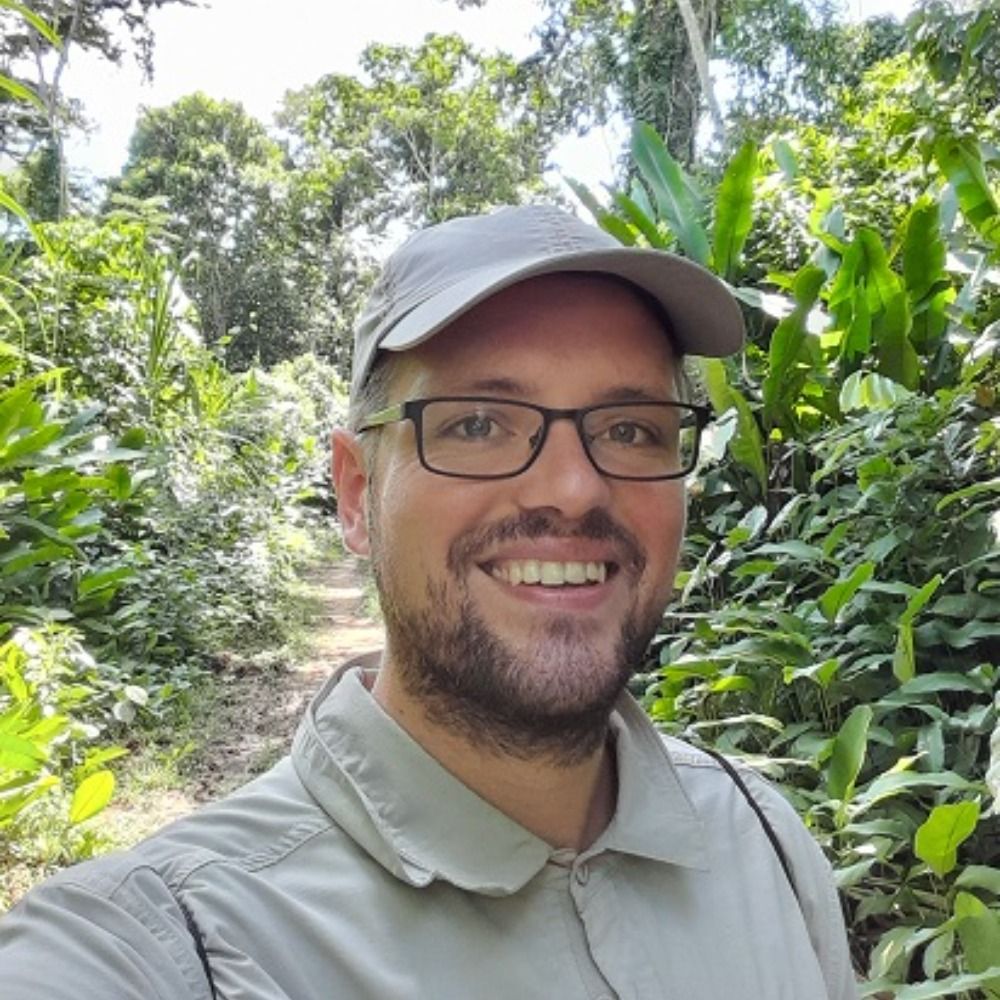
I am looking for a PhD student to join my new Socio-Eco-Evo group, hosted in Katie Peichel's Evolutionary Ecology Division @ University of Bern. We're offering a fully funded 4-year position, studying social plasticity and behavioral adaptation among stickleback in Greenland. Please share around!

February 2, 2026 at 12:01 PM
I am looking for a PhD student to join my new Socio-Eco-Evo group, hosted in Katie Peichel's Evolutionary Ecology Division @ University of Bern. We're offering a fully funded 4-year position, studying social plasticity and behavioral adaptation among stickleback in Greenland. Please share around!
Reposted by Sam J Wilson

Only 2 more days to apply for this post as Research Fellow in the Health Protection Research Unit - Public Health Genomics at the University of Birmingham.
Come and join us to exciting, cutting-edge genomics and metagenomics work to deliver public health benefits
www.jobs.ac.uk/job/DQE112/r...
Come and join us to exciting, cutting-edge genomics and metagenomics work to deliver public health benefits
www.jobs.ac.uk/job/DQE112/r...

Research Fellow at University of Birmingham
Discover Research Fellow jobs and more in higher education on jobs.ac.uk. Apply for further details on the top job board.
www.jobs.ac.uk
February 2, 2026 at 4:08 PM
Only 2 more days to apply for this post as Research Fellow in the Health Protection Research Unit - Public Health Genomics at the University of Birmingham.
Come and join us to exciting, cutting-edge genomics and metagenomics work to deliver public health benefits
www.jobs.ac.uk/job/DQE112/r...
Come and join us to exciting, cutting-edge genomics and metagenomics work to deliver public health benefits
www.jobs.ac.uk/job/DQE112/r...
Reposted by Sam J Wilson
This is finally out.
Very short take home. All the variation in spike that produced the immune escape characteristics of Omicron can occur in one single persistently infected individual over the period of a year.
This is why persistent infections matter
www.cell.com/cell-reports...
Very short take home. All the variation in spike that produced the immune escape characteristics of Omicron can occur in one single persistently infected individual over the period of a year.
This is why persistent infections matter
www.cell.com/cell-reports...

Antibody escape drives emergence of diverse spike haplotypes resembling variants of concern in persistent SARS-CoV-2 infections
Snell et al. develop sequencing methodology to identify full-length spike haplotypes
and show that persistent SARS-CoV-2 infections drive divergent haplotype emergence,
accelerating viral evolution an...
www.cell.com
February 2, 2026 at 4:09 PM
This is finally out.
Very short take home. All the variation in spike that produced the immune escape characteristics of Omicron can occur in one single persistently infected individual over the period of a year.
This is why persistent infections matter
www.cell.com/cell-reports...
Very short take home. All the variation in spike that produced the immune escape characteristics of Omicron can occur in one single persistently infected individual over the period of a year.
This is why persistent infections matter
www.cell.com/cell-reports...
Reposted by Sam J Wilson

We are hiring for group leaders again — EBI is a great place to start your research group!
embl.wd103.myworkdayjobs.com/EMBL/job/Hin...
embl.wd103.myworkdayjobs.com/EMBL/job/Hin...

Research Group Leader
Do you want to lead groundbreaking research in computational biology? Join us at EMBL-EBI! EMBL's European Bioinformatics Institute (EMBL-EBI) is seeking talented and highly-motivated scientists to jo...
embl.wd103.myworkdayjobs.com
January 30, 2026 at 9:02 AM
We are hiring for group leaders again — EBI is a great place to start your research group!
embl.wd103.myworkdayjobs.com/EMBL/job/Hin...
embl.wd103.myworkdayjobs.com/EMBL/job/Hin...
Reposted by Sam J Wilson

Update bsky.app/profile/resp...

MRC instructs grant review boards to slash funding rates.
Boards asked to recommend just three applications for funding, as BBSRC also suspends calls.
www.researchprofessionalnews.com/rr-news-uk-r...
Boards asked to recommend just three applications for funding, as BBSRC also suspends calls.
www.researchprofessionalnews.com/rr-news-uk-r...

MRC instructs grant review boards to slash funding rates - Research Professional News
Boards asked to recommend just three applications for funding, as BBSRC also suspends calls
www.researchprofessionalnews.com
January 30, 2026 at 7:59 AM
Update bsky.app/profile/resp...
Reposted by Sam J Wilson

Join us at the Evolutionary Biology Centre at Uppsala University. We’re searching for an Assistant Professor in Biology. www.uu.se/en/about-uu/...

January 28, 2026 at 8:28 PM
Join us at the Evolutionary Biology Centre at Uppsala University. We’re searching for an Assistant Professor in Biology. www.uu.se/en/about-uu/...
Substantial overlap, but only two work well at dinner parties

January 27, 2026 at 4:49 PM
Substantial overlap, but only two work well at dinner parties
Reposted by Sam J Wilson

Another cool example of how retroviral elements have influenced the evolution of the brain..in this case resulting in a chimp specific change in gene expression in the brain. Nice story and summary by Siddhant!

A virus that infected chimpanzee ancestors millions of years ago may still be shaping brains today. New organoid and long-read sequencing work links an ancient retrovirus to gene silencing in chimpanzees.
By @siddhantpusdekar.bsky.social
#neuroskyence
www.thetransmitter.org/evolution/vi...
By @siddhantpusdekar.bsky.social
#neuroskyence
www.thetransmitter.org/evolution/vi...

Viral DNA in chimps silences brain gene humans still use
The retroviral insert appears to inadvertently switch off a gene involved in brain development.
www.thetransmitter.org
January 27, 2026 at 3:32 PM
Another cool example of how retroviral elements have influenced the evolution of the brain..in this case resulting in a chimp specific change in gene expression in the brain. Nice story and summary by Siddhant!
Reposted by Sam J Wilson

Check out these tools to detect co-evolution in protein-protein interactions developed by postdoc @chrislbgraham.bsky.social
Very useful as a hypothesis generator, complementing protein interaction prediction from Alphafold.
www.biorxiv.org/content/10.6...
Very useful as a hypothesis generator, complementing protein interaction prediction from Alphafold.
www.biorxiv.org/content/10.6...
www.biorxiv.org
January 27, 2026 at 8:55 AM
Check out these tools to detect co-evolution in protein-protein interactions developed by postdoc @chrislbgraham.bsky.social
Very useful as a hypothesis generator, complementing protein interaction prediction from Alphafold.
www.biorxiv.org/content/10.6...
Very useful as a hypothesis generator, complementing protein interaction prediction from Alphafold.
www.biorxiv.org/content/10.6...
Reposted by Sam J Wilson

We have a fantastic opportunity for a PhD studentship in collaboration with @jesuscollegecam.bsky.social and Cambridge Children’s Research Institute, part of the new Cambridge Children’s Hospital. Closing date 20th Feb; all the details here: www.cimr.cam.ac.uk/postgraduate...
The Chi-Wang PhD Studentship at Jesus College and the University of Cambridge School of Clinical Medicine | Cambridge Institute for Medical Research
The Chi-Wang Studentship at Jesus College and the University of Cambridge School of Clinical Medicine. Funding Application deadline: 23:59pm (midnight) UK time on 20th February 2026.
www.cimr.cam.ac.uk
January 27, 2026 at 9:18 AM
We have a fantastic opportunity for a PhD studentship in collaboration with @jesuscollegecam.bsky.social and Cambridge Children’s Research Institute, part of the new Cambridge Children’s Hospital. Closing date 20th Feb; all the details here: www.cimr.cam.ac.uk/postgraduate...

Reposted by Sam J Wilson

Cryo-EM structure reveals how influenza A virus NEP binds the viral polymerase at a regulatory hotspot, coordinating RNA synthesis and nuclear export. Fantastic collaboration with @loiccarrique.bsky.social and Jon Grimes. www.science.org/doi/10.1126/...
January 24, 2026 at 5:25 PM
Cryo-EM structure reveals how influenza A virus NEP binds the viral polymerase at a regulatory hotspot, coordinating RNA synthesis and nuclear export. Fantastic collaboration with @loiccarrique.bsky.social and Jon Grimes. www.science.org/doi/10.1126/...
So much other news that I haven't heard an update about this....
www.independent.co.uk/asia/india/i...
www.independent.co.uk/asia/india/i...

India rushes to contain deadly Nipah virus outbreak after five cases confirmed
Nearly 100 people have been asked to quarantine in their homes
www.independent.co.uk
January 26, 2026 at 1:46 PM
So much other news that I haven't heard an update about this....
www.independent.co.uk/asia/india/i...
www.independent.co.uk/asia/india/i...
Reposted by Sam J Wilson

First evidence in Europe of highly pathogenic avian influenza virus H5N1 infection in a dairy cow. Antibodies against H5N1 detected in a cow with mastitis and respiratory signs on a Dutch dairy farm at the end of December. A cat on that farm had died from H5N1. www.tweedekamer.nl/downloads/do...

January 23, 2026 at 9:26 PM
First evidence in Europe of highly pathogenic avian influenza virus H5N1 infection in a dairy cow. Antibodies against H5N1 detected in a cow with mastitis and respiratory signs on a Dutch dairy farm at the end of December. A cat on that farm had died from H5N1. www.tweedekamer.nl/downloads/do...

Reposted by Sam J Wilson

Yet another reason to screen people over 65 years of age for type I IFN autoantibodies:
Type I IFN autoantibodies underlie chikungunya live-attenuated vaccine encephalitis | PNAS www.pnas.org/doi/10.1073/...
Type I IFN autoantibodies underlie chikungunya live-attenuated vaccine encephalitis | PNAS www.pnas.org/doi/10.1073/...

Type I IFN autoantibodies underlie chikungunya live-attenuated vaccine encephalitis | PNAS
Human autoantibodies neutralizing type I interferons (IFNs) have emerged as strong,
common, and global determinants of a growing number of severe v...
www.pnas.org
January 22, 2026 at 7:09 PM
Yet another reason to screen people over 65 years of age for type I IFN autoantibodies:
Type I IFN autoantibodies underlie chikungunya live-attenuated vaccine encephalitis | PNAS www.pnas.org/doi/10.1073/...
Type I IFN autoantibodies underlie chikungunya live-attenuated vaccine encephalitis | PNAS www.pnas.org/doi/10.1073/...
Reposted by Sam J Wilson
Excited to share: We show that basal IFNλ2/3 signaling helps human intestinal epithelial cells stay ready for viral infections, even before an acute infection. A reminder that a lot of innate immune defense happens quietly in the background. journals.plos.org/plospathogen...

Basal IFNλ2/3 signaling is required for ISG expression and viral control in human intestinal epithelial cells
Author summary Interferon-lambdas (IFNλs) are antiviral molecules that help protect the surfaces of our body, such as the gut and lungs, from infection. While IFNλs are best known for being produced d...
journals.plos.org
January 22, 2026 at 4:46 PM
Excited to share: We show that basal IFNλ2/3 signaling helps human intestinal epithelial cells stay ready for viral infections, even before an acute infection. A reminder that a lot of innate immune defense happens quietly in the background. journals.plos.org/plospathogen...
Reposted by Sam J Wilson

Newsweek (January 20, 1969)

January 21, 2026 at 3:18 AM
Newsweek (January 20, 1969)
Reposted by Sam J Wilson

Rhinoviruses cause common cold & asthma attacks but are also often benign. Using nasal organoids, we learned how the community of cells in the lining the nasal passages coordinates to respond to rhinovirus and which responses lead to excess mucus & inflammation. www.cell.com/cell-press-b...

Rhinovirus triggers distinct host responses through differential engagement of epithelial innate immune signaling
Rhinoviruses are the most frequent cause of common colds and also a major cause of
respiratory distress in high-risk groups. Using single-cell sequencing of rhinovirus-infected
nasal epithelial organo...
www.cell.com
January 20, 2026 at 9:23 PM
Rhinoviruses cause common cold & asthma attacks but are also often benign. Using nasal organoids, we learned how the community of cells in the lining the nasal passages coordinates to respond to rhinovirus and which responses lead to excess mucus & inflammation. www.cell.com/cell-press-b...
I really think the MRC/UKRI need to say something about what they're planning.
January 22, 2026 at 9:40 AM
I really think the MRC/UKRI need to say something about what they're planning.
Reposted by Sam J Wilson
🚨Job Alert🚨
Looking for a highly motivated postdoctoral researcher to join our multidisciplinary team of scientists. The postdoc will collaborate with world-class structural biologist Peijun Zhang to understand everything about HIV capsids and how they work via host interactions.
Spread the word!
Looking for a highly motivated postdoctoral researcher to join our multidisciplinary team of scientists. The postdoc will collaborate with world-class structural biologist Peijun Zhang to understand everything about HIV capsids and how they work via host interactions.
Spread the word!
Postdoctoral Research Associate (Molecular Biology of HIV Infection) - QMUL Jobs
ID: 8551. Title: Postdoctoral Research Associate (Molecular Biology of HIV Infection). Application Deadline:
qmul-jobs.tal.net
January 20, 2026 at 5:50 PM
🚨Job Alert🚨
Looking for a highly motivated postdoctoral researcher to join our multidisciplinary team of scientists. The postdoc will collaborate with world-class structural biologist Peijun Zhang to understand everything about HIV capsids and how they work via host interactions.
Spread the word!
Looking for a highly motivated postdoctoral researcher to join our multidisciplinary team of scientists. The postdoc will collaborate with world-class structural biologist Peijun Zhang to understand everything about HIV capsids and how they work via host interactions.
Spread the word!
Reposted by Sam J Wilson

I have a new preprint! www.biorxiv.org/content/10.6... I found this endogenous retrovirus as a PhD student with @rtarlinton.bsky.social back in 2012 - a mere 14 years later we've written it up! This ERV is expressed in guinea pig lymphomas and might explain their high rate of lymphoma/leukemia. 💻🧪
Expression of Retroviruses in Guinea Pig Lymphomas
Retroviruses commonly cause neoplasia in many species but have not been described in guinea pigs. While historical evidence exists for the presence of an active retrovirus in domestic guinea pigs ( Cavia porcella), there has been no description of the sequence of these viruses or their role in disease in guinea pigs. This paper uses genome mining of the published domestic and wild ( Cavia aperea) guinea pig genomes for retroviral sequences to identify the gamma and beta-retroviral complement of the Cavia genome, describing eight groups of viruses with evidence of recombination between virus groups. The most intact group, gamma-like retroviruses related to HERV-T (integration estimates of 855,000 to 3.8 million years ago), has five near full length loci that are likely capable of active infection. RNA-Scope In-situ Hybridisation of archived formalin-fixed, paraffin embedded (FFPE) guinea pig lymphoma sections with a probe for one of these loci demonstrated viral RNA expression in lymphoma tissue, strengthening the case for a role of these viruses in the high incidence of leukaemia and lymphoma in this species. ### Competing Interest Statement The authors have declared no competing interest. University of Nottingham, https://ror.org/01ee9ar58
www.biorxiv.org
January 20, 2026 at 2:27 PM
I have a new preprint! www.biorxiv.org/content/10.6... I found this endogenous retrovirus as a PhD student with @rtarlinton.bsky.social back in 2012 - a mere 14 years later we've written it up! This ERV is expressed in guinea pig lymphomas and might explain their high rate of lymphoma/leukemia. 💻🧪
Reposted by Sam J Wilson
UKRI pauses several funding calls amid priorities shake-up
The applicant-led MRC funding calls on pause include research grants, partnership grants and new investigator research grants made available through the council’s research boards.
www.researchprofessional.com/news-article...
The applicant-led MRC funding calls on pause include research grants, partnership grants and new investigator research grants made available through the council’s research boards.
www.researchprofessional.com/news-article...
Research Professional Sign-in
www.researchprofessional.com
January 19, 2026 at 5:24 PM
UKRI pauses several funding calls amid priorities shake-up
The applicant-led MRC funding calls on pause include research grants, partnership grants and new investigator research grants made available through the council’s research boards.
www.researchprofessional.com/news-article...
The applicant-led MRC funding calls on pause include research grants, partnership grants and new investigator research grants made available through the council’s research boards.
www.researchprofessional.com/news-article...