



Stegle Lab
@steglelab.bsky.social
Our group develops and applies computational approaches to study molecular variations and their phenotypic consequence. We are part of DKFZ and EMBL.
Website: https://steglelab.org/
Website: https://steglelab.org/
Pinned
Stegle Lab
@steglelab.bsky.social
· Dec 9
We are the Stegle Lab: A bioinformatics group advancing computational methods to study molecular variations and their impact on phenotypes. We are jointly hosted at the German Cancer Research Center (@dkfz.bsky.social) and the European Molecular Biology Laboratory (@embl.org) in Heidelberg, Germany.
Reposted by Stegle Lab

📢 3rd Keynote reveal!
We’re excited to welcome Prof. Dr. Oliver Stegle as keynote speaker at #HMCConference2026
Director & Co-Spokesperson of #GHGA, @oliverstegle.bsky.social advances secure, #FAIR infrastructures for data-driven biomedical research. 🧬
steglelab.bsky.social ghga.bsky.social
We’re excited to welcome Prof. Dr. Oliver Stegle as keynote speaker at #HMCConference2026
Director & Co-Spokesperson of #GHGA, @oliverstegle.bsky.social advances secure, #FAIR infrastructures for data-driven biomedical research. 🧬
steglelab.bsky.social ghga.bsky.social

February 10, 2026 at 11:46 AM
📢 3rd Keynote reveal!
We’re excited to welcome Prof. Dr. Oliver Stegle as keynote speaker at #HMCConference2026
Director & Co-Spokesperson of #GHGA, @oliverstegle.bsky.social advances secure, #FAIR infrastructures for data-driven biomedical research. 🧬
steglelab.bsky.social ghga.bsky.social
We’re excited to welcome Prof. Dr. Oliver Stegle as keynote speaker at #HMCConference2026
Director & Co-Spokesperson of #GHGA, @oliverstegle.bsky.social advances secure, #FAIR infrastructures for data-driven biomedical research. 🧬
steglelab.bsky.social ghga.bsky.social
Working on trans-eQTL mapping with population-scale scRNA-seq? Meet LIVI, our latest framework that enables efficient trans-eQTL mapping at single-cell resolution across cohorts of hundreds to thousands of donors.
Preprint: doi.org/10.64898/202...
Summary in the 🧵 below by @danaivagiaki.bsky.social
Preprint: doi.org/10.64898/202...
Summary in the 🧵 below by @danaivagiaki.bsky.social
February 10, 2026 at 8:59 AM
Working on trans-eQTL mapping with population-scale scRNA-seq? Meet LIVI, our latest framework that enables efficient trans-eQTL mapping at single-cell resolution across cohorts of hundreds to thousands of donors.
Preprint: doi.org/10.64898/202...
Summary in the 🧵 below by @danaivagiaki.bsky.social
Preprint: doi.org/10.64898/202...
Summary in the 🧵 below by @danaivagiaki.bsky.social
We are hiring a Research Software Engineer at @embl.org Heidelberg to enhance and maintain open-source infrastructure for spatial omics.
🔗 Deadline: 15/02/2026
embl.wd103.myworkdayjobs.com/en-US/EMBL/d...
🔗 Deadline: 15/02/2026
embl.wd103.myworkdayjobs.com/en-US/EMBL/d...

Research Software Engineer - Spatial-omics
The Oliver Stegle team and the Bioimage Analysis Support Team at EMBL Heidelberg are looking for a research software engineer to contribute to the development and maintenance of highly-used open-sourc...
embl.wd103.myworkdayjobs.com
February 2, 2026 at 2:54 PM
We are hiring a Research Software Engineer at @embl.org Heidelberg to enhance and maintain open-source infrastructure for spatial omics.
🔗 Deadline: 15/02/2026
embl.wd103.myworkdayjobs.com/en-US/EMBL/d...
🔗 Deadline: 15/02/2026
embl.wd103.myworkdayjobs.com/en-US/EMBL/d...
Together with Jeroen Krijgsveld, we are looking for a postdoc to help us unlock single-cell proteomics (SCP) through the establishment of a scalable computational framework.
For more information, see the @hlsalliance.bsky.social Postdoc Program:
www.health-life-sciences.de/opportunitie...
For more information, see the @hlsalliance.bsky.social Postdoc Program:
www.health-life-sciences.de/opportunitie...
HEALTH + LIFE SCIENCE ALLIANCE | Interinstitutional Postdocs
www.health-life-sciences.de
January 20, 2026 at 9:43 AM
Together with Jeroen Krijgsveld, we are looking for a postdoc to help us unlock single-cell proteomics (SCP) through the establishment of a scalable computational framework.
For more information, see the @hlsalliance.bsky.social Postdoc Program:
www.health-life-sciences.de/opportunitie...
For more information, see the @hlsalliance.bsky.social Postdoc Program:
www.health-life-sciences.de/opportunitie...
We're organizing a one-day, in-person workshop on trustworthy healthcare AI, with leading experts discussing key dimensions such as robustness, fairness, privacy, explainability, and clinical validation.
Register now and submit your poster: elsa-ai.eu/elsa-worksho...
📅 March 9, Heidelberg DE
Register now and submit your poster: elsa-ai.eu/elsa-worksho...
📅 March 9, Heidelberg DE
January 15, 2026 at 10:09 AM
We're organizing a one-day, in-person workshop on trustworthy healthcare AI, with leading experts discussing key dimensions such as robustness, fairness, privacy, explainability, and clinical validation.
Register now and submit your poster: elsa-ai.eu/elsa-worksho...
📅 March 9, Heidelberg DE
Register now and submit your poster: elsa-ai.eu/elsa-worksho...
📅 March 9, Heidelberg DE
Fresh off the press in 2026! Interested in the challenge of how to advance from descriptive atlases to causal mechanisms and counterfactuals? 🔬
Take a look at our recent perspective: "Interpretation, extrapolation and perturbation of single cells"! (rdcu.be/eXeDY)
Take a look at our recent perspective: "Interpretation, extrapolation and perturbation of single cells"! (rdcu.be/eXeDY)

Interpretation, extrapolation and perturbation of single cells
Nature Reviews Genetics - Causal and mechanistic modelling strategies, which aim to infer cause–effect relationships, provide insights into cellular responses to perturbations. The authors...
rdcu.be
January 7, 2026 at 9:53 AM
Fresh off the press in 2026! Interested in the challenge of how to advance from descriptive atlases to causal mechanisms and counterfactuals? 🔬
Take a look at our recent perspective: "Interpretation, extrapolation and perturbation of single cells"! (rdcu.be/eXeDY)
Take a look at our recent perspective: "Interpretation, extrapolation and perturbation of single cells"! (rdcu.be/eXeDY)
How do CRISPR edits actually change cells in real tissues?
Most single-cell CRISPR screens infer edits indirectly.
We present scPT-seq, a method that directly detects CRISPR mutations and transcriptomes in the same single cells in vivo, from John Hawkins and Siamak Redhai from Boutros Lab. 1/10
Most single-cell CRISPR screens infer edits indirectly.
We present scPT-seq, a method that directly detects CRISPR mutations and transcriptomes in the same single cells in vivo, from John Hawkins and Siamak Redhai from Boutros Lab. 1/10

December 27, 2025 at 4:13 PM
How do CRISPR edits actually change cells in real tissues?
Most single-cell CRISPR screens infer edits indirectly.
We present scPT-seq, a method that directly detects CRISPR mutations and transcriptomes in the same single cells in vivo, from John Hawkins and Siamak Redhai from Boutros Lab. 1/10
Most single-cell CRISPR screens infer edits indirectly.
We present scPT-seq, a method that directly detects CRISPR mutations and transcriptomes in the same single cells in vivo, from John Hawkins and Siamak Redhai from Boutros Lab. 1/10
We are looking for a Software Developer to work on R/Python interoperability for single-cell and spatial omics methods.
🔗 Apply here: jobs.dkfz.de/en/jobs/1683...
🔗 Apply here: jobs.dkfz.de/en/jobs/1683...

Software Developer - Interoperability for Single-Cell and Spatial Omics Methods
jobs.dkfz.de
December 27, 2025 at 3:50 PM
We are looking for a Software Developer to work on R/Python interoperability for single-cell and spatial omics methods.
🔗 Apply here: jobs.dkfz.de/en/jobs/1683...
🔗 Apply here: jobs.dkfz.de/en/jobs/1683...
We’re excited to announce the "Toward Trustworthy AI Modeling for Computational Healthcare" @elsa-ai.eu workshop, a one-day in-person event focused on building private, fair, robust, reliable, and accountable AI systems for healthcare. Register now.
📅 March 9, 2026
📍 EMBL, Heidelberg, Germany
📅 March 9, 2026
📍 EMBL, Heidelberg, Germany

Registrations just opened for the workshop “TrustworthyAI4Health: Toward #TrustworthyAI Modeling for Computational #Healthcare”!🔥
Join us on March 9, 2026, to advance private, fair, robust, reliable, and accountable AI models for healthcare applications.
elsa-ai.eu/elsa-worksho...
Join us on March 9, 2026, to advance private, fair, robust, reliable, and accountable AI models for healthcare applications.
elsa-ai.eu/elsa-worksho...

December 19, 2025 at 1:42 PM
We’re excited to announce the "Toward Trustworthy AI Modeling for Computational Healthcare" @elsa-ai.eu workshop, a one-day in-person event focused on building private, fair, robust, reliable, and accountable AI systems for healthcare. Register now.
📅 March 9, 2026
📍 EMBL, Heidelberg, Germany
📅 March 9, 2026
📍 EMBL, Heidelberg, Germany
Meet Hendrik Mehrtens who recently joined our lab as a PhD student - shared with @mlolab.bsky.social 👋
Hendrik’s research focuses on reliable machine learning methods integrating large-scale EHR data with multimodal data like genomics data, with a focus on causality and uncertainty estimation.
Hendrik’s research focuses on reliable machine learning methods integrating large-scale EHR data with multimodal data like genomics data, with a focus on causality and uncertainty estimation.

December 5, 2025 at 3:41 PM
Meet Hendrik Mehrtens who recently joined our lab as a PhD student - shared with @mlolab.bsky.social 👋
Hendrik’s research focuses on reliable machine learning methods integrating large-scale EHR data with multimodal data like genomics data, with a focus on causality and uncertainty estimation.
Hendrik’s research focuses on reliable machine learning methods integrating large-scale EHR data with multimodal data like genomics data, with a focus on causality and uncertainty estimation.
Reposted by Stegle Lab
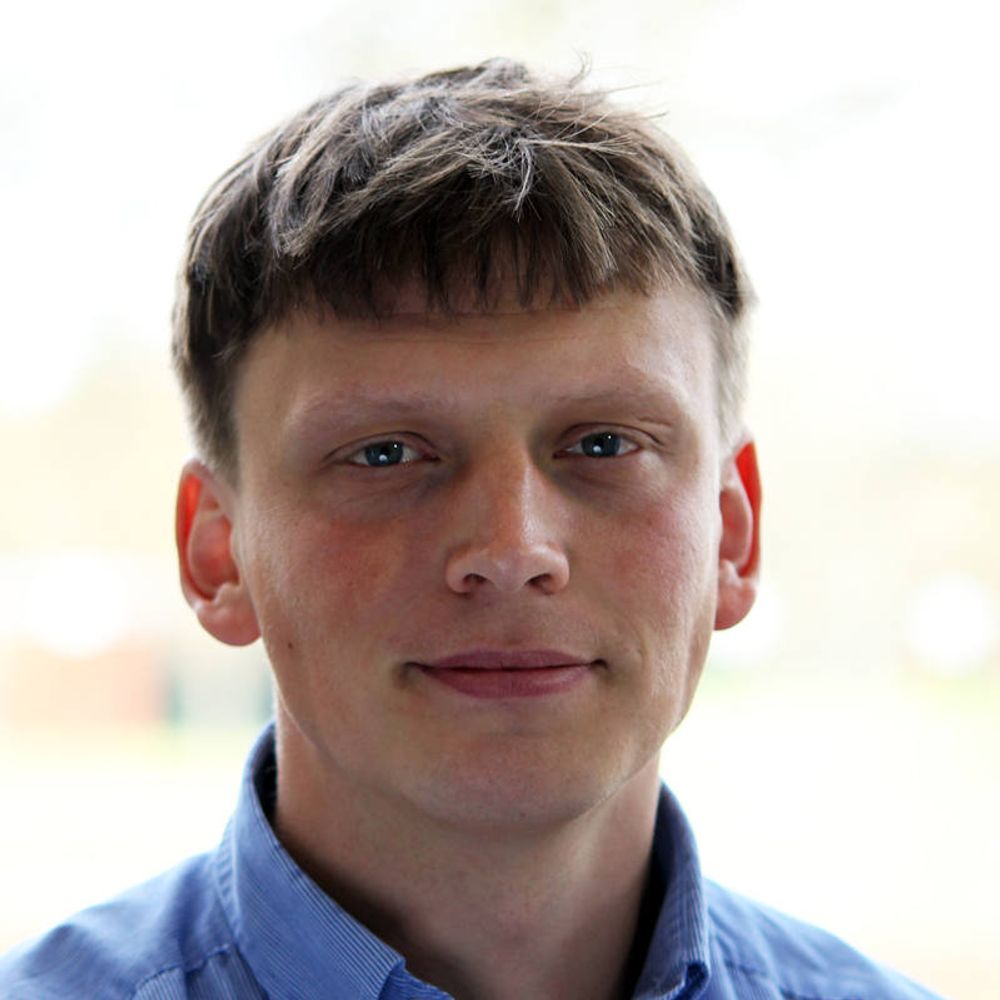
Claudia Feng's Ph.D work is now out, co-led with @brittavelten.bsky.social and @steglelab.bsky.social . Large-scale CRISPRi perturbations in genetically heterogenous iPSC lines, with single cell readout - enjoy :)
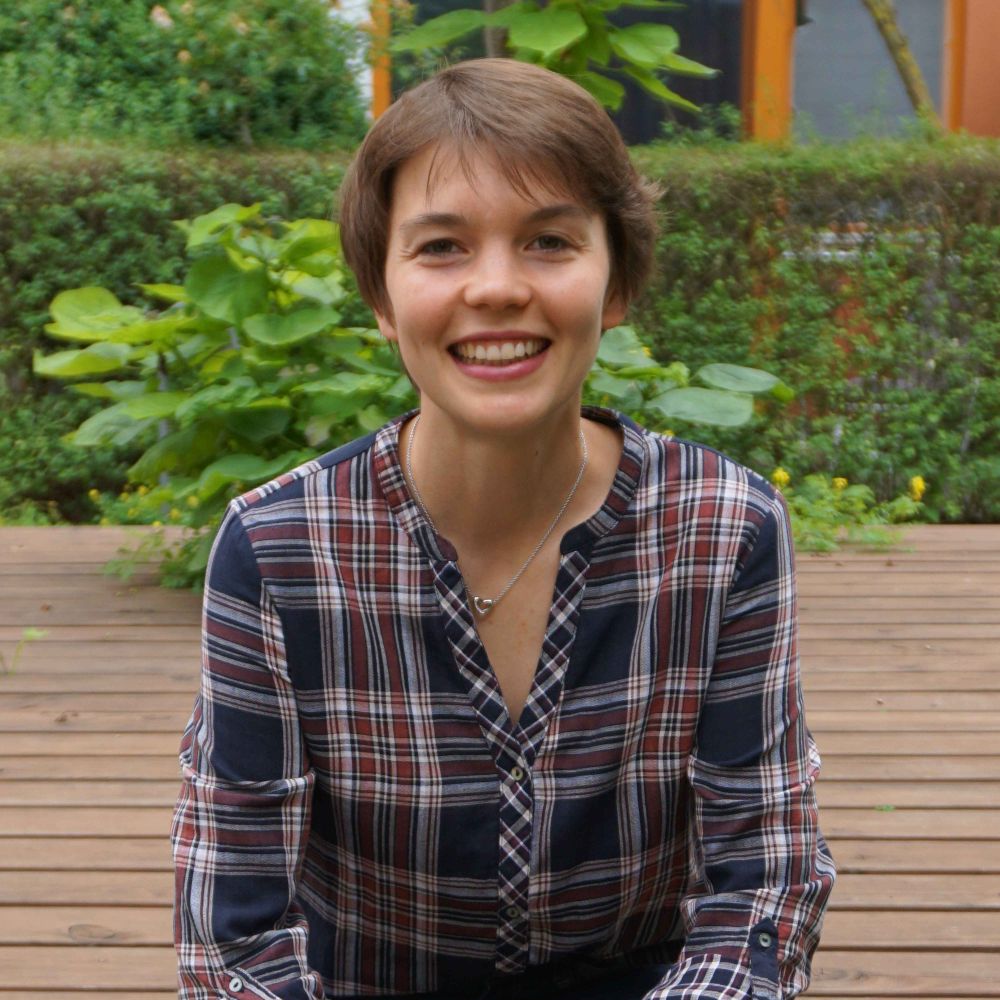
Happy to see this out now in Cell Genomics: A genome-scale single-cell CRISPRi map of trans gene regulation across human pluripotent stem cell lines: www.cell.com/cell-genomic...

A genome-scale single-cell CRISPRi map of trans gene regulation across human pluripotent stem cell lines
Feng et al. present the first genome-scale CRISPR interference perturbation map with
scRNA-seq readout across many genetic backgrounds in human pluripotent cells, pioneering
population-scale CRISPR pe...
www.cell.com
December 3, 2025 at 11:04 AM
Claudia Feng's Ph.D work is now out, co-led with @brittavelten.bsky.social and @steglelab.bsky.social . Large-scale CRISPRi perturbations in genetically heterogenous iPSC lines, with single cell readout - enjoy :)
Back from #scverse25 and feeling inspired by what @scverse.bsky.social has achieved over the last years. Impressive tools, a vibrant community and we even had a reunion with our two alumni Danila and Max Frank.
We also presented our latest findings from the lab 👇
We also presented our latest findings from the lab 👇

November 25, 2025 at 9:01 AM
Back from #scverse25 and feeling inspired by what @scverse.bsky.social has achieved over the last years. Impressive tools, a vibrant community and we even had a reunion with our two alumni Danila and Max Frank.
We also presented our latest findings from the lab 👇
We also presented our latest findings from the lab 👇
Reposted by Stegle Lab

The ELLIS Society welcomes its new Board. As the primary decision-making body, it will play a vital role in shaping the future of ELLIS and advancing #AI and #MachineLearning research across Europe in a time of global change.
Read the full article: ellis.eu/news/ellis-s...
Read the full article: ellis.eu/news/ellis-s...

October 27, 2025 at 9:15 AM
The ELLIS Society welcomes its new Board. As the primary decision-making body, it will play a vital role in shaping the future of ELLIS and advancing #AI and #MachineLearning research across Europe in a time of global change.
Read the full article: ellis.eu/news/ellis-s...
Read the full article: ellis.eu/news/ellis-s...
Welcome to our team, Gesa Voigt! 👋
During her molecular biology studies, Gesa developed an interest in applying mathematics and ML to understand complex biological systems. Her PhD research will focus on inferring GRNs by integrating insights from population genetics and genetic perturbation data.
During her molecular biology studies, Gesa developed an interest in applying mathematics and ML to understand complex biological systems. Her PhD research will focus on inferring GRNs by integrating insights from population genetics and genetic perturbation data.

November 12, 2025 at 12:30 PM
Welcome to our team, Gesa Voigt! 👋
During her molecular biology studies, Gesa developed an interest in applying mathematics and ML to understand complex biological systems. Her PhD research will focus on inferring GRNs by integrating insights from population genetics and genetic perturbation data.
During her molecular biology studies, Gesa developed an interest in applying mathematics and ML to understand complex biological systems. Her PhD research will focus on inferring GRNs by integrating insights from population genetics and genetic perturbation data.
Please join me in welcoming Stefanie Mantz to our lab! 👋
Steffi joins us as a PhD student after completing her Master’s at Heidelberg University. She will explore gene regulation and cell differentiation using organoid models and is excited to analyze these complex datasets and develop ML methods.
Steffi joins us as a PhD student after completing her Master’s at Heidelberg University. She will explore gene regulation and cell differentiation using organoid models and is excited to analyze these complex datasets and develop ML methods.

November 10, 2025 at 12:30 PM
Please join me in welcoming Stefanie Mantz to our lab! 👋
Steffi joins us as a PhD student after completing her Master’s at Heidelberg University. She will explore gene regulation and cell differentiation using organoid models and is excited to analyze these complex datasets and develop ML methods.
Steffi joins us as a PhD student after completing her Master’s at Heidelberg University. She will explore gene regulation and cell differentiation using organoid models and is excited to analyze these complex datasets and develop ML methods.
Are you using any of our factor models, such as MOFA? 🛵
You might’ve found it challenging to tailor them to your specific use cases - not anymore!
Introducing MOFA-FLEX: a flexible, modular factor analysis framework designed for customizable modeling across diverse multi-omics data scenarios. 1/n
You might’ve found it challenging to tailor them to your specific use cases - not anymore!
Introducing MOFA-FLEX: a flexible, modular factor analysis framework designed for customizable modeling across diverse multi-omics data scenarios. 1/n

November 7, 2025 at 10:29 AM
Are you using any of our factor models, such as MOFA? 🛵
You might’ve found it challenging to tailor them to your specific use cases - not anymore!
Introducing MOFA-FLEX: a flexible, modular factor analysis framework designed for customizable modeling across diverse multi-omics data scenarios. 1/n
You might’ve found it challenging to tailor them to your specific use cases - not anymore!
Introducing MOFA-FLEX: a flexible, modular factor analysis framework designed for customizable modeling across diverse multi-omics data scenarios. 1/n
Reposted by Stegle Lab
Thank you to everyone who joined the Life Science Thematic Workshop at the AI in Science Summit in Copenhagen.
Led by EMBL’s Oliver Stegle and Anna Kreshuk, the workshop united researchers and AI experts to explore how advanced computational approaches are shaping the future of life sciences.
#ai
Led by EMBL’s Oliver Stegle and Anna Kreshuk, the workshop united researchers and AI experts to explore how advanced computational approaches are shaping the future of life sciences.
#ai

November 4, 2025 at 12:47 PM
Thank you to everyone who joined the Life Science Thematic Workshop at the AI in Science Summit in Copenhagen.
Led by EMBL’s Oliver Stegle and Anna Kreshuk, the workshop united researchers and AI experts to explore how advanced computational approaches are shaping the future of life sciences.
#ai
Led by EMBL’s Oliver Stegle and Anna Kreshuk, the workshop united researchers and AI experts to explore how advanced computational approaches are shaping the future of life sciences.
#ai
Looking forward to this collab with @moritzmall.bsky.social and Barbara Treutlein!
We’ll generate high-throughput multi-modal CRISPR data on ASD risk genes in 🧠 organoids & assembloids, and build an ML model of gene regulation dynamics to analyze the data and enable future in silico experiments.
We’ll generate high-throughput multi-modal CRISPR data on ASD risk genes in 🧠 organoids & assembloids, and build an ML model of gene regulation dynamics to analyze the data and enable future in silico experiments.

Presenting recipients of our 2025 Stimulator Grant:
👉TACTICS: Thalamocortical Assembloids and Computational Tools for Investigating Cellular Signatures in #Autism.
🧠How do autism-linked mutations disrupt early brain development? @moritzmall.bsky.social @steglelab.bsky.social
@dkfz.bsky.social
👉TACTICS: Thalamocortical Assembloids and Computational Tools for Investigating Cellular Signatures in #Autism.
🧠How do autism-linked mutations disrupt early brain development? @moritzmall.bsky.social @steglelab.bsky.social
@dkfz.bsky.social

October 14, 2025 at 11:42 AM
Looking forward to this collab with @moritzmall.bsky.social and Barbara Treutlein!
We’ll generate high-throughput multi-modal CRISPR data on ASD risk genes in 🧠 organoids & assembloids, and build an ML model of gene regulation dynamics to analyze the data and enable future in silico experiments.
We’ll generate high-throughput multi-modal CRISPR data on ASD risk genes in 🧠 organoids & assembloids, and build an ML model of gene regulation dynamics to analyze the data and enable future in silico experiments.
Do you want to link genomic variants to functional gene expression - cell by cell?
SDR-seq makes it possible; an experimental method connecting coding and non-coding variants to expression in single cells.
Proud to have contributed a custom FASTQ-processing tool to this great collaborative project.
SDR-seq makes it possible; an experimental method connecting coding and non-coding variants to expression in single cells.
Proud to have contributed a custom FASTQ-processing tool to this great collaborative project.
EMBL scientists have created a more sensitive single-cell sequencing tool for genomic variants and RNA in the same single cell.
Known as SDR-seq, the tool has unprecedented scale, precision, and speed to characterise variants and link them to functions and disease.
www.embl.org/news/science...
Known as SDR-seq, the tool has unprecedented scale, precision, and speed to characterise variants and link them to functions and disease.
www.embl.org/news/science...

New tool offers single-cell study of specific genetic variants | EMBL
Scientists developed a more sensitive single-cell sequencing tool linking genomic variants & RNA in the same cell uncover links to disease.
www.embl.org
October 10, 2025 at 2:42 PM
Do you want to link genomic variants to functional gene expression - cell by cell?
SDR-seq makes it possible; an experimental method connecting coding and non-coding variants to expression in single cells.
Proud to have contributed a custom FASTQ-processing tool to this great collaborative project.
SDR-seq makes it possible; an experimental method connecting coding and non-coding variants to expression in single cells.
Proud to have contributed a custom FASTQ-processing tool to this great collaborative project.
Don’t miss Manu’s poster on DeepGenoXcan, our new personalized and interpretable sequence-to-expression model, at #ASHG2025!
📅 October 16, 2:30pm-4:30pm
📍 Poster 1007T
📅 October 16, 2:30pm-4:30pm
📍 Poster 1007T

Excited to be at #ASHG2025 in Boston next week. On Thursday, I will be presenting a poster (1007T) on our latest work on Personalised sequence to expression modelling. Looking forward to meeting new folks and reconnecting with old friends and colleagues.
October 10, 2025 at 1:35 PM
Don’t miss Manu’s poster on DeepGenoXcan, our new personalized and interpretable sequence-to-expression model, at #ASHG2025!
📅 October 16, 2:30pm-4:30pm
📍 Poster 1007T
📅 October 16, 2:30pm-4:30pm
📍 Poster 1007T
Super excited for the 2nd edition of the #scverse conference!
A fantastic opportunity to showcase and discover innovative data frameworks for #singlecell analysis, and to meet the developers behind the scverse ecosystem. Looking forward to connecting with the community!
Register now! 👇
A fantastic opportunity to showcase and discover innovative data frameworks for #singlecell analysis, and to meet the developers behind the scverse ecosystem. Looking forward to connecting with the community!
Register now! 👇
August 28, 2025 at 3:59 PM
Super excited for the 2nd edition of the #scverse conference!
A fantastic opportunity to showcase and discover innovative data frameworks for #singlecell analysis, and to meet the developers behind the scverse ecosystem. Looking forward to connecting with the community!
Register now! 👇
A fantastic opportunity to showcase and discover innovative data frameworks for #singlecell analysis, and to meet the developers behind the scverse ecosystem. Looking forward to connecting with the community!
Register now! 👇
A scalable framework enabling the induction and spatial genotyping ➡ phenotyping of hundreds of tumors in mouse liver. #CHOCOLAT-G2P
Check out the publication for the nuts and bolts of 🍫-G2P: doi.org/10.1038/s415...
Check out the publication for the nuts and bolts of 🍫-G2P: doi.org/10.1038/s415...

This is a great set of methods for studying combinatorial effects of cancer mutations on spatial phenotypes.
Clever experimental design by @breinigmarco.bsky.social hijacking Visium and elegant analysis by @lomakinai.bsky.social and @elihei.bsky.social
www.nature.com/articles/s41...
Clever experimental design by @breinigmarco.bsky.social hijacking Visium and elegant analysis by @lomakinai.bsky.social and @elihei.bsky.social
www.nature.com/articles/s41...
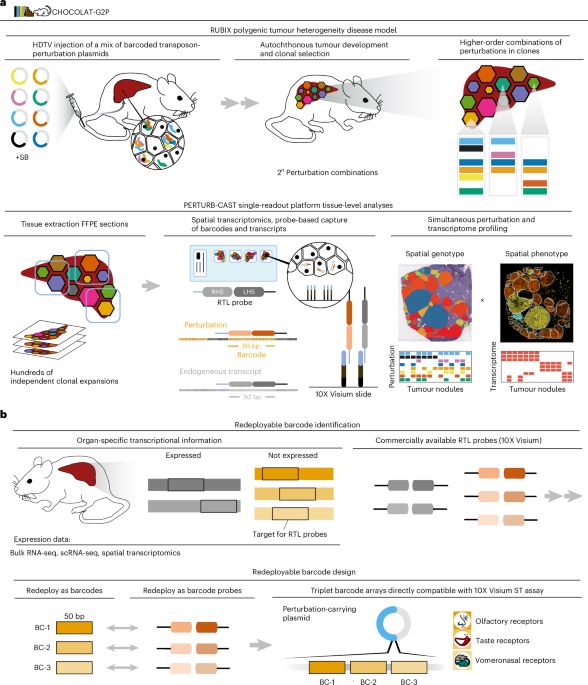
Integrated in vivo combinatorial functional genomics and spatial transcriptomics of tumours to decode genotype-to-phenotype relationships - Nature Biomedical Engineering
A method integrates perturbation mapping with 10X Visium spatial transcriptomics to map tumour genetic complexity and heterogeneity.
www.nature.com
August 7, 2025 at 7:27 AM
A scalable framework enabling the induction and spatial genotyping ➡ phenotyping of hundreds of tumors in mouse liver. #CHOCOLAT-G2P
Check out the publication for the nuts and bolts of 🍫-G2P: doi.org/10.1038/s415...
Check out the publication for the nuts and bolts of 🍫-G2P: doi.org/10.1038/s415...
We're seeking a PhD student passionate about ML, biology, and driving impact in healthcare!
You'll be working on multi-omics factorization models for personalized medicine, co-supervised by @junyanlu.bsky.social.
👉 Project: www.helmholtz.de/assets/hidss...
✍️ Apply: hidss4health.de/application
You'll be working on multi-omics factorization models for personalized medicine, co-supervised by @junyanlu.bsky.social.
👉 Project: www.helmholtz.de/assets/hidss...
✍️ Apply: hidss4health.de/application

Application - Helmholtz Information & Data Science Academy
hidss4health.de
August 5, 2025 at 8:08 AM
We're seeking a PhD student passionate about ML, biology, and driving impact in healthcare!
You'll be working on multi-omics factorization models for personalized medicine, co-supervised by @junyanlu.bsky.social.
👉 Project: www.helmholtz.de/assets/hidss...
✍️ Apply: hidss4health.de/application
You'll be working on multi-omics factorization models for personalized medicine, co-supervised by @junyanlu.bsky.social.
👉 Project: www.helmholtz.de/assets/hidss...
✍️ Apply: hidss4health.de/application
Reposted by Stegle Lab
🌐 EMBL’s new initiative is set to transform life science research through full AI integration – from genomics to drug discovery.
💡 Funding from the Hector Foundation is dedicated to attracting interdisciplinary talent, boosting infrastructure, training, & innovation.
www.embl.org/news/connect...
💡 Funding from the Hector Foundation is dedicated to attracting interdisciplinary talent, boosting infrastructure, training, & innovation.
www.embl.org/news/connect...

August 1, 2025 at 7:15 AM
🌐 EMBL’s new initiative is set to transform life science research through full AI integration – from genomics to drug discovery.
💡 Funding from the Hector Foundation is dedicated to attracting interdisciplinary talent, boosting infrastructure, training, & innovation.
www.embl.org/news/connect...
💡 Funding from the Hector Foundation is dedicated to attracting interdisciplinary talent, boosting infrastructure, training, & innovation.
www.embl.org/news/connect...
Reposted by Stegle Lab
To all post-docs: The Genome Biology dept @embl.org
has an Independent faculty position. Fantastic place to set up your lab –great package: core funding, fantastic Ph.D. students, cutting edge core facilities & great colleagues. Closing date Sept 19th
embl.wd103.myworkdayjobs.com/en-US/EMBL/j...
has an Independent faculty position. Fantastic place to set up your lab –great package: core funding, fantastic Ph.D. students, cutting edge core facilities & great colleagues. Closing date Sept 19th
embl.wd103.myworkdayjobs.com/en-US/EMBL/j...
Group Leader - Genome Biology Unit
Are you ready to lead groundbreaking research in Genome Biology? Join us at EMBL! We are seeking a motivated scientist to lead an independent research group addressing exciting and original biological...
embl.wd103.myworkdayjobs.com
July 30, 2025 at 1:41 PM
To all post-docs: The Genome Biology dept @embl.org
has an Independent faculty position. Fantastic place to set up your lab –great package: core funding, fantastic Ph.D. students, cutting edge core facilities & great colleagues. Closing date Sept 19th
embl.wd103.myworkdayjobs.com/en-US/EMBL/j...
has an Independent faculty position. Fantastic place to set up your lab –great package: core funding, fantastic Ph.D. students, cutting edge core facilities & great colleagues. Closing date Sept 19th
embl.wd103.myworkdayjobs.com/en-US/EMBL/j...