


Charles Snider
banner
strawberrybricks.com
Charles Snider
@strawberrybricks.com
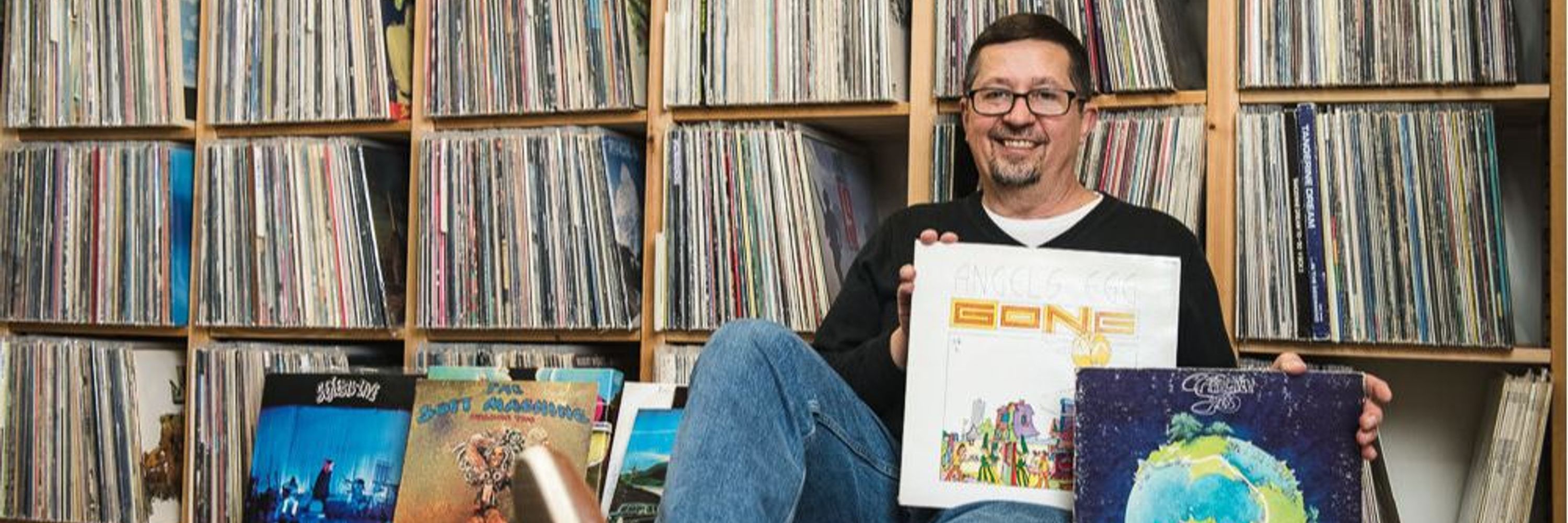
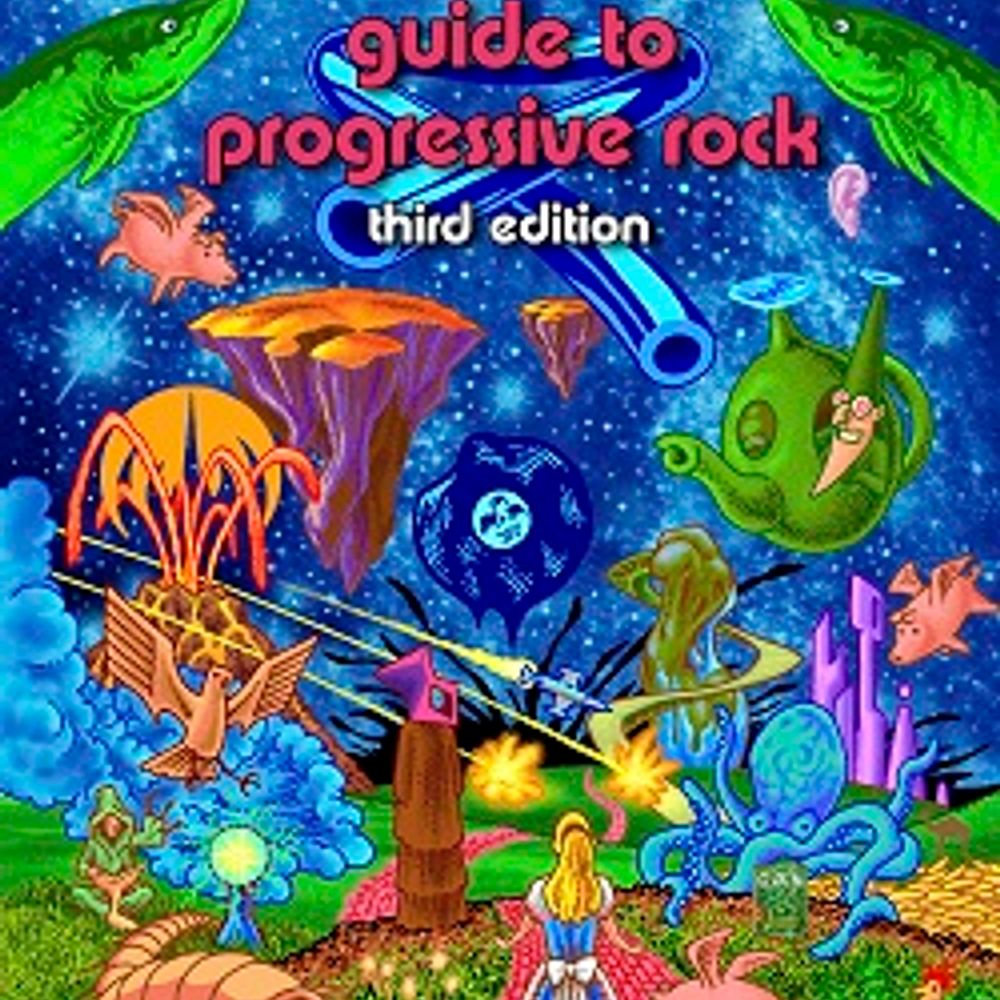
Author of The Strawberry Bricks Guide to Progressive Rock and webmaster of strawberrybricks.com. Follow me for the Progressive Rock Album of the Day
#progaotd #progrock #progressiverock #strawberrybricks
Album of the Day: Twink - Think Pink (Sire US | May 1970) progaotd
Twink - Think Pink (Sire US | May 1970)
John Charles Edward Alder, aka Twink (after a popular home perm kit), hailed from Colchester, Essex, where he had formed an R&B band called The Fairies. After moving to London in 1966, the band released three singles that went nowhere, so Twink joined The In Crowd, which later morphed into Tomorrow. After a spell with The Pretty Things, Twink and a soon to be ex-Tyrannosaurus Rex Steve Peregrine Took started an embryonic version of the Pink Fairies, the fruits of which became Twink's debut solo album, Think Pink. Released in 1970 on Sire Records in the US, the album was produced by Deviant Mick Farren and featured Took, guitarist Paul Rudolph, bassist Junior Wood (from Tomorrow and The Aquarian Age) and some of The Pretty Things. The album opens with the eastern-tinged "The Coming of the Other One," complete with sitar from Jon Povey. "Ten Thousand Words in a Cardboard Box" follows, and presents a heady dose of psychedelia with solid guitar from Rudolph. Following the Om mantra of "Dawn of Magic," another of the album's full-on electric numbers, "Tiptoe on the Highest Hill," offers sterling psychedelia. The sexy "Fluid" slows the pace, while "Mexican Grass War" is a drum-led freak out. "Rock An' Roll the Joint" dips back for some good old-time rock ‘n' roll, while "Suicide" is reminiscent of The Pretty Things. Took penned the last two tracks: "Three Little Piggies" is plain silly, and the closer, "The Sparrow Is a Sign," quite Bowie-esque. The album presents a Ladbroke Grove all-stars product-or as they were known-Pink Fairies Motorcycle Club & All-Star Rock & Roll Band. The album would see release in the UK in January 1971. Following the album's release, Twink teamed up with former Deviants Rudolph, Duncan Sanderson and Russell Hunter to start the Pink Fairies proper.
dlvr.it
January 1, 2026 at 2:22 AM
Album of the Day: Gong - Camembert Electrique (BYG Actuel FR | October 1971) progaotd
Gong - Camembert Electrique (BYG Actuel FR | October 1971)
Gong had now solidified from a loose amalgamation of Paris fringe musicians to a relatively stable touring unit. Daevid Allen, accompanied by partner Gilli Smyth and saxophonist Didier Malherbe, added Pip Pyle on drums and Christian Tritsch on bass; and the band completed their first return to England with a performance at the Glastonbury Festival in June 1971. Kevin Ayers also served a six-month tour duty around this time, leaving a John Peel Session as his recorded legacy with the band. Gong recorded three albums in 1971. Dashiell Hedayat's Obsolete for the Shandar label was a very loose recording, while the soundtrack for the Jérôme Laperrousaz film Continental Circus was a gem, best evidenced in the motorik-like beat of "Blues for Findlay." But the third album, Camembert Electrique, is the real introduction to what Allen had in store for the band. Gong's music is truly unique, combining vocal lunacy with musical anarchy into what could be described as the first rock cabaret. Yet the band consistently supported a strong rhythm section for soloists Allen and Malherbe to accentuate. The album contains some classic Gong repertoire: The raging riff of "You Can't Kill Me" is Allen's testimony to the events in Paris during the May 1968 student uprisings, and the merger of Smyth's space whisper and unique feminism are introduced on "Dynamite: I Am your Animal." "Fohat Digs Holes in Space," though, is key. The track first showcases the quintessential Gong groove, complete with Syd Barrett-inspired glissando guitar. But behind the bizarre aliases and musical anarchy, as Allen explained, Gong is "about things much too serious to be serious about." It may not say much about a person if they do like Gong, but it certainly says more about them if they do not. The album was re-released on Caroline Records in 1974, selling for the price of a single-play record (49p).
dlvr.it
December 31, 2025 at 2:46 AM
Album of the Day: Rush - A Farewell To Kings (Mercury US | September 1977) progaotd
Rush - A Farewell To Kings (Mercury US | September 1977)
With their records now charting in the US and UK, what must have been a confident Rush flew to Wales and Rockfield Studios to record A Farewell To Kings, their fifth studio album. It represents a substantial leap in their development. The title track opens, and it's a typical Rush construct: Propelled by Neil Peart's masterful drumming, Alex Lifeson and Geddy Lee hammer away until Lifeson's lead guitar takes full-flight. The epically constructed "Xanadu" takes the concept of 2112 one step further; Lee also doubles on keyboards, providing a new augmentation to the band's sound. Clocking in at a near-perfect two minutes and 55 seconds, the straightforward "Closer to the Heart" earned considerable airplay in the US, and even charted as a single. "Cinderella Man" comes from the same mold, while "Madrigal" is uncharacteristically serene. Still, by no means had Rush become a pushover: "Cygnus X-1" is the prog rock opus, complete with multiple sections, heavy metal plodding and a "to be continued" byline. Again, it's not that far off from their previous works; in that respect, it's a splendid illustration of the band's musical progression to date. If there is a formula to Rush's success, it's radio-friendliness; their virtuosity always manages to remain commercial even as it progressed. Rush would become the new face of prog rock; and somehow, this more than fit into the changing commercial landscape of rock music. In fact, while most prog rock bands dropped their "progressiveness" as they moved into the 80s, Rush relished in it. A Farewell To Kings was their first to chart simultaneously on both sides of the Atlantic, straddling each shore in the Top 30.
dlvr.it
December 30, 2025 at 12:14 AM
Album of the Day: Starcastle - Starcastle (Epic US | February 1976) progaotd
Starcastle - Starcastle (Epic US | February 1976)
Hailing from Illinois, Starcastle was one of a few US prog rock bands (along with Ethos and Symphonic Slam) that achieved some recognition in the mid-70s. After trudging the bar circuits under various names, the core of guitarist Steve Hagler, drummer Steve Tassler, keyboard player Herb Schildt and bassist Gary Strater were joined by another two members: second guitarist Matthew Stewart and vocalist Terry Luttrell, the latter previously in another Champaign band, REO Speedwagon. In 1974, they changed their name to Starcastle and signed to Epic Records. To say that they were influenced by British progressive rock is, of course, a huge understatement. "Lady of the Lake" reveals an easygoing Yes approach, with the emphasis on the vocal harmonies. "Elliptical Seasons" has a little more Midwest grit to it, while "Stargate" goes symphonic. But if two things stick out immediately about Starcastle's music, it's Luttrell's voice and lyrics; unfortunately, his high tenor lacks any visceral punch (most evident on "Sunfield") and his lyric-writing seems like high school poetry. Musically though, the band is playful, boasting rich arrangements that make the best of their expansive sound; check out "To the Fire Wind." Although the Yes-clone analogy runs true, their accessible approach probably owes as much to another Illinois band: Styx. The album was well received, and Starcastle even opened for some of their prog rock big brethren, including Jethro Tull and Rush, on subsequent tours. Epic then sent the band off to Montreal with Queen producer Roy Thomas Baker to record their next album. Though the collaboration was uneasy, there's little argument that Fountains Of Light, released in early 1977, would be the band's definitive statement. Starcastle released two further albums, but even shorter haircuts couldn't change their prospects. Without a record label, the band folded in 1980.
dlvr.it
December 29, 2025 at 12:37 AM
Album of the Day: Jethro Tull - Heavy Horses (Chrysalis US | April 1978) progaotd
Jethro Tull - Heavy Horses (Chrysalis US | April 1978)
Jethro Tull celebrated a decade in the music business with a second compilation, Repeat – The Best of Jethro Tull – Vol II (released in November 1977), and their 11th studio album—no small feat. On Heavy Horses, Ian Anderson continues his lyrical dalliance with most things country, including farm animals and...two songs about mice. Anderson again sticks to the tried-and-true Tull formula he first pitched on Too Old To Rock ‘n' Roll: Too Young To Die!, and precious little seems to have changed, save the song's titles. Darryl Way lends a fiddle to the upbeat jig of "Acres Wild." In sharp contrast is the altogether heavy "No Lullaby;" like the previous album's "Pibroch," it's this album's potent rocker. While "Journeyman" reveals a little nostalgia with a twinge of old Tull, the album mostly opts for acoustic numbers that bypass instrumental flash for richer arrangements. Technical perfection may have its place, but was rock ‘n' roll ever supposed to sound so sterile? "Moths" and "Rover" opt for a little simplicity, while the title track sports a big orchestral gown. Despite the rural nature of the compositions, Anderson's voice again sounds like it was canned in a studio; he is almost always doubled-tracked, sounding both hoarse and processed. Regardless, the album still scored well on the charts on both sides of the Atlantic, reaching into the Top 20s. The band then set off on the annual round of touring, dragging along their Masion Rouge mobile studio to record what would make up their next release: the live double-album Bursting Out. Former Blackpool mate and Stealers Wheel bassist Tony Williams replaced an ill John Glascock on the US leg of the tour. Released later in the year, it again placed Tull into the Top 20 on both the US and UK charts.
dlvr.it
December 27, 2025 at 10:05 PM
Album of the Day: Agitation Free - 2nd (Vertigo DE | Fall 1973) progaotd
Agitation Free - 2nd (Vertigo DE | Fall 1973)
Agitation Free remained busy after recording their debut album, appearing in the cultural program for the 1972 Munich Olympics as well as touring France for a few months in 1973. Guitarist Stefan Diez deputized for their second album, titled 2nd; it also saw release on the Music Factory label. "First Communication" opens the album. With its guitars in unison, it offers a sound that has more similarities with the improvisations of American Southern rock than with the German krautrock of the day! Never mind though—the ensuing "Dialogue and Random" is pure electronic bliss. The following two-part "Laila" offers more of the band's wonderful jam-band rock; again, the dual guitar interplay of the second part is sublime. The lucid journey continues on "In the Silence of the Morning Sunrise;" Paced by a metronomic drum, the light melody reveals more of the band's close interplay, draped in Michael Hoenig's ever-present synths. "A Quiet Walk" goes acoustic, while the closing "Haunted Island" is a rare vocal number from the band. Following the album's release, the group kept busy with radio broadcasts and touring; but by 1974, the band had run its course. After a farewell concert, Agitation Free broke up, and a final record, Last, was released in 1976 by the French label Barclay. Though one of the more musically accessible bands of the era, Agitation Free's records were, for a while, interminably difficult to find. But the story has a happy ending: Hoenig went on to work with Tangerine Dream before forging a solo career, while Lüül Ulbrich would join Ashra towards the end of the decade and also foster a successful solo career in the 80s.
dlvr.it
December 26, 2025 at 10:29 PM
Album of the Day: Heldon - Un Rêve Sans Conséquence Spéciale  (Cobra FR | June 1976) progaotd
Heldon - Un Rêve Sans Conséquence Spéciale  (Cobra FR | June 1976)
Heldon's fourth album (also carrying the subtitle of Richard Pinhas's then-girlfriend, Agneta Nilsson) was released in early 1976, and offered a more polished production than previous efforts. The big change though was the middle section of the album's side-long piece, "Perspective IV." Aided by Coco Roussel on drums, Alain Bellaïche on bass guitar and Patrick Gauthier on Mini-Moog synthesizer, Heldon delivers very aggressive rock ‘n' roll. The approach was continued on the next album, Un Rêve Sans Conséquence Spéciale (US title: A Dream Without Reason), where Heldon was now the trio of Pinhas, Gauthier and drummer François Auger-(more or less) a band. While there is a certain resemblance to the power-trio era King Crimson, Heldon is far darker, far more experimental and indeed, violent: The album is a savage mix of lead guitar, lead synthesizer, manic drumming and incessant sequencer. "Marie Virginie C." finds a potent combination of sequencer and drums, while "Elephanta" is pure percussive mayhem. "MVC II" again is altogether different: Lumbering over a slower sequence, it's a lot closer to what would be known as "industrial" music later in the decade. "Toward the Red Line" features bassist Jannick Top, but his contribution is difficult to discern: The track harks back to the extreme electronic improvisation of Heldon's earlier works. The album saw distribution on the French Cobra label, and even garnered a US release on the Aural Explorer/Inner City label. Two final Heldon albums followed, with both offering further refinement (and progressively slicker production) to the approach first presented here. Interface saw release on Cobra in 1977, while the 1978 release Stand By saw a switch to the Egg label and Didier Batard on bass. In late 1976, beginning with the album Rhizosphere, Pinhas launched a parallel solo career (mostly synthesizer works), and continued recording well into the 1980s.
dlvr.it
December 25, 2025 at 10:53 PM
Album of the Day: Caravan - Caravan (Decca UK | January 1969) progaotd
Caravan - Caravan (Decca UK | January 1969)
Caravan's history begins as half of The Wilde Flowers, the original hotbed of musical proclivity that originated in Canterbury, Kent in 1965. Soft Machine, of course, was the other half. With its members drifting both in and out of the band, The Wilde Flowers ranks were constantly revolving. At some point, the reins were left to guitarist/singer Pye Hastings, drummer Richard Coughlan and organist Dave Sinclair. Adding Dave's cousin Richard Sinclair on bass, they became Caravan in early 1968. Caravan's music contained an uncompromisingly British character—and a penchant for whimsy—that is best exemplified by their lightheartedness and exquisite song-form. In comparison to the Soft Machine, Caravan was far more psychedelic than jazzy; though they did have some similarities: Much like Robert Wyatt, Hastings's vocals are undeniably accented and English, and like Mike Ratledge, Dave Sinclair was a first-rate organist. A particularly strong appearance at Middle Earth Club led to a recording contract with the Verve Forecast label. Together with producer Tony Cox, they headed to Advision Studios to record their debut album. The opener "Place of My Own" is classic Caravan; highly indicative of the band's songwriting, it intertwines deft instrumentality with a keen melodic sense into their unique brand of psychedelia. Tracks like "Ride" and "Love Song with Flute" (featuring Pye's brother Jimmy Hastings) are of the era, while "Cecil Rons" is surely Pink Floyd-inspired. Dave Sinclair's organ solo is a standout on Brian Hopper's trippy "Where but for Caravan Would I." Unfortunately, the album's echoey production is unfitting for the material. The album saw release in both the UK and US, and in both stereo and mono formats. But in what would become another unfortunate Canterbury tradition, it failed to chart in either country.
dlvr.it
December 24, 2025 at 8:20 PM
Album of the Day: Patto - Hold Your Fire (Vertigo UK | December 1971) progaotd
Patto - Hold Your Fire (Vertigo UK | December 1971)
Amazing musicianship already given, for the band's second album, Hold Your Fire, Patto pulled out some of their best songwriting. The lead-off and title track "Hold Your Fire" is the post-hippie anthem, complete with some of Ollie Halsall's slickest guitar work at the fade. Note the release date; this is some of the earliest "shredding" on record. "You, You Point Your Finger" cops a somber mood, with more of Mike Patto's poignant lyrics about the counter-culture vs. the establishment; again, Halsall's emotive lead toward the end just kills it. "Give It All Away" has a nice hook, and more of Halsall's guitar histrionics swinging underneath the potent rhythm section of Clive Griffiths and John Halsey. "Air Raid Shelter," however, is the album's paragon. Much like the previous "Money Bag," it owes more to jazz than to rock, and is simply unparalleled by any contemporaneous group. Yet even a high-profile tour supporting Ten Years After didn't change Patto's fortunes: The album did not chart. In early 1972, Halsall recorded the lost Blue Traffs album with John Halsey and Gary Windo; Robert Fripp produced. Patto's Roll ‘Em Smoke ‘Em Put Another Line Out was released on Island Records in October 1972 and then the band went off on a world tour supporting Joe Cocker. A fourth and final album was recorded, but Halsall quit before it was finished. After that, Patto split, with Halsall joining Tempest and Mike Patto briefly working with Spooky Tooth (appearing on the excellent album The Mirror). With Keith Ellis and ex-May Blitz drummer Tony Newman, Patto and Halsall reunited in 1975 as Boxer, recording a pair of (more or less) mainstream rock albums over the next two years. Griffiths and Halsey kept busy as session musicians; the latter was part of Eric Idle and Neil Innes's Beatles 1978 spoof, The Rutles' All You Need Is Cash. Halsall would also participate in the film and soundtrack, yet despite his supplying the voice of the Paul McCartney character, Dirk McQuickly, he was relegated to just a brief cameo as the fifth Rutle, Leppo, in the film. Sadly, Mike Patto would succumb to throat cancer in 1979, while Griffiths would never physically recover from a road accident in 1983.
dlvr.it
December 23, 2025 at 8:45 PM
Album of the Day: Chris Squire - Fish Out Of Water  (Atlantic US | November 1975) progaotd
Chris Squire - Fish Out Of Water  (Atlantic US | November 1975)
Yes bassist Chris Squire's solo album Fish Out Of Water was the first to appear after Yes took a sabbatical following Relayer. That each member recorded an album worthy of release on Atlantic Records is debatable; but judged by this record alone, it was a great idea! Squire put together a fantastic band, including ex-Yes member Bill Bruford and almost ex-Yes member Patrick Moraz, with noted session players Mel Collins and Jimmy Hastings contributing. In addition to piano, Andrew Pryce Jackman provided the luscious orchestral arrangements. Jackman was previously in Squire's late 60s outfit The Syn. Squire took on all the vocal and guitar duties, with his distinctive Rickenbacker bass obviously to the fore. The album contains the same majesty of Yes, with the added distinction of not sounding like Yes at all. The energetic melody and pipe organ of "Hold Out Your Hand" presage "Parallels" from the next Yes album, while "You by My Side" is similarly melodic. Both feature a huge bass line straight down the middle; Jackman's arrangements meld each piece together, giving the side a fluidity not found in even the best of Yes' efforts. Moraz lends a hand (or two) to the instrumental section of the next track, "Silently Falling," before Squire's electric guitar sends the ending section into a spiraling refrain. "Lucky Seven" (written in 7/8 time) has the simplicity of Fragile's best moments; Squire's bass soars over Bruford's deft rhythm and Jackman's chiming electric piano. "Safe (Canon Song)" reaches out to symphonic proportions, repeating an even longer fade than on the first side. The album was moderately successful, charting in the Top 50 on both sides of the Atlantic, as did most of the other Yes members' solo albums; and Yes' record-breaking tour in the summer of 1976 would feature live renditions from these individual works. But Squire would stick true to Yes, and this would remain his only solo record for many decades.
dlvr.it
December 22, 2025 at 6:12 PM
Album of the Day: Renaissance - Live At Carnegie Hall  (Sire US | June 1976) progaotd
Renaissance - Live At Carnegie Hall  (Sire US | June 1976)
Renaissance's live double-album—recorded on their Scheherazade tour at Carnegie Hall with the New York Philharmonic, with Tony Cox conducting—is by most accounts their best (and most consistent) document on record. The band integrates well with the orchestra; that's not much of a surprise though, considering that Michael Dunford's compositions were classical in nature. In fact, the band's music often comes closer to the sound of a Broadway stage show than that of a rock concert, which perhaps explains their significant audience in New England. The album highlights Renaissance's lengthier compositions, including "Can You Understand," "Mother Russia" and the Cox-arranged "Scheherazade." But "Ashes Are Burning" steals the show, largely due to Jon Camp's adept bass work and classic Rickenbacker tone. Here, with John Tout's keyboards providing ample color, the band ditches the symphonic embellishment to prove that they can play rock music after all. The album reached No. 55 in the US, while the following year's Novella also reached the US Top 50. Again, it was a solid effort, including the fan favorite tracks "Can You Hear Me" and "Touching Once (Is So Hard to Keep)." But "Midas Man" stands as one of Renaissance's finest creations; drum-less but propelled by huge twelve-string guitars, it's Haslam's long note on the opening lyric that's bewitchingly seductive. The album would see release twice in the US-with different cover art-due to a change in distributors and wouldn't see release in the UK until the fall. With fiancé Roy Wood, Annie Haslam would record a solo album around this time, titled Annie In Wonderland.
dlvr.it
December 21, 2025 at 6:36 PM
Album of the Day: Gentle Giant - In A Glass House (WWA UK | December 1973) progaotd
Gentle Giant - In A Glass House (WWA UK | December 1973)
Gentle Giant recorded their fifth album in the still-settling wake of the eldest Shulman Phil's departure. The band was back at Advision, but for the first time since their debut without engineer Martin Rushent. Like the black-and-white cover, In A Glass House has a stark, monochromatic feel to it; but nevertheless contains some classic Giant material. "The Runaway" kicks off on John Weathers's solid offbeat; and along with "Experience," both songs would remain concert favorites for some years, albeit in shortened form. "An Inmates Lullaby," one of the quiet tunes on the album, is exceptional: The track's percussive vibes provide emphasis rather than embellishment. "Way of Life" clicks away under Weathers's fierce tempo, but it sounds a little too neat; while the noodling arrangement of "Experience" opens the second side. But all of Gentle Giant's studio trickery sounds, well, just like studio trickery. And although Weathers's drums are curiously up in the mix (a good thing), one can't help but get the feeling that the album was constructed, layer by layer and part by part, rather than played by a band. Still, it's difficult to throw stones at the album: The luscious melody and strings of "A Reunion" complement a tender vocal from Kerry Minnear and together are sublime. The title track is the album's hardest rocking affair, and also perhaps the most successful; its incessant beat drives the song forward through its various sections, holding interest throughout. Gary Green's guitar work is particularly strong here, as is Derek Shulman's direct vocal. Though the album never saw release in the US, it went on to sell a reputed 150,000 copies on import and attain near-legendary status with fans. Not bad for an album that was rejected by their US label, Columbia.
dlvr.it
December 20, 2025 at 4:03 PM
Album of the Day: Camel - Nude (Passport US | January 1981) progaotd
Camel - Nude (Passport US | January 1981)
The beginning of the 1980s saw the start of a new personal and creative relationship for Andy Latimer, with partner Susan Hoover. She provided the lyrics and concept for Nude: it was based on the true story of Hiroo Onoda, a Japanese soldier who held out in the Philippines until 1974, denying that WWII had ended. Thus, with the lofty concept in place, Latimer assembled Camel's rhythm section of Andy Ward and Colin Bass, along with former 10cc keyboardist Duncan Mackay and session man Mel Collins at Abbey Road Studios to record the album. Both the opening "City Life" and "Nude" contain all the aspects that make up Camel's music: soft, gentle vocals, easy melodies and pristine production. But that big bass line of "Drafted" starts a series of tracks that provide all of the tension and intrigue of Nude's journey. The album returns to a consistency in composition that echoes Camel's previous epic works. Mackay's keyboards are first-rate throughout, while Ward and Bass certainly earn their keep as well. The second side's "Changing Places" switches to a world music vibe; and again, the well-composed instrumentals offer more than a simple continuity to the storyline. "Lies" is the penultimate conclusion and another great Camel vocal number, with Latimer's brilliant guitar tone also singing over the straightforward beat. The album rose to No. 36 in the UK charts, and saw release on Passport Records in the US. Following the band's spring tour, Ward took his leave from the band for personal reasons; but Decca Records forced Latimer back into the studio in early 1982 to complete another album. The aptly-titled The Single Factor was recorded with a host of guest musicians, including Anthony Phillips, singer Chris Rainbow and bassist David Paton, the latter two part of The Alan Parsons Project. A final studio album, Stationary Traveller, was released in 1984, with Ton Scherpenzeel from Kayak on keyboards and Paul Burgess from 10cc on drums; and after a final live album for Decca the same year, Camel broke up.
dlvr.it
December 19, 2025 at 4:27 PM
Album of the Day: Museo Rosenbach - Zarathustra (Ricordi IT | April 1973) progaotd
Museo Rosenbach - Zarathustra (Ricordi IT | April 1973)
Museo Rosenbach were another Ligurian band, formed from the legendary Il Sistemi by guitarist Enzo Merogno and Leonard Lagorio in 1972. But Lagorio eventually dropped out (forming Celeste with another Il Sistemi alumnus, Ciro Perrino), and Merogno teamed up with Giancarlo Golzi on drums, Alberto Moreno on bass, Pit Corradi on keyboards and Stefano Galifi on vocals. The band's debut album, Zarathustra, takes its concept from Nietzsche's Also sprach Zarathustra and was released on the Dischi Ricordi label. Though arranged by the band, Moreno wrote the album's compositions and Mauro La Luce, a collaborator with another Genoan band Delirium, wrote the lyrics. The first side contains the epic five-part "Zarathustra," a high-flying and flowing piece of progressive rock. Mellotrons galore kick off the opening "L'ultimo uomo," which alternates between gentle, English-inspired prog rock and the more bombastic English-inspired prog rock. Galifi has a virile voice well-suited for the music; however, as he sings in Italian, his message is lost on these ears. The second side features another three tracks that maintain the album's continuity, both sonically and thematically: "Of Men," "Of Nature" and "Of the Eternal Return." Layers of keyboards, guitar and synthesizer, spiritedly and aggressively performed, offer a grand and progressive epic, classically constructed and expertly executed. Despite the critical success of the album, the cover image (Mussolini bust) and lyrical content engendered some controversy, and the album was reputedly boycotted by the RAI (Italian government radio). Museo Rosenbach broke up after a final festival gig in 1973. Nevertheless, the album is another prime example of rock progressivo Italiano in the early 70s.
dlvr.it
December 18, 2025 at 4:51 PM
Album of the Day: Curved Air - Air Conditioning (Warner Bros. US | November 1970) progaotd
Curved Air - Air Conditioning (Warner Bros. US | November 1970)
Named after Terry Riley's A Rainbow In Curved Air, Curved Air was another novel group of the progressive era; and the band had no shortage of talent, either. Violinist Darryl Way was a Royal College of Music graduate, while multi-instrumentalist Francis Monkman came from the competing Royal Academy of Music. Seeking to meld their knowledge of classical music and rock, the two joined forces as Sisyphus in 1969, adding drummer Florian Pilkington-Miksa and bassist Robert Martin. They morphed into Curved Air when they added one of the most unlikely of progressive devices-the female voice! They found a more than capable singer in Sonja Kristina (Linwood), recently released from the London production of Hair. She had her start in London's folk scene, including the Troubadour Club. The group's debut album Air Conditioning was issued by Warner Bros Records. As the opening track (and single) "It Happened Today" demonstrates, the band's music was ripe with West Coast influence. The second half of the album ascends into more classically-inspired territory; but overall, the album's highbrow orchestral embellishments are on a par with the average songwriting, with one big exception: Way's majestic crescendos on "Screw." That's not to say that the album isn't without some redemption. Monkman's echoed guitar work on "Propositions" is unique, as is his Mellotron on Way's "Situations." But even Way's violin tour de force "Vivaldi" ends up a screechy mess. Their debut album has the distinction of being the first picture disc, which no doubt helped propel it into the UK Top 10.
dlvr.it
December 17, 2025 at 2:18 PM
Album of the Day: Tangerine Dream - Exit (Elektra US | September 1981) progaotd
Tangerine Dream - Exit (Elektra US | September 1981)
Now a trio of Edgar Froese, Chris Franke and Johannes Schmölling, Tangerine Dream's first release of 1981 was the soundtrack to the film Thief in April. Although it reprised material from Force Majeure (as was often the case with soundtracks), the band would record another three studio albums for Virgin Records, beginning with the not-to-be-missed Exit in September. Offering six discreet tracks, it's a contemporary, if not timeless album of electronic music. "Kiew Mission" offers a slight return to vocals, albeit disguised in the spoken chant of continent names of its first section; the second half spryly skips over a trio of synths before fading off. "Pilots of Purple Twilight" offers a more conventional theme, but equally thrives from its use of space; "Choronzon" dances to a brisk, drum-like tempo. The second side contains some of the finest TD on record. The slow moving "Exit" ambles over an undulating sequence, while "Network 23" blasts open with a tight groove, approaching song-form. Yet it's the closing "Remote Viewing" that most heralds the return to their 70s glory: A powerful, monolithic wall of sound gives rise to a hypnotic and detailed sequence, one both sinister and epic, and full of the band's expert sound design as it goes for the long fade. Brilliant. Both the soundtrack and the studio album (oddly enough) rose to No. 43 in the UK, while seeing release on Elektra Records in the US. Henceforth, Tangerine Dream would further concentrate their work on soundtracks and film scores—effectively a replacement for their live shows, which had all but disappeared after a final European tour in 1982. From Hollywood blockbusters (Risky Business, Firestarter, Legend), to lower budget films (Wavelength, Heartbreakers), they would foot the bill for the band. But by 1983, their contract with Virgin Records would expire, and by mid-decade Schmölling had left the band. With Paul Haslinger on board, Tangerine Dream would relocate to Los Angeles. Their subsequent output would have little, if any, resemblance to their work from the 70s and earliest 80s.
dlvr.it
December 16, 2025 at 2:42 PM
Album of the Day: Rare Bird - Epic Forest (Polydor US | September 1972) progaotd
Rare Bird - Epic Forest (Polydor US | September 1972)
Following the departure of Graham Field, Rare Bird, now signed to Polydor, shifted musical focus to a very guitar-centric sound. Steve Gould switched to guitar and Andy "Ced" Curtis was recruited as a second guitarist, while Fred Kelly joined on drums and Paul Karas added bass and additional lead vocals. The lead-off track, "Baby Listen," immediately reveals the difference: its funky groove, driving bass and dual-lead guitars are quite a change from their previous work. But change can be good, especially with songwriting of this caliber. "Hey Man" and "Turning the Lights Out" reveal more of Rare Bird's exemplary vocal harmonies; while the title track "Epic Forest" is indeed epic—and features some tasty electric piano from Dave Kaffinetti. "Her Darkest Hour" and "Turn It All Around" are hauntingly beautiful acoustic numbers, though the latter includes an explosively heavy middle section to great effect. The dueling lead guitars (à la Wishbone Ash) and vocal harmonies are back in full force for the driving "Title No. 1 Again (Birdman)," another potent rocker. The UK pressing included a bonus three-song 7" with initial copies, again filled with more-than-album-worthy tracks. All in all, the new musical direction was welcome, though it didn't reflect on the charts. With various new members (including Nic Potter), Kaffinetti and Gould continued, releasing a few more albums until 1976. Unfortunately, these are of lesser interest to the progressive listener, as the promise of Epic Forest was lost. Kaffinetti would famously appear in This Is Spinal Tap, playing the part of drummer Viv Savage, while Gould would play bass in Alvin Lee's band. Ced Curtis would participate in The Long Hello, featuring ex-VdGG members.
dlvr.it
December 15, 2025 at 12:09 PM
Album of the Day: Van der Graaf Generator - The Aerosol Grey Machine (Mercury US | September 1969) progaotd
Van der Graaf Generator - The Aerosol Grey Machine (Mercury US | September 1969)
Here begins the musical quest of Van der Graaf Generator. Led by the indefatigable Peter Hammill, he would divide his time between leading VdGG and a prolific solo career over the next decade; though where those lines separate could at times prove difficult to identify. The band had already been through a couple of iterations by the time it got around to recording The Aerosol Grey Machine. Hammill and Chris Judge Smith first formed the band with organist Nick Pearne in 1968 while still at Manchester University. Moving to London, the duo spent the next year attempting to record, having already secured a recording contract with Mercury Records. More fruitful was the assembly of a full band, with Hugh Banton on organ, Guy Evans on drums and Keith Ellis on bass, as well as a relationship with Charisma impresario Tony Stratton-Smith. However, Judge left the band after they recorded their first single "People You Were Going To" b/w "Firebrand;" and after a few gigs, their equipment was stolen and the band split up. Though he'd originally planned to record a solo album, Hammill rounded up the others in July 1969 to record what was eventually released as the first VdGG album. "Afterwards" opens and immediately reveals the album's promise: a gentle, indeed, beautiful song that introduces Hammill's highly emotional voice, which is as distinct as his songwriting. The following the two parts of "Orthenthian St." and "Into a Game" provide further insight into what the band could offer. Evans's delicate drumming and Banton's monstrous organ would remain hallmarks of VdGG, while Ellis's thick, rhythmic bass would only propel this album. Both "Necromancer" and "Octopus" continue to demonstrate the band's virtuosity; and in true VdGG fashion, the album closes in a chaotic finale. Oddly, the album was only released in the US.
dlvr.it
December 14, 2025 at 12:33 PM
Album of the Day: Wallenstein - Blitzkrieg (Pilz DE | November 1971) progaotd
Wallenstein - Blitzkrieg (Pilz DE | November 1971)
Though originating from Mönchengladbach, Germany, Wallenstein sported an international lineup: Keyboardist Jürgen Dollase and drummer Harald Grosskopf aided American Bill Barone on guitar and Dutchman Jerry Berkers on bass and vocals. Their debut album Blitzkrieg shared the band's original name; their choice of using a term associated with Nazi Germany was controversial for the time. Released on the Pilz label, the album was produced by Dieter Dierks. Written by Dollase, Wallenstein's symphonic styling is based on his classically-trained piano playing. The lead-off track "Lunetic" (sic) attests. With phase-drumming and wah-wah guitar contrasting with Dollase's harpsichord, a frenetic, almost claustrophobic arrangement ploughs forward; it's very different from any other prog rock, British or otherwise. "The Theme" continues, this time with Mellotron and piano dominating the relatively straightforward composition. The near 14-minute "Manhatten Project" (sic) offers a few minutes of respite before the band breaks into an extended jam with Barone's guitar taking center stage. Finally, the more plaintive and conventional "Audiences" closes, with the extended middle section showcasing the band's skills. Their next album, Mother Universe, followed in 1972 and charted a similar path. An excellent drummer, Grosskopf's services would be sought by many others, including Ash Ra Tempel and Klaus Schulze. Both Dollase and Grosskopf then participated in the ultra-psychedelic Cosmic Jokers sessions for Rolf-Ulrich Kaiser of Ohr/Pilz fame. Along with Klaus Schulze and Manuel Göttsching, and with engineer Dieter Dierks at the helm, Kaiser released three albums of unauthorized music from the ensuing sessions, most of it exemplary space-rock. Yet years later, legal proceedings over the records would collapse Kaiser's empire.
dlvr.it
December 13, 2025 at 12:57 PM
Album of the Day: Clearlight - Symphony  (Virgin UK | March 1975) progaotd
Clearlight - Symphony  (Virgin UK | March 1975)
Along with a host of guests from the French progressive scene, Cyrille Verdeaux recorded a series of albums under the umbrella of Clearlight. The Paris-born keyboardist had a formal musical education at Conservatoire de Paris, and this experience certainly shaped his compositions. Signed to Virgin Records in the wake of Tubular Bells' success, the similarities between Mike Oldfield and Clearlight are purely topical: If Oldfield represented a folksy, hippie vibe, then Clearlight was the opposite—the French sophisticate. As its title suggests, Symphony is indeed a large-scale concerto, and one of the earliest works that truly earns the description "symphonic." On one side of the album, guitarist Christian Boulé and drummer Gilbert Artman, the latter the leader of Lard Free, aid Verdeaux. Propelled by the rhythm section of Artman and bassist Martin Isaacs, Verdeaux's excellent keyboard work favors piano and Mellotron. His composition hints at minimalism and jazz, but the work is far denser, driven by massive motifs and rich instrumentation. The other side of the album features a drum-less piece recorded at Virgin's The Manor Studio with Gong members Steve Hillage, Didier Malherbe and Tim Blake; the latter also shared production duties. There's more openness to this side, with Blake's synthesizer lending a cosmic edge. Guided by piano, the piece rolls through each section's theme with intensity and a modicum of weirdness (something I always like). Yet with Verdeaux's work ultimately rooted in composition and the classics, the side ends in a resplendent finale. The album saw release in 1975, almost a year after it was recorded. In between, Verdeaux hosted the psychedelic Delired Chameleon Family album, a soundtrack for the Pierre Clémenti film, Visa de censure no. X.
dlvr.it
December 12, 2025 at 10:24 AM
Album of the Day: The Incredible String Band - The Hangman's Beautiful Daughter (Elektra UK | March 1968) progaotd
The Incredible String Band - The Hangman's Beautiful Daughter (Elektra UK | March 1968)
Over its near ten-year existence, The Incredible String Band revolved around the psychedelic folk of mainstays Robin Williamson and Mike Heron. In 1965, Williamson first teamed with Clive Palmer in Edinburgh, Scotland as a folk duo. The following year, they auditioned Heron and headed to London, where Joe Boyd signed them to Elektra Records. Their debut album was a traditional folk record, but earned accolades from Melody Maker. The trio then split. However, under Boyd's continued watch, Williamson and Heron reunited and released the more promising The 5000 Spirits Or The Layers of the Onion in July 1967. The record reached No. 26 in the UK charts and quickly The Incredible String Band became fixtures in the London underground. Their next album, The Hangman's Beautiful Daughter, saw release in March 1968. Heron's "A Very Cellular Song" is the album's crown achievement. The 13-minute song shifts between its different sections, whether the Bahamian spiritual "I Bid You Goodnight" or the closing "May the Long Time Sun Shine;" the interim section, "Amoebas Are Very Small," offers an account of mitosis! Another of the album's highlights, "Waltz of the New Moon," is all Williamson until Heron comes in on harpsichord. Both Williamson and Heron offer a uniquely emotive vocal delivery throughout, one that would offer a blueprint for artists such as Peter Hammill and Syd Barrett to follow. The album's seemingly Spartan arrangement is mostly a ruse; armed with a chestful of acoustic instruments, ranging from gimbri and sitar, whistle and Jew's harp, harpsichord and various percussion instruments, there's a trance-like quality to the album's many layers that captivates the listener. The album soared to No. 5 on the UK charts, and while only reaching No. 161 in the US; yet it earned a Grammy Award nomination. Later in the year, the duo released the double-album Wee Tam And The Big Huge, now with girlfriends Christina "Licorice" McKechnie and Rose Simpson in full-time roles. The Incredible String Band continued releasing albums throughout the early 70s until Williamson and Heron split in 1974. Both continued successful solo careers for many years.
dlvr.it
December 11, 2025 at 10:48 AM
Album of the Day: Eloy - Dawn  (Harvest DE | December 1976) progaotd
Eloy - Dawn  (Harvest DE | December 1976)
Since we last left Eloy, the band had added a second guitarist, Detlev Schwaar, for 1975's Power And The Passion. The sprawling concept album displayed a marked progression from the band's previous efforts; their writing was more demonstrative, and Manfred Wieczorke's use of synthesizers added considerable texture. But despite the success of the album in their native Germany, problems with management led to the band's breakup, with founding member Wieczorke joining German hard rockers Jane. Undeterred, Frank Bornemann formed a new band with bassist Klaus-Peter Matziol, drummer (and lyricist) Jürgen Rosenthal and keyboardist Detlev Schmidtchen. The British influences so prevalent in their earlier work had by now dissolved into the signature Eloy sound; Dawn represents a considerable step forward in their more prosaic adaptation of symphonic rock. Tracks like "The Sun-Song" or "The Midnight-Fight" also indicate the band's reliably spirited performance. Matziol produces a powerful bass sound, while Rosenthal is an accomplished drummer. Originally hired as a guitarist, Schmidtchen is less successful at keyboards; they mostly sound monochromatic, even when augmented by strings. Nevertheless, the album was a huge success in Germany, selling over 150,000 copies. Eloy would refine the same formula on their next album, Ocean, and again the following year on Silent Cries And Mighty Echoes—and the more symphonic (and musically akin to mid-70s Pink Floyd) their sound became, the more success they garnered. After a live album in 1979, Bornemann would again repopulate the band with new blood, as they continued well into the 80s, yet musically drifted dangerously close to heavy metal. However, Colours, released in 1980, is regarded as their last epic progressive work.
dlvr.it
December 10, 2025 at 8:15 AM
Album of the Day: Henry Cow - In Praise Of Learning  (Virgin UK | May 1975) progaotd
Henry Cow - In Praise Of Learning  (Virgin UK | May 1975)
Following a BBC Top Gear session in June 1974, Henry Cow eventually merged with the German-Anglo band Slapp Happy. Originally from Hamburg, the trio set up shop in the UK after signing with Virgin Records; they first re-recorded their second album, Casablanca Moon, after Polydor refused to release it (recorded with Faust, the original recording eventually saw release as Acnalbasac Noom in 1980). The first joint release between the two bands was Desperate Straights in March 1975, which saw Henry Cow's avant-music mixed with the heady cabaret of Slapp Happy, and the take-it-or-leave-it voice of Dagmar Krause. Though it mostly comprised of Slapp Happy members' Anthony Moore and Peter Blegvad's songwriting, the results were generally promising, leading to a second record in May, In Praise Of Learning. Here, the songwriting was more democratic. "War" leads off with a rousing melody and jazzy meter, followed by the epic construct of Tim Hodgkinson's "Living in the Heart of the Beast;" treading both the progressive and rock music, even Krause sounds tuneful on the track-it's the band's finest recording. "Beginning The Long March" and "Morning Star" are group compositions between the two bands; but mostly improvisations that drift into avant-weirdness. Chris Cutler and Fred Frith's "Beautiful as the Moon - Terrible as an Army with Banners" approaches a terrain similar to Magma in the fade, before descending into atonality. As with most of Henry Cow's output, none of it is easy listening-but that's not to say it isn't without reward. Anyway, the collaboration didn't last. Moore went solo, while Blegvad and John Greaves would unite for the Kew.Rhone album in 1977. Krause jumped ship and joined Henry Cow, appearing on the live Concerts album (with guest Robert Wyatt) in 1976. However, divisions in the Henry Cow saw it split in two: Frith, Cutler and Krause would further a vocal-based approach as the Art Bears, releasing Hopes and Fears in May 1978, while a final instrumental album from Henry Cow, Western Culture, would appear in 1979. All would then champion the Rock In Opposition movement and forge an alternative "industry" for like-minded artists; based partly on their political leanings, and partly out of necessity.
dlvr.it
December 9, 2025 at 8:39 AM
Album of the Day: Steeleye Span - Now We Are Six  (Chrysalis US | February 1974) progaotd
Steeleye Span - Now We Are Six  (Chrysalis US | February 1974)
The arrival of ex-Gnidrolog drummer Nigel Pegrum on 1974's Now We Are Six saw Steeleye Span's music take a nod towards the progressive. Of course, having Ian Anderson in the producer's chair certainly pushed things along: "Thomas the Rhymer" has that complex meter that is quite like Jethro Tull. Whether this is vindication of their progressiveness or proof positive that Anderson was a folkie at heart is another matter. Whatever the setting, and despite rather strange production, the band presents first-rate music here. "Drink Down the Moon" has a somber tone that shines in the electric setting, while "Two Magicians" remains traditional. "Seven Hundred Elves" and "Edwin" both dial up the prog quotient on their folksy tunes; and throughout, Steeleye Span offer a lively dose of electric folk—though the inclusion of "Twinkle Twinkle Little Star" and a rather languid cover of Phil Spector's "To Know Him is to Love Him" (complete with David Bowie on saxophone) are dubious at best. Nonetheless, the album rose to No. 13 on the UK charts. Their second 1975 release, All Around My Hat—also the first in a series to be produced by ex-Womble Mike Batt—was a commercial success fueled by the title track, which rose to No. 6 on the UK single charts. However, their subsequent albums couldn't sustain the momentum, even with the readdition of Martin Carthy, and after a live album in 1978, the band ostensibly broke up; though throughout the 1980s, recordings would occasionally appear. Prior would join Mike Oldfield's touring band in 1979.
dlvr.it
December 8, 2025 at 6:06 AM
Album of the Day: Hans-Joachim Roedelius - Jardin au Fou (Egg FR | Sometime 1979) progaotd
Hans-Joachim Roedelius - Jardin au Fou (Egg FR | Sometime 1979)
Born in 1936, Hans-Joachim Roedelius's life story before he arrived in Berlin in the late 60s is as interesting as his musical career. From his unwilling membership in the Hitlerjugend to forced conscription in the DDR's Volkspolizei to Stasi imprisonment to eventual refugee status in West Berlin, Roedelius had endured the worst of WWII Germany by the age of 25. But by the late 60s, Germany, like most of Continental Europe, was going through sweeping cultural changes; and in Berlin, Roedelius helped found the influential Zodiak Free Arts Lab with Conrad Schnitzler. The bulk of the 70s was taken up with projects like Cluster and Harmonia; though toward the end of the decade Roedelius ventured beyond his collaborations with musical partner Dieter Moebius to tackle solo projects. First up was Durch Die Wüste in 1978, a collection of pieces recorded with Conny Plank over the prior two years. For 1979's Jardin au Fou ("Garden of Fools"), Roedelius signed with the French label Egg and enlisted Peter Baumann as producer. Much like a music box, the gentle "Fou Fou" opens the album; yet the keyboard-based compositions reveal Roedelius's talent on the instrument. "Toujours" is similar: a playful solo piano piece, punctuated by a descending piano line. "Balsam" puts the studio to great use, with Roedelius's piano augmented by an effective backward effect. From simple compositions, such as the circus-like "Rue Fortune" and brief "Final," to more involved tracks, like the bonus track "Tempera," the album's ten vignettes are at once wistful, serious and calming; they venture toward a light, classical music nature, yet without ever sounding "lite." Roedelius would release further albums on the Sky label, including his Selbsportrait series and the excellent Lustwandel, before signing with EG Records in the early 80s.
dlvr.it
December 7, 2025 at 6:30 AM