


Centre for Synthetic Biology @TUDarmstadt
@synbio.bsky.social
Centre for Engineering-based Synthetic Biology
@TUDarmstadt
@TUDarmstadt
Reposted by Centre for Synthetic Biology @TUDarmstadt

𝗠𝗼𝗿𝗴𝗲𝗻🥁𝗶𝘀𝘁 der 𝗧𝗮𝗴 𝗱𝗲𝗿 𝗙𝗿𝗮𝘂𝗲𝗻 & 𝗠ä𝗱𝗰𝗵𝗲𝗻 𝗶𝗻 𝗱𝗲𝗿 𝗪𝗶𝘀𝘀𝗲𝗻𝘀𝗰𝗵𝗮𝗳𝘁 + 𝘄𝗶𝗿 𝘄𝗼𝗹𝗹𝗲𝗻 𝗘𝘂𝗰𝗵 𝘀𝗰𝗵𝗼𝗻 𝗲𝗶𝗻 𝗯𝗶𝘀𝘀𝗰𝗵𝗲𝗻 𝗻𝗲𝘂𝗴𝗶𝗲𝗿𝗶𝗴 𝗺𝗮𝗰𝗵𝗲𝗻, 𝘄𝗲𝗻𝗻 𝗲𝘀 𝘄𝗶𝗲𝗱𝗲𝗿 𝗵𝗲𝗶ß𝘁 👉🏼𝗣𝗿𝗼𝗟𝗢𝗘𝗪𝗘 𝗽𝗿ä𝘀𝗲𝗻𝘁𝗶𝗲𝗿𝘁: 𝗩𝗶𝗲𝗹𝗲 𝗙𝗿𝗮𝘂𝗲𝗻, 𝗲𝗶𝗻𝗲 𝗠𝗶𝘀𝘀𝗶𝗼𝗻: 𝗟𝗢𝗘𝗪𝗘-𝗦𝗽𝗶𝘁𝘇𝗲𝗻𝗳𝗼𝗿𝘀𝗰𝗵𝘂𝗻𝗴 𝗮𝘂𝘀 𝗛𝗲𝘀𝘀𝗲𝗻👏🏽 – 𝗲𝗶𝗻𝗲 𝗔𝗸𝘁𝗶𝗼𝗻 𝘇𝘂𝗺 𝗶𝗻𝘁𝗲𝗿𝗻𝗮𝘁𝗶𝗼𝗻𝗮𝗹𝗲𝗻 𝗧𝗮𝗴 𝗱𝗲𝗿 𝗠𝗮̈𝗱𝗰𝗵𝗲𝗻+𝗙𝗿𝗮𝘂𝗲𝗻,𝟭𝟭. FEB 𝟮𝟬𝟮𝟲!
February 10, 2026 at 3:38 PM
𝗠𝗼𝗿𝗴𝗲𝗻🥁𝗶𝘀𝘁 der 𝗧𝗮𝗴 𝗱𝗲𝗿 𝗙𝗿𝗮𝘂𝗲𝗻 & 𝗠ä𝗱𝗰𝗵𝗲𝗻 𝗶𝗻 𝗱𝗲𝗿 𝗪𝗶𝘀𝘀𝗲𝗻𝘀𝗰𝗵𝗮𝗳𝘁 + 𝘄𝗶𝗿 𝘄𝗼𝗹𝗹𝗲𝗻 𝗘𝘂𝗰𝗵 𝘀𝗰𝗵𝗼𝗻 𝗲𝗶𝗻 𝗯𝗶𝘀𝘀𝗰𝗵𝗲𝗻 𝗻𝗲𝘂𝗴𝗶𝗲𝗿𝗶𝗴 𝗺𝗮𝗰𝗵𝗲𝗻, 𝘄𝗲𝗻𝗻 𝗲𝘀 𝘄𝗶𝗲𝗱𝗲𝗿 𝗵𝗲𝗶ß𝘁 👉🏼𝗣𝗿𝗼𝗟𝗢𝗘𝗪𝗘 𝗽𝗿ä𝘀𝗲𝗻𝘁𝗶𝗲𝗿𝘁: 𝗩𝗶𝗲𝗹𝗲 𝗙𝗿𝗮𝘂𝗲𝗻, 𝗲𝗶𝗻𝗲 𝗠𝗶𝘀𝘀𝗶𝗼𝗻: 𝗟𝗢𝗘𝗪𝗘-𝗦𝗽𝗶𝘁𝘇𝗲𝗻𝗳𝗼𝗿𝘀𝗰𝗵𝘂𝗻𝗴 𝗮𝘂𝘀 𝗛𝗲𝘀𝘀𝗲𝗻👏🏽 – 𝗲𝗶𝗻𝗲 𝗔𝗸𝘁𝗶𝗼𝗻 𝘇𝘂𝗺 𝗶𝗻𝘁𝗲𝗿𝗻𝗮𝘁𝗶𝗼𝗻𝗮𝗹𝗲𝗻 𝗧𝗮𝗴 𝗱𝗲𝗿 𝗠𝗮̈𝗱𝗰𝗵𝗲𝗻+𝗙𝗿𝗮𝘂𝗲𝗻,𝟭𝟭. FEB 𝟮𝟬𝟮𝟲!
Reposted by Centre for Synthetic Biology @TUDarmstadt

Today is International Day of Women and Girls in Science: There are strong role models for this in the Research Field Matter and Materials at @tuda.bsky.social!
They are catalysts, mentors, role models and important voices in a diverse research community.
#WomenInSTEM #WomenInScience
They are catalysts, mentors, role models and important voices in a diverse research community.
#WomenInSTEM #WomenInScience

February 11, 2026 at 10:43 AM
Today is International Day of Women and Girls in Science: There are strong role models for this in the Research Field Matter and Materials at @tuda.bsky.social!
They are catalysts, mentors, role models and important voices in a diverse research community.
#WomenInSTEM #WomenInScience
They are catalysts, mentors, role models and important voices in a diverse research community.
#WomenInSTEM #WomenInScience
How does charge and pore size shape polymer growth? The groups of Nico Bruns and Annette Andrieu-Brunsen @tuda.bsky.social show how enzyme-catalyzed polymerization inside mesoporous silica can be tuned and even visualized opening new paths for functional nanomaterials. pubs.acs.org/doi/abs/10.1...

Varying Monomer Charge in SI-bioATRP Polymer Grafting from Mesoporous Silica
Polymer functionalization of mesoporous materials is crucial for a range of technologies including separation and sensing. In this study, we investigate the influence of monomer charge on enzyme-catalyzed polymerizations in mesoporous silica particles. Specifically, we copolymerize various charged monomers, such as potassium 3-sulfopropyl methacrylate (KSPMA), [2-(methacryloyloxy)ethyl]trimethylammonium chloride (METAC), 2-hydroxyethyl methacrylate phosphate (MEP), and 2-(dimethylamino)ethyl methacrylate (DMAEMA), with the positively charged fluorescent comonomer rhodamine-hydroxyethyl methacrylate (RhoB-HEMA), using enzyme-catalyzed surface-initiated atom transfer radical polymerization (SI-bioATRP). The polymerizations were performed in mesoporous spherical silica particles with average pore diameters of 23, 21, 17, and 12 nm using hemoglobin (Hb) as the catalyst. By adjusting the ratio of the fluorescent comonomer RhoB-HEMA to the charged monomers, the amount of the fluorescent comonomer in the polymers can be varied. Size-restricted accessibility of hemoglobin and small molecules, such as monomers to mesopores, especially when the pore neck diameter was smaller than the size of the protein, led to polymer formation mostly in the outer regions of the particles. Larger mesopores led to a homogeneous distribution of copolymers throughout the particles and to a higher overall polymer content within the mesoporous structures. These findings provide insights into the possibilities of functionalizing silica mesopores with polyelectrolytes via enzymatic SI-bioATRP, while the fluorescent comonomer enabled direct visualization of the copolymers by fluorescence microscopy. We anticipate that this approach will further advance the field of polymerization in confined nanoporous environments.
pubs.acs.org
February 6, 2026 at 1:38 PM
How does charge and pore size shape polymer growth? The groups of Nico Bruns and Annette Andrieu-Brunsen @tuda.bsky.social show how enzyme-catalyzed polymerization inside mesoporous silica can be tuned and even visualized opening new paths for functional nanomaterials. pubs.acs.org/doi/abs/10.1...
On #WorldCancerDay, proud that MultiDrug-TDM helps drive innovation for better quality of life for pediatric cancer patients 🎗️
FEB 4 is🌎🎗️ #WorldCancerDay. Cancer affects millions, bringing physical and emotional challenges. The LOEWE Center @loewe-fci.bsky.social and LOEWE Research Clusters CARISMa + MultiDrug-TDM advance🆕therapies and early detection – driving targeted, effective🩺💊treatments for a better quality of life.


February 4, 2026 at 10:58 AM
On #WorldCancerDay, proud that MultiDrug-TDM helps drive innovation for better quality of life for pediatric cancer patients 🎗️
Check out the the Coli Toolkit (CTK): an extension of the modular yeast toolkit for use in E. coli published in ACS Synthetic Biology by the group of Heinz Koeppl @tuda.bsky.social pubs.acs.org/doi/10.1021/...

The Coli Toolkit (CTK): An Extension of the Modular Yeast Toolkit for Use in E. coli
Genetic circuits are a cornerstone of synthetic biology, enabling programmable control of cellular behavior for applications in health, sustainability, and biotechnology. While Genetic Design Automati...
pubs.acs.org
February 2, 2026 at 12:31 PM
Check out the the Coli Toolkit (CTK): an extension of the modular yeast toolkit for use in E. coli published in ACS Synthetic Biology by the group of Heinz Koeppl @tuda.bsky.social pubs.acs.org/doi/10.1021/...
Reposted by Centre for Synthetic Biology @TUDarmstadt
🔎Participants sought: “Leben nach Gewalt” by @loewe-dynamic.bsky.social explores why🧑🏾🤝🧑🏾👨👨👦🧑🏽🤝🧑🏽👨👦respond differently to traumatic violence. @goetheuni.bsky.social, @jlugiessen.bsky.social + @unimarburg.bsky.social combine psych, bio+socialdata to make therapy more effective➡️ www.linkedin.com/posts/chiara...

January 28, 2026 at 10:10 AM
🔎Participants sought: “Leben nach Gewalt” by @loewe-dynamic.bsky.social explores why🧑🏾🤝🧑🏾👨👨👦🧑🏽🤝🧑🏽👨👦respond differently to traumatic violence. @goetheuni.bsky.social, @jlugiessen.bsky.social + @unimarburg.bsky.social combine psych, bio+socialdata to make therapy more effective➡️ www.linkedin.com/posts/chiara...
Reposted by Centre for Synthetic Biology @TUDarmstadt
How do cells keep their recycling system running? A research collaboration led by @tuda.bsky.social+headed by Dr. Oliver Rauh uncovered how the protein TMEM175 prevents Lysosome hyperacidity+how dysfunctions damage neurons and can be linked to Parkinson’s. The results provide a basis for🆕therapies.

January 16, 2026 at 2:55 PM
How do cells keep their recycling system running? A research collaboration led by @tuda.bsky.social+headed by Dr. Oliver Rauh uncovered how the protein TMEM175 prevents Lysosome hyperacidity+how dysfunctions damage neurons and can be linked to Parkinson’s. The results provide a basis for🆕therapies.
On the 4th of December at 17:00 we are pleased to welcome Annegret Wilde (@freecyano.bsky.social) from @uni-freiburg.de to our SynBio seminar series @tuda.bsky.social, with a talk entitled: RNA localization in cyanobacteria and the mRNA targeting hypothesis for gene retention in chloroplasts 🧪

December 1, 2025 at 8:36 AM
On the 4th of December at 17:00 we are pleased to welcome Annegret Wilde (@freecyano.bsky.social) from @uni-freiburg.de to our SynBio seminar series @tuda.bsky.social, with a talk entitled: RNA localization in cyanobacteria and the mRNA targeting hypothesis for gene retention in chloroplasts 🧪
Reposted by Centre for Synthetic Biology @TUDarmstadt

The SynBioReactor is the place to be for BioTech Startups!
Show us what you’ve got during our Pitching Competition and get the chance to win a fantastic prize that will help move you and your startup forward🚀.
Learn more about SBR and apply for our Pitching Competition👇!
shorturl.at/2um8W
Show us what you’ve got during our Pitching Competition and get the chance to win a fantastic prize that will help move you and your startup forward🚀.
Learn more about SBR and apply for our Pitching Competition👇!
shorturl.at/2um8W
November 22, 2025 at 3:21 PM
The SynBioReactor is the place to be for BioTech Startups!
Show us what you’ve got during our Pitching Competition and get the chance to win a fantastic prize that will help move you and your startup forward🚀.
Learn more about SBR and apply for our Pitching Competition👇!
shorturl.at/2um8W
Show us what you’ve got during our Pitching Competition and get the chance to win a fantastic prize that will help move you and your startup forward🚀.
Learn more about SBR and apply for our Pitching Competition👇!
shorturl.at/2um8W
Reposted by Centre for Synthetic Biology @TUDarmstadt
✨ Welcome to the Research Field Matter and Materials (M+M) at @tuda.bsky.social!
We conduct basic research on particles, materials, and cells, and uses interdisciplinary and collaborative research and development work to design groundbreaking technologies and building blocks for our future.
We conduct basic research on particles, materials, and cells, and uses interdisciplinary and collaborative research and development work to design groundbreaking technologies and building blocks for our future.

November 12, 2025 at 3:32 PM
✨ Welcome to the Research Field Matter and Materials (M+M) at @tuda.bsky.social!
We conduct basic research on particles, materials, and cells, and uses interdisciplinary and collaborative research and development work to design groundbreaking technologies and building blocks for our future.
We conduct basic research on particles, materials, and cells, and uses interdisciplinary and collaborative research and development work to design groundbreaking technologies and building blocks for our future.
The group of Prof. Beatrix Suess @tuda.bsky.social highlights in Nature Communications how synthetic riboswitches can move beyond niche uses. These modular, protein-free RNA switches enable precise gene control and hold strong promise for biotechnology and medicine.
doi.org/10.1038/s414...
doi.org/10.1038/s414...

Beyond the niche - unlocking the full potential of synthetic riboswitches - Nature Communications
Synthetic riboswitches are a burgeoning regulatory tool in the field of molecular biology. Here, the authors explore the unique features of synthetic riboswitches, highlight key applications, assess c...
doi.org
November 19, 2025 at 1:18 PM
The group of Prof. Beatrix Suess @tuda.bsky.social highlights in Nature Communications how synthetic riboswitches can move beyond niche uses. These modular, protein-free RNA switches enable precise gene control and hold strong promise for biotechnology and medicine.
doi.org/10.1038/s414...
doi.org/10.1038/s414...
Reposted by Centre for Synthetic Biology @TUDarmstadt
Spielerisch🤹🏼♂️ #Wissenschaft und #Demokratie von innen 🏋🏼stärken: ProLOEWE mit dem #Wissenschaftsplanspiel „Wissen🆚Meinung“ #KI, am 28. November 2025 zu Gast bei der @leopoldina.org in Halle. Mehr dazu ➡️ proloewe.de/de/aktuelles... + ➡️ www.leopoldina.org/veranstaltun...

November 19, 2025 at 8:18 AM
Spielerisch🤹🏼♂️ #Wissenschaft und #Demokratie von innen 🏋🏼stärken: ProLOEWE mit dem #Wissenschaftsplanspiel „Wissen🆚Meinung“ #KI, am 28. November 2025 zu Gast bei der @leopoldina.org in Halle. Mehr dazu ➡️ proloewe.de/de/aktuelles... + ➡️ www.leopoldina.org/veranstaltun...
Reposted by Centre for Synthetic Biology @TUDarmstadt
🆕NEU&schick: die aktuelle Ausgabe der hoch³ –🗞️Zeitung der TU Darmstadt! LOEWE-Themen sind zu unserer Freude auch dabei 👍🏼Der neue LOEWE-Schwerpunkt „MultiDrug-TDM“, koordiniert an der TU Darmstadt @tuda.bsky.social , startet im Januar 2026. Und: 3 LOEWE-Exploration-Vorhaben mit TU-Beteiligung. Mehr⤵️
📘 Die neue Ausgabe der TUDa-Unizeitung hoch³ ist erschienen! Im Fokus: Das Sprachenkonzept der TUDa und der erfolgreiche RMU-Kooperationsstudiengang Medizintechnik. Jetzt reinschauen 👉 www.tu-darmstadt.de/universitaet...

November 14, 2025 at 2:58 PM
🆕NEU&schick: die aktuelle Ausgabe der hoch³ –🗞️Zeitung der TU Darmstadt! LOEWE-Themen sind zu unserer Freude auch dabei 👍🏼Der neue LOEWE-Schwerpunkt „MultiDrug-TDM“, koordiniert an der TU Darmstadt @tuda.bsky.social , startet im Januar 2026. Und: 3 LOEWE-Exploration-Vorhaben mit TU-Beteiligung. Mehr⤵️
Reposted by Centre for Synthetic Biology @TUDarmstadt
📘 Die neue Ausgabe der TUDa-Unizeitung hoch³ ist erschienen! Im Fokus: Das Sprachenkonzept der TUDa und der erfolgreiche RMU-Kooperationsstudiengang Medizintechnik. Jetzt reinschauen 👉 www.tu-darmstadt.de/universitaet...
November 14, 2025 at 10:27 AM
📘 Die neue Ausgabe der TUDa-Unizeitung hoch³ ist erschienen! Im Fokus: Das Sprachenkonzept der TUDa und der erfolgreiche RMU-Kooperationsstudiengang Medizintechnik. Jetzt reinschauen 👉 www.tu-darmstadt.de/universitaet...
On the 4th of December at 17:00 we are pleased to welcome Annegret Wilde from @uni-freiburg.de to our SynBio seminar series, where @freecyano.bsky.social will give a talk entitled: RNA localization in cyanobacteria and the mRNA targeting hypothesis for gene retention in chloroplasts.
#Synbio 🧪
#Synbio 🧪
November 10, 2025 at 1:53 PM
On the 4th of December at 17:00 we are pleased to welcome Annegret Wilde from @uni-freiburg.de to our SynBio seminar series, where @freecyano.bsky.social will give a talk entitled: RNA localization in cyanobacteria and the mRNA targeting hypothesis for gene retention in chloroplasts.
#Synbio 🧪
#Synbio 🧪
Torsten Waldminghaus and his colleagues @tuda.bsky.social have shown that free available chlorine (FAC) formed in situ plays a key role in the inactivation of E. coli during ClO₂ treatment. Disinfection efficiency depends on pH and natural organic matter composition.
doi.org/10.1021/acse...
doi.org/10.1021/acse...

Effect of In Situ-Formed Free Available Chlorine during Chlorine Dioxide-Based Disinfection of Escherichia Coli in the Presence of Natural Organic Matter
Chlorine dioxide (ClO2) is increasingly used as an alternative to chlorine in oxidative water treatment to mitigate the formation of halogenated disinfection byproducts. However, ClO2 can generate in ...
pubs.acs.org
November 10, 2025 at 12:01 PM
Torsten Waldminghaus and his colleagues @tuda.bsky.social have shown that free available chlorine (FAC) formed in situ plays a key role in the inactivation of E. coli during ClO₂ treatment. Disinfection efficiency depends on pH and natural organic matter composition.
doi.org/10.1021/acse...
doi.org/10.1021/acse...
Reposted by Centre for Synthetic Biology @TUDarmstadt
🗞️TIP: ProLOEWE👱🏼🧑🏼🦰 with Kristian Kersting+Constantin @c-rothkopf.bsky.social, who bring together modern #AI + #cognitivescience➡️@tuda.bsky.social within LOEWE-WhiteBox. Who, together with their team, have succeeded in obtaining 2 clusters of #excellence with #RAI + #TAM ➡️ proloewe.de/en/proloewe-...

November 4, 2025 at 2:12 PM
🗞️TIP: ProLOEWE👱🏼🧑🏼🦰 with Kristian Kersting+Constantin @c-rothkopf.bsky.social, who bring together modern #AI + #cognitivescience➡️@tuda.bsky.social within LOEWE-WhiteBox. Who, together with their team, have succeeded in obtaining 2 clusters of #excellence with #RAI + #TAM ➡️ proloewe.de/en/proloewe-...
New approach to extrusion 3D printing by the group of Andreas Bläser @tuda.bsky.social: Force measurements during the process enable real-time monitoring and quality control. More stable production, early fault detection. More information: tandfonline.com/doi/full/10.1080/17452759.2025.2567383

Force-based process monitoring in extrusion-based additive manufacturing
Extrusion-based additive manufacturing is one of the most widely used 3D printing technologies. However, achieving reliable results, especially with challenging materials, still requires in-depth p...
tandfonline.com
November 4, 2025 at 2:02 PM
New approach to extrusion 3D printing by the group of Andreas Bläser @tuda.bsky.social: Force measurements during the process enable real-time monitoring and quality control. More stable production, early fault detection. More information: tandfonline.com/doi/full/10.1080/17452759.2025.2567383
The group of Andreas Blaeser @tuda.bsky.social has developed and validated a novel method for diagnosing disease through a non-invasive biomarker test — offering a more efficient path to early detection.
#biomarkers #diagnostics #innovation
👉 doi.org/10.1016/j.bioactmat.2025.09.027
#biomarkers #diagnostics #innovation
👉 doi.org/10.1016/j.bioactmat.2025.09.027

November 3, 2025 at 4:30 PM
The group of Andreas Blaeser @tuda.bsky.social has developed and validated a novel method for diagnosing disease through a non-invasive biomarker test — offering a more efficient path to early detection.
#biomarkers #diagnostics #innovation
👉 doi.org/10.1016/j.bioactmat.2025.09.027
#biomarkers #diagnostics #innovation
👉 doi.org/10.1016/j.bioactmat.2025.09.027
The group of Heribert Warzecha @tuda.bsky.social engineered Nicotiana benthamiana to produce new irregular monoterpene malonyl glucosides by co-expressing isoprenyl diphosphate synthases and key precursor enzymes — achieving record yields in plants.
👉 doi.org/10.3389/fpls.2025.1678814
👉 doi.org/10.3389/fpls.2025.1678814

Frontiers | Efficient accumulation of new irregular monoterpene malonyl glucosides in Nicotiana benthamiana achieved by co-expression of isoprenyl diphosphate synthases and substrate-producing enzymes
Irregular monoterpenes have limited natural sources but possess unique activities applicable in medicine and agriculture. To enable sustainable plant-based p...
www.frontiersin.org
November 3, 2025 at 4:22 PM
The group of Heribert Warzecha @tuda.bsky.social engineered Nicotiana benthamiana to produce new irregular monoterpene malonyl glucosides by co-expressing isoprenyl diphosphate synthases and key precursor enzymes — achieving record yields in plants.
👉 doi.org/10.3389/fpls.2025.1678814
👉 doi.org/10.3389/fpls.2025.1678814
The groups of Markus Biesalski and Harald Kolmar @tuda.bsky.social describe a paper-based fluorescent sensor for detecting lactate in cell culture media - covalently immobilized on cellulose without losing activity.
www.mdpi.com/2079-6374/15...
#biosensors #syntheticbiology #fluorescence
www.mdpi.com/2079-6374/15...
#biosensors #syntheticbiology #fluorescence

November 3, 2025 at 4:10 PM
The groups of Markus Biesalski and Harald Kolmar @tuda.bsky.social describe a paper-based fluorescent sensor for detecting lactate in cell culture media - covalently immobilized on cellulose without losing activity.
www.mdpi.com/2079-6374/15...
#biosensors #syntheticbiology #fluorescence
www.mdpi.com/2079-6374/15...
#biosensors #syntheticbiology #fluorescence
Reposted by Centre for Synthetic Biology @TUDarmstadt

LOEWE FLOW FOR LIFE joins the Poster session at the Matter and Materials Symposium - Building Blocks for Future.
@tuda.bsky.social y.social
@synbio.bsky.social
@tuda.bsky.social y.social
@synbio.bsky.social

October 23, 2025 at 2:46 PM
LOEWE FLOW FOR LIFE joins the Poster session at the Matter and Materials Symposium - Building Blocks for Future.
@tuda.bsky.social y.social
@synbio.bsky.social
@tuda.bsky.social y.social
@synbio.bsky.social
Reposted by Centre for Synthetic Biology @TUDarmstadt
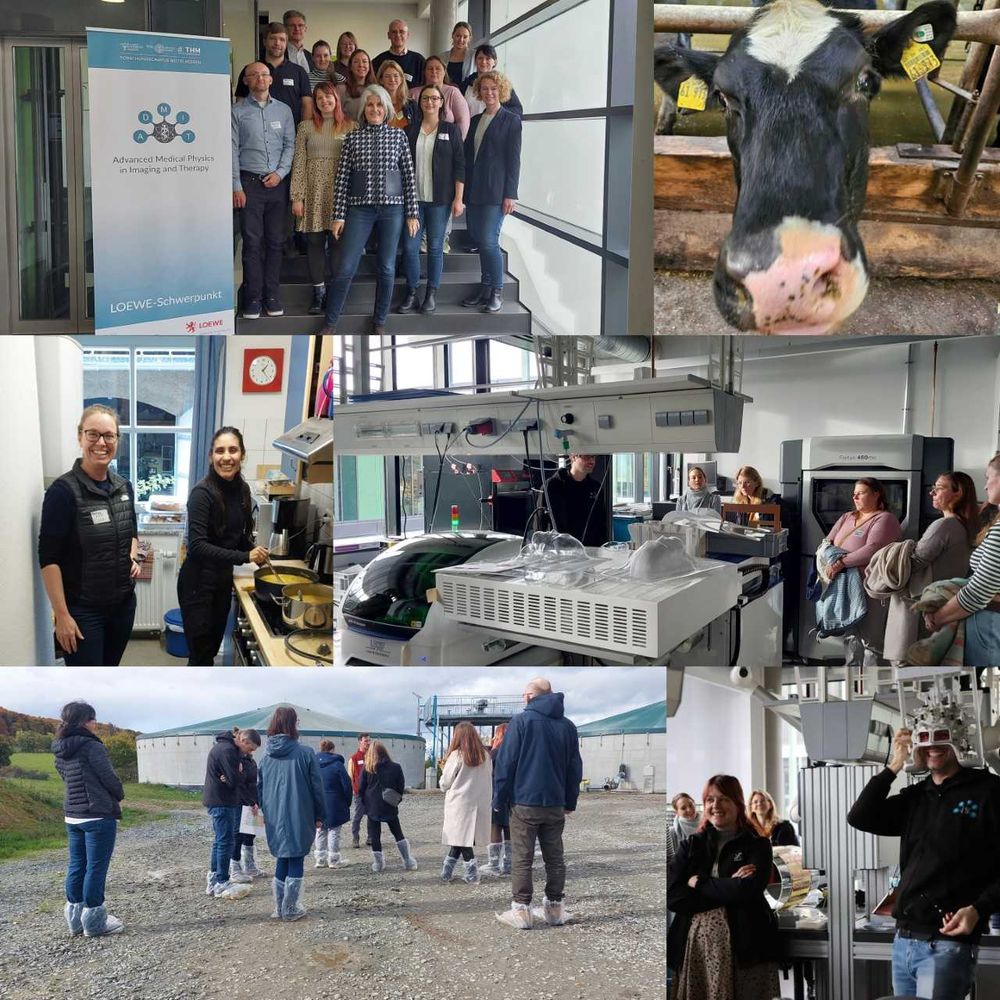
𝗪𝗼𝘄, 𝘄𝗲𝗹𝗰𝗵 𝘀𝗰𝗵ö𝗻𝗲, 𝘃𝗼𝗹𝗹𝗴𝗲𝗳ü𝗹𝗹𝘁𝗲+𝗶𝗻𝘀𝗽𝗶𝗿𝗶𝗲𝗿𝗲𝗻𝗱𝗲 𝗣𝗿𝗼𝗟𝗢𝗘𝗪𝗘-𝗧𝗮𝗴𝗲 𝘃𝗼𝗺 23.-24.🍂𝗢𝗸𝘁𝗼𝗯𝗲𝗿 𝗮𝘂𝗳 𝗱𝗲𝗺🐮𝗚𝗹𝗮𝗱𝗯𝗮𝗰𝗵𝗲𝗿 𝗛𝗼𝗳 𝗯𝗲𝗶 𝗟𝗢𝗘𝗪𝗘-𝗚𝗿𝗲𝗲𝗻𝗗𝗮𝗶𝗿𝘆, 𝗶𝗺 𝗟𝗶𝗲𝗯𝗶𝗴-𝗠𝘂𝘀𝗲𝘂𝗺 𝗺𝗶𝘁 𝗠𝗮𝗻𝘂𝗲𝗹 𝗛𝗲𝗶𝗻𝗿𝗶𝗰𝗵 + 𝗯𝗲𝗶 𝗟𝗢𝗘𝗪𝗘-𝗔𝗗𝗠𝗜𝗧, Technische Hochschule Mittelhessen (𝗧𝗛𝗠) 𝗚𝗶𝗲ß𝗲𝗻! @jlugiessen.bsky.social
📸Katrina Friese, Leonie Dittrich+ProLOEWE
📸Katrina Friese, Leonie Dittrich+ProLOEWE

October 25, 2025 at 1:43 PM
𝗪𝗼𝘄, 𝘄𝗲𝗹𝗰𝗵 𝘀𝗰𝗵ö𝗻𝗲, 𝘃𝗼𝗹𝗹𝗴𝗲𝗳ü𝗹𝗹𝘁𝗲+𝗶𝗻𝘀𝗽𝗶𝗿𝗶𝗲𝗿𝗲𝗻𝗱𝗲 𝗣𝗿𝗼𝗟𝗢𝗘𝗪𝗘-𝗧𝗮𝗴𝗲 𝘃𝗼𝗺 23.-24.🍂𝗢𝗸𝘁𝗼𝗯𝗲𝗿 𝗮𝘂𝗳 𝗱𝗲𝗺🐮𝗚𝗹𝗮𝗱𝗯𝗮𝗰𝗵𝗲𝗿 𝗛𝗼𝗳 𝗯𝗲𝗶 𝗟𝗢𝗘𝗪𝗘-𝗚𝗿𝗲𝗲𝗻𝗗𝗮𝗶𝗿𝘆, 𝗶𝗺 𝗟𝗶𝗲𝗯𝗶𝗴-𝗠𝘂𝘀𝗲𝘂𝗺 𝗺𝗶𝘁 𝗠𝗮𝗻𝘂𝗲𝗹 𝗛𝗲𝗶𝗻𝗿𝗶𝗰𝗵 + 𝗯𝗲𝗶 𝗟𝗢𝗘𝗪𝗘-𝗔𝗗𝗠𝗜𝗧, Technische Hochschule Mittelhessen (𝗧𝗛𝗠) 𝗚𝗶𝗲ß𝗲𝗻! @jlugiessen.bsky.social
📸Katrina Friese, Leonie Dittrich+ProLOEWE
📸Katrina Friese, Leonie Dittrich+ProLOEWE
On the 16th of October at 14:30 in Darmstadt we are pleased to welcome Bastian Blombach from TU Munich in our SynBio seminar series with a talk entitled: Engineering Corynebacterium glutamicum and Vibrio natriegens for a more sustainable chemical economy.
Join us if you are interested in #Synbio 🧪
Join us if you are interested in #Synbio 🧪

October 15, 2025 at 1:12 PM
On the 16th of October at 14:30 in Darmstadt we are pleased to welcome Bastian Blombach from TU Munich in our SynBio seminar series with a talk entitled: Engineering Corynebacterium glutamicum and Vibrio natriegens for a more sustainable chemical economy.
Join us if you are interested in #Synbio 🧪
Join us if you are interested in #Synbio 🧪
Reposted by Centre for Synthetic Biology @TUDarmstadt
This is a paper by Eleonora Ornati and Iiulia Ushakova that I am really proud of. Who would have thought that the well-known Glucose Oxidase is up for some surprises, i.e., that it initiates radical polymerizations without the need for initiators or activation by light!
pubs.acs.org/doi/full/10....
pubs.acs.org/doi/full/10....

Glucose Oxidase Initiates Radical Polymerizations by Direct Electron Transfer to Monomers
Glucose oxidase (GOx) is a widely used and studied enzyme, yet it continues to surprise with previously unknown activities. We report GOx to initiate radical polymerizations of acrylamides and methacr...
pubs.acs.org
October 1, 2025 at 5:47 PM
This is a paper by Eleonora Ornati and Iiulia Ushakova that I am really proud of. Who would have thought that the well-known Glucose Oxidase is up for some surprises, i.e., that it initiates radical polymerizations without the need for initiators or activation by light!
pubs.acs.org/doi/full/10....
pubs.acs.org/doi/full/10....