


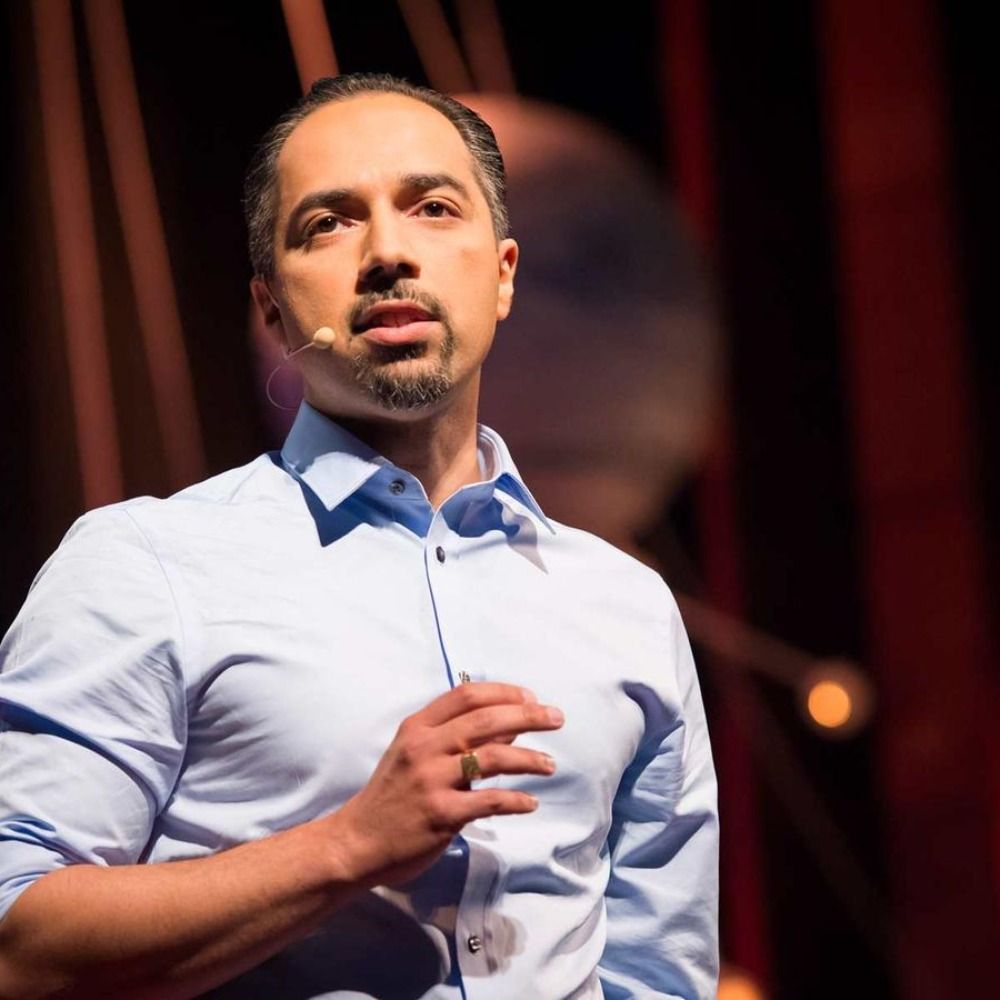
Trita Parsi
tparsi.bsky.social
Trita Parsi
@tparsi.bsky.social

2010 Grawemeyer Award for Ideas Improving World Order Recipient. Executive VP @quincyinst. Author of Losing an Enemy, Single Roll of the Dice & Treacherous Alliance. Views are my own.

Trita Parsi is an Iranian-born Swedish writer and activist, co-founder and executive vice president of the Quincy Institute for Responsible Statecraft, and founder and former president of the National Iranian American Council. .. more

Political science 66%
Sociology 17%

Reposted by Trita Parsi

Told @aje that we don't know the validity of Iran's belief that it can inflict such damage on the US that a small war can lead to Trump dropping his maximalist positions.

Hopefully, we will never need to find out if Tehran simply picks up the phone and calls Trump directly.

The primary audience for Iran's warnings is Trump himself - Tehran is trying to dispel Trump's sense that Iran is on the brink. Some in Tehran believe a small confrontation may be necessary to make Trump drop his maximalist demands and get him to negotiate more realistically.

Direct talks between Iranian officials and Trump himself may appear completely unrealistic, but some of the main turning points in the US-Iran drama were caused by moves that most believe were completely impossible. I don't see what the Iranian shave tolose by trying this card.

Told @AJEnglish that the most effective way to walk away from the precipice of war is for Tehran to talk directly to Trump - not to negotiate, but to defuse tensions and broaden the parameters for the negotiations.

Reposted by Trita Parsi

Reposted by Trita Parsi

Reposted by Trita Parsi

Reposted by Trita Parsi

Failing to do so is strategic malpractice on par with Ayatollah Khomeini's refusal to accept an end to the war with Iraq in 1982.//

...by changing the redlines and parameters for the talks: Direct engagement between Tehran and wants himself. Tehran can simply pick up the phone and talk directly with Trump to defuse the situation and set the stage for much more realistic and constructive negotiations.

While I agree that Trump's maximalist demands and threat-intense approach need to be amended, Tehran is still refusing the most effective deescalatory card, which could not only eliminate the risk for war in the shortrun, but also set the stage for a solution that can hold in the long run...>>

So the combination of Trump's threat-intense, maximalist diplomacy and Tehran's calculation that it can "correct" Trump's strategy through a limited but highly intense war, leads both toward a larger war that neither actually wants.

But it is important to understand that Trump himself has destroyed much of the credibility of those in Tehran who prefer a bolder diplomatic path rather than this confrontation-first, diplomacy-later approach, because of the deceit he engaged in back in June 2024.

This, in turn, will lead to Trump opting for more realistic demands and parameters, the calculation goes. Whether Tehran really can either strike that hard or absorb the US's massive strikes is unclear to me.

It will be long, bloody, and costly, rather than the quick, bloodless, and glorious assessment the Iranians believe Trump has.

The idea being that Iran takes massive hits but also strikes back in an unprecedented way throughout the region and against US troops with mass casualties, in order to dispel Trump's belief that a war with Iran can resemble the military operation in Venezuela.

Some in Tehran prefer a limited military confrontation (not a symbolic one) in order to "correct" Trump's assessment and push him to negotiate more realistically.

Trump is overestimating Iran's regional and internal weakness and believes that pressure and military threats will cause Tehran to yield.

Some thoughts re the state of US-Iran talks...

Neither the US nor Iran is pursuing a diplomatic strategy that is likely to succeed, though both sides overall prefer to avoid war.

>>

Reposted by Trita Parsi

Reposted by Trita Parsi

Reposted by Trita Parsi

Reposted by Trita Parsi