




Zaibatsu
@zaibatsu.bsky.social
🔍 Exploring #SocialMedia, #Tech, #AI, and #CyberSecurity
🛡️ Championing #Democracy & Digital Integrity
🎨 Passionate about #Art, Innovation, and the Future 🌊💙
🛡️ Championing #Democracy & Digital Integrity
🎨 Passionate about #Art, Innovation, and the Future 🌊💙
Pinned
Zaibatsu
@zaibatsu.bsky.social
· Nov 30
Mary Tyler Moore accidentally nailed a perfect trick shot in *The Dick Van Dyke Show* (1962)—on the FIRST take.
It was supposed to be done by a pro, but she shocked everyone and pulled it off herself. Absolute legend. 🎱✨
#ClassicTV #FunFacts
It was supposed to be done by a pro, but she shocked everyone and pulled it off herself. Absolute legend. 🎱✨
#ClassicTV #FunFacts
Read the Uplifting Letter That Albert Einstein Sent to Marie Curie During a Time of Personal Crisis (1911)

Read the Uplifting Letter That Albert Einstein Sent to Marie Curie During a Time of Personal Crisis (1911)
Marie Curie’s 1911 Nobel Prize win, her second, for the discovery of radium and polonium, would have been cause for public celebration in her adopted France, but for the nearly simultaneous revelation of her affair with fellow physicist Paul Langevin, the fellow standing to the right of a 32-year-old Albert Einstein in the above group […]
www.openculture.com
December 9, 2025 at 3:32 PM
Read the Uplifting Letter That Albert Einstein Sent to Marie Curie During a Time of Personal Crisis (1911)
APOD: 2025 December 9 – The Heart of the Soul Nebula #astronomy #photography

APOD: 2025 December 9 – The Heart of the Soul Nebula
APOD: 2025 December 9 – The Heart of the Soul Nebula
This cosmic close-up looks deep inside the Soul Nebula.
The dark and brooding dust clouds outlined by bright
ridges of glowing gas are cataloged as IC 1871.
About 25
light-years across,
the telescopic field of view spans only
a small part of the much larger
Heart and Soul nebulae.
At an estimated distance of 6,500 light-years, the star-forming
complex lies within the Perseus spiral arm of the
Milky Way, seen in planet
Earth's skies toward the
constellation of the Queen of
Aethiopia
(Cassiopeia).
An example of triggered star formation,
the dense star-forming clouds of IC 1871 are
themselves sculpted by the intense
winds and
radiation of the region's
massive young stars.
This color image adopts a
palette made popular in Hubble images
of star-forming regions.
apod.nasa.gov
December 9, 2025 at 2:08 PM
APOD: 2025 December 9 – The Heart of the Soul Nebula #astronomy #photography
Beautiful Winners from the 2024 Canadian Photos of the Year Competition

Beautiful Winners from the 2024 Canadian Photos of the Year Competition
Canadian Photographer of the Year 2024: Shane Turgeon The 2024 Canadian Photos of the Year Competition honored 14 outstanding winners who captured Canada’s breathtaking landscapes and wildlife. From lightning striking a golden canola field to an octopus mother guarding her eggs, the images highlight photography’s power to illuminate fleeting beauty. Judged by experts like Christian […]
designyoutrust.com
December 9, 2025 at 1:59 PM
Beautiful Winners from the 2024 Canadian Photos of the Year Competition
Guanaco in Punta Norte, Argentina (© Sylvain Cordier/naturepl.com)

th (1920×1080)
www.bing.com
December 9, 2025 at 8:30 AM
Guanaco in Punta Norte, Argentina (© Sylvain Cordier/naturepl.com)
Colorful Stars of All Ages

Day 5 of the 2025 Space Telescope Advent Calendar: Colorful Stars of All Ages
The fifth day of the 18th annual Space Telescope Advent Calendar features a close view of a distant and colorful spiral galaxy.
www.theatlantic.com
December 9, 2025 at 4:17 AM
Colorful Stars of All Ages
Photographers Around the World Capture Astonishing Auroras During the Solar Maximum

Photographers Around the World Capture Astonishing Auroras During the Solar Maximum
The 2025 Northern Lights Photographer of the Year contest, organized by Capture the Atlas, curates 25 images from around the world.
www.thisiscolossal.com
December 9, 2025 at 2:03 AM
Photographers Around the World Capture Astonishing Auroras During the Solar Maximum
Caroline Gaudreault Creates Enigmatic Oil Paintings With Anthropomorphic Cats, Birds, And Girls Draped In Rococo Detail And Quiet Symbolism

Caroline Gaudreault Creates Enigmatic Oil Paintings With Anthropomorphic Cats, Birds, And Girls Draped In Rococo Detail And Quiet Symbolism
Caroline Gaudreault is a Canadian magical‑realist figurative painter from Alma, Québec, known for strange, classical‑looking portraits of animals and humans that sit somewhere between fairy tale, allegory, and fine art. She paints in oils (and sometimes watercolor) with a refined, almost academic touch, then inserts surreal details—anthropomorphic cats and birds, ornate costumes, symbolic objects and […]
designyoutrust.com
December 9, 2025 at 12:36 AM
Caroline Gaudreault Creates Enigmatic Oil Paintings With Anthropomorphic Cats, Birds, And Girls Draped In Rococo Detail And Quiet Symbolism
Everything We Know About STAR TREK: STARFLEET ACADEMY

Everything We Know About STAR TREK: STARFLEET ACADEMY
After years of rumors about a Star Trek series focusing on young starship cadets, Starfleet Academy is finally coming to Paramount+ in 2026.
nerdist.com
December 8, 2025 at 11:15 PM
Everything We Know About STAR TREK: STARFLEET ACADEMY
After 50 Years of Civil War, Photographer Captures the Untold Stories of Young Lebanese Women #Books #PortraitPhotography

After 50 Years of Civil War, Photographer Captures the Untold Stories of Young Lebanese Women
After 50 Years of Civil War, Photographer Captures the Untold Stories of Young Lebanese Women
A few years ago, Rania Matar returned to Lebanon, the country in which she was born but had fled nearly four decades earlier amid the civil war. She weaved through abandoned buildings alongside a young Lebanese woman, whom she intended to photograph for an upcoming project. Suddenly, the pair noticed something: graffiti scrawled across a […]
READ: After 50 Years of Civil War, Photographer Captures the Untold Stories of Young Lebanese Women
mymodernmet.com
December 8, 2025 at 10:03 PM
After 50 Years of Civil War, Photographer Captures the Untold Stories of Young Lebanese Women #Books #PortraitPhotography
Oil Painter Creates Contemporary Gothic Portraits With Classical Technique And Lowbrow Attitude, Recasting Fairy‑tale Femininity As Sharp, Haunted, And Fully Present

Oil Painter Creates Contemporary Gothic Portraits With Classical Technique And Lowbrow Attitude, Recasting Fairy‑tale Femininity As Sharp, Haunted, And Fully Present
risten Margiotta is a Delaware‑based contemporary oil painter, illustrator, and art instructor whose work blends classical portrait skills with lowbrow / pop‑surreal influences like Tim Burton and Edward Gorey. A graduate of the University of Delaware’s Visual Communications/Illustration program, she has over 20 years of professional practice, developing a signature world of big‑eyed “Mourning Dolls,” […]
designyoutrust.com
December 8, 2025 at 8:30 PM
Oil Painter Creates Contemporary Gothic Portraits With Classical Technique And Lowbrow Attitude, Recasting Fairy‑tale Femininity As Sharp, Haunted, And Fully Present
We Are the Drum and the Scribe: Black Art In America Collection at the Bo Bartlett Center #Art #ArtLovers #BlackSky

We Are the Drum and the Scribe: Black Art In America Collection at the Bo Bartlett Center
We Are the Drum and the Scribe: Black Art In America Collection at the Bo Bartlett Center
January 20th - May 16th
Many Rivers by Dr Fahamu Pecou
We Are the Drum and the Scribe is both an exhibition and an affirmation of Black Art In America's (BAIA) ongoing mission to document, preserve, and promote the contributions of African American visual culture.
As the scribe, BAIA records, preserves, and safeguards the visual histories of African American artists—ensuring that their legacies, past and present, are written into the record of American art.
As the drum, BAIA amplifies those voices—allowing both emerging and established artists to resonate across the nation through exhibitions, collections, media, and meaningful institutional partnerships.
Presented at the Bo Bartlett Center in Columbus, Georgia, this exhibition reflects BAIA's core mission while serving as a living reminder that Black stories are to be kept and experienced.
Please join us in celebrating We Are the Drum and the Scribe at the public reception on February 19th, 6-8pm!
The Bo Bartlett Center
Columbus State University
921 Front Ave
Columbus, GA 31901
Baldwin by Khalif Thompson
Black Collectors Have Preserved the Voices of Black Artists, Now They Are Amplifying Them
By Shantay Robinson
(Essay originally published in the catalog "Black Is Beautiful: recent gifts from Black Art in America and Najee & Seteria Dorsey" to the Columbus Museum 2021)
The heavily publicized incidences of racism in this country in recent times are weighing on the consciousnesses of museum curators. They are working to fill in gaps in their collections where Black presence is lacking. Kerry James Marshall calls this gap the “vacuum in the image bank.” The artworld is slowly opening and most recognize it is a long game that the entire art ecosystem needs to play a part in. Many Black art collectors have been playing their role for decades. Now is the time for Black artists to score.
Black artists have long been denied entry into the art establishment. In 2009, the late David Driskell was honored at the Birmingham Museum of Art, the museum that had turned him and his art students away when they attempted to visit on a day outside of the designated Tuesday for Black visitors. In the 1950s and 1960s the museum was a department of the City of Birmingham and was subject to Jim Crow laws. The ideology of separate but equal excluded Black people in Birmingham from enjoying art at their leisure. Ironically, the first artwork by a Black artist the museum purchased was a painting by Driskell in 1972.
The 1960s was a time when Black people reclaimed their humanity, and artists at this time were no exception. In the 1960s notable artists Romare Bearden, Norman Lewis, Hale Woodruff and others formed Spiral, a group formed to foster creativity and present their art. Although, many in the group are renowned today, the artists were not welcome into the downtown art establishments. At the 1969 art exhibition, Harlem on My Mind at the Metropolitan Museum of Art, no black artists were included. In the 1960s, when the white art establishment felt conscious about the fight for civil rights and Black power, they accepted Black artists but especially when the art was overtly radical.
Paul Robeson once said, “Artists are the gatekeepers of the truth. We are civilization’s radical voice.” In an article for Artsy, Jewels Dodson writes, “Collectors of Black art often see themselves as custodians of the history, culture, and nuanced narratives of the global Black experience. These collectors often feel honor-bound to protect Black artists and preserve Black culture, which for so long, and so often, has been excluded from contemporary art spaces.” Black artists express views that are often marginalized in the mainstream. The narratives they share are not often popular with or important to white conservators of information. So, Black collectors are reimagining the art canon by gifting their collections of artworks by Black artists to art museums to fill in the gaps of the art historical canon.
Collectors have started collections to show their Black children culture that often gets left out of history books and class lessons. These collectors take it upon themselves to educate their own. And more recently, they have been sharing their collections by gifting to museums so that not only their children benefit, but other children, who may not have the advantage of growing up with Black art in their homes, are exposed to art by Black artists, as well.
While historically mainstream art establishments have willfully ignored art by Black artists, Black collectors and historically Black institutions are the saving grace. Black collectors have been doing the work of gathering artifacts to maintain a catalog of work of Black artists to share with later generations. In an Art News article from March 1989, “Black Artists Today: A Case of Exclusion,” Chicago gallerist Isobel Neal states, “Everyone in the business knows that for many collectors, museum exposure is necessary to establish credibility.” Without museum credibility, artists lack the means to further their careers. Black collectors have stepped in to do this work.
Walter O. Evans who was named among the top 100 collectors by Art and Antiques magazine, assembled a collection that spans 150 years of African American art from 19th century landscapes to 20th century work by Jacob Lawrence and Romare Bearden. Evans donated 62 artworks to Savannah College of Art and Design (SCAD) in 2005. The college established the Walter O. Evans Center for African American Studies, a permanent home for the Evans Collection that will include an interdisciplinary facility devoted to the study of African American art, literature, and culture.
Larry D. and Brenda A. Thompson amassed a collection of art by African American artists from around the country with attention paid to unrecognized artists who are not included in traditional narratives about African American art. In 2012, the couple gifted the Georgia Museum of Art with 37 artworks. The collection aims to offer an in-depth and inclusive understanding of Black artists, their aesthetic, and social concerns.
Patricia Walters, who started building her collection in the mid-1980s donated 152 artworks to Howard University. Her collection represents the work of Kerry James Marshall and Norman Lewis to name a few. Walters’ donation is the second largest in the school’s history. The largest of 450 artworks, was gifted by Alain Locke, a former professor at Howard and dean of the Harlem Renaissance.
Najee and Seteria Dorsey, who are avid art collectors, wanted to contribute to the culture, as well. Their gift of 15 artworks by Black artists to the Columbus Museum, express their belief that “to whom much is given, much is expected.” The Dorseys believe in the artists in the collection they shared. The gift is an opportunity to further the artists’ careers, be part of a legacy, and play a role in the art ecosystem.
Najee Dorsey recognizes that their success with Black Art in America (BAIA) allows them the means to share their holdings with the community of Columbus, Georgia where the couple lived for 7 years. The Columbus Museum was the first museum to give Najee Dorsey a solo show, and he says, “I know they are working to build their collection and holdings of work by African American artists. So, I thought it was a good opportunity to further their mission to increase their holdings.” The Dorsey gift includes legacy artist, Richard Mayhew and contemporary artist, Alfred Conteh among others. The hope is to document the artists’ careers by placing their work in a space that affirms their livelihoods.
Though several Historically Black Colleges and Universities (HBCU) have museums and galleries exclusively to present Black art, selecting a mainstream institution to gift artworks to was a conscious decision made by Dorsey, with considerations like the physical space and economics of the institution in mind. There are pros and cons to both keeping the art centrally in Black institutions and sharing the work with mainstream communities. Dorsey states, “There was a period in time when a majority of institutions ignored the material and collectors, but Black collectors have been collecting for decades. And I think they want to see the work in all institutions.”
The collections of popular contemporary artists also bear much social significance. Sean P. Diddy Combs’ $21.1 million purchase of Kerry James Marshall’s Past Times (1997) in 2018 was the highest amount of money earned for an artwork by a living African American artist. This was a well-thought-out power move; it wasn’t a purchase of passion. Combs was not bidding for the artwork out of the need to own a painting for himself but for the culture. Kaseem “Swizz Beatz” Dean was the impetus for the purchase. He had convinced Combs over 10 years to make a big purchase on Black art. The goal was to keep the Marshall painting in Black hands.
Dean is an avid art collector and advocate for artists’ rights. Though he started out collecting art by masters, he later decided to collect work by artists that he had a connection to. Alicia Keys, Dean’s wife, considers it a cultural duty to support young artists. Antoine Sargent writes for The New York Times, “As the couple have focused and formalized their holdings, the Dean Collection has become one of the most important assemblages in the world of work by African-America artists such as Lorna Simpson, Derrick Adams, Mickalene Thomas, and Nina Chanel Abney.” Keys, with a somewhat sentimental but also strategic gesture for her husband, purchased 80 of Gordon Parks’ photographs spanning the photographer’s career, making them the owners of the largest collection of Gordon Parks’ work.
African American artists, for so long have been ignored, but museums are now working to fill the gaps of their collections with Black artists who have been working diligently for years without recognition. Artist, Noah Purifoy received a survey of his career 11 years after his death and Norman Lewis’ retrospective at the Pennsylvania Academy of the Fine Arts came 36 years after his death. While these artists may have been overlooked by major art institutions until after their deaths, Black collectors have kept their legacies alive.
Without Black collectors who have preserved the culture by collecting artworks by Black artists, there would be no gifts to give or art to borrow to fill in the gaps in our contemporary scramble to appreciate what Black artists have to say. Museums will not be diversified with one or two gifts; it is going to take years to get this work done. As museum leadership reckons with the truth about race relations in this country, we can hope they contemplate how they treat the concept of race within their institutions and with those artists they present.
www.blackartinamerica.com
December 8, 2025 at 7:18 PM
We Are the Drum and the Scribe: Black Art In America Collection at the Bo Bartlett Center #Art #ArtLovers #BlackSky
Top 25 News Photos of 2025

Top 25 News Photos of 2025
Powerful images from the past 12 months
www.theatlantic.com
December 8, 2025 at 6:04 PM
Top 25 News Photos of 2025
“The Matilda Effect”: How Pioneering Women Scientists Have Been Written Out of Science History

“The Matilda Effect”: How Pioneering Women Scientists Have Been Written Out of Science History
Photo via Wikimedia Commons The history of science, like most every history we learn, comes to us as a procession of great, almost exclusively white, men, unbroken but for the occasional token woman—well-deserving of her honors but seemingly anomalous nonetheless. “If you believe the history books,” notes the Timeline series The Matilda Effect, “science is […]
www.openculture.com
December 8, 2025 at 4:13 PM
“The Matilda Effect”: How Pioneering Women Scientists Have Been Written Out of Science History
Winners of the 2025 International Landscape Photographer of the Year

Winners of the 2025 International Landscape Photographer of the Year
A collection of winners and selected images from the competition’s “Top 101” group, chosen from more than 3,600 entries by professional and amateur photographers around the world
www.theatlantic.com
December 8, 2025 at 3:31 PM
Winners of the 2025 International Landscape Photographer of the Year
APOD: 2025 December 8 – Flying Over the Earth at Night #astronomy #photography
APOD: 2025 December 8 – Flying Over the Earth at Night
APOD: 2025 December 8 – Flying Over the Earth at Night
Many wonders are visible when flying over the Earth at night.
Such visual spectacles occur every day for astronauts in low Earth orbit, but the
featured video
captured several from the
International Space Station (ISS) in 2011 and set them to rousing music.
Passing below are
white clouds,
orange city lights,
lightning flashes in
thunderstorms, and dark
blue seas.
On the horizon is the
golden haze of
Earth's thin atmosphere,
frequently decorated by dancing auroras as the video progresses.
The green parts of auroras typically remain below the space station, but the station flies
right through
the red and purple auroral peaks.
Solar panels of the ISS are seen around the frame edges.
The ominous wave of approaching brightness at the end of each sequence is just the
dawn of the sunlit half of
Earth,
a dawn that occurs every 90 minutes.
apod.nasa.gov
December 8, 2025 at 2:10 PM
APOD: 2025 December 8 – Flying Over the Earth at Night #astronomy #photography
These Long Exposure Photos Of Clouds In Landscapes Will Inspire You To Slow Down And Capture Movements In Nature #Photography

These Long Exposure Photos Of Clouds In Landscapes Will Inspire You To Slow Down And Capture Movements In Nature
Long exposure clouds can add an extra layer of dynamism to landscape images and in order to effectively capture cloud movement, the photographer needs to analyse the scene and look at the direction of movement of clouds and compose the shot so the movement contributes to the composition of the image. This can be done by moving around, finding a suitable perspective and taking a few test shots. It may not be possible to get the clouds exactly how you want them to be, but you can try your best.
The post These Long Exposure Photos Of Clouds In Landscapes Will Inspire You To Slow Down And Capture Movements In Nature appeared first on Light Stalking.
www.lightstalking.com
December 8, 2025 at 1:59 PM
These Long Exposure Photos Of Clouds In Landscapes Will Inspire You To Slow Down And Capture Movements In Nature #Photography
Christmas lights in Domaso, Lake Como, Italy (© Roberto Moiola/Getty Images)

th (1920×1080)
www.bing.com
December 8, 2025 at 8:45 AM
Christmas lights in Domaso, Lake Como, Italy (© Roberto Moiola/Getty Images)

Scientists sequence genome of the elusive 'vampire squid from hell'

Scientists sequence genome of the elusive 'vampire squid from hell'
The research looked at a seldom-seen cephalopod found only in the extreme depths of the ocean. Typically found in the darkest, deepest parts of the p...
www.unexplained-mysteries.com
December 8, 2025 at 2:03 AM
Scientists sequence genome of the elusive 'vampire squid from hell'
Scientists Impressed by “Fire Amoeba” That Can Survive Incredible Temperatures

Scientists Impressed by “Fire Amoeba” That Can Survive Incredible Temperatures
This tiny critter is basically almost indestructible.
The post Scientists Impressed by “Fire Amoeba” That Can Survive Incredible Temperatures appeared first on Futurism.
futurism.com
December 8, 2025 at 12:35 AM
Scientists Impressed by “Fire Amoeba” That Can Survive Incredible Temperatures
Unreleased DB Cooper hijacking flight audio recording revealed

Unreleased DB Cooper hijacking flight audio recording revealed
The 12-minute audio has been pieced together from tapes dating back to the day of the incident itself. One of the most notorious unsolved crimes in A...
www.unexplained-mysteries.com
December 7, 2025 at 11:15 PM
Unreleased DB Cooper hijacking flight audio recording revealed
Japanese Students Successfully Build a Flying Bike That Gets off the Ground by Pedaling #Technology #flyingbike
Japanese Students Successfully Build a Flying Bike That Gets off the Ground by Pedaling
Japanese Students Successfully Build a Flying Bike That Gets off the Ground by Pedaling
Japanese Students Built A Flying Bicycle That Actually Lifts Off The Ground Powered Only By Pedaling byu/EducationalOne5313 ininterestingasfuck The idea of a flying bicycle is incredibly alluring, bringing together the autonomy of riding a bike with the freeing possibility of exploring the world from up above. That’s why an experiment carried out by Japanese students […]
READ: Japanese Students Successfully Build a Flying Bike That Gets off the Ground by Pedaling
mymodernmet.com
December 7, 2025 at 10:04 PM
Japanese Students Successfully Build a Flying Bike That Gets off the Ground by Pedaling #Technology #flyingbike
The Louisiana Department of Wildlife and Fisheries Is Detaining People for ICE

The Louisiana Department of Wildlife and Fisheries Is Detaining People for ICE
Louisiana’s hunting and wildlife authority is one of more than 1,000 state and local agencies that have partnered with US immigration authorities this year alone.
www.wired.com
December 7, 2025 at 8:31 PM
The Louisiana Department of Wildlife and Fisheries Is Detaining People for ICE
An AI Dark Horse Is Rewriting the Rules of Game Design

An AI Dark Horse Is Rewriting the Rules of Game Design
The Chinese video game giant Tencent is now building some of the world’s best 3D AI models. This could have implications far outside game design.
www.wired.com
December 7, 2025 at 6:03 PM
An AI Dark Horse Is Rewriting the Rules of Game Design
Black Art in America Brings Its Acclaimed Fine Art Print Fair Back to Houston, February 6–8, 2026 #Art #ArtLovers #BlackSky
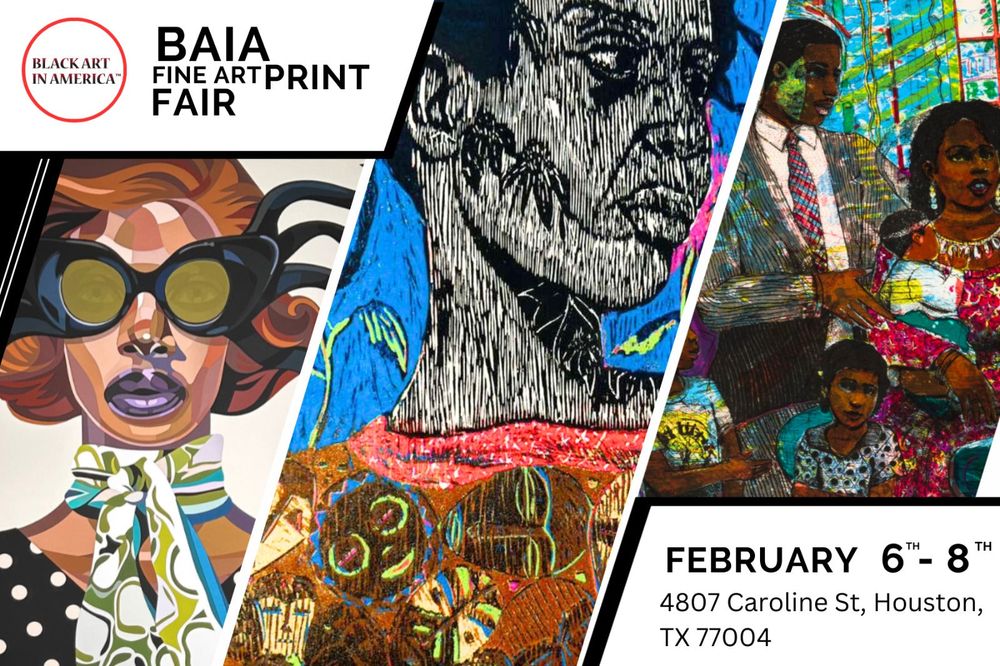
Black Art in America Brings Its Acclaimed Fine Art Print Fair Back to Houston, February 6–8, 2026
Black Art in America™ Brings Its Acclaimed Fine Art Print Fair Back to Houston, February 6–8, 2026
Black Art in America™ (BAIA) is proud to announce the next stop of its celebrated BAIA Fine Art Print Fair, arriving in Houston, Texas, and hosted by the Houston Museum of African American Culture (HMAAC) from February 6–8. Building on the success of previous fairs in Atlanta, Houston and Washington, D.C —where hundreds of collectors, first-time buyers, and art lovers gathered to engage with the rich legacy of Black printmaking—this Houston edition expands BAIA’s mission to make fine art accessible.
The BAIA Fine Art Print Fair is a dynamic, three-day event showcasing limited-edition fine art prints and original works on paper from hundreds of artists spanning from the Harlem Renaissance to some of today’s most compelling African American artists and master printmakers. Explore the various forms of printmaking; screenprints, woodcuts, linocuts, lithographs, etchings, monoprints, and more as the fair brings together museum-level works at collector-friendly price points.
This year’s Houston fair spotlights four standout artists whose practices deepen the visual tradition of Black printmaking: Traci Mims, known for bold, politically incisive relief prints exploring resistance and identity, with works held in major collections including The Coca-Cola Company and The Legacy Museum; Jamaal Barber, the Virginia-born, Alabama-raised, Atlanta-shaped printmaker celebrated for expressive, layered compositions, with commissions for The New York Times and illustrations for Colson Whitehead’s Pulitzer Prize–winning The Underground Railroad; Katrina Andry, the New Orleans–based artist whose large-scale, hand-carved woodcuts confront race, power, and colorism; and Michael Ellison (1952–2001), a master innovator whose experimental techniques and rhythm-infused abstractions continue to influence contemporary printmaking.
Past BAIA Print Fairs have drawn audiences nationwide, ranging from seasoned collectors to families encountering fine art prints for the first time. Programming will include artist talks, live printmaking demonstrations, guided tours, and more! Join us for a unique opportunity to make meaningful connections and collect investable art!
For media inquiries please contact [email protected]
www.blackartinamerica.com
December 7, 2025 at 4:45 PM
Black Art in America Brings Its Acclaimed Fine Art Print Fair Back to Houston, February 6–8, 2026 #Art #ArtLovers #BlackSky