


Andrew Abraham
@andrewabraham.bsky.social
Research Associate at @cuny.edu - City University of New York
biodiversity | ecology | global change | rewilding | wildlife management
biodiversity | ecology | global change | rewilding | wildlife management
With many thanks to: @celestemare.bsky.social, @ymalhi.bsky.social, @duvallecology.bsky.social, @jcsvenning.bsky.social, @fonsvanderplas.bsky.social, and many others not on bluesky
December 9, 2025 at 12:39 PM
With many thanks to: @celestemare.bsky.social, @ymalhi.bsky.social, @duvallecology.bsky.social, @jcsvenning.bsky.social, @fonsvanderplas.bsky.social, and many others not on bluesky
So, next time you sit down to dinner and immediately reach for the salt shaker, spare a thought for Africa’s salt-starved megaherbivores.
December 9, 2025 at 12:39 PM
So, next time you sit down to dinner and immediately reach for the salt shaker, spare a thought for Africa’s salt-starved megaherbivores.
From crop raiding by elephants to moose collisions with cars due to road salting, wild animal movements, ecological impacts and conflict with humans are often driven by a desire to satisfy their salt cravings.
December 9, 2025 at 12:39 PM
From crop raiding by elephants to moose collisions with cars due to road salting, wild animal movements, ecological impacts and conflict with humans are often driven by a desire to satisfy their salt cravings.
Where animals can't get enough salt in their diet, they may come into conflict with humans. Many protected areas are located in low-sodium environments; yet humans have artificially increased salt availability through activities like borehole water pumping and crop fertilisation.
December 9, 2025 at 12:39 PM
Where animals can't get enough salt in their diet, they may come into conflict with humans. Many protected areas are located in low-sodium environments; yet humans have artificially increased salt availability through activities like borehole water pumping and crop fertilisation.
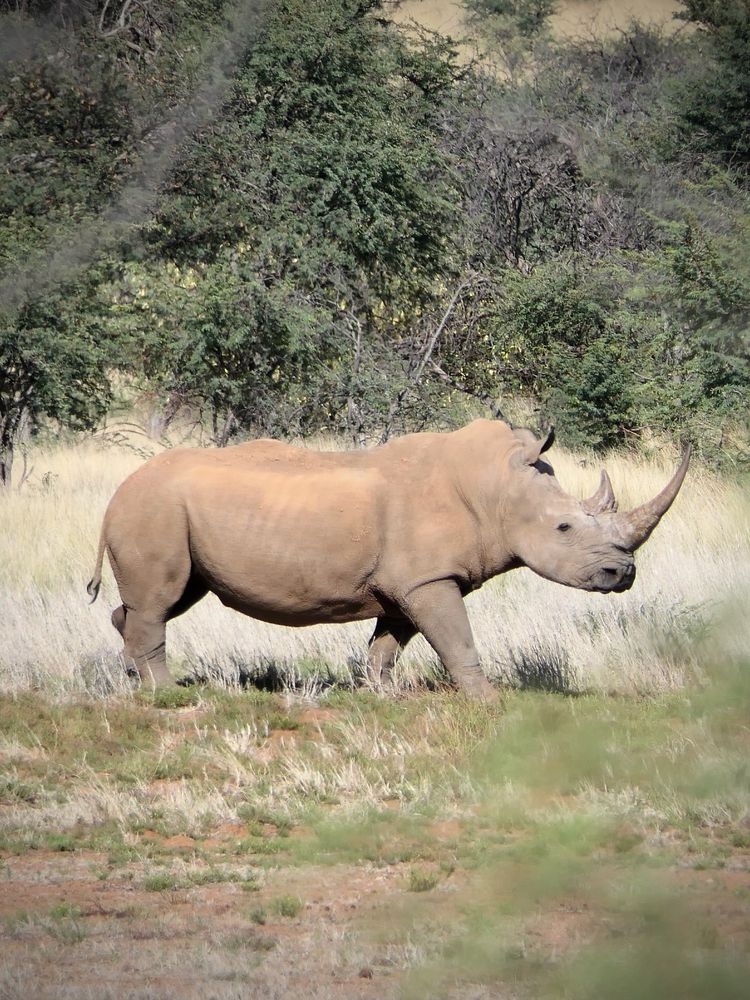
While rhinos, kudu, springbok and zebra often gather at natural and artificial salt pans from the Kalahari Desert to the Maasai Mara.
December 9, 2025 at 12:39 PM
While rhinos, kudu, springbok and zebra often gather at natural and artificial salt pans from the Kalahari Desert to the Maasai Mara.
Gorillas on the other hand are known to fight for the saltiest foods, in particular decaying wood stumps that accumulate high levels of sodium (photo credit: Jessica Rothman)

December 9, 2025 at 12:39 PM
Gorillas on the other hand are known to fight for the saltiest foods, in particular decaying wood stumps that accumulate high levels of sodium (photo credit: Jessica Rothman)
Salt limitation also explains several interesting behaviours exhibited by wild animals. In Kenya, elephants enter caves to consume the sodium-rich rocks, while in the Congo rainforest, they dig for salt in riverbeds

December 9, 2025 at 12:39 PM
Salt limitation also explains several interesting behaviours exhibited by wild animals. In Kenya, elephants enter caves to consume the sodium-rich rocks, while in the Congo rainforest, they dig for salt in riverbeds
Together, these results provide a new explanation for the so-called 'missing megaherbivores' in West and Central Africa. There is enough productivity to sustain higher densities of elephants, rhinos and giraffes, but a curious absence of these largest-bodied herbivores.

December 9, 2025 at 12:39 PM
Together, these results provide a new explanation for the so-called 'missing megaherbivores' in West and Central Africa. There is enough productivity to sustain higher densities of elephants, rhinos and giraffes, but a curious absence of these largest-bodied herbivores.
Adding plant sodium availability improved statistical models predicting large herbivore density across Africa. We found that the largest species (megaherbivores) were the group most constrained in low-sodium environments, mirroring our previous work on the allometry of sodium requirements


December 9, 2025 at 12:39 PM
Adding plant sodium availability improved statistical models predicting large herbivore density across Africa. We found that the largest species (megaherbivores) were the group most constrained in low-sodium environments, mirroring our previous work on the allometry of sodium requirements
Interestingly, we found that in any given place, grasses had approximately 1-2x more sodium than woody plants; a pattern that was reflected by grazers generally having higher dung sodium concentrations that browsers.
December 9, 2025 at 12:39 PM
Interestingly, we found that in any given place, grasses had approximately 1-2x more sodium than woody plants; a pattern that was reflected by grazers generally having higher dung sodium concentrations that browsers.
Over 1,300 dung measurements from across 20 different wild herbivore species confirmed our assumption that plant sodium availability is a major determinant of herbivore sodium intake.

December 9, 2025 at 12:39 PM
Over 1,300 dung measurements from across 20 different wild herbivore species confirmed our assumption that plant sodium availability is a major determinant of herbivore sodium intake.
We collected a large database of plant sodium concentrations from across Africa and generated high-resolution maps, which revealed multi-scale gradients
arising from sea-salt deposition, hydrology, soil chemistry and plant traits.
arising from sea-salt deposition, hydrology, soil chemistry and plant traits.

December 9, 2025 at 12:39 PM
We collected a large database of plant sodium concentrations from across Africa and generated high-resolution maps, which revealed multi-scale gradients
arising from sea-salt deposition, hydrology, soil chemistry and plant traits.
arising from sea-salt deposition, hydrology, soil chemistry and plant traits.
Humans live in a world abundant in salt. In fact, medical professionals warn most of us against the dangers of consuming too much. Yet, it is far from clear how wild herbivores get enough and if this may limit their abundance.
December 9, 2025 at 12:39 PM
Humans live in a world abundant in salt. In fact, medical professionals warn most of us against the dangers of consuming too much. Yet, it is far from clear how wild herbivores get enough and if this may limit their abundance.