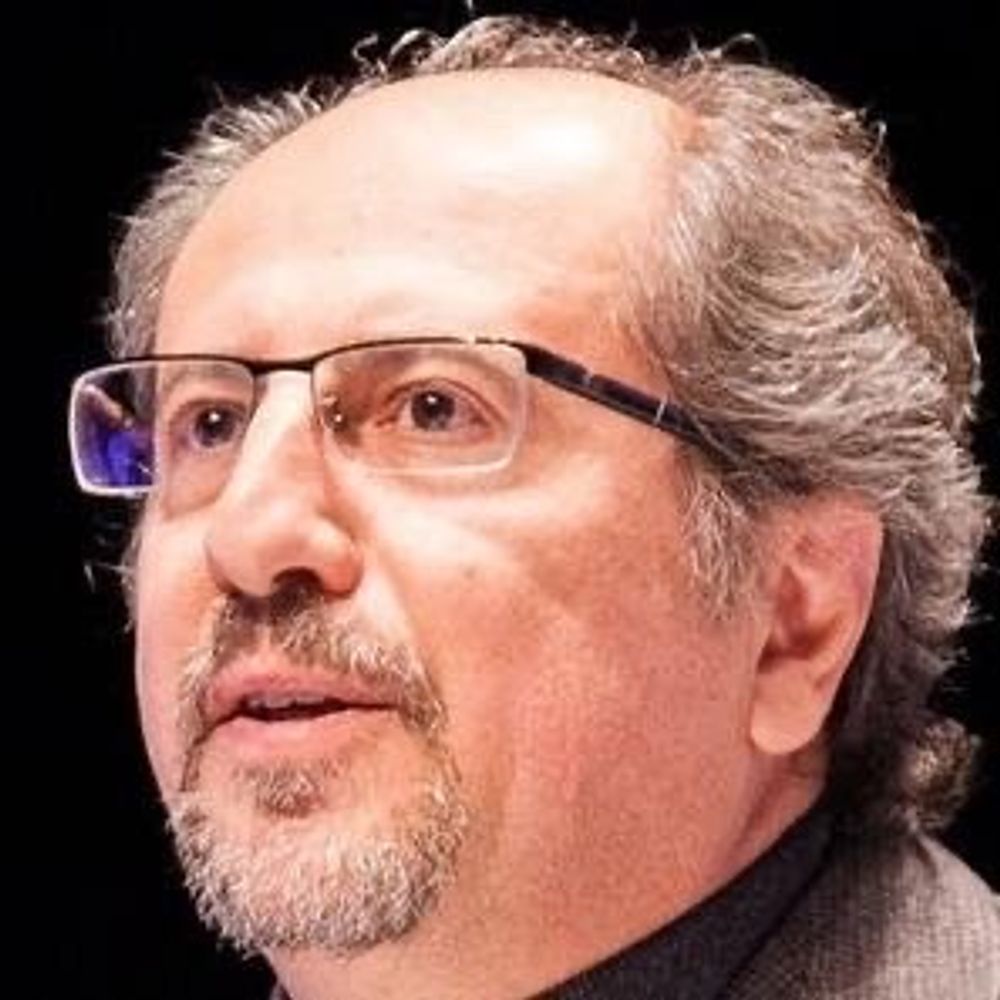
Andrew Wheeler of HPE Labs: Being a constant learner is key to being a good technologist
_For the last five years,Andrew Wheeler has been in charge of HPE Labs, which is focused on driving innovative technologies from R&D to commercialization. The senior vice president and director of HPE Labs was in Barcelona this week, where HPE Discover 2025 took place. Wheeler sat down with Esther Macías, chief editor of Computerworld Spain, to talk about the projects being developed under his wing. He reflected on the future of more embryonic technologies, such as quantum computing, as well as the rapid evolution of artificial intelligence, which, he predicts, “will completely change the way companies operate.”_
**You have been leadingHPE Labs for five years, although in reality you has been with the project for much longer, and even longer with the company. What has your experience been these last few years, which were marked by unprecedented technological developments in the fields of computing and artificial intelligence?**
The evolution has been really interesting. I have spent my entire professional career in areas dedicated to research and product development. I’ve been doing this for 31 years, working on a wide variety of aspects, from a lot of silicon and system design, to business-critical technology development, high-performance computing, hyperconvergence… And if we count cloud-related projects, the list would be endless. That’s probably why I’ve stayed with the same company, because we do all kinds of different things here.
When I joined, in fact, I joined the labs organization, the applied research group that serves the entire company. The fascinating thing about this center is the breadth with which it operates with the technology that we are always exposed to. In fact, before the company split in two, in the old HP Labs we did literally everything from inkjet and other printing projects to supercomputing. And all on a large scale. I found that very interesting, the level of breadth we were working with.
But to the question of how the landscape has changed over the last few years, well, slowly but steadily, we’ve been converging to get to where we are today. Now our focus areas are networking, cloud and artificial intelligence.
All of HPE’s business and the reorganization that the company has done has been channeled into these three areas, so our work has gone from being very broad to being very specialized.
**Now your focus is on the areas that HPE’s own management emphasizes: networking, cloud and AI. How has the latter changed? Is it changing the landscape of the former? How do you see it from your perspective as a researcher?**
Our perspective —and what we work on every day — is focused on the application of AI. That’s our current focus and it’s developing on two fronts. One is the application of this technology internally, that is, applied to our supply chain organization, to support, to the organization itself, finance, marketing and, of course, to the product teams. All areas of HPE are now asking how AI can make us more efficient as a company and improve our customers’ experience.
The other front is enabling AI, whether in hardware, networking, storage or hybrid cloud, i.e. equipping our products to support this technology and vice versa.
**The buzz generated by AI, especially its new flavors, generative and agentive, in the market is impressive. Would you say there is a bubble around these technologies?**
I hate to say yes, but there may be a bubble, although a natural correction will eventually occur. The big users of AI, the creators of the models, which are few in number in essence, will spend whatever it takes to maintain leadership in this space. But at the overall enterprise level, it’s all about ROI; then it’s about organizations implementing smaller models, albeit leveraging the big ones. We’re talking, of course, about agentive AI, which is what we’re largely focused on.
But going back to the initial thread, and being aware that we are in the expectation phase and that a balance will be reached, there is no doubt that artificial intelligence is going to completely change the way companies operate. This much is clear.
> **_“The very broad impact it will have is the disruptive potential of AI.”_**
**Would you say it is the most disruptive technology today?**
Yes, I would say it is because of the very broad impact it will have, that’s its disruptive potential. And while there may be a bubble, it’s here to stay. As they say, the genie is out of the bottle.
**It has been announced that, together with Nvidia, HPE will launch in Grenoble (France) what they call AI Factory Lab, with the aim of “responding to the needs of customers seeking greater control and autonomy over their AI infrastructure and data.” The Labs are involved in this project; what are you pursuing in particular?**
The idea is to have an environment where companies can come and test AI projects. It gives them a testing ground, a sandbox environment, where they can start exploring.
Not every company can have AI supercomputers. This is great for power users and people working with large models, but many companies don’t need something that big.
**You mentioned earlier that one line of work for the Labs is to integrate AI into HPE’s technology offering. What are the big challenges you face in this integration?**
There are many considerations to take into account. The first is from an ethical point of view. In fact, the first challenge we faced was to provide our engineers and product developers with a manual or a set of principles that they had to comply with. We spent 18 months putting together our ethical AI principles, which basically consist of a checklist of five or six points at the highest level that ensure that, if they are met, the final product meets the standards set. This is an issue that we have taken very seriously, conducting annual trainings for our employees on AI ethics. This ensures that we continue to develop and deploy technology and projects in the right way.
Having established the AI ethics framework for the company, we address the next challenge, relating to the user experience. Here, as seen at the Discover event in Barcelona, we already have things in place, such as agent technology, AI operations in networks or in Greenlake, the projects we are already tackling in storage…. A large part of the engineering community feels very comfortable moving full speed ahead in this area.
However, as I said earlier, much of the application of AI and the associated benefits will come with the adoption of this technology internally. And here we may not have the same experience in areas such as the finance or support organization. My next challenge is how to equip and train the vast majority of users. In the end, as Antonio [Neri, HPE’s CEO] himself says in all his conferences, everyone, regardless of the discipline or function they have in the company, will have a specialization in AI, and this is what we are working on.
**Another technology that may be disruptive but more long-term is quantum computing. How do you see this topic? What is the reality?**
Quantum is another example of a technology around which there is a lot of over hype and promotion by industry. That said, it has incredible potential.
The first thing to keep in mind is that quantum computing is not mainstream. There is not going to be a quantum laptop to replace the one we have to do our day-to-day work. That’s not how it works. It’s an accelerator to drive specific forms of computing that would otherwise be infeasible.
A good analogy, to understand this, is the current use of GPUs. We don’t use a GPU just for general purpose computing. We don’t, we do use some aspects of it, perhaps in the phone, to help render the screen, etc. What do we do today with a GPU or a quantum accelerator? It usually sits alongside the traditional CPU and acts as a quantum computing offload engine.
That, ultimately, is how it will go into production: with a hybrid system that has what we call classical computing, CPU and GPU, but to which we will add a quantum accelerator to which we will have networked; then we will have a workflow that, ideally, will abstract a lot of that complexity, because that’s the nature of computing. That’s been the evolution since assembly language programming. The idea is how to make this technology more accessible for mass development.
**Then the key,as other companies like IBM have already said, is a combination of quantum technology with classical technology.**
Right, yes. And then it will be implemented in centers like the supercomputing center in Barcelona or wherever; that’s how it will ultimately be used, especially at the beginning, because it will be very sparse computing in terms of capacity. And expensive, so you will want to do as much as possible with CPUs and GPUs, and then use quantum computing only for what quantum computing can uniquely do. That will be the recipe.
Andrew Wheeler, director of HPE Labs, speaking at the Discover 2025 event in Barcelona, Spain.
HPE
> **_“Quantum computing is not general-purpose […]. It is an accelerator to drive specific forms of computing that would otherwise be unfeasible_**.”
**Together with seven other technology organizations you have launched an alliance, called the Quantum Scaling Alliance, which aims to “make quantum computing scalable, practical and transformative across industries.” The project is co-led by Masoud Mohseni of HPE Labs and John Martinis, the 2025 Nobel Laureate and co-founder and CTO of Qolab. What can you tell us about it?**
The idea is to bring together companies, organizations and universities that really want to develop and build that practical quantum system that encompasses everything from silicon and fabrication to the algorithm, or in other words, from building the cubits to building the circuits, creating the control systems and developing the algorithms that can take advantage of it.
Only collectively can this kind of effort be achieved, because I don’t think any one company alone is really in a position to overcome all the technological hurdles that are going to come up in quantum technology. It is a unique ecosystem.
**Creating ecosystem, the current big focus of the tech companies.**
Yes, it is needed, and they need to be open ecosystems, because that is what will accelerate progress. On the other hand, you have to ensure that there are standards and interfaces for new components to work together. That’s the only way to succeed.
**What would you say is the difference between the innovation strategy you have at HPE Labs and the labs of other big tech companies like, for example, Alphabet/Google, Microsoft, AWS or IBM?**
I would say we focus more on applied research, which means we don’t do basic research, aimed only at publishing papers or getting patents. Ours is very focused research that is applied to the company’s strategy.
However, we collaborate well in the innovation ecosystem and, in some cases, with universities that help us accelerate or augment our own knowledge or lack thereof. We also collaborate with customers or partners closely, with the aim of working on proofs of concept that can then be taken to market. The close connection we have with the innovation ecosystem as a whole is probably what differentiates us in the way we operate.
**Can you tell us how many people work in your labs?**
No, sorry. But I can say that we have a presence all over the world, wherever we have teams, like in the UK and also in Europe, plus, of course, the Asia region and the United States.
**Not in Spain?**
No, but when we were HP we did have a strong presence in Barcelona, so we have a very rich history in Spain [the new HP still has a strong lab in the city].
> **_“No single company on its own is in a position to overcome the technological hurdles that are going to come in quantum technology.”_**
**What are your challenges at the helm of HPE Labs?**
To say no. Because, although our focus areas are _networking_ , cloud and AI, the reality is that we also work in other related areas such as sustainability and security. We are a team in high demand, working hand in hand with the product teams, and sometimes we have to say no to requests that come to us. Finding the balance is a challenge. We could do with more people.
**In your division, the Labs, you have a program to encourage technical careers. What would you recommend to young talent?**
Several things. First, don’t get too identified with one field, for example, systems management, because the wonderful thing about this market is the breadth of it. They have to avoid becoming stagnant and obsolete, pursue their goals, improve and learn. Yes, especially the latter, to be an eternal learner. That I would say is the main thing to be a good technologist.
_This articleoriginally appeared on Computerworld Spain_.