



Lee = MS squared 🐟🌊🏳️⚧️
@aquaticenby.bsky.social
Nonbinary by birth (they/them) 🏳️⚧️🏳️🌈
Aquatic ecologist by profession 🐟🐠🐡
Kind by choice
Fisheries, human impacts, sustainability, all things water
Currently studying how environmental stressors affect aquatic-terrestrial linkages in Germany 🇩🇪
Aquatic ecologist by profession 🐟🐠🐡
Kind by choice
Fisheries, human impacts, sustainability, all things water
Currently studying how environmental stressors affect aquatic-terrestrial linkages in Germany 🇩🇪
However, a complete moratorium on harvest in US waters in 1990 has helped the goliath grouper go from critically endangered in 2011 to now listed as vulnerable. This is a great recovery, but highlights the need to keep these fish protected as their recovery continues
6/6
6/6

December 5, 2025 at 6:41 PM
However, a complete moratorium on harvest in US waters in 1990 has helped the goliath grouper go from critically endangered in 2011 to now listed as vulnerable. This is a great recovery, but highlights the need to keep these fish protected as their recovery continues
6/6
6/6
Larval settlement is also highly vulnerable to environmental conditions, like storm patterns. An increasing concern with climate change. As with other large top predators, adults accumulate high levels of mercury. This can lead to liver damage, reduced egg viability, and death in large fish
5/6
5/6

December 5, 2025 at 6:41 PM
Larval settlement is also highly vulnerable to environmental conditions, like storm patterns. An increasing concern with climate change. As with other large top predators, adults accumulate high levels of mercury. This can lead to liver damage, reduced egg viability, and death in large fish
5/6
5/6
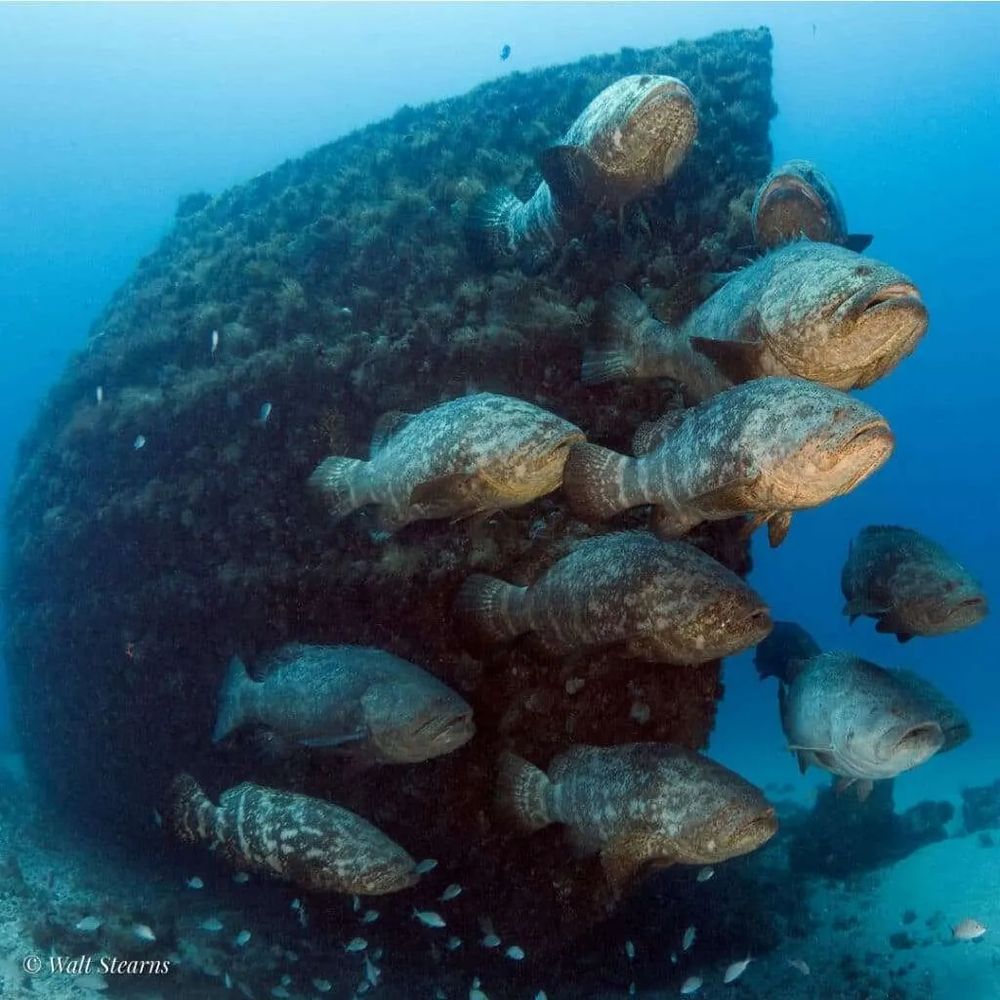
Unfortunately, they nearly went extinct. Goliath groupers are especially vulnerable to overharvest, not only because they are large fish that mature slowly, but they aggregate in groups to spawn. Which makes it easy to catch nearly all members in a population
4/6
4/6
December 5, 2025 at 6:41 PM
Unfortunately, they nearly went extinct. Goliath groupers are especially vulnerable to overharvest, not only because they are large fish that mature slowly, but they aggregate in groups to spawn. Which makes it easy to catch nearly all members in a population
4/6
4/6
They were once called jewfish, likely because they share characteristics with antisemitic caricatures. The American Fisheries Society rightfully changed their name in 2001 to the goliath grouper. A mich more fitting name for such a cool fish
3/6
3/6

December 5, 2025 at 6:41 PM
They were once called jewfish, likely because they share characteristics with antisemitic caricatures. The American Fisheries Society rightfully changed their name in 2001 to the goliath grouper. A mich more fitting name for such a cool fish
3/6
3/6
Goliath groupers are the largest grouper species, growing up to 8 feet long and weighing 800 pounds! They prefer to hang around rocky reefs, wrecks, and oil platforms, waiting for slow or injured prey to come within range. And they have been known to attack fish caught by anglers, even sharks
2/6
2/6

December 5, 2025 at 6:41 PM
Goliath groupers are the largest grouper species, growing up to 8 feet long and weighing 800 pounds! They prefer to hang around rocky reefs, wrecks, and oil platforms, waiting for slow or injured prey to come within range. And they have been known to attack fish caught by anglers, even sharks
2/6
2/6
When we think about fish large enough to attack people, sharks are usually what comes to mind. However, there is one fish in the ocean that even most sharks would choose to leave alone. And that is the goliath grouper, a fitting choice for #FishOfTheWeek
1/6
1/6

December 5, 2025 at 6:41 PM
When we think about fish large enough to attack people, sharks are usually what comes to mind. However, there is one fish in the ocean that even most sharks would choose to leave alone. And that is the goliath grouper, a fitting choice for #FishOfTheWeek
1/6
1/6
This singing moose head hung over the stand selling glühwein and one of my friends loved it. I just kept thinking of Billy Bass...
November 30, 2025 at 8:47 AM
This singing moose head hung over the stand selling glühwein and one of my friends loved it. I just kept thinking of Billy Bass...
The Christmas market opened on Thursday so naturally we had to go last night and enjoy it. A few glasses of glühwein and I mind the crowds a whole lot less


November 30, 2025 at 8:45 AM
The Christmas market opened on Thursday so naturally we had to go last night and enjoy it. A few glasses of glühwein and I mind the crowds a whole lot less
Countershading is a great way to be invisible in open water when there's nothing to hide behind. Predators can lurk below without being seen and prey can blend into the light above and have a chance to escape. And yes, this is why orcas and penguins are black and white. Fish just have more flair
6/6
6/6

November 28, 2025 at 7:05 PM
Countershading is a great way to be invisible in open water when there's nothing to hide behind. Predators can lurk below without being seen and prey can blend into the light above and have a chance to escape. And yes, this is why orcas and penguins are black and white. Fish just have more flair
6/6
6/6
But what about fish that live in the open ocean? There's nothing there for them to camouflage against, right? Wrong. Even there, fish have found a way to be sneaky. Countershading allows fish to blend into darkness when seen from above and be indistinguishable from light when viewed from below
5/6
5/6

November 28, 2025 at 7:05 PM
But what about fish that live in the open ocean? There's nothing there for them to camouflage against, right? Wrong. Even there, fish have found a way to be sneaky. Countershading allows fish to blend into darkness when seen from above and be indistinguishable from light when viewed from below
5/6
5/6
Of course, there are other types of camouflage. Evolving to look like objects in your habitat is a great way to hide in plain sight. And is a useful strategy for both predators and prey. There are fish the look like rocks, algae, coral, and even dead leaves
3/6
3/6

November 28, 2025 at 7:05 PM
Of course, there are other types of camouflage. Evolving to look like objects in your habitat is a great way to hide in plain sight. And is a useful strategy for both predators and prey. There are fish the look like rocks, algae, coral, and even dead leaves
3/6
3/6
First up, we have fish that are literally invisible, clear as glass. This is common with larval fish, well-known in eel leptocephalus life stages, and even seen in adult fish like the glass fish and glass catfish. All have simplified internal structures and largely clear fluids
2/6
2/6

November 28, 2025 at 7:05 PM
First up, we have fish that are literally invisible, clear as glass. This is common with larval fish, well-known in eel leptocephalus life stages, and even seen in adult fish like the glass fish and glass catfish. All have simplified internal structures and largely clear fluids
2/6
2/6
When it comes to remaining unseen, there are many animals with insanely good camouflage. But fish really take camouflage to every extreme. For this #FishOfTheWeek, let's look at fishes power of invisibility
1/6
1/6

November 28, 2025 at 7:05 PM
When it comes to remaining unseen, there are many animals with insanely good camouflage. But fish really take camouflage to every extreme. For this #FishOfTheWeek, let's look at fishes power of invisibility
1/6
1/6
It decided to snow a bit this morning and we rescued a poor hedgehog that got caught out in it instead of safely hibernating. He was taken to a wildlife rehab where they'll help him to gain some weight and be properly prepared for winter


November 21, 2025 at 3:05 PM
It decided to snow a bit this morning and we rescued a poor hedgehog that got caught out in it instead of safely hibernating. He was taken to a wildlife rehab where they'll help him to gain some weight and be properly prepared for winter
Reductions in body size also result in lower reproductive rates since female fecundity in fishes is related to body size. This means a 20lb red snapper in the 1960s could produce more eggs than the average 1lb fish today. Fisheries are essential, but they also have several issues to solve
5/5
5/5

November 21, 2025 at 12:41 PM
Reductions in body size also result in lower reproductive rates since female fecundity in fishes is related to body size. This means a 20lb red snapper in the 1960s could produce more eggs than the average 1lb fish today. Fisheries are essential, but they also have several issues to solve
5/5
5/5
It isn't just changes in body size. It turns out this starts a positive feedback loop that becomes extremely hard to overcome. Once fish start shrinking, they aren't likely to stop. This is complicated and best explained by a resource like the paper below:
pmc.ncbi.nlm.nih.gov/articles/PMC...
4/5
pmc.ncbi.nlm.nih.gov/articles/PMC...
4/5

November 21, 2025 at 12:41 PM
It isn't just changes in body size. It turns out this starts a positive feedback loop that becomes extremely hard to overcome. Once fish start shrinking, they aren't likely to stop. This is complicated and best explained by a resource like the paper below:
pmc.ncbi.nlm.nih.gov/articles/PMC...
4/5
pmc.ncbi.nlm.nih.gov/articles/PMC...
4/5
The collapse of the Baltic cod fishery is partly due to this reduction in size. But these effects can also occur in fish that aren't being directly targeted. Atlantic croaker are commonly caught as bycatch in shrimp trawls. They now reach sexual maturity at smaller and smaller sizes
3/5
3/5

November 21, 2025 at 12:41 PM
The collapse of the Baltic cod fishery is partly due to this reduction in size. But these effects can also occur in fish that aren't being directly targeted. Atlantic croaker are commonly caught as bycatch in shrimp trawls. They now reach sexual maturity at smaller and smaller sizes
3/5
3/5
Baltic cod are probably the biggest example of this phenomenon. In the past, such as this photo taken in 1987, Baltic cod grew to over a meter in length. Intense fishing pressure has led to them becoming smaller and smaller, and today an adult cod can fit on a dinner plate
2/5
2/5

November 21, 2025 at 12:41 PM
Baltic cod are probably the biggest example of this phenomenon. In the past, such as this photo taken in 1987, Baltic cod grew to over a meter in length. Intense fishing pressure has led to them becoming smaller and smaller, and today an adult cod can fit on a dinner plate
2/5
2/5
Today is World Fisheries Day, so for #FishOfTheWeek let's talk about a fisheries issue that is becoming more and more common, reductions in size of fishes due to fishing pressure. This may seem like a small issue but is in fact a major problem for many reasons
1/5
1/5

November 21, 2025 at 12:41 PM
Today is World Fisheries Day, so for #FishOfTheWeek let's talk about a fisheries issue that is becoming more and more common, reductions in size of fishes due to fishing pressure. This may seem like a small issue but is in fact a major problem for many reasons
1/5
1/5
This means that live snakeheads are illegal to possess in most states and anglers are asked to kill them and not release them. And since they are good to eat the fish doesn't need to go to waste. But make sure you can ID them from bowfin and burbot, both natives that commonly get misidentified
7/7
7/7

November 14, 2025 at 5:05 PM
This means that live snakeheads are illegal to possess in most states and anglers are asked to kill them and not release them. And since they are good to eat the fish doesn't need to go to waste. But make sure you can ID them from bowfin and burbot, both natives that commonly get misidentified
7/7
7/7
They are established in the Potomac River, with over 21,000 individuals in just 120 miles of river. They are also in New Jersey and the size of the Delaware River system makes eradication highly unlikely. And they've been reported in at least 11 other states
6/7
6/7

November 14, 2025 at 5:05 PM
They are established in the Potomac River, with over 21,000 individuals in just 120 miles of river. They are also in New Jersey and the size of the Delaware River system makes eradication highly unlikely. And they've been reported in at least 11 other states
6/7
6/7
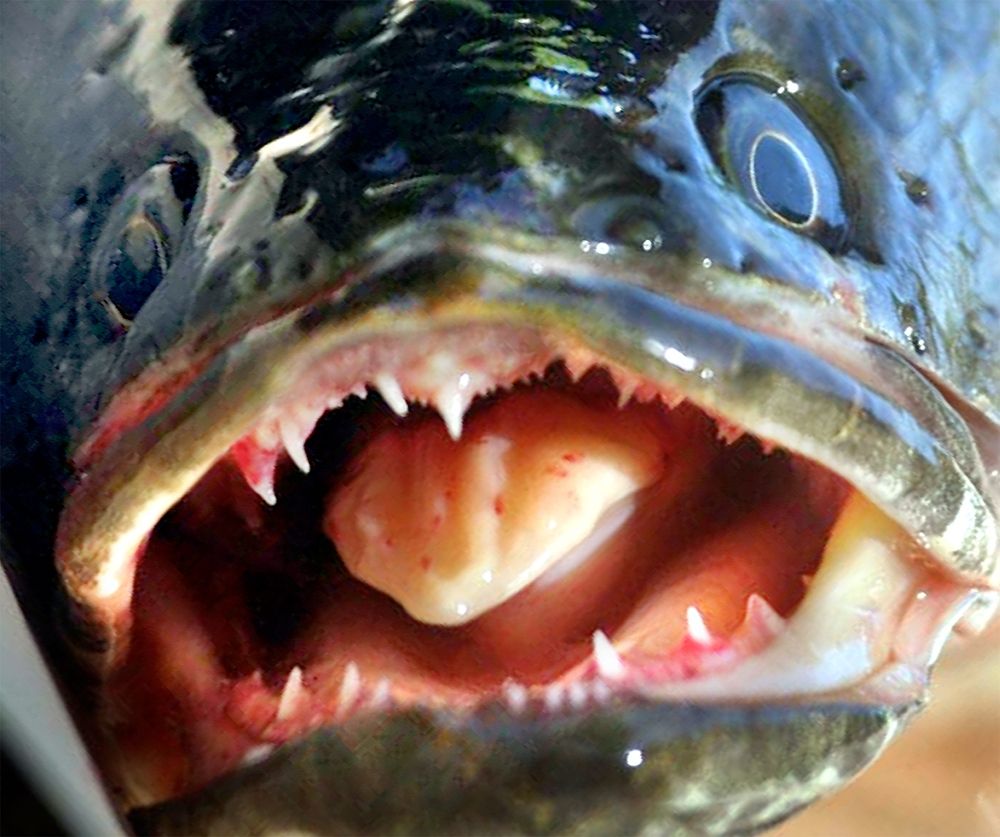
Unfortunately, they are highly invasive in North America. This is due to a generalized diet, lack of predators, parental care, and toughness. They can move over land and survive out of water up to 4 days. Frankenfish indeed. They were likely introduced as food fish, but are now spreading
5/7
5/7
November 14, 2025 at 5:05 PM
Unfortunately, they are highly invasive in North America. This is due to a generalized diet, lack of predators, parental care, and toughness. They can move over land and survive out of water up to 4 days. Frankenfish indeed. They were likely introduced as food fish, but are now spreading
5/7
5/7
One thing that helps snakeheads be successful is that they are devoted parents. Both will guard the eggs and young ferociously until they are ready to live on their own. Even when one adult is captured the others will often stay nearby. They're definitely in the running for best fish parents
4/7
4/7

November 14, 2025 at 5:05 PM
One thing that helps snakeheads be successful is that they are devoted parents. Both will guard the eggs and young ferociously until they are ready to live on their own. Even when one adult is captured the others will often stay nearby. They're definitely in the running for best fish parents
4/7
4/7
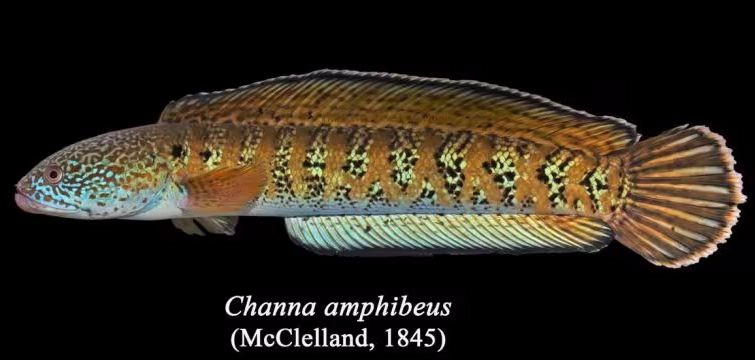
Snakeheads originated on the Indian Subcontinent, what is today Pakistan and northern India. When the Intertropical Convergence Zone developed due to the formation of the Alps, Pyrenees, and Hamalyas, it increased humidity and the monsoon weather pattern, allowing them to spread into Eurasia
3/7
3/7
November 14, 2025 at 5:05 PM
Snakeheads originated on the Indian Subcontinent, what is today Pakistan and northern India. When the Intertropical Convergence Zone developed due to the formation of the Alps, Pyrenees, and Hamalyas, it increased humidity and the monsoon weather pattern, allowing them to spread into Eurasia
3/7
3/7
There are about 50 species of snakehead, native to Asia and Africa. They range in size from less than 10 inches to over 3 feet long, depending on species. And they are impressive predators in their native waters, filling a somewhat similar role to pike in North America
2/7
2/7

November 14, 2025 at 5:05 PM
There are about 50 species of snakehead, native to Asia and Africa. They range in size from less than 10 inches to over 3 feet long, depending on species. And they are impressive predators in their native waters, filling a somewhat similar role to pike in North America
2/7
2/7