



Doug Balogh
@astro-doug.bsky.social
Retired from pharmaceutical industry. Started astrophotography about 5 years ago, and became hooked. I also put on a monthly astronomy program at our county park.
Avid runner and traveler. Two grandkids.
Avid runner and traveler. Two grandkids.
Our interstellar visitor, comet 3I/Atlas has been getting lots of press. After several unsuccessful attempts, the skies cooperated at 4:00 AM today and I got a pic of it. Will be closest to Earth on Dec 19th, and visible with a small scope in dark skies.
Click ALT for more info
#astronomy
Click ALT for more info
#astronomy

December 17, 2025 at 12:13 AM
Our interstellar visitor, comet 3I/Atlas has been getting lots of press. After several unsuccessful attempts, the skies cooperated at 4:00 AM today and I got a pic of it. Will be closest to Earth on Dec 19th, and visible with a small scope in dark skies.
Click ALT for more info
#astronomy
Click ALT for more info
#astronomy
Merry Christmas from the Cosmos! 🎄
NGC 2264 normally appears totally red in color. However, I decided to have a little fun and “decorate the tree” for the holidays.
Despite how this appears, I didn’t add anything to the image, rather I subtracted.
Click ALT on the pic for more info
#astronomy
NGC 2264 normally appears totally red in color. However, I decided to have a little fun and “decorate the tree” for the holidays.
Despite how this appears, I didn’t add anything to the image, rather I subtracted.
Click ALT on the pic for more info
#astronomy

December 13, 2025 at 7:07 PM
Merry Christmas from the Cosmos! 🎄
NGC 2264 normally appears totally red in color. However, I decided to have a little fun and “decorate the tree” for the holidays.
Despite how this appears, I didn’t add anything to the image, rather I subtracted.
Click ALT on the pic for more info
#astronomy
NGC 2264 normally appears totally red in color. However, I decided to have a little fun and “decorate the tree” for the holidays.
Despite how this appears, I didn’t add anything to the image, rather I subtracted.
Click ALT on the pic for more info
#astronomy
Meet Algol - the Demon Star. Every 2.87 days it dims from mag 2 (about as bright as Polaris), to nearly gone to the unaided eye.
This is a binary star system where a large dim star periodically eclipses its brighter but smaller companion star.
Click ALT in the 1st pic for much more
#astronomy
This is a binary star system where a large dim star periodically eclipses its brighter but smaller companion star.
Click ALT in the 1st pic for much more
#astronomy


December 2, 2025 at 3:24 PM
Meet Algol - the Demon Star. Every 2.87 days it dims from mag 2 (about as bright as Polaris), to nearly gone to the unaided eye.
This is a binary star system where a large dim star periodically eclipses its brighter but smaller companion star.
Click ALT in the 1st pic for much more
#astronomy
This is a binary star system where a large dim star periodically eclipses its brighter but smaller companion star.
Click ALT in the 1st pic for much more
#astronomy
Saturn’s rings are GONE! (They aren’t really, we just can’t see them.)
How is this possible? Pics taken 2 yr ago, 2 mo ago, and last night. The rings are only 30 feet thick. Viewed edge-on it’s not surprising we can’t see them at 825 M mi.
Click ALT on the 1st pic for more info.
#astronomy
How is this possible? Pics taken 2 yr ago, 2 mo ago, and last night. The rings are only 30 feet thick. Viewed edge-on it’s not surprising we can’t see them at 825 M mi.
Click ALT on the 1st pic for more info.
#astronomy


November 6, 2025 at 3:56 PM
Saturn’s rings are GONE! (They aren’t really, we just can’t see them.)
How is this possible? Pics taken 2 yr ago, 2 mo ago, and last night. The rings are only 30 feet thick. Viewed edge-on it’s not surprising we can’t see them at 825 M mi.
Click ALT on the 1st pic for more info.
#astronomy
How is this possible? Pics taken 2 yr ago, 2 mo ago, and last night. The rings are only 30 feet thick. Viewed edge-on it’s not surprising we can’t see them at 825 M mi.
Click ALT on the 1st pic for more info.
#astronomy
Pluto, our famous dwarf planet has eluded my camera for years. Not any more! I captured it 2 nights ago, confirming location using 2 independent references.
Pluto is 6x smaller than our moon, averaging 3.9 billion miles away, so understandably hard to find.
Click ALT for more info
#astronomy
Pluto is 6x smaller than our moon, averaging 3.9 billion miles away, so understandably hard to find.
Click ALT for more info
#astronomy

October 22, 2025 at 3:02 PM
Pluto, our famous dwarf planet has eluded my camera for years. Not any more! I captured it 2 nights ago, confirming location using 2 independent references.
Pluto is 6x smaller than our moon, averaging 3.9 billion miles away, so understandably hard to find.
Click ALT for more info
#astronomy
Pluto is 6x smaller than our moon, averaging 3.9 billion miles away, so understandably hard to find.
Click ALT for more info
#astronomy
Supernova’s are rare. Last in our Milky Way was over 200 years ago. So to see them, we need to look outside our galaxy to other galaxies. Turns out, one ignited in July, in Galaxy NGC7731. It is fading, but still visible. My image from about a week ago.
Click ALT in pic for more info
#astronomy
Click ALT in pic for more info
#astronomy

October 12, 2025 at 5:54 PM
Supernova’s are rare. Last in our Milky Way was over 200 years ago. So to see them, we need to look outside our galaxy to other galaxies. Turns out, one ignited in July, in Galaxy NGC7731. It is fading, but still visible. My image from about a week ago.
Click ALT in pic for more info
#astronomy
Click ALT in pic for more info
#astronomy
This is the North America Nebula - so named because of it’s shape. It is a massive gas / dust cloud located near Cygnus. To the lower right lies the Pelican Nebula. This is a massive object about 4 moons x 3 moons. The red color is due to ionized hydrogen gas.
Click ALT for more info
#astronomy
Click ALT for more info
#astronomy

September 27, 2025 at 11:45 PM
This is the North America Nebula - so named because of it’s shape. It is a massive gas / dust cloud located near Cygnus. To the lower right lies the Pelican Nebula. This is a massive object about 4 moons x 3 moons. The red color is due to ionized hydrogen gas.
Click ALT for more info
#astronomy
Click ALT for more info
#astronomy
This is the Andromeda galaxy. It is the nearest complete galaxy to us at about 2.5 M LY away, containing over a trillion stars. So bright, it can be seen with the unaided eye in clear skies. My pic is the first. The 2nd was in Astronomy Magazine this month.
Click ALT for more info
#astronomy
Click ALT for more info
#astronomy


September 24, 2025 at 1:51 PM
This is the Andromeda galaxy. It is the nearest complete galaxy to us at about 2.5 M LY away, containing over a trillion stars. So bright, it can be seen with the unaided eye in clear skies. My pic is the first. The 2nd was in Astronomy Magazine this month.
Click ALT for more info
#astronomy
Click ALT for more info
#astronomy
How often have you looked up in the sky and seen a star and thought..... "OK. That's just another star", and you move your attention to something else? Well, to be honest, I used to do so too. Not necessarily anymore.
Click ALT on pics for the star’s names and more info
#astronomy
Click ALT on pics for the star’s names and more info
#astronomy


September 19, 2025 at 10:37 PM
How often have you looked up in the sky and seen a star and thought..... "OK. That's just another star", and you move your attention to something else? Well, to be honest, I used to do so too. Not necessarily anymore.
Click ALT on pics for the star’s names and more info
#astronomy
Click ALT on pics for the star’s names and more info
#astronomy
This is my re-do of the Tulip Nebula, SH 2-101. It’s an attractive nebula, but what makes it even more interesting is that the black hole Cygnus X-1 is nearby. It is in a binary system where Cygnus X-1 and an observable star orbit each other. So cool!
Click ALT for more info
#astronomy
Click ALT for more info
#astronomy

September 2, 2025 at 5:31 PM
This is my re-do of the Tulip Nebula, SH 2-101. It’s an attractive nebula, but what makes it even more interesting is that the black hole Cygnus X-1 is nearby. It is in a binary system where Cygnus X-1 and an observable star orbit each other. So cool!
Click ALT for more info
#astronomy
Click ALT for more info
#astronomy
This, the Eastern Veil Nebula, is the other half of the supernova remnant that I posted yesterday. The debris expanding over the past 15K years or so, giving the current very large structure. Both are particularly beautiful due to the amount of oxygen (blue).
Click ALT for more info
#astronomy
Click ALT for more info
#astronomy

September 1, 2025 at 4:43 PM
This, the Eastern Veil Nebula, is the other half of the supernova remnant that I posted yesterday. The debris expanding over the past 15K years or so, giving the current very large structure. Both are particularly beautiful due to the amount of oxygen (blue).
Click ALT for more info
#astronomy
Click ALT for more info
#astronomy
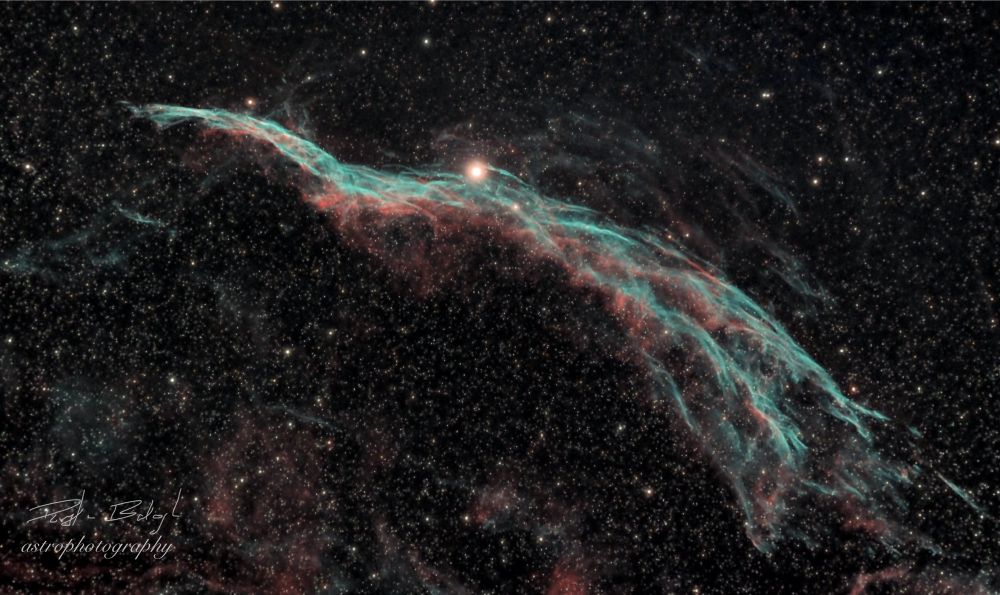
The Witches Broom Nebula is the remnant from a supernova from 10-20K years ago. Nearby stars energize the dust/gas cloud that formed from the explosion and make it glow. It’s a big object - as long as 6 moons side by side. Telescope needed to view.
Click ALT for more info
#astronomy
Click ALT for more info
#astronomy
August 31, 2025 at 8:15 PM
The Witches Broom Nebula is the remnant from a supernova from 10-20K years ago. Nearby stars energize the dust/gas cloud that formed from the explosion and make it glow. It’s a big object - as long as 6 moons side by side. Telescope needed to view.
Click ALT for more info
#astronomy
Click ALT for more info
#astronomy
I was collecting the tulip nebula last night. The nebula is faint and will require lots more data. But my research led to find that the indicated star is a binary star with a as its partner.
Not that much to look at, but fun to know about.
#astronomy
Click ALT for more info.
Not that much to look at, but fun to know about.
#astronomy
Click ALT for more info.

August 19, 2025 at 8:57 PM
I was collecting the tulip nebula last night. The nebula is faint and will require lots more data. But my research led to find that the indicated star is a binary star with a as its partner.
Not that much to look at, but fun to know about.
#astronomy
Click ALT for more info.
Not that much to look at, but fun to know about.
#astronomy
Click ALT for more info.
Scope is a Celestron C11. ZWO 533Mc camera; IR/UV cutoff filter; ZWO AM5N mount. Not guided because I took videos. ASI AirPlus controller. Abt 2000 frames each. Stacked 40%.

What scope camera combo are you using for these?
August 3, 2025 at 5:27 PM
Scope is a Celestron C11. ZWO 533Mc camera; IR/UV cutoff filter; ZWO AM5N mount. Not guided because I took videos. ASI AirPlus controller. Abt 2000 frames each. Stacked 40%.
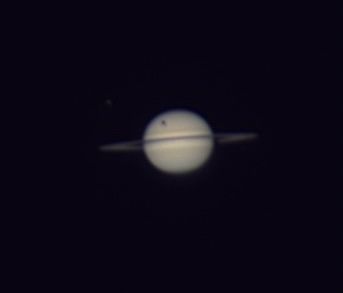
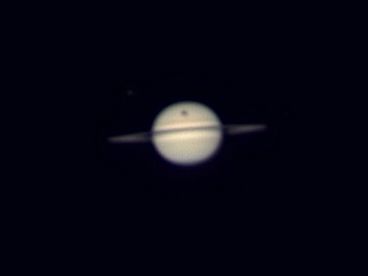
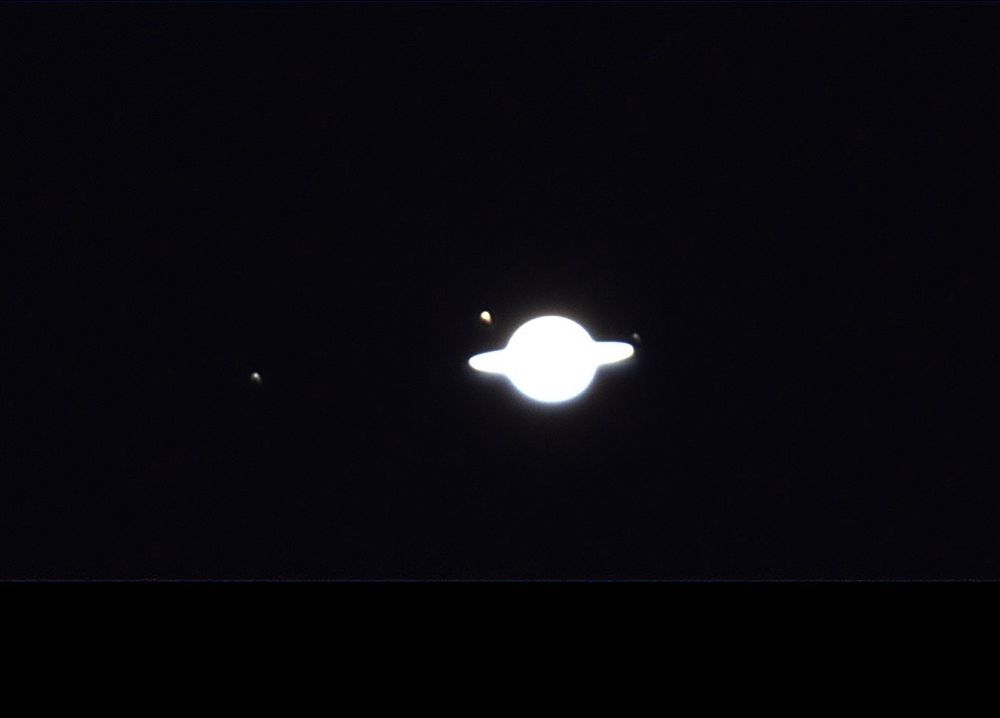
Saturn’s moon Titan casts its shadow on Saturn where we Earthlings can see it once every 15 (or so) years. Even then, you have to be in the right location. North America was the right location for 2025. I took these last night.
Click ALT on the first pic for more info
#astronomy
Click ALT on the first pic for more info
#astronomy
August 3, 2025 at 3:23 PM
Saturn’s moon Titan casts its shadow on Saturn where we Earthlings can see it once every 15 (or so) years. Even then, you have to be in the right location. North America was the right location for 2025. I took these last night.
Click ALT on the first pic for more info
#astronomy
Click ALT on the first pic for more info
#astronomy
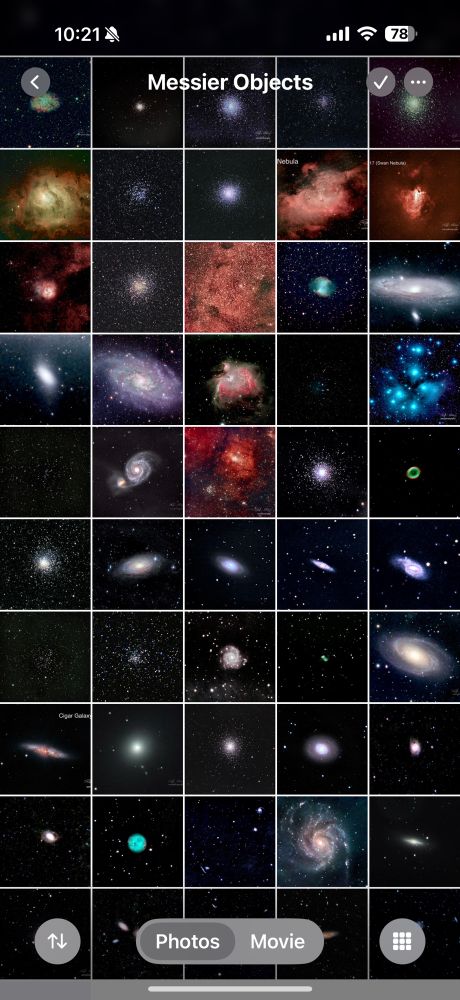
The Messier catalog is a popular list of astronomy targets for backyard astronomers, and I’m working my way through it. I have about 50 so far out of 110. I will be periodically updating this post as I add more images.
For more on Charles Messier, click on ALT
#astronomy
For more on Charles Messier, click on ALT
#astronomy
July 31, 2025 at 3:57 PM
The Messier catalog is a popular list of astronomy targets for backyard astronomers, and I’m working my way through it. I have about 50 so far out of 110. I will be periodically updating this post as I add more images.
For more on Charles Messier, click on ALT
#astronomy
For more on Charles Messier, click on ALT
#astronomy
Yesterday was an active day for solar flares. It takes a special Hydrogen alpha telescope to see solar flares. One of my better. The sun goes through an 11-year activity cycle in which the poles flip. Mid cycle is the most active time.
Click ALT for much more info
#astronomy
Click ALT for much more info
#astronomy


July 30, 2025 at 2:52 PM
Yesterday was an active day for solar flares. It takes a special Hydrogen alpha telescope to see solar flares. One of my better. The sun goes through an 11-year activity cycle in which the poles flip. Mid cycle is the most active time.
Click ALT for much more info
#astronomy
Click ALT for much more info
#astronomy
NGC543 aka Cat's Eye nebula is the most complex known to exist. Center is a dying Wolf-Rayet star responsible for creation. It has a very faint outer ring. The small core/larger faint ring make this a challenging target. I ended up using 2 different scopes.
Click ALT for much more info
#astronomy
Click ALT for much more info
#astronomy


July 26, 2025 at 11:32 PM
NGC543 aka Cat's Eye nebula is the most complex known to exist. Center is a dying Wolf-Rayet star responsible for creation. It has a very faint outer ring. The small core/larger faint ring make this a challenging target. I ended up using 2 different scopes.
Click ALT for much more info
#astronomy
Click ALT for much more info
#astronomy
NGC7129 is a delightful star cluster & nebula region in Cepheus. Quite the busy place! 1st, it’s a star-forming region with over a 100 stars less than a mil years old. Then, it also has reflection, emission, and dark nebulosity.
Taken over last 2 nights
Click ALT for much more info
#astronomy
Taken over last 2 nights
Click ALT for much more info
#astronomy

July 23, 2025 at 8:46 PM
NGC7129 is a delightful star cluster & nebula region in Cepheus. Quite the busy place! 1st, it’s a star-forming region with over a 100 stars less than a mil years old. Then, it also has reflection, emission, and dark nebulosity.
Taken over last 2 nights
Click ALT for much more info
#astronomy
Taken over last 2 nights
Click ALT for much more info
#astronomy
Took this last night of M101, the Pinwheel Galaxy. M101 is located abt 22MLY away. It’s located near the constellation Ursa Major. Visually, it is the size of the moon, but you will need a telescope to see it.
Click on ALT for more info.
#astronomy
Click on ALT for more info.
#astronomy

July 2, 2025 at 4:38 PM
Took this last night of M101, the Pinwheel Galaxy. M101 is located abt 22MLY away. It’s located near the constellation Ursa Major. Visually, it is the size of the moon, but you will need a telescope to see it.
Click on ALT for more info.
#astronomy
Click on ALT for more info.
#astronomy
Taken last night, M5, is a globular star cluster in the Milky Way, 25,000 LY away in Serpens. It is one of the oldest star clusters with many of its 100,000 stars approaching 12 B years old.
Star clusters are held together by the star’s mutual gravity.
Click Alt for more
# astronomy
Star clusters are held together by the star’s mutual gravity.
Click Alt for more
# astronomy

June 2, 2025 at 11:32 PM
Taken last night, M5, is a globular star cluster in the Milky Way, 25,000 LY away in Serpens. It is one of the oldest star clusters with many of its 100,000 stars approaching 12 B years old.
Star clusters are held together by the star’s mutual gravity.
Click Alt for more
# astronomy
Star clusters are held together by the star’s mutual gravity.
Click Alt for more
# astronomy
The Whirlpool Galaxy
Finally a clear night! This is the Whirlpool Galaxy (M51). M51 is the process of merging with the smaller galaxy (NGC5195). Note how the arms of M51 are distorted by the gravitational forces of NGC5195.
Enjoy,
Doug
Click Alt for more info.
#astronomy
Finally a clear night! This is the Whirlpool Galaxy (M51). M51 is the process of merging with the smaller galaxy (NGC5195). Note how the arms of M51 are distorted by the gravitational forces of NGC5195.
Enjoy,
Doug
Click Alt for more info.
#astronomy

May 25, 2025 at 2:42 PM
The Whirlpool Galaxy
Finally a clear night! This is the Whirlpool Galaxy (M51). M51 is the process of merging with the smaller galaxy (NGC5195). Note how the arms of M51 are distorted by the gravitational forces of NGC5195.
Enjoy,
Doug
Click Alt for more info.
#astronomy
Finally a clear night! This is the Whirlpool Galaxy (M51). M51 is the process of merging with the smaller galaxy (NGC5195). Note how the arms of M51 are distorted by the gravitational forces of NGC5195.
Enjoy,
Doug
Click Alt for more info.
#astronomy
Spring is galaxy season for astronomers. Our orbit around the sun takes us out of the plane of the Milky Way and gives us a clear view beyond. This is our neighbor, Bode’s galaxy M81, named after Johann Bode, first to discover it in 1774.
Click + Alt for more info
#astronomy
Click + Alt for more info
#astronomy

April 23, 2025 at 11:11 PM
Spring is galaxy season for astronomers. Our orbit around the sun takes us out of the plane of the Milky Way and gives us a clear view beyond. This is our neighbor, Bode’s galaxy M81, named after Johann Bode, first to discover it in 1774.
Click + Alt for more info
#astronomy
Click + Alt for more info
#astronomy
I imaged APM 08279+5255 last night. Light from this quasar traveled 12.1 B LY to get here, making it the furthest object a backyard astronomer can see.
At 33 B solar masses, this quasar is huge, and the light is some 10^14 x that of the sun.
#astronomy
At 33 B solar masses, this quasar is huge, and the light is some 10^14 x that of the sun.
#astronomy

March 26, 2025 at 10:47 PM
I imaged APM 08279+5255 last night. Light from this quasar traveled 12.1 B LY to get here, making it the furthest object a backyard astronomer can see.
At 33 B solar masses, this quasar is huge, and the light is some 10^14 x that of the sun.
#astronomy
At 33 B solar masses, this quasar is huge, and the light is some 10^14 x that of the sun.
#astronomy
@bot.astronomy.blue signup
Took this of M87 2 nights ago in central IN. Just right of center what you are seeing is a 4000 LY long plasma jet shooting out from the supermassive black hole, 55 mil LY away.
10” Newtonian
ZWO 533MC
ZWO AM5
ASI Air Plus
IDAS D3
120 sec x 100 stacked DSS
StarTools
Took this of M87 2 nights ago in central IN. Just right of center what you are seeing is a 4000 LY long plasma jet shooting out from the supermassive black hole, 55 mil LY away.
10” Newtonian
ZWO 533MC
ZWO AM5
ASI Air Plus
IDAS D3
120 sec x 100 stacked DSS
StarTools

March 23, 2025 at 4:47 PM
@bot.astronomy.blue signup
Took this of M87 2 nights ago in central IN. Just right of center what you are seeing is a 4000 LY long plasma jet shooting out from the supermassive black hole, 55 mil LY away.
10” Newtonian
ZWO 533MC
ZWO AM5
ASI Air Plus
IDAS D3
120 sec x 100 stacked DSS
StarTools
Took this of M87 2 nights ago in central IN. Just right of center what you are seeing is a 4000 LY long plasma jet shooting out from the supermassive black hole, 55 mil LY away.
10” Newtonian
ZWO 533MC
ZWO AM5
ASI Air Plus
IDAS D3
120 sec x 100 stacked DSS
StarTools