


bashstkid.mastodon.online.ap.brid.gy
@bashstkid.mastodon.online.ap.brid.gy
Reposted by bashstkid.mastodon.online.ap.brid.gy

:nkoWave: Hello and a good meowing on this #Caturday everyone! :blobcathearts: :blobcatsnuggle: Have a most wonderful day and stay safe ♥️😸

January 24, 2026 at 11:43 AM
:nkoWave: Hello and a good meowing on this #Caturday everyone! :blobcathearts: :blobcatsnuggle: Have a most wonderful day and stay safe ♥️😸
Reposted by bashstkid.mastodon.online.ap.brid.gy
"As the nationwide uprising against the clerical regime in Iran marks its 27th day on January 23, 2026, the mullahs’ regime finds itself confronting what its own security apparatus now describes as an “existential threat.” Despite a near-total information blackout, reports leaking from the […]
Original post on mastodonapp.uk
mastodonapp.uk
January 24, 2026 at 10:13 AM
"As the nationwide uprising against the clerical regime in Iran marks its 27th day on January 23, 2026, the mullahs’ regime finds itself confronting what its own security apparatus now describes as an “existential threat.” Despite a near-total information blackout, reports leaking from the […]
Reposted by bashstkid.mastodon.online.ap.brid.gy
Plastic keys to Paradise.
I read the graphic novel "Persepolis" by Marjane Satrapi for our Banned Book Club.
Among all the sadness in her story growing up in post-revolutionary Iran, were the young men who were rushed to the front in the war with Iraq bearing plastic keys their leaders assured […]
I read the graphic novel "Persepolis" by Marjane Satrapi for our Banned Book Club.
Among all the sadness in her story growing up in post-revolutionary Iran, were the young men who were rushed to the front in the war with Iraq bearing plastic keys their leaders assured […]
Original post on mastodon.sdf.org
mastodon.sdf.org
January 23, 2026 at 9:10 PM
Plastic keys to Paradise.
I read the graphic novel "Persepolis" by Marjane Satrapi for our Banned Book Club.
Among all the sadness in her story growing up in post-revolutionary Iran, were the young men who were rushed to the front in the war with Iraq bearing plastic keys their leaders assured […]
I read the graphic novel "Persepolis" by Marjane Satrapi for our Banned Book Club.
Among all the sadness in her story growing up in post-revolutionary Iran, were the young men who were rushed to the front in the war with Iraq bearing plastic keys their leaders assured […]
Reposted by bashstkid.mastodon.online.ap.brid.gy
Fixed. By Happy Toast.

January 23, 2026 at 11:41 PM
Fixed. By Happy Toast.
Reposted by bashstkid.mastodon.online.ap.brid.gy

A new documentary at Sundance Film Festival shows a community coming together to stop immigration officials snatching their neighbors. But it wasn't shot in Minneapolis or Chicago. "Everybody To Kenmure Street" tells the story of a "dawn raid" in Pollokshields, Glasgow, in May 2021, where Home […]
Original post on flipboard.social
flipboard.social
January 23, 2026 at 9:20 PM
A new documentary at Sundance Film Festival shows a community coming together to stop immigration officials snatching their neighbors. But it wasn't shot in Minneapolis or Chicago. "Everybody To Kenmure Street" tells the story of a "dawn raid" in Pollokshields, Glasgow, in May 2021, where Home […]
Reposted by bashstkid.mastodon.online.ap.brid.gy
ICE agent to a woman filming him: "We have a nice little database, and now you're considered a domestic terrorist." [Link is to Threads]
Of course if they really thought she was a domestic terrorist they wouldn't let mer walk away. But it's not mere bluster, because those labels can be used for […]
Of course if they really thought she was a domestic terrorist they wouldn't let mer walk away. But it's not mere bluster, because those labels can be used for […]
Original post on mastodon.scot
mastodon.scot
January 23, 2026 at 7:45 PM
ICE agent to a woman filming him: "We have a nice little database, and now you're considered a domestic terrorist." [Link is to Threads]
Of course if they really thought she was a domestic terrorist they wouldn't let mer walk away. But it's not mere bluster, because those labels can be used for […]
Of course if they really thought she was a domestic terrorist they wouldn't let mer walk away. But it's not mere bluster, because those labels can be used for […]
Reposted by bashstkid.mastodon.online.ap.brid.gy

How shifting tectonic plates drove Earth's climate swings. Via @sciencex.physorg #seismology #EarthScience #RocksForJocks #Geology #ClimateScience

How shifting tectonic plates drove Earth's climate swings
Carbon released from Earth's spreading tectonic plates, not volcanoes, may have triggered major transitions between ancient ice ages and warm climates, new research finds.
phys.org
January 23, 2026 at 5:45 PM
How shifting tectonic plates drove Earth's climate swings. Via @sciencex.physorg #seismology #EarthScience #RocksForJocks #Geology #ClimateScience
Reposted by bashstkid.mastodon.online.ap.brid.gy

Finally! A new #bookmaking project! We discovered traveller’s notebooks this year. Love the concept but wanted to have one that was #vegan AND not made of plastic. I also wanted to make my own inserts. These are prototypes to see if the concept could work. I am so […]
[Original post on mas.to]
[Original post on mas.to]


January 23, 2026 at 5:41 PM
Finally! A new #bookmaking project! We discovered traveller’s notebooks this year. Love the concept but wanted to have one that was #vegan AND not made of plastic. I also wanted to make my own inserts. These are prototypes to see if the concept could work. I am so […]
[Original post on mas.to]
[Original post on mas.to]
Reposted by bashstkid.mastodon.online.ap.brid.gy
Mranwhile in #Syria "...great fear not only for Rojava as an idea, but for the thousands of Kurds in the territory. With potentially hundreds of Isis militants released into the area..."
https://novaramedia.com/2026/01/22/rojava-is-fighting-for-its-life/
https://novaramedia.com/2026/01/22/rojava-is-fighting-for-its-life/

novaramedia.com
January 23, 2026 at 4:12 PM
Mranwhile in #Syria "...great fear not only for Rojava as an idea, but for the thousands of Kurds in the territory. With potentially hundreds of Isis militants released into the area..."
https://novaramedia.com/2026/01/22/rojava-is-fighting-for-its-life/
https://novaramedia.com/2026/01/22/rojava-is-fighting-for-its-life/
Reposted by bashstkid.mastodon.online.ap.brid.gy
Fun fact. Donald Trump is Chairman of the Board of Peace for life.
That means he will still be running it when he is no longer President, which also means he will be running it from prison.
#winningbigly
That means he will still be running it when he is no longer President, which also means he will be running it from prison.
#winningbigly
January 23, 2026 at 4:52 PM
Fun fact. Donald Trump is Chairman of the Board of Peace for life.
That means he will still be running it when he is no longer President, which also means he will be running it from prison.
#winningbigly
That means he will still be running it when he is no longer President, which also means he will be running it from prison.
#winningbigly
Reposted by bashstkid.mastodon.online.ap.brid.gy
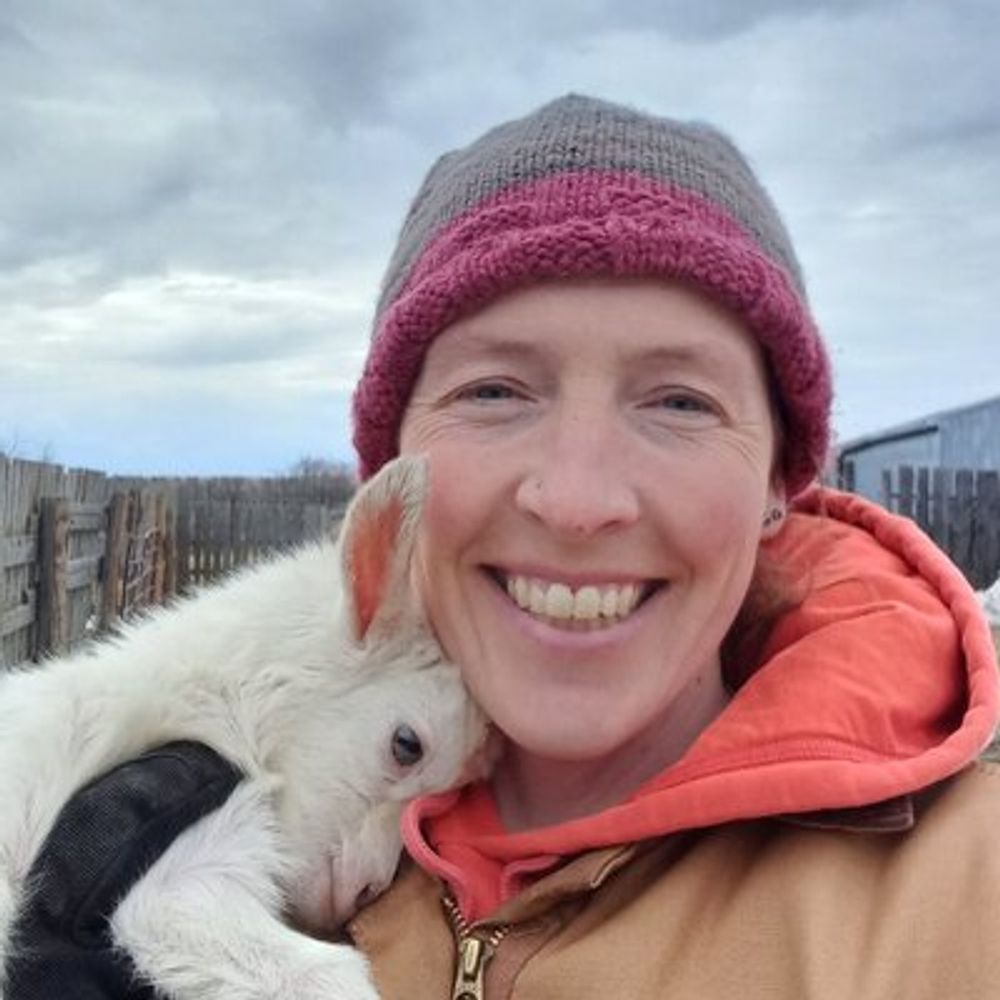
Oh look I'm complaining about satellite collision risks in IEEE Spectrum too: https://spectrum.ieee.org/kessler-syndrome-crash-clock
(Holy crap, no wonder I'm tired.)
(Holy crap, no wonder I'm tired.)

CRASH Clock Measures Dangerous Overcrowding in Low Earth Orbit
Thousands of satellites are tightly packed into low Earth orbit, and the overcrowding is only growing.
Scientists have created a simple warning system called the CRASH Clock that answers a basic question: if satellites suddenly couldn’t steer around each other, how much time would elapse before there was a crash in orbit? Their current answer: 5.5 days.
The CRASH Clock metric was introduced in a paper orginally published on the Arxiv physics preprint server in December, and is currently under consideration for publication. The team’s research measures how quickly a catastrophic collision could occur if satellite operators lost the ability to maneuver—whether due to a solar storm, a software failure, or some other catastrophic failure.
To be clear, say the CRASH Clock scientists, low Earth orbit is not about to become a new realm of collisions that’s about to become unusable. But what they have shown, consistent with recent research and public outcry, is that low Earth orbit’s current stability demands perfect decisions on the part of a range of satellite operators around the globe every day. A few mistakes at the wrong time and place in orbit could set a lot of chaos in motion.
But the biggest hidden threat isn’t always debris that can be seen from the ground or via radar imaging systems. Rather, thousands of pieces of junk too small to track but big enough to disrupt a satellite’s operations are the stuff of satellite operators’ nightmares these days. Making matters worse is SpaceX essentially locking up one the most valuable altitudes with their Starlink satellite megaconstellation, forcing Chinese competitors to fly higher through clouds of old collision debris left over from earlier accidents.
_IEEE Spectrum_ spoke with astrophysicists Sarah Thiele (graduate student at Princeton University), Aaron Boley (professor of physics and astronomy at the University of British Columbia in Vancouver, Canada), and Samantha Lawler (associate professor of astronomy at the University of Regina in Saskatchewan, Canada) about their new paper, and about how close satellites actually are to each other, why you can’t see most space junk, and what happens to the power grid when everything in orbit fails at once.
**Does the CRASH Clock measure Kessler syndrome, or something different?**
**Sarah Thiele:** A lot of people are claiming we’re saying Kessler syndrome is days away, and that’s not what our work is saying. We’re not making any claim about this being a runaway collisional cascade. We only look at the time scale to the first collision—we don’t simulate secondary or tertiary collisions. The CRASH Clock reflects how reliant we are on errorless operations and is an indicator for stress on the orbital environment.
**Aaron Boley:** A lot of people’s mental vision of Kessler syndrome is this very rapid runaway, and in reality this is something that can take decades to truly build.
**Thiele:** Recent papers found that altitudes between 520 to 1,000 kilometers have already reached this potential runaway threshold. Even in that case, the time scales for how slowly this happens is very long. It’s more about whether you have a significant number of objects at a given altitude such that controlling the proliferation of debris becomes difficult.
## Understanding the CRASH Clock’s Implications
**What does the CRASH Clock approaching zero actually mean?**
**Thiele:** The CRASH Clock assumes no maneuvers can happen—a worst-case scenario where some catastrophic event like a solar storm has occurred. A zero value would mean if you lose maneuvering capabilities, you’re likely to have a collision right away. It’s possible to reach saturation where any maneuver triggers another maneuver, and you have this endless swarm of maneuvers where dodging doesn’t mean anything anymore.
**Boley:** I think about the CRASH Clock as an evaluation of stress on orbit. As you approach zero, there’s very little tolerance for error. If you have an accidental explosion—whether a battery exploded or debris slammed into a satellite—the risk of knock-on effects is amplified. It doesn’t mean a runaway, but you can have consequences that are still operationally bad. It means much higher costs—both economic and environmental—because companies have to replace satellites more often. Greater launches, more satellites going up and coming down. The orbital congestion, the atmospheric pollution, all of that gets amplified.
**Are working satellites becoming a bigger danger to each other than debris?**
**Boley:** The biggest risk on orbit is the lethal non-trackable debris—this middle region where you can’t track it, it won’t cause an explosion, but it can disable the spacecraft if hit. This population is very large compared with what we actually track. We often talk about Kessler syndrome in terms of number density, but really what’s also important is the collisional area on orbit. As you increase the area through the number of active satellites, you increase the probability of interacting with smaller debris.
**Samantha Lawler:** Starlink just released a conjunction report—they’re doing one collision avoidance maneuver every two minutes on average in their megaconstellation.
**The orbit at 550 kilometers altitude, in particular, is densely packed with Starlink satellites. Is that right?**
**Lawler:** The way Starlink has occupied 550 km and filled it to very high density means anybody who wants to use a higher altitude orbit has to get through that really dense shell. China’s megaconstellations are all at higher altitudes, so they have to go through Starlink. A couple weeks ago there was a headline about a Starlink satellite almost hitting a Chinese rocket. These problems are happening now. Starlink recently announced they’re moving down to 350 km, shifting satellites to even lower orbits. Really everybody has to go through them—including ISS, including astronauts.
**Thiele:** 550 km has the highest density of active payloads. There are other orbits of concern around 800 kilometers—the altitude of the [2007] Chinese anti-satellite missile test and the [2009] Cosmos-Iridium collision. Above 600 km, atmospheric drag takes a very long time to bring objects down. Below 600 km, drag acts as a natural cleaning mechanism. In that 800 to 900 km band there’s a lot of debris that’s going to be there for centuries.
## Impact of Collisions at 550 Kilometers
**What happens if there’s a collision at 550 km? Would that orbit become unusable?**
**Thiele:** No, it would not become unusable—not a Gravity movie scenario. Any catastrophic collision is an acute injection of debris. You would still be able to use that altitude, but your operating conditions change. You’re going to do a lot more collision avoidance maneuvers. Because it’s below 600 km, that debris will come down within a handful of years. But in the meantime, you’re dealing with a lot more danger, especially because that’s the altitude with the highest density of Starlink satellites.
**Lawler:** I don’t know how quickly Starlink can respond to new debris injections. It takes days or weeks for debris to be tracked, cataloged, and made public. I hope Starlink has access to faster services, because in the meantime that’s an awful lot of risk.
**How do solar storms affect orbital safety?**
**Lawler:** Solar storms make the atmosphere puff up—high energy particles smashing into the atmosphere. Drag can change very quickly. During the May 2024 solar storm, orbital uncertainties were kilometers. With things traveling 7 kilometers per second, that’s terrifying. Everything is maneuvering at the same time, which adds uncertainty. You want to have margin for error, time to recover after an event that changes many orbits. We’ve come off solar maximum, but over the next couple years it’s very likely we’ll have more really powerful solar storms.
**Thiele:** The risk for collision within the first few days of a solar storm is a lot higher than under normal operating conditions. Even if you can still communicate with your satellite, there’s so much uncertainty in your positions when everything is moving because of atmospheric drag. When you have high density of objects, it makes the likelihood of collision a lot more prominent.
Canadian and American researchers simulated satellite orbits in low Earth orbit—generating a metric, the CRASH Clock, that measures the number of days before collisions start happening if collision-avoidance maneuvers stop. Sarah Thiele, Skye R. Heiland, et al.
**Between the first and second drafts of your paper that were uploaded to the preprint server, your key metric, the CRASH Clock finding, was updated from 2.8 days to 5.5 days. Can you explain the revision?**
**Thiele:** We updated based on community feedback, which was excellent. The newer numbers are 164 days for 2018 and 5.5 days for 2025. The paper is submitted and will hopefully go through peer review.
**Lawler:** It’s been a very interesting process putting this on Arxiv and receiving community feedback. I feel like it’s been peer-reviewed almost—we got really good feedback from top tier experts that improved the paper. Sarah put a note “feedback welcome,” and we got very helpful feedback. Sometimes the internet works well. If you think 5.5 days is okay when 2.8 days was not, you missed the point of the paper.
**Thiele:** The paper is quite interdisciplinary. My hope was to bridge astrophysicists, industry operators, and policymakers—give people a structure to assess space safety. All these different stakeholders use space for different reasons, so work that has an interdisciplinary connection can get conversations started between these different domains.
spectrum.ieee.org
January 23, 2026 at 3:11 PM
Oh look I'm complaining about satellite collision risks in IEEE Spectrum too: https://spectrum.ieee.org/kessler-syndrome-crash-clock
(Holy crap, no wonder I'm tired.)
(Holy crap, no wonder I'm tired.)
Reposted by bashstkid.mastodon.online.ap.brid.gy
Oh look I'm also complaining about the potential for satellite collisions in New Scientist again too: https://www.newscientist.com/article/2512470-spacexs-starlink-dodged-300000-satellite-collisions-in-2025/ (article by @astrojonny.bsky.social)
January 23, 2026 at 2:32 PM
Oh look I'm also complaining about the potential for satellite collisions in New Scientist again too: https://www.newscientist.com/article/2512470-spacexs-starlink-dodged-300000-satellite-collisions-in-2025/ (article by @astrojonny.bsky.social)
Reposted by bashstkid.mastodon.online.ap.brid.gy
Best 12ft Ladder Alternatives That Actually Work
https://www.digitalcitizen.life/best-12ft-ladder-alternatives/
If 12ft Ladder no longer opens articles reliably, you are not alone. Many publishers now block simple text-only loaders, forcing readers to look for smarter alternatives. The options […]
https://www.digitalcitizen.life/best-12ft-ladder-alternatives/
If 12ft Ladder no longer opens articles reliably, you are not alone. Many publishers now block simple text-only loaders, forcing readers to look for smarter alternatives. The options […]
Original post on mastodon.scot
mastodon.scot
January 22, 2026 at 3:24 PM
Best 12ft Ladder Alternatives That Actually Work
https://www.digitalcitizen.life/best-12ft-ladder-alternatives/
If 12ft Ladder no longer opens articles reliably, you are not alone. Many publishers now block simple text-only loaders, forcing readers to look for smarter alternatives. The options […]
https://www.digitalcitizen.life/best-12ft-ladder-alternatives/
If 12ft Ladder no longer opens articles reliably, you are not alone. Many publishers now block simple text-only loaders, forcing readers to look for smarter alternatives. The options […]
Reposted by bashstkid.mastodon.online.ap.brid.gy
Plant sex life is more complicated than you probably imagine https://theconversation.com/plant-sex-life-is-more-complicated-than-you-probably-imagine-269229

Plant sex life is more complicated than you probably imagine
The amazing variety of plant reproductive systems.
theconversation.com
January 22, 2026 at 1:48 PM
Plant sex life is more complicated than you probably imagine https://theconversation.com/plant-sex-life-is-more-complicated-than-you-probably-imagine-269229
Reposted by bashstkid.mastodon.online.ap.brid.gy

To be clear, I'm all for any and all platforms pushing for digital sovereignty, but this feels like a brash attempt to undercut Eurosky and get something, anything, on the board for Davos. There appears to be funding.
Governments can't fund what they don't know about.
If European digital […]
Governments can't fund what they don't know about.
If European digital […]
Original post on toot.wales
toot.wales
January 22, 2026 at 1:54 PM
To be clear, I'm all for any and all platforms pushing for digital sovereignty, but this feels like a brash attempt to undercut Eurosky and get something, anything, on the board for Davos. There appears to be funding.
Governments can't fund what they don't know about.
If European digital […]
Governments can't fund what they don't know about.
If European digital […]
Reposted by bashstkid.mastodon.online.ap.brid.gy
Who funds the "Free Speech Union"?
https://democracyforsale.substack.com/p/who-funds-the-free-speech-union-toby-young
Toby Young’s outfit went to court to hide its donors. Today we reveal that funders include US anti-abortion groups, Brexit politicians and Tufton Street insiders.
https://democracyforsale.substack.com/p/who-funds-the-free-speech-union-toby-young
Toby Young’s outfit went to court to hide its donors. Today we reveal that funders include US anti-abortion groups, Brexit politicians and Tufton Street insiders.
January 22, 2026 at 1:58 PM
Who funds the "Free Speech Union"?
https://democracyforsale.substack.com/p/who-funds-the-free-speech-union-toby-young
Toby Young’s outfit went to court to hide its donors. Today we reveal that funders include US anti-abortion groups, Brexit politicians and Tufton Street insiders.
https://democracyforsale.substack.com/p/who-funds-the-free-speech-union-toby-young
Toby Young’s outfit went to court to hide its donors. Today we reveal that funders include US anti-abortion groups, Brexit politicians and Tufton Street insiders.
Reposted by bashstkid.mastodon.online.ap.brid.gy
Here is the full text of the Charter for The Board of Peace.
In a nutshell, the Chairman of the Board of Peace is chairman for life, and has complete control of any and all aspects of the Board of Peace.
Full text: Charter of Trump's Board of Peace | The Times of Israel […]
In a nutshell, the Chairman of the Board of Peace is chairman for life, and has complete control of any and all aspects of the Board of Peace.
Full text: Charter of Trump's Board of Peace | The Times of Israel […]
Original post on mastodonapp.uk
mastodonapp.uk
January 22, 2026 at 2:17 PM
Here is the full text of the Charter for The Board of Peace.
In a nutshell, the Chairman of the Board of Peace is chairman for life, and has complete control of any and all aspects of the Board of Peace.
Full text: Charter of Trump's Board of Peace | The Times of Israel […]
In a nutshell, the Chairman of the Board of Peace is chairman for life, and has complete control of any and all aspects of the Board of Peace.
Full text: Charter of Trump's Board of Peace | The Times of Israel […]
Reposted by bashstkid.mastodon.online.ap.brid.gy

If you aren't furious when you read this then, like Nick Clegg and George Osborne, you can't haven't understood it.

"Those 18-year-olds – the first guinea pigs, the class who matriculated in 2012 – are now turning 31. And belatedly, the impact of the loans they were assured were a rock-solid investment in their futures is becoming apparent."
Some thoughts on student loans
www.newstatesman.com/politics/uk-...
Some thoughts on student loans
www.newstatesman.com/politics/uk-...

Britain's youth are living in Nick Clegg's shadow
All except the richest graduates since 2012 face a bespoke additional tax. No wonder they're radicalised
www.newstatesman.com
January 22, 2026 at 1:33 PM
If you aren't furious when you read this then, like Nick Clegg and George Osborne, you can't haven't understood it.
Reposted by bashstkid.mastodon.online.ap.brid.gy
Of course, Israeli president Netanyahu couldn't be at the Supreme Board of Peace signing ceremony in person as he still has a warrant out for his arrest in Europe for war crimes.
It's ironic. Or at least it would be if it was the slightest bit funny.
It's ironic. Or at least it would be if it was the slightest bit funny.
January 22, 2026 at 11:45 AM
Of course, Israeli president Netanyahu couldn't be at the Supreme Board of Peace signing ceremony in person as he still has a warrant out for his arrest in Europe for war crimes.
It's ironic. Or at least it would be if it was the slightest bit funny.
It's ironic. Or at least it would be if it was the slightest bit funny.
Reposted by bashstkid.mastodon.online.ap.brid.gy
Rosyth-Dunkirk ferry route: Expected launch date announced which could take Scotland rugby fans to France
https://www.scotsman.com/news/transport/rosyth-dunkirk-ferry-route-expected-launch-date-announced-5482514
There had been hope that the ferries would start in the spring of this year […]
https://www.scotsman.com/news/transport/rosyth-dunkirk-ferry-route-expected-launch-date-announced-5482514
There had been hope that the ferries would start in the spring of this year […]
Original post on mastodon.scot
mastodon.scot
January 22, 2026 at 10:25 AM
Rosyth-Dunkirk ferry route: Expected launch date announced which could take Scotland rugby fans to France
https://www.scotsman.com/news/transport/rosyth-dunkirk-ferry-route-expected-launch-date-announced-5482514
There had been hope that the ferries would start in the spring of this year […]
https://www.scotsman.com/news/transport/rosyth-dunkirk-ferry-route-expected-launch-date-announced-5482514
There had been hope that the ferries would start in the spring of this year […]
Reposted by bashstkid.mastodon.online.ap.brid.gy
Judge-only trials in England and Wales will not wipe out crown court backlog, report says
https://www.theguardian.com/law/2026/jan/22/judge-only-trials-england-wales-crown-court-backlog-report
IFG says proposed plans, which will slash the number of jury trials, will produce ‘marginal gains’ of […]
https://www.theguardian.com/law/2026/jan/22/judge-only-trials-england-wales-crown-court-backlog-report
IFG says proposed plans, which will slash the number of jury trials, will produce ‘marginal gains’ of […]
Original post on mastodon.scot
mastodon.scot
January 22, 2026 at 10:36 AM
Judge-only trials in England and Wales will not wipe out crown court backlog, report says
https://www.theguardian.com/law/2026/jan/22/judge-only-trials-england-wales-crown-court-backlog-report
IFG says proposed plans, which will slash the number of jury trials, will produce ‘marginal gains’ of […]
https://www.theguardian.com/law/2026/jan/22/judge-only-trials-england-wales-crown-court-backlog-report
IFG says proposed plans, which will slash the number of jury trials, will produce ‘marginal gains’ of […]
Reposted by bashstkid.mastodon.online.ap.brid.gy
Well, that was incredibly pleasant, I had amazing conversations about meteorites, space debris, Indigenous sky knowledge, farming, and mentoring students, AND I got ice cream. Wins all around!
Now time to figure out how I'm getting to SFU tomorrow and then sleep for a really long time […]
Now time to figure out how I'm getting to SFU tomorrow and then sleep for a really long time […]
Original post on mastodon.social
mastodon.social
January 22, 2026 at 5:18 AM
Well, that was incredibly pleasant, I had amazing conversations about meteorites, space debris, Indigenous sky knowledge, farming, and mentoring students, AND I got ice cream. Wins all around!
Now time to figure out how I'm getting to SFU tomorrow and then sleep for a really long time […]
Now time to figure out how I'm getting to SFU tomorrow and then sleep for a really long time […]
Reposted by bashstkid.mastodon.online.ap.brid.gy

Of course, when the solar and battery are installed I’ll be getting paid to export energy at 15p/kWh so I won’t be importing any at that price sensitive time. See how fun this gets? 😄
January 22, 2026 at 6:46 AM
Of course, when the solar and battery are installed I’ll be getting paid to export energy at 15p/kWh so I won’t be importing any at that price sensitive time. See how fun this gets? 😄