



Gasper Begus
@begus.bsky.social
Assoc. Professor at UC Berkeley
Artificial and biological intelligence and language
Linguistics Lead at Project CETI 🐳
PI Berkeley Biological and Artificial Language Lab 🗣️
College Principal of Bowles Hall 🏰
https://www.gasperbegus.com
Artificial and biological intelligence and language
Linguistics Lead at Project CETI 🐳
PI Berkeley Biological and Artificial Language Lab 🗣️
College Principal of Bowles Hall 🏰
https://www.gasperbegus.com
The one construction by which I recognize LLM writing is the “it’s not X, it’s Y” construction.
It reminds me so much of the Slavic antithesis. We should call it the LLM antithesis. Where did LLMs get this from?
It reminds me so much of the Slavic antithesis. We should call it the LLM antithesis. Where did LLMs get this from?

February 16, 2026 at 6:04 AM
The one construction by which I recognize LLM writing is the “it’s not X, it’s Y” construction.
It reminds me so much of the Slavic antithesis. We should call it the LLM antithesis. Where did LLMs get this from?
It reminds me so much of the Slavic antithesis. We should call it the LLM antithesis. Where did LLMs get this from?
A great piece on exploring the latent spaces by poetic engineering
open.substack.com/pub/poeticen...
open.substack.com/pub/poeticen...

February 14, 2026 at 5:15 PM
A great piece on exploring the latent spaces by poetic engineering
open.substack.com/pub/poeticen...
open.substack.com/pub/poeticen...
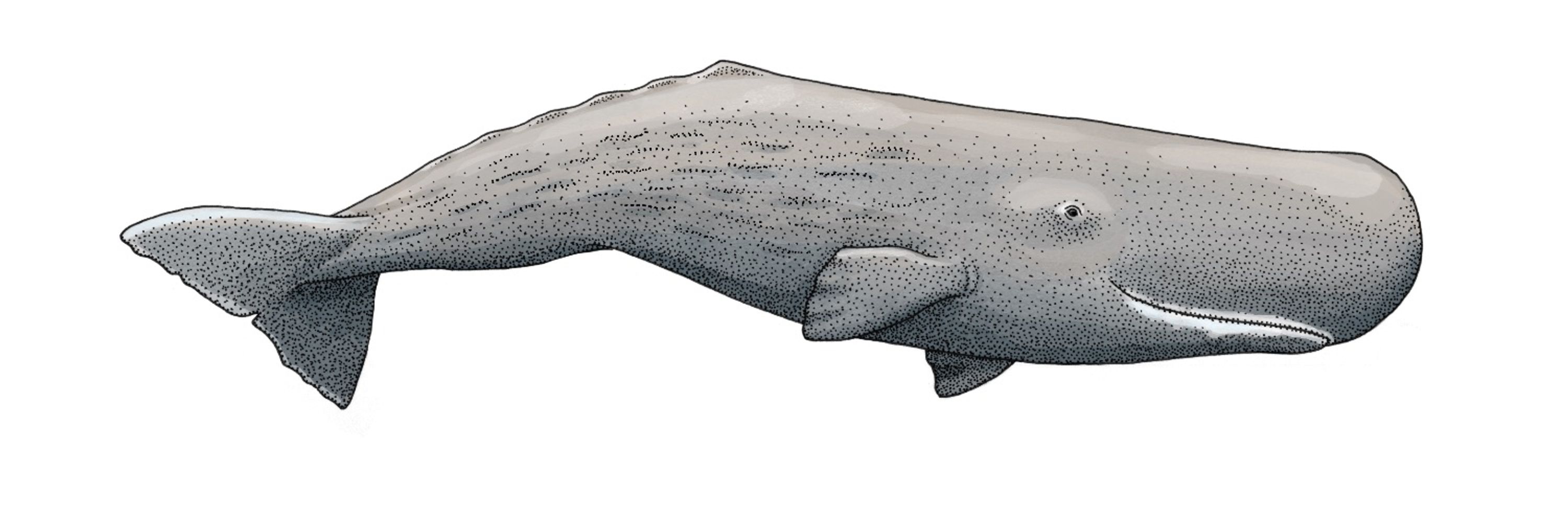
Whales exchange vowels in conversations. It was wonderful to speak to our CBS News station about this wonderful species.
@projectceti.bsky.social
@projectceti.bsky.social
February 13, 2026 at 8:33 PM
Whales exchange vowels in conversations. It was wonderful to speak to our CBS News station about this wonderful species.
@projectceti.bsky.social
@projectceti.bsky.social
The first time I see a whale drawing on a talk announcement 💙 come to my talk and hear about AI interpretability, building realistic models of human learning and animal communication.

February 9, 2026 at 9:49 PM
The first time I see a whale drawing on a talk announcement 💙 come to my talk and hear about AI interpretability, building realistic models of human learning and animal communication.
Humanities offer crucial tools for the development of AI. Now companies are realizing this. Check out Nina Begus book for guidelines on how to use the humanities in AI development:
www.fulcrum.org/concern/mono...
@ninabegus.bsky.social
www.fulcrum.org/concern/mono...
@ninabegus.bsky.social


February 8, 2026 at 7:28 PM
Humanities offer crucial tools for the development of AI. Now companies are realizing this. Check out Nina Begus book for guidelines on how to use the humanities in AI development:
www.fulcrum.org/concern/mono...
@ninabegus.bsky.social
www.fulcrum.org/concern/mono...
@ninabegus.bsky.social
- AI has a physical interior space.
- By exploring language’s uncharted cognitive terrain both in humans and machines, we bring attention to the interiority of speech in brains and in computational models.
- By exploring language’s uncharted cognitive terrain both in humans and machines, we bring attention to the interiority of speech in brains and in computational models.
February 4, 2026 at 6:17 PM
- AI has a physical interior space.
- By exploring language’s uncharted cognitive terrain both in humans and machines, we bring attention to the interiority of speech in brains and in computational models.
- By exploring language’s uncharted cognitive terrain both in humans and machines, we bring attention to the interiority of speech in brains and in computational models.
pre-speech edge, further into entropic interiority. Generated outputs portray limits of intelligibility and make the model’s interior layers a site for interpretative exploration.
- Language is a final linearizing layer over a richer prelinguistic space.
- Language is a final linearizing layer over a richer prelinguistic space.
February 4, 2026 at 6:17 PM
pre-speech edge, further into entropic interiority. Generated outputs portray limits of intelligibility and make the model’s interior layers a site for interpretative exploration.
- Language is a final linearizing layer over a richer prelinguistic space.
- Language is a final linearizing layer over a richer prelinguistic space.
AI is creating a new kind of space, the latent space. We pair art and internal interpretability techniques to explore philosophical implications of these new spaces.
FinneGAN generates speech, based on the text of the novel, and pushes the language of Finnegans Wake toward the
FinneGAN generates speech, based on the text of the novel, and pushes the language of Finnegans Wake toward the
February 4, 2026 at 6:17 PM
AI is creating a new kind of space, the latent space. We pair art and internal interpretability techniques to explore philosophical implications of these new spaces.
FinneGAN generates speech, based on the text of the novel, and pushes the language of Finnegans Wake toward the
FinneGAN generates speech, based on the text of the novel, and pushes the language of Finnegans Wake toward the
UC Merced has a fabulous cognitive science department. It was a pleasure giving a talk on defining language as “informative imitation” there.


February 4, 2026 at 1:15 AM
UC Merced has a fabulous cognitive science department. It was a pleasure giving a talk on defining language as “informative imitation” there.
- LLMs as probes of the limits of silicon intelligence
- LLMs for synthetic data, expanding the space of what we can even imagine testing
- Internal interpretability + custom models to narrow the hypothesis space and accelerate discovery
- LLMs for synthetic data, expanding the space of what we can even imagine testing
- Internal interpretability + custom models to narrow the hypothesis space and accelerate discovery


January 30, 2026 at 7:23 PM
- LLMs as probes of the limits of silicon intelligence
- LLMs for synthetic data, expanding the space of what we can even imagine testing
- Internal interpretability + custom models to narrow the hypothesis space and accelerate discovery
- LLMs for synthetic data, expanding the space of what we can even imagine testing
- Internal interpretability + custom models to narrow the hypothesis space and accelerate discovery
How can AI interpretability help us make new discoveries in science? I had an awesome time at OpenAI yesterday giving a talk and a fireside chat with Kevin Weil.
.
I outlined three use cases how AI can help push science forward:
.
I outlined three use cases how AI can help push science forward:

January 30, 2026 at 7:23 PM
How can AI interpretability help us make new discoveries in science? I had an awesome time at OpenAI yesterday giving a talk and a fireside chat with Kevin Weil.
.
I outlined three use cases how AI can help push science forward:
.
I outlined three use cases how AI can help push science forward:
A lunch talk at Berkeley Law tomorrow!

January 27, 2026 at 9:32 PM
A lunch talk at Berkeley Law tomorrow!
A lunch talk at Berkeley Law tomorrow!
January 27, 2026 at 9:29 PM
A lunch talk at Berkeley Law tomorrow!
AI interpretability can accelerate scientific discovery! We've demonstrated that in our recent paper on whale vowels.
Excited to share that I'll be talking about AI interpretability and how it can change our perspective on language in humans, animals, and machines at OpenAI Forum fireside chat.
Excited to share that I'll be talking about AI interpretability and how it can change our perspective on language in humans, animals, and machines at OpenAI Forum fireside chat.

January 14, 2026 at 6:31 PM
AI interpretability can accelerate scientific discovery! We've demonstrated that in our recent paper on whale vowels.
Excited to share that I'll be talking about AI interpretability and how it can change our perspective on language in humans, animals, and machines at OpenAI Forum fireside chat.
Excited to share that I'll be talking about AI interpretability and how it can change our perspective on language in humans, animals, and machines at OpenAI Forum fireside chat.
Starting the year in Dutch and Belgian news @devolkskrant.bsky.social @demorgen.be


January 5, 2026 at 6:42 PM
Starting the year in Dutch and Belgian news @devolkskrant.bsky.social @demorgen.be
– Our work crossed into Nature, The Economist, NatGeo, WIRED, IEEE Spectrum, Die ZEIT, and even the Venice Biennale
– We spent the summer thinking about the future of language and AI at Schloss Dagstuhl and in linguistics and AI communities worldwide
– We spent the summer thinking about the future of language and AI at Schloss Dagstuhl and in linguistics and AI communities worldwide

December 31, 2025 at 5:49 PM
– Our work crossed into Nature, The Economist, NatGeo, WIRED, IEEE Spectrum, Die ZEIT, and even the Venice Biennale
– We spent the summer thinking about the future of language and AI at Schloss Dagstuhl and in linguistics and AI communities worldwide
– We spent the summer thinking about the future of language and AI at Schloss Dagstuhl and in linguistics and AI communities worldwide
– We showed that recursion and metalinguistic analysis, long assumed to be uniquely human, can now be carried out by LLMs
– We built tools that let models analyze and generate language itself, including entirely new languages
– We built tools that let models analyze and generate language itself, including entirely new languages

December 31, 2025 at 5:49 PM
– We showed that recursion and metalinguistic analysis, long assumed to be uniquely human, can now be carried out by LLMs
– We built tools that let models analyze and generate language itself, including entirely new languages
– We built tools that let models analyze and generate language itself, including entirely new languages
We had a whale of a year. 🐋
This year we continued researching what counts as language and intelligence -- in humans, animals, and machines.
A few highlights:
– We uncovered vowels and diphthongs in sperm whales, with consequences that reach all the way to law and animal rights
This year we continued researching what counts as language and intelligence -- in humans, animals, and machines.
A few highlights:
– We uncovered vowels and diphthongs in sperm whales, with consequences that reach all the way to law and animal rights

December 31, 2025 at 5:49 PM
We had a whale of a year. 🐋
This year we continued researching what counts as language and intelligence -- in humans, animals, and machines.
A few highlights:
– We uncovered vowels and diphthongs in sperm whales, with consequences that reach all the way to law and animal rights
This year we continued researching what counts as language and intelligence -- in humans, animals, and machines.
A few highlights:
– We uncovered vowels and diphthongs in sperm whales, with consequences that reach all the way to law and animal rights
An interview with me for RAL on why we would be wise to be very careful with letting AI into legal and policymaking world.

December 9, 2025 at 5:47 PM
An interview with me for RAL on why we would be wise to be very careful with letting AI into legal and policymaking world.
Artificial Humanities launches now in a conversation with the author @ninabegus.bsky.social, Ted Chiang and James Yu.
press.umich.edu/Books/A/Arti...
@uofmpress.bsky.social
press.umich.edu/Books/A/Arti...
@uofmpress.bsky.social


December 3, 2025 at 7:43 PM
Artificial Humanities launches now in a conversation with the author @ninabegus.bsky.social, Ted Chiang and James Yu.
press.umich.edu/Books/A/Arti...
@uofmpress.bsky.social
press.umich.edu/Books/A/Arti...
@uofmpress.bsky.social
Creating artificial life has been in the domain of fiction for millennia. Artificial Humanities leverages fiction and humanities for evaluating and creating AI in the future.
The book launches tomorrow in a conversation with the author @ninabegus.bsky.social, Ted Chiang and James Yu.
The book launches tomorrow in a conversation with the author @ninabegus.bsky.social, Ted Chiang and James Yu.


December 1, 2025 at 7:47 PM
Creating artificial life has been in the domain of fiction for millennia. Artificial Humanities leverages fiction and humanities for evaluating and creating AI in the future.
The book launches tomorrow in a conversation with the author @ninabegus.bsky.social, Ted Chiang and James Yu.
The book launches tomorrow in a conversation with the author @ninabegus.bsky.social, Ted Chiang and James Yu.
Excited to see our metalinguistic research featured in one of the largest Swedish newspapers. 🗞️
ieeexplore.ieee.org/document/110...
ieeexplore.ieee.org/document/110...

November 30, 2025 at 8:34 PM
Excited to see our metalinguistic research featured in one of the largest Swedish newspapers. 🗞️
ieeexplore.ieee.org/document/110...
ieeexplore.ieee.org/document/110...
Recent developments in machine learning and animal communication, however, require us to look beyond the humans. We will extend the definition of language and model it as informative imitation.

November 24, 2025 at 4:50 PM
Recent developments in machine learning and animal communication, however, require us to look beyond the humans. We will extend the definition of language and model it as informative imitation.
I'm teaching a new class at Berkeley next semester:
Linguistics 265: Biological and Artificial Language
From the syllabus:
This class is an introduction to a novel approach to language. Linguistics has predominantly focused on
human language.
Linguistics 265: Biological and Artificial Language
From the syllabus:
This class is an introduction to a novel approach to language. Linguistics has predominantly focused on
human language.

November 24, 2025 at 4:50 PM
I'm teaching a new class at Berkeley next semester:
Linguistics 265: Biological and Artificial Language
From the syllabus:
This class is an introduction to a novel approach to language. Linguistics has predominantly focused on
human language.
Linguistics 265: Biological and Artificial Language
From the syllabus:
This class is an introduction to a novel approach to language. Linguistics has predominantly focused on
human language.
A whale conversation in whale vowels. Pinchy the whale and her conversant.
The vowels are so clear that they can be transcribed with our human letters.
aye, aye!
The vowels are so clear that they can be transcribed with our human letters.
aye, aye!

November 19, 2025 at 12:22 AM
A whale conversation in whale vowels. Pinchy the whale and her conversant.
The vowels are so clear that they can be transcribed with our human letters.
aye, aye!
The vowels are so clear that they can be transcribed with our human letters.
aye, aye!