



Benito Wainwright
@benitoexplains.bsky.social
Research fellow at the University of St Andrews 🏳️🌈 • Evolutionary and sensory ecology in 🦋+ 🦗 • He/him • I also make YouTube videos. Link here: https://youtube.com/@benitosexplenations?si=zpMANThrSJv_efM0
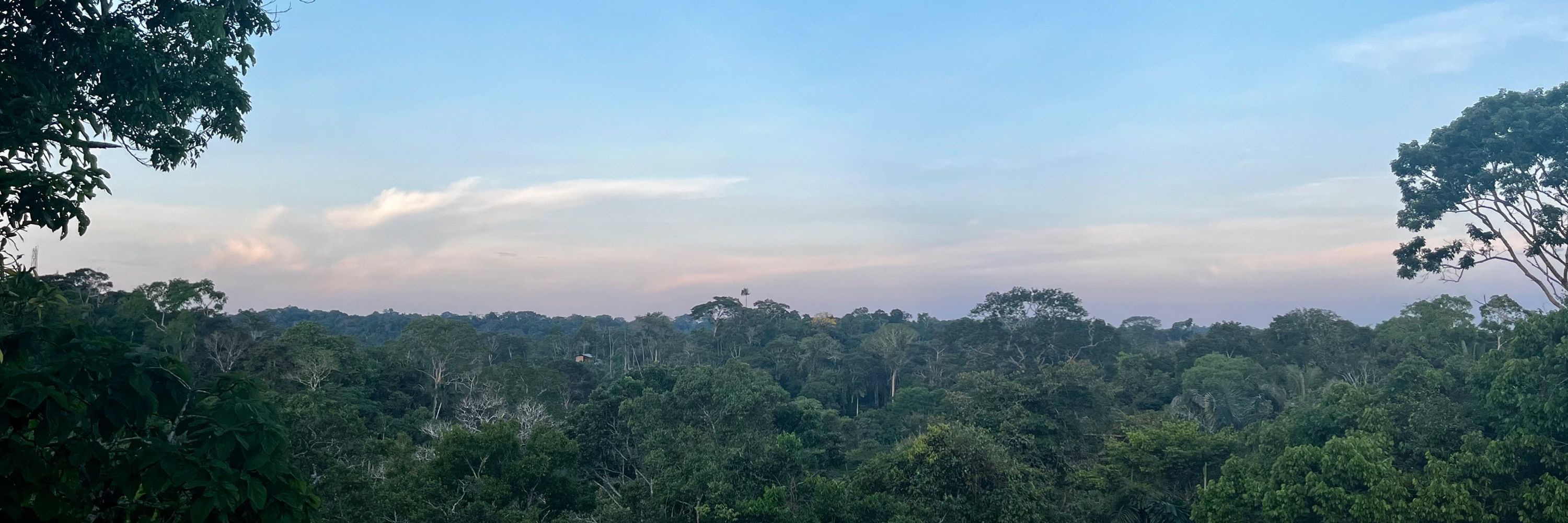
This was one the most fun things I’ve ever written, not least because I wrote most of it in Panama, with this gorgeous view, but also because I get to work with the Lennon & McCartney of academic writing, Graeme Ruxton and Nathan Bailey (not willing to disclose which is which). 🌴☺️ 6/n

November 29, 2025 at 2:07 PM
This was one the most fun things I’ve ever written, not least because I wrote most of it in Panama, with this gorgeous view, but also because I get to work with the Lennon & McCartney of academic writing, Graeme Ruxton and Nathan Bailey (not willing to disclose which is which). 🌴☺️ 6/n
Specifically, we hypothesise that sexual signalling a) constrains the evolution the specialist camouflage (e.g. masquerade), b) drives sexual dimorphism in camouflage and c) restricts adaptive crypsis polymorphism. Here is a smattering of the study systems we suggest could provide some answers. 5/n


November 29, 2025 at 2:07 PM
Specifically, we hypothesise that sexual signalling a) constrains the evolution the specialist camouflage (e.g. masquerade), b) drives sexual dimorphism in camouflage and c) restricts adaptive crypsis polymorphism. Here is a smattering of the study systems we suggest could provide some answers. 5/n
BUT what about concealment strategies like camouflage? Here, the existing literature is a lot more hazy. We propose that in this scenario, sexual signals could act as an evolutionary ratchet, giving rise to subpar concealment... 🤷🏽🤷🏽🤷🏽 4/n

November 29, 2025 at 2:07 PM
BUT what about concealment strategies like camouflage? Here, the existing literature is a lot more hazy. We propose that in this scenario, sexual signals could act as an evolutionary ratchet, giving rise to subpar concealment... 🤷🏽🤷🏽🤷🏽 4/n
For aposematic species like this strawberry poison dart frog, this is not an issue. Here, sexier colours = more effective warning colouration. Thus, the two traits coevolve positively and there’s already lots of wonderful theoretical and empirical work to support this across various taxa. 🐸🦋🐝 3/n

November 29, 2025 at 2:07 PM
For aposematic species like this strawberry poison dart frog, this is not an issue. Here, sexier colours = more effective warning colouration. Thus, the two traits coevolve positively and there’s already lots of wonderful theoretical and empirical work to support this across various taxa. 🐸🦋🐝 3/n
Very happy to see our opinion article out in @cp-trendsecolevo.bsky.social today. 🥳 We ask whether sexual signals can influence the evolutionary trajectory of naturally selected adaptations, such as protective colouration, for better or for worse 🧐 1/n
doi.org/10.1016/j.tr...
doi.org/10.1016/j.tr...

November 29, 2025 at 2:07 PM
Very happy to see our opinion article out in @cp-trendsecolevo.bsky.social today. 🥳 We ask whether sexual signals can influence the evolutionary trajectory of naturally selected adaptations, such as protective colouration, for better or for worse 🧐 1/n
doi.org/10.1016/j.tr...
doi.org/10.1016/j.tr...
So then, the co-occurrence of traits with synergistic effects provide a viable mechanism through which exquisitely sophisticated adaptations, such as leaf masquerade, can evolve! 11/n

November 4, 2025 at 2:02 PM
So then, the co-occurrence of traits with synergistic effects provide a viable mechanism through which exquisitely sophisticated adaptations, such as leaf masquerade, can evolve! 11/n
But most excitingly of all, we found that (controlling for phylogeny) colour and shape are evolutionarily correlated with path analysis suggesting that these leafy traits were acquired simultaneously during the evolution of leaf masquerade in katydids. 10/n


November 4, 2025 at 2:02 PM
But most excitingly of all, we found that (controlling for phylogeny) colour and shape are evolutionarily correlated with path analysis suggesting that these leafy traits were acquired simultaneously during the evolution of leaf masquerade in katydids. 10/n
In concordance with our predation experiment, we found that to score highly in the human leafiness rankings, wings needed to be the right colouration AND the right shape. 9/n

November 4, 2025 at 2:02 PM
In concordance with our predation experiment, we found that to score highly in the human leafiness rankings, wings needed to be the right colouration AND the right shape. 9/n
Having collected these wings, I designed a survey where 55 human participants had the honour of assigning them a ‘leafiness score’. Pictured on the left is our leafy winner (leafiness score: 9.05), and on the right is our wooden spoon prize (leafiness score: 1.88). Better luck next year mate 😢. 8/n


November 4, 2025 at 2:02 PM
Having collected these wings, I designed a survey where 55 human participants had the honour of assigning them a ‘leafiness score’. Pictured on the left is our leafy winner (leafiness score: 9.05), and on the right is our wooden spoon prize (leafiness score: 1.88). Better luck next year mate 😢. 8/n
To answer this, I had to exchange fieldwork in bonnie Scotland for the lush rainforests of Barro Colorado Island, Panama… 🌴 My newfound hobby of katydidling yielded 250+ katydid wings across 58 species, with leafy features having evolved several times independently. 7/n


November 4, 2025 at 2:02 PM
To answer this, I had to exchange fieldwork in bonnie Scotland for the lush rainforests of Barro Colorado Island, Panama… 🌴 My newfound hobby of katydidling yielded 250+ katydid wings across 58 species, with leafy features having evolved several times independently. 7/n
Lo and behold, prey that were leafy in colour (green) and in shape (oval) were more likely to trick predators than all other colour*shape combinations. This tells us that leaf masquerade relies on a synergistic interaction of its trait components to be functional. 5/n

November 4, 2025 at 2:02 PM
Lo and behold, prey that were leafy in colour (green) and in shape (oval) were more likely to trick predators than all other colour*shape combinations. This tells us that leaf masquerade relies on a synergistic interaction of its trait components to be functional. 5/n
…And exposed them to wild bird predators in Bonnie Scotland 🏴❤️4/n

November 4, 2025 at 2:02 PM
…And exposed them to wild bird predators in Bonnie Scotland 🏴❤️4/n
It seems intuitive to suppose that to be a convincing leaf, one must be both leaf-coloured AND leaf-shaped. To test how leaf masquerade actually fools predators, we used advanced skills acquired from playschool to make fake “leafy prey” of different colours and shapes.… ✂️3/n

November 4, 2025 at 2:02 PM
It seems intuitive to suppose that to be a convincing leaf, one must be both leaf-coloured AND leaf-shaped. To test how leaf masquerade actually fools predators, we used advanced skills acquired from playschool to make fake “leafy prey” of different colours and shapes.… ✂️3/n
Complex composite adaptations are everywhere you look, yet explaining their existence from both a functional and evolutionary perspective is no simple task. The dazzling variety of leafy and non-leafy outfits of katydids provides a system in which to tackle these evolutionary questions… 2/n

November 4, 2025 at 2:02 PM
Complex composite adaptations are everywhere you look, yet explaining their existence from both a functional and evolutionary perspective is no simple task. The dazzling variety of leafy and non-leafy outfits of katydids provides a system in which to tackle these evolutionary questions… 2/n
How about a splash of Scottish North Sea for good measure 🌊

August 26, 2025 at 11:35 AM
How about a splash of Scottish North Sea for good measure 🌊
Thanks to those who came and chatted all things katydid camouflage at my poster on Monday! For those watching on catch-up, come and find me at the poster session on Thursday 😀🦗🍃 #ESEB2025

August 20, 2025 at 7:54 AM
Thanks to those who came and chatted all things katydid camouflage at my poster on Monday! For those watching on catch-up, come and find me at the poster session on Thursday 😀🦗🍃 #ESEB2025
This work would not have been possible without the immense support and guidance @ebablab.bsky.social has given me over these past six years. I also wouldn't have got very far without my world-class field assistant Theodora Loupasaki. We took our work very seriously... 13/n


July 16, 2025 at 9:29 AM
This work would not have been possible without the immense support and guidance @ebablab.bsky.social has given me over these past six years. I also wouldn't have got very far without my world-class field assistant Theodora Loupasaki. We took our work very seriously... 13/n
I would love to say that I spent several evenings pondering these thought-provoking scientific ideas whilst basking in the warm glow of the Amazonian sunset, but to be honest, I mostly spent those evenings thinking about how much I missed crisps...

July 16, 2025 at 9:29 AM
I would love to say that I spent several evenings pondering these thought-provoking scientific ideas whilst basking in the warm glow of the Amazonian sunset, but to be honest, I mostly spent those evenings thinking about how much I missed crisps...
Our work highlights the role of ecologically relevant light in shaping communities and visual system evolution in megadiverse rainforests like Yasuni. But perhaps more interestingly, it demonstrates the profound effects interspecies mutualisms can have on other aspects of trait evolution. 12/n

July 16, 2025 at 9:29 AM
Our work highlights the role of ecologically relevant light in shaping communities and visual system evolution in megadiverse rainforests like Yasuni. But perhaps more interestingly, it demonstrates the profound effects interspecies mutualisms can have on other aspects of trait evolution. 12/n
We wanted to take things one step further and see whether the strength of these processes was enough to drive sensory convergence among co-mimics. Evolutionary modelling (+a bunch of other approaches) confirmed that indeed it is! 11/n

July 16, 2025 at 9:29 AM
We wanted to take things one step further and see whether the strength of these processes was enough to drive sensory convergence among co-mimics. Evolutionary modelling (+a bunch of other approaches) confirmed that indeed it is! 11/n
Low and behold, we see striking light environmental convergence in a suite of visual traits, including facet diameter and the relative investment in visual brain structures, shown here. Simply put, species in brighter habitats have convergently evolved bigger visual systems 10/n


July 16, 2025 at 9:29 AM
Low and behold, we see striking light environmental convergence in a suite of visual traits, including facet diameter and the relative investment in visual brain structures, shown here. Simply put, species in brighter habitats have convergently evolved bigger visual systems 10/n
We examined the eye physiology, eye anatomy, and brain anatomy of ~750 wild-caught ithomiines from Yasuni and correlated variation in these traits with light microhabitat, controlling for differences in flight-related morphology (see the paper for deets) 9/n


July 16, 2025 at 9:29 AM
We examined the eye physiology, eye anatomy, and brain anatomy of ~750 wild-caught ithomiines from Yasuni and correlated variation in these traits with light microhabitat, controlling for differences in flight-related morphology (see the paper for deets) 9/n
This shows that mutualistic interactions between Mullerian co-mimics can drive convergence in light preference and therefore strengthen niche partioning within diverse tropical community assemblages. 7/n

July 16, 2025 at 9:29 AM
This shows that mutualistic interactions between Mullerian co-mimics can drive convergence in light preference and therefore strengthen niche partioning within diverse tropical community assemblages. 7/n
But more interestingly, by taking light readings for ~800 individual butts, we found that ithomiine mimicry rings are partitioned across these light microhabitats! 6/n

July 16, 2025 at 9:29 AM
But more interestingly, by taking light readings for ~800 individual butts, we found that ithomiine mimicry rings are partitioned across these light microhabitats! 6/n
We measured spectral irradiance in the forest and calibrated this for butterfly vision. We found that ecologically relevant light does indeed vary between forest microhabitats... 5/n

July 16, 2025 at 9:29 AM
We measured spectral irradiance in the forest and calibrated this for butterfly vision. We found that ecologically relevant light does indeed vary between forest microhabitats... 5/n