



Ben Neely
@benneely.com
Analytical biochemist attempting molecular cartography across the tree of life, powered by MS-based proteomics. Opinions expressed are solely my own. he/him
benjaminneely.com
Charleston, SC, USA
benjaminneely.com
Charleston, SC, USA
On this week’s #THEProteomicsShow Ben @proteomicsnews.bsky.social and I sat down with Dr. Jeff Gordon who will be giving the plenary at the upcoming #USHUPO2026 meeting. Find it wherever you find fine podcasts, or here anchor.fm/theproteomic...

January 8, 2026 at 7:16 PM
On this week’s #THEProteomicsShow Ben @proteomicsnews.bsky.social and I sat down with Dr. Jeff Gordon who will be giving the plenary at the upcoming #USHUPO2026 meeting. Find it wherever you find fine podcasts, or here anchor.fm/theproteomic...
Since I mentioned collards, another big thing around here is rice, and specifically this Carolina Gold Rice, pictured here as I just sampled to be sure I had it where I wanted it.
www.seriouseats.com/carolina-gol...
www.seriouseats.com/carolina-gol...

January 1, 2026 at 5:22 PM
Since I mentioned collards, another big thing around here is rice, and specifically this Carolina Gold Rice, pictured here as I just sampled to be sure I had it where I wanted it.
www.seriouseats.com/carolina-gol...
www.seriouseats.com/carolina-gol...
Only 10 years later and my name is still up in the lobby. Considering how many new fancy mass specs they have now at the MUSC Proteomics Center, I wonder if i could just move back in and no one would notice?


December 29, 2025 at 2:37 PM
Only 10 years later and my name is still up in the lobby. Considering how many new fancy mass specs they have now at the MUSC Proteomics Center, I wonder if i could just move back in and no one would notice?
In other words, each bag like so.

December 26, 2025 at 9:15 PM
In other words, each bag like so.
PSA for parents (or old “kids”) giving/getting Legos: I didn’t know this till very recently, but if you open a Lego box on one side (I don’t use the finger tabs), the box becomes a self-contained Lego holder/tray. Maybe everyone but me already knew.

December 26, 2025 at 9:06 PM
PSA for parents (or old “kids”) giving/getting Legos: I didn’t know this till very recently, but if you open a Lego box on one side (I don’t use the finger tabs), the box becomes a self-contained Lego holder/tray. Maybe everyone but me already knew.
#AminoAcidAdvent Day 21: Tyrosine (Tyr; Y)
This is the end my friend, tomorrow is the big day. Gird your loins and have lots of merry on hand! tYrosine is the last of the three phosphomusketeers, a fun F derivative. Why 21? Well, U know Y.
Source for Dayhoff: biology.arizona.edu/biochemistry...
This is the end my friend, tomorrow is the big day. Gird your loins and have lots of merry on hand! tYrosine is the last of the three phosphomusketeers, a fun F derivative. Why 21? Well, U know Y.
Source for Dayhoff: biology.arizona.edu/biochemistry...

December 24, 2025 at 1:32 PM
#AminoAcidAdvent Day 21: Tyrosine (Tyr; Y)
This is the end my friend, tomorrow is the big day. Gird your loins and have lots of merry on hand! tYrosine is the last of the three phosphomusketeers, a fun F derivative. Why 21? Well, U know Y.
Source for Dayhoff: biology.arizona.edu/biochemistry...
This is the end my friend, tomorrow is the big day. Gird your loins and have lots of merry on hand! tYrosine is the last of the three phosphomusketeers, a fun F derivative. Why 21? Well, U know Y.
Source for Dayhoff: biology.arizona.edu/biochemistry...
#AminoAcidAdvent Day 20: Asparagine (Asn; N)
You know how sometimes you over do it when nogging your eggnog and you wake up feeling like ass(n), well, that’s the penultimate day of this. It’s like mini glutamine, but also maybe hydrolizes to Asp in aging 🤷♂️. FYI was asparagiN according to Dayhoff.
You know how sometimes you over do it when nogging your eggnog and you wake up feeling like ass(n), well, that’s the penultimate day of this. It’s like mini glutamine, but also maybe hydrolizes to Asp in aging 🤷♂️. FYI was asparagiN according to Dayhoff.

December 23, 2025 at 1:53 PM
#AminoAcidAdvent Day 20: Asparagine (Asn; N)
You know how sometimes you over do it when nogging your eggnog and you wake up feeling like ass(n), well, that’s the penultimate day of this. It’s like mini glutamine, but also maybe hydrolizes to Asp in aging 🤷♂️. FYI was asparagiN according to Dayhoff.
You know how sometimes you over do it when nogging your eggnog and you wake up feeling like ass(n), well, that’s the penultimate day of this. It’s like mini glutamine, but also maybe hydrolizes to Asp in aging 🤷♂️. FYI was asparagiN according to Dayhoff.
Me and Ben @proteomicsnews.bsky.social are bringing you some holiday science cheer with this week’s #THEProteomicsShow with @lingjun2025.bsky.social. We expect that soon everyone will want to do research they can eat, we do! Find it wherever you find fine podcasts or here anchor.fm/theproteomic...

December 22, 2025 at 5:12 PM
Me and Ben @proteomicsnews.bsky.social are bringing you some holiday science cheer with this week’s #THEProteomicsShow with @lingjun2025.bsky.social. We expect that soon everyone will want to do research they can eat, we do! Find it wherever you find fine podcasts or here anchor.fm/theproteomic...
#AminoAcidAdvent Day 18: Aspartic Acid (Asp; D)
Apologies to all you Hofmann fans, there’s no fear and loathing in peptides going on here, though Dayhoff’s “asparDic” seems a bit sus. Shorter than its acid brethren, it can still cyclize, which seems biologically important. Google it, I’m on break.
Apologies to all you Hofmann fans, there’s no fear and loathing in peptides going on here, though Dayhoff’s “asparDic” seems a bit sus. Shorter than its acid brethren, it can still cyclize, which seems biologically important. Google it, I’m on break.

December 21, 2025 at 3:47 PM
#AminoAcidAdvent Day 18: Aspartic Acid (Asp; D)
Apologies to all you Hofmann fans, there’s no fear and loathing in peptides going on here, though Dayhoff’s “asparDic” seems a bit sus. Shorter than its acid brethren, it can still cyclize, which seems biologically important. Google it, I’m on break.
Apologies to all you Hofmann fans, there’s no fear and loathing in peptides going on here, though Dayhoff’s “asparDic” seems a bit sus. Shorter than its acid brethren, it can still cyclize, which seems biologically important. Google it, I’m on break.
#AminoAcidAdvent Day 17: Alanine (Ala; A)
I heard Paul Simon wanted to use Ala instead of Al, but no one got the reference. This tiny aliphatic residue is the Switzerland of amino acids (aka non-reactive), but does have some roles in structure and signaling motifs. 🤷♂️
I heard Paul Simon wanted to use Ala instead of Al, but no one got the reference. This tiny aliphatic residue is the Switzerland of amino acids (aka non-reactive), but does have some roles in structure and signaling motifs. 🤷♂️

December 20, 2025 at 2:46 PM
#AminoAcidAdvent Day 17: Alanine (Ala; A)
I heard Paul Simon wanted to use Ala instead of Al, but no one got the reference. This tiny aliphatic residue is the Switzerland of amino acids (aka non-reactive), but does have some roles in structure and signaling motifs. 🤷♂️
I heard Paul Simon wanted to use Ala instead of Al, but no one got the reference. This tiny aliphatic residue is the Switzerland of amino acids (aka non-reactive), but does have some roles in structure and signaling motifs. 🤷♂️
#AminoAcidAdvent Day 16: Phenylalanine (Phe; F)
If you like it then you should've put a ring on it (i.e., alanine). This essential hydrophobic amino acid is often buried inside protein structures, and is useful to make tyrosine.
Dayhoff named F cause P was taken and the obvious phonetics.
If you like it then you should've put a ring on it (i.e., alanine). This essential hydrophobic amino acid is often buried inside protein structures, and is useful to make tyrosine.
Dayhoff named F cause P was taken and the obvious phonetics.

December 19, 2025 at 1:49 PM
#AminoAcidAdvent Day 16: Phenylalanine (Phe; F)
If you like it then you should've put a ring on it (i.e., alanine). This essential hydrophobic amino acid is often buried inside protein structures, and is useful to make tyrosine.
Dayhoff named F cause P was taken and the obvious phonetics.
If you like it then you should've put a ring on it (i.e., alanine). This essential hydrophobic amino acid is often buried inside protein structures, and is useful to make tyrosine.
Dayhoff named F cause P was taken and the obvious phonetics.
#AminoAcidAdvent Day 15: Glutamic Acid (Glu; E)
Don't get too excited about this tasty amino acid! Dayhoff wasn't thinking just about about gluE but also "glutamEke" when naming it. And yes, this terminal residue will cyclize to pyro-Glu with loss of water (like Q), so be warned search algorithms.
Don't get too excited about this tasty amino acid! Dayhoff wasn't thinking just about about gluE but also "glutamEke" when naming it. And yes, this terminal residue will cyclize to pyro-Glu with loss of water (like Q), so be warned search algorithms.

December 18, 2025 at 2:22 PM
#AminoAcidAdvent Day 15: Glutamic Acid (Glu; E)
Don't get too excited about this tasty amino acid! Dayhoff wasn't thinking just about about gluE but also "glutamEke" when naming it. And yes, this terminal residue will cyclize to pyro-Glu with loss of water (like Q), so be warned search algorithms.
Don't get too excited about this tasty amino acid! Dayhoff wasn't thinking just about about gluE but also "glutamEke" when naming it. And yes, this terminal residue will cyclize to pyro-Glu with loss of water (like Q), so be warned search algorithms.
#AminoAcidAdvent Day 14: Glutamine (Gln; Q)
Maybe one of the funnier Dayhoff naming moments ("Q-tamine"), this amide of glutamic acid will spontaneously cyclize and deamidate when on the N-terminus (not a rare event! Ig beware)... making this new post-doc convinced his SIS peptide was contaminated.
Maybe one of the funnier Dayhoff naming moments ("Q-tamine"), this amide of glutamic acid will spontaneously cyclize and deamidate when on the N-terminus (not a rare event! Ig beware)... making this new post-doc convinced his SIS peptide was contaminated.


December 17, 2025 at 1:19 PM
#AminoAcidAdvent Day 14: Glutamine (Gln; Q)
Maybe one of the funnier Dayhoff naming moments ("Q-tamine"), this amide of glutamic acid will spontaneously cyclize and deamidate when on the N-terminus (not a rare event! Ig beware)... making this new post-doc convinced his SIS peptide was contaminated.
Maybe one of the funnier Dayhoff naming moments ("Q-tamine"), this amide of glutamic acid will spontaneously cyclize and deamidate when on the N-terminus (not a rare event! Ig beware)... making this new post-doc convinced his SIS peptide was contaminated.
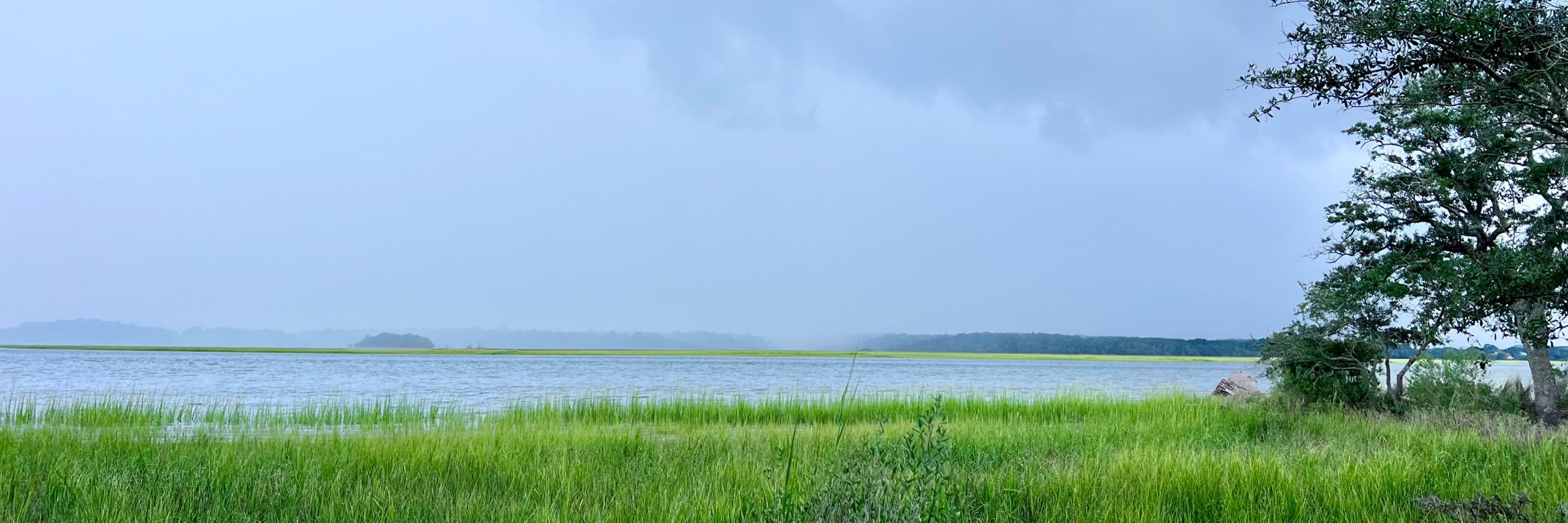
My fav memory in grad school was coming in early before anyone was in the lab, sitting at my bench planning experiments or making media, with my back to the window as the sun came up over the marsh. Weirdly I work in this building now, though they’ve blocked my old window (and that PI is long gone).

December 17, 2025 at 12:39 PM
My fav memory in grad school was coming in early before anyone was in the lab, sitting at my bench planning experiments or making media, with my back to the window as the sun came up over the marsh. Weirdly I work in this building now, though they’ve blocked my old window (and that PI is long gone).
#AminoAcidAdvent Day 13: Selonocystein (Sec; U)
Not one of the classic 20 but U love it! Fenyo and @ronbeavis.bsky.social showed you need to think about its alkylation (Unimod #1008). Pro tip 2: check that the MS1 agrees with Se-78 and Se-80 abundance (it might not).
pubs.acs.org/doi/10.1021/...
Not one of the classic 20 but U love it! Fenyo and @ronbeavis.bsky.social showed you need to think about its alkylation (Unimod #1008). Pro tip 2: check that the MS1 agrees with Se-78 and Se-80 abundance (it might not).
pubs.acs.org/doi/10.1021/...


December 16, 2025 at 1:01 PM
#AminoAcidAdvent Day 13: Selonocystein (Sec; U)
Not one of the classic 20 but U love it! Fenyo and @ronbeavis.bsky.social showed you need to think about its alkylation (Unimod #1008). Pro tip 2: check that the MS1 agrees with Se-78 and Se-80 abundance (it might not).
pubs.acs.org/doi/10.1021/...
Not one of the classic 20 but U love it! Fenyo and @ronbeavis.bsky.social showed you need to think about its alkylation (Unimod #1008). Pro tip 2: check that the MS1 agrees with Se-78 and Se-80 abundance (it might not).
pubs.acs.org/doi/10.1021/...
A day late for Hanukkah, but we are definitely in the season! Happy holidays to all who celebrate, or maybe just have a nice winter break.

December 15, 2025 at 9:26 PM
A day late for Hanukkah, but we are definitely in the season! Happy holidays to all who celebrate, or maybe just have a nice winter break.
#AminoAcidAdvent Day 12: Lysine (Lys; K)
You know it, you love it, the most popular amino acid for tryptic peptide connoisseurs. BUT how often does trypsin really cut after K? Sure Lys-C is on KP duty, but what about cutting sugary Ks in collagenous domains?! More exceptions than I think about.
You know it, you love it, the most popular amino acid for tryptic peptide connoisseurs. BUT how often does trypsin really cut after K? Sure Lys-C is on KP duty, but what about cutting sugary Ks in collagenous domains?! More exceptions than I think about.

December 15, 2025 at 1:51 PM
#AminoAcidAdvent Day 12: Lysine (Lys; K)
You know it, you love it, the most popular amino acid for tryptic peptide connoisseurs. BUT how often does trypsin really cut after K? Sure Lys-C is on KP duty, but what about cutting sugary Ks in collagenous domains?! More exceptions than I think about.
You know it, you love it, the most popular amino acid for tryptic peptide connoisseurs. BUT how often does trypsin really cut after K? Sure Lys-C is on KP duty, but what about cutting sugary Ks in collagenous domains?! More exceptions than I think about.
#AminoAcidAdvent Day 11: Leucine (Leu; L)
Isoleucine if it was a Mickey Mouse fan with two methyls at the end, which I guess is important (see Day 10). Beat out lysine for the coveted L.
Am I mailing this in by having I and L back to back so I can chill on Sunday… maybe. Don’t judge me!
Isoleucine if it was a Mickey Mouse fan with two methyls at the end, which I guess is important (see Day 10). Beat out lysine for the coveted L.
Am I mailing this in by having I and L back to back so I can chill on Sunday… maybe. Don’t judge me!

December 14, 2025 at 3:23 PM
#AminoAcidAdvent Day 11: Leucine (Leu; L)
Isoleucine if it was a Mickey Mouse fan with two methyls at the end, which I guess is important (see Day 10). Beat out lysine for the coveted L.
Am I mailing this in by having I and L back to back so I can chill on Sunday… maybe. Don’t judge me!
Isoleucine if it was a Mickey Mouse fan with two methyls at the end, which I guess is important (see Day 10). Beat out lysine for the coveted L.
Am I mailing this in by having I and L back to back so I can chill on Sunday… maybe. Don’t judge me!
The excitement I felt seeing an old school lan party was not surprising. I was sad there was no Descent but whatever, also didn’t know about Commander Keen.

December 14, 2025 at 3:08 PM
The excitement I felt seeing an old school lan party was not surprising. I was sad there was no Descent but whatever, also didn’t know about Commander Keen.
#AminoAcidAdvent Day 10: Isoleucine (Ile; I)
The branched chain poster child for “small differences lead to big changes”. Move a methyl group in leucine and you’ve got a subtle shift that can change protein structure… but a mass spec can’t tell of course. And using I and l is bad coding practice.
The branched chain poster child for “small differences lead to big changes”. Move a methyl group in leucine and you’ve got a subtle shift that can change protein structure… but a mass spec can’t tell of course. And using I and l is bad coding practice.

December 13, 2025 at 1:41 PM
#AminoAcidAdvent Day 10: Isoleucine (Ile; I)
The branched chain poster child for “small differences lead to big changes”. Move a methyl group in leucine and you’ve got a subtle shift that can change protein structure… but a mass spec can’t tell of course. And using I and l is bad coding practice.
The branched chain poster child for “small differences lead to big changes”. Move a methyl group in leucine and you’ve got a subtle shift that can change protein structure… but a mass spec can’t tell of course. And using I and l is bad coding practice.
#THEProteomicsShow is back and now we’re talking about #USHUPO2026. Me and Ben @proteomicsnews.bsky.social got to talk to Mike MacCoss @maccoss.bsky.social and it’s everything you’d want: quant, mentoring and car discussions. Find it wherever you find fine podcast or here anchor.fm/theproteomic...

December 12, 2025 at 1:14 PM
#THEProteomicsShow is back and now we’re talking about #USHUPO2026. Me and Ben @proteomicsnews.bsky.social got to talk to Mike MacCoss @maccoss.bsky.social and it’s everything you’d want: quant, mentoring and car discussions. Find it wherever you find fine podcast or here anchor.fm/theproteomic...
#AminoAcidAdvent Day 9: Glycine (Gly; G)
The first amino acid discovered, with the simplest of side groups and flexible, and astrobiologists love it. However, my notes say watch out for G making our life hard (G + G = N; G + A = Q), which seems unlikely, but really confounds when it happens.
The first amino acid discovered, with the simplest of side groups and flexible, and astrobiologists love it. However, my notes say watch out for G making our life hard (G + G = N; G + A = Q), which seems unlikely, but really confounds when it happens.

December 12, 2025 at 1:06 PM
#AminoAcidAdvent Day 9: Glycine (Gly; G)
The first amino acid discovered, with the simplest of side groups and flexible, and astrobiologists love it. However, my notes say watch out for G making our life hard (G + G = N; G + A = Q), which seems unlikely, but really confounds when it happens.
The first amino acid discovered, with the simplest of side groups and flexible, and astrobiologists love it. However, my notes say watch out for G making our life hard (G + G = N; G + A = Q), which seems unlikely, but really confounds when it happens.
#AminoAcidAdvent Day 8: Histidine (His; H)
This is the chemist amino acid, fun for his and hers biochemical and chemical reactions, and likely makes your peptide fragment ions 2+. Fortunately it leaves a 110 m/z immonium ion as a clue so you can easily solve MS/MS by hand. You do that still, right?
This is the chemist amino acid, fun for his and hers biochemical and chemical reactions, and likely makes your peptide fragment ions 2+. Fortunately it leaves a 110 m/z immonium ion as a clue so you can easily solve MS/MS by hand. You do that still, right?

December 11, 2025 at 1:11 PM
#AminoAcidAdvent Day 8: Histidine (His; H)
This is the chemist amino acid, fun for his and hers biochemical and chemical reactions, and likely makes your peptide fragment ions 2+. Fortunately it leaves a 110 m/z immonium ion as a clue so you can easily solve MS/MS by hand. You do that still, right?
This is the chemist amino acid, fun for his and hers biochemical and chemical reactions, and likely makes your peptide fragment ions 2+. Fortunately it leaves a 110 m/z immonium ion as a clue so you can easily solve MS/MS by hand. You do that still, right?
Well, turns out they did a wrap for us, and all I know is there 127 fans out there where we are number 1. Step it up you two!!!

December 10, 2025 at 7:45 PM
Well, turns out they did a wrap for us, and all I know is there 127 fans out there where we are number 1. Step it up you two!!!
#AminoAcidAdvent Day 7: Argenine (Arg; R)
What's a pirate's favorite amino acid? ARRRgenine!
This basic residue is a fav for heavy isotope fans, with a storied history from SILAC to SRM, and of course most famous for trypsin cutting after it giving us the 175 m/z y1 we all know and love.
What's a pirate's favorite amino acid? ARRRgenine!
This basic residue is a fav for heavy isotope fans, with a storied history from SILAC to SRM, and of course most famous for trypsin cutting after it giving us the 175 m/z y1 we all know and love.

December 10, 2025 at 1:46 PM
#AminoAcidAdvent Day 7: Argenine (Arg; R)
What's a pirate's favorite amino acid? ARRRgenine!
This basic residue is a fav for heavy isotope fans, with a storied history from SILAC to SRM, and of course most famous for trypsin cutting after it giving us the 175 m/z y1 we all know and love.
What's a pirate's favorite amino acid? ARRRgenine!
This basic residue is a fav for heavy isotope fans, with a storied history from SILAC to SRM, and of course most famous for trypsin cutting after it giving us the 175 m/z y1 we all know and love.