


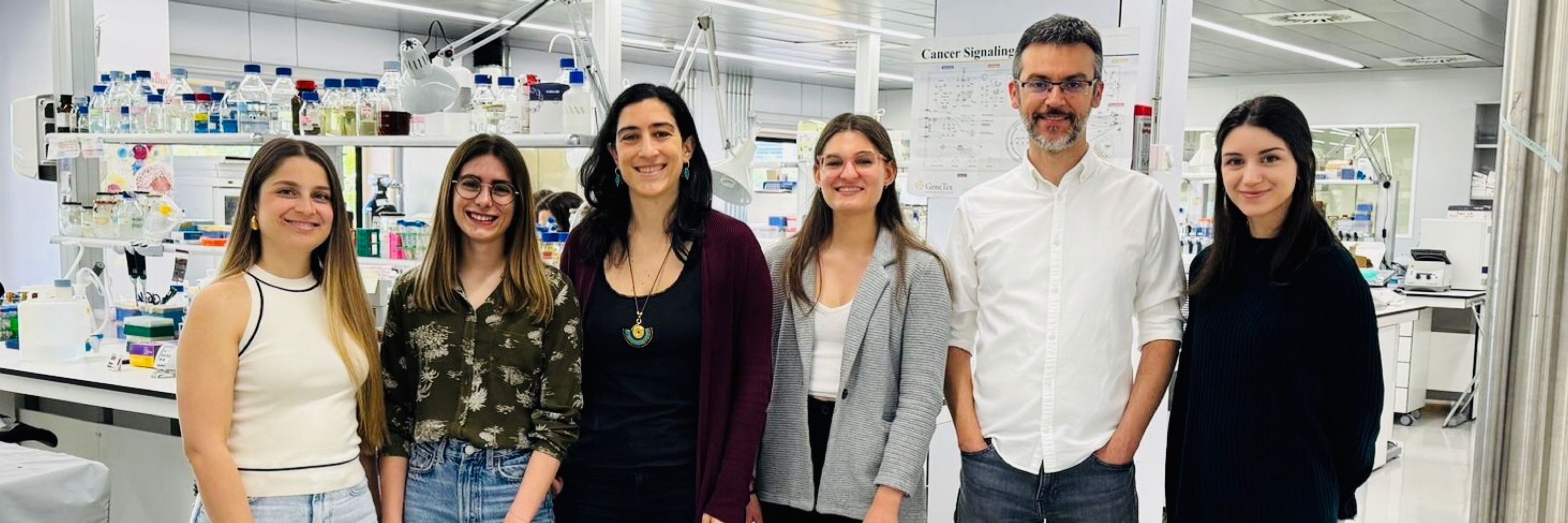

Spine Lab at UIC
@boschlab.bsky.social
Synaptic plasticity and synaptophaties Lab, Dept Biomed Sc, UIC.
Spines, waves, autism, photopharma, mapping
Spines, waves, autism, photopharma, mapping
In conclusion: TCP9 is a unique non-invasive tool for durable labeling, reversible photoswitching, and functional tracking of native receptors in brain tissue without genetic manipulation.
September 30, 2025 at 5:09 PM
In conclusion: TCP9 is a unique non-invasive tool for durable labeling, reversible photoswitching, and functional tracking of native receptors in brain tissue without genetic manipulation.
TCP9 photocontrols single neurons and single synapses in Xenopus tadpole brain in vivo

September 30, 2025 at 5:09 PM
TCP9 photocontrols single neurons and single synapses in Xenopus tadpole brain in vivo
TCP9 photocontrols single neurons and synapses in ex vivo rat brain tissue, and allows tracking endogenous receptor physiology during long-term depression (LTD) in hippocampal neurons.

September 30, 2025 at 5:09 PM
TCP9 photocontrols single neurons and synapses in ex vivo rat brain tissue, and allows tracking endogenous receptor physiology during long-term depression (LTD) in hippocampal neurons.
TCP9 enables photocontrolling endogenous GluRs in dissociated neurons at 1–10 Hz

September 30, 2025 at 5:08 PM
TCP9 enables photocontrolling endogenous GluRs in dissociated neurons at 1–10 Hz
TCP9 covalently targets AMPA and kainate receptors, maintaining their functionality and photoswitchability for extended periods (>8 h) after a single compound application.
September 30, 2025 at 5:08 PM
TCP9 covalently targets AMPA and kainate receptors, maintaining their functionality and photoswitchability for extended periods (>8 h) after a single compound application.
TCP9 allows photoactivation of neuronal ensembles, individual neurons, and single synapses in ex vivo tissue and in intact brain in vivo, which is challenging using optogenetics and neurotransmitter uncaging.
September 30, 2025 at 5:08 PM
TCP9 allows photoactivation of neuronal ensembles, individual neurons, and single synapses in ex vivo tissue and in intact brain in vivo, which is challenging using optogenetics and neurotransmitter uncaging.
We combine the photopharmacological effector TCP9 with neuronal activity sensors to demonstrate all-optical reversible control of endogenous GluRs across multiple spatiotemporal scales in rat brain tissue ex vivo and in Xenopus tadpole brains in vivo.
September 30, 2025 at 5:08 PM
We combine the photopharmacological effector TCP9 with neuronal activity sensors to demonstrate all-optical reversible control of endogenous GluRs across multiple spatiotemporal scales in rat brain tissue ex vivo and in Xenopus tadpole brains in vivo.
Since there was a lack of non-genetic methods to control the activity of endogenous proteins with pharmacological and spatiotemporal precision, we developed targeted covalent photoswitchable (TCP) compounds to control endogenous glutamate receptors (GluRs) using light.
September 30, 2025 at 5:07 PM
Since there was a lack of non-genetic methods to control the activity of endogenous proteins with pharmacological and spatiotemporal precision, we developed targeted covalent photoswitchable (TCP) compounds to control endogenous glutamate receptors (GluRs) using light.