


Jen Farrar
@botany-jen.bsky.social
I am a botanical trainer with a deep love of the natural world and everything in it.
Reposted by Jen Farrar

Primrose, Primula vulgaris. Leaves in basal rosette, up to 15cm, strongly net-veined, hairless above (apart from midrib) and hairy below. Leaves taper gradually to base. Petiole reddish at base

December 16, 2025 at 5:50 PM
Primrose, Primula vulgaris. Leaves in basal rosette, up to 15cm, strongly net-veined, hairless above (apart from midrib) and hairy below. Leaves taper gradually to base. Petiole reddish at base
Reposted by Jen Farrar
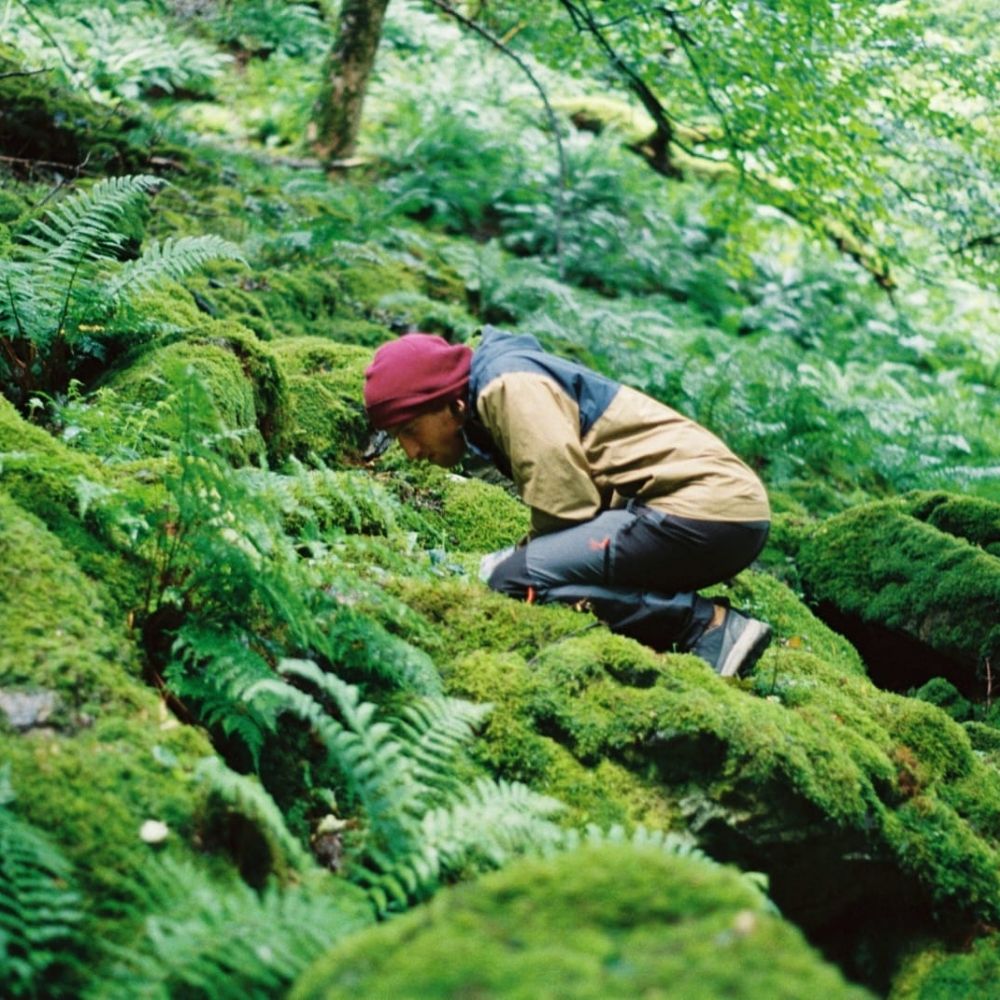
Carex magellanica (Tall Bog-sedge) at one of the few North Wales sites. Gosh all of the Bog Sedges really are spectacular!
@bsbibotany.bsky.social
@bsbibotany.bsky.social

December 17, 2025 at 9:07 AM
Carex magellanica (Tall Bog-sedge) at one of the few North Wales sites. Gosh all of the Bog Sedges really are spectacular!
@bsbibotany.bsky.social
@bsbibotany.bsky.social
Reposted by Jen Farrar

Montane willow scrub is 1 of our most threatened habitats, with only a few 100 ha remaining throughout Scotland
Finding this nationally rare Net-leaved Willow in Perthshire was a fine reward for one of the wettest day's botanising I've ever endured! Botanical #adventcalendar Day 17
#wildflowerhour
Finding this nationally rare Net-leaved Willow in Perthshire was a fine reward for one of the wettest day's botanising I've ever endured! Botanical #adventcalendar Day 17
#wildflowerhour


December 17, 2025 at 6:51 AM
Montane willow scrub is 1 of our most threatened habitats, with only a few 100 ha remaining throughout Scotland
Finding this nationally rare Net-leaved Willow in Perthshire was a fine reward for one of the wettest day's botanising I've ever endured! Botanical #adventcalendar Day 17
#wildflowerhour
Finding this nationally rare Net-leaved Willow in Perthshire was a fine reward for one of the wettest day's botanising I've ever endured! Botanical #adventcalendar Day 17
#wildflowerhour
Reposted by Jen Farrar
Two fabulous sedges from late April on Arnside Knott.
Spring Sedge (Carex caryophyllea) and its rare red relative Carex ericetorum (Rare Spring Sedge).
The beautiful wine red glumes of ericetorum separate these really well in flower/fruit. What beauties! 😍
@bsbibotany.bsky.social
Spring Sedge (Carex caryophyllea) and its rare red relative Carex ericetorum (Rare Spring Sedge).
The beautiful wine red glumes of ericetorum separate these really well in flower/fruit. What beauties! 😍
@bsbibotany.bsky.social

December 17, 2025 at 4:12 PM
Two fabulous sedges from late April on Arnside Knott.
Spring Sedge (Carex caryophyllea) and its rare red relative Carex ericetorum (Rare Spring Sedge).
The beautiful wine red glumes of ericetorum separate these really well in flower/fruit. What beauties! 😍
@bsbibotany.bsky.social
Spring Sedge (Carex caryophyllea) and its rare red relative Carex ericetorum (Rare Spring Sedge).
The beautiful wine red glumes of ericetorum separate these really well in flower/fruit. What beauties! 😍
@bsbibotany.bsky.social
Reposted by Jen Farrar

A nice cluster of Cladonia #lichen spp...plus the remains of what was a cloudberry flower. #fungi #fungifriends #wildflower

December 16, 2025 at 2:51 PM
A nice cluster of Cladonia #lichen spp...plus the remains of what was a cloudberry flower. #fungi #fungifriends #wildflower
Reposted by Jen Farrar
You might spot this moth in orbit this month 🛰️
The Satellite (Eupsilia transversa) can be found in areas of woodland and scrub from October through to April.
📷: Iain H Leach, Patrick Clement
#MothMonday #TeamMoth
The Satellite (Eupsilia transversa) can be found in areas of woodland and scrub from October through to April.
📷: Iain H Leach, Patrick Clement
#MothMonday #TeamMoth


December 15, 2025 at 12:00 PM
You might spot this moth in orbit this month 🛰️
The Satellite (Eupsilia transversa) can be found in areas of woodland and scrub from October through to April.
📷: Iain H Leach, Patrick Clement
#MothMonday #TeamMoth
The Satellite (Eupsilia transversa) can be found in areas of woodland and scrub from October through to April.
📷: Iain H Leach, Patrick Clement
#MothMonday #TeamMoth
Reposted by Jen Farrar
Oblong Woodsia is perhaps Britain's rarest fern, and Day 16's species for my botanical #adventcalendar
It suffered big declines due to Victorian collecting, and the national population now consists of <200 individuals with little evidence of recruitment, despite conservation actions
It suffered big declines due to Victorian collecting, and the national population now consists of <200 individuals with little evidence of recruitment, despite conservation actions


December 16, 2025 at 7:59 AM
Oblong Woodsia is perhaps Britain's rarest fern, and Day 16's species for my botanical #adventcalendar
It suffered big declines due to Victorian collecting, and the national population now consists of <200 individuals with little evidence of recruitment, despite conservation actions
It suffered big declines due to Victorian collecting, and the national population now consists of <200 individuals with little evidence of recruitment, despite conservation actions
Reposted by Jen Farrar
Day 15 of my botanical #adventcalendar - time for Black Alpine-sedge! If I could I'd fill the calendar with sedges, but my shaky phone-pics aren't good enough 😂
This was a newly discovered population in the Grey Corries - always an exciting plant to find, and very distinctive #wildflowerhour
This was a newly discovered population in the Grey Corries - always an exciting plant to find, and very distinctive #wildflowerhour

December 15, 2025 at 8:41 AM
Day 15 of my botanical #adventcalendar - time for Black Alpine-sedge! If I could I'd fill the calendar with sedges, but my shaky phone-pics aren't good enough 😂
This was a newly discovered population in the Grey Corries - always an exciting plant to find, and very distinctive #wildflowerhour
This was a newly discovered population in the Grey Corries - always an exciting plant to find, and very distinctive #wildflowerhour
Reposted by Jen Farrar
Ground-ivy, Glechoma hederacea. Trailing, stoloniferous, perennial to 30cm. Stems root at lower nodes. Channelled petiole. Lvs hairy, dark green, fetid smell, reniform (kidney shape), pitted with glands below. Crenate leaf margin with 6-10 teeth. Petiole & stem retrorsely hairy.

December 15, 2025 at 6:00 PM
Ground-ivy, Glechoma hederacea. Trailing, stoloniferous, perennial to 30cm. Stems root at lower nodes. Channelled petiole. Lvs hairy, dark green, fetid smell, reniform (kidney shape), pitted with glands below. Crenate leaf margin with 6-10 teeth. Petiole & stem retrorsely hairy.
Reposted by Jen Farrar
Heath Speedwell, Veronica officinalis. Roots at nodes. Septate hairy, opposite leaves. 5-12 teeth per leaf side. Leaves hairy both sides.

December 14, 2025 at 7:52 AM
Heath Speedwell, Veronica officinalis. Roots at nodes. Septate hairy, opposite leaves. 5-12 teeth per leaf side. Leaves hairy both sides.
Reposted by Jen Farrar
It’s the oft overlooked and under appreciated Dandelion from me for #wildflowerhour
429 pollinator interactions from 96 different species are listed on the Database of Pollinator Interactions (DoPI) for Dandelion
sussex.ac.uk/lifesci/ebe/do…
429 pollinator interactions from 96 different species are listed on the Database of Pollinator Interactions (DoPI) for Dandelion
sussex.ac.uk/lifesci/ebe/do…


December 14, 2025 at 8:08 PM
It’s the oft overlooked and under appreciated Dandelion from me for #wildflowerhour
429 pollinator interactions from 96 different species are listed on the Database of Pollinator Interactions (DoPI) for Dandelion
sussex.ac.uk/lifesci/ebe/do…
429 pollinator interactions from 96 different species are listed on the Database of Pollinator Interactions (DoPI) for Dandelion
sussex.ac.uk/lifesci/ebe/do…
Reposted by Jen Farrar
Maidenhair Spleenwort, Asplenium trichomanes. Evergreen. Wiry, dark brown-purple rachis. Simply pinnate. Pinnae up to 8mm, rectangular with slight serrations. Linear sori. 3 subspecies.

December 12, 2025 at 5:55 PM
Maidenhair Spleenwort, Asplenium trichomanes. Evergreen. Wiry, dark brown-purple rachis. Simply pinnate. Pinnae up to 8mm, rectangular with slight serrations. Linear sori. 3 subspecies.
Reposted by Jen Farrar

Excited to be speaking at #BES2025 next week on my PhD research also just ACCEPTED FOR PUBLICATION: "Thinking outside the bog: planting Dwarf Birch for mountain woodland restoration beyond habitat refugia constrained by overgrazing" Implications for practice, policy & deer management.
@stir.ac.uk
@stir.ac.uk

December 12, 2025 at 10:52 AM
Excited to be speaking at #BES2025 next week on my PhD research also just ACCEPTED FOR PUBLICATION: "Thinking outside the bog: planting Dwarf Birch for mountain woodland restoration beyond habitat refugia constrained by overgrazing" Implications for practice, policy & deer management.
@stir.ac.uk
@stir.ac.uk
Reposted by Jen Farrar
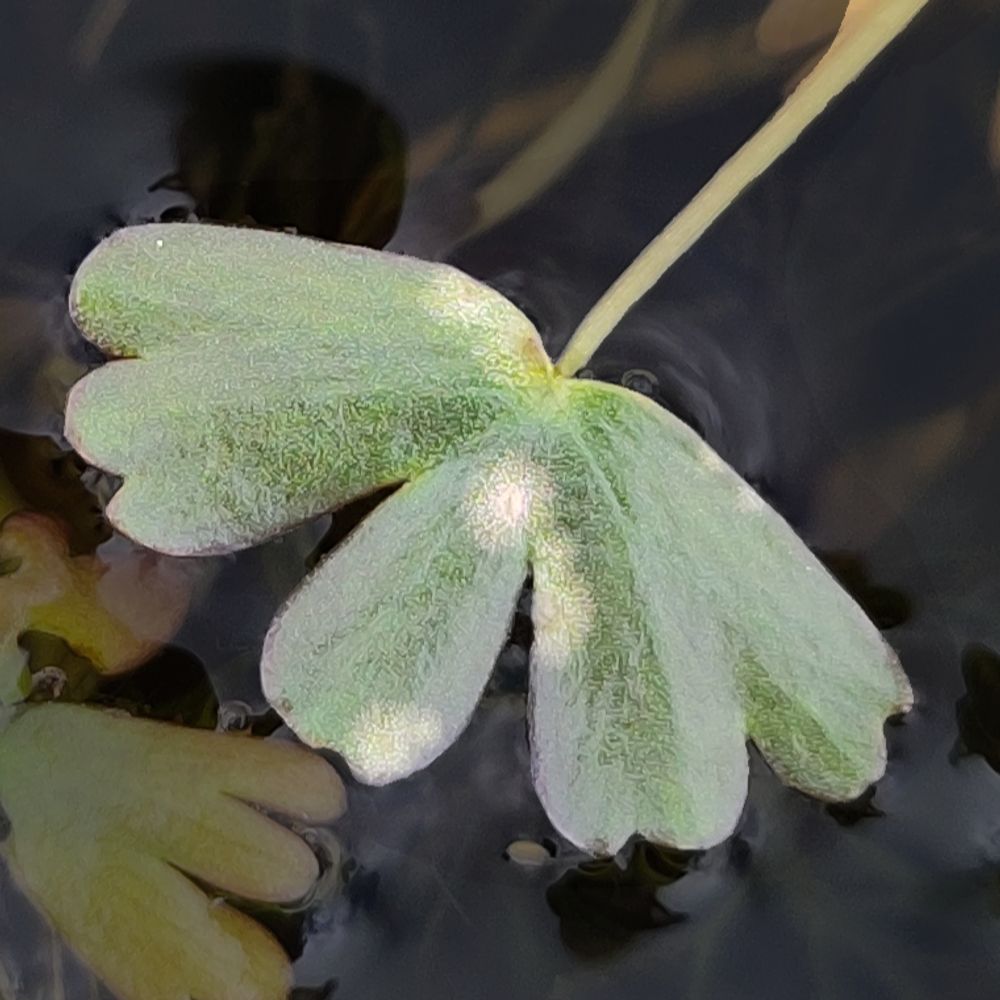
Are you interested in learning more about identifying plant pathogens in the wild? Come along to my webinar at 7pm on the 27th of January!
bsbi.org/take-part/ev...
#FungiFriends #WildPlantDisease
bsbi.org/take-part/ev...
#FungiFriends #WildPlantDisease

December 11, 2025 at 3:38 PM
Are you interested in learning more about identifying plant pathogens in the wild? Come along to my webinar at 7pm on the 27th of January!
bsbi.org/take-part/ev...
#FungiFriends #WildPlantDisease
bsbi.org/take-part/ev...
#FungiFriends #WildPlantDisease
Reposted by Jen Farrar
Every so often I venture south of the border, and Day 11 of my botanical #adventcalendar is the amazing Large-flowered Butterwort - native to SW Ireland, but occasionally introduced in England, including this population in Edale
Like @bsbibotany.bsky.social, I couldn't stop grinning!
#wildflowerhour
Like @bsbibotany.bsky.social, I couldn't stop grinning!
#wildflowerhour


December 11, 2025 at 9:03 AM
Every so often I venture south of the border, and Day 11 of my botanical #adventcalendar is the amazing Large-flowered Butterwort - native to SW Ireland, but occasionally introduced in England, including this population in Edale
Like @bsbibotany.bsky.social, I couldn't stop grinning!
#wildflowerhour
Like @bsbibotany.bsky.social, I couldn't stop grinning!
#wildflowerhour
Reposted by Jen Farrar

Welcome to my new podcast “Meadow Matters”. The first episode is all about Yellow Rattle.
rss.com/podcasts/mea...
rss.com/podcasts/mea...

Meadow Matters | Podcast on RSS.com
This podcast explores the creation, restoration, and management of species-rich meadows and how ultimately, they not only support wildlife, but enable us to produce food in a more sustainable way.
rss.com
December 11, 2025 at 8:24 PM
Welcome to my new podcast “Meadow Matters”. The first episode is all about Yellow Rattle.
rss.com/podcasts/mea...
rss.com/podcasts/mea...
Reposted by Jen Farrar
Hard-fern, Blechnum spicant. Two types of leaves. Fertile (F) fronds arise from centre of plant & grow up to 75cm. Pinnae are narrow and widely spaced. Their underside have brown linear spore bearing sori. Sterile (S) leaves up to 60cm, glossy with close together, linear pinnae

December 11, 2025 at 6:26 PM
Hard-fern, Blechnum spicant. Two types of leaves. Fertile (F) fronds arise from centre of plant & grow up to 75cm. Pinnae are narrow and widely spaced. Their underside have brown linear spore bearing sori. Sterile (S) leaves up to 60cm, glossy with close together, linear pinnae
Reposted by Jen Farrar
Hart’s-tongue, Asplenium scolopendrium. Shiny. Strap shaped leaves up to 6cm wide with cordate base and distinct midrib. Each vein ends in submarginal hydathode. Petiole up to 30cm and scaly

December 10, 2025 at 6:24 PM
Hart’s-tongue, Asplenium scolopendrium. Shiny. Strap shaped leaves up to 6cm wide with cordate base and distinct midrib. Each vein ends in submarginal hydathode. Petiole up to 30cm and scaly
Reposted by Jen Farrar
White Clover, Trifolium repens. Very variable. Up to 50cm. Roots at the nodes and forms mats. Leaves on long stalks. Leaflets up to 30mm, finely toothed with 5-20 teeth per side. Usually with pale chevron near the base.

December 9, 2025 at 6:13 PM
White Clover, Trifolium repens. Very variable. Up to 50cm. Roots at the nodes and forms mats. Leaves on long stalks. Leaflets up to 30mm, finely toothed with 5-20 teeth per side. Usually with pale chevron near the base.
Reposted by Jen Farrar
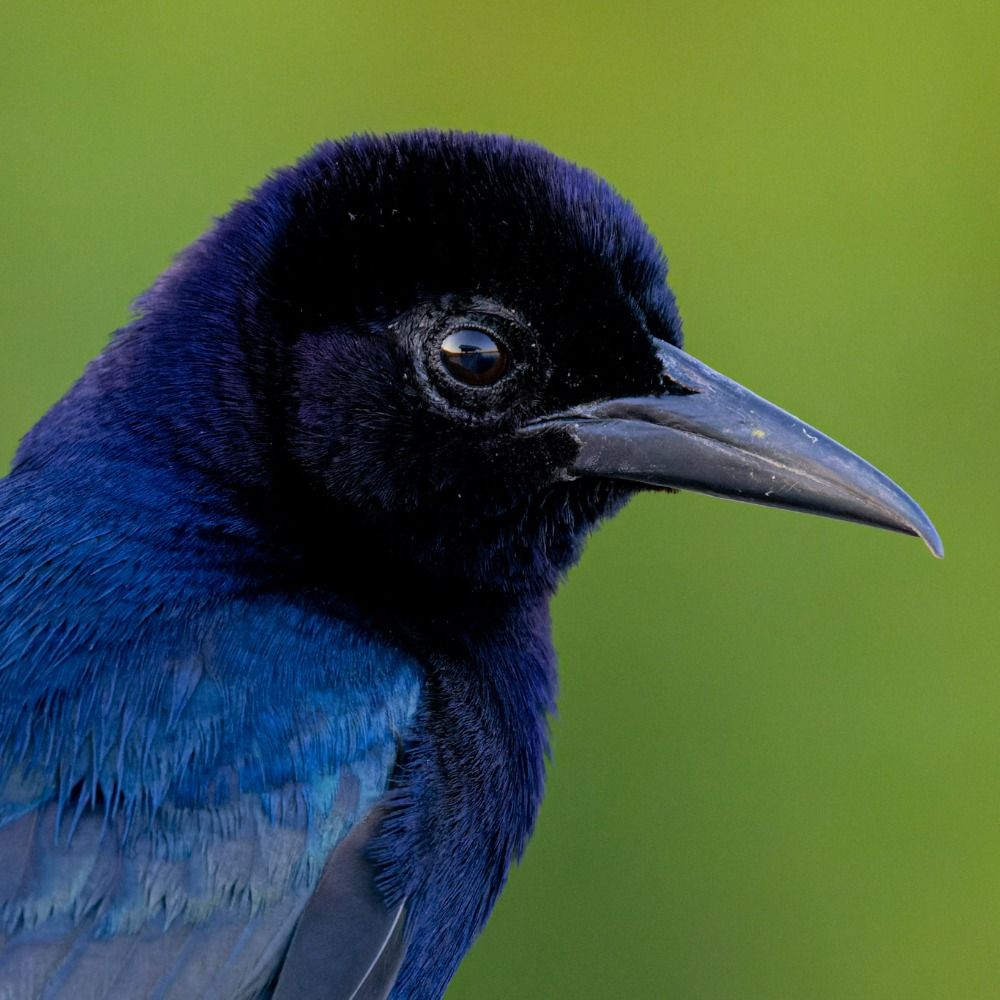
Favorite images from 2025, Day 8: A closeup of an eye belonging to a female anhinga during the breeding season, which is when the eyes themselves turn dark red with a bright orange ring, surrounded by a green and blue eyering and lore. #birds

December 8, 2025 at 3:29 PM
Favorite images from 2025, Day 8: A closeup of an eye belonging to a female anhinga during the breeding season, which is when the eyes themselves turn dark red with a bright orange ring, surrounded by a green and blue eyering and lore. #birds
Reposted by Jen Farrar

Fungi are among the most important and beautiful soil organisms.
🍄 Explore the fungal tree of life, with an emphasis on the macroscopic diversity of fungi.
📷 Laszlo G. Nagy
🍄 Explore the fungal tree of life, with an emphasis on the macroscopic diversity of fungi.
📷 Laszlo G. Nagy

December 8, 2025 at 10:00 AM
Fungi are among the most important and beautiful soil organisms.
🍄 Explore the fungal tree of life, with an emphasis on the macroscopic diversity of fungi.
📷 Laszlo G. Nagy
🍄 Explore the fungal tree of life, with an emphasis on the macroscopic diversity of fungi.
📷 Laszlo G. Nagy
Reposted by Jen Farrar
Red Clover, Trifolium pratense. Leaves hairy below and often above. 3-leaflets each up to 30mm long and often with white chevron. Petiole variable: hairy-hairless.

December 8, 2025 at 6:01 PM
Red Clover, Trifolium pratense. Leaves hairy below and often above. 3-leaflets each up to 30mm long and often with white chevron. Petiole variable: hairy-hairless.
Reposted by Jen Farrar
I mentioned ‘elastic stele’ in my earlier post. Below is definition & video to demonstrate (Video shows it on Bog Stitchwort).
Stele: the central core of the stem containing the vascular system (xylem and phloem).
From the Greek ‘stele’ for pillar.
Stele: the central core of the stem containing the vascular system (xylem and phloem).
From the Greek ‘stele’ for pillar.
December 6, 2025 at 6:27 PM
I mentioned ‘elastic stele’ in my earlier post. Below is definition & video to demonstrate (Video shows it on Bog Stitchwort).
Stele: the central core of the stem containing the vascular system (xylem and phloem).
From the Greek ‘stele’ for pillar.
Stele: the central core of the stem containing the vascular system (xylem and phloem).
From the Greek ‘stele’ for pillar.
Reposted by Jen Farrar
Nipplewort, Lapsana communis. Basal rosette: Hairy, stalked, toothed leaves up to 15cm long. Large terminal leaf lobe and 1-3 pairs of smaller lateral lobes

December 5, 2025 at 6:00 PM
Nipplewort, Lapsana communis. Basal rosette: Hairy, stalked, toothed leaves up to 15cm long. Large terminal leaf lobe and 1-3 pairs of smaller lateral lobes
Reposted by Jen Farrar
Stuck for Christmas gift ideas…. how about a Big Meadow Search book? 🤔😉🤓
2 volumes compiled from the project’s social media posts. Bk: 1 covers grassland indicator species with a range of associated species whilst Bk 2 has >200 different species, again with associated species
2 volumes compiled from the project’s social media posts. Bk: 1 covers grassland indicator species with a range of associated species whilst Bk 2 has >200 different species, again with associated species

December 4, 2025 at 6:03 PM
Stuck for Christmas gift ideas…. how about a Big Meadow Search book? 🤔😉🤓
2 volumes compiled from the project’s social media posts. Bk: 1 covers grassland indicator species with a range of associated species whilst Bk 2 has >200 different species, again with associated species
2 volumes compiled from the project’s social media posts. Bk: 1 covers grassland indicator species with a range of associated species whilst Bk 2 has >200 different species, again with associated species