



Brian Mackie
@brianmackie.bsky.social
WW2 Clyde history. HMCS Niobe / Royal Canadian Navy. Greenock Morton / In the Community. Slava Ukraini!
St John’s is now a city of just over 100,000 people. It was less than half that size in the 1940s. Yet it was a favoured destination for sailors, who were well catered-for by a population who knew what it was to go to sea. And the locals are still just as welcoming – visit if you can!
13/End
13/End

November 9, 2025 at 2:47 AM
St John’s is now a city of just over 100,000 people. It was less than half that size in the 1940s. Yet it was a favoured destination for sailors, who were well catered-for by a population who knew what it was to go to sea. And the locals are still just as welcoming – visit if you can!
13/End
13/End
The U-190’s periscope and items from the ship are preserved at the Crow’s Nest, a St John’s club established in January 1942 for seagoing Naval officers, that is unchanged to this day. The wall decorations, original to wartime, tell stories that only such artifacts can.
12/13
12/13


November 9, 2025 at 2:43 AM
The U-190’s periscope and items from the ship are preserved at the Crow’s Nest, a St John’s club established in January 1942 for seagoing Naval officers, that is unchanged to this day. The wall decorations, original to wartime, tell stories that only such artifacts can.
12/13
12/13
Hundreds of convoys, each a battle in and of itself, were escorted from St John’s, primarily by the Royal Canadian Navy and Royal Navy. At war’s end, one of their tormentors, U-190, was surrendered and brought into port.
11/13
11/13


November 9, 2025 at 2:35 AM
Hundreds of convoys, each a battle in and of itself, were escorted from St John’s, primarily by the Royal Canadian Navy and Royal Navy. At war’s end, one of their tormentors, U-190, was surrendered and brought into port.
11/13
11/13
The St John’s dockyard, owned by the Newfoundland Railway Corp, worked 7 days a week from 1940-45 and recorded no less than 1,312 ships repaired and upgraded over that time. Ships with torpedo, collision or weather damage were a common sight in harbour.
10/13
10/13

November 9, 2025 at 2:27 AM
The St John’s dockyard, owned by the Newfoundland Railway Corp, worked 7 days a week from 1940-45 and recorded no less than 1,312 ships repaired and upgraded over that time. Ships with torpedo, collision or weather damage were a common sight in harbour.
10/13
10/13
On March 4, 1942, U-587 attacked the old steamer ‘Terra Nova’, as the ship was leaving St John’s. One torpedo exploded below Fort Amherst’s gun battery, another was caught in the torpedo nets. A sunken ship would have caused severe problems to harbour access.
9/13
9/13

November 9, 2025 at 2:21 AM
On March 4, 1942, U-587 attacked the old steamer ‘Terra Nova’, as the ship was leaving St John’s. One torpedo exploded below Fort Amherst’s gun battery, another was caught in the torpedo nets. A sunken ship would have caused severe problems to harbour access.
9/13
9/13
The Newfoundland Escort Force was assigned to the western North Atlantic, handing convoys over to escorts based at Londonderry, Northern Ireland in mid-ocean. Both bases were disconnected from the mainland and were smaller in scale than major ports. But they were ideal as convoy escort hubs.
8/13
8/13


November 9, 2025 at 2:18 AM
The Newfoundland Escort Force was assigned to the western North Atlantic, handing convoys over to escorts based at Londonderry, Northern Ireland in mid-ocean. Both bases were disconnected from the mainland and were smaller in scale than major ports. But they were ideal as convoy escort hubs.
8/13
8/13
Concrete underground gun emplacements were built at Cape Spear, Newfoundland, with 10-inch naval guns in operation by January 1942. The site can be visited today and is reminiscent of similar, and perhaps more familiar, gun emplacements in north-west Europe.
7/13
7/13


November 9, 2025 at 2:01 AM
Concrete underground gun emplacements were built at Cape Spear, Newfoundland, with 10-inch naval guns in operation by January 1942. The site can be visited today and is reminiscent of similar, and perhaps more familiar, gun emplacements in north-west Europe.
7/13
7/13
Fort Cape Spear was first manned in June 1941, the same month that the Royal Canadian Navy based its ‘Newfoundland Escort Force’ at St John’s. The men of the 103rd Nova Scotia Coastal Battery staffed the fort, in all weathers, right through to the end of the war in 1945.
6/13
6/13


November 9, 2025 at 1:52 AM
Fort Cape Spear was first manned in June 1941, the same month that the Royal Canadian Navy based its ‘Newfoundland Escort Force’ at St John’s. The men of the 103rd Nova Scotia Coastal Battery staffed the fort, in all weathers, right through to the end of the war in 1945.
6/13
6/13
Beyond Fort Amherst is Cape Spear, the easterly-most point of North America. Just a 20-minute drive from St John’s, the lighthouse there has served as a directional beacon since 1836.
5/13
5/13

November 9, 2025 at 1:45 AM
Beyond Fort Amherst is Cape Spear, the easterly-most point of North America. Just a 20-minute drive from St John’s, the lighthouse there has served as a directional beacon since 1836.
5/13
5/13
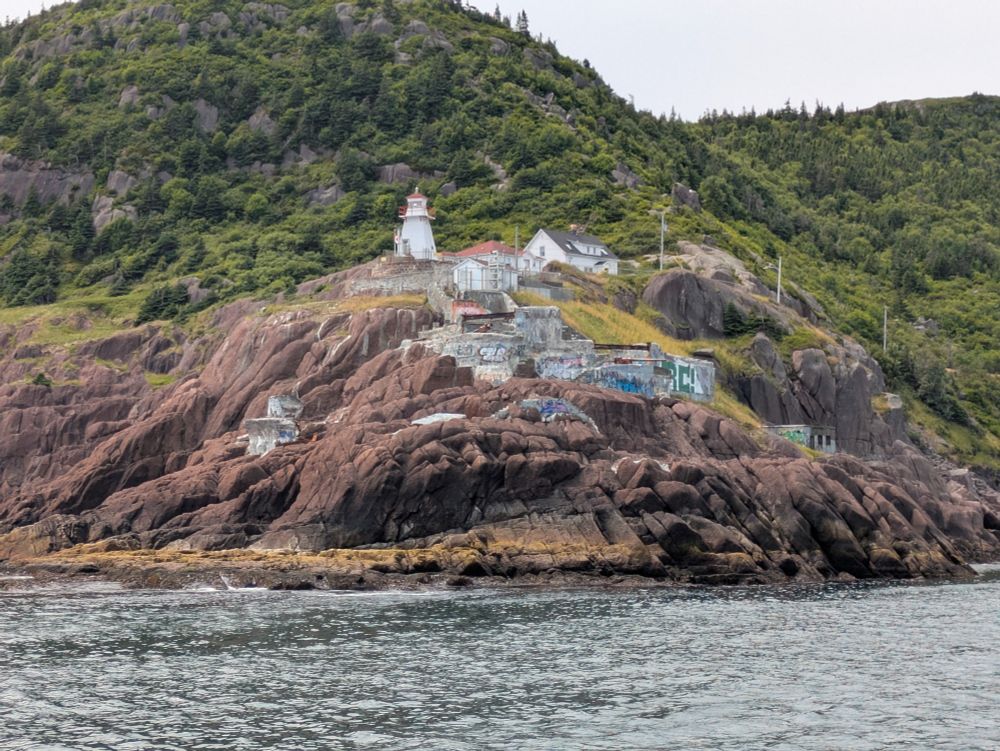
The Narrows’ entrance was protected during the war by a US garrison on Signal Hill, now demolished, and by Fort Amherst, still visible today. The Fort, manned by Canadian Forces, featured two 4.7-inch guns, fired on several occasions to ward off merchant ships giving incorrect signals.
4/13
4/13

November 9, 2025 at 1:40 AM
The Narrows’ entrance was protected during the war by a US garrison on Signal Hill, now demolished, and by Fort Amherst, still visible today. The Fort, manned by Canadian Forces, featured two 4.7-inch guns, fired on several occasions to ward off merchant ships giving incorrect signals.
4/13
4/13
The 11-metre depth of the Narrows was created through wartime excavation of the submerged Merlin Rock, first reduced in the 19th century. The channel already required skill and care in large-ship piloting. The addition of multiple torpedo nets necessitated greater depth for safe passage.
3/13
3/13

November 9, 2025 at 1:34 AM
The 11-metre depth of the Narrows was created through wartime excavation of the submerged Merlin Rock, first reduced in the 19th century. The channel already required skill and care in large-ship piloting. The addition of multiple torpedo nets necessitated greater depth for safe passage.
3/13
3/13
The St John’s harbour Narrows, just 61 metres (200 feet) wide and 11 metres (36 feet) deep, lead straight out into the North Atlantic. Ships in a storm report an immediate calm upon entering the Narrows, and the exact reverse when leaving.
2/13
2/13

November 9, 2025 at 1:27 AM
The St John’s harbour Narrows, just 61 metres (200 feet) wide and 11 metres (36 feet) deep, lead straight out into the North Atlantic. Ships in a storm report an immediate calm upon entering the Narrows, and the exact reverse when leaving.
2/13
2/13
A narrow WW2 North Atlantic port entrance, protected by torpedo nets AND icebergs! We could only be in St John’s, Newfoundland.
Here is a thread of intertwined St John’s coastal and naval history, with views of both the past and the present.
#coastalhistory #navalhistory 🧵1/13
Here is a thread of intertwined St John’s coastal and naval history, with views of both the past and the present.
#coastalhistory #navalhistory 🧵1/13

November 9, 2025 at 1:19 AM
A narrow WW2 North Atlantic port entrance, protected by torpedo nets AND icebergs! We could only be in St John’s, Newfoundland.
Here is a thread of intertwined St John’s coastal and naval history, with views of both the past and the present.
#coastalhistory #navalhistory 🧵1/13
Here is a thread of intertwined St John’s coastal and naval history, with views of both the past and the present.
#coastalhistory #navalhistory 🧵1/13
Enjoying the World Series here in Toronto! We often get blue jays in our back garden, their colours remind me of thick coats needed in winter here.

October 25, 2025 at 3:06 AM
Enjoying the World Series here in Toronto! We often get blue jays in our back garden, their colours remind me of thick coats needed in winter here.
The Sackville Place monument, on the Halifax waterfront, that together with the ship acts as a memorial to the 96,000 members of the Royal Canadian Navy that served during WW2. Over 2,000 Canadian sailors did not return home.
20/End.
20/End.

August 31, 2025 at 4:28 AM
The Sackville Place monument, on the Halifax waterfront, that together with the ship acts as a memorial to the 96,000 members of the Royal Canadian Navy that served during WW2. Over 2,000 Canadian sailors did not return home.
20/End.
20/End.
Left: HMCS Sackville’s badge: the ship was named after port towns in both New Brunswick and Nova Scotia.
Right: Life belt. HMCS Sackville was restored in the early 1980s and recommissioned in 1985 as Canada's Naval Memorial.
19/20
Right: Life belt. HMCS Sackville was restored in the early 1980s and recommissioned in 1985 as Canada's Naval Memorial.
19/20


August 31, 2025 at 4:23 AM
Left: HMCS Sackville’s badge: the ship was named after port towns in both New Brunswick and Nova Scotia.
Right: Life belt. HMCS Sackville was restored in the early 1980s and recommissioned in 1985 as Canada's Naval Memorial.
19/20
Right: Life belt. HMCS Sackville was restored in the early 1980s and recommissioned in 1985 as Canada's Naval Memorial.
19/20
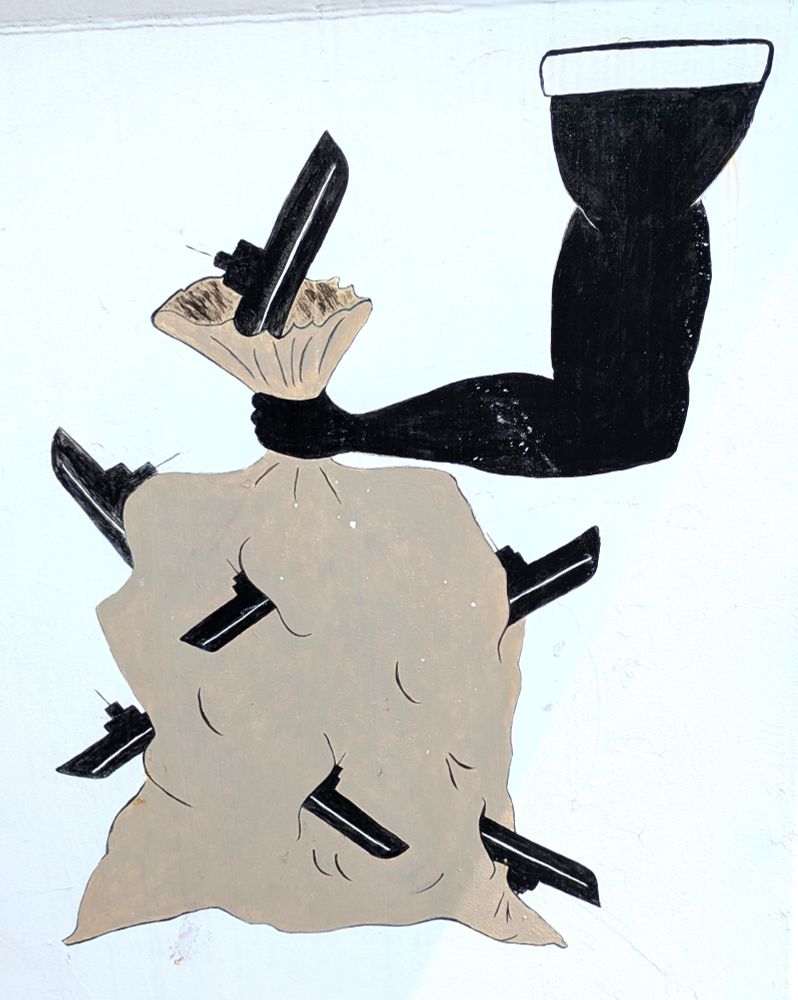
Left: HMCS Sackville’s bell
Right: Gunplate art. As on US ‘Flying Fortress” bombers, Canadian WW2 ships featured art unique to each ship. In this case, a ‘Sackfull’ of U-Boats is pictured.
18/20
Right: Gunplate art. As on US ‘Flying Fortress” bombers, Canadian WW2 ships featured art unique to each ship. In this case, a ‘Sackfull’ of U-Boats is pictured.
18/20

August 31, 2025 at 4:18 AM
Left: HMCS Sackville’s bell
Right: Gunplate art. As on US ‘Flying Fortress” bombers, Canadian WW2 ships featured art unique to each ship. In this case, a ‘Sackfull’ of U-Boats is pictured.
18/20
Right: Gunplate art. As on US ‘Flying Fortress” bombers, Canadian WW2 ships featured art unique to each ship. In this case, a ‘Sackfull’ of U-Boats is pictured.
18/20
Left: A rather cramped galley, serving over 100 men.
Right: The most important ration: throughout WW2 (and indeed until 1972), RCN sailors received a daily rum ration at the noon hour of 71 ml of rum, roughly a large shot glass full.
17/20
Right: The most important ration: throughout WW2 (and indeed until 1972), RCN sailors received a daily rum ration at the noon hour of 71 ml of rum, roughly a large shot glass full.
17/20


August 31, 2025 at 4:14 AM
Left: A rather cramped galley, serving over 100 men.
Right: The most important ration: throughout WW2 (and indeed until 1972), RCN sailors received a daily rum ration at the noon hour of 71 ml of rum, roughly a large shot glass full.
17/20
Right: The most important ration: throughout WW2 (and indeed until 1972), RCN sailors received a daily rum ration at the noon hour of 71 ml of rum, roughly a large shot glass full.
17/20
Left: Ship’s Carpentry shop. Right: Sick Bay.
For a small ship, a lot was packed in, allowing for basic services.
16/20
For a small ship, a lot was packed in, allowing for basic services.
16/20


August 31, 2025 at 4:09 AM
Left: Ship’s Carpentry shop. Right: Sick Bay.
For a small ship, a lot was packed in, allowing for basic services.
16/20
For a small ship, a lot was packed in, allowing for basic services.
16/20
HMCS Sackville's auxiliary steering, located immediately above the rudder. With this, it would be possible to steer the ship, if other parts of the ship were damaged.
15/20
15/20

August 31, 2025 at 4:01 AM
HMCS Sackville's auxiliary steering, located immediately above the rudder. With this, it would be possible to steer the ship, if other parts of the ship were damaged.
15/20
15/20
View from above of the Engine room. A suspension device allows access to several valves above the boilers, that are not accessible otherwise. Just above the sailor’s head is a metal canopy with portholes, allowing in light from the deck.
14/20
14/20

August 31, 2025 at 3:58 AM
View from above of the Engine room. A suspension device allows access to several valves above the boilers, that are not accessible otherwise. Just above the sailor’s head is a metal canopy with portholes, allowing in light from the deck.
14/20
14/20
View from stern – the QF (quick-firing) 2-pounder 'pom-pom' anti-aircraft gun is visible at centre. The funnel is decorated with a Barber pole stripe, showing that HMCS Sackville had been a member of Mid-Ocean Escort group C3, on Atlantic convoy duty.
13/20
13/20

August 31, 2025 at 3:54 AM
View from stern – the QF (quick-firing) 2-pounder 'pom-pom' anti-aircraft gun is visible at centre. The funnel is decorated with a Barber pole stripe, showing that HMCS Sackville had been a member of Mid-Ocean Escort group C3, on Atlantic convoy duty.
13/20
13/20
Left: Depth charge setting chart, with depths from 50 to 500 feet.
Right: Noise-maker, cast off and suspended from the stern to attract acoustic homing torpedoes away from the ship. These torpedoes, called GNATs by the allies, were used by U-Boats from September 1943 onwards.
12/20
Right: Noise-maker, cast off and suspended from the stern to attract acoustic homing torpedoes away from the ship. These torpedoes, called GNATs by the allies, were used by U-Boats from September 1943 onwards.
12/20


August 31, 2025 at 3:50 AM
Left: Depth charge setting chart, with depths from 50 to 500 feet.
Right: Noise-maker, cast off and suspended from the stern to attract acoustic homing torpedoes away from the ship. These torpedoes, called GNATs by the allies, were used by U-Boats from September 1943 onwards.
12/20
Right: Noise-maker, cast off and suspended from the stern to attract acoustic homing torpedoes away from the ship. These torpedoes, called GNATs by the allies, were used by U-Boats from September 1943 onwards.
12/20
At the stern of the ship, two rails of depth charges, with seven depth charges in each, await a target. HMCS Sackville damaged two U-Boats during her wartime service.
11/20
11/20

August 31, 2025 at 3:43 AM
At the stern of the ship, two rails of depth charges, with seven depth charges in each, await a target. HMCS Sackville damaged two U-Boats during her wartime service.
11/20
11/20
The starboard deck / gangway, with every space used. Immediately ahead, a depth charge launcher. Spare depth charges are stored on the deck. Suspended above are two Carley floats, in case of sinking. For rescue, scramble nets are immediately to hand, stored in a rack at head height.
10/20
10/20

August 31, 2025 at 3:37 AM
The starboard deck / gangway, with every space used. Immediately ahead, a depth charge launcher. Spare depth charges are stored on the deck. Suspended above are two Carley floats, in case of sinking. For rescue, scramble nets are immediately to hand, stored in a rack at head height.
10/20
10/20