



Celtx
@celtx.com
Celtx, a Backlight business, is an all-in-one solution for writing, planning, and managing media production.
https://celtx.com
https://celtx.com
The end result will be a layered character. One that grows, that falls apart and rise again. The best characters are ones that are baked with intention.
Need a recipe? We’ve got the ingredients and the steps:
Need a recipe? We’ve got the ingredients and the steps:

Character Development: How to Write Stronger Characters - Celtx Blog
Learn character development basics: traits, backstory, motivation, and arcs. Build complex characters your audience truly cares about.
blog.celtx.com
December 23, 2025 at 4:02 PM
The end result will be a layered character. One that grows, that falls apart and rise again. The best characters are ones that are baked with intention.
Need a recipe? We’ve got the ingredients and the steps:
Need a recipe? We’ve got the ingredients and the steps:
Nature is awesome.
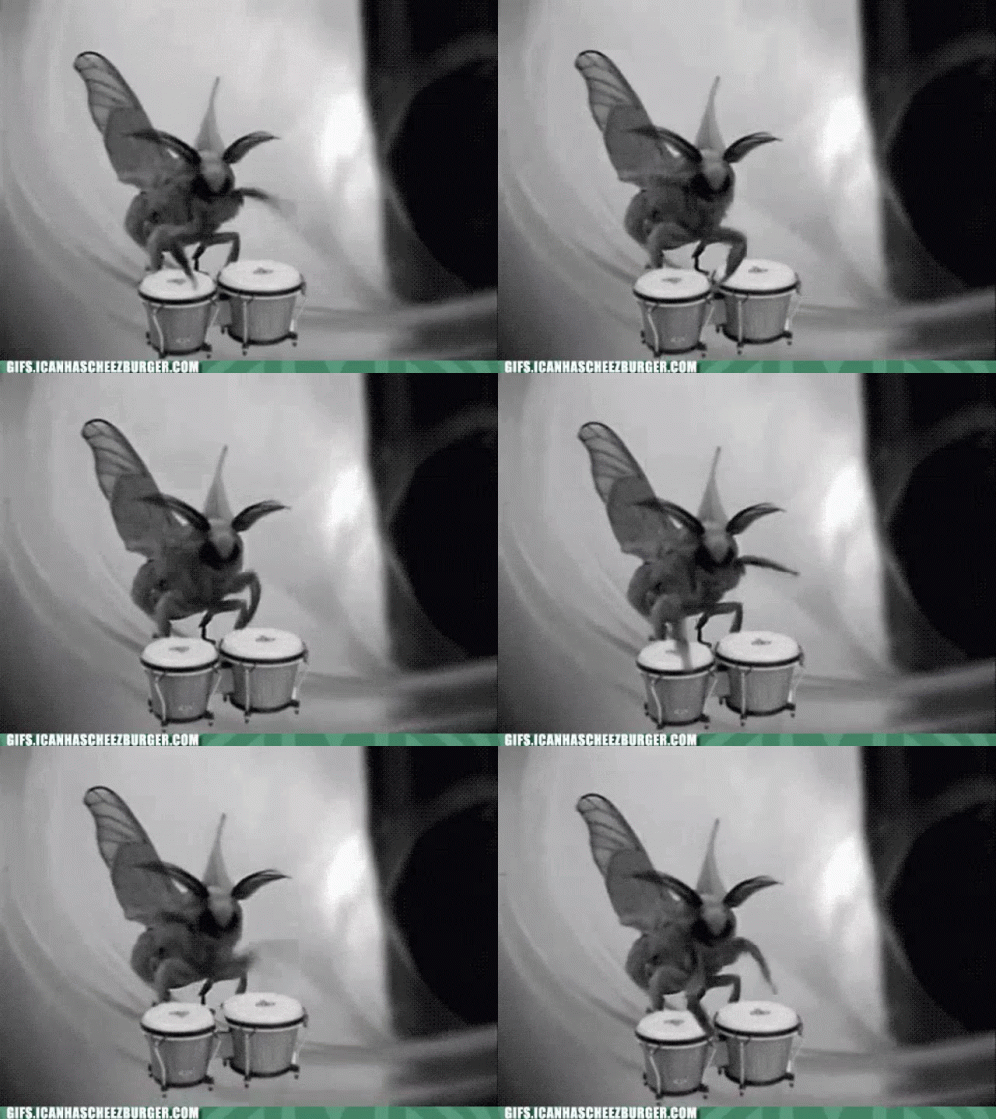
a black and white photo of a moth playing bongos with the website gifs.icanhascheezburger.com below it
Alt: a black and white photo of a moth playing bongos with the website gifs.icanhascheezburger.com below it
media.tenor.com
December 18, 2025 at 5:57 PM
Nature is awesome.
You said it better than us! 👏👏👏
December 17, 2025 at 7:49 PM
You said it better than us! 👏👏👏
A group of moths is called an eclipse! That also made me happy. Thought I'd share!
December 17, 2025 at 6:28 PM
A group of moths is called an eclipse! That also made me happy. Thought I'd share!
While switching tones isn’t “wrong,” understanding the type you’re grounding your story in helps everything feel more cohesive. Use the approach that supports the truth you’re trying to reveal.
For more on using satire: https://blog.celtx.com/what-is-satire-screenwriting-guide/
#scriptsky #filmsky
For more on using satire: https://blog.celtx.com/what-is-satire-screenwriting-guide/
#scriptsky #filmsky

What is Satire? Social Commentary and Subversive Humor - Celtx Blog
Learn what satire is, the three main types, and how writers use humor and exaggeration to expose deeper truths—plus examples from film and TV.
blog.celtx.com
December 17, 2025 at 5:31 PM
While switching tones isn’t “wrong,” understanding the type you’re grounding your story in helps everything feel more cohesive. Use the approach that supports the truth you’re trying to reveal.
For more on using satire: https://blog.celtx.com/what-is-satire-screenwriting-guide/
#scriptsky #filmsky
For more on using satire: https://blog.celtx.com/what-is-satire-screenwriting-guide/
#scriptsky #filmsky
Type 3: Menippean
Targets ideas and worldviews; often surreal or ensemble-driven.
Examples include Barbie & Dr. Strangelove
Targets ideas and worldviews; often surreal or ensemble-driven.
Examples include Barbie & Dr. Strangelove
December 17, 2025 at 5:31 PM
Type 3: Menippean
Targets ideas and worldviews; often surreal or ensemble-driven.
Examples include Barbie & Dr. Strangelove
Targets ideas and worldviews; often surreal or ensemble-driven.
Examples include Barbie & Dr. Strangelove
Type 2: Juvenalian
Sharper, darker, confronts bigger issues head-on.
Think: Parasite and Don't Look Up
Sharper, darker, confronts bigger issues head-on.
Think: Parasite and Don't Look Up
December 17, 2025 at 5:31 PM
Type 2: Juvenalian
Sharper, darker, confronts bigger issues head-on.
Think: Parasite and Don't Look Up
Sharper, darker, confronts bigger issues head-on.
Think: Parasite and Don't Look Up
Type 1: Horatian
Warm, playful, gently pokes fun.
Think: Parks & Rec
Warm, playful, gently pokes fun.
Think: Parks & Rec
December 17, 2025 at 5:31 PM
Type 1: Horatian
Warm, playful, gently pokes fun.
Think: Parks & Rec
Warm, playful, gently pokes fun.
Think: Parks & Rec
There are three major types of satire, each shaping tone and intent in a different way: Horatian, Juvenalian, and Minippean.
Knowing which one you’re using helps keep your story focused.
Knowing which one you’re using helps keep your story focused.
December 17, 2025 at 5:30 PM
There are three major types of satire, each shaping tone and intent in a different way: Horatian, Juvenalian, and Minippean.
Knowing which one you’re using helps keep your story focused.
Knowing which one you’re using helps keep your story focused.
3. Track Your Progress: Use a tool like Celtx to keep your pre-production notes and screenplays organized. Visually seeing your progress (from treatment to draft) is a massive motivator.
Start small, build a habit, and soon reaping won't feel quite as crushing. Stack your wins. You've got this!
Start small, build a habit, and soon reaping won't feel quite as crushing. Stack your wins. You've got this!
December 15, 2025 at 4:01 PM
3. Track Your Progress: Use a tool like Celtx to keep your pre-production notes and screenplays organized. Visually seeing your progress (from treatment to draft) is a massive motivator.
Start small, build a habit, and soon reaping won't feel quite as crushing. Stack your wins. You've got this!
Start small, build a habit, and soon reaping won't feel quite as crushing. Stack your wins. You've got this!
2. Go Small to Win Big: Instead of "Finish the first act," try "Write two scenes," or even "Outline the next five beats." Small, completed tasks create momentum and a sense of accomplishment.
December 15, 2025 at 4:01 PM
2. Go Small to Win Big: Instead of "Finish the first act," try "Write two scenes," or even "Outline the next five beats." Small, completed tasks create momentum and a sense of accomplishment.
🎯 How to Set Attainable Writing Goals (A quick guide):
1. Audit Your Time: How much realistic distraction-free time do you have? Don't plan for a two-hour session if you only have a solid 30 minutes.
1. Audit Your Time: How much realistic distraction-free time do you have? Don't plan for a two-hour session if you only have a solid 30 minutes.
December 15, 2025 at 4:01 PM
🎯 How to Set Attainable Writing Goals (A quick guide):
1. Audit Your Time: How much realistic distraction-free time do you have? Don't plan for a two-hour session if you only have a solid 30 minutes.
1. Audit Your Time: How much realistic distraction-free time do you have? Don't plan for a two-hour session if you only have a solid 30 minutes.
Listen, we've all been there. Setting massive writing goals is easy (and fun!), but the follow-through can feel like trying to run a marathon in quicksand. The secret to getting that sweet, sweet dopamine hit? Setting attainable goals.
December 15, 2025 at 4:01 PM
Listen, we've all been there. Setting massive writing goals is easy (and fun!), but the follow-through can feel like trying to run a marathon in quicksand. The secret to getting that sweet, sweet dopamine hit? Setting attainable goals.
For more on writing flashbacks that land:

How to Write a Flashback: Formatting, Rules, and Tips - Celtx Blog
Learn how to write and format flashbacks in a screenplay with clear examples, tips, and industry-standard guidelines to keep your story seamless and strong.
blog.celtx.com
December 12, 2025 at 3:02 PM
For more on writing flashbacks that land:
Before you write one, ask yourself:
• What does this reveal that the story truly needs?
• How does it reshape the scene we’re in?
• Would the script still work without it?
If the flashback doesn’t change anything, the scene doesn’t need it.
• What does this reveal that the story truly needs?
• How does it reshape the scene we’re in?
• Would the script still work without it?
If the flashback doesn’t change anything, the scene doesn’t need it.
December 12, 2025 at 3:02 PM
Before you write one, ask yourself:
• What does this reveal that the story truly needs?
• How does it reshape the scene we’re in?
• Would the script still work without it?
If the flashback doesn’t change anything, the scene doesn’t need it.
• What does this reveal that the story truly needs?
• How does it reshape the scene we’re in?
• Would the script still work without it?
If the flashback doesn’t change anything, the scene doesn’t need it.
Curious how to pull that off without overdoing it?

How to Use Alliteration in Screenwriting (with Excellent Examples) - Celtx Blog
How do you use alliteration? This guide breaks down what alliteration is, why it works, and how to apply it effectively in scripts, stories, and dialogue.
blog.celtx.com
December 8, 2025 at 4:03 PM
Curious how to pull that off without overdoing it?