Cliff Mass Weather Blog
cliffmass.blogspot.com.web.brid.gy
Cliff Mass Weather Blog
@cliffmass.blogspot.com.web.brid.gy
This blog provides updated forecasts and comments on current weather or other topics

🌉 bridged from https://cliffmass.blogspot.com/ on the web: https://fed.brid.gy/web/cliffmass.blogspot.com
Drought Exaggeration
One of the most misused terms is **drought**.    Certain groups and individuals are constantly using the "D" word when it is not appropriate, often to support their own agenda. The most frequent source of the most exaggerated, unfounded drought claims is the **Drought Monitor graphic** , produced by a partnership between the National Drought Mitigation Center at the University of Nebraska-Lincoln, the United States Department of Agriculture, and the National Oceanic and Atmospheric Administration (see the most recent graphic below). The trouble is that these graphics are **subjective and often wildly wrong.** And they are virtually always wrong in the same direction: **exaggerating the intensity of the "drought."** Want a good example?  Consider the LATEST Drought Monitor graphic for Washington State released on Thursday (see below).  It shows the conditions for last Tuesday morning Moderate drought over western Washington, most of the Cascades, and the eastern slopes of the Cascades.  Severe drought over the western slopes of the central Washington Cascades, the eastern slopes of the Cascades, and northeast Washington.   EXTREME drought over southwest Washington. Drought during a period of flooding, moist soils, and above-normal reservoir levels. How can I put it diplomatically? **This is inconsistent with reality.** Climate advocacy groups, such as the **Seattle Times Climate Lab,** take exaggerated drought claims like this as gospel, and hype is further. (see below) **So, When Should We Use the Term "drought"** Some groups, like the Drought Monitor folks at the University of Nebraska, call it a drought when rain or snow are simply below normal. This makes little sense, since precipitation will be below normal half the time.  So 50% of the time we are in drought?   Silly. And what about impacts?   A drought must produce serious problems due to a lack of water. More scientifically grounded groups, such as NASA (below), use such a definition. **T here is no way our region is in drought, by any rational definition.  ** During this fall wet season, most locations received MORE precipitation than usual. To illustrate, here is the difference from normal over the past 60 days. Most of the state was above normal, with large areas receiving MUCH more precipitation than normal (the North Cascades). The biggest drought concern has been the Yakima Valley and its reservoirs, with the latter being significantly below normal at the end of the summer. Now the Yakima reservoir levels are MUCH  higher above normal (see below). Local rivers? Most are flowing much above normal (see below). Westside reservoir storage?  All above normal (Seattle shown below). The water level in Lake Roosevelt, behind the crucial Grand Coulee Dam?  Above normal! Soil moisture? Large areas are above normal (green colors) The only aspect that is below normal right now is regional snowpack, but being low in mid-December is not unusual, and lots of snow is expected during the next week (and has been in the forecast for over a week). As shown below, the snow situation for the Columbia Basin is excellent (well above normal), and the north Cascades is at 77% of normal.    The Yakima basin has about half of its normal snowpack. A major enhancement of snowpack is now forecast, with huge amounts predicted for the Cascades during the next five days (see below). ** ** **In short, there is no rational reason to suggest that Washington State is now or will not be in drought during the next months.     ** And there's something else. Washington State receives far more precipitation than it needs.  Thus, a modest dry period (such as last spring and summer) had relatively little impact on the economy or essential water resources.  You really should not use the term drought when impacts were not evident.
cliffmass.blogspot.com
December 17, 2025 at 2:22 PM
The Incoming System
 I wanted to provide a brief update on the incoming system. A strong front is approaching, which will bring modest winds and substantial mountain precipitation...but nothing like we endured last week. The latest forecast precipitation totals through 4 PM Monday is for "only" 3-5 inches in the Olympics and northern Cascades. That will drive some of the local rivers up to moderate flow levels, but not nearly as high as last week. Here is a sample for the Snoqualmie River,  where levels just reach major flood levels.  Also, a much lower peak this time. Then there will be some winds associated with a strong cold front and the low pressure accompanying it. This forecast surface map for 7 AM Monday shows the  pressure pattern (solid lines), winds, and temperature (shading).  A strong front is offshore at this time, with a large north-south pressure difference over western Washington.  That means strong winds from the south. By 4 PM, the front has moved in, and cooler air has swept into western WA.  A big pressure difference across the Cascades means strong winds descending into eastern WA.   Good for wind energy, bad for power outages around Ellensburg and Leavenworth. Here in western WA, wind gusts should reach 40-50 mph, as illustrated by the Seattle WindWatch graphic for Seattle (below). A few outages should be expected in western Washington--tens of thousands, but no more. Finally, the big upcoming weather story will be SNOW.   Lots of it in the mountains, as illustrated by totals through next Sunday (below).
cliffmass.blogspot.com
December 15, 2025 at 2:23 PM
The Other Weather Disaster Last Week: A Downslope Windstorm
Although the big local weather story this week has been the heavy rain and serious flooding over the Pacific Northwest, there WAS another extreme weather feature:   **powerful downslope winds on Wednesday that caused massive tree damage and power outages over the eastern slopes of the Cascades.** Some of the winds exceeded 100 mph from the west. Leavenworth, on the eastern slopes of the Washington Cascades, was hit particularly hard, with the entire town losing power, forcing the cancellation of the Christmas Lights festival.  Here are a few samples of the destruction: The maximum wind gusts on Wednesday (from the limited collection of locations with power) are shown below. 106 mph above Lake Wenachee, 112 mph at Mission Ridge, 77 mph on the slopes just above Leavenworth. Much lighter winds over the lower Columbia Basin. The winds at Mission Ridge (6730 ft) are shown below (the dark blue line indicates the sustained wind, the top of the light blue area indicates the gusts, the bottom of the light blue indicates the low winds during the hour). Very windy from early Wednesday through early Thursday, with many gusts over 100 mph.   And the winds were exceedingly gusty.  Were these winds predicted ahead of time?   You bet they were.  Below is the forecast surface winds from the UW WRF modeling system for 1 PM Wednesday. Reds are over 70 knots (81 mph).  You can see bands of localized strong winds on the eastern side of the Cascades. The NOAA high-resolution model (HRRR, High Resolution Rapid Refresh) was doing the same thing, as shown by the forecast wind gusts at 7 PM Wednesday. ** So why such localized winds?   ** Answer: There was a downslope wind event in which strong winds approaching a mountain barrier are accelerated as they descend the lee slopes (see schematic below). Favorable conditions include strong winds approaching the barrier with sufficient vertical stability, conditions that can occur with the passage of the weather system from off the Pacific or the approach of a strong atmospheric river, which occurred during that day. The eastern slopes of the Cascades are well known for strong downslope winds. In my Northwest weather book, I note several incidents. Finally, many of you would like to know whether another major atmospheric river is headed to our region.   **The answer is yes.** Here is the atmospheric river diagnostic for Monday morning.  A juicy plume heading right into us. Consider the predicted precipitation totals through next Friday. Yikes!  Some places will get over 10 inches. On top of saturated soils and rivers that are running high. Some rivers will flood again. Will discuss in future blogs.
cliffmass.blogspot.com
December 14, 2025 at 2:19 PM
The Atmospheric River Event is Ending--- And ANOTHER One is Predicted
The heavy rainfall is over, but some rivers are still rising.   The most impactful atmospheric river event of the past few decades. Consider the 5-day rainfall totals below, and be prepared to be impressed. Many of the windward slopes of the Cascades and Olympics received more than 10 inches, with some experiencing 15-17 inches. You will also notice extreme rain shadow areas in the lee (east) of major barriers, which received less than an inch. Numerical weather prediction models were STUNNINGLY good, as shown by the predicted 5-day precipitation totals by the UW WRF model made last Sunday (see below). Close correspondence between predicted and observed rainfall. **The weather prediction world has changed dramatically during the past decades, with virtually every major extreme weather event predicted days before.** The problem is that governments, local agencies, and others are not sufficiently taking advantage of these skillful forecasts to save lives and property.  The media do not understand the profound impact of improved weather prediction technology. This problem is compounded by the National Weather Service, whose forecasts and warnings have declined substantially compared to the state of the art.  I can provide a half-dozen cases of the NWS failing to provide timely warnings even when model forecasts are excellent, such as this event and the Seattle ice storm of December 2022. ** ** **I hate to reveal this, but   ANOTHER significant atmospheric river/precipitation event is in the forecast.** ** ** Consider the predicted 72-h precipitation total ending 4 AM on Thursday.   Yikes...pretty wet, with some mountain areas getting 10 inches.  This is problematic, falling on saturated soils and rivers already well above normal. To address the reliability of this forecast, one should consult **ensembles of many forecasts**.  Below are plots of forecast precipitation at Stampede Pass in the central Cascades from many forecasts. All are going for a major precipitation event starting in the middle of next week.  You can take this to the bank. All of this is a reminder that the most impactful severe weather of the Pacific Northwest is flooding.  Not heatwaves, not wildfires, not windstorms.
cliffmass.blogspot.com
December 12, 2025 at 3:17 PM
The Second Atmospheric River Will Bring Far More Severe Impacts
In act one of this meteorological drama, yesterday and this morning brought heavy rain and flooding to many sections of western Washington.  Well-predicted days in advance. But the weather prediction models indicated that this would be a two-act event, with the **second act being far more serious**.   The curtain is about to rise. Take a look at the precipitation totals of the first act (last two days, below).  Some areas received 7-8 inches. Many local rivers are now at flood stage, with some at record levels (black dots are record levels, blue are 90th percentile or greater, with normal being 50th percentile) The media is full of pictures of flooded roads, such as in the Snoqualmie Valley.  A once-in-1-3-year event. But this is just the meteorological appetizer course.  The real action is about to begin:  a second, stronger event that will throw massive amounts of rain on saturated surfaces. Consider the total precipitation from the UW ultra-high resolution modeling system for the 72 h start this morning at 4 AM (shown below). Wow.  There are going to be some happy ducks.  Large areas will get 10 inches of rain or more, particularly in the Olympics and northern/central Cascades. Serious flooding is inevitable. How can I be so sure?  Because of the use of ensembles of many high-resolution forecasts.  If they are all on board with heavy rain, my confidence grows. Let me demonstrate this to you.   Here is the ensemble of accumulated precipitation at Humptulips on the southwest side of the Olympics.  A huge amount of precipitation (about 6 inches), most over about 12h.   Not much variance in the forecasts. _ _ _ _ Stampede Pass in the central Cascades (below)?   A similar soggy story. Every reservoir in the region will reach normal or above normal levels.  Consider the Seattle Times' favorite drought reservoir system (the Yakima), which they featured in a recent story. The Yakima River is now at flood stage (see below), and in a few days the entire system will be full to normal levels.
cliffmass.blogspot.com
December 10, 2025 at 2:16 PM
The Torrent Has Begun: The Philippine Connection
The predicted rain has begun.  Rain associated with a potent atmospheric river, with some of the water originating thousands of miles away near the Philippines! Consider the situation on Sunday afternoon, as shown by special satellites that observe atmospheric moisture from space (below). You can see the plume of atmospheric moisture extending from the western Pacific to the Northwest. But it is not quite that simple.  There is substantial three-dimensionality to atmospheric rivers. To prove this to you, below are air trajectories--the three-dimensional motion in space--of the air reaching the Cascades at 10,000, 5000, and 2000 meters above the surface.   At high altitudes, the moisture is coming from the western Pacific, but at lower elevations, the moisture is coming off the Pacific to our south. Atmospheric rivers are like real rivers, with tributaries contributing moisture along the way. The big precipitation has started.  Below are the precipitation totals for the past 24h.  A number of locations have already received 3-4.5 inches.   And more is on the way. Our rivers are rising very rapidly.  For example, the levels of the Cowlitz River in SW Washington are zooming upward (see below).   Soon it will be at flood stage. Remember...this is a two-step event...and this is only the first part! The Seattle NWS Forecast Office has FINALLY put out flooding warnings over large areas of western WA (see below).  Quite honestly, they waited way too long to do this. This is a serious event, and people need time to prepare.
cliffmass.blogspot.com
December 9, 2025 at 2:14 PM
A Monster Moisture Plume is About to Hit the Pacific Northwest
 The latest satellite imagery is stunning....and concerning.  A huge plume of water vapor, extending thousands of miles to the southwest, is about to hit our region, resulting in massive rainfall and localized flooding. Consider the water vapor imagery late this afternoon (below). Green and yellow are the highest values, Look at a wider view, and you can see this atmospheric river of moisture extends many thousands of miles to the southwest. We are now close enough in time to the event, and forecast models are similar enough, that we can have great confidence in the forecasts. The forecast totals through Wednesday morning are stunning, with over ten inches over the Cascades and coastal mountains. Some locations in SW Washington and NW Oregon will receive 15 inches. Very concerning. But it doesn't end there.  The next 24 hours will bring even more, particularly over the southern Cascades.  Major rivers in SW Washington (e.g., the Cowlitz) are going to flood. Don't take my word for it:  here are the latest predictions from the NOAA NW River Forecast Center: TEN Rivers are predicted to go into major flood, up from two predicted a few days ago. Some rivers, like the Collitz, are predicted to approach all-time record levels (black line below). Stunning. I am more than surprised that the National Weather Service does not have flood warnings out for drainages in the central and southern Cascades (see below).  They should.
cliffmass.blogspot.com
December 8, 2025 at 2:56 PM
Flooding Ahead
It is now clear that we will have a major precipitation event on Monday and Tuesday, with flooding over vulnerable areas of western Washington, such as the Snoqualmie Valley, on Tuesday and Wednesday.  Later in this event, substantial snowfall is expected in the mountains. **Overall, this will be a very positive event for water resources in our region.  ** The NWS has now released a flood watch over much of western Washington, which is good (see below).  Soon they should upgrade this to a warning. Models, such as the UW WRF forecast system, are still going for a big event, although the totals have backed off slightly.  Still predicting ten inches or more over large sections of the Cascades and Olympics (see total precipitation through 4 PM Wednesday below). Perhaps what is just as impressive is where it is **not** precipitating.  Look more closely at the predicted totals, and you will see a profound rain shadow northeast of the Olympics. We are talking about less than a tenth of an inch.  So ONE HUNDRED times more rainfall in the mountains than in Sequim.  Much less rain in north Seattle than at SeaTac. Back to flooding potential, **it is now highly probable for vulnerable locations such as the Snoqualmie Valley.   ** The situation near Carnation is stunning, with the river reaching major flood level for THREE days (see below).    You don't see that very often. **Please...if you live in local flood plains, avoid driving through water.   And complete your preparations for flooding by early Monday.** Finally, there is a lot of talk on social media and online about the importance of rain versus snow and snowpack versus reservoir storage. **A lot of it is not correct.  ** Some of the AI information is not accurate either.     I will discuss the water situation more in a future blog.
cliffmass.blogspot.com
December 7, 2025 at 2:12 PM
Major Flooding Coming to Western Washington
With very heavy precipitation expected next week, particularly on the western side of regional mountains, major flooding is being forecast. Over the next five days, the UW WRF model is forecasting more than **ten inches** over the western side of the Cascades (see below). Are you sitting down?  Ready for a shock?  Below is the ten-day accumulated precipitation forecast for the region.  Some locations are expected to receive 15-20 inches in total. **That means flooding**. The European Center model is doing the same thing, as shown by the predicted totals through next Saturday (13 December).  For all models, the wettest day is on Tuesday. The super-heavy precipitation on Tuesday will be associated with this region being hit by one of the strongest atmospheric rivers in a long time (Tuesday at 7 PM shown): The Gogzilla Atmospheric River.  Trained meteorologists call this a GAR. The Northwest River Forecast Center in Portland is predicting moderate flooding on several northwest rivers (see red dots on the map below). For example, the Snoquamie River near Carnation will get to MAJOR flood stage (purple line) on two days (10-1lth), with levels reaching all-time high river stages on two days. The Snohomish will reach major flood stage (red line) during the same period. And the Skagit will approach major flood stage on December 20th. This is a serious event, and those of you in vulnerable locations should make preparations. A good effect of this major precipitation event is that local reservoirs will gain an enormous amounts of water.  All the western Washington reservoirs should fill to at least normal levels and a major filling of the Yakima system will occur.
cliffmass.blogspot.com
December 5, 2025 at 2:10 PM
Massive La Nina Precipitation Coming to the Northwest
**Heavy rain and snow?   Check.** **Skiing before the holidays?   Check.** **Bring reservoirs to near normal levels?   Check.** **Threaten flooding on some local rivers?   Check and check again!** _The next few weeks are going to be an exciting meteorological ride, so buckle up._ A series of atmospheric rivers will make landfall over our region, resulting in bountiful precipitation, including snow in the mountains.  Let me show you. The next week will include three atmospheric rivers (water vapor transport is shown below...the key measure of atmospheric river activity) A modest atmospheric river on Thursday, A strong one next Monday. And a **GODZILLA** atmospheric river next Wednesday.  Directed right towards us. Precipitation totals over our region? Through Friday morning, a good wetting, with the mountains soaked by 3-5 inches.  Just the start. By Sunday morning, very large precipitation totals will have accumulated in the mountains, with some locations receiving 5-7 inches. But then the third, **crazy-strong** atmospheric river hits, and by next Friday, the totals become insane..10 inches and more in much of the mountain areas. The above are forecasts from the UW modeling system, driven by the NOAA/NWS GFS model. The European Center modeling system is doing the same thing, which gives us confidence that a major event is ahead.  Below are the totals through next Monday morning.  Mountains are hit very hard. By next Friday, crazy high totals: The rivers will rise rapidly, some to flood stage.  Consider the situation for the Snoqualmie River near Carnation (below).  The first two atmospheric rivers will bring the level up to flood stage (see below).  The third, stronger river will cause substantial flooding (not shown below). Snow in the mountains?  **Huge amounts will fall.**   Here is the forecast through mid-December by the European Center model.  Yards of snow in some locations. The ski season will begin.  Our water resources will be greatly enhanced.  Winter recreation will beckon.
cliffmass.blogspot.com
December 3, 2025 at 2:08 PM
La Nina Strengthens: What are the Implications for this Winter?
La Niña, associated with cool water over the tropical Pacific, has a significant impact on Northwest weather, influencing temperature, precipitation, and snowfall. As described below, La Niña has strengthened recently, and some decidedly La Niña weather is now in the forecasts. As noted in previous blogs, La Niña is associated with cooler-than-normal ocean temperatures over the central tropical Pacific, known as the Nino 3.4 area (see below) According to the latest observations, we are about to transition from a weak to a moderate La Niña (see figure below).   This figure shows the difference from normal of the temperatures in the Nino 3.4 area, with blue colors indicating below-normal temperatures.   A _moderate La Nina_ is associated with a cool temperature anomaly larger than .9C. We are now crossing this threshold to moderate La Niña conditions (see below). The recent NOAA El Nino/La Niña forecast indicates continued La Niña conditions into mid-winter.  If anything, it's erring on the warm side. La Niña winters tend to be associated with an upper-level ridge of high pressure over the Gulf of Alaska and associated cold northerly flow over the Northwest (see below).  La Niña winters tend to be cooler than normal over the Northwest, generally with more snow than typical. Occasionally, the jet stream breaks through underneath the ridge with a strong cyclone/wind event. Now, let's look ahead over the next week or so, considering forecast models' predictions. The forecast of the upper level (500 hPa, about 18,000 ft) heights/pressures for Saturday afternoon shows a big ridge offshore and northwesterly flow over Washington.  Classic La Niña pattern. Tuesday morning?    Very similar.  La Niña upper air pattern With a La Niña pattern with northerly flow from Alaska in place, temperatures should be a bit colder than normal over the Northwest, as illustrated by the forecast temperatures at SeaTac over the next few days.  Normal is around 50F.... predicted temperatures are several degrees cooler. The forecast surface (2-m above the ground) temperatures on Sunday at 7 AM indicate that much of the state will be below freezing, with most of the Cascades and eastern Washington in the 20s. (see below) Below-freezing temperatures will also occur over the eastern part of Puget Sound country.    Keep in mind that temperatures could be even cooler at the surface. ** ** **So be ready for the first frost of the season!**
cliffmass.blogspot.com
November 29, 2025 at 2:04 PM
Snow in the Passes and Eastern Slopes of the Cascades
 I have received several inquiries about snow in the Cascade passes from folks who will be traveling over Thanksgiving, and for others looking for some snowy recreation this week. **So let's take a look at the latest forecasts.  ** A weather system is off our coast right now and has our name on it.  It will move in on Tuesday afternoon, with precipitation into Wednesday. The UW ultra-high resolution model predictions of snowfall totals through 1 PM on Wednesday (below) show up to about a foot in the Cascades, with about half that amount in the passes. Much more snow on the eastern slopes of the Cascades than to the west.  Substantial snows on the southwest side of the Olympics as well. But this is just the beginning:  more snow will come in on late Thursday and Friday over the north Cascades (see total through 4 PM Saturday below). There is some uncertainty in the forecasts...let me illustrate.  A powerful tool used by meteorologists is ensemble forecasting....running our forecast models many times with slight differences in initial conditions or physics (e.g., precipitation processes). Below is the ensemble prediction of snow at Stampede Pass at 4000 ft on the eastern side of the Cascade crest. The mean forecast is for about 6 inches, with a range of 4 to 12 inches.   Snoqualmie will get less...perhaps 2-4 inches.  So, not the end of the world, as predicted by a few online sites. Not enough snow for downhill skiing, but plenty for snowballs and perhaps snowshoeing.    The landscape will look pretty. Enjoy.  And please drive carefully when crossing the Cascades.
cliffmass.blogspot.com
November 25, 2025 at 1:59 PM
The Problem With Wind Energy in the Northwest
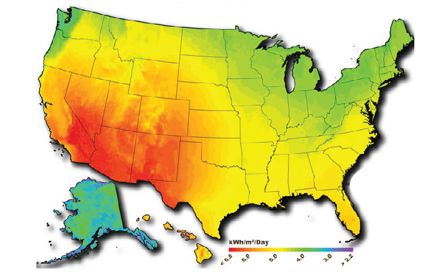
**This was a bad week for wind energy in the Northwest, but before I discuss this, let's step back for a few minutes.** There is a lot of interest in renewable energy in the Pacific Northwest that could supplement our hydropower. With our northern latitude and extensive clouds for much of the year, solar energy can only make a small contribution. To illustrate, here is the annual solar energy map for the U.S.  Western Oregon and Washington have poor solar resources.  Better in eastern Oregon and the Columbia Basin.  But even in these areas, there is very little resource from November through February. The wind energy situation in the Northwest is better, but not particularly good.   Consider the map of annual wind energy resources in the U.S. (below).   The windy High Plains of the U.S. have terrific potential, but the western U.S., away from the coast, has very modest wind energy, at best.  Only the coastal waters from central Oregon to central CA have good wind potential. Here in Washington State, the only decent non-coastal area for wind energy is the eastern slopes of the Cascades (see map below).   That is why nearly all of the wind turbines are there.  Constructing wind turbines offshore is very expensive and has significant environmental problems. **But there is a problem**.   For much of the year, these turbines generate little power. Consider the Bonneville Power Authority (BPA) statistics for the past week.   The total energy demand is the red line, and hydro generation is blue. Wind energy (green) has been very small most of the week, except on one day (November 18) when a frontal system moved through.  The output from one nuclear plant (purple) has been constant and generally much higher. The truth is that wind generation in our region is only really significant from late spring to late summer, when strong westerly flow descends the eastern slopes of the Cascades. To see this, consider the winds at Ellensburg, surrounded by wind turbines on several sides.  Good winds from April into the middle of August.  But consistently slower (and often very weak) the remainder of the year. In short, our region needs to maximize our hydro resources and invest in next-generation nuclear (fission) plants, which are inherently safe. With rapidly increasing demand for electricity, expected to roughly double by mid-century (see NW Power Council estimate below),  without new generation capacity, there is a near certainty of blackouts, particularly during cold periods.
cliffmass.blogspot.com
November 23, 2025 at 1:59 PM
Wet California
 This has been a very wet fall in California.    **A big contrast with last year.** Los Angeles this week Consider the differences from normal of the precipitation during the last month for the western U.S. (below). Wow.  Some parts of southern California have gotten 800% of normal precipitation!  The entire state is considerably wetter than normal. Many of the rivers are running MUCH higher than normal, as shown by the latest percentages below.   Crazy high river levels over coastal southern California. What about the levels of the all-important California reservoirs?  The answer is below. **All are at or above normal.**   Over southern California, some are full. Last year, had one of the driest Octobers through December on record in Southern California, which contributed to the LA wildfire in early January. **Some claimed this was the result of "climate change."** The atmosphere did not get the message.   Consider the precipitation from October 1 through November 19 over the past 50 years.  **This year was the second wettest of the entire record!** This wet fall has led to the suppression of wildfires. ** ** **So far this has been a VERY low wildfire year in California....something that is being given little attention in the media.  ** Below are the statistics for wildfire acres year to date.    So far in 2025, about 525,208 acres have burned compared to a fire-year average of 1,315,947. **That is only about 40% of the recent average.** So, why has California been so wet?    The answer:  a persistent trough of low pressure off its coast. For example, here is the anomaly map (difference from normal) for the heights at 500 hPa pressure (think of pressure around 18,000 ft). Purple and blue indicate lower than normal values....troughs of low pressure.    Right off of California!
cliffmass.blogspot.com
November 21, 2025 at 1:56 PM
Drought Misinformation
There have been several stories in the Seattle Times and some local media that have hyped and exaggerated the "drought" over Washington State. For example, a few days ago, the Seattle Times had a big spread talking about drought for the Yakima River basin: _The lack of rain and snow forced farmers to tear out their apple orchards by the acre. Wine grapes are withering on the vine. Miles-long irrigation canals leak and crumble._ _This basin is the face of Washington’s drought. This might be the  driest year in recent memory, fresh on the heels of severe droughts last year and the year before_.. They had a picture of Lake Keechelus that showed it being completely dry. **Very deceptive.**   I went up there on Sunday and this is what I saw: They took a picture of one of the lake flanks, which is always dry during this season---even during a normal year. This is not honest journalism. **The truth is that the Yakima Reservoir system is rapidly filling, and Yakima River levels are normal.   ** Still believe the Seattle Times?  Let's look at the actual numbers. Below is a plot of storage for the entire Yakima system over time, showing average values (red), last year (green), and this year (blue). **This year, we are WAY higher than last year and rapidly refilling.** In fact, the current storage now is about the same as last year, ONE FEBRUARY 1. What about the water flow in the critical Yakima River?   (see below) ** ** **The flow is now above normal, and the prediction is for it to stay that way.** The Seattle Times is making all kinds of serious drought claims, with a lot of hints about global warming being the cause. **But is precipitation really declining over time on the eastern slopes of the Cascades, the watershed area for the Yakima Basin?** Let's check, using the official NOAA climate division data. Below is a plot of October through August precipitation totals on the eastern slopes of the Cascades. Both the last two years were below normal.  No doubt about that.  **But other years were drier...some much drier.  ** Importantly, **there is no long-term trend toward drier conditions, which is a sign of climate change.  ** **  Climate change is not the origin of the last two dry years....it is natural variability.** This year is clearly going to be substantially moister than the last two years. There is a critical issue that the Seattle Times and certain activists never consider: ** ** **Is a drier-than-normal year really a big deal?**  For example, if the Yakima Valley region receives more precipitation than it really needs on average, is being down modestly a problem of any significance? It turns out that the "drought" had very little impact on Yakima Valley agriculture: * The 2025 Yakima Valley apple crop was large and high-quality, with a record-tying amounts. * The 2025 Yakima Valley cherry crop was excellent, with a good-sized and high-quality harvest resulting from favorable weather conditions. The cherry season was particularly long this year. * The 2025 Yakima Valley grape crop is expected to be a "standout vintage" for quality. Bottom line:  the agricultural impacts of the "drought" were very minor for the eastern slopes of the Cascades. In a future blog, I will take on the Seattle Times' claims about drought on the western side of the Cascades. But I can't help myself.  Here are the latest reservoir levels for Seattle Precipitation has been a bit above normal over watershed and reservoir levels are rising rapidly and are almost at normal levels
cliffmass.blogspot.com
November 19, 2025 at 1:48 PM
A Remarkable Mini Atmospheric River Hits Western Washington
Most of the time, atmospheric rivers--_plumes of lower-atmospheric moisture from off the Pacific Ocean-_ -are relatively wide and thus produce large amounts of precipitation over a broad region. But on Friday, something relatively unusual occurred:   a very narrow "mini" atmospheric river was locked over our region for hours, producing a narrow band of intense precipitation over western Washington and into the Cascades. You can really see it in the regional weather radar image for Friday morning (below).  Yellows indicate the heaviest precipitation. The southwest-northeast plume of heavier rain was very evident.  Totally dry over the San Juans and the southern Cascades.    Consider the precipitation totals on Friday below (only values more than a third of an inch are shown). You can clearly see the precipitation band; where the moisture plume was forced to rise by the central Cascades, 3-5 inches fell. Local rivers have surged, some to near flood stage.  The black dots below show the rivers that are now experiencing MUCH above normal flow. Ironically, this is the area that the wacky Drought Monitor graphic shows SEVERE DROUGHT. **The UW WRF model accurately predicted this moisture plume the day before.**    Below is the prediction (for Friday morning) of _water vapor flux_ (the amount of water vapor brought in by the wind).  Orange shows the highest amounts.    Not bad. The model precipitation total (through 4 PM Friday) was excellent:  here is the proof: We have come very, very far in our ability to predict local weather.  Really stunning. **This is something the gloom and doom global disaster folks don't seem to understand:   we now have the ability to predict and prepare for severe weather.** My colleagues in the National Weather Service recognized the situation and put out a flood advisory yesterday morning for the moisture plume area. For those of you (like the Seattle Times) who are worried about drought conditions and lack of water for our region, the plume of precipitation made a direct hit on Seattle's Tolt Reservoir, where almost four inches have fallen: Reservoir levels are moving up rapidly as a result. _ _ _ _ Apparently, this has gotten some folks nervous. More rain is coming later Sunday and Monday. Sorry...this IS November.
cliffmass.blogspot.com
November 16, 2025 at 1:47 PM
A Near "Bomb" Cyclone Approaches the West Coast
 Last weekend, I started getting emails from folks concerned about a "bomb cyclone" approaching Washington state.    Some of the amateur Facebook and YouTube sites were also starting to beat the weather drums. The reason?  Several model runs at that time had scary forecasts, such as this one for 4 PM Thursday (tomorrow).  The kind of strong low that would easily take out power to hundreds of thousands of local customers. When I took a look at the situation, I realized the uncertainty of these forecasts was very, very large:  the ensembles of many forecasts have a huge spread in solutions, and the forecasts changed radically run to run. **That is why I did not blog about it**. We are close enough now to have a good idea of what will occur tomorrow... the rapid development of a strong low off the California coast. A low center that will dissipate almost as quickly as it developed. Here is the pressure analysis for 4 AM this morning.  An amorphous 1002 hPa low-pressure center off of northern California.  Yawn. Now look at the forecast for 4 AM Thursday morning:  **a 986 hPa low has formed**.  Impressive. A deepening of 16 hPa in 24 h.   Not quite the bomb rate (24 hPa in 24 h), but very substantial. The developing low was quite evident on the visible satellite image this afternoon (see below, and I marked the low-pressure center). The water vapor satellite imager tonight (8:30 PM) was quite impressive: By 10 AM on Friday, the low will weaken to 1001 hPa and drift nearly due south. This storm is predicted to drive some large waves offshore (see wave forecast for 4 PM Thursday), with some getting to 25 feet, and some modest waves reaching the coast.  No big deal. Here in Washington State, we will get little wind from the low center.  However, it _will_  push a plume of moisture into our region (yes, an _atmospheric river_) that will provide more welcome rain (see forecast of the water vapor transport below). The forecast totals through Sunday at 4 AM are impressive in the mountains:
cliffmass.blogspot.com
November 13, 2025 at 1:46 PM
Super Inversion and Record Heat
 The temperature inversion today over Seattle is one of the strongest I have ever seen. As a reminder, an **_inversion_** is when temperature increases with height, in contrast to the normal decrease with height. The conditions at SeaTac Airport this morning are shown below. 42°F at the surface and 61°F at 2100 feet. **19°F warmer.     Just amazing.** Some of the local temperature contrasts this morning were stunning, with cold air at lower elevations, and MUCH warmer temperatures on hills or downwind of hills. To illustrate, consider the temperatures this morning near Carnation, Washington.  A range from 60 to 39F over a few miles.  60 to 42°F over a short walk. A super-inversion was also observed on the coast at Forks (see below, temperatures in °C and height in pressure, 700 hPa is about 10,000 ft) The UW high-resolution weather prediction for this morning had the general pattern right, with the warm temperatures associated with easterly (from the east) winds down the western slopes of local terrain. But it failed to get the lowest temperatures correct. Current modeling systems have too much vertical mixing and thus fail to maintain the low temperatures at the bottom of inversions.  We are working on this. The record high for today at SeaTac is 64F (see below).   There is a good chance we will tie or beat it. What weather pattern is producing such an extreme inversion?  As shown by the 500 hPa heights (pressure around 18,000 ft), there was a huge ridge of high pressure over the western US.  Such high pressure is associated with great warmth aloft and a lack of serious clouds. As the sun heats the surface, it causes vertical mixing, the warm air will be brought down to the surface, and daily record high temperatures for the date are quite possible.  Here are the predicted temperatures at 2 PM this afternoon.  Western Washington will be torrid, especially on the slopes..   Several stations will climb into the low to mid-60s today in western Washington.  Perfect for a walk, bike ride, or raking up leaves.  Much cooler in eastern Washington. I am planning on a long run this afternoon.😀
cliffmass.blogspot.com
November 10, 2025 at 1:43 PM
Deaths from Extreme Weather are Rapidly Declining
There is a lot of talk about extreme weather these days, with many climate activists and media suggesting that deaths and injuries from extreme weather are increasing due to human-caused global warming. **However, the truth is very different** : **Deaths from extreme weather are actually decreasing rapidly for several reasons.** You read that correctly:  **declining**. To illustrate, the figure below shows the number of global deaths from floods, droughts, storms, wildfires, and extreme temperatures from the 1920s to 2021, based on a respected international database. **Huge declines in deaths.**   And this is not including the fact that the population has increased immensely during the past century. Thus, personal risk from extreme weather is going down even faster!. **Want a more specific example?  ** In 1970, the Bhola Cyclone (hurricane) hit India/Bangladesh, resulting in about 500,000 deaths.  Forecasts were poor, warning systems were poor, and infrastructure was inadequate. Path and satellite image of the 1970 Bhola cyclone In contrast, in 2020, a MUCH stronger hurricane, Super Cyclone Amphan, followed an almost identical path. ** 2020 Cyclone Amphan ** ** The death toll?   133.  You read that right. 133.** Why?  Forecasts were much better, warnings were improved, and there is far more robust infrastructure. During the past few decades, the Earth has warmed by approximately 2°F, with human emissions of greenhouse gases being the primary cause. **Yet, deaths from severe weather are WAY down.   How can this be?** Some reasons include: (**1) Weather forecasts are HUGELY better for all types of extreme weather compared to 40 years ago.**     This allows better warning and preparation for extreme weather events. Hurricane tracks are usually predicted with great accuracy. **(2) The ability to communicate threats is WAY better than 40 years ago, with people in even poor countries possessing smartphones that provide updated warnings.** (**3)   All nations are richer and developed than 40 years ago, with major investments making infrastructure and homes more robust for extreme weather events.** **(4)   Global warming does not increase the threat of all types of extreme weather. ** In fact, global warming decreases some threats. Shocking right?  You don't read that very often in the Seattle Times and other mainstream media. Global warming can decrease deaths from some extreme weather. But it is true.  Let me give you an example:  extreme temperatures. Rising temperatures REDUCE deaths because the biggest temperature threat for most people is COLD rather than heat. It is not even close.  As shown below, cold waves kill MANY more people than heat waves, by a factor of 5-10 to one. There are several articles in the peer-reviewed literature that explicitly state this:  warming temperatures will reduce extreme heat deaths. Hurricanes?   The ability to forecast their track has become much, much better.  At the same time, the frequency of major hurricanes has been stable as the Earth has warmed considerably during the past few decades. Same thing with the number of landfalling storms.  No upward trends as the planet warms. Even with an immense increase in population in the coastal zone, the number of hurricane deaths from Atlantic hurricanes and tropical storms is nearly constant (see below).  Thus, personal risk is immensely LESS. I could discuss other forms of extreme weather, but the conclusions are the same: **Your personal risk from virtually any type of extreme weather is now much, much smaller than it has been historically.** We live with LESS risk of being killed or injured by extreme weather today, even as the planet slowly warms. **Announcement** I will hold a special online Zoom session at 10 AM on Sunday for Patreon supporters.  Will answer questions and talk in detail about the outlook for the coming winter

cliffmass.blogspot.com
November 8, 2025 at 1:44 PM
The Thunderbird Returns to the Northwest: Substantial Precipitation Ahead
 There are many Native American stories about the origin of Northwest storms and rain, with my favorite being about the Thunderbird, a huge avian living in a cave of the Olympics.  When it left its high abode to hunt for its favorite prey (the Killer Whale), storms, wind, and even lightning would occur. If there was ever a month for Thunderbird flights, it would have to be November. A tenth of an inch represents a decent wetting, and the frequency of that amount at Seattle Tacoma Airport is shown below.  There is a clear peak:  in mid-November!   By December, there is already a bit of drying! With this climatology in mind, let's look at the latest forecast for accumulating precipitation. With a weather system coming in tonight and tomorrow, the total through Thursday morning is substantial, particularly on the Olympics and the coastal mountains. By Friday morning, the Cascades will get to enjoy the wet fun with 2-3 inches of rain.  Note the profound rain shadow over the San Juans in the lee of the Olympics. The next week will bring much more rain, with the totals through Friday morning, 14 November, getting to 4-5 inches in the mountains. And far more, by Tuesday, Nov. 18th.   The Thunderbird will be busy.  This is enough to result in localized river flooding and substantial progress in filling local reservoirs. **An interesting aspect of the next two weeks will be the absence of major landfalling storms, with persistent low pressure staying offshore.** To illustrate, below is the sea level pressure forecast for tomorrow (Wednesday) morning.  Huge low offshore. Five days from now, another low will be offshore. No major power outages to be expected, with this pattern. No "bomb cyclone" action in our nearshore waters like last year.  At least not yet. A relief for many.
cliffmass.blogspot.com
November 5, 2025 at 1:38 PM
Washington is the UFO Capital of the U.S. Is it Our Weather?
 A series of reports have come out recently demonstrating that Washington State is NUMBER ONE in the number of reports per person of UFOs (Unidentified Flying Objects). Below is the data.  During the past year, there was one sighting for every 1021 people in Washington. In contrast, in Louisiana UFOs are observed less than a third as often, something perhaps explained by the greater interest in Mardi Gras, alligators, and spicy gumbo. Certain Washington (and Oregon) locations are favored for extraterritorial visitation, particularly east of the Cascade Crest and over the Olympics (see below, darker green indicates more events), There are three reasons why Washington State could have more UFO sighting reports: ** (1)  UFOs really are more frequent here. ** **      **Perhaps extraterrestrials like our salmon or are interested in Boeing. Perhaps they think Washingtonians are particularly interesting.   I would doubt it.   (2) **Washington State has a mental health issue.   ** ** ** Some political commentators might agree with this.  Perhaps folks in this state are so worried about the future of the world and the current administration that they yearn for intergalactic intervention. **(3) Our meteorology often produces features in the sky that look like UFOs.  ** This is the one I would put my money on. **It all started here.** Did you know that the UFO craze started HERE in 1947, when a pilot of a small plane  (Kennith Arnold), flying between Chehalis and Yakima, spotted a group of "saucer-like" objects over Mount Rainier? A faculty member in my department analyzed the situation and demonstrated that Arnold actually saw lenticular clouds forced by Mount Rainier. Such clouds form when relatively moist air is forced over a mountain barrier and then oscillates up and down, with upward motion producing the lens-shaped cloud (see schematic below). As an aside, during a presidential debate on October 20, 2017, presidential candidate Dennis Kucinich admitted to seeing a UFO while staying at actress Shirley Maclaine's home near....... Mount Rainier. Dennis Kuckinch **The Pacific Northwest, and particularly Washington State, is probably the best place in the US to see lenticular/mountain wave clouds.   ** You can see them here on many, many days--either by viewing the sky or on satellite imagery. _Why so frequent here?_ We have big mountain barriers of sufficient height. We have strong winds approaching the mountains. We have air that is sufficiently moist to produce clouds. Cloud like this: Or this Or this So consider the meteorological explanation of our first rank in UFO sightings. Or if you prefer:
cliffmass.blogspot.com
November 3, 2025 at 1:38 PM
Wind Uncertainty
T**he confidence in weather forecasts is not always the same.** Sometimes all the models lock onto a forecast, suggesting uncertainty is low and meteorologists can have confidence in their predictions. But in other situations, uncertainty is large, with large differences among the forecast guidance. The wind forecast for tomorrow over central Puget Sound is a good example of such an uncertain forecast. One of the key tools of meteorologists for exploring uncertainty is viewing the forecasts from many weather model simulations, something called an _ensemble.  _ Below is the ensemble of forecasts for wind gusts in Seattle for forecasts starting early Friday. **The predictions for Saturday are all over the place!** ** ** ** ** **A low confidence prediction, at least for Seattle winds.** The key issue producing uncertainty is the path and intensity of a weak low-pressure center approaching the region. The updated American model solution on Friday evening has a low approach coast and then passes across northern Puget Sound  (see below for forecast at 5 AM Saturday. Earlier today, both the European Center and NOAA HRRR models had a stronger low passing to the north, which would have produced much stronger winds (up to 50 mph) over western Washington, but they have backed off that solution. I suspect very few will lose power tomorrow.  However, the approaching low will dump ever more rain over the region on Saturday morning.   Showers will greatly decline on Sunday and Monday, and Tuesday should be mainly dry. Talking of rain, today's moist southwesterly flow produced profound contrasts for precipitation across the Olympics (below).  For the period from midnight through 8 PM Friday, there were 2-3 inches on the southwest side of the barrier and only .01 in Port Townsend.    That is quite a rain shadow. Note that the largest rainfall totals are not at the high elevations but in the lower foothills of the mountains, where the moist air was initially forced to rise.
cliffmass.blogspot.com
November 1, 2025 at 1:35 PM
Three Atmospheric Rivers During the Next Week
**Three** atmospheric rivers will be impinging on the Pacific Northwest, and substantial precipitation will be falling. To illustrate, below is a plot of integrated water vapor transport (the intensity of the horizontal movement of water vapor by winds) on Friday at 5 PM.  The arrows show the direction and intensity of the water vapor transport. **Lots of water vapor pushing into western WA and BC**.    Water vapor that will turn to precipitation as it is forced to rise by our local mountains. When you get into the blue colors,  you know the atmospheric river is a strong one! Late Monday, another (but weaker) atmosphere will make landfall And then a **monster atmospheric river** will make landfall on Wednesday, with heavier precipitation in Oregon and northern California. **You want to see how much precipitation will fall?   ** You bet..and be prepared to be impressed. After the first atmospheric river (Saturday at 5 PM shown below), the Washington and BC mountains (and their windward slopes) will have received two inches or more of liquid water. **This is just the start.    ** After the third atmospheric river moves through (Thursday at 4 PM shown), the accumulated precipitation totals will be stunning, with some locations getting over **10 inches of accumulated liquid water**. There will be a massive fill of regional reservoirs, and I suspect the persistent talk of drought will fade.   Of course, no more regional wildfires. But as in late-night TV commercials, there is MORE!   The latest long-range European Center forecast for November through January predicts much more precipitation than normal over the region.
cliffmass.blogspot.com
October 30, 2025 at 1:34 PM