


Clint Oakley
@clintoak.bsky.social
Integrative Biologist and Principal Investigator specializing in coral reef biology. 🇳🇿
Universities use a simplistic kludge of an overheads model where overheads/F&A are charged only on the salary portion of a grant at a >100% rate. The result is that hiring people, especially early-career researchers, is extremely difficult, because that has to bear the entire overhead burden.
January 12, 2026 at 11:45 PM
Universities use a simplistic kludge of an overheads model where overheads/F&A are charged only on the salary portion of a grant at a >100% rate. The result is that hiring people, especially early-career researchers, is extremely difficult, because that has to bear the entire overhead burden.
And even that scheme has just been cut by ~30%. The entire national basic science research budget is now about $32m USD.
January 12, 2026 at 11:42 PM
And even that scheme has just been cut by ~30%. The entire national basic science research budget is now about $32m USD.
There are many features of the US system that I wish the NZ system would/could emulate: program officers for support (we have none); receiving scores on proposals; the sheer number of funding schemes (NZ has 1 for basic science, with a 10% success rate and 1 round per year, max award ~550kUSD).
January 12, 2026 at 11:39 PM
There are many features of the US system that I wish the NZ system would/could emulate: program officers for support (we have none); receiving scores on proposals; the sheer number of funding schemes (NZ has 1 for basic science, with a 10% success rate and 1 round per year, max award ~550kUSD).
The legal term is "turkey pardon"
December 12, 2025 at 9:09 PM
The legal term is "turkey pardon"
These scholarships fully fund the three-year PhD program.
To apply, send the following to Prof. Simon Davy [email protected]:
- Cover letter
- CV
- Copies of academic transcripts
- Writing sample (e.g. Publication, MSc thesis chapter)
- Names of two academic referees (inc. a thesis supervisor)
To apply, send the following to Prof. Simon Davy [email protected]:
- Cover letter
- CV
- Copies of academic transcripts
- Writing sample (e.g. Publication, MSc thesis chapter)
- Names of two academic referees (inc. a thesis supervisor)
November 14, 2025 at 3:32 AM
These scholarships fully fund the three-year PhD program.
To apply, send the following to Prof. Simon Davy [email protected]:
- Cover letter
- CV
- Copies of academic transcripts
- Writing sample (e.g. Publication, MSc thesis chapter)
- Names of two academic referees (inc. a thesis supervisor)
To apply, send the following to Prof. Simon Davy [email protected]:
- Cover letter
- CV
- Copies of academic transcripts
- Writing sample (e.g. Publication, MSc thesis chapter)
- Names of two academic referees (inc. a thesis supervisor)
My suspicion is that it contributes heavily to its ability to quickly recolonize post-bleaching, and potentially to its infection of a broad diversity of hosts in the Caribbean.
April 23, 2025 at 12:28 AM
My suspicion is that it contributes heavily to its ability to quickly recolonize post-bleaching, and potentially to its infection of a broad diversity of hosts in the Caribbean.
Possibly. We've got a previous paper showing that Durusdinium is better at acquiring nitrogenous compounds from the host, which may be a mechanism of how it escapes host control: enviromicro-journals.onlinelibrary.wiley.com/doi/abs/10.1...
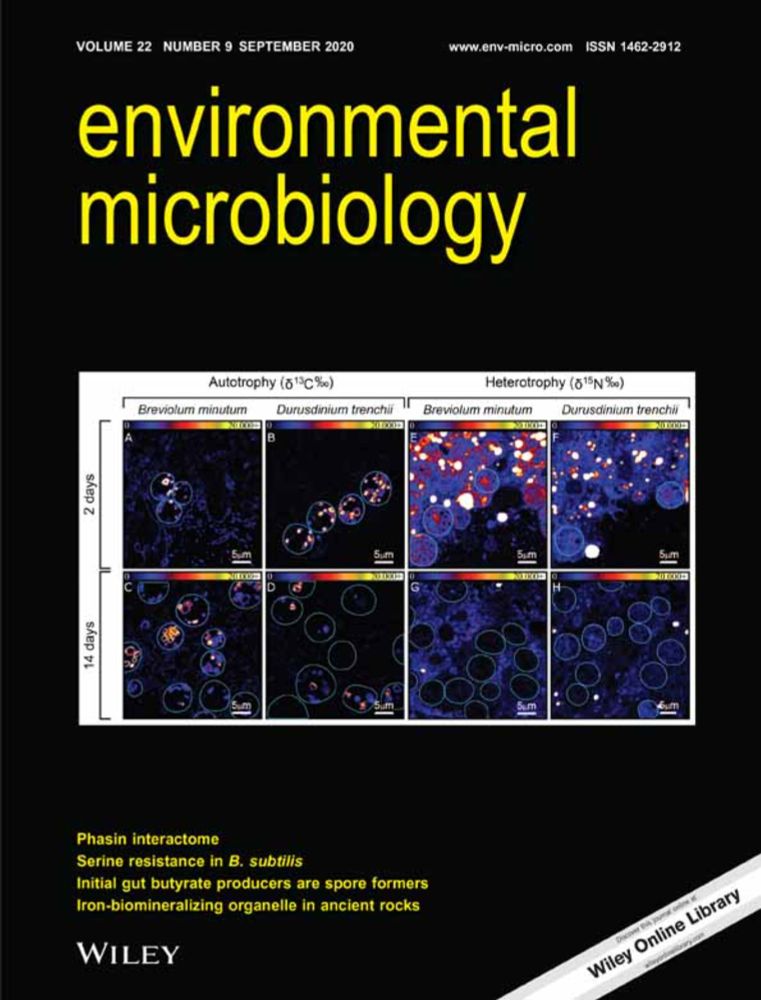
Sub‐cellular imaging shows reduced photosynthetic carbon and increased nitrogen assimilation by the non‐native endosymbiont Durusdinium trenchii in the model cnidarian Aiptasia
Hosting different symbiont species can affect inter-partner nutritional fluxes within the cnidarian–dinoflagellate symbiosis. Using nanoscale secondary ion mass spectrometry (NanoSIMS), we measured t....
enviromicro-journals.onlinelibrary.wiley.com
April 23, 2025 at 12:25 AM
Possibly. We've got a previous paper showing that Durusdinium is better at acquiring nitrogenous compounds from the host, which may be a mechanism of how it escapes host control: enviromicro-journals.onlinelibrary.wiley.com/doi/abs/10.1...
But of course you're familiar with Aiptasia! :)
November 25, 2024 at 11:36 PM
But of course you're familiar with Aiptasia! :)
Exaiptasia diaphana ('Aiptasia'), a symbiotic anemone and model for the coral-dinoflagellate symbiosis. Great in the lab and you can do lots of good undergrad work with it. aiptasia-resource.org
Aiptasia Symbiosis Resource
Supporting a collaborative understanding of the mechanisms behind coral symbiosis
aiptasia-resource.org
November 25, 2024 at 11:35 PM
Exaiptasia diaphana ('Aiptasia'), a symbiotic anemone and model for the coral-dinoflagellate symbiosis. Great in the lab and you can do lots of good undergrad work with it. aiptasia-resource.org
Hi, yes please, thanks for organizing.
November 25, 2024 at 11:29 PM
Hi, yes please, thanks for organizing.
Hi, I'd love to be included!
November 14, 2024 at 10:42 AM
Hi, I'd love to be included!