




Coloria
@coloria-net.bsky.social
All about #colour #color
all hues and languages welcome
Based on https://coloria.net (in Finnish only) by Päivi Hintsanen @colorianna.bsky.social
+ IG @colorianet
+ Vintage & historical colour article archives at https://coloriasto.net
all hues and languages welcome
Based on https://coloria.net (in Finnish only) by Päivi Hintsanen @colorianna.bsky.social
+ IG @colorianet
+ Vintage & historical colour article archives at https://coloriasto.net
Overview of Artists' Materials is a fantastic page for anyone interested of old pigments and of their use. Short illustrations, beautiful images and lots of information! Recommended!
- ILLUMINATED, Manuscripts in the making page, by the Fitzwilliam Museum
www.fitzmuseum.cam.ac.uk/illuminated/...
- ILLUMINATED, Manuscripts in the making page, by the Fitzwilliam Museum
www.fitzmuseum.cam.ac.uk/illuminated/...

Overview of Artists' Materials | ILLUMINATED
ILLUMINATED brings to life the finest illuminated manuscripts preserved at the Fitzwilliam Museum in Cambridge.
www.fitzmuseum.cam.ac.uk
October 16, 2025 at 8:55 AM
Overview of Artists' Materials is a fantastic page for anyone interested of old pigments and of their use. Short illustrations, beautiful images and lots of information! Recommended!
- ILLUMINATED, Manuscripts in the making page, by the Fitzwilliam Museum
www.fitzmuseum.cam.ac.uk/illuminated/...
- ILLUMINATED, Manuscripts in the making page, by the Fitzwilliam Museum
www.fitzmuseum.cam.ac.uk/illuminated/...
Reposted by Coloria

(1/3) New podcast episode & blog post out now! Episode feat Riina Rammo, Liis Luhamaa & Debbie Bamford on traditional textile & dyeing practices. Blog post by Riina, Liis, Krista Wright & Kerttu Palginõmm on history of indigo blue dyes in Estonia. Both found here: colour4crafts.eu/menu/engagem....


September 29, 2025 at 12:14 PM
(1/3) New podcast episode & blog post out now! Episode feat Riina Rammo, Liis Luhamaa & Debbie Bamford on traditional textile & dyeing practices. Blog post by Riina, Liis, Krista Wright & Kerttu Palginõmm on history of indigo blue dyes in Estonia. Both found here: colour4crafts.eu/menu/engagem....
Reposted by Coloria

We're looking forward to the next phase of our Wonders of Colour programme of events. The exhibition opens on 14th October, with children's workshops during half term, and a range of talks with a colour theme.

September 29, 2025 at 9:53 AM
We're looking forward to the next phase of our Wonders of Colour programme of events. The exhibition opens on 14th October, with children's workshops during half term, and a range of talks with a colour theme.
Reposted by Coloria
P is for purple.This display, in the Lebanese National Museum, shows the shells of murex snails that were crushed to produce the purple dyes of ancient Phoenicia. The expense of producing the dye is why we have “royal purple” Photo mine. 📷 #AlphabetChallenge #WeekP #Nature #Art #History 💜

April 19, 2024 at 1:40 PM
P is for purple.This display, in the Lebanese National Museum, shows the shells of murex snails that were crushed to produce the purple dyes of ancient Phoenicia. The expense of producing the dye is why we have “royal purple” Photo mine. 📷 #AlphabetChallenge #WeekP #Nature #Art #History 💜
Reposted by Coloria
Just love it when chemistry and archaeology /history come together for me. I can feel an assignment based on the chemistry of the dyes Irish monks used being designed. Inspiration courtesy of Words on the wave exhibition in National Museum of Ireland www.museum.ie/en-IE/Museum...


August 14, 2025 at 5:45 PM
Just love it when chemistry and archaeology /history come together for me. I can feel an assignment based on the chemistry of the dyes Irish monks used being designed. Inspiration courtesy of Words on the wave exhibition in National Museum of Ireland www.museum.ie/en-IE/Museum...
Reposted by Coloria
Sept 5 @ Science History Institute "Come see a display of artists’ books created by the Guild of Book Workers inspired by the Institute’s collection of historic sample books on textiles, paints, and dyes... Guild [members] will also be [@] a bookmaking table to show off the tools of their trade..."

First Friday: Books, Meet Their Makers!
Explore historic sample books and accompanying art by members of the Guild of Book Workers.
www.sciencehistory.org
August 18, 2025 at 6:42 PM
Sept 5 @ Science History Institute "Come see a display of artists’ books created by the Guild of Book Workers inspired by the Institute’s collection of historic sample books on textiles, paints, and dyes... Guild [members] will also be [@] a bookmaking table to show off the tools of their trade..."
The Dyer, and the Calico Printer, an engraving from The Panorama of Professions and Trades; or Every Man's Book by Edward Hazen (1837). Read about how the article depicts the professions of dyer and calico-printer at: coloriasto.blogspot.com/2025/10/the-...
#historyofdyeing #coloriasto #dyeing
#historyofdyeing #coloriasto #dyeing

October 11, 2025 at 6:02 PM
The Dyer, and the Calico Printer, an engraving from The Panorama of Professions and Trades; or Every Man's Book by Edward Hazen (1837). Read about how the article depicts the professions of dyer and calico-printer at: coloriasto.blogspot.com/2025/10/the-...
#historyofdyeing #coloriasto #dyeing
#historyofdyeing #coloriasto #dyeing
Scientists Have Recreated the Long-Lost Formula for Ancient Egyptian Blue Pigment
news.artnet.com/art-world/sc...
news.artnet.com/art-world/sc...

Scientists Have Recreated the Long-Lost Formula for Egyptian Blue
Scientists have recreated the elusive Egyptian blue, a pigment used by ancient Egyptian artists for thousands of years.
news.artnet.com
October 4, 2025 at 2:21 PM
Scientists Have Recreated the Long-Lost Formula for Ancient Egyptian Blue Pigment
news.artnet.com/art-world/sc...
news.artnet.com/art-world/sc...

Blue pigments are absent in Palaeolithic art. The authors identify traces of azurite on an artefact from the Final Palaeolithic site of Mühlheim-Dietesheim, Germany. This represents the earliest use of blue pigment in Europe!
www.cambridge.org/core/journal...
#historyofcolour #historyofpigments
www.cambridge.org/core/journal...
#historyofcolour #historyofpigments

The earliest evidence of blue pigment use in Europe | Antiquity | Cambridge Core
The earliest evidence of blue pigment use in Europe
www.cambridge.org
October 4, 2025 at 2:11 PM
Blue pigments are absent in Palaeolithic art. The authors identify traces of azurite on an artefact from the Final Palaeolithic site of Mühlheim-Dietesheim, Germany. This represents the earliest use of blue pigment in Europe!
www.cambridge.org/core/journal...
#historyofcolour #historyofpigments
www.cambridge.org/core/journal...
#historyofcolour #historyofpigments
"My discovery consists in the preparation of a mordant, which I obtain from certain vegetables of British growth", from Specification of the Patent granted to SAMUEL JOHN SMITH, in The Repertory of Arts, Manufactures, and agriculture 1816
coloriasto.blogspot.com/2025/10/spec...
#historyofdyeing
coloriasto.blogspot.com/2025/10/spec...
#historyofdyeing
Specification of the Patent granted to SAMUEL JOHN SMITH, of Gaythorne, Manchester, in the County of Lancaster, Dyer; for an Improved Method of Staining, Printing, or Dying, on Silk, Woollen, Cotton, ...
The Repertory of Arts, Manufactures, and agriculture. No. CLXVII (167). Second series. April 1816. Tekstiin lisätty kappaleita lukemisen hel...
coloriasto.blogspot.com
October 4, 2025 at 1:56 PM
"My discovery consists in the preparation of a mordant, which I obtain from certain vegetables of British growth", from Specification of the Patent granted to SAMUEL JOHN SMITH, in The Repertory of Arts, Manufactures, and agriculture 1816
coloriasto.blogspot.com/2025/10/spec...
#historyofdyeing
coloriasto.blogspot.com/2025/10/spec...
#historyofdyeing
"Shortly before flowering, or about three months after sowing, the plants are cut off close to the ground, and are then ready for the extraction of the colour. "
in Indigo, Textile Mercury, 12.3.1892
coloriasto.blogspot.com/2025/09/indi...
#coloriasto #historyofdyes #dyehistory #indigofera
in Indigo, Textile Mercury, 12.3.1892
coloriasto.blogspot.com/2025/09/indi...
#coloriasto #historyofdyes #dyehistory #indigofera
Indigo.
The Textile Mercury, 12.3.1892 The chief source of natural indigo is the various species of Indigofera , especially Indigofera tinctoria ,...
coloriasto.blogspot.com
September 27, 2025 at 8:53 AM
"Shortly before flowering, or about three months after sowing, the plants are cut off close to the ground, and are then ready for the extraction of the colour. "
in Indigo, Textile Mercury, 12.3.1892
coloriasto.blogspot.com/2025/09/indi...
#coloriasto #historyofdyes #dyehistory #indigofera
in Indigo, Textile Mercury, 12.3.1892
coloriasto.blogspot.com/2025/09/indi...
#coloriasto #historyofdyes #dyehistory #indigofera
"Calico printers require most of their cloth madder-bleached, which is understood to be the most perfect kind of bleaching..."
in Calico Bleaching, The Textile Mercury, 12.3.1892
coloriasto.blogspot.com/2025/09/cali...
Any tips where I can find more info on madder-bleaching are welcome!
in Calico Bleaching, The Textile Mercury, 12.3.1892
coloriasto.blogspot.com/2025/09/cali...
Any tips where I can find more info on madder-bleaching are welcome!
Calico Bleaching.
The Textile Mercury, 12.3.1892 There have been many patents taken out for rapid bleaching, such as that of Du Motay, and others, by the us...
coloriasto.blogspot.com
September 27, 2025 at 8:11 AM
"Calico printers require most of their cloth madder-bleached, which is understood to be the most perfect kind of bleaching..."
in Calico Bleaching, The Textile Mercury, 12.3.1892
coloriasto.blogspot.com/2025/09/cali...
Any tips where I can find more info on madder-bleaching are welcome!
in Calico Bleaching, The Textile Mercury, 12.3.1892
coloriasto.blogspot.com/2025/09/cali...
Any tips where I can find more info on madder-bleaching are welcome!
"We learn by the London Artisan, that in all likelihood the English manufacturers will hereafter import all their silk in cocoons, and wind it oft themselves, at a great saving."
in The Silk Manufacture in England, Scientific American 12, 1854
coloriasto.blogspot.com/2025/08/the-...
#coloriasto
in The Silk Manufacture in England, Scientific American 12, 1854
coloriasto.blogspot.com/2025/08/the-...
#coloriasto
The Silk Manufacture in England.
Scientific American 12, 2.12.1854 All the silk heretofore manufactured in England, either into cloth or spun yarn, has been from raw silk ...
coloriasto.blogspot.com
August 24, 2025 at 3:18 PM
"We learn by the London Artisan, that in all likelihood the English manufacturers will hereafter import all their silk in cocoons, and wind it oft themselves, at a great saving."
in The Silk Manufacture in England, Scientific American 12, 1854
coloriasto.blogspot.com/2025/08/the-...
#coloriasto
in The Silk Manufacture in England, Scientific American 12, 1854
coloriasto.blogspot.com/2025/08/the-...
#coloriasto
..."woodwork painted in October looks better at the end of four years, than if painted in June it would at the end of two"...
-On Painting Houses, Scientific American 12, 1854
coloriasto.blogspot.com/2025/08/on-p...
#coloriasto #vintageadvice #vintagepainting
-On Painting Houses, Scientific American 12, 1854
coloriasto.blogspot.com/2025/08/on-p...
#coloriasto #vintageadvice #vintagepainting
On Painting Houses.
Scientific American 12, 2.12.1854 In No. 4. Vol. 10, Scientific American, you copy from the London Builder, "woodwork painted in October ...
coloriasto.blogspot.com
August 24, 2025 at 3:14 PM
..."woodwork painted in October looks better at the end of four years, than if painted in June it would at the end of two"...
-On Painting Houses, Scientific American 12, 1854
coloriasto.blogspot.com/2025/08/on-p...
#coloriasto #vintageadvice #vintagepainting
-On Painting Houses, Scientific American 12, 1854
coloriasto.blogspot.com/2025/08/on-p...
#coloriasto #vintageadvice #vintagepainting
Stories in Colour | National Gallery Podcast - stories of how colour has changed the world. In each episode, the hidden mysteries woven into colour from antiquity to the present day are uncovered.
www.youtube.com/playlist?lis...
www.youtube.com/playlist?lis...

Stories in Colour | National Gallery Podcast - YouTube
These are the stories of how colour has changed the world. 'Stories in Colour’ is a vibrant new podcast from the National Gallery in London. Stream from Wedn...
www.youtube.com
August 20, 2025 at 7:40 AM
Stories in Colour | National Gallery Podcast - stories of how colour has changed the world. In each episode, the hidden mysteries woven into colour from antiquity to the present day are uncovered.
www.youtube.com/playlist?lis...
www.youtube.com/playlist?lis...
Short instructions for making Indian ink, given in Manufacturer and builder 7, 1878 coloriasto.blogspot.com/2025/08/2136...
#coloriasto #inks #historyofink
#coloriasto #inks #historyofink
(2136) Making India Ink.
Manufacturer and builder 7, 1878 The constituents of all Indian Inks, whatever the quality, are simply carbon. It is manufactured in hundr...
coloriasto.blogspot.com
August 18, 2025 at 10:49 AM
Short instructions for making Indian ink, given in Manufacturer and builder 7, 1878 coloriasto.blogspot.com/2025/08/2136...
#coloriasto #inks #historyofink
#coloriasto #inks #historyofink
"The oxide of copper combines with the acid principle of vinegar, acetic acid [...] and thus forms different compounds, of which, however, only two are used in the preparation of paints." - Paints made of Copper, Manufacturer and builder 11, 1870 coloriasto.blogspot.com/2025/08/pain...
#coloriasto
#coloriasto
Paints made of Copper. Verdigris, or Acetate of Copper.
Manufacturer and builder 11, 1870 The oxide of copper combines with the acid principle of vinegar, acetic acid, in different proportions, ...
coloriasto.blogspot.com
August 6, 2025 at 6:17 PM
"The oxide of copper combines with the acid principle of vinegar, acetic acid [...] and thus forms different compounds, of which, however, only two are used in the preparation of paints." - Paints made of Copper, Manufacturer and builder 11, 1870 coloriasto.blogspot.com/2025/08/pain...
#coloriasto
#coloriasto
Reposted by Coloria

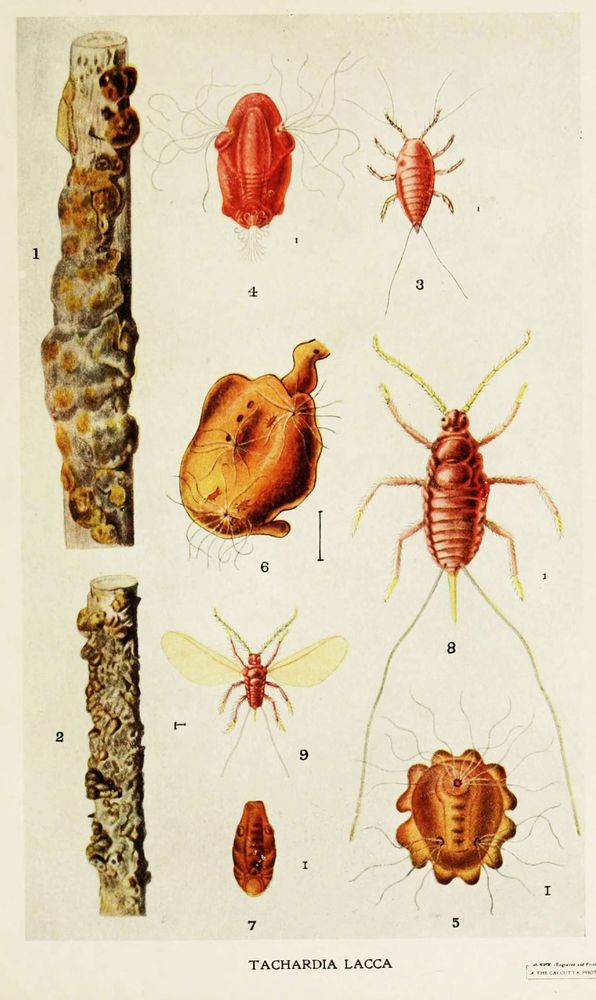
Lac insects are the source of pigments used in dyes, paints, lacquer, and jewelry. The insects have two endosymbionts—the bacteria Wolbachia and a yeast-like symbiont, which produces its coveted bright red pigment, laccaic acid. In PNAS: www.pnas.org/doi/10.1073/...
June 30, 2025 at 6:08 PM
Lac insects are the source of pigments used in dyes, paints, lacquer, and jewelry. The insects have two endosymbionts—the bacteria Wolbachia and a yeast-like symbiont, which produces its coveted bright red pigment, laccaic acid. In PNAS: www.pnas.org/doi/10.1073/...
Reposted by Coloria

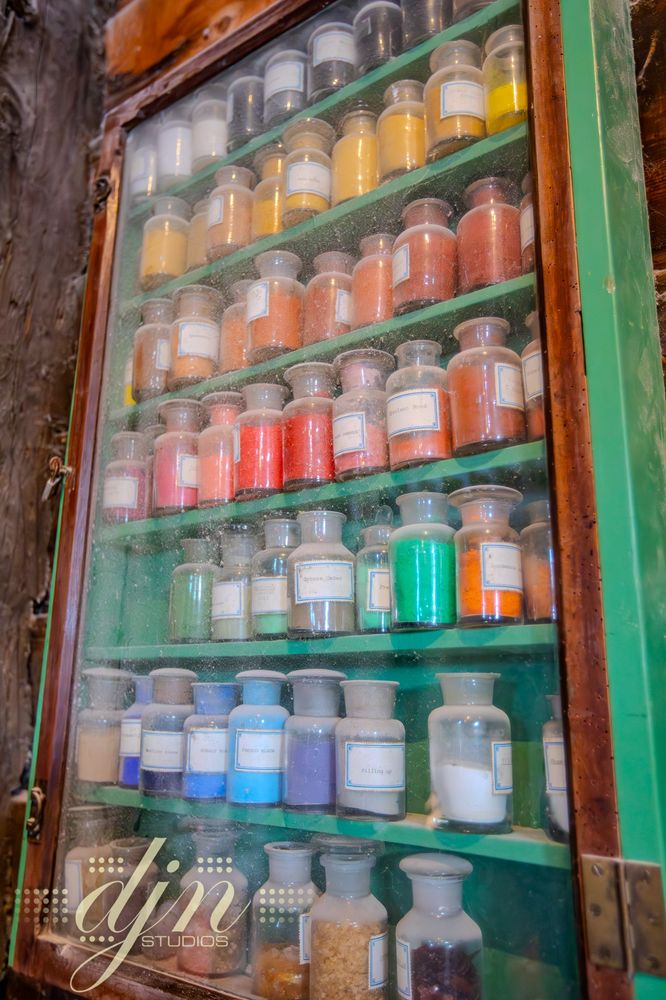
The old windmills in Zaanse Schans are still in service. Their enormous milling stones are used to grind grains into flour and meal, or minerals into vibrant pigments. Those pigments would be added to binders for paints and dyes. #Vibrant #BlueSkyArtShow #Windmill #Dutch #Netherlands #Amsterdam
June 7, 2025 at 10:05 AM
The old windmills in Zaanse Schans are still in service. Their enormous milling stones are used to grind grains into flour and meal, or minerals into vibrant pigments. Those pigments would be added to binders for paints and dyes. #Vibrant #BlueSkyArtShow #Windmill #Dutch #Netherlands #Amsterdam
Reposted by Coloria

"The Egyptian Blue"
Egyptian Blue is the oldest known artificial pigment. The Blue color has been throughout the history of humanity, one of the most quoted, identified by it with royalty and divinity, due to the difficulty of its obtaining.
More info in the alt text 👇
Egyptian Blue is the oldest known artificial pigment. The Blue color has been throughout the history of humanity, one of the most quoted, identified by it with royalty and divinity, due to the difficulty of its obtaining.
More info in the alt text 👇

June 10, 2025 at 12:40 PM
"The Egyptian Blue"
Egyptian Blue is the oldest known artificial pigment. The Blue color has been throughout the history of humanity, one of the most quoted, identified by it with royalty and divinity, due to the difficulty of its obtaining.
More info in the alt text 👇
Egyptian Blue is the oldest known artificial pigment. The Blue color has been throughout the history of humanity, one of the most quoted, identified by it with royalty and divinity, due to the difficulty of its obtaining.
More info in the alt text 👇
Reposted by Coloria
Does Bluesky like ancient blue pigments? I hope so, because here's a story about them! 🧪🐡 www.forbes.com/sites/evaams...

Scientists Recreate 5000-Year-Old Blue Pigment
The pigment Egyptian blue was used in ancient Egypt and Rome, but the recipe was lost to time. Now, chemists have replicated this blue pigment.
www.forbes.com
June 16, 2025 at 6:00 PM
Does Bluesky like ancient blue pigments? I hope so, because here's a story about them! 🧪🐡 www.forbes.com/sites/evaams...
Reposted by Coloria
‘Using period materials like “calcium carbonate that could have been drawn from limestone or seashells; quartz sand; and a copper source” heated to around 1,000 degrees Celsius… “the researchers prepared nearly two dozen powdered pigments in a stunning range of blues.”’

How Scientists Recreated Ancient Egypt’s Long-Lost Pigment, “Egyptian Blue”
Photo courtesy of Washington State University.
It's become fashionable, in recent years, to observe that we live in an increasingly beige-and-gray world from which all color is being drained.
www.openculture.com
June 26, 2025 at 2:17 AM
‘Using period materials like “calcium carbonate that could have been drawn from limestone or seashells; quartz sand; and a copper source” heated to around 1,000 degrees Celsius… “the researchers prepared nearly two dozen powdered pigments in a stunning range of blues.”’
Reposted by Coloria

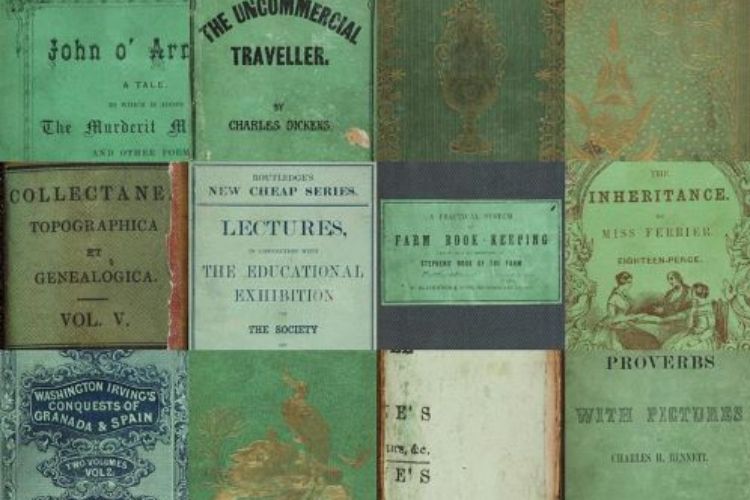
New tool to identify ‘toxic’ green books
Developed by @physastrostand.bsky.social and the University of St Andrews Libraries and Museum, the new device is transforming how cultural heritage institutions identify toxic pigments in historic books.
Read more 👇
ow.ly/WAil50Wflrf
#EverToExcel
Developed by @physastrostand.bsky.social and the University of St Andrews Libraries and Museum, the new device is transforming how cultural heritage institutions identify toxic pigments in historic books.
Read more 👇
ow.ly/WAil50Wflrf
#EverToExcel
June 24, 2025 at 10:43 AM
New tool to identify ‘toxic’ green books
Developed by @physastrostand.bsky.social and the University of St Andrews Libraries and Museum, the new device is transforming how cultural heritage institutions identify toxic pigments in historic books.
Read more 👇
ow.ly/WAil50Wflrf
#EverToExcel
Developed by @physastrostand.bsky.social and the University of St Andrews Libraries and Museum, the new device is transforming how cultural heritage institutions identify toxic pigments in historic books.
Read more 👇
ow.ly/WAil50Wflrf
#EverToExcel
Chromium mordants in cotton dyeing.
- The Textile Mercury, 13.12.1890
coloriasto.blogspot.com/2025/06/chro...
#coloriasto #historyofdyeing #historyofdyes #mordants #mordanting #historyofmordants
- The Textile Mercury, 13.12.1890
coloriasto.blogspot.com/2025/06/chro...
#coloriasto #historyofdyeing #historyofdyes #mordants #mordanting #historyofmordants
Chromium mordants in cotton dyeing.
The Textile Mercury, 13.12.1890 The bichromates of potash and soda are used to a large extent in dyeing cotton aniline black and chrome ye...
coloriasto.blogspot.com
June 26, 2025 at 6:29 PM
Chromium mordants in cotton dyeing.
- The Textile Mercury, 13.12.1890
coloriasto.blogspot.com/2025/06/chro...
#coloriasto #historyofdyeing #historyofdyes #mordants #mordanting #historyofmordants
- The Textile Mercury, 13.12.1890
coloriasto.blogspot.com/2025/06/chro...
#coloriasto #historyofdyeing #historyofdyes #mordants #mordanting #historyofmordants