


Cosmic Observer
@cosmicobserver.bsky.social
Just another fool. Also a physicist. I like holograms.

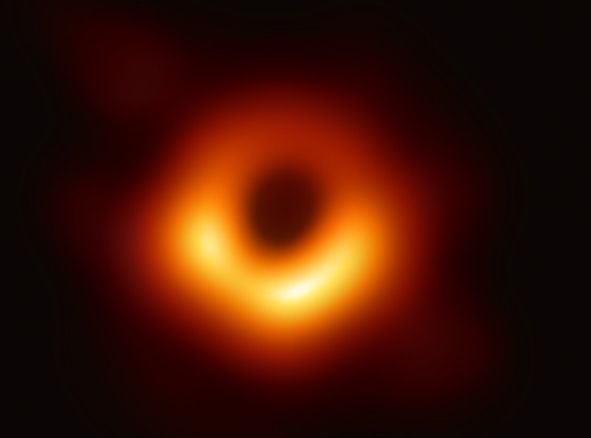
Teaching Black Hole shadows in GR today. What a great day !
December 9, 2024 at 11:30 AM
Teaching Black Hole shadows in GR today. What a great day !
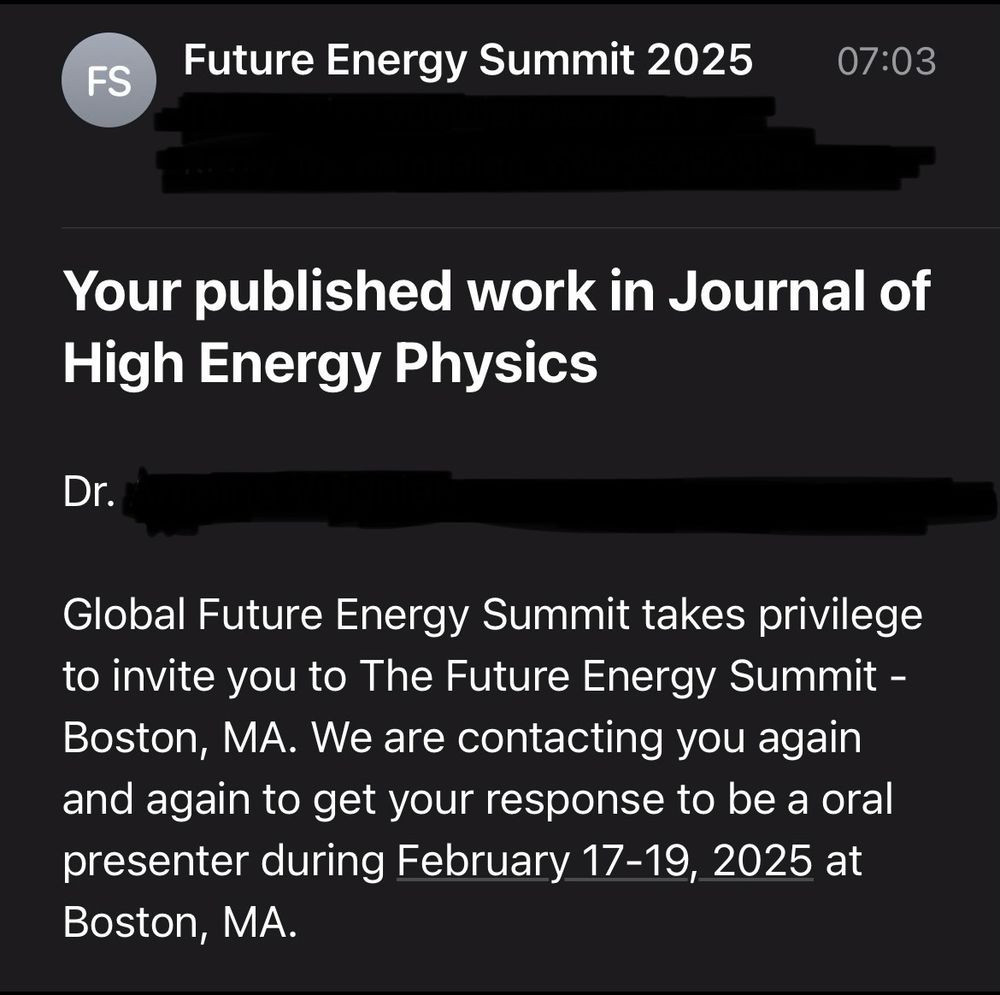
Who are those people and why do they think that string theory is relevant for their workshop on sustainability and transition to clean energy ?
December 9, 2024 at 7:04 AM
Who are those people and why do they think that string theory is relevant for their workshop on sustainability and transition to clean energy ?
I promise I did not mean any harm

December 5, 2024 at 1:26 PM
I promise I did not mean any harm
when Overleaf is back

December 3, 2024 at 5:09 PM
when Overleaf is back
when overleaf is down

December 3, 2024 at 1:58 PM
when overleaf is down
That one postdoc in the collaboration

December 2, 2024 at 6:34 PM
That one postdoc in the collaboration
(Me in the confessional)
I like to open quantum chaos papers just to see their nice figures, knowing I will not understand a single equation.
I like to open quantum chaos papers just to see their nice figures, knowing I will not understand a single equation.

December 2, 2024 at 4:52 PM
(Me in the confessional)
I like to open quantum chaos papers just to see their nice figures, knowing I will not understand a single equation.
I like to open quantum chaos papers just to see their nice figures, knowing I will not understand a single equation.
This collaborator who is overly busy

November 30, 2024 at 10:07 AM
This collaborator who is overly busy
Banks is also good but not as a starter. I was following it in parallel as I was struggling through Weinberg and that helped a lot.

November 28, 2024 at 8:18 AM
Banks is also good but not as a starter. I was following it in parallel as I was struggling through Weinberg and that helped a lot.
For QM I learned almost from scratch starting from Sakurai. It’s an amazing book.

November 28, 2024 at 8:15 AM
For QM I learned almost from scratch starting from Sakurai. It’s an amazing book.
This one is great for starting. But at some point one has to go through Weinberg to get a real understanding of QFT.

November 28, 2024 at 8:13 AM
This one is great for starting. But at some point one has to go through Weinberg to get a real understanding of QFT.
If we take this idea seriously, we run in a problem. Usually the entropy counts the number of microstates.
In General Relativity, the black hole is pure spacetime geometry, and there is a unique spherically symmetric solution that has energy M.
What are the microstates ?
In General Relativity, the black hole is pure spacetime geometry, and there is a unique spherically symmetric solution that has energy M.
What are the microstates ?

November 24, 2024 at 12:14 PM
If we take this idea seriously, we run in a problem. Usually the entropy counts the number of microstates.
In General Relativity, the black hole is pure spacetime geometry, and there is a unique spherically symmetric solution that has energy M.
What are the microstates ?
In General Relativity, the black hole is pure spacetime geometry, and there is a unique spherically symmetric solution that has energy M.
What are the microstates ?
In fact it is the same if we identify the entropy as the area of the Black Hole.
The resulting temperature is called the Hawking temperature.
Note that, since nothing escapes the Black hole, its area can only increase. This is the second law of thermodynamics.
7/10
The resulting temperature is called the Hawking temperature.
Note that, since nothing escapes the Black hole, its area can only increase. This is the second law of thermodynamics.
7/10

November 24, 2024 at 12:10 PM
In fact it is the same if we identify the entropy as the area of the Black Hole.
The resulting temperature is called the Hawking temperature.
Note that, since nothing escapes the Black hole, its area can only increase. This is the second law of thermodynamics.
7/10
The resulting temperature is called the Hawking temperature.
Note that, since nothing escapes the Black hole, its area can only increase. This is the second law of thermodynamics.
7/10
This takes a form very similar to the first law of thermodynamics !
6/10
6/10

November 24, 2024 at 12:08 PM
This takes a form very similar to the first law of thermodynamics !
6/10
6/10
Now we can study the change in area when the black hole mass, (or its energy from E= Mc^2), changed by a small amount delta M.
5/10
5/10

November 24, 2024 at 12:07 PM
Now we can study the change in area when the black hole mass, (or its energy from E= Mc^2), changed by a small amount delta M.
5/10
5/10
We can compute the size of a sphere whose radius is 2GM.
This can be interpreted as the "area" of the black hole, and is just the area of a round sphere of radius r_s.
This can be interpreted as the "area" of the black hole, and is just the area of a round sphere of radius r_s.

November 24, 2024 at 12:06 PM
We can compute the size of a sphere whose radius is 2GM.
This can be interpreted as the "area" of the black hole, and is just the area of a round sphere of radius r_s.
This can be interpreted as the "area" of the black hole, and is just the area of a round sphere of radius r_s.
We see that something special happens when the radial coordinate r is equal to 2GM.
This is known as the event horizon and is the point of no return.
This is known as the event horizon and is the point of no return.

November 24, 2024 at 12:05 PM
We see that something special happens when the radial coordinate r is equal to 2GM.
This is known as the event horizon and is the point of no return.
This is known as the event horizon and is the point of no return.
The simplest of those solutions is the 4 dimensional Schwartzschild metric.
It describes a Black Hole of mass M.
2/10
It describes a Black Hole of mass M.
2/10

November 24, 2024 at 12:04 PM
The simplest of those solutions is the 4 dimensional Schwartzschild metric.
It describes a Black Hole of mass M.
2/10
It describes a Black Hole of mass M.
2/10
Small thread on Black Holes thermodynamics, or why "spacetime is doomed".
General relativity, our best current classical model for gravitational interactions, has vacuum solutions describing black holes, and recently we started to take pictures of them.
1/10
General relativity, our best current classical model for gravitational interactions, has vacuum solutions describing black holes, and recently we started to take pictures of them.
1/10

November 24, 2024 at 12:03 PM
Small thread on Black Holes thermodynamics, or why "spacetime is doomed".
General relativity, our best current classical model for gravitational interactions, has vacuum solutions describing black holes, and recently we started to take pictures of them.
1/10
General relativity, our best current classical model for gravitational interactions, has vacuum solutions describing black holes, and recently we started to take pictures of them.
1/10
Check out my favourite cow

November 23, 2024 at 9:01 PM
Check out my favourite cow
Me trying to read a plot from a CERN collaboration

November 22, 2024 at 8:48 PM
Me trying to read a plot from a CERN collaboration
By studying the explicit time evolution of the wavefunction, they can plot the expectation value of the energy and this « draws » Feynman diagrams for the scattering process !

November 22, 2024 at 7:11 AM
By studying the explicit time evolution of the wavefunction, they can plot the expectation value of the energy and this « draws » Feynman diagrams for the scattering process !
I like that one as it is written to be understood by human beings (unlike other references in the field)

November 20, 2024 at 1:57 PM
I like that one as it is written to be understood by human beings (unlike other references in the field)