



David López-Idiáquez
@davididiaquez.bsky.social
Behavioural and Evolutionary Ecologist at the Edward Grey Institute of Field Ornithology. Expect science, wildlife pictures and bike stuff (but not in that particular order).
davididiaquez.wixsite.com/zurrimicle
davididiaquez.wixsite.com/zurrimicle
Thanks, Louis! Yes, selective disappearance is a real possibility. Haven’t tested whether the process within cohorts reflect a within individual change, yet ;-)
February 16, 2026 at 7:48 AM
Thanks, Louis! Yes, selective disappearance is a real possibility. Haven’t tested whether the process within cohorts reflect a within individual change, yet ;-)
Finally, this work wouldn't have been possible without the help of the endless number of field assistants, PhD students, postdocs and fieldworkers that obtained the almost 95,000 measures used in this study and without the support of @biology.ox.ac.uk @ox.ac.uk and @egioxford.bsky.social.
February 15, 2026 at 5:19 PM
Finally, this work wouldn't have been possible without the help of the endless number of field assistants, PhD students, postdocs and fieldworkers that obtained the almost 95,000 measures used in this study and without the support of @biology.ox.ac.uk @ox.ac.uk and @egioxford.bsky.social.
This work, as many others using long-term data, highlights the relevance of continuous systematic monitoring of natural populations to increase our understanding of how phenotypic traits respond to environmental change, and of the complex, life-stage-spanning mechanisms that underpin those responses
February 15, 2026 at 5:07 PM
This work, as many others using long-term data, highlights the relevance of continuous systematic monitoring of natural populations to increase our understanding of how phenotypic traits respond to environmental change, and of the complex, life-stage-spanning mechanisms that underpin those responses
Overall, our results illustrate the potential for effects mediated early in development to carry-over into long-term phenotypic change at later life history stages, and emphasise the value of considering multiple effects as drivers of phenotypic change in natural populations.
February 15, 2026 at 5:07 PM
Overall, our results illustrate the potential for effects mediated early in development to carry-over into long-term phenotypic change at later life history stages, and emphasise the value of considering multiple effects as drivers of phenotypic change in natural populations.
This, added to the fact that adult body mass is negatively associated with the competition levels that adult experienced as a nestling in Wytham, suggests that the temporal trend in adults is a product of a change in the environmental conditions at early-life.
February 15, 2026 at 5:07 PM
This, added to the fact that adult body mass is negatively associated with the competition levels that adult experienced as a nestling in Wytham, suggests that the temporal trend in adults is a product of a change in the environmental conditions at early-life.
A more developed analysis of the temporal trends in adults revealed a two level process, akin to Simpson's paradox. While the population level trend is negative, the temporal trends within each tit cohort are positive (likely reflecting an age dependent increase in mass).

February 15, 2026 at 5:07 PM
A more developed analysis of the temporal trends in adults revealed a two level process, akin to Simpson's paradox. While the population level trend is negative, the temporal trends within each tit cohort are positive (likely reflecting an age dependent increase in mass).
The lack of strong associations between adult mass and the environment leave a question open: what does explain the decrease we see in adults?
February 15, 2026 at 5:07 PM
The lack of strong associations between adult mass and the environment leave a question open: what does explain the decrease we see in adults?
Adult mass was weakly sensitive to the environmental variation. Nestling mass, however, was negatively associated to competition (by great and blue tits), and given that both the number of great and blue tits has increased in Wytham, we think that this explains the trends in reported in nestlings.

February 15, 2026 at 5:07 PM
Adult mass was weakly sensitive to the environmental variation. Nestling mass, however, was negatively associated to competition (by great and blue tits), and given that both the number of great and blue tits has increased in Wytham, we think that this explains the trends in reported in nestlings.
Along that idea, we linked the reported trends to three environmental variables previously recognised as drivers of body mass: temperature, intra- and inter-specific competition and temporal mismatch with a key prey during breeding, winter moth _Operophtera brumata_ caterpillars.
February 15, 2026 at 5:07 PM
Along that idea, we linked the reported trends to three environmental variables previously recognised as drivers of body mass: temperature, intra- and inter-specific competition and temporal mismatch with a key prey during breeding, winter moth _Operophtera brumata_ caterpillars.
Quantitative genetic analyses using a pedigree spanning 36 generations revealed that despite an heritability of 37% there was no change in body mass at the genetic level. Therefore, suggesting that the change can be attributed to phenotypic plasticity.

February 15, 2026 at 5:07 PM
Quantitative genetic analyses using a pedigree spanning 36 generations revealed that despite an heritability of 37% there was no change in body mass at the genetic level. Therefore, suggesting that the change can be attributed to phenotypic plasticity.
Mmm, good question. I think that mine is the view of Port Meadow from the top of Botley Hill (point between Singing way and Marley) at sunrise. When is foggy the view is stunning. I also like a lot the view of the city from the top of South Park.

January 29, 2026 at 9:32 AM
Mmm, good question. I think that mine is the view of Port Meadow from the top of Botley Hill (point between Singing way and Marley) at sunrise. When is foggy the view is stunning. I also like a lot the view of the city from the top of South Park.
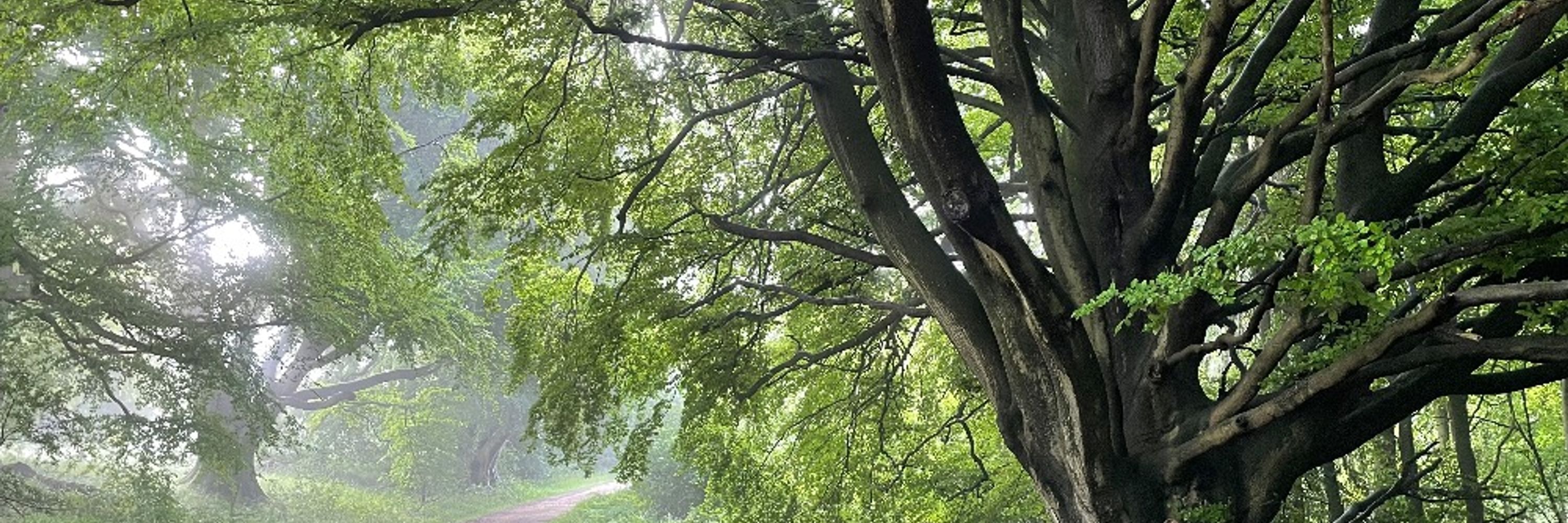
The perks of ringing in Wytham!
January 29, 2026 at 6:51 AM
The perks of ringing in Wytham!