


Evolutionary Applications
@evolappjournal.bsky.social
Evolutionary Applications. Scientific journal. Evolutionary approaches to environmental, biomedical and socio-economic issues. Tweets by Social Media Editor
https://onlinelibrary.wiley.com/journal/17524571
https://onlinelibrary.wiley.com/journal/17524571
Dispersal shapes population stability and evolutionary potential, yet linking larval traits to gene flow in marine species remains challenging. A study examined 10 coastal species with varying pelagic larval durations (PLD), using consistent sampling and genetic data (ddRAD, microsatellites) (1/2)

January 27, 2026 at 9:22 PM
Dispersal shapes population stability and evolutionary potential, yet linking larval traits to gene flow in marine species remains challenging. A study examined 10 coastal species with varying pelagic larval durations (PLD), using consistent sampling and genetic data (ddRAD, microsatellites) (1/2)
A drought nearly wiped out a protected population of unarmoured stickleback. Their numbers recovered, but their defining trait didn't: unarmoured fish went from 51% to ~15%. Conservation must protect the traits that make populations unique, not just their existence 🐟
doi.org/10.1111/eva.70189
doi.org/10.1111/eva.70189

January 12, 2026 at 7:00 PM
A drought nearly wiped out a protected population of unarmoured stickleback. Their numbers recovered, but their defining trait didn't: unarmoured fish went from 51% to ~15%. Conservation must protect the traits that make populations unique, not just their existence 🐟
doi.org/10.1111/eva.70189
doi.org/10.1111/eva.70189
Delineation of conservation units and assessments of pop. vulnerability are key to protection of intraspecific diversity. A new study shows why multiple vulnerability measures and accounting for high levels of population differentiation are key to Arctic charr conservation 🐟 @thefentagon.bsky.social


January 7, 2026 at 10:06 PM
Delineation of conservation units and assessments of pop. vulnerability are key to protection of intraspecific diversity. A new study shows why multiple vulnerability measures and accounting for high levels of population differentiation are key to Arctic charr conservation 🐟 @thefentagon.bsky.social
🚨 Don't forget our call for Associate Editors 🚨
We're seeking experts in (1) evolutionary epigenetics and (2) microbial evolution. Join our team to help us shape the journal 🧬🦠 @wileyecology.bsky.social
Learn more & apply: onlinelibrary.wiley.com/page/journal/17524571/homepage/open-call
We're seeking experts in (1) evolutionary epigenetics and (2) microbial evolution. Join our team to help us shape the journal 🧬🦠 @wileyecology.bsky.social
Learn more & apply: onlinelibrary.wiley.com/page/journal/17524571/homepage/open-call

December 15, 2025 at 5:00 PM
🚨 Don't forget our call for Associate Editors 🚨
We're seeking experts in (1) evolutionary epigenetics and (2) microbial evolution. Join our team to help us shape the journal 🧬🦠 @wileyecology.bsky.social
Learn more & apply: onlinelibrary.wiley.com/page/journal/17524571/homepage/open-call
We're seeking experts in (1) evolutionary epigenetics and (2) microbial evolution. Join our team to help us shape the journal 🧬🦠 @wileyecology.bsky.social
Learn more & apply: onlinelibrary.wiley.com/page/journal/17524571/homepage/open-call
Wars impose unprecedented environmental damage that has rarely been studied in real time. Study on Ukrainian dogs shows rapid natural selection near the front lines: changes in traits, age structure, and health, driven by high mortality 🐕
doi.org/10.1111/eva.70182
doi.org/10.1111/eva.70182

December 12, 2025 at 6:08 PM
Wars impose unprecedented environmental damage that has rarely been studied in real time. Study on Ukrainian dogs shows rapid natural selection near the front lines: changes in traits, age structure, and health, driven by high mortality 🐕
doi.org/10.1111/eva.70182
doi.org/10.1111/eva.70182
New study uncovers the population structure and connectivity of M. edulis, M. galloprovincialis and admixed mussels in Irish waters, highlighting sea-current resistance and wave exposure as major drivers of genetic structure. Key knowledge for sustainable aquaculture 🧬🌊
📸: E. Cariolato
📸: E. Cariolato


December 4, 2025 at 3:46 PM
New study uncovers the population structure and connectivity of M. edulis, M. galloprovincialis and admixed mussels in Irish waters, highlighting sea-current resistance and wave exposure as major drivers of genetic structure. Key knowledge for sustainable aquaculture 🧬🌊
📸: E. Cariolato
📸: E. Cariolato
Want to amplify your climate research and connect with a global network? 🌍⚡️
Join Wiley's FREE webinar to learn how publishing in the SDG-13 Special Collection can maximize your impact and visibility.
📅 Date: December 10th
🕒 Time: 9 AM CST/ 9 PM AMT/ 8 PM EST
🔗 Register Here: lnkd.in/e4JS2RVJ
Join Wiley's FREE webinar to learn how publishing in the SDG-13 Special Collection can maximize your impact and visibility.
📅 Date: December 10th
🕒 Time: 9 AM CST/ 9 PM AMT/ 8 PM EST
🔗 Register Here: lnkd.in/e4JS2RVJ

November 28, 2025 at 6:19 PM
Want to amplify your climate research and connect with a global network? 🌍⚡️
Join Wiley's FREE webinar to learn how publishing in the SDG-13 Special Collection can maximize your impact and visibility.
📅 Date: December 10th
🕒 Time: 9 AM CST/ 9 PM AMT/ 8 PM EST
🔗 Register Here: lnkd.in/e4JS2RVJ
Join Wiley's FREE webinar to learn how publishing in the SDG-13 Special Collection can maximize your impact and visibility.
📅 Date: December 10th
🕒 Time: 9 AM CST/ 9 PM AMT/ 8 PM EST
🔗 Register Here: lnkd.in/e4JS2RVJ
🌲New study on Scots pine shows how hyperspectral phenotyping and genomic tools can reveal heritable adaptive traits linked to drought resilience. A step forward for climate-smart forestry! 🌲
doi.org/10.1111/eva....
📸: Jan Stejskal
doi.org/10.1111/eva....
📸: Jan Stejskal


November 19, 2025 at 9:54 PM
🌲New study on Scots pine shows how hyperspectral phenotyping and genomic tools can reveal heritable adaptive traits linked to drought resilience. A step forward for climate-smart forestry! 🌲
doi.org/10.1111/eva....
📸: Jan Stejskal
doi.org/10.1111/eva....
📸: Jan Stejskal
How do invasive species rapidly adjust to stress? New study on the sea squirt reveals DNA methylation & microRNAs work in a dynamic, coordinated fashion to regulate genes. This contributes to the plasticity needed for invasion success 🧬
doi.org/10.1111/eva.70178
doi.org/10.1111/eva.70178

November 18, 2025 at 9:49 PM
How do invasive species rapidly adjust to stress? New study on the sea squirt reveals DNA methylation & microRNAs work in a dynamic, coordinated fashion to regulate genes. This contributes to the plasticity needed for invasion success 🧬
doi.org/10.1111/eva.70178
doi.org/10.1111/eva.70178
Predator-stressed eggs, metal-stressed larvae, and time-stressed both - how damselflies cope across life stages. ⏳🦞☠️ #EcoEvo #Stress #Plasticity #Insects
doi.org/10.1111/eva.70169
Photo: Ulf Norling - Professor-emeritus from Lund University, Sweden
doi.org/10.1111/eva.70169
Photo: Ulf Norling - Professor-emeritus from Lund University, Sweden

November 10, 2025 at 8:15 PM
Predator-stressed eggs, metal-stressed larvae, and time-stressed both - how damselflies cope across life stages. ⏳🦞☠️ #EcoEvo #Stress #Plasticity #Insects
doi.org/10.1111/eva.70169
Photo: Ulf Norling - Professor-emeritus from Lund University, Sweden
doi.org/10.1111/eva.70169
Photo: Ulf Norling - Professor-emeritus from Lund University, Sweden
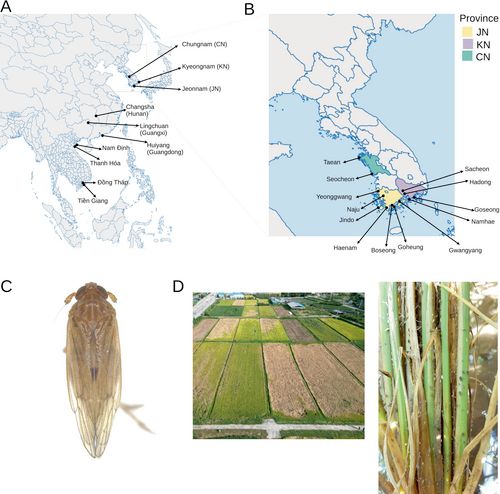
The brown planthopper is a major rice pest in Asia. Study reveals complex & variable migration pathways from at least two distinct overwintering populations. This is key for forecasting outbreaks and for pest control 🌱
doi.org/10.1111/eva.70171
doi.org/10.1111/eva.70171

November 10, 2025 at 7:50 PM
The brown planthopper is a major rice pest in Asia. Study reveals complex & variable migration pathways from at least two distinct overwintering populations. This is key for forecasting outbreaks and for pest control 🌱
doi.org/10.1111/eva.70171
doi.org/10.1111/eva.70171
How do predators, pollution, and climate change (eg. shorter seasons) affect animals throughout their lives? New study shows that time stress, predators, & copper shape damselfly growth, behaviour & physiology across life stages
doi.org/10.1111/eva.70169
doi.org/10.1111/eva.70169


November 3, 2025 at 5:12 PM
How do predators, pollution, and climate change (eg. shorter seasons) affect animals throughout their lives? New study shows that time stress, predators, & copper shape damselfly growth, behaviour & physiology across life stages
doi.org/10.1111/eva.70169
doi.org/10.1111/eva.70169
Western chimpanzees in Guinea-Bissau are at threat. Study shows a critically low population size (~500), signaling high extinction risk. Coastal groups are most vulnerable, while inland populations are a key stronghold. Urgent, targeted conservation is needed 🧬🌍
doi.org/10.1111/eva.70162
doi.org/10.1111/eva.70162


October 28, 2025 at 2:42 PM
Western chimpanzees in Guinea-Bissau are at threat. Study shows a critically low population size (~500), signaling high extinction risk. Coastal groups are most vulnerable, while inland populations are a key stronghold. Urgent, targeted conservation is needed 🧬🌍
doi.org/10.1111/eva.70162
doi.org/10.1111/eva.70162
🌲 How do Scots pine seedlings cope with drought? 🌱💧A new study combines #high-throughput-phenotyping & genomic modeling to reveal the genetic basis of drought tolerance - laying the groundwork for GWAS, genomic prediction & climate-smart forestry. #ForestResilience
doi.org/10.1111/eva.70157
doi.org/10.1111/eva.70157


October 9, 2025 at 6:06 PM
🌲 How do Scots pine seedlings cope with drought? 🌱💧A new study combines #high-throughput-phenotyping & genomic modeling to reveal the genetic basis of drought tolerance - laying the groundwork for GWAS, genomic prediction & climate-smart forestry. #ForestResilience
doi.org/10.1111/eva.70157
doi.org/10.1111/eva.70157
Climate change is causing mismatches in the timing of animal migrations. A new study on Atlantic salmon reveals the genes behind their return to rivers and how future warming could disrupt their epic journey 🧬🐟
doi.org/10.1111/eva.70148
doi.org/10.1111/eva.70148

September 30, 2025 at 6:28 PM
Climate change is causing mismatches in the timing of animal migrations. A new study on Atlantic salmon reveals the genes behind their return to rivers and how future warming could disrupt their epic journey 🧬🐟
doi.org/10.1111/eva.70148
doi.org/10.1111/eva.70148
New study shows that genetic groups of popular utility dogs excel in social learning and spatial problem-solving 🐶🦮🧬
doi.org/10.1111/eva.70151
doi.org/10.1111/eva.70151

September 16, 2025 at 8:21 PM
New study shows that genetic groups of popular utility dogs excel in social learning and spatial problem-solving 🐶🦮🧬
doi.org/10.1111/eva.70151
doi.org/10.1111/eva.70151
How do marine organisms adapt their cell membranes to extreme temperatures? New study on oysters reveals divergent strategies: cold-adapted oysters use shorter lipid chains, while warm-adapted ones modulate unsaturation. Key biomarkers for climate resilience! 🦪🦪
doi.org/10.1111/eva.70156
doi.org/10.1111/eva.70156


September 15, 2025 at 1:14 PM
How do marine organisms adapt their cell membranes to extreme temperatures? New study on oysters reveals divergent strategies: cold-adapted oysters use shorter lipid chains, while warm-adapted ones modulate unsaturation. Key biomarkers for climate resilience! 🦪🦪
doi.org/10.1111/eva.70156
doi.org/10.1111/eva.70156
The almond's past is complex! A new study uses genetics to trace its domestication from a single Middle Eastern origin, with significant contributions from several wild species and recurrent gene flow. These findings are crucial for future conservation and breeding 🌳🧬
doi.org/10.1111/eva....
doi.org/10.1111/eva....

September 10, 2025 at 5:39 PM
The almond's past is complex! A new study uses genetics to trace its domestication from a single Middle Eastern origin, with significant contributions from several wild species and recurrent gene flow. These findings are crucial for future conservation and breeding 🌳🧬
doi.org/10.1111/eva....
doi.org/10.1111/eva....
Genomic data can be used for developing targeted SNP genotyping panels for estimating genomic vulnerability to climate change and demonstrate a novel application of donor and recipient importance analysis for informing freshwater fisheries management 🐟🐟🐟
doi.org/10.1111/eva.70149
📸 Craig Goodwin
doi.org/10.1111/eva.70149
📸 Craig Goodwin


September 4, 2025 at 1:15 PM
Genomic data can be used for developing targeted SNP genotyping panels for estimating genomic vulnerability to climate change and demonstrate a novel application of donor and recipient importance analysis for informing freshwater fisheries management 🐟🐟🐟
doi.org/10.1111/eva.70149
📸 Craig Goodwin
doi.org/10.1111/eva.70149
📸 Craig Goodwin
New study compares tree planting and natural regeneration in shaping the future of UK woodlands 🌱 Planted trees maintain genetic diversity but risk homogenization, while wild populations may face increased inbreeding 🧬 #Genomics #Afforestation #UKForests #TreePlanting🍃
doi.org/10.1111/eva.70146
doi.org/10.1111/eva.70146

September 4, 2025 at 1:09 PM
New study compares tree planting and natural regeneration in shaping the future of UK woodlands 🌱 Planted trees maintain genetic diversity but risk homogenization, while wild populations may face increased inbreeding 🧬 #Genomics #Afforestation #UKForests #TreePlanting🍃
doi.org/10.1111/eva.70146
doi.org/10.1111/eva.70146
Genetic rescue and habitat restoration can boost survival in fragmented Stephens' kangaroo rat (Dipodomys stephensi) populations 🐭🧬
doi.org/10.1111/eva.70152
doi.org/10.1111/eva.70152

August 28, 2025 at 12:44 PM
Genetic rescue and habitat restoration can boost survival in fragmented Stephens' kangaroo rat (Dipodomys stephensi) populations 🐭🧬
doi.org/10.1111/eva.70152
doi.org/10.1111/eva.70152

The symposium was brilliantly closed by Dr. David Berger with his talk on "Strong Selection, but low repeatability: Temperature-specific effects on genomic predictions of adaptation" #ESEB2025

August 19, 2025 at 1:00 PM
The symposium was brilliantly closed by Dr. David Berger with his talk on "Strong Selection, but low repeatability: Temperature-specific effects on genomic predictions of adaptation" #ESEB2025
Dr. Jean-Baptiste Ledoux talked about coral heat stress: "Can Mediterranean Gorgonian Populations Cope with Extreme Climatic Events? Insights from Common Garden Experiments and Population Genomics in Paramuricea clavata". A powerful reminder of why this research is crucial 🪸 #ESEB2025

August 19, 2025 at 12:58 PM
Dr. Jean-Baptiste Ledoux talked about coral heat stress: "Can Mediterranean Gorgonian Populations Cope with Extreme Climatic Events? Insights from Common Garden Experiments and Population Genomics in Paramuricea clavata". A powerful reminder of why this research is crucial 🪸 #ESEB2025
Paulo Aceyo talked about bromeliads and elevational change in his presentation: "A locally adapted neotropical bromeliad shows loss of macrosynteny and expansion of
stress related gene families among individuals along an elevational gradient" 🪴 #ESEB2025
stress related gene families among individuals along an elevational gradient" 🪴 #ESEB2025

August 19, 2025 at 12:55 PM
Paulo Aceyo talked about bromeliads and elevational change in his presentation: "A locally adapted neotropical bromeliad shows loss of macrosynteny and expansion of
stress related gene families among individuals along an elevational gradient" 🪴 #ESEB2025
stress related gene families among individuals along an elevational gradient" 🪴 #ESEB2025