



C. González-Lagos
@gonzalezlagos.bsky.social
Ecología del Comportamiento/ Ecología urbana/ Académico en U. Adolfo Ibáñez, Chile
Reposted by C. González-Lagos

2025. Behavioural ecology in the twenty-first century - www.nature.com/articles/s41...

Behavioural ecology in the twenty-first century - Nature Ecology & Evolution
This Perspective discusses how the field of behavioural ecology has contributed to fundamental science and tackling global challenges, ranging from understanding how natural selection leads to adaptat...
www.nature.com
December 1, 2025 at 12:31 AM
2025. Behavioural ecology in the twenty-first century - www.nature.com/articles/s41...
Reposted by C. González-Lagos

Land-use change undermines the stability of avian functional diversity - new #OA @nature.com paper with @patrickawalkden.bsky.social @josephtobias.bsky.social, combining #PredictsProject with #Avonet doi.org/10.1038/s415...

Land-use change undermines the stability of avian functional diversity - Nature
Large-scale analyses of bird species traits reveal that land-use change reduces resilience of key ecological functions more than previously thought.
doi.org
November 27, 2025 at 8:29 AM
Land-use change undermines the stability of avian functional diversity - new #OA @nature.com paper with @patrickawalkden.bsky.social @josephtobias.bsky.social, combining #PredictsProject with #Avonet doi.org/10.1038/s415...
Reposted by C. González-Lagos
Our new paper in @plosbiology.org reveals that life history evolution is at the core of an eco-evolutionary feedback that promotes diversity.
Do you want to know how? read more in: plos.io/4p7YT0a
Do you want to know how? read more in: plos.io/4p7YT0a
November 13, 2025 at 2:47 PM
Our new paper in @plosbiology.org reveals that life history evolution is at the core of an eco-evolutionary feedback that promotes diversity.
Do you want to know how? read more in: plos.io/4p7YT0a
Do you want to know how? read more in: plos.io/4p7YT0a
Reposted by C. González-Lagos

Behavioral data can be very detailed but are usually aggregated and normalized in ways that smother the dynamics. Ben wrote a continuous-time Markov model to improve on this, and also wrote simulations for exploring and validating pipelines. All the code is here: github.com/BenKawam/ASN...

New paper!
We propose a framework to empirically study animal social relationships by modelling social network (SN) data as time-series—that is, without the need to aggregate them over time.
www.biorxiv.org/content/10.1...
We propose a framework to empirically study animal social relationships by modelling social network (SN) data as time-series—that is, without the need to aggregate them over time.
www.biorxiv.org/content/10.1...

November 12, 2025 at 12:05 PM
Behavioral data can be very detailed but are usually aggregated and normalized in ways that smother the dynamics. Ben wrote a continuous-time Markov model to improve on this, and also wrote simulations for exploring and validating pipelines. All the code is here: github.com/BenKawam/ASN...
Reposted by C. González-Lagos

Happy to share our new review in @royalsocietypublishing.org on the role of chemical pollutants in shaping biological invasions
Part of our upcoming Special Feature issue on 'Wildlife behaviour and movement ecology in a human-dominated world'!
Available Open Access 👉 tinyurl.com/ptsjmbpn
Part of our upcoming Special Feature issue on 'Wildlife behaviour and movement ecology in a human-dominated world'!
Available Open Access 👉 tinyurl.com/ptsjmbpn

October 23, 2025 at 2:10 AM
Happy to share our new review in @royalsocietypublishing.org on the role of chemical pollutants in shaping biological invasions
Part of our upcoming Special Feature issue on 'Wildlife behaviour and movement ecology in a human-dominated world'!
Available Open Access 👉 tinyurl.com/ptsjmbpn
Part of our upcoming Special Feature issue on 'Wildlife behaviour and movement ecology in a human-dominated world'!
Available Open Access 👉 tinyurl.com/ptsjmbpn
Reposted by C. González-Lagos
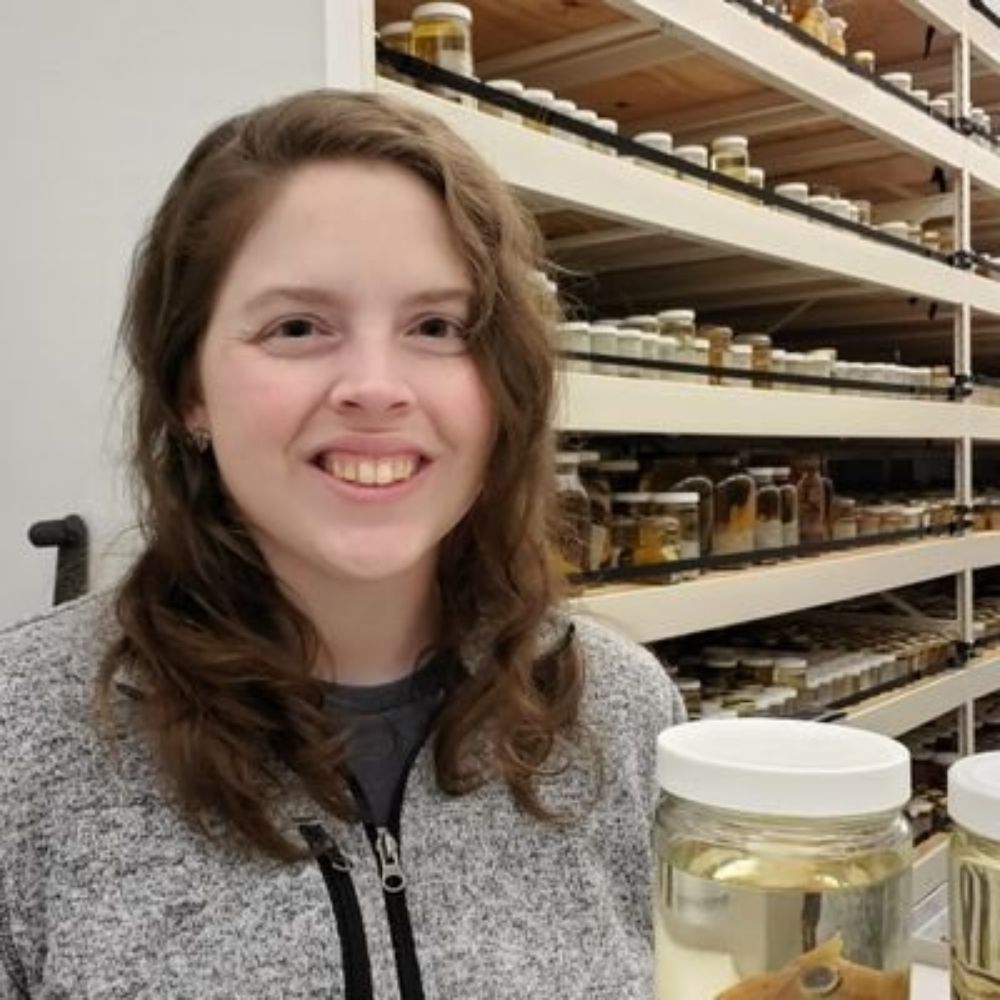
Why are some species smaller than a paperclip while others grow longer than a school bus? How is body size evolution governed in animals? Out now in @pnas.org we tackle these longstanding questions through a genetic lens using my favorite group of fishes as our model!! www.pnas.org/doi/10.1073/...

Parallel shifts in differential gene expression reveal convergent miniaturization in fishes | PNAS
Body size variation in vertebrates is a complex polygenic trait, tightly correlated
with numerous aspects of a species’ biology, ecology, and physi...
www.pnas.org
October 22, 2025 at 9:33 PM
Why are some species smaller than a paperclip while others grow longer than a school bus? How is body size evolution governed in animals? Out now in @pnas.org we tackle these longstanding questions through a genetic lens using my favorite group of fishes as our model!! www.pnas.org/doi/10.1073/...
Reposted by C. González-Lagos

Interested in a PhD in ornithology? Funding available for projects at the interface of ecology, behaviour & evolution from Oct '26 working on long-term population studies of tits at Wytham, based in @biology.ox.ac.uk in the new Life & Mind Building in Oxford
www.findaphd.com/phds/project...
www.findaphd.com/phds/project...


October 20, 2025 at 7:44 PM
Interested in a PhD in ornithology? Funding available for projects at the interface of ecology, behaviour & evolution from Oct '26 working on long-term population studies of tits at Wytham, based in @biology.ox.ac.uk in the new Life & Mind Building in Oxford
www.findaphd.com/phds/project...
www.findaphd.com/phds/project...
Reposted by C. González-Lagos

🏝️4-year funded PhD opportunity to study biodiversity change on islands
Work with datasets of mammals, birds & plants 🐦⬛🦌🌳
Supervisors: @sandranogue.bsky.social & myself
👉 Apply by 27 Oct 2025
More info:
🔗 creaf.factorialhr.com/job_posting/...
#PhD #Ecology #Palaeoecology #Biodiversity
Work with datasets of mammals, birds & plants 🐦⬛🦌🌳
Supervisors: @sandranogue.bsky.social & myself
👉 Apply by 27 Oct 2025
More info:
🔗 creaf.factorialhr.com/job_posting/...
#PhD #Ecology #Palaeoecology #Biodiversity
CREAF - Job offers, offices and team
Check out all the job offers at CREAF. Get to know the team, see our offices, learn about our values, and discover the benefits of working at CREAF
creaf.factorialhr.com
October 2, 2025 at 5:37 AM
🏝️4-year funded PhD opportunity to study biodiversity change on islands
Work with datasets of mammals, birds & plants 🐦⬛🦌🌳
Supervisors: @sandranogue.bsky.social & myself
👉 Apply by 27 Oct 2025
More info:
🔗 creaf.factorialhr.com/job_posting/...
#PhD #Ecology #Palaeoecology #Biodiversity
Work with datasets of mammals, birds & plants 🐦⬛🦌🌳
Supervisors: @sandranogue.bsky.social & myself
👉 Apply by 27 Oct 2025
More info:
🔗 creaf.factorialhr.com/job_posting/...
#PhD #Ecology #Palaeoecology #Biodiversity
Reposted by C. González-Lagos

🚨Our new paper introduces the #AirQualityStripes – a visual tool to show how outdoor air pollution (PM2.5) has changed in 🌍 cities since 1850. Inspired by the iconic #WarmingStripes. Led by @kirstypringle.bsky.social & @jimmcquaid.bsky.social
🔗 airqualitystripes.info
📄 doi.org/10.5194/gc-8...
🧵👇
🔗 airqualitystripes.info
📄 doi.org/10.5194/gc-8...
🧵👇

October 2, 2025 at 10:45 AM
🚨Our new paper introduces the #AirQualityStripes – a visual tool to show how outdoor air pollution (PM2.5) has changed in 🌍 cities since 1850. Inspired by the iconic #WarmingStripes. Led by @kirstypringle.bsky.social & @jimmcquaid.bsky.social
🔗 airqualitystripes.info
📄 doi.org/10.5194/gc-8...
🧵👇
🔗 airqualitystripes.info
📄 doi.org/10.5194/gc-8...
🧵👇
Reposted by C. González-Lagos

#ISBE2026 Call for Abstracts is now open! Submit your abstract by 15 December 2025 on www.isbe2026.com
@behavecol.bsky.social
@behavecol.bsky.social

September 30, 2025 at 7:12 PM
#ISBE2026 Call for Abstracts is now open! Submit your abstract by 15 December 2025 on www.isbe2026.com
@behavecol.bsky.social
@behavecol.bsky.social
Reposted by C. González-Lagos

Hybridization and introgression are major evolutionary processes. Since the 1940s, the prevailing view has been that they shape plants far more than animals. In our new study (www.science.org/doi/10.1126/...
), we find the opposite: animals exchange genes more, and for longer, than plants
), we find the opposite: animals exchange genes more, and for longer, than plants

September 12, 2025 at 7:55 AM
Hybridization and introgression are major evolutionary processes. Since the 1940s, the prevailing view has been that they shape plants far more than animals. In our new study (www.science.org/doi/10.1126/...
), we find the opposite: animals exchange genes more, and for longer, than plants
), we find the opposite: animals exchange genes more, and for longer, than plants
Reposted by C. González-Lagos
I am thrilled that this manuscript is now out in the world! If you saw my talk at #Evol2025 you may remember me discussing how religion, politics & war shape urban evolution & now you can read all about it here: www.nature.com/articles/s44...
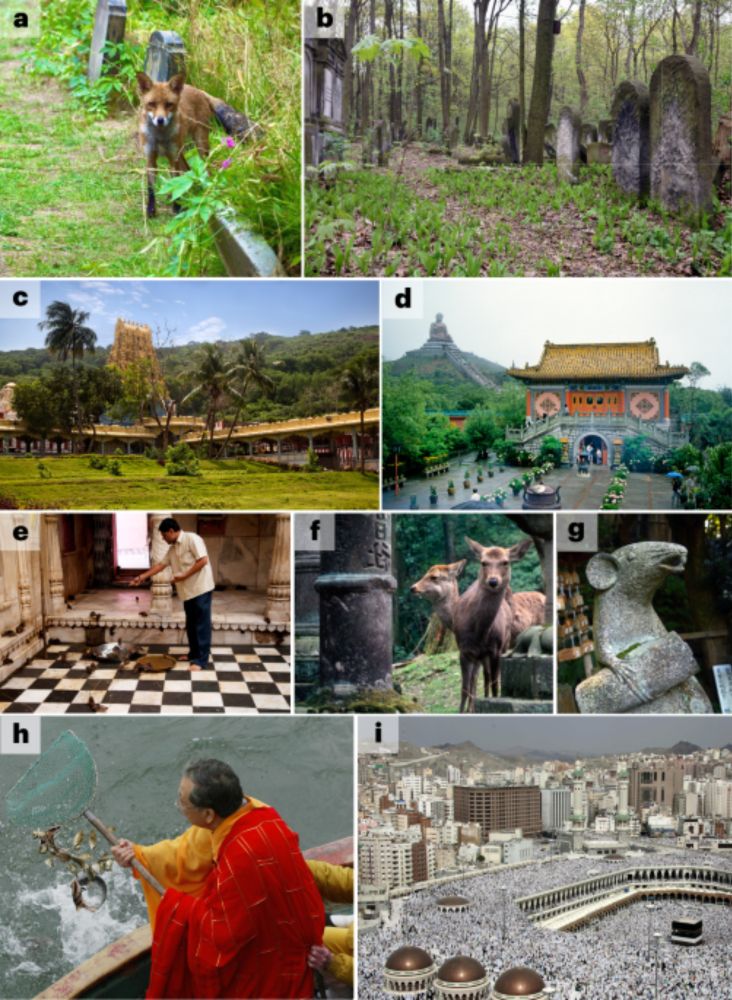
Legacy effects of religion, politics and war on urban evolutionary biology - Nature Cities
Cities affect biological evolution, but traditionally researchers focus on the biophysical influence of urban environments. Instead, this Review explores how the social processes of religion, politics...
www.nature.com
July 2, 2025 at 7:35 PM
I am thrilled that this manuscript is now out in the world! If you saw my talk at #Evol2025 you may remember me discussing how religion, politics & war shape urban evolution & now you can read all about it here: www.nature.com/articles/s44...
Reposted by C. González-Lagos

For sauropsids lovers: Two fresh papers map trait spaces of birds, turtles and crocodiles to reveal what disappears when species go extinct
www.nature.com/articles/s41...
onlinelibrary.wiley.com/doi/full/10....
🧪🌐🪶 🧮➕📏
#trait, #traits, #FunctionalTraits
www.nature.com/articles/s41...
onlinelibrary.wiley.com/doi/full/10....
🧪🌐🪶 🧮➕📏
#trait, #traits, #FunctionalTraits
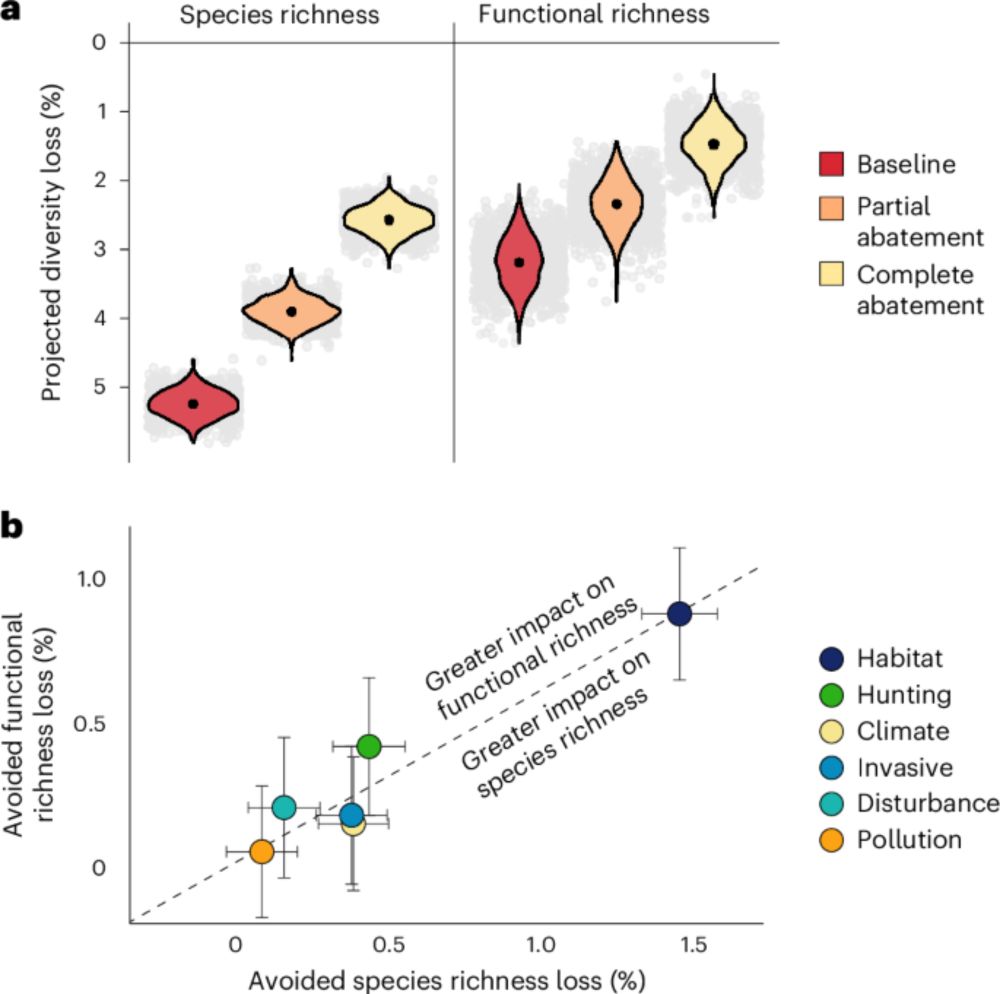
Threat reduction must be coupled with targeted recovery programmes to conserve global bird diversity - Nature Ecology & Evolution
Projections of extinctions of bird species and losses of functional diversity over the next 100 years suggest that even immediate and widespread threat abatement would be insufficient to prevent losse...
www.nature.com
June 25, 2025 at 4:36 AM
For sauropsids lovers: Two fresh papers map trait spaces of birds, turtles and crocodiles to reveal what disappears when species go extinct
www.nature.com/articles/s41...
onlinelibrary.wiley.com/doi/full/10....
🧪🌐🪶 🧮➕📏
#trait, #traits, #FunctionalTraits
www.nature.com/articles/s41...
onlinelibrary.wiley.com/doi/full/10....
🧪🌐🪶 🧮➕📏
#trait, #traits, #FunctionalTraits
Reposted by C. González-Lagos
New preprint: we advertise DAFNEE, a database of academia-friendly eco-evo-archaeo journals. 1/6
#AcademicPublishing #ecoevo #archaeology #EthicalPublishing #SocietyJournals #DiamondOpenAccess
doi.org/10.32942/X24...
#AcademicPublishing #ecoevo #archaeology #EthicalPublishing #SocietyJournals #DiamondOpenAccess
doi.org/10.32942/X24...
Time to publish ethically: DAFNEE, a database of academia-friendly journals in ecology and evolutionary biology.
doi.org
June 24, 2025 at 6:42 PM
New preprint: we advertise DAFNEE, a database of academia-friendly eco-evo-archaeo journals. 1/6
#AcademicPublishing #ecoevo #archaeology #EthicalPublishing #SocietyJournals #DiamondOpenAccess
doi.org/10.32942/X24...
#AcademicPublishing #ecoevo #archaeology #EthicalPublishing #SocietyJournals #DiamondOpenAccess
doi.org/10.32942/X24...
Reposted by C. González-Lagos

Have you ever cited or come across a mention of the 'human shield hypothesis' and wondered: what is the evidence for this hypothesis, and what is the quality of that evidence? Wonder no more!
onlinelibrary.wiley.com/doi/10.1111/...
onlinelibrary.wiley.com/doi/10.1111/...
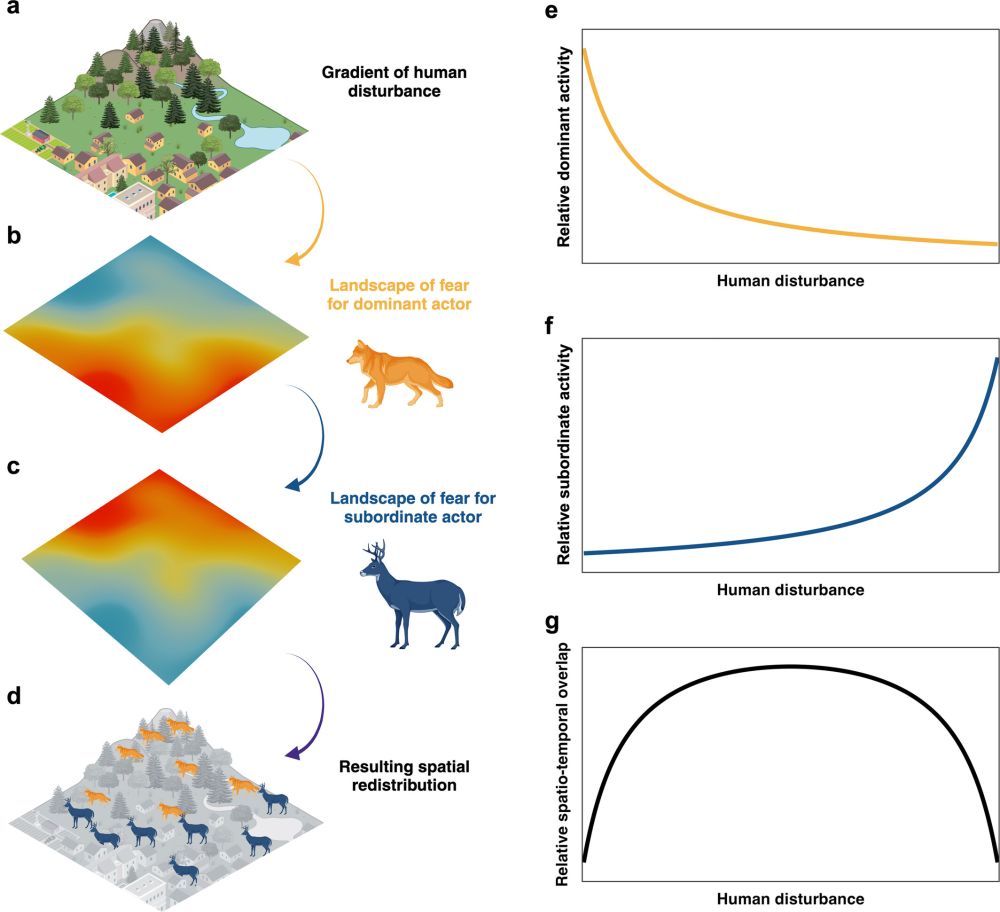
The Human Shield Hypothesis: Does Predator Avoidance of Humans Create Refuges for Prey?
The human shield hypothesis posits that predators avoid areas of human disturbance due to perceived risk from humans, and prey therefore seeks refuge in these areas of perceived safety. Our systemati....
onlinelibrary.wiley.com
June 17, 2025 at 6:21 PM
Have you ever cited or come across a mention of the 'human shield hypothesis' and wondered: what is the evidence for this hypothesis, and what is the quality of that evidence? Wonder no more!
onlinelibrary.wiley.com/doi/10.1111/...
onlinelibrary.wiley.com/doi/10.1111/...
Reposted by C. González-Lagos

How the disappearance of mastodons still threatens native South American forests phys.org/news/2025-06...

How the disappearance of mastodons still threatens native South American forests
Ten thousand years ago, mastodons vanished from South America. With them, an ecologically vital function also disappeared: the dispersal of seeds from large-fruited plants. A new study led by the Univ...
phys.org
June 16, 2025 at 6:04 PM
How the disappearance of mastodons still threatens native South American forests phys.org/news/2025-06...
Reposted by C. González-Lagos

My conference roadshow is running workshops on creating open educational materials. In preparation, I've recorded a walkthrough of creating your own online book using Quarto and Github pages. The walkthrough is available on Youtube: youtu.be/Hbixs7ACvvw?...

Creating Online Books using Quarto and Github Pages
YouTube video by James Bartlett
youtu.be
June 13, 2025 at 9:38 AM
My conference roadshow is running workshops on creating open educational materials. In preparation, I've recorded a walkthrough of creating your own online book using Quarto and Github pages. The walkthrough is available on Youtube: youtu.be/Hbixs7ACvvw?...
Reposted by C. González-Lagos

Our guidelines on how to give linguistically friendly presentations in English for #ICCB2025 are now on @figshare.com - please use and disseminate it widely!
doi.org/10.6084/m9.f...
#languagebarriers
doi.org/10.6084/m9.f...
#languagebarriers
June 9, 2025 at 7:17 AM
Our guidelines on how to give linguistically friendly presentations in English for #ICCB2025 are now on @figshare.com - please use and disseminate it widely!
doi.org/10.6084/m9.f...
#languagebarriers
doi.org/10.6084/m9.f...
#languagebarriers
Reposted by C. González-Lagos

This was not an easy one.
🚨 A recent article by Ahmed et al. (2025) attempted to draw parallels between biological invasions and human migration.
While intended to explore interdisciplinary insights, the analogy raises serious conceptual and ethical concerns. 🧵
🚨 A recent article by Ahmed et al. (2025) attempted to draw parallels between biological invasions and human migration.
While intended to explore interdisciplinary insights, the analogy raises serious conceptual and ethical concerns. 🧵

Parallels between biological invasions and human migration are flawed and undermine both disciplines. Response to Ahmed et al.
A recent article by Ahmed and colleagues (2025) attempt to draw parallels and assess distinctions between biological invasions and human migration. This co
academic.oup.com
June 9, 2025 at 6:53 PM
This was not an easy one.
🚨 A recent article by Ahmed et al. (2025) attempted to draw parallels between biological invasions and human migration.
While intended to explore interdisciplinary insights, the analogy raises serious conceptual and ethical concerns. 🧵
🚨 A recent article by Ahmed et al. (2025) attempted to draw parallels between biological invasions and human migration.
While intended to explore interdisciplinary insights, the analogy raises serious conceptual and ethical concerns. 🧵
Reposted by C. González-Lagos
New paper! led by Ruben Bernardo-Madrid "A general rule on the organization of biodiversity in Earth’s biogeographical regions" in NEE @natureportfolio.nature.com
Read it here: doi.org/10.1038/s415...
Read it here: doi.org/10.1038/s415...

A general rule on the organization of biodiversity in Earth’s biogeographical regions - Nature Ecology & Evolution
Ecological assemblages may be spatially organized by both context dependency and general processes. Here the authors find general patterns in the organization of regional biodiversity in biogeographic...
doi.org
June 4, 2025 at 11:15 AM
New paper! led by Ruben Bernardo-Madrid "A general rule on the organization of biodiversity in Earth’s biogeographical regions" in NEE @natureportfolio.nature.com
Read it here: doi.org/10.1038/s415...
Read it here: doi.org/10.1038/s415...
Reposted by C. González-Lagos
“Humans, livestock, and pets now comprise 94% of the global mammalian biomass” ☹️☹️☹️ ⬇️
2025. A universally applicable definition for domestication | PNAS www.pnas.org/doi/10.1073/...
June 4, 2025 at 1:58 AM
“Humans, livestock, and pets now comprise 94% of the global mammalian biomass” ☹️☹️☹️ ⬇️
Reposted by C. González-Lagos
2025. A universally applicable definition for domestication | PNAS www.pnas.org/doi/10.1073/...
June 4, 2025 at 1:21 AM
2025. A universally applicable definition for domestication | PNAS www.pnas.org/doi/10.1073/...
Reposted by C. González-Lagos

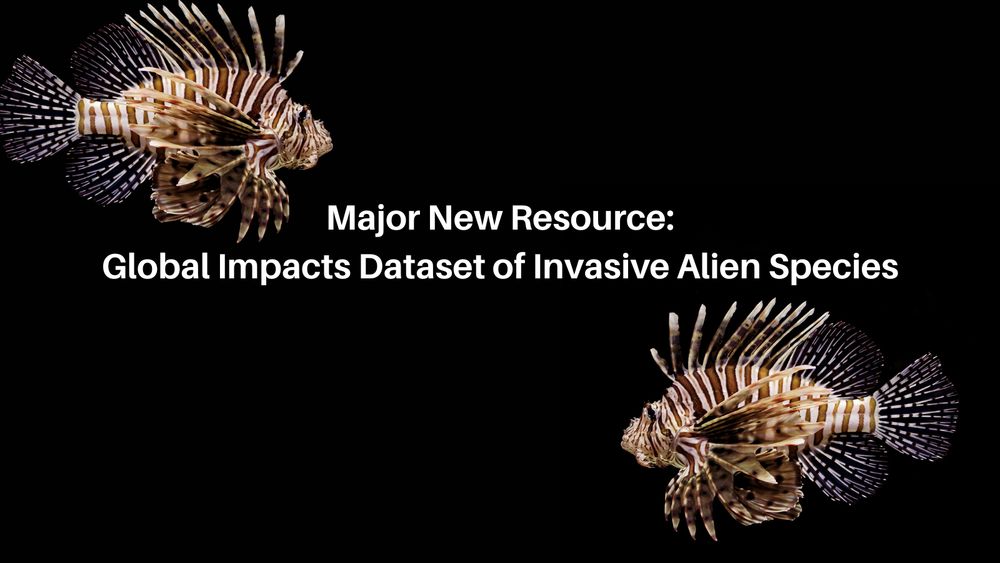
🗞️Authors from the @ipbes.net #InvasiveAlienSpecies Report have published the Global Impacts Dataset of Invasive Alien Species derived from the report, creating a global resource for investigating and managing the impacts of invasive alien species. 🌍🧪
Read more in @nature.com bit.ly/43APoP7
Read more in @nature.com bit.ly/43APoP7
May 21, 2025 at 12:02 PM
🗞️Authors from the @ipbes.net #InvasiveAlienSpecies Report have published the Global Impacts Dataset of Invasive Alien Species derived from the report, creating a global resource for investigating and managing the impacts of invasive alien species. 🌍🧪
Read more in @nature.com bit.ly/43APoP7
Read more in @nature.com bit.ly/43APoP7
Reposted by C. González-Lagos
*** Academic BFD alert ***
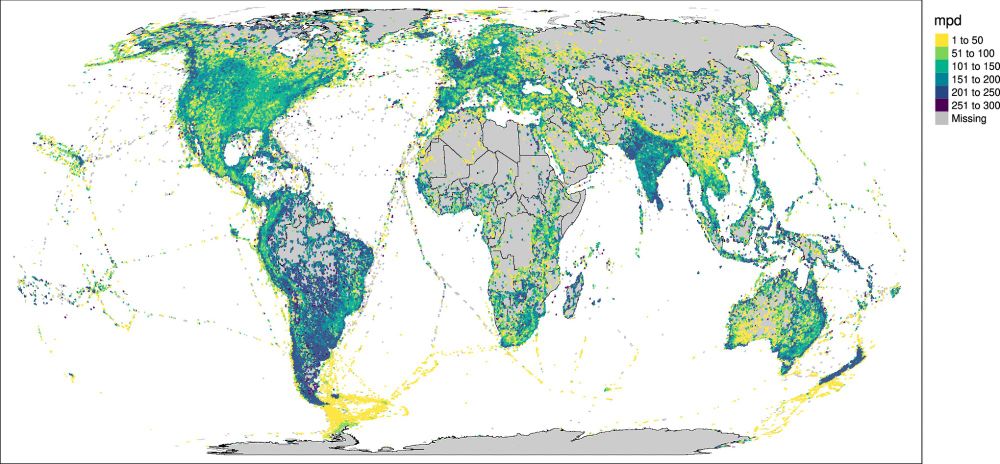
We just published a new global bird phylogeny. It synthesizes the work of thousands of researchers before us, and it will grow and improve over time. @snacktavish.bsky.social @birdsoftheworld.bsky.social www.pnas.org/doi/10.1073/...
We just published a new global bird phylogeny. It synthesizes the work of thousands of researchers before us, and it will grow and improve over time. @snacktavish.bsky.social @birdsoftheworld.bsky.social www.pnas.org/doi/10.1073/...
April 29, 2025 at 4:56 PM
*** Academic BFD alert ***
We just published a new global bird phylogeny. It synthesizes the work of thousands of researchers before us, and it will grow and improve over time. @snacktavish.bsky.social @birdsoftheworld.bsky.social www.pnas.org/doi/10.1073/...
We just published a new global bird phylogeny. It synthesizes the work of thousands of researchers before us, and it will grow and improve over time. @snacktavish.bsky.social @birdsoftheworld.bsky.social www.pnas.org/doi/10.1073/...