



Graeme Lyons
@graemelyons.bsky.social
Freelance entomologist specialising in reserve management, conservation grazing, rewilding & farming. 2nd place pan-species listing. Spiders. Bugs. Grew up below poverty line. AuDHD. Writing this https://pelagicpublishing.com/products/pan-species-listing
2/2 I have 1,002 records at least! It's basically a map of where I have been.

January 10, 2026 at 7:33 AM
2/2 I have 1,002 records at least! It's basically a map of where I have been.
1/2 #speciesaday no. 684 is Pardosa pullata. An extremely common wolf spider. The epigyne is very distinctive - think heart-shaped glasses at a jaunty angle! Can turn up pretty much anywhere that is open, most of my records are from the suction sampler. I expect this on every grassland survey.

January 10, 2026 at 7:32 AM
1/2 #speciesaday no. 684 is Pardosa pullata. An extremely common wolf spider. The epigyne is very distinctive - think heart-shaped glasses at a jaunty angle! Can turn up pretty much anywhere that is open, most of my records are from the suction sampler. I expect this on every grassland survey.
As of this morning, I am on 571 species for the year. Here's an update from an exciting spider trip to Stedham & Iping Commons on the 7th January where I found a spider that's not been seen there since 1969 @sussexwildlife.bsky.social analternativenaturalhistoryofsussex.blogspot.com/2026/01/6000...


January 10, 2026 at 7:28 AM
As of this morning, I am on 571 species for the year. Here's an update from an exciting spider trip to Stedham & Iping Commons on the 7th January where I found a spider that's not been seen there since 1969 @sussexwildlife.bsky.social analternativenaturalhistoryofsussex.blogspot.com/2026/01/6000...
My top ten highlights of 2025! What a difficult year it was to rank these, there were so many amazing moments!
analternativenaturalhistoryofsussex.blogspot.com/2026/01/my-t...
analternativenaturalhistoryofsussex.blogspot.com/2026/01/my-t...



January 1, 2026 at 9:12 AM
My top ten highlights of 2025! What a difficult year it was to rank these, there were so many amazing moments!
analternativenaturalhistoryofsussex.blogspot.com/2026/01/my-t...
analternativenaturalhistoryofsussex.blogspot.com/2026/01/my-t...
2/2 I have 48 records between April and August, all on the South Downs, especially on arable land there where it is often common in flower-rich arable margins.

December 15, 2025 at 6:46 AM
2/2 I have 48 records between April and August, all on the South Downs, especially on arable land there where it is often common in flower-rich arable margins.
1/2 #specieaday no. 683 is Andrena minutuloides. Nationally Scarce A. A 'mini-miner'. In Sussex, commonest on the Downs especially arable margins. Slimmer, shinier and with more widely spaced punctures than the much commoner and more widespread Andrena minutula (with which it often occurs).

December 15, 2025 at 6:44 AM
1/2 #specieaday no. 683 is Andrena minutuloides. Nationally Scarce A. A 'mini-miner'. In Sussex, commonest on the Downs especially arable margins. Slimmer, shinier and with more widely spaced punctures than the much commoner and more widespread Andrena minutula (with which it often occurs).
2/2 I have just 8 records over a 14 year period. All my Sussex records are from the Weald, mostly in the west. Not had it this year.

December 9, 2025 at 6:50 AM
2/2 I have just 8 records over a 14 year period. All my Sussex records are from the Weald, mostly in the west. Not had it this year.
1/2 #speciesaday no. 682 is Tomoxia bucephala. A Nationally Scarce saproxylic 'tumbling flower beetle'. Superficially like the much commoner Variimorda villosa, but a different pattern and more strongly associated with deadwood. I have recorded it between 2nd June and 10th July. Not annual for me.

December 9, 2025 at 6:49 AM
1/2 #speciesaday no. 682 is Tomoxia bucephala. A Nationally Scarce saproxylic 'tumbling flower beetle'. Superficially like the much commoner Variimorda villosa, but a different pattern and more strongly associated with deadwood. I have recorded it between 2nd June and 10th July. Not annual for me.
2/2 I have just 4 records, not seen it since 2014. I have seen it at Burton Pond and Old Lodge in Sussex, both sites I have surveyed since (and more frequently) but have not seen it in over a decade. Is it declining in the south east perhaps. I miss it!

December 8, 2025 at 11:09 AM
2/2 I have just 4 records, not seen it since 2014. I have seen it at Burton Pond and Old Lodge in Sussex, both sites I have surveyed since (and more frequently) but have not seen it in over a decade. Is it declining in the south east perhaps. I miss it!
1/2 #speciesaday no. 681 is Sericomyia lappona. A very smart and distinctive large, almost black and white hover with a conker for a scutellum. Restricted to boggy sites, much commoner in the north and west but also New Forest. Not common in Sussex. My records are between 30th May and 20th June.

December 8, 2025 at 11:08 AM
1/2 #speciesaday no. 681 is Sericomyia lappona. A very smart and distinctive large, almost black and white hover with a conker for a scutellum. Restricted to boggy sites, much commoner in the north and west but also New Forest. Not common in Sussex. My records are between 30th May and 20th June.
2/2 I have just three records, all from the New Forest or very near to the forest. I have not seen this in Sussex.

December 7, 2025 at 1:30 PM
2/2 I have just three records, all from the New Forest or very near to the forest. I have not seen this in Sussex.
1/2 #speaciesaday no. 680 is Stictoleptura scutellata. A large, solid, all-black (with an orange scutellum) Nationally Scarce longhorn beetle. Commonest in Beech woodland, seems to be fairly common around the New Forest but it's very scarce in Sussex. All my records are between 30th May & 11th July.

December 7, 2025 at 1:28 PM
1/2 #speaciesaday no. 680 is Stictoleptura scutellata. A large, solid, all-black (with an orange scutellum) Nationally Scarce longhorn beetle. Commonest in Beech woodland, seems to be fairly common around the New Forest but it's very scarce in Sussex. All my records are between 30th May & 11th July.
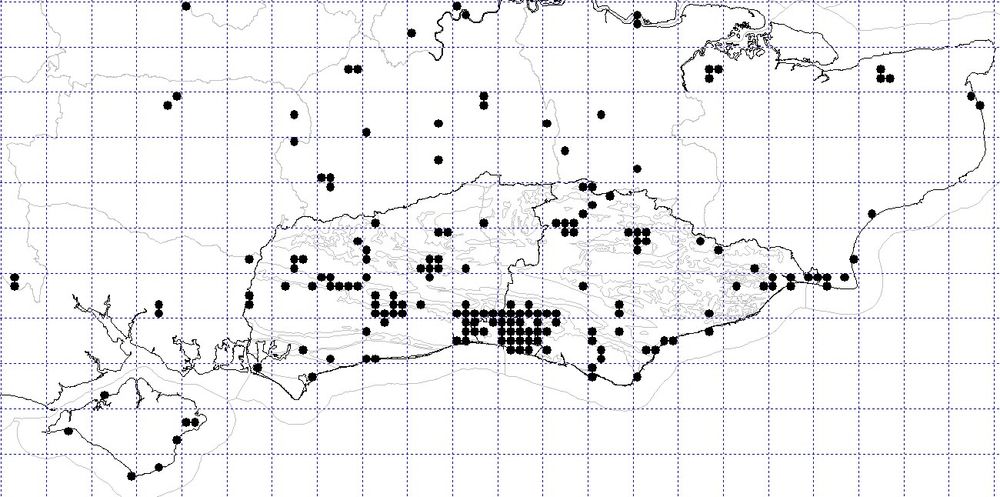
2/2 I have 811 records. Basically, this is a map of where I have recorded.
December 6, 2025 at 7:43 AM
2/2 I have 811 records. Basically, this is a map of where I have recorded.
1/2 #speciesaday no. 679 is Euophrys frontalis. A very common jumper in open habitats. Identifiable throughout much of the year. Adult males have magic wands for front legs and red-ringed eyes (think Paul Daniels with hay fever). Striking white on the top of the palps too! I just love salticids!

December 6, 2025 at 7:42 AM
1/2 #speciesaday no. 679 is Euophrys frontalis. A very common jumper in open habitats. Identifiable throughout much of the year. Adult males have magic wands for front legs and red-ringed eyes (think Paul Daniels with hay fever). Striking white on the top of the palps too! I just love salticids!
2/2 I have just 66 records. Commonest on heaths and woods. I never find lots and there are more spiders classed Nationally Scarce that I find far more frequently than this in the south east. It's widespread nationally though (those two records on the coastal plain are a glitch on the map).

December 5, 2025 at 7:31 AM
2/2 I have just 66 records. Commonest on heaths and woods. I never find lots and there are more spiders classed Nationally Scarce that I find far more frequently than this in the south east. It's widespread nationally though (those two records on the coastal plain are a glitch on the map).
1/2 #speciesaday no. 677 is Walckenaeria acuminata. Periscope up! The male of this spider has its eyes spread out along the turret - 4 half way and the other 4 at the top! This genus is an utter joy, I love showing this spider to people for the first time. Even the female has a small protrusion.

December 5, 2025 at 7:29 AM
1/2 #speciesaday no. 677 is Walckenaeria acuminata. Periscope up! The male of this spider has its eyes spread out along the turret - 4 half way and the other 4 at the top! This genus is an utter joy, I love showing this spider to people for the first time. Even the female has a small protrusion.
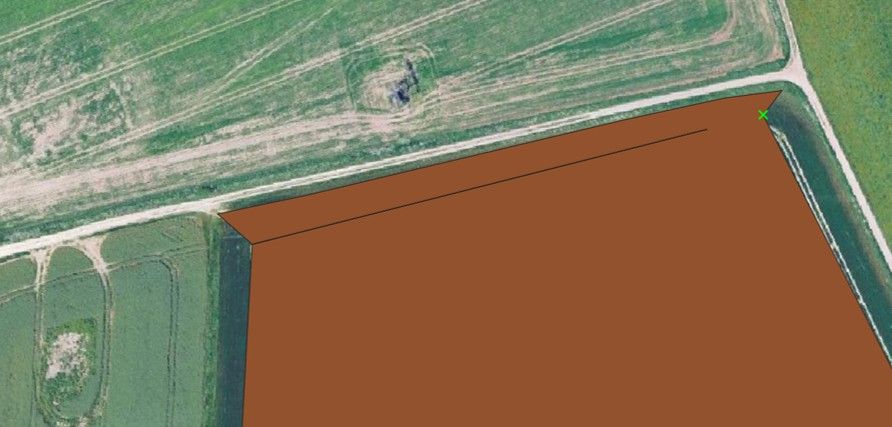
Anyone digitise sites in QGIS? I have been digitising large complex sites for over 20 years but recently I have found QGIS a nightmare. I drew the yellow polygon (the geometry is good/seamless). I go to merge it with the existing polygon and this happens. Please help! Driving me nuts #qgis

December 2, 2025 at 1:52 PM
Anyone digitise sites in QGIS? I have been digitising large complex sites for over 20 years but recently I have found QGIS a nightmare. I drew the yellow polygon (the geometry is good/seamless). I go to merge it with the existing polygon and this happens. Please help! Driving me nuts #qgis
2/2 I have 10 records.

November 26, 2025 at 9:04 AM
2/2 I have 10 records.
1/2 #speciesaday no. 676 is Megalinus glabratus. A large, shiny, local rove beetle with red eltyra and a big head that I see in open habitats, usually on the Downs. I have two records in June but most of my records come from August and September.

November 26, 2025 at 9:03 AM
1/2 #speciesaday no. 676 is Megalinus glabratus. A large, shiny, local rove beetle with red eltyra and a big head that I see in open habitats, usually on the Downs. I have two records in June but most of my records come from August and September.
2/2 I have 52 records, all unsurprisingly from chalk grassland!

November 23, 2025 at 10:01 AM
2/2 I have 52 records, all unsurprisingly from chalk grassland!
1/2 #speciesaday no. 676 is Common Rock-rose (Helianthemum nummularium). Vulnerable as of the latest status review! It's certainly not in every parcel of chalk grassland but is often really common where it occurs and there are loads of inverts that use it (as well as oddly, mycorrhizal fungi).

November 23, 2025 at 9:59 AM
1/2 #speciesaday no. 676 is Common Rock-rose (Helianthemum nummularium). Vulnerable as of the latest status review! It's certainly not in every parcel of chalk grassland but is often really common where it occurs and there are loads of inverts that use it (as well as oddly, mycorrhizal fungi).
#speciesaday no. 675 is Silky Rosegill (Volvariella bombycina). I have only seen this once at Ebernoe Common in 2016, growing out of a hole in a Beech tree. It really reminded me of some sort of coconut dessert! www.panspecieslisting.com


November 21, 2025 at 9:00 AM
#speciesaday no. 675 is Silky Rosegill (Volvariella bombycina). I have only seen this once at Ebernoe Common in 2016, growing out of a hole in a Beech tree. It really reminded me of some sort of coconut dessert! www.panspecieslisting.com
#speciesaday no. 674 is Montagu's Sea Snail (Liparis montagui). Not a snail, but a fish! Considering it is not meant to be that scarce, I only have one record - from 2013 at St Mary's Lighthouse in the north east. I'm sure I've seen it once more though, but not in the last decade. Cut little thing!

November 20, 2025 at 8:34 AM
#speciesaday no. 674 is Montagu's Sea Snail (Liparis montagui). Not a snail, but a fish! Considering it is not meant to be that scarce, I only have one record - from 2013 at St Mary's Lighthouse in the north east. I'm sure I've seen it once more though, but not in the last decade. Cut little thing!
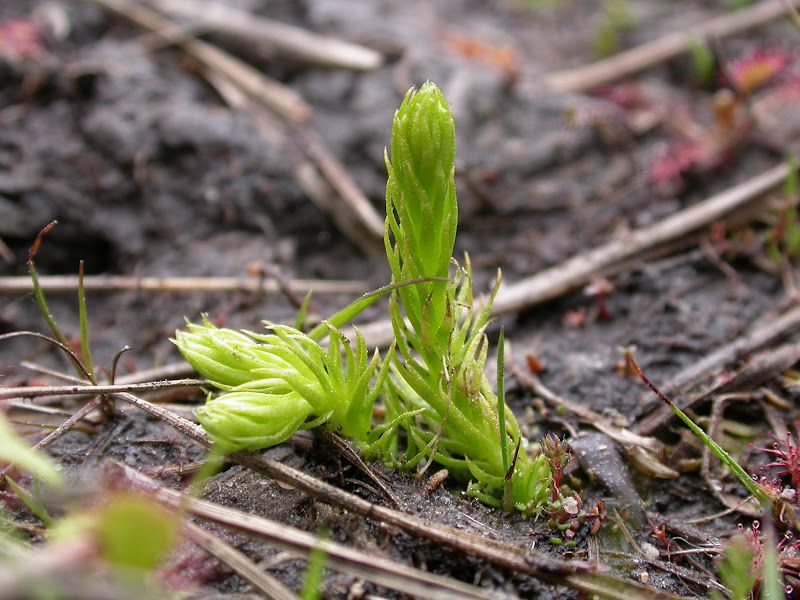
2/2 I have 24 records from three sites. Most are from Graffham Common (where it seems to be lost) and Iping Common where in both places it is/was dependant on the creation of bare ground to keep it going. I have seen huge numbers of plants in the New Forest though.

November 19, 2025 at 6:58 AM
2/2 I have 24 records from three sites. Most are from Graffham Common (where it seems to be lost) and Iping Common where in both places it is/was dependant on the creation of bare ground to keep it going. I have seen huge numbers of plants in the New Forest though.
1/2 #speciesaday no. 673 is Marsh Clubmoss (Lycopodiella inundata) is a Nationally Scarce & Section 41 (although it has come off the Red List in the 2025 status review, this is stil a plant that's struggling in places). Found only on damp, black, peaty mud (M16), in places where you'll see sundews.
November 19, 2025 at 6:55 AM
1/2 #speciesaday no. 673 is Marsh Clubmoss (Lycopodiella inundata) is a Nationally Scarce & Section 41 (although it has come off the Red List in the 2025 status review, this is stil a plant that's struggling in places). Found only on damp, black, peaty mud (M16), in places where you'll see sundews.