


GrumpyUncleSean🔥
@grumpyunclesean.bsky.social
Research scientist | public land owner | facial hair enthusiast. Science interests: #Wildfire #Forests #GlobalChange
3/3
The figure below shows area burned in western US forests from 1985-2022 (focus on the purple; ignore the orange). Note that record-breaking seasons are the norm: new records are broken every few years. This graphic is modified from Parks et al. 2025 (onlinelibrary.wiley.com/doi/10.1111/...).
The figure below shows area burned in western US forests from 1985-2022 (focus on the purple; ignore the orange). Note that record-breaking seasons are the norm: new records are broken every few years. This graphic is modified from Parks et al. 2025 (onlinelibrary.wiley.com/doi/10.1111/...).

January 7, 2026 at 5:43 PM
3/3
The figure below shows area burned in western US forests from 1985-2022 (focus on the purple; ignore the orange). Note that record-breaking seasons are the norm: new records are broken every few years. This graphic is modified from Parks et al. 2025 (onlinelibrary.wiley.com/doi/10.1111/...).
The figure below shows area burned in western US forests from 1985-2022 (focus on the purple; ignore the orange). Note that record-breaking seasons are the norm: new records are broken every few years. This graphic is modified from Parks et al. 2025 (onlinelibrary.wiley.com/doi/10.1111/...).

I have concluded that dogs are losing their ability to walk.
Perhaps @theonion.com should cover this important story.
Perhaps @theonion.com should cover this important story.


January 2, 2026 at 8:22 PM
I have concluded that dogs are losing their ability to walk.
Perhaps @theonion.com should cover this important story.
Perhaps @theonion.com should cover this important story.
I’m stoked to attend the 11th International Fire Ecology and Management Congress, share/learn about the latest fire science, and reconnect/connect with my fire science colleagues!
#FireCon2025 🔥
#FireCon2025 🔥

December 1, 2025 at 4:54 PM
I’m stoked to attend the 11th International Fire Ecology and Management Congress, share/learn about the latest fire science, and reconnect/connect with my fire science colleagues!
#FireCon2025 🔥
#FireCon2025 🔥
According to supplemental figure 4 of this paper (www.nature.com/articles/s41...), here's the 1748 pattern (top-right panel). 🔥🧪🌍

September 4, 2025 at 2:54 AM
According to supplemental figure 4 of this paper (www.nature.com/articles/s41...), here's the 1748 pattern (top-right panel). 🔥🧪🌍
Not a key finding, but an interesting corroboration of our findings (see supplemental material):
Our results are totally in line with those of Peterson et al. (2024; doi.org/10.1073/pnas...)
6/6
Our results are totally in line with those of Peterson et al. (2024; doi.org/10.1073/pnas...)
6/6

September 2, 2025 at 5:10 PM
Not a key finding, but an interesting corroboration of our findings (see supplemental material):
Our results are totally in line with those of Peterson et al. (2024; doi.org/10.1073/pnas...)
6/6
Our results are totally in line with those of Peterson et al. (2024; doi.org/10.1073/pnas...)
6/6
We also used a cool moving window regression to account for variable WBP-climate relationships across the study area
This means each 220 m pixel has its own model. We built over 20 million models!
Model skill was high: average AUC was 0.875 and the commission/omission error rates were 6%/14%
5/6
This means each 220 m pixel has its own model. We built over 20 million models!
Model skill was high: average AUC was 0.875 and the commission/omission error rates were 6%/14%
5/6

September 2, 2025 at 5:10 PM
We also used a cool moving window regression to account for variable WBP-climate relationships across the study area
This means each 220 m pixel has its own model. We built over 20 million models!
Model skill was high: average AUC was 0.875 and the commission/omission error rates were 6%/14%
5/6
This means each 220 m pixel has its own model. We built over 20 million models!
Model skill was high: average AUC was 0.875 and the commission/omission error rates were 6%/14%
5/6
Key finding #2:
75% of the climatically suitable area for WBP under mid-21st century climate is located in designated wilderness areas and national parks. This could challenge WBP recovery efforts, as these protected areas strive to reduce human manipulation of ecological systems.
3/6
75% of the climatically suitable area for WBP under mid-21st century climate is located in designated wilderness areas and national parks. This could challenge WBP recovery efforts, as these protected areas strive to reduce human manipulation of ecological systems.
3/6

September 2, 2025 at 5:10 PM
Key finding #2:
75% of the climatically suitable area for WBP under mid-21st century climate is located in designated wilderness areas and national parks. This could challenge WBP recovery efforts, as these protected areas strive to reduce human manipulation of ecological systems.
3/6
75% of the climatically suitable area for WBP under mid-21st century climate is located in designated wilderness areas and national parks. This could challenge WBP recovery efforts, as these protected areas strive to reduce human manipulation of ecological systems.
3/6
Key finding #1:
We projected an 80% reduction in the area climatically suitable for WBP in the United States by the mid-21st century.
2/6
We projected an 80% reduction in the area climatically suitable for WBP in the United States by the mid-21st century.
2/6

September 2, 2025 at 5:10 PM
Key finding #1:
We projected an 80% reduction in the area climatically suitable for WBP in the United States by the mid-21st century.
2/6
We projected an 80% reduction in the area climatically suitable for WBP in the United States by the mid-21st century.
2/6
Plus, here’s the bear we saw while paddleboarding

September 2, 2025 at 2:42 AM
Plus, here’s the bear we saw while paddleboarding

September 2, 2025 at 2:37 AM

3/4
Key point #2: Strong links to intensifying climate aridity portend ongoing forest area burned and area burned severely.
Key point #2: Strong links to intensifying climate aridity portend ongoing forest area burned and area burned severely.

August 21, 2025 at 6:32 PM
3/4
Key point #2: Strong links to intensifying climate aridity portend ongoing forest area burned and area burned severely.
Key point #2: Strong links to intensifying climate aridity portend ongoing forest area burned and area burned severely.
2/4
Key point #1: In addition to the rapid expansion of fire size and annual area burned in the western US since 1985, fires have become more severe, with greater impacts and long-term consequences to forest ecosystems
Key point #1: In addition to the rapid expansion of fire size and annual area burned in the western US since 1985, fires have become more severe, with greater impacts and long-term consequences to forest ecosystems

August 21, 2025 at 6:32 PM
2/4
Key point #1: In addition to the rapid expansion of fire size and annual area burned in the western US since 1985, fires have become more severe, with greater impacts and long-term consequences to forest ecosystems
Key point #1: In addition to the rapid expansion of fire size and annual area burned in the western US since 1985, fires have become more severe, with greater impacts and long-term consequences to forest ecosystems
#FireScarFriday
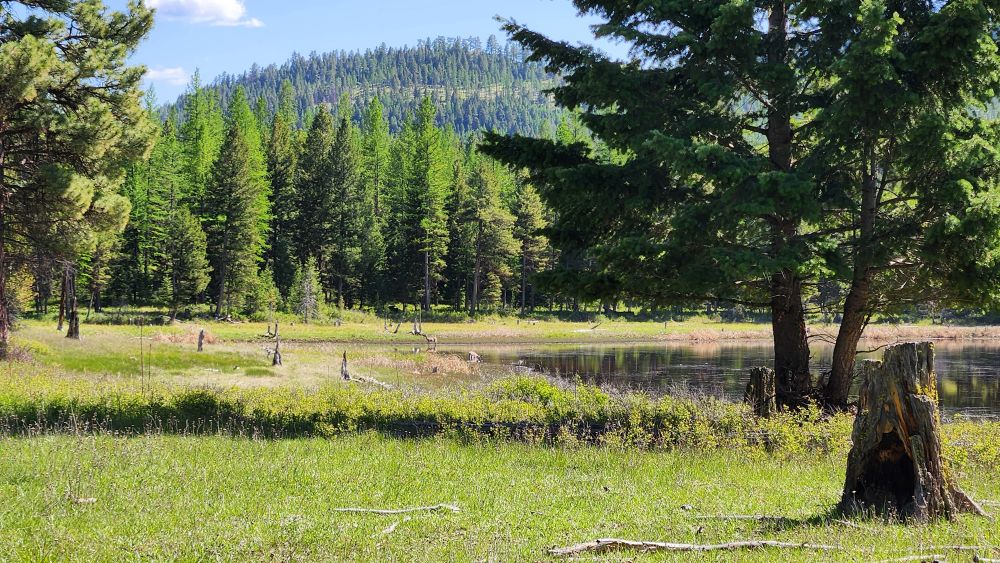
Very old fire-scarred stump. The astute observer will notice two whitetail deer in the background. 🔥
Very old fire-scarred stump. The astute observer will notice two whitetail deer in the background. 🔥
August 1, 2025 at 7:31 PM
#FireScarFriday
Very old fire-scarred stump. The astute observer will notice two whitetail deer in the background. 🔥
Very old fire-scarred stump. The astute observer will notice two whitetail deer in the background. 🔥

#FireScarFriday
Teresa Hollingsworth (RIP) and I in front of a fire-scarred Douglas fir in the Axolotl Lakes Wilderness Study Area in SW Montana
Teresa Hollingsworth (RIP) and I in front of a fire-scarred Douglas fir in the Axolotl Lakes Wilderness Study Area in SW Montana

June 21, 2025 at 3:59 AM
#FireScarFriday
Teresa Hollingsworth (RIP) and I in front of a fire-scarred Douglas fir in the Axolotl Lakes Wilderness Study Area in SW Montana
Teresa Hollingsworth (RIP) and I in front of a fire-scarred Douglas fir in the Axolotl Lakes Wilderness Study Area in SW Montana
Here is a turtle (okay, it's really a tortoise) i saw a couple of months ago in southern Georgia

June 21, 2025 at 3:20 AM
Here is a turtle (okay, it's really a tortoise) i saw a couple of months ago in southern Georgia
Here's a turtle (okay, it's a tortoise) I saw in southern Georgia a couple of months ago
June 21, 2025 at 3:18 AM
Here's a turtle (okay, it's a tortoise) I saw in southern Georgia a couple of months ago
Belated #FireScarFriday post.
I saw some cool fire-scarred trees, snags, and stumps on my mtn bike ride today.
Those two snags have 6+ fire scars each. 🔥
I saw some cool fire-scarred trees, snags, and stumps on my mtn bike ride today.
Those two snags have 6+ fire scars each. 🔥


May 24, 2025 at 10:25 PM
Belated #FireScarFriday post.
I saw some cool fire-scarred trees, snags, and stumps on my mtn bike ride today.
Those two snags have 6+ fire scars each. 🔥
I saw some cool fire-scarred trees, snags, and stumps on my mtn bike ride today.
Those two snags have 6+ fire scars each. 🔥
Pro tip: When you are shopping at a grocery store while traveling, and the grocery store requires some stupid-ass membership to get the sale price, this phone number usually works --- local area code + 867 + 5309

May 18, 2025 at 1:32 AM
Pro tip: When you are shopping at a grocery store while traveling, and the grocery store requires some stupid-ass membership to get the sale price, this phone number usually works --- local area code + 867 + 5309
#FireScarFriday
Fire-scarred western red cedar trees as seen while biking (on a Friday) in #GlacierNationalPark two weeks ago.
Plus a bad picture of a mama black bear with cubs!
Fire-scarred western red cedar trees as seen while biking (on a Friday) in #GlacierNationalPark two weeks ago.
Plus a bad picture of a mama black bear with cubs!


May 16, 2025 at 5:09 PM
#FireScarFriday
Fire-scarred western red cedar trees as seen while biking (on a Friday) in #GlacierNationalPark two weeks ago.
Plus a bad picture of a mama black bear with cubs!
Fire-scarred western red cedar trees as seen while biking (on a Friday) in #GlacierNationalPark two weeks ago.
Plus a bad picture of a mama black bear with cubs!
Enjoy your #PublicLands while you still can (before the Trump administration sells them off)

May 9, 2025 at 9:58 PM
Enjoy your #PublicLands while you still can (before the Trump administration sells them off)
#FireScarFriday
Me and the amazing Crystal Raymond posing in front of a fire-scarred incense cedar in the Lake Tahoe basin. 🔥
Me and the amazing Crystal Raymond posing in front of a fire-scarred incense cedar in the Lake Tahoe basin. 🔥

May 9, 2025 at 8:54 PM
#FireScarFriday
Me and the amazing Crystal Raymond posing in front of a fire-scarred incense cedar in the Lake Tahoe basin. 🔥
Me and the amazing Crystal Raymond posing in front of a fire-scarred incense cedar in the Lake Tahoe basin. 🔥

April 25, 2025 at 1:25 PM