




Historic Pudong
@historic-pudong.bsky.social
The often overlooked side of Shanghai by a 23-year resident. Coverage includes everything east of the Huangpu River.
Gu left seven children. He was buried north of his home. The area now is just south of Line 16 near Hangsan Road.
He and his brother were among eight revolutionary martyrs from their village of Jiangqiao.
Some photos from: meipian.cn/394r33fs
He and his brother were among eight revolutionary martyrs from their village of Jiangqiao.
Some photos from: meipian.cn/394r33fs


January 20, 2025 at 1:28 AM
Gu left seven children. He was buried north of his home. The area now is just south of Line 16 near Hangsan Road.
He and his brother were among eight revolutionary martyrs from their village of Jiangqiao.
Some photos from: meipian.cn/394r33fs
He and his brother were among eight revolutionary martyrs from their village of Jiangqiao.
Some photos from: meipian.cn/394r33fs
During the ensuring battle, Gu was captured and taken to Xinchang, where he was imprisoned in Qinglong Temple (青龙庙). He was tortured and later executed on the north side of Xinchang Bridge near Hunan Highway.
January 20, 2025 at 1:28 AM
During the ensuring battle, Gu was captured and taken to Xinchang, where he was imprisoned in Qinglong Temple (青龙庙). He was tortured and later executed on the north side of Xinchang Bridge near Hunan Highway.
After a period of recuperation, Gu in June 1948 was appointed as a political instructor with the Pudong People's Liberation Corps (浦东人民解放总队). In late July 1948, KMT forces learned that Gu’s troops were operating southwest of Xinchang at Qinglong Port (青龙港).
January 20, 2025 at 1:28 AM
After a period of recuperation, Gu in June 1948 was appointed as a political instructor with the Pudong People's Liberation Corps (浦东人民解放总队). In late July 1948, KMT forces learned that Gu’s troops were operating southwest of Xinchang at Qinglong Port (青龙港).
Gu was beaten, severely undernourished, and almost went blind. His family sold land to raise money in order to bribe the prison guards. Under the pretense that Gu had died, the guards rolled Gu up in reed mats and tossed him in an empty lot so he could be rescued by his family.
January 20, 2025 at 1:28 AM
Gu was beaten, severely undernourished, and almost went blind. His family sold land to raise money in order to bribe the prison guards. Under the pretense that Gu had died, the guards rolled Gu up in reed mats and tossed him in an empty lot so he could be rescued by his family.
When sweeps in the area by the KMT of suspected CPC sympathizers proved unsuccessful, suspicions were raised of possible CPC infiltration. Gu’s cover was soon betrayed. He was arrested and sent to a prison in Wuxi (无锡).
January 20, 2025 at 1:28 AM
When sweeps in the area by the KMT of suspected CPC sympathizers proved unsuccessful, suspicions were raised of possible CPC infiltration. Gu’s cover was soon betrayed. He was arrested and sent to a prison in Wuxi (无锡).
After joining the CPC, Gu Qintang covertly became the head of Qizao Township (七灶乡) and served in other government positions in order to provide CPC organizations with information about the Japanese occupiers, and, later, the nationalist government.
January 20, 2025 at 1:28 AM
After joining the CPC, Gu Qintang covertly became the head of Qizao Township (七灶乡) and served in other government positions in order to provide CPC organizations with information about the Japanese occupiers, and, later, the nationalist government.
That same year, Gu’s elder brother, Gu Menghua (顾梦花), joined the Songhu detachment of the New Fourth Army, engaging in reconnaissance work in Pudong. In March 1944, he was captured while performing a mission. He was later executed at the Tanzhi Bridge (坦直桥).


January 20, 2025 at 1:28 AM
That same year, Gu’s elder brother, Gu Menghua (顾梦花), joined the Songhu detachment of the New Fourth Army, engaging in reconnaissance work in Pudong. In March 1944, he was captured while performing a mission. He was later executed at the Tanzhi Bridge (坦直桥).
During the Japanese occupation, he joined a local peasant resistance association serving as its president and participating in underground activities. He was admitted as a CPC member in 1941.

January 20, 2025 at 1:28 AM
During the Japanese occupation, he joined a local peasant resistance association serving as its president and participating in underground activities. He was admitted as a CPC member in 1941.
Gu was born in 1913 and, according to a recent account by his great granddaughter, was the only literate person in his family.
He was admitted to Shanghai East Asia Sports College, now the Department of Physical Education of East China Normal University.
He was admitted to Shanghai East Asia Sports College, now the Department of Physical Education of East China Normal University.


January 20, 2025 at 1:28 AM
Gu was born in 1913 and, according to a recent account by his great granddaughter, was the only literate person in his family.
He was admitted to Shanghai East Asia Sports College, now the Department of Physical Education of East China Normal University.
He was admitted to Shanghai East Asia Sports College, now the Department of Physical Education of East China Normal University.
The home of Gu Qintang (顾琴堂) is in Jiangqiao Village (蒋桥村), which was an important center of Communist Party activity in the war against the Japanese and later in the civil war.


January 20, 2025 at 1:28 AM
The home of Gu Qintang (顾琴堂) is in Jiangqiao Village (蒋桥村), which was an important center of Communist Party activity in the war against the Japanese and later in the civil war.
In recent times. the Caojiagou has been dredged and straightened in 1957, 1972, and 1984. The temple was destroyed and rebuilt in the late Qing Dynasty, then destroyed again during the Cultural Revolution.


January 6, 2025 at 12:31 AM
In recent times. the Caojiagou has been dredged and straightened in 1957, 1972, and 1984. The temple was destroyed and rebuilt in the late Qing Dynasty, then destroyed again during the Cultural Revolution.
During this period, the ditch picked up the name Dutaipu (都台浦). A temple was also built along the banks at Hengmian (横沔) to worship Cui Gong (崔使君庙) for his contributions to the area. Cui Gong had also ordered the dredging of the Wusong River (Suzhou Creek) in Puxi.
January 6, 2025 at 12:31 AM
During this period, the ditch picked up the name Dutaipu (都台浦). A temple was also built along the banks at Hengmian (横沔) to worship Cui Gong (崔使君庙) for his contributions to the area. Cui Gong had also ordered the dredging of the Wusong River (Suzhou Creek) in Puxi.
The Caojiagou was extended in 1460 to Xinchang (新场) in the south and Donggou (东沟) in the north, joining the Huangpu River roughly near today’s Donglu Road Station on Line 12. The project was also intended to irrigate crops and help with flood control.

January 6, 2025 at 12:31 AM
The Caojiagou was extended in 1460 to Xinchang (新场) in the south and Donggou (东沟) in the north, joining the Huangpu River roughly near today’s Donglu Road Station on Line 12. The project was also intended to irrigate crops and help with flood control.
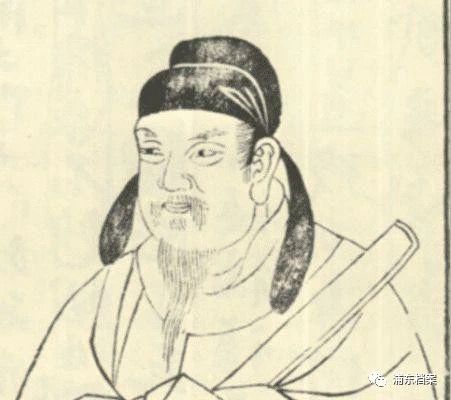
n 1457, on an inspection of southern China, Ming imperial envoy Cui Gong (崔恭) determined that the ditch was too short and narrow. He ordered an expansion.
January 6, 2025 at 12:31 AM
n 1457, on an inspection of southern China, Ming imperial envoy Cui Gong (崔恭) determined that the ditch was too short and narrow. He ordered an expansion.
As a result, he initiated the digging of a canal north from Sanzao Creek (三灶浜) to Jiangjia Creek (蒋家浜), naming it after his family: Caojiagou (曹家沟), or Caojia Ditch.
January 6, 2025 at 12:31 AM
As a result, he initiated the digging of a canal north from Sanzao Creek (三灶浜) to Jiangjia Creek (蒋家浜), naming it after his family: Caojiagou (曹家沟), or Caojia Ditch.
During that time, Cao Zhuxuan (曹竹轩) had moved his family to what is now Tangzhen. He found that while existing waterways made for relatively easy transportation east and west across Pudong, moving goods north and south was difficult.
January 6, 2025 at 12:31 AM
During that time, Cao Zhuxuan (曹竹轩) had moved his family to what is now Tangzhen. He found that while existing waterways made for relatively easy transportation east and west across Pudong, moving goods north and south was difficult.
The Dutaipu Relic Site (都台浦遗址) in Tangzhen Greenland Culture Park (唐城绿地文化公园) near the Outer Ring Road marks the location of the canal from the Zhengtong period (1436-1449).


January 6, 2025 at 12:31 AM
The Dutaipu Relic Site (都台浦遗址) in Tangzhen Greenland Culture Park (唐城绿地文化公园) near the Outer Ring Road marks the location of the canal from the Zhengtong period (1436-1449).
In the late 1950s, the local cultural bureau suggested moving the statute to Shanghai’s Confucian Temple (上海文庙). The statue instead was relocated to Penglai Park (蓬莱公园). The statute was removed during the Cultural Revolution and its whereabouts are unknown today.
November 29, 2024 at 1:41 PM
In the late 1950s, the local cultural bureau suggested moving the statute to Shanghai’s Confucian Temple (上海文庙). The statue instead was relocated to Penglai Park (蓬莱公园). The statute was removed during the Cultural Revolution and its whereabouts are unknown today.
After his death, Li was honored with a statute in one of the most prominent locations in Shanghai: Yuyuan Garden. His statute was on the Huxin Pavilion (湖心亭) next to the Jiuqu Bridge (九曲桥).


November 29, 2024 at 1:41 PM
After his death, Li was honored with a statute in one of the most prominent locations in Shanghai: Yuyuan Garden. His statute was on the Huxin Pavilion (湖心亭) next to the Jiuqu Bridge (九曲桥).
Li was buried back in Pudong near his hometown southwest of Gaoqiao. Due to the excavation of the river in Gaoqiao, Li Pingshu's tomb was moved in 1977 to Gaohang.

November 29, 2024 at 1:41 PM
Li was buried back in Pudong near his hometown southwest of Gaoqiao. Due to the excavation of the river in Gaoqiao, Li Pingshu's tomb was moved in 1977 to Gaohang.
In 1914, the Yuan Shikai government suspended local self-government, with it restored in Shanghai only in 1923. Li resumed involvement in the government, serving until his death from illness on December 13, 1927. He was also involved in literature and arts in his later years.
November 29, 2024 at 1:41 PM
In 1914, the Yuan Shikai government suspended local self-government, with it restored in Shanghai only in 1923. Li resumed involvement in the government, serving until his death from illness on December 13, 1927. He was also involved in literature and arts in his later years.
In 1913, during the Second Revolution, Li supported forces opposing those of provisional president Yuan Shikai. On the losing side, Li fled to Japan for three years.
November 29, 2024 at 1:41 PM
In 1913, during the Second Revolution, Li supported forces opposing those of provisional president Yuan Shikai. On the losing side, Li fled to Japan for three years.
Primary schools were also established. Among them is today’s Gaoqiao Town Primary School (高桥镇小学). Li initiated the establishment of the Pudong Tongren Association (浦东同人会). In 1907, he had merged five sports organizations to a new association, serving as its president.

November 29, 2024 at 1:41 PM
Primary schools were also established. Among them is today’s Gaoqiao Town Primary School (高桥镇小学). Li initiated the establishment of the Pudong Tongren Association (浦东同人会). In 1907, he had merged five sports organizations to a new association, serving as its president.