


Hyeonmin Jeong
@hynmn-jeong.bsky.social
Reposted by Hyeonmin Jeong
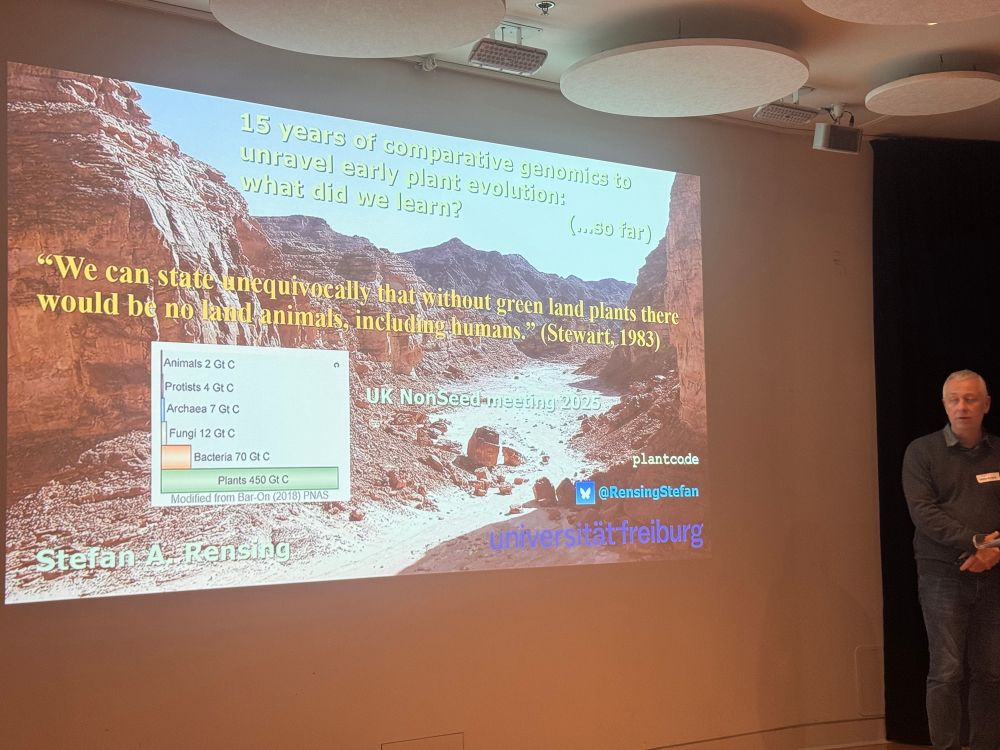
Very inspiring keynote talk by Stefan Rensing @rensingstefan.bsky.social at today’s UK NonSeed Plant Meeting. It was an inspiring day, and I am so glad I could be part of it! Thanks again for the invitation @philcarella.bsky.social 💚


December 12, 2025 at 6:00 PM
Very inspiring keynote talk by Stefan Rensing @rensingstefan.bsky.social at today’s UK NonSeed Plant Meeting. It was an inspiring day, and I am so glad I could be part of it! Thanks again for the invitation @philcarella.bsky.social 💚
Reposted by Hyeonmin Jeong
Fantastic closing keynote by @rensingstefan.bsky.social. Thanks for joining us and telling us about all of the great @watertoland.bsky.social outputs 👍

December 12, 2025 at 7:05 PM
Fantastic closing keynote by @rensingstefan.bsky.social. Thanks for joining us and telling us about all of the great @watertoland.bsky.social outputs 👍
Reposted by Hyeonmin Jeong
The 4th annual non-seed plant flash talk showcase extravaganza didn’t disappoint #nonseedUK25 🌱

December 12, 2025 at 4:46 PM
The 4th annual non-seed plant flash talk showcase extravaganza didn’t disappoint #nonseedUK25 🌱
Reposted by Hyeonmin Jeong
It’s a pleasure to have @rensingstefan.bsky.social join our UK NonSeed Plant Group Meeting in Norwich! Happy to see a very popular cartoon in the slides ☀️ 🌱 🧴 🍄

December 12, 2025 at 5:16 PM
It’s a pleasure to have @rensingstefan.bsky.social join our UK NonSeed Plant Group Meeting in Norwich! Happy to see a very popular cartoon in the slides ☀️ 🌱 🧴 🍄
Reposted by Hyeonmin Jeong
@philcarella.bsky.social opens up the 4th #nonseedUK25 meeting. An exciting day of science lies ahead…

December 12, 2025 at 9:40 AM
@philcarella.bsky.social opens up the 4th #nonseedUK25 meeting. An exciting day of science lies ahead…
Reposted by Hyeonmin Jeong

Looking forward to Friday's Non-seed plant meeting in Norwich. Together with @karimaelm.bsky.social, we wrote a Review about the last year meeting. We discuss about the latest advances and the importance of using in models. Thanks @biologists.bsky.social and @biologyopen.bsky.social. #PlantScience

Non-seed plant research in the spotlight
Summary: With non-seed plant research gaining momentum and a vibrant community emerging, this Meeting Review highlights the growing impact of diverse model systems on key questions in plant evolution.
journals.biologists.com
December 10, 2025 at 3:29 PM
Looking forward to Friday's Non-seed plant meeting in Norwich. Together with @karimaelm.bsky.social, we wrote a Review about the last year meeting. We discuss about the latest advances and the importance of using in models. Thanks @biologists.bsky.social and @biologyopen.bsky.social. #PlantScience
Reposted by Hyeonmin Jeong
December 9, 2025 at 8:27 AM
Reposted by Hyeonmin Jeong
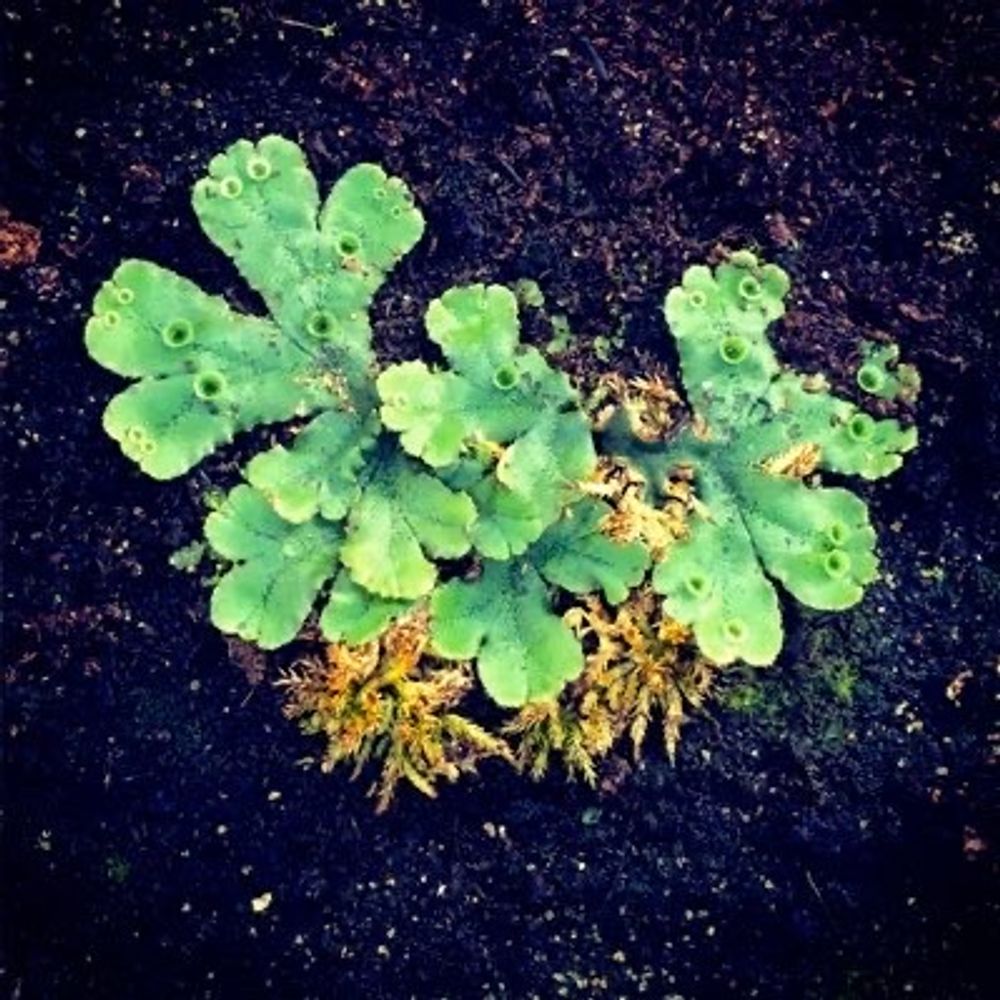
PhD opportunity in our lab - deadline passes on Dec 2nd - don’t miss out!
New opportunity to undertake a PhD in my group at the John Innes Centre - if you’re interested in plant immunity and evolution check out the link!

Understanding Host Compatibility in the Marchantia-Phytophthora System (CARELLA_J26DTP) | Doctoral Training Partnership
The fossil record demonstrates that filamentous microbes invaded ancient plant cells with intracellular hyphal structures over 450 million years ago. To this day, a rich diversity of extant land plant...
biodtp.norwichresearchpark.ac.uk
November 28, 2025 at 7:30 PM
PhD opportunity in our lab - deadline passes on Dec 2nd - don’t miss out!
Reposted by Hyeonmin Jeong

MpNPR modulates lineage-specific oil body development and defence against gastropod herbivory in Marchantia polymorpha https://www.biorxiv.org/content/10.1101/2025.11.17.688000v1
November 18, 2025 at 12:04 AM
MpNPR modulates lineage-specific oil body development and defence against gastropod herbivory in Marchantia polymorpha https://www.biorxiv.org/content/10.1101/2025.11.17.688000v1
Reposted by Hyeonmin Jeong

#Lichens form their complex thalli through a partnership involving at least a fungus and an alga. But can these living structures be rebuilt in vitro? For more than a century, people have tried. With @spribille.bsky.social we revisited 150 years of #lichen #resynthesis to ask: has anyone succeeded?

November 7, 2025 at 2:07 AM
#Lichens form their complex thalli through a partnership involving at least a fungus and an alga. But can these living structures be rebuilt in vitro? For more than a century, people have tried. With @spribille.bsky.social we revisited 150 years of #lichen #resynthesis to ask: has anyone succeeded?
Reposted by Hyeonmin Jeong
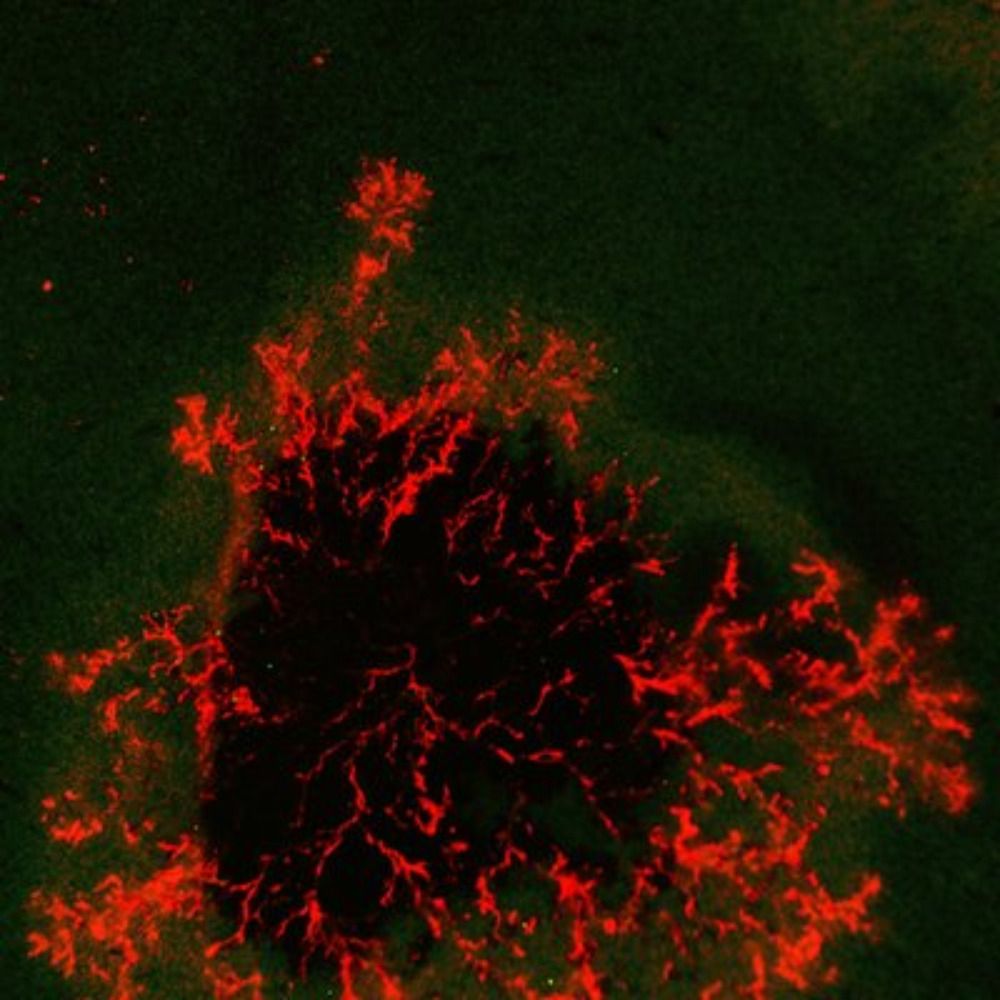
Plz RP. Come join us at @slcuplants.bsky.social @cam.ac.uk to study effector-targeted plant processes impacting plant cell biology and development.
www.cam.ac.uk/jobs/post-do...
www.schornacklab.net
www.cam.ac.uk/jobs/post-do...
www.schornacklab.net


November 6, 2025 at 6:51 PM
Plz RP. Come join us at @slcuplants.bsky.social @cam.ac.uk to study effector-targeted plant processes impacting plant cell biology and development.
www.cam.ac.uk/jobs/post-do...
www.schornacklab.net
www.cam.ac.uk/jobs/post-do...
www.schornacklab.net
Reposted by Hyeonmin Jeong
Very nice work -> Two residues reprogram immunity receptors for nitrogen-fixing symbiosis

Two residues reprogram immunity receptors for nitrogen-fixing symbiosis
Receptor signalling determines cellular responses and is crucial for defining specific biological outcomes. In legume root cells, highly similar and structurally conserved chitin and Nod factor receptor kinases activate immune or symbiotic pathways, respectively, when chitinous ligands are perceived1. Here we show that specific amino acid residues in the intracellular part of the Nod factor receptor NFR1 control signalling specificity and enable the distinction of immune and symbiotic responses. Functional investigation of CERK6, NFR1 and receptor variants thereof revealed a conserved motif that we term Symbiosis Determinant 1 in the juxtamembrane region of the kinase domain, which is key for symbiotic signalling. We show that two residues in Symbiosis Determinant 1 are indispensable hallmarks of NFR1-type receptors and are sufficient to convert Lotus CERK6 and barley RLK4 kinase outputs to enable symbiotic signalling in Lotus japonicus.
sco.lt
November 6, 2025 at 2:44 PM
Very nice work -> Two residues reprogram immunity receptors for nitrogen-fixing symbiosis
Reposted by Hyeonmin Jeong
1/ Preprint alert:
🌾 The developing leaf of the wild grass Brachypodium distachyon at single-cell resolution
👉 doi.org/10.1101/2025...
A 70k-cell single-cell RNA-seq atlas of the developing grass leaf—from the shoot meristem to mature leaf tissues. @cerealcell.bsky.social @lbmountain.bsky.social
🌾 The developing leaf of the wild grass Brachypodium distachyon at single-cell resolution
👉 doi.org/10.1101/2025...
A 70k-cell single-cell RNA-seq atlas of the developing grass leaf—from the shoot meristem to mature leaf tissues. @cerealcell.bsky.social @lbmountain.bsky.social

November 5, 2025 at 12:32 PM
1/ Preprint alert:
🌾 The developing leaf of the wild grass Brachypodium distachyon at single-cell resolution
👉 doi.org/10.1101/2025...
A 70k-cell single-cell RNA-seq atlas of the developing grass leaf—from the shoot meristem to mature leaf tissues. @cerealcell.bsky.social @lbmountain.bsky.social
🌾 The developing leaf of the wild grass Brachypodium distachyon at single-cell resolution
👉 doi.org/10.1101/2025...
A 70k-cell single-cell RNA-seq atlas of the developing grass leaf—from the shoot meristem to mature leaf tissues. @cerealcell.bsky.social @lbmountain.bsky.social
Reposted by Hyeonmin Jeong
🛑Exciting update from our work with @pierremarcdelaux.bsky.social team on the ericoid mycorrhizal symbiosis❗❗
🔥New results support a conserved three-gene module and master regulator for nutrient-responsive intracellular accommodation of fungal symbionts🤯
Check the nice thread below👇🏼
#plantscience
🔥New results support a conserved three-gene module and master regulator for nutrient-responsive intracellular accommodation of fungal symbionts🤯
Check the nice thread below👇🏼
#plantscience
1/ It is my pleasure to share the latest preprint of the team: "Symbiotic diversification relies on an ancestral gene network in plants"
doi.org/10.1101/2025...
Here, we identified and functionally validated a novel master regulator of intracellular symbioses!
A thread ...
#PlantScience
doi.org/10.1101/2025...
Here, we identified and functionally validated a novel master regulator of intracellular symbioses!
A thread ...
#PlantScience

Symbiotic diversification relies on an ancestral gene network in plants
Symbioses have been fundamental to colonization of terrestrial ecosystems by plants and their evolution. Emergence of the ancient arbuscular mycorrhizal symbiosis was followed by the diversification o...
doi.org
November 4, 2025 at 12:30 PM
🛑Exciting update from our work with @pierremarcdelaux.bsky.social team on the ericoid mycorrhizal symbiosis❗❗
🔥New results support a conserved three-gene module and master regulator for nutrient-responsive intracellular accommodation of fungal symbionts🤯
Check the nice thread below👇🏼
#plantscience
🔥New results support a conserved three-gene module and master regulator for nutrient-responsive intracellular accommodation of fungal symbionts🤯
Check the nice thread below👇🏼
#plantscience
Reposted by Hyeonmin Jeong

1/ It is my pleasure to share the latest preprint of the team: "Symbiotic diversification relies on an ancestral gene network in plants"
doi.org/10.1101/2025...
Here, we identified and functionally validated a novel master regulator of intracellular symbioses!
A thread ...
#PlantScience
doi.org/10.1101/2025...
Here, we identified and functionally validated a novel master regulator of intracellular symbioses!
A thread ...
#PlantScience
Symbiotic diversification relies on an ancestral gene network in plants
Symbioses have been fundamental to colonization of terrestrial ecosystems by plants and their evolution. Emergence of the ancient arbuscular mycorrhizal symbiosis was followed by the diversification o...
doi.org
November 4, 2025 at 8:06 AM
1/ It is my pleasure to share the latest preprint of the team: "Symbiotic diversification relies on an ancestral gene network in plants"
doi.org/10.1101/2025...
Here, we identified and functionally validated a novel master regulator of intracellular symbioses!
A thread ...
#PlantScience
doi.org/10.1101/2025...
Here, we identified and functionally validated a novel master regulator of intracellular symbioses!
A thread ...
#PlantScience
Reposted by Hyeonmin Jeong

🌟 We celebrate Dr. Mung Hsia Foo from Hirofumi Nakagami’s lab @mpipz.bsky.social for completing her PhD! 🎓👏 Best of luck for the exciting journey ahead! 🌱
#PhDSuccess #PlantScience #PhDone #ScientificAchievement
#PhDSuccess #PlantScience #PhDone #ScientificAchievement

October 27, 2025 at 9:35 AM
🌟 We celebrate Dr. Mung Hsia Foo from Hirofumi Nakagami’s lab @mpipz.bsky.social for completing her PhD! 🎓👏 Best of luck for the exciting journey ahead! 🌱
#PhDSuccess #PlantScience #PhDone #ScientificAchievement
#PhDSuccess #PlantScience #PhDone #ScientificAchievement
Reposted by Hyeonmin Jeong

@cellevol.bsky.social @turbokraken.bsky.social et al. used comparative genomics and experimental biology to investigate the evolution of mitochondrial and plastid import mechanisms in land plants.
🔗 doi.org/10.1093/molbev/msaf240
#evobio #molbio #PlantSky
🔗 doi.org/10.1093/molbev/msaf240
#evobio #molbio #PlantSky

Evolutionary Refinement of Mitochondrial and Plastid Targeting Sequences Coincides with the Late Diversification of Land Plants
Abstract. Plastids and mitochondria are key to plant survival and adaptation. The evolutionary progress of land plants (embryophytes) witnessed gene and ge
doi.org
October 27, 2025 at 11:15 AM
@cellevol.bsky.social @turbokraken.bsky.social et al. used comparative genomics and experimental biology to investigate the evolution of mitochondrial and plastid import mechanisms in land plants.
🔗 doi.org/10.1093/molbev/msaf240
#evobio #molbio #PlantSky
🔗 doi.org/10.1093/molbev/msaf240
#evobio #molbio #PlantSky
Reposted by Hyeonmin Jeong
@farleykvdg.bsky.social et al. investigate the importance of translation-enabling RNA editing in ferns, suggesting an adaptive role, in contrast to the prevailing view of RNA editing as a neutral evolutionary process.
🔗 doi.org/10.1093/molbev/msaf241
#evobio #molbio #PlantSky
🔗 doi.org/10.1093/molbev/msaf241
#evobio #molbio #PlantSky

October 27, 2025 at 11:30 AM
@farleykvdg.bsky.social et al. investigate the importance of translation-enabling RNA editing in ferns, suggesting an adaptive role, in contrast to the prevailing view of RNA editing as a neutral evolutionary process.
🔗 doi.org/10.1093/molbev/msaf241
#evobio #molbio #PlantSky
🔗 doi.org/10.1093/molbev/msaf241
#evobio #molbio #PlantSky
Reposted by Hyeonmin Jeong
Wei et al. present chromosome-scale genomes for three ecologically divergent ferns, demonstrating how regulated genomic dynamism enables adaptive diversification while sustaining morphological conservatism.
🔗 doi.org/10.1093/molbev/msaf247
#evobio #molbio #PlantSky
🔗 doi.org/10.1093/molbev/msaf247
#evobio #molbio #PlantSky

Resolving the Stasis-Dynamism Paradox: Genome Evolution in Tree Ferns
Abstract. The paradox of evolutionary stasis and dynamism—how morphologically static lineages persist through deep geological periods despite environmental
doi.org
October 27, 2025 at 11:20 AM
Wei et al. present chromosome-scale genomes for three ecologically divergent ferns, demonstrating how regulated genomic dynamism enables adaptive diversification while sustaining morphological conservatism.
🔗 doi.org/10.1093/molbev/msaf247
#evobio #molbio #PlantSky
🔗 doi.org/10.1093/molbev/msaf247
#evobio #molbio #PlantSky
Reposted by Hyeonmin Jeong

What if we could chart all cell types across the tree of life?
In @nature.com, @arnausebe.bsky.social and colls launch the Biodiversity Cell Atlas, a global effort to map eukaryotic cell diversity using single-cell & genomic data.
drive.google.com/file/d/1G4zZ... @crg.eu @ibe-barcelona.bsky.social
In @nature.com, @arnausebe.bsky.social and colls launch the Biodiversity Cell Atlas, a global effort to map eukaryotic cell diversity using single-cell & genomic data.
drive.google.com/file/d/1G4zZ... @crg.eu @ibe-barcelona.bsky.social

October 23, 2025 at 9:27 PM
What if we could chart all cell types across the tree of life?
In @nature.com, @arnausebe.bsky.social and colls launch the Biodiversity Cell Atlas, a global effort to map eukaryotic cell diversity using single-cell & genomic data.
drive.google.com/file/d/1G4zZ... @crg.eu @ibe-barcelona.bsky.social
In @nature.com, @arnausebe.bsky.social and colls launch the Biodiversity Cell Atlas, a global effort to map eukaryotic cell diversity using single-cell & genomic data.
drive.google.com/file/d/1G4zZ... @crg.eu @ibe-barcelona.bsky.social
Reposted by Hyeonmin Jeong
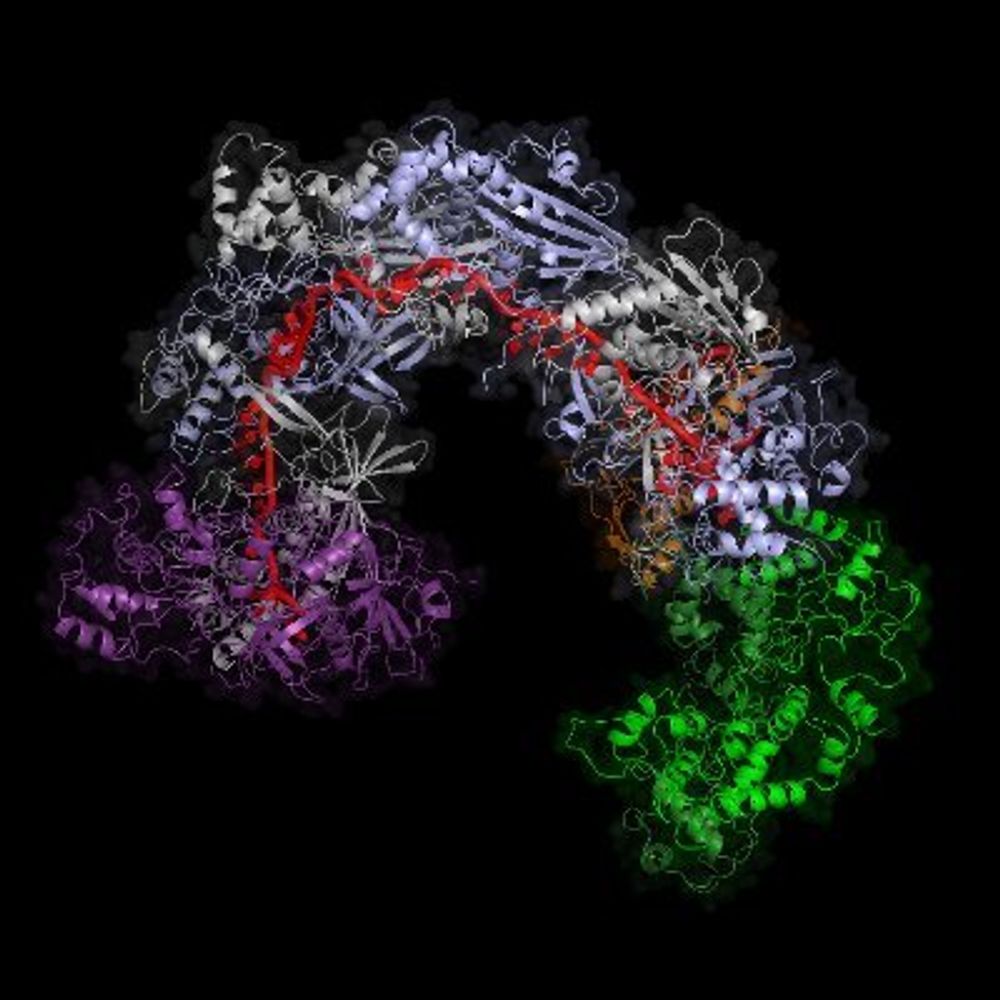
1/10 Genome maintenance by telomerase is a fundamental process in nearly all eukaryotes. But where does it come from?
Today, we report the discovery of telomerase homologs in a family of antiviral RTs, revealing an unexpected evolutionary origin in bacteria.
www.biorxiv.org/content/10.1...
Today, we report the discovery of telomerase homologs in a family of antiviral RTs, revealing an unexpected evolutionary origin in bacteria.
www.biorxiv.org/content/10.1...

Antiviral reverse transcriptases reveal the evolutionary origin of telomerase
Defense-associated reverse transcriptases (DRTs) employ diverse and distinctive mechanisms of cDNA synthesis to protect bacteria against viral infection. However, much of DRT family diversity remains ...
www.biorxiv.org
October 17, 2025 at 5:22 PM
1/10 Genome maintenance by telomerase is a fundamental process in nearly all eukaryotes. But where does it come from?
Today, we report the discovery of telomerase homologs in a family of antiviral RTs, revealing an unexpected evolutionary origin in bacteria.
www.biorxiv.org/content/10.1...
Today, we report the discovery of telomerase homologs in a family of antiviral RTs, revealing an unexpected evolutionary origin in bacteria.
www.biorxiv.org/content/10.1...
Reposted by Hyeonmin Jeong
1\ bmcbiol.biomedcentral.com/articles/10....
🌿🌿Our article on fern immunity has been peer-reviewed 🌿🌿
Thanks to @madeleinebaker.bsky.social @kellerjeanphd.bsky.social @maximebonhomme.bsky.social @pierremarcdelaux.bsky.social and @jacquet-chris.bsky.social
a quick thread 🧵 1/4
🌿🌿Our article on fern immunity has been peer-reviewed 🌿🌿
Thanks to @madeleinebaker.bsky.social @kellerjeanphd.bsky.social @maximebonhomme.bsky.social @pierremarcdelaux.bsky.social and @jacquet-chris.bsky.social
a quick thread 🧵 1/4

Exploring fern pathosystems and immune receptors to bridge gaps in plant immunity - BMC Biology
Land plants include angiosperms, gymnosperms, bryophytes, lycophytes, and ferns, each of which may deploy distinct strategies to resist pathogens. Here, we investigate fern-pathogen interactions by characterizing novel pathosystems and analyzing the diversity of fern immune receptors. A collection of fern species was inoculated with a diverse set of filamentous microbes, and disease symptoms were assessed. We further leveraged published genome mining tools to analyse the diversity of receptor-like kinases, receptor-like proteins (RLKs/RLPs) and nucleotide-binding and leucine-rich repeats (NLRs), along with key immune signalling components, in ferns. Our results reveal that ferns exhibit a range of responses to pathogens, including putative non-host resistance and more specific resistance mechanisms. Among ten ferns tested, Pteris vittata displays the broadest spectrum of pathogen compatibility. Genome mining indicates that ferns encode a diverse repertoire of putative immune receptors, antimicrobial peptides, and mediators of systemic acquired resistance. Ferns possess numerous RLKs/RLPs, resembling those required for cell-surface immunity in angiosperms. They also encode diverse NLRs, including sub-families lost in flowering plants. These findings provide insights into disease resistance evolution and open promising perspectives for crop protection strategies.
bmcbiol.biomedcentral.com
October 13, 2025 at 8:28 AM
1\ bmcbiol.biomedcentral.com/articles/10....
🌿🌿Our article on fern immunity has been peer-reviewed 🌿🌿
Thanks to @madeleinebaker.bsky.social @kellerjeanphd.bsky.social @maximebonhomme.bsky.social @pierremarcdelaux.bsky.social and @jacquet-chris.bsky.social
a quick thread 🧵 1/4
🌿🌿Our article on fern immunity has been peer-reviewed 🌿🌿
Thanks to @madeleinebaker.bsky.social @kellerjeanphd.bsky.social @maximebonhomme.bsky.social @pierremarcdelaux.bsky.social and @jacquet-chris.bsky.social
a quick thread 🧵 1/4
Reposted by Hyeonmin Jeong
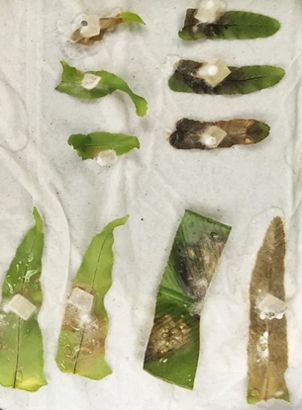
Want to see ferns under attack and how they respond to pathogens? Check out our latest paper!
doi.org/10.1186/s129...
Congrats on this huge team effort to @baptistebio.bsky.social @madeleinebaker.bsky.social @kellerjeanphd.bsky.social @maximebonhomme.bsky.social @pierremarcdelaux.bsky.social
doi.org/10.1186/s129...
Congrats on this huge team effort to @baptistebio.bsky.social @madeleinebaker.bsky.social @kellerjeanphd.bsky.social @maximebonhomme.bsky.social @pierremarcdelaux.bsky.social
October 9, 2025 at 3:40 PM
Want to see ferns under attack and how they respond to pathogens? Check out our latest paper!
doi.org/10.1186/s129...
Congrats on this huge team effort to @baptistebio.bsky.social @madeleinebaker.bsky.social @kellerjeanphd.bsky.social @maximebonhomme.bsky.social @pierremarcdelaux.bsky.social
doi.org/10.1186/s129...
Congrats on this huge team effort to @baptistebio.bsky.social @madeleinebaker.bsky.social @kellerjeanphd.bsky.social @maximebonhomme.bsky.social @pierremarcdelaux.bsky.social
Reposted by Hyeonmin Jeong

Very happy and proud to share the #Spirogyra genome: 50 Mbp small, lacking almost all plastid division proteins and many transcription factors. Kudos to all the many people involved in this multi year project!
@jandevries.bsky.social
@watertoland.bsky.social
www.biorxiv.org/content/10.1...
@jandevries.bsky.social
@watertoland.bsky.social
www.biorxiv.org/content/10.1...

October 11, 2025 at 9:20 AM
Very happy and proud to share the #Spirogyra genome: 50 Mbp small, lacking almost all plastid division proteins and many transcription factors. Kudos to all the many people involved in this multi year project!
@jandevries.bsky.social
@watertoland.bsky.social
www.biorxiv.org/content/10.1...
@jandevries.bsky.social
@watertoland.bsky.social
www.biorxiv.org/content/10.1...
Reposted by Hyeonmin Jeong
New opportunity to undertake a PhD in my group at the John Innes Centre - if you’re interested in plant immunity and evolution check out the link!
Understanding Host Compatibility in the Marchantia-Phytophthora System (CARELLA_J26DTP) | Doctoral Training Partnership
The fossil record demonstrates that filamentous microbes invaded ancient plant cells with intracellular hyphal structures over 450 million years ago. To this day, a rich diversity of extant land plant...
biodtp.norwichresearchpark.ac.uk
October 12, 2025 at 5:30 PM
New opportunity to undertake a PhD in my group at the John Innes Centre - if you’re interested in plant immunity and evolution check out the link!