




Ian M. Miller
@ianmmiller.bsky.social
孟一衡. Chinese history at St. John's University (NYC).
Also, the earliest (and one of the best) depictions I've seen of an idealized water mouth 水口. 10th of 10 "great collapses": "observe the water mouth - its islets, temples, ponds, shrines, and groves, their state indicates the state of the village within..."

May 8, 2025 at 5:13 PM
Also, the earliest (and one of the best) depictions I've seen of an idealized water mouth 水口. 10th of 10 "great collapses": "observe the water mouth - its islets, temples, ponds, shrines, and groves, their state indicates the state of the village within..."
Haha! Michael was my advisor, so obviously a big influence on my thinking too!
May 8, 2025 at 5:07 PM
Haha! Michael was my advisor, so obviously a big influence on my thinking too!
Thanks! Very fun. I need to not let this distract me. Although given the centrality of (Chinese) genealogical sources to my current project, maybe I should go down this rabbit hole for a while and see where it emerges. Looking forward to the book!
May 8, 2025 at 1:13 PM
Thanks! Very fun. I need to not let this distract me. Although given the centrality of (Chinese) genealogical sources to my current project, maybe I should go down this rabbit hole for a while and see where it emerges. Looking forward to the book!
Reposted by Ian M. Miller

I wrote a short post with links, and as ever huge appreciation for OUP designer Brady McNamara. 2// karinwulf.com/tidbits/what...

What's on the Cover? (1) - Karin Wulf
Starting from the top left! I really do love the cover that the talented Brady McNamara designed for Lineage. I had an idea that the cover could mimic the look of my Instagram account, @VernacularGene...
karinwulf.com
May 8, 2025 at 11:21 AM
I wrote a short post with links, and as ever huge appreciation for OUP designer Brady McNamara. 2// karinwulf.com/tidbits/what...
My grandfather collected about half a dozen of these birth (and marriage?) certificates. Nominally related to our Pennsylvania Dutch ancestry. I'd love to learn more!
May 8, 2025 at 12:02 PM
My grandfather collected about half a dozen of these birth (and marriage?) certificates. Nominally related to our Pennsylvania Dutch ancestry. I'd love to learn more!
In any case, I am convinced that there are relatively uniform conventions for how to depict trees by their branching patterns and leaf shape. I realize this is a strange rabbit-hole to be down at this dark time, but it is my strange rabbit-hole, and any help would be much appreciated.
April 2, 2025 at 8:46 PM
In any case, I am convinced that there are relatively uniform conventions for how to depict trees by their branching patterns and leaf shape. I realize this is a strange rabbit-hole to be down at this dark time, but it is my strange rabbit-hole, and any help would be much appreciated.
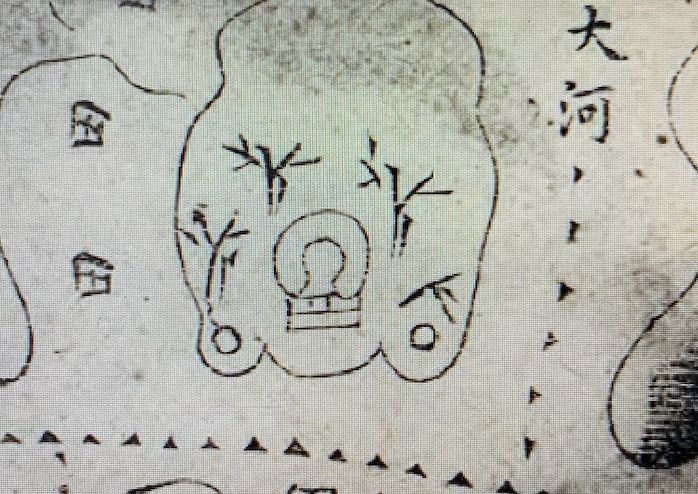
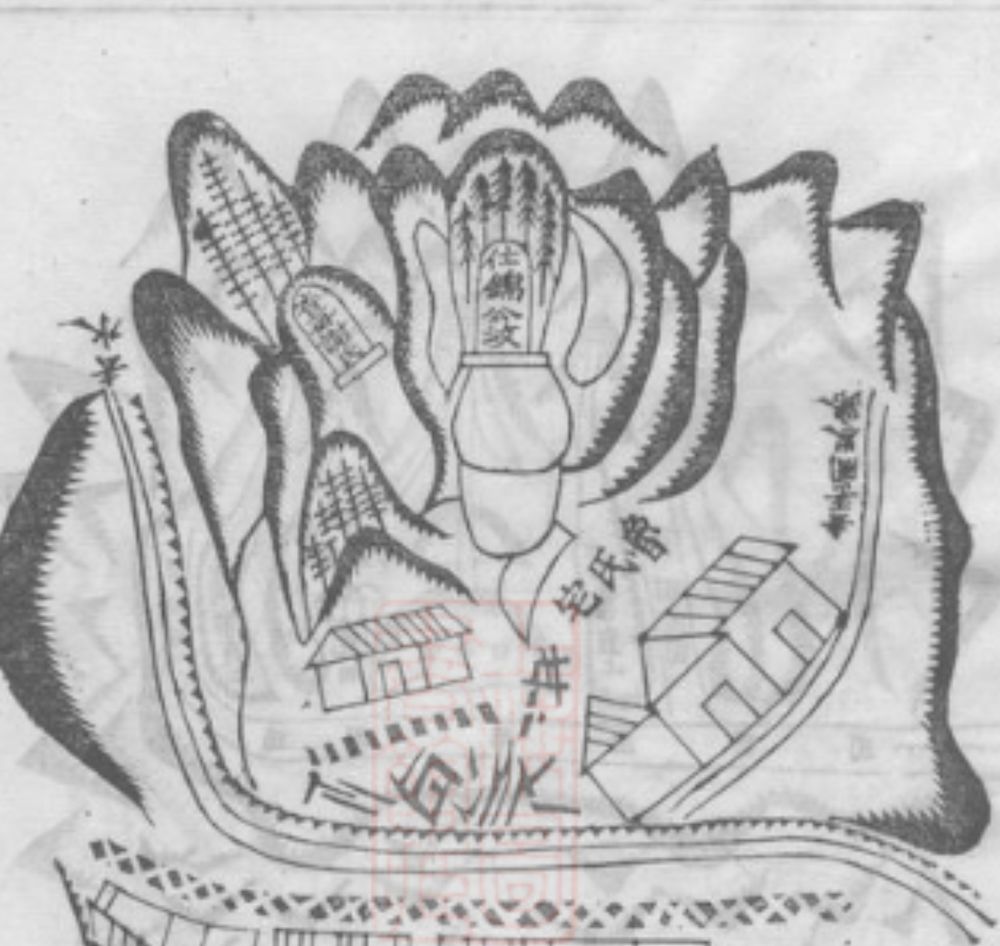
Here are trees shading graves. Notional depictions from an early example (16th cent?) on the left. Clearer depictions of conifers in the later (late 19th cent) example on the right.
April 2, 2025 at 8:46 PM
Here are trees shading graves. Notional depictions from an early example (16th cent?) on the left. Clearer depictions of conifers in the later (late 19th cent) example on the right.
It's worth noting that individual trees are depicted in situations where they are clearly significant. To the left is a well 井 with a tree (camphor?) standing behind it. To the right is an old pond with three large trees (two pines? and ?) shading it.


April 2, 2025 at 8:46 PM
It's worth noting that individual trees are depicted in situations where they are clearly significant. To the left is a well 井 with a tree (camphor?) standing behind it. To the right is an old pond with three large trees (two pines? and ?) shading it.
What about these other trees? I can identify at least three, and possibly as many as five, other varieties, not counting the willows in the foreground and the sweetgum (?) at left. I suspect - again from fieldwork - that at least one of these is a camphor. Probably the small-leaved one in the middle

April 2, 2025 at 8:46 PM
What about these other trees? I can identify at least three, and possibly as many as five, other varieties, not counting the willows in the foreground and the sweetgum (?) at left. I suspect - again from fieldwork - that at least one of these is a camphor. Probably the small-leaved one in the middle
But what about this tree on the left? It is clearly depicted as having five-lobed leaves. Is it the same tree as the right (from 饮膳正要)? Fieldwork suggests that it might be Chinese sweetgum 楓香, which has five-lobed leaves and is often found in fengshui forests.


April 2, 2025 at 8:46 PM
But what about this tree on the left? It is clearly depicted as having five-lobed leaves. Is it the same tree as the right (from 饮膳正要)? Fieldwork suggests that it might be Chinese sweetgum 楓香, which has five-lobed leaves and is often found in fengshui forests.