


Igor Henrique Rodrigues Oliveira 🐟🧬
@iguhro013.bsky.social
Bacharel em Ciências Biológicas 🧬
Mestre em Manejo e Conservação 🏞️
Doutorando em Zoologia 🐟
Ah, e claro, Corinthiano 🦅🖤🤍
Mestre em Manejo e Conservação 🏞️
Doutorando em Zoologia 🐟
Ah, e claro, Corinthiano 🦅🖤🤍
and highlight the complexity and dynamism of headwater environments, which promote endemism and sympatry among closely related species.
December 16, 2025 at 7:18 PM
and highlight the complexity and dynamism of headwater environments, which promote endemism and sympatry among closely related species.
Psalidodon paiva, Psalidodon velhochico, and Psalidodon terezinhae. These species occur west of the Upper São Francisco River basin, a region still poorly studied in terms of its ichthyofauna.
Overall, our findings advance the understanding of tetra diversity in the São Francisco River basin +
Overall, our findings advance the understanding of tetra diversity in the São Francisco River basin +

December 16, 2025 at 7:18 PM
Psalidodon paiva, Psalidodon velhochico, and Psalidodon terezinhae. These species occur west of the Upper São Francisco River basin, a region still poorly studied in terms of its ichthyofauna.
Overall, our findings advance the understanding of tetra diversity in the São Francisco River basin +
Overall, our findings advance the understanding of tetra diversity in the São Francisco River basin +
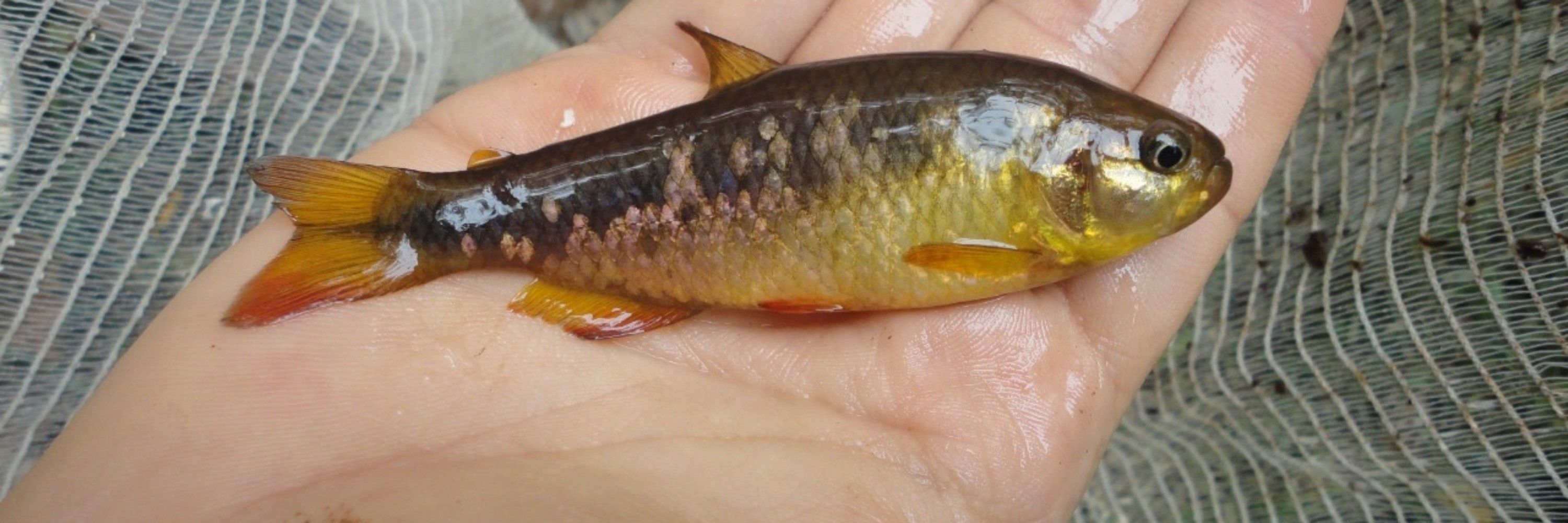
Our results indicate that what was once recognized as P. rivularis actually represents at least five distinct species occurring in the Upper São Francisco River basin.
In addition to redescribing P. rivularis and H. santae (now Psalidodon santae), we describe three new species:
In addition to redescribing P. rivularis and H. santae (now Psalidodon santae), we describe three new species:

December 16, 2025 at 7:18 PM
Our results indicate that what was once recognized as P. rivularis actually represents at least five distinct species occurring in the Upper São Francisco River basin.
In addition to redescribing P. rivularis and H. santae (now Psalidodon santae), we describe three new species:
In addition to redescribing P. rivularis and H. santae (now Psalidodon santae), we describe three new species:
occurring in sympatry, and marked morphometric variation among populations. Based on this evidence, we proposed P. rivularis as a species complex.
To unravel this complex, we applied an integrative approach combining morphological, morphometric, cytogenetic, and next-generation sequencing data.
To unravel this complex, we applied an integrative approach combining morphological, morphometric, cytogenetic, and next-generation sequencing data.
December 16, 2025 at 7:18 PM
occurring in sympatry, and marked morphometric variation among populations. Based on this evidence, we proposed P. rivularis as a species complex.
To unravel this complex, we applied an integrative approach combining morphological, morphometric, cytogenetic, and next-generation sequencing data.
To unravel this complex, we applied an integrative approach combining morphological, morphometric, cytogenetic, and next-generation sequencing data.
P. rivularis type series, which we confirm corresponds to morphotype 2 of P. rivularis.
However, the variability of P. rivularis goes far beyond these original morphotypes. Subsequent studies revealed differences in chromosome numbers (2n = 46 and 2n = 50), distinct mitochondrial lineages
However, the variability of P. rivularis goes far beyond these original morphotypes. Subsequent studies revealed differences in chromosome numbers (2n = 46 and 2n = 50), distinct mitochondrial lineages
December 16, 2025 at 7:18 PM
P. rivularis type series, which we confirm corresponds to morphotype 2 of P. rivularis.
However, the variability of P. rivularis goes far beyond these original morphotypes. Subsequent studies revealed differences in chromosome numbers (2n = 46 and 2n = 50), distinct mitochondrial lineages
However, the variability of P. rivularis goes far beyond these original morphotypes. Subsequent studies revealed differences in chromosome numbers (2n = 46 and 2n = 50), distinct mitochondrial lineages
morphological variation in the type series, illustrated by two clearly distinct specimens, which we refer to as morphotypes 1 and 2.
The idea that more than one species was present in Lütken’s material is not new. Eigenmann (1907) described Hyphessobrycon santae based on specimens from the +
The idea that more than one species was present in Lütken’s material is not new. Eigenmann (1907) described Hyphessobrycon santae based on specimens from the +

December 16, 2025 at 7:18 PM
morphological variation in the type series, illustrated by two clearly distinct specimens, which we refer to as morphotypes 1 and 2.
The idea that more than one species was present in Lütken’s material is not new. Eigenmann (1907) described Hyphessobrycon santae based on specimens from the +
The idea that more than one species was present in Lütken’s material is not new. Eigenmann (1907) described Hyphessobrycon santae based on specimens from the +
actually exist within the Psalidodon rivularis complex.
Psalidodon rivularis is a tetra species endemic to Brazil, originally described by Christian Frederik Lütken (1875) based on specimens collected from the Velhas River basin, Minas Gerais. Notably, Lütken already pointed out considerable +
Psalidodon rivularis is a tetra species endemic to Brazil, originally described by Christian Frederik Lütken (1875) based on specimens collected from the Velhas River basin, Minas Gerais. Notably, Lütken already pointed out considerable +

December 16, 2025 at 7:18 PM
actually exist within the Psalidodon rivularis complex.
Psalidodon rivularis is a tetra species endemic to Brazil, originally described by Christian Frederik Lütken (1875) based on specimens collected from the Velhas River basin, Minas Gerais. Notably, Lütken already pointed out considerable +
Psalidodon rivularis is a tetra species endemic to Brazil, originally described by Christian Frederik Lütken (1875) based on specimens collected from the Velhas River basin, Minas Gerais. Notably, Lütken already pointed out considerable +
Aaah olha só quem eu achei no Bluesky! Feliz por te encontrar aqui amigo, tava sentindo falta de mais pessoas conhecidas na timeline
September 4, 2024 at 1:17 AM
Aaah olha só quem eu achei no Bluesky! Feliz por te encontrar aqui amigo, tava sentindo falta de mais pessoas conhecidas na timeline