



Ivan Takis-moðan
@ivan-takismooan.bsky.social
Let's explore the universe
March 31, 2025 at 7:18 AM
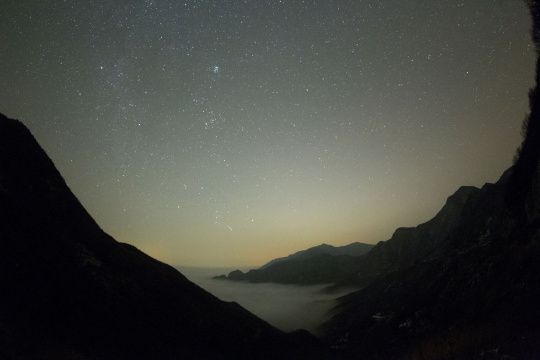
The starry night and the Great Wall

March 21, 2025 at 2:18 PM
The starry night and the Great Wall
Fascinating view

December 15, 2024 at 11:01 AM
Fascinating view
By using the camera, the fascinating scenery that is hidden to the naked eye can be revealed.

November 10, 2024 at 5:30 PM
By using the camera, the fascinating scenery that is hidden to the naked eye can be revealed.
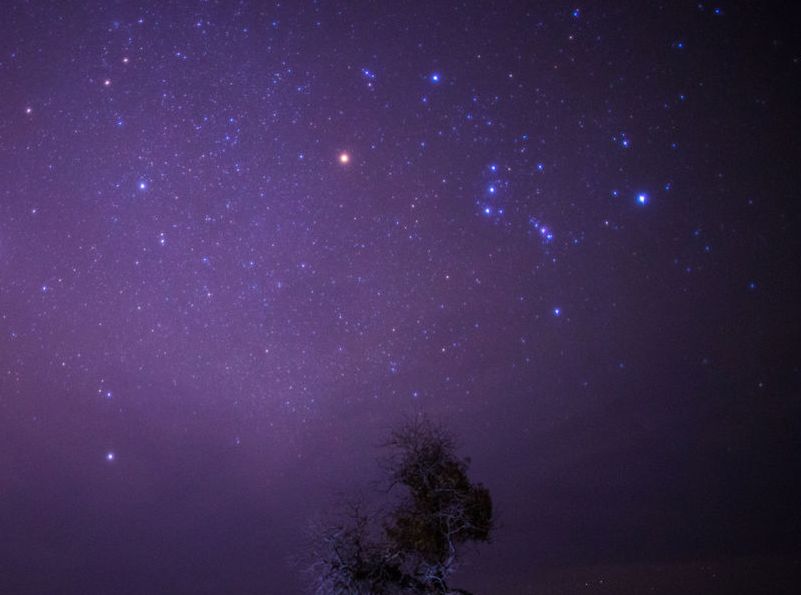
Beautiful night sky
November 9, 2024 at 6:24 PM
Beautiful night sky
Mira Ceti, the dimmest red giant star

November 7, 2024 at 2:49 PM
Mira Ceti, the dimmest red giant star
The variations in the color of stars are the direct consequence of their surface temperature and only of this temperature. The hotter a star is, the more bluish colors the star's light spectrum will be.

November 6, 2024 at 2:41 AM
The variations in the color of stars are the direct consequence of their surface temperature and only of this temperature. The hotter a star is, the more bluish colors the star's light spectrum will be.
J1818.0-1607 is one of the youngest stars, with estimated age between 240 and 500 years
November 5, 2024 at 6:29 PM
J1818.0-1607 is one of the youngest stars, with estimated age between 240 and 500 years
November 5, 2024 at 4:24 AM
Quarks is the smallest particle which cannot be broken down further. Quarks can have a positive or negative electric charge, with blue, green or red in colour
November 5, 2024 at 2:38 AM
Quarks is the smallest particle which cannot be broken down further. Quarks can have a positive or negative electric charge, with blue, green or red in colour
Hot stars are gravitationally bound and in orbit each other, one star starts to absorb materials from another, it rotates faster and become flattened, another becomes smaller and loses mass in a stellar wind. Secondary star expands to become red giant, explodes as a supernova, leaving a neutron star
November 4, 2024 at 5:25 PM
Hot stars are gravitationally bound and in orbit each other, one star starts to absorb materials from another, it rotates faster and become flattened, another becomes smaller and loses mass in a stellar wind. Secondary star expands to become red giant, explodes as a supernova, leaving a neutron star
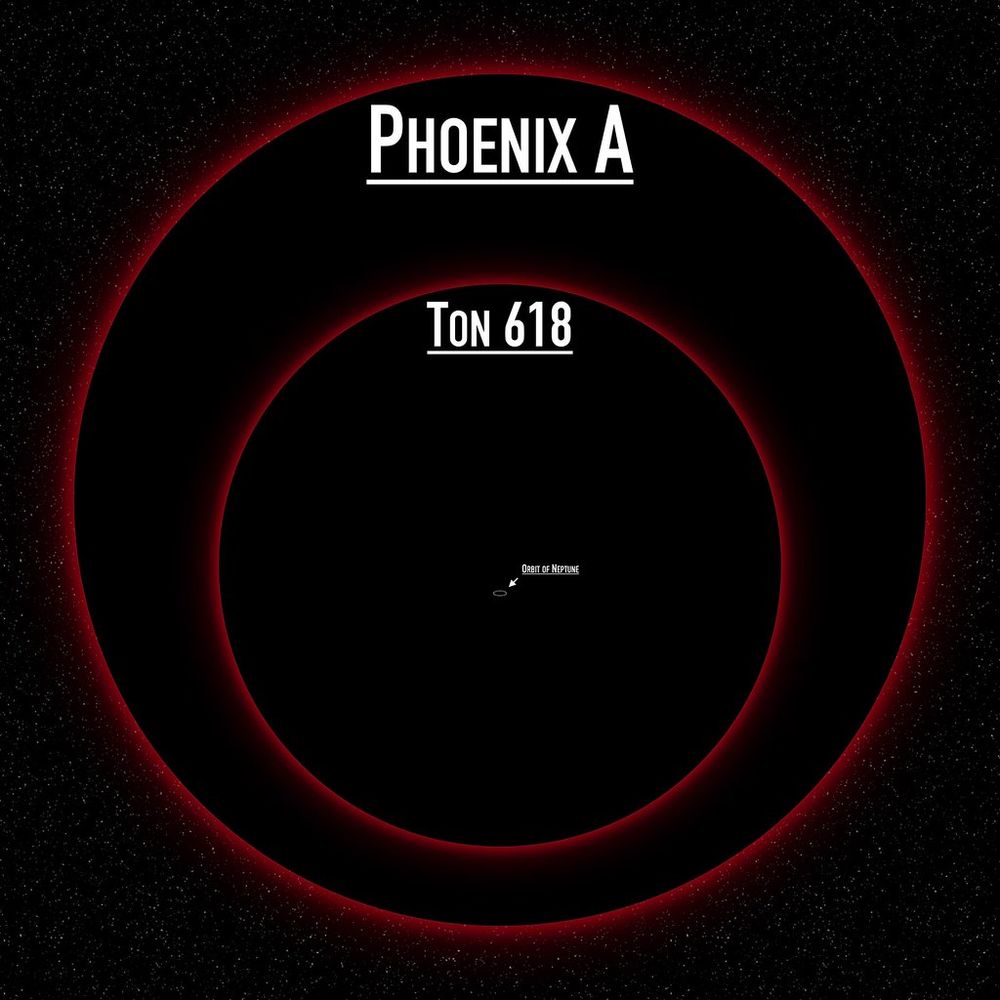
The circle marked TON 618, 40 billion times the mass of the Sun. There is still an argument whether Ton 618 or Phoenix A is the biggest black hole, depending on different measuring method. Phoenix A is huge enough to engulf the Solar System but it can only engulf objects that are extremely close.

November 4, 2024 at 12:14 PM
The circle marked TON 618, 40 billion times the mass of the Sun. There is still an argument whether Ton 618 or Phoenix A is the biggest black hole, depending on different measuring method. Phoenix A is huge enough to engulf the Solar System but it can only engulf objects that are extremely close.
ASASSN-14li was a massive star first discovered in 2014 but it is discovered in 2023 that it has been destroyed by the black hole.
November 4, 2024 at 8:10 AM
ASASSN-14li was a massive star first discovered in 2014 but it is discovered in 2023 that it has been destroyed by the black hole.
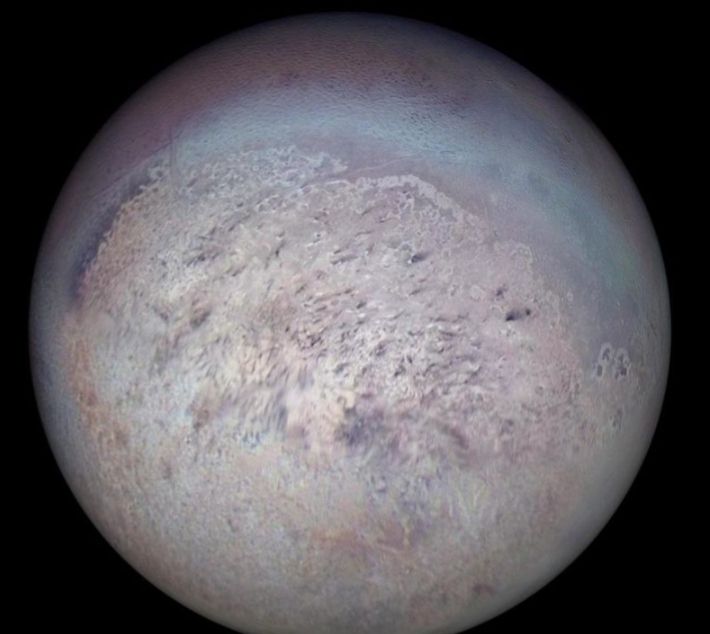
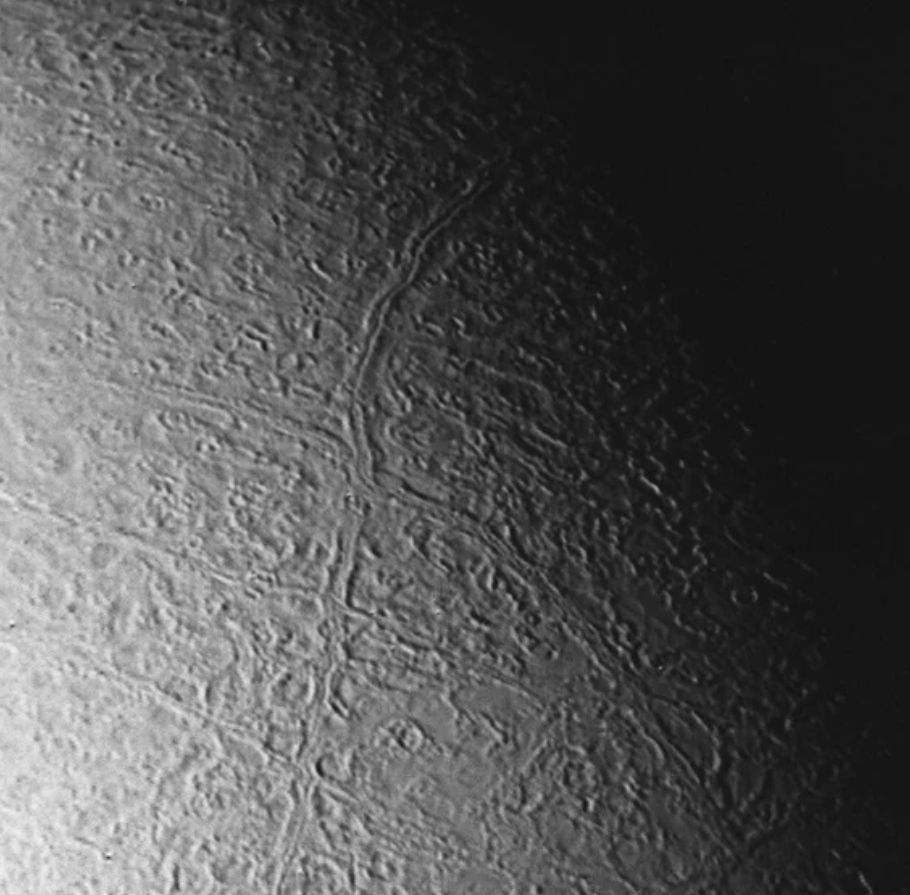
Triton is the moon of Neptune. It holds two records, the most distant major moons in the Solar system and the coldest known object in the solar system with an average surface temperature of -391° F.
November 4, 2024 at 4:08 AM
Triton is the moon of Neptune. It holds two records, the most distant major moons in the Solar system and the coldest known object in the solar system with an average surface temperature of -391° F.
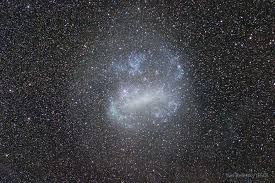
This is the Large Magellanic Cloud, where give birth of the fastest star HE 0437-5439, it travels at the speed of 2574960 km/h and getting out the fixed orbit around the center of galaxy. It isn't affected by gravitation. It travels faster than SDSS J090745.0+024507, which travels at 2420000km/h.

November 3, 2024 at 6:16 PM
This is the Large Magellanic Cloud, where give birth of the fastest star HE 0437-5439, it travels at the speed of 2574960 km/h and getting out the fixed orbit around the center of galaxy. It isn't affected by gravitation. It travels faster than SDSS J090745.0+024507, which travels at 2420000km/h.
The star which the arrow pointed is called HD140283, it is the oldest star, it is estimated has the age of 14.4 billion years, which may be even older than the universe. It is about 190 light years far

November 3, 2024 at 1:07 PM
The star which the arrow pointed is called HD140283, it is the oldest star, it is estimated has the age of 14.4 billion years, which may be even older than the universe. It is about 190 light years far
This brown draft is called Gliese 229B, which is one of the dimmest star in the universe

November 3, 2024 at 8:47 AM
This brown draft is called Gliese 229B, which is one of the dimmest star in the universe