



Jan Pfänder
@janpfa.bsky.social
phd student https://janpfander.github.io/
Help us strengthen trust in climate scientists in the US! Join our megastudy 👇

October 15, 2025 at 10:03 AM
Help us strengthen trust in climate scientists in the US! Join our megastudy 👇
On average, participants accepted the scientific consensus in 95% of cases.
Even participants who claimed they don’t trust science at all accepted the scientific consensus in 87% of cases.
Flat earthers accepted 87% of basic science claims.
Climate change deniers had an acceptance rate of 92%.
Even participants who claimed they don’t trust science at all accepted the scientific consensus in 87% of cases.
Flat earthers accepted 87% of basic science claims.
Climate change deniers had an acceptance rate of 92%.

September 5, 2025 at 11:17 AM
On average, participants accepted the scientific consensus in 95% of cases.
Even participants who claimed they don’t trust science at all accepted the scientific consensus in 87% of cases.
Flat earthers accepted 87% of basic science claims.
Climate change deniers had an acceptance rate of 92%.
Even participants who claimed they don’t trust science at all accepted the scientific consensus in 87% of cases.
Flat earthers accepted 87% of basic science claims.
Climate change deniers had an acceptance rate of 92%.
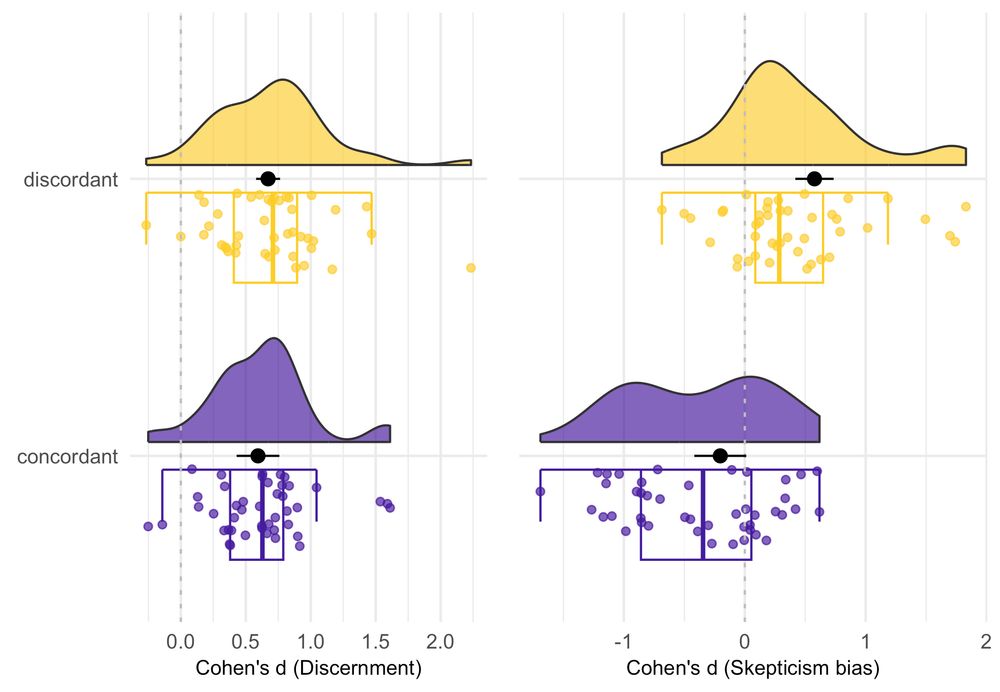
We find that participants were equally able to discern concordant and discordant news (left side) but they were more skeptical of discordant headlines (right side)
February 21, 2025 at 10:33 AM
We find that participants were equally able to discern concordant and discordant news (left side) but they were more skeptical of discordant headlines (right side)
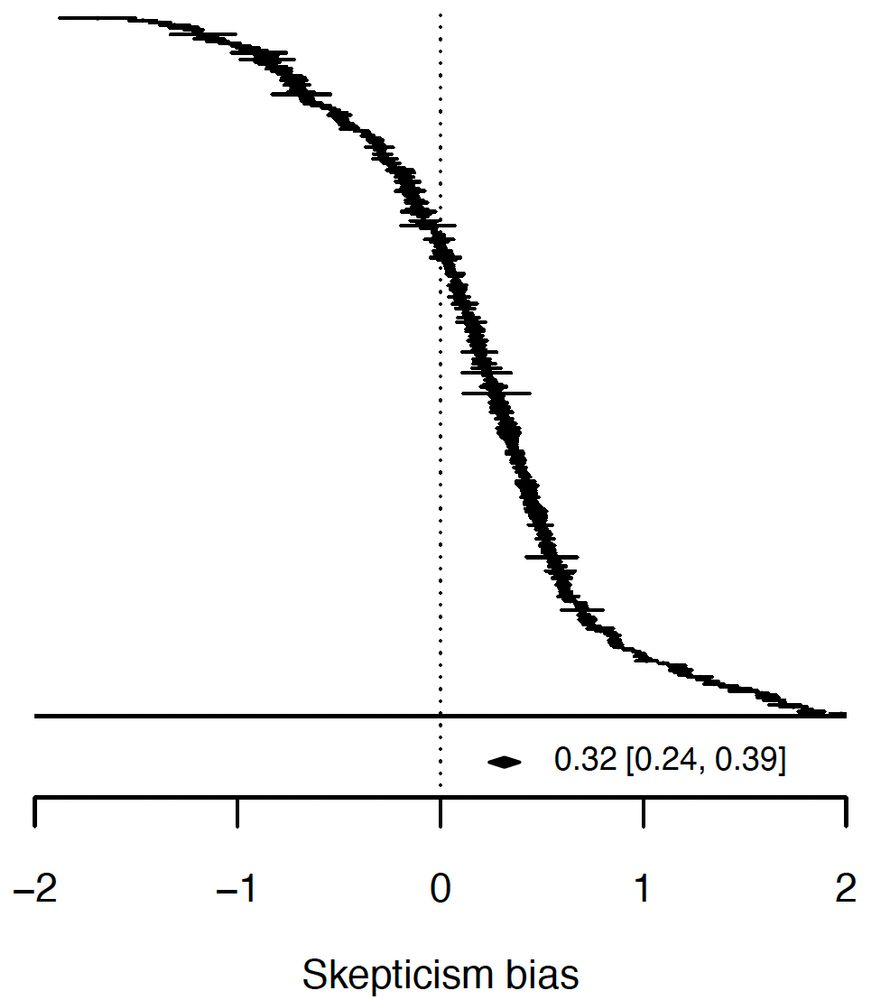
In 203 of the 303 cases, participants displayed a positive response bias: they were more skeptical of true news than they were gullible towards false news. However, the average effect is relatively small.
February 21, 2025 at 10:33 AM
In 203 of the 303 cases, participants displayed a positive response bias: they were more skeptical of true news than they were gullible towards false news. However, the average effect is relatively small.
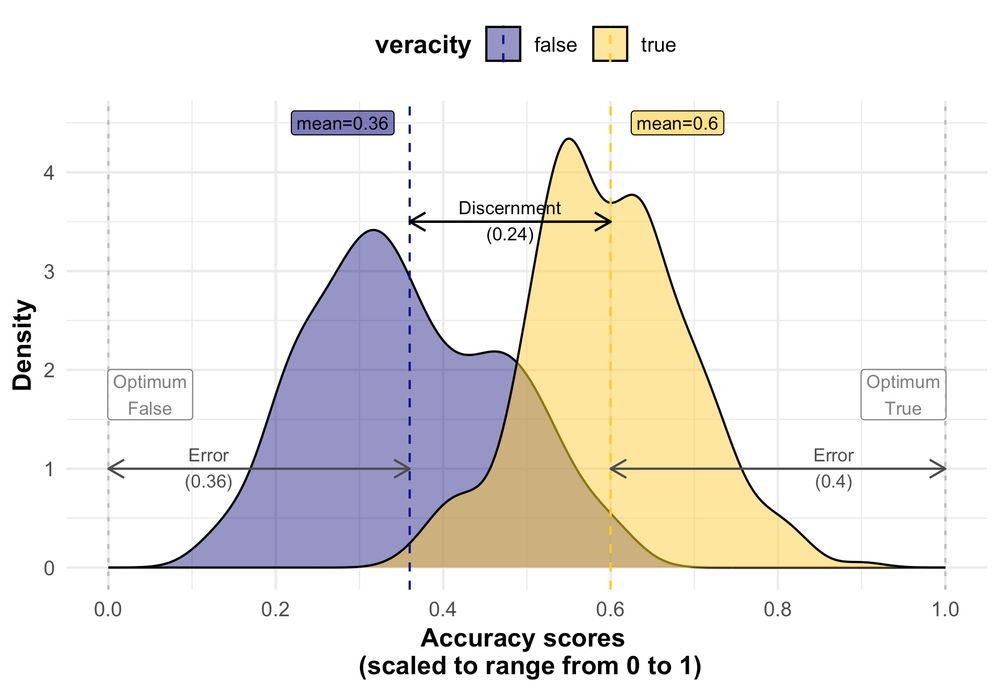
For true news, people are farther from the ideal rating than for false news. We call this distance from actual to ideal rating the “error”, and the difference between errors the “response bias”.
February 21, 2025 at 10:33 AM
For true news, people are farther from the ideal rating than for false news. We call this distance from actual to ideal rating the “error”, and the difference between errors the “response bias”.
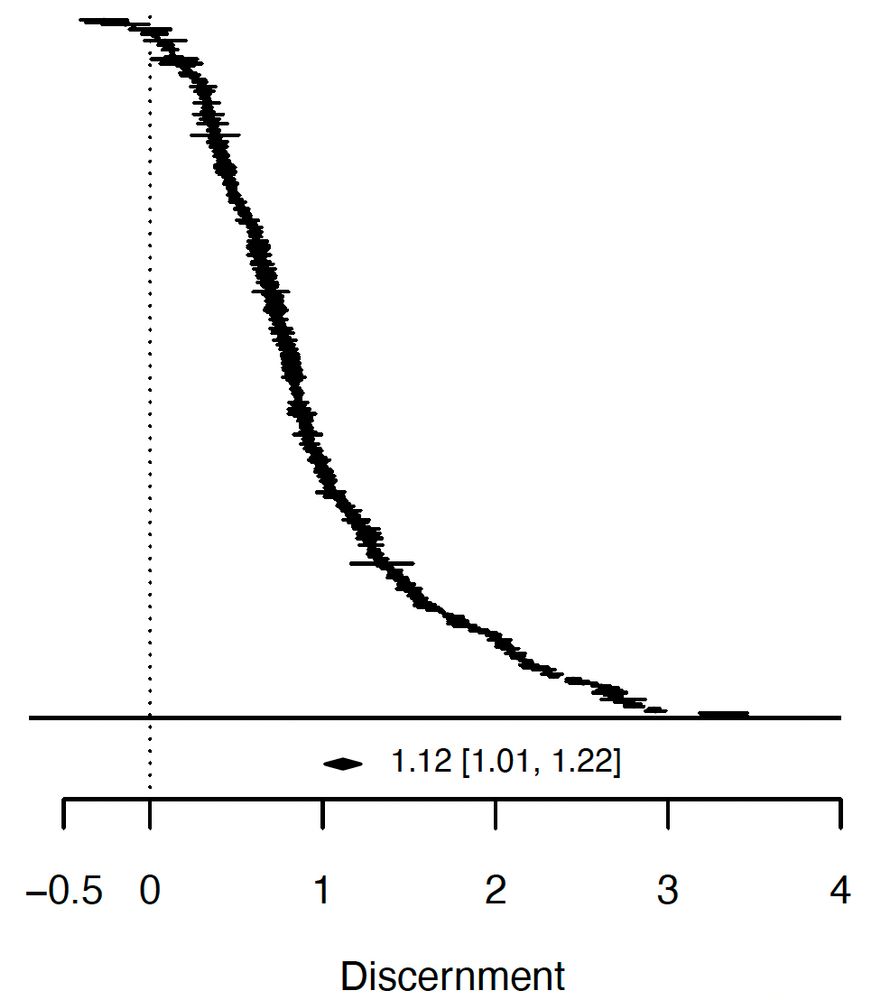
For 298 of the 303 effect sizes (the meta-analytic observations), participants, on average, rated true news as more accurate than false news, and considerably so.
February 21, 2025 at 10:33 AM
For 298 of the 303 effect sizes (the meta-analytic observations), participants, on average, rated true news as more accurate than false news, and considerably so.
We meta-analyzed 67 papers, totaling 194'438 participants and 303 effect sizes across 40 countries. In sum, these participants rated the accuracy of 2'167 unique news items.

February 21, 2025 at 10:33 AM
We meta-analyzed 67 papers, totaling 194'438 participants and 303 effect sizes across 40 countries. In sum, these participants rated the accuracy of 2'167 unique news items.
Numerous experiments have asked participants to rate the accuracy of true and false news (without telling them which is which). We meta-analyzed the control groups of these experiments, which typically look like this:


February 21, 2025 at 10:33 AM
Numerous experiments have asked participants to rate the accuracy of true and false news (without telling them which is which). We meta-analyzed the control groups of these experiments, which typically look like this:
Out in @naturehumbehav.bsky.social
Can people tell true from false news?
Yes! Our meta-analysis shows that people rate true news as more accurate than false news (d = 1.12) and were better at spotting false news than at recognizing true news (d = 0.32).
www.nature.com/articles/s41...
Can people tell true from false news?
Yes! Our meta-analysis shows that people rate true news as more accurate than false news (d = 1.12) and were better at spotting false news than at recognizing true news (d = 0.32).
www.nature.com/articles/s41...
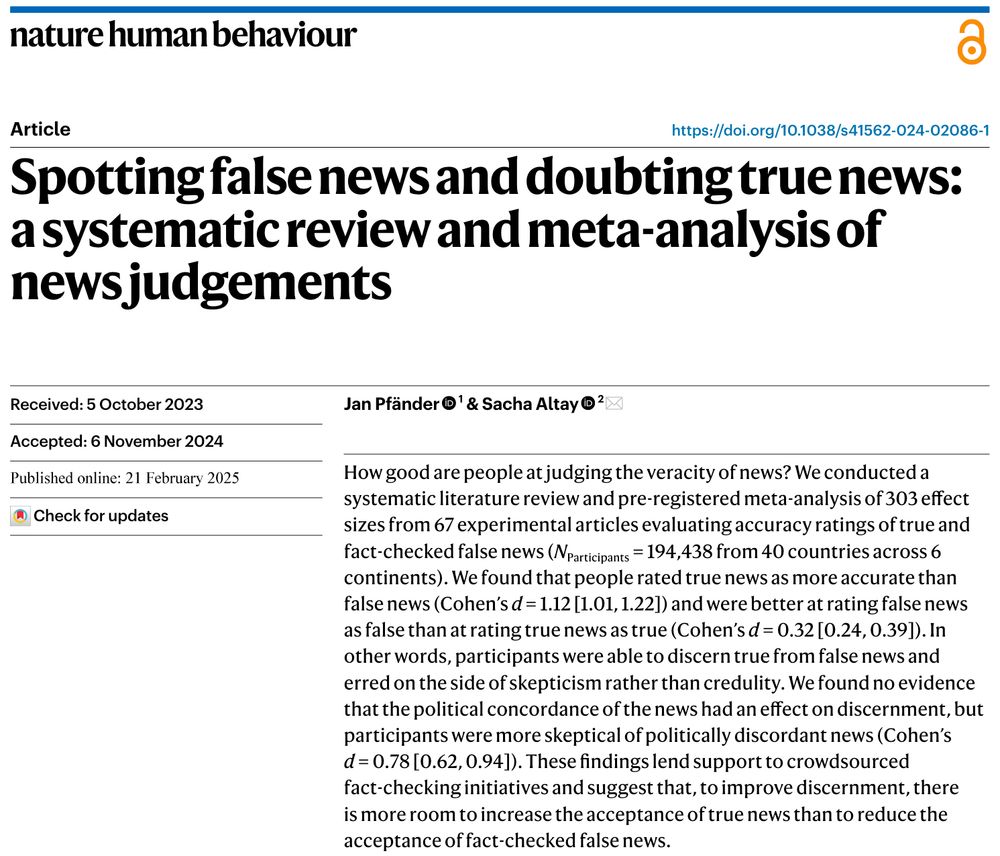
February 21, 2025 at 10:33 AM
Out in @naturehumbehav.bsky.social
Can people tell true from false news?
Yes! Our meta-analysis shows that people rate true news as more accurate than false news (d = 1.12) and were better at spotting false news than at recognizing true news (d = 0.32).
www.nature.com/articles/s41...
Can people tell true from false news?
Yes! Our meta-analysis shows that people rate true news as more accurate than false news (d = 1.12) and were better at spotting false news than at recognizing true news (d = 0.32).
www.nature.com/articles/s41...
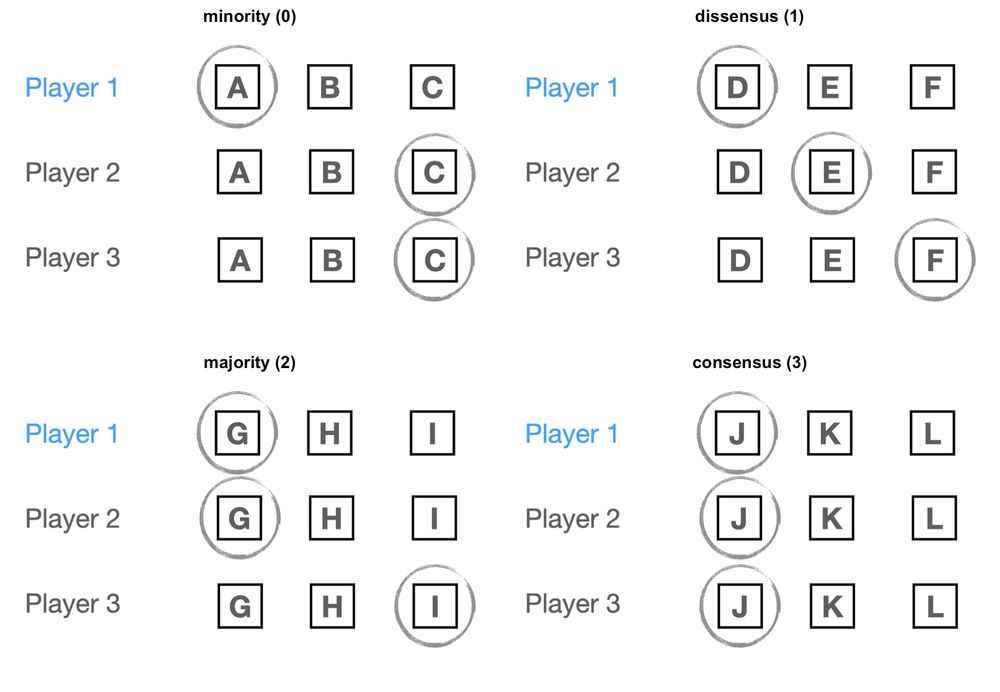
In other experiments, games are about choosing one of a few options. Again, some players were more convergent (i.e. their voted option was more consensual) than other players.
6/
6/
November 27, 2024 at 3:32 PM
In other experiments, games are about choosing one of a few options. Again, some players were more convergent (i.e. their voted option was more consensual) than other players.
6/
6/
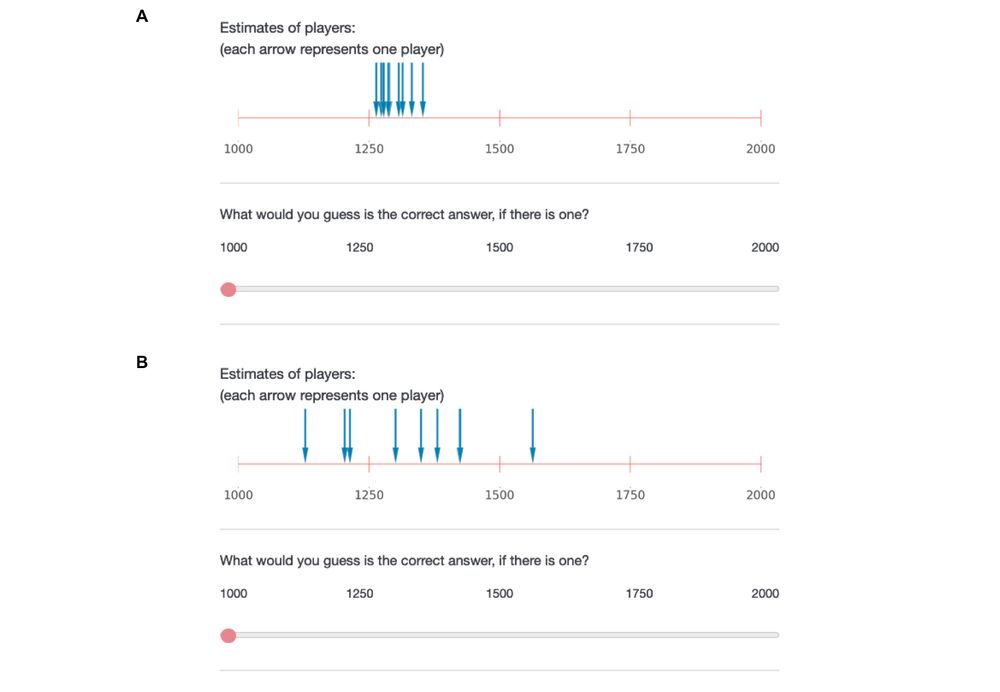
In some experiments, the games are about numeric estimates. Some groups of players were more convergent estimates (i.e. closer to each other) than other groups.
5/
5/
November 27, 2024 at 3:32 PM
In some experiments, the games are about numeric estimates. Some groups of players were more convergent estimates (i.e. closer to each other) than other groups.
5/
5/
Imagine that you live in ancient Greece, and a fellow called Eratosthenes claims the circumference of the earth is 40000 kilometers.
You’d probably (mis)take him for a pretentious loon.
2/
You’d probably (mis)take him for a pretentious loon.
2/

November 27, 2024 at 3:32 PM
Imagine that you live in ancient Greece, and a fellow called Eratosthenes claims the circumference of the earth is 40000 kilometers.
You’d probably (mis)take him for a pretentious loon.
2/
You’d probably (mis)take him for a pretentious loon.
2/