



@joshuabraver.bsky.social
First ten minutes is a slow and straightforward exposition of the law on domestic deployments.
October 20, 2025 at 5:11 PM
First ten minutes is a slow and straightforward exposition of the law on domestic deployments.
, the weakness of the liberal legal establishment, why the Great Recession didn’t produce a New Deal moment, and what it means when the only thing left to restrain the executive is the executive itself.
October 20, 2025 at 5:11 PM
, the weakness of the liberal legal establishment, why the Great Recession didn’t produce a New Deal moment, and what it means when the only thing left to restrain the executive is the executive itself.
Come for the dire analysis of civil-military breakdowns—
Stay for the scenes where Abbie Hoffman successfully negotiates permits to levitate the Pentagon, make it spin, turn orange, and exorcise its demons. Then 2,500 protesters try to break into the Pentagon!
Stay for the scenes where Abbie Hoffman successfully negotiates permits to levitate the Pentagon, make it spin, turn orange, and exorcise its demons. Then 2,500 protesters try to break into the Pentagon!
June 17, 2025 at 4:01 PM
Come for the dire analysis of civil-military breakdowns—
Stay for the scenes where Abbie Hoffman successfully negotiates permits to levitate the Pentagon, make it spin, turn orange, and exorcise its demons. Then 2,500 protesters try to break into the Pentagon!
Stay for the scenes where Abbie Hoffman successfully negotiates permits to levitate the Pentagon, make it spin, turn orange, and exorcise its demons. Then 2,500 protesters try to break into the Pentagon!
If we lose the norms that kept domestic troop deployments from becoming disasters, we may not be so lucky next time.
I explain more here: www.theatlantic.com/ideas/archiv...
I explain more here: www.theatlantic.com/ideas/archiv...
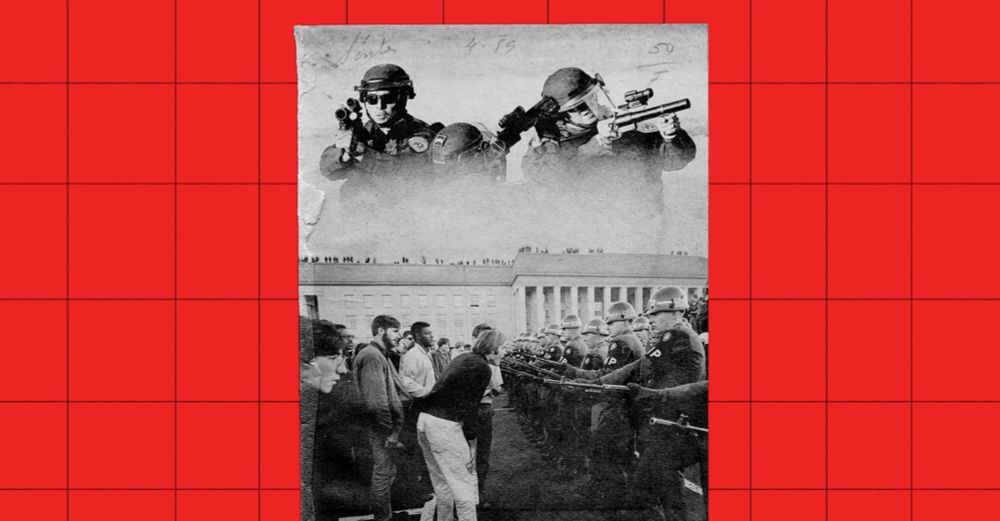
When the Military Comes to American Soil
Domestic deployments have generally been quite restrained. Can they still be?
www.theatlantic.com
June 17, 2025 at 4:01 PM
If we lose the norms that kept domestic troop deployments from becoming disasters, we may not be so lucky next time.
I explain more here: www.theatlantic.com/ideas/archiv...
I explain more here: www.theatlantic.com/ideas/archiv...
Today? Both the public and the elites are polarized. The expert class is more distrusted. The systems that kept past troop deployments from spiraling—planning, legal caution, expert input—aren’t guaranteed.
They were built by consensus. And that consensus is breaking down.
They were built by consensus. And that consensus is breaking down.
June 17, 2025 at 4:01 PM
Today? Both the public and the elites are polarized. The expert class is more distrusted. The systems that kept past troop deployments from spiraling—planning, legal caution, expert input—aren’t guaranteed.
They were built by consensus. And that consensus is breaking down.
They were built by consensus. And that consensus is breaking down.
But something deeper has changed, too.
In the 1960s, the public was divided—but the elites who planned these deployments shared norms, and they trusted expert advice.
In the 1960s, the public was divided—but the elites who planned these deployments shared norms, and they trusted expert advice.
June 17, 2025 at 4:01 PM
But something deeper has changed, too.
In the 1960s, the public was divided—but the elites who planned these deployments shared norms, and they trusted expert advice.
In the 1960s, the public was divided—but the elites who planned these deployments shared norms, and they trusted expert advice.
Today, those guardrails are slipping.
Marines—combat troops, not military police—are now being deployed alone in Los Angeles. That’s a big shift. Marines weren’t used for these missions before, and for good reason: they’re trained to win battles, not manage civil unrest.
Marines—combat troops, not military police—are now being deployed alone in Los Angeles. That’s a big shift. Marines weren’t used for these missions before, and for good reason: they’re trained to win battles, not manage civil unrest.
June 17, 2025 at 4:01 PM
Today, those guardrails are slipping.
Marines—combat troops, not military police—are now being deployed alone in Los Angeles. That’s a big shift. Marines weren’t used for these missions before, and for good reason: they’re trained to win battles, not manage civil unrest.
Marines—combat troops, not military police—are now being deployed alone in Los Angeles. That’s a big shift. Marines weren’t used for these missions before, and for good reason: they’re trained to win battles, not manage civil unrest.
It came from careful planning, bipartisan consensus, and the central role of military police—not front-line combat troops.
The goal was to de-escalate, not dominate.
The goal was to de-escalate, not dominate.
June 17, 2025 at 4:01 PM
It came from careful planning, bipartisan consensus, and the central role of military police—not front-line combat troops.
The goal was to de-escalate, not dominate.
The goal was to de-escalate, not dominate.